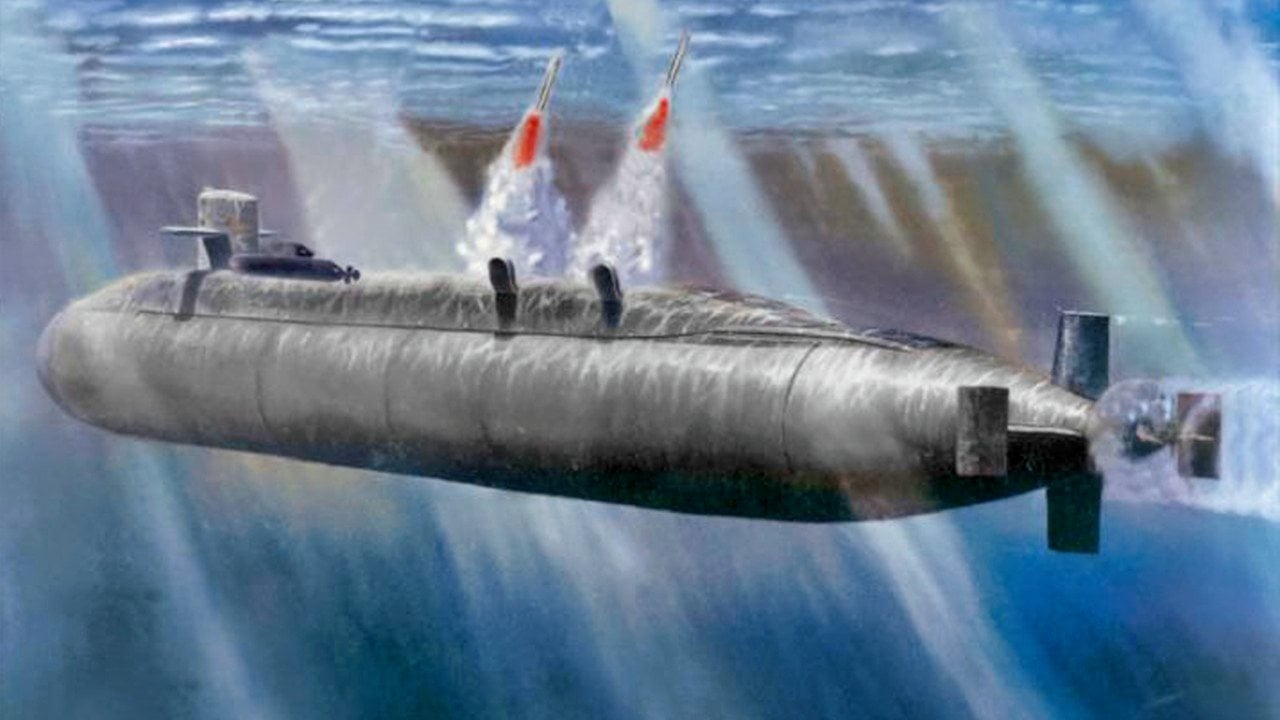
Key Points and Summary – America’s Ohio-class submarines are giants—and a big chunk of their punch is about to retire.
-Four converted SSGNs that carry large Tomahawk loads and support special operations are scheduled to leave service by the late 2020s.
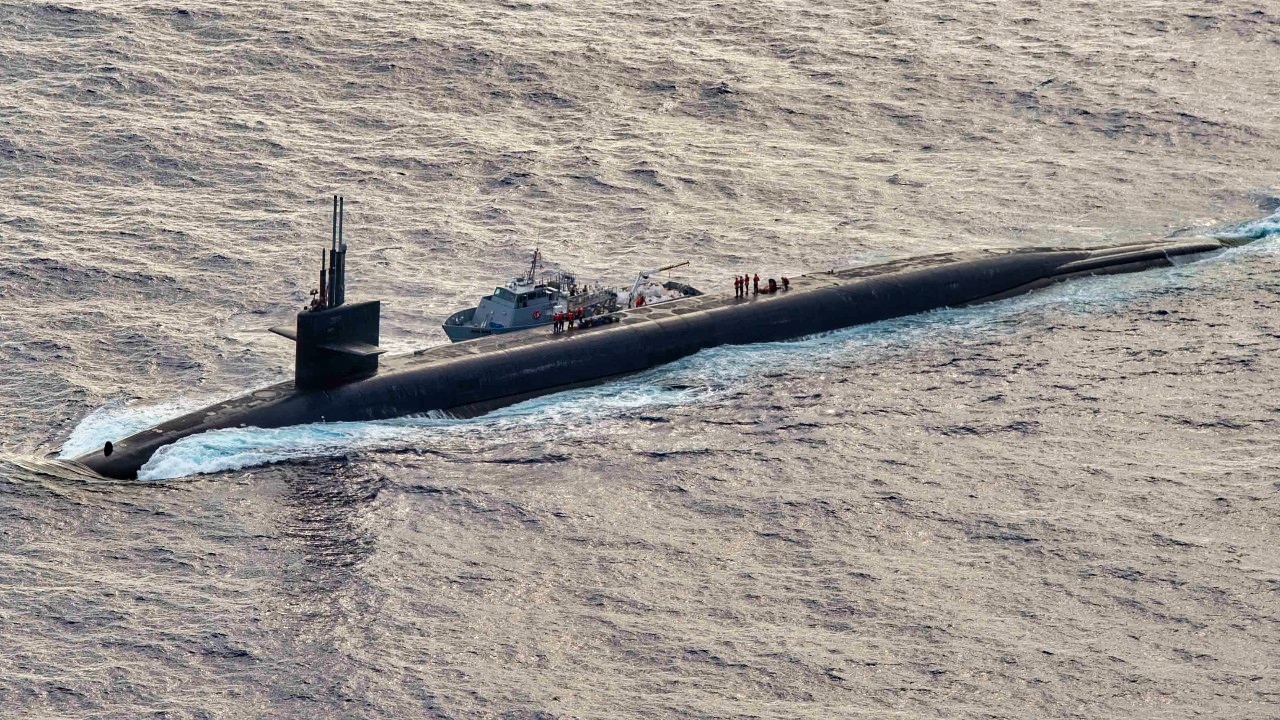
The Ohio-class ballistic missile submarine USS Kentucky (SSBN 737) sails alongside a submarine support vessel during a routine armed air escort (AAE) exercise, April 24, 2025. AAEs are designed to improve interoperability between our services, increasing lethalitythrough multi-domain integration.. Commander, Submarine Group (SUBGRU) 9, exercises administrative control authority for assigned submarine commands and units in the Pacific Northwest providing oversight for shipboard training, personnel, supply and material readiness of submarines and their crews. SUBGRU-9 is also responsible for nuclear submarines undergoing conversion or overhaul at Puget Sound Naval Shipyard in Bremerton, Washington. (U.S. Navy photo by Mass Communication Specialist 1st Class Ryan Riley)
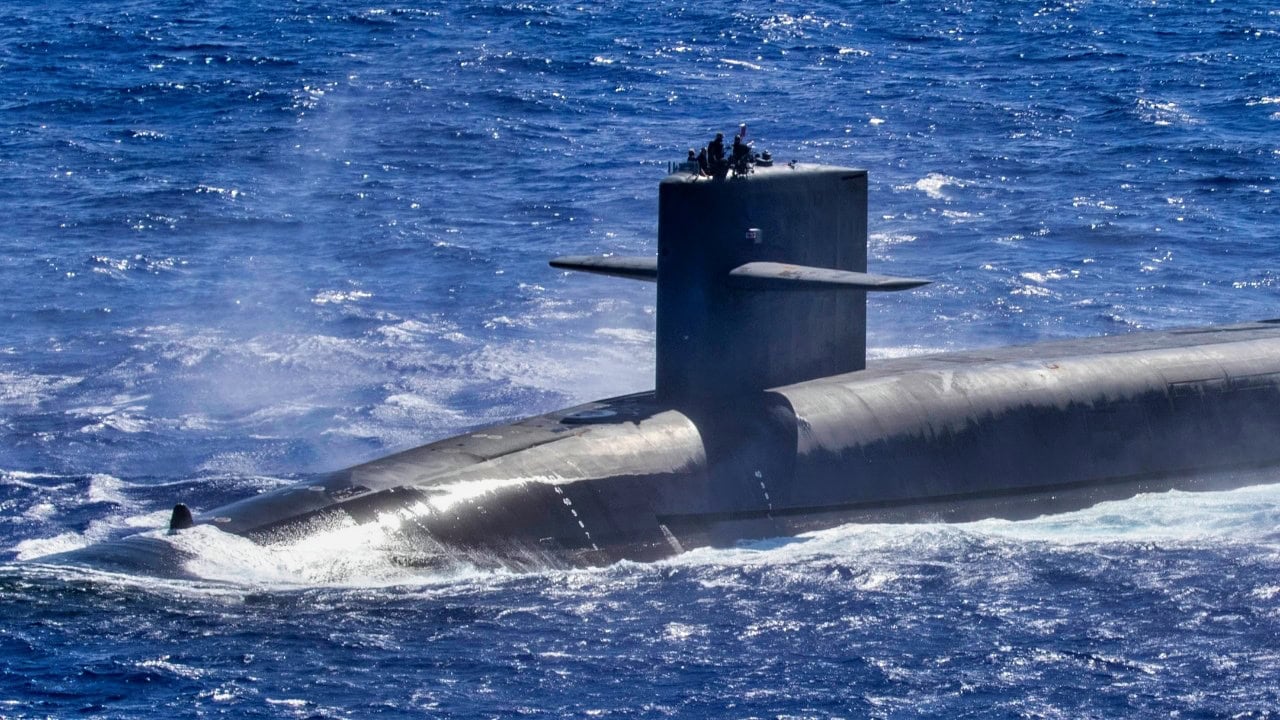
PACIFIC OCEAN (June 28, 2024) – An AS-332 Super Puma assigned to the Lewis and Clark-class dry cargo ship USNS Cesar Chavez (T-AKE 14) delivers supplies to the Ohio-class ballistic missile submarine USS Louisiana (SSBN 743) during a vertical replenishment at sea, June 28, 2024. The presence of the SSBN in the Pacific demonstrates the flexibility, survivability, readiness, and capability of the U.S. Navy submarine forces and complements the many exercises, training, operations, and other military cooperation activities conducted by Strategic Forces to ensure they are available and ready to operate around the globe at any time. Homeported in Bangor, Washington and currently assigned to Submarine Squadron 17, Louisiana is an undetectable launch platform for submarine-launched ballistic missiles, providing the United States with its most survivable leg of the nuclear triad. (U.S. Navy Photo by Mass Communication Specialist Seaman Andrew McPeek)
-At the same time, the ballistic-missile SSBNs start retiring around 2027 and phase out through 2040 as Columbia-class boats arrive.
-Recent strikes highlight what these submarines can do from stealth.
-The Navy plans to cover the conventional firepower gap with Virginia Block V attack subs equipped with the Virginia Payload Module, but timing and capacity remain tight.
-That transition will shape deterrence, Pacific operations, and first-strike planning.
Why the Ohio-Class SSGN Submarines Still Matter Before They Retire in the Late 2020s
The United States Navy’s Ohio-class submarines are some of the largest submarines in existence today.
Measuring around 560 feet in length, they can dive hundreds of feet below the ocean surface, ferrying about 144 Sailors and 15 officers around the ocean, underwater.
In their original configuration, the Ohio-class submarines formed the sea-based leg of the United States nuclear triad and are widely considered among the most formidable submarines on the planet.
Though arms reduction treaties reduced the need for nuclear-armed guided-mission SSBN submarines and led to extensive modifications to four of them, they remain highly relevant to the Navy’s capabilities today.
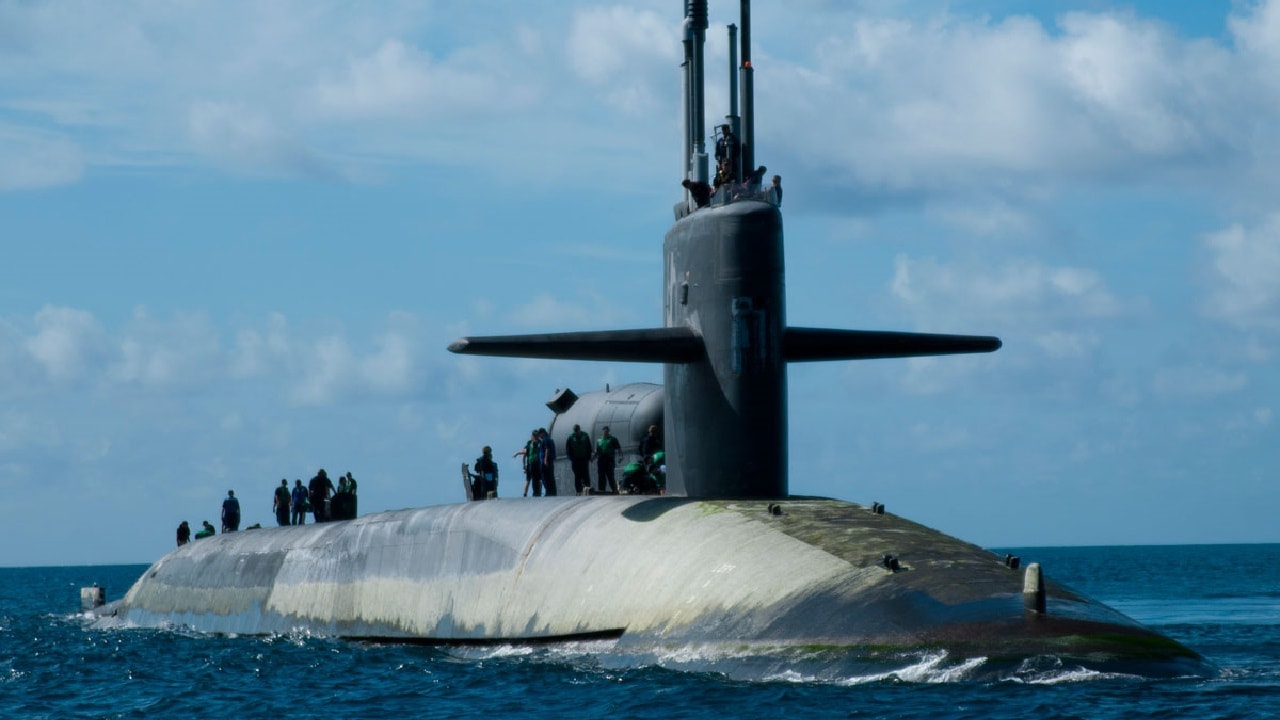
Ohio-class submarine. Image Credit: Creative Commons.
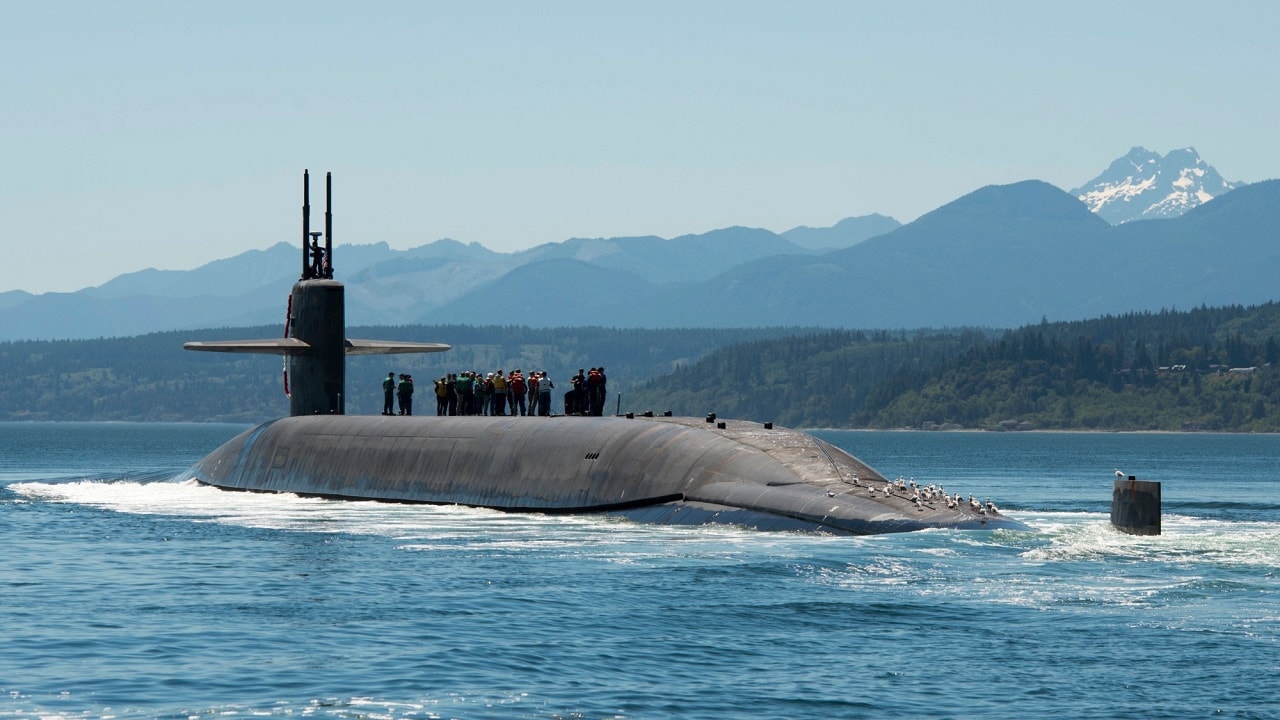
Ohio-class submarine. Image Credit: Creative Commons.

An artist rendering of the future U.S. Navy Columbia-class ballistic missile submarines. The 12 submarines of the Columbia-class will replace the Ohio-class submarines which are reaching their maximum extended service life. It is planned that the construction of USS Columbia (SSBN-826) will begin in in fiscal year 2021, with delivery in fiscal year 2028, and being on patrol in 2031.
Reporting from several years ago underscored the vital role submarines play in the United States’ global force posture.
“Submarines like USS Ohio provide the U.S. Navy with unprecedented strike and special operation mission capabilities from a stealth, clandestine platform, said Rear Adm. Thomas Wall, commander, Submarine Group Nine. More than half of the US Navy’s Submarine Force is based in the Indo-Pacific region due to the area’s strategic importance, and SSGNs work as part of joint and combined operations to maintain the international rules-based order, ensuring the region remains open and free.”
“Restoring Ohio’s operational readiness plays a direct role in our undersea warfighter’s continued ability to achieve peace through strength,” Wall said.
But over the next decade, the US Navy’s Ohio-class submarines will be taken offline in stepped increments.
This will affect both guided-missile submarines, known by their acronym SSGNs, and ballistic-missile submarines, or SSBNs.
For the Ohio-class’s SSGN submarines, four total hulls that were converted from their original ballistic missile configuration to carry cruise missiles and facilitate special operations missions, the US Navy’s current planning calls for all four SSGN submarines to be retired by around 2028.
It should be noted that earlier retirement schedules listed the first two of the submarines, the USS Ohio and the USS Florida, retiring sometime next year, and the other two SSGN Ohio submarines, the USS Michigan and USS Georgia, retiring around 2028. Retirement scheduling may change, however, as the US Navy updates its plans.
For the Ohio-class SSBNs, on the other hand, the submarines’ ballistic-missile submarines that carry nuclear weapons, their retirement timeline is closely related to the submarines that will replace them: the US Navy’s upcoming Columbia-class submarines.
The Navy’s policy planning documents point to the first Ohio SSBN retiring around 2027, at which point the lead sub of the class will be forty-two years old. Following that submarine’s retirement, the remaining SSBN Ohios will be retired annually. The last Ohio-class SSBN is slated for retirement in 2040.
The Ohio-class should be retired initially around 2028 for the SSGN guided-missile submarines and entirely, about 2040, for the Ohio-class SSBN ballistic-missile submarines.
The Ohio-class’s importance to the Department of Defense was vividly illustrated earlier this summer, when an Ohio-class SSGN ballistic-missile submarine launched more than two dozen Tomahawk cruise missiles at targets in Iran, striking Iranian nuclear infrastructure in Isfahan. The strikes, part of Operations Midnight Hammer, paved the way for B-2 Spirit stealth bombers and their fighter escorts to fan out over Iran with impunity, and ultimately dropping 14 GBU-57 Massive Ordnance Penetrators munitions on some of Iran’s most deeply-buried infrastructure.
The mission was technically complex, a challenge that only the United States could have tackled successfully.
And while the role of the bunker-busting bombs, or the B-2 stealth aircraft that delivered the munitions, takes much of the limelight, the Ohio-class SSGN that fired Tomahawks deserves some recognition too. Equally important, however, is the looming retirement of the Ohio-class.
The United States Navy is not replacing the Ohio-class SSGNs with a purpose-built guided-missile submarine.
Instead, the Navy is relying on a combination of strategies, including extending the operational life of some Ohio-class submarines and increasing missile capacity on the upcoming Block V Virginia-class attack submarines to take on conventional strike missions. However, in the immediate aftermath of the Ohio-class SSGN retirement (the USS Ohio, Michigan, Florida, and Georgia), the Navy does face a firepower gap.
Block V Virginia-class submarines include an extra section within their hull, the Virginia Payload Module, that accommodates four large vertical launch tubes, affording those submarines the ability to carry 28 additional Tomahawk cruise missiles, for a total of 40 per submarine.
The Navy is also making an effort to accelerate the production of VPM-equipped Virginia-class submarines to partially offset the loss of firepower caused by the Virginia-class’ SSGN retirement.
About the Author: Caleb Larson
Caleb Larson is an American multiformat journalist based in Berlin, Germany. His work covers the intersection of conflict and society, focusing on American foreign policy and European security. He has reported from Germany, Russia, and the United States. Most recently, he covered the war in Ukraine, reporting extensively on the war’s shifting battle lines from Donbas and writing on the war’s civilian and humanitarian toll. Previously, he worked as a Defense Reporter for POLITICO Europe. You can follow his latest work on X.