
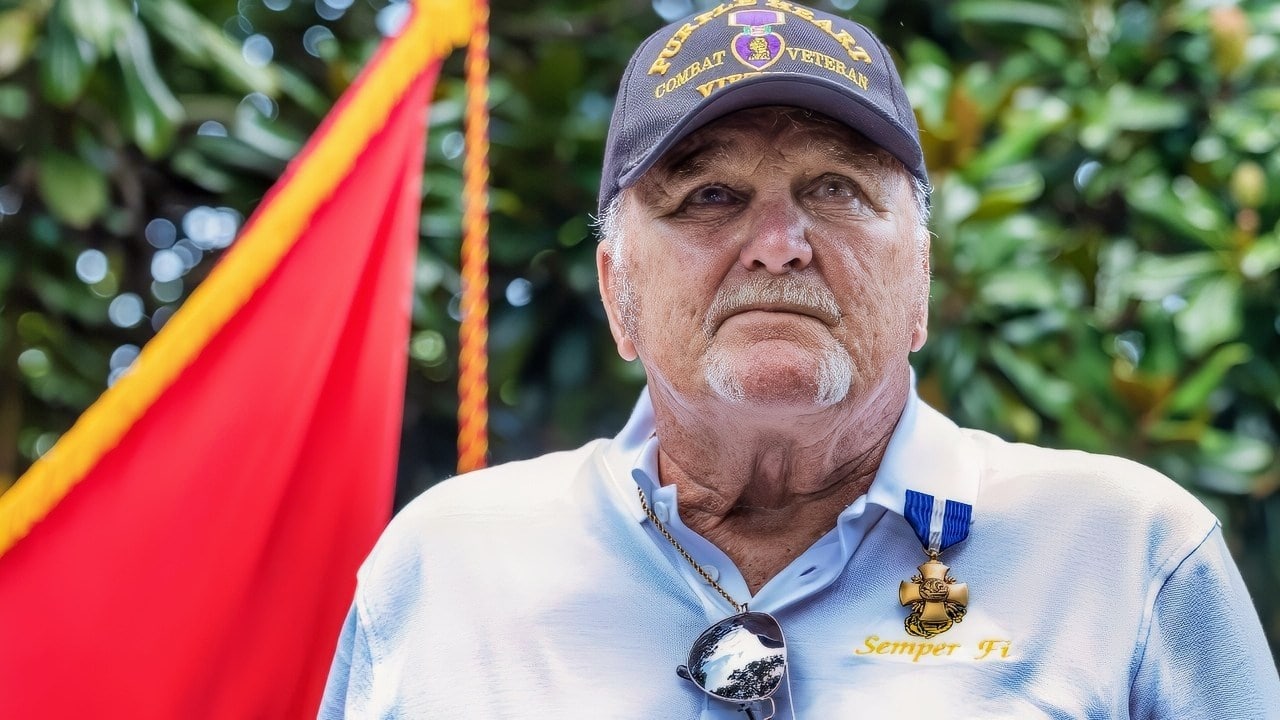
Key Points and Summary – This piece explains how the Navy Cross—second only to the Medal of Honor—is actually earned and why it is reserved for extraordinary heroism in combat.
-Tracing its origins in World War I, it shows how the criteria tightened over time, then profiles trailblazers like Chief Nurse Lenah Higbee and Pearl Harbor hero Dorie Miller.
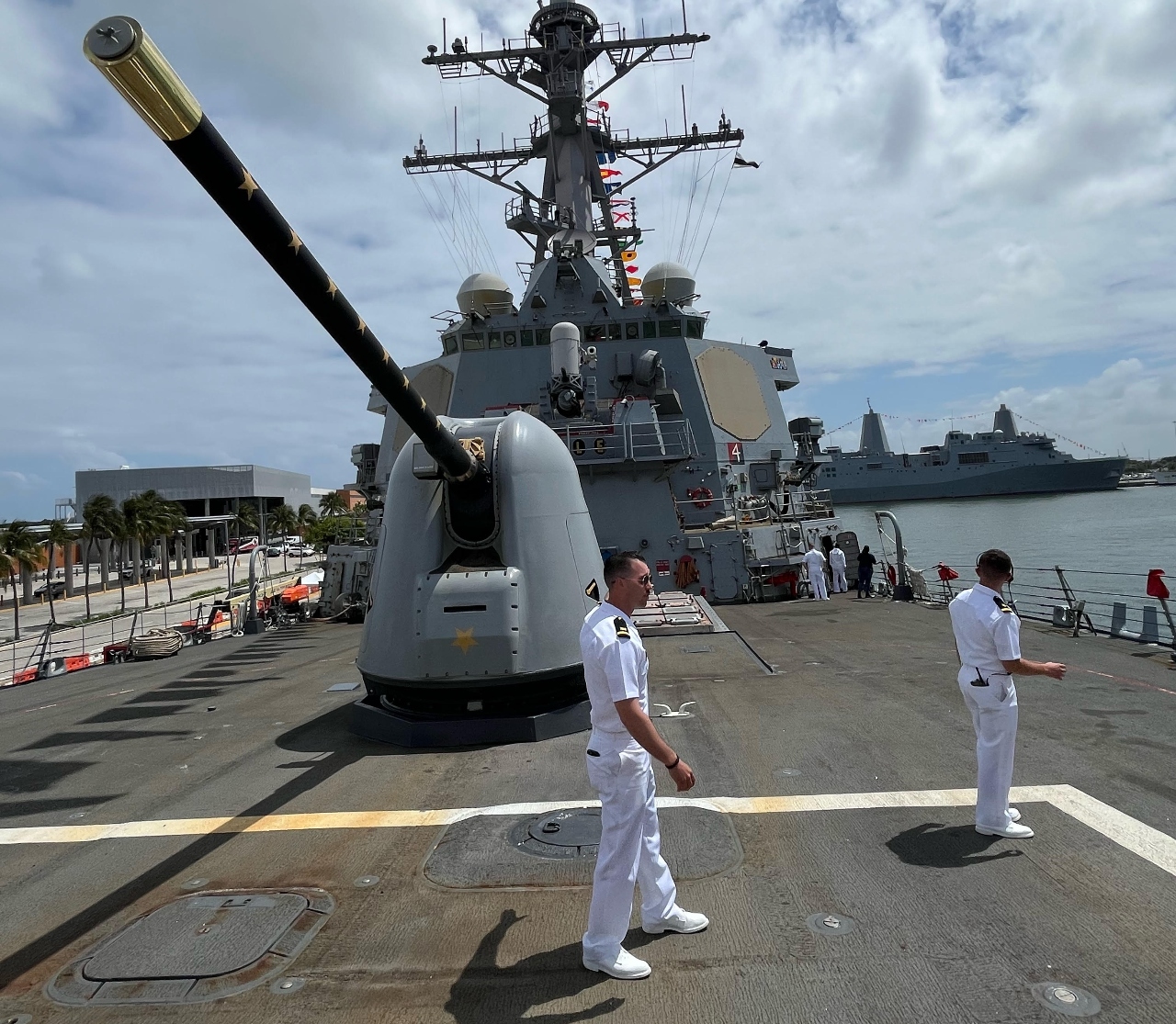
5-Inch Gun from U.S. Navy Warship. Image Credit: Creative Commons.
-It also spotlights legends such as “Chesty” Puller and battleship commanders Willis Lee and Jesse Oldendorf, showing how a small, elite group of Sailors and Marines have met its demanding standard in America’s toughest wars.
-Together, these stories reveal what separates routine bravery from the rare valor that merits the Navy Cross.
How Does One Win the Navy Cross?
The Navy Cross is the second-highest military decoration awarded to U.S. Navy sailors and Marines who distinguish themselves for extraordinary heroism in combat with an armed enemy force. (The highest award for military heroism is the Medal of Honor, which is not a service-specific decoration.)
It is equivalent to the Army’s Distinguished Service Cross, the Air and Space Forces’ Air Force Cross, and the Coast Guard’s Coast Guard Cross.
Navy Cross Initial History and Criteria
As noted by Navy History and Heritage Command, “The Navy Cross was established by an act of Congress (Public Law 253) on 4 February 1919 ‘to any person who, while in the naval service of the United States, since the sixth day of April, nineteen hundred and seventeen, has distinguished, or who shall hereafter distinguish, himself by extraordinary heroism or distinguished service in the line of his profession, such heroism or service not being sufficient to justify the award of a medal of honor or a distinguished service medal.’”
America’s entry into World War I was a major catalyst for the creation of the Navy Cross, and accordingly, it was made retroactive to April 6, 1917.
On Aug. 7, 1942, Congress added a stipulation limiting the Navy Cross to combat-only recognition and elevated its status to just below the Medal of Honor.
As result, the criteria for receiving it are as follows: The act in question must occur while engaged in action against an enemy of the United States; while engaged in military operations involving conflict with an opposing foreign force; or, while serving with friendly foreign forces engaged in an armed conflict in which the United States is not a belligerent party.
In addition, the act to be commended must be performed in the presence of great danger or at great personal risk and in such a manner as to render the individual highly conspicuous among others of equal grade, rate, experience, or position of responsibility.
In other words, an accumulation of minor acts of heroism does not qualify for an awarding of the Navy Cross.
Some Navy Cross Firsts
-First Woman to Receive the Navy Cross: Chief Nurse Lenah H. Sutcliffe Higbee. She was a part of the “sacred 20,” the first 20 women to formally serve as active members of the Navy. She joined the service in 1908 and was promoted to chief nurse the following year. In January 1911, Chief Higbee became the second superintendent of the Navy Nurse Corps. She held that post throughout World War I and thus was awarded the Navy Cross for “distinguished service in the line of her profession and unusual and conspicuous devotion to duty.”
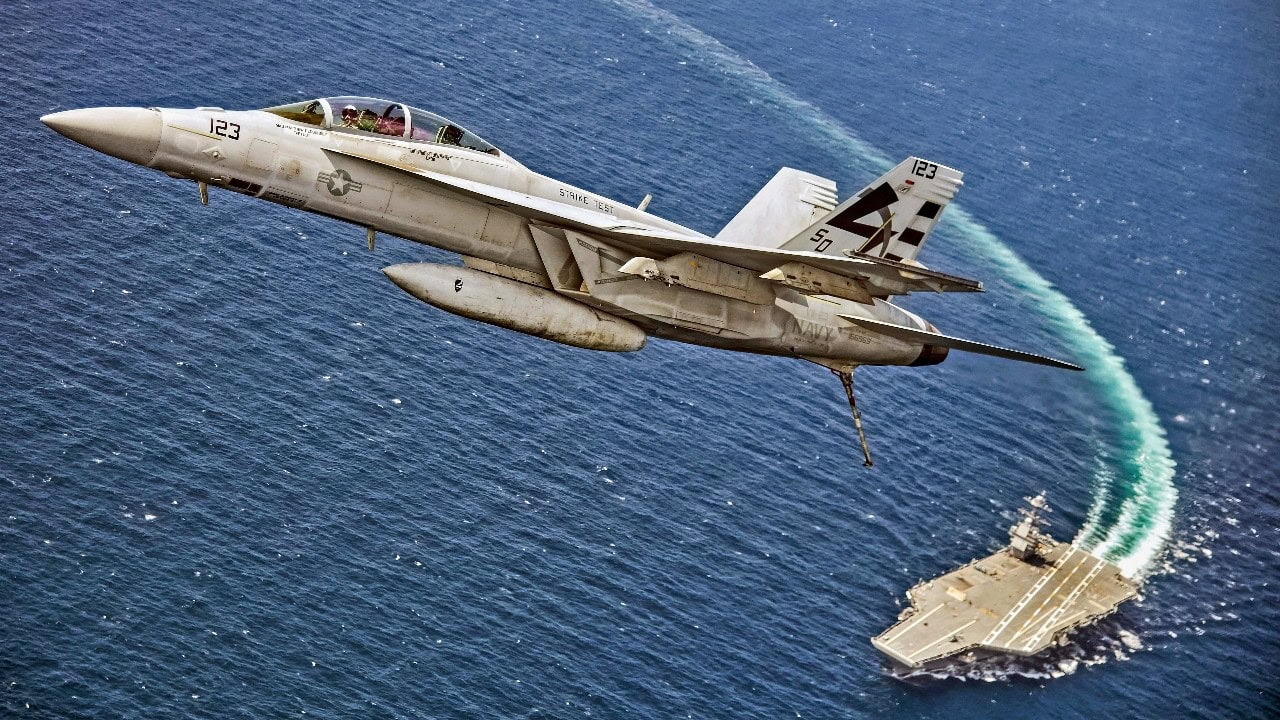
Super Hornet Navy Fighter. Image Credit: Creative Commons.
Higbee had two Navy vessels named in her honor: the Gearing-class destroyer USS Higbee (DD-806), commissioned in 1945, which the first Navy warship to bear the name of one of its female members; and the Arleigh Burke-class guided-missile destroyer USS Lenah H. Sutcliffe Higbee (DDG-123), commissioned in 2023.
-First African-American to Receive the Navy Cross: Mess Attendant 2nd Class Doris “Dorie” Miller. During the Imperial Japanese Army’s raid on Pearl Harbor on December 7, 1941, Miller was serving aboard the battleship USS West Virginia (BB-48), and helped carry wounded sailors to safety during the attack on Pearl Harbor.
From there, Dorie manned an anti-aircraft gun and, despite no prior training in gunnery, officially shot down at least one enemy plane (according to Navy Department records), and quite possibly four to six.
Dorie Miller was immortalized for moviegoing audiences via his portrayal by Cuba Gooding Jr. in the 2001 blockbuster film Pearl Harbor. Like Chief Nurse Higbee, two Navy warships were named in his honor: the Knox-class destroyer escort USS Miller (DE/FF-1091) and the future Gerald R. Ford-class aircraft carrier USS Doris Miller (CVN-81).
Other Noteworthy Navy Cross Recipients
Five-Timers: Rear Admiral Roy Milton Davenport and Lieutenant General Lewis Burwell “Chesty” Puller have been awarded a record five Navy Crosses each. The fact that Chesty Puller never received the Medal of Honor remains a matter of some controversy, as he is the most beloved Marine Corps officer of all time. (Ask any Marine about the significance of “Good night, Chesty, wherever you are!”)
Medal of Honor for Good Measure: Speaking of the Medal of Honor, 24 American military heroes have received both the Medal of Honor and the Navy Cross. Indeed, Lieutenant Commander John McCloy and Sergeant Major Dan Daly stand out for receiving two Metals of Honor and the Navy Cross.
-Battleship Bosses: Vice Admiral Willis A. “Ching” Lee Jr. and Admiral Jesse Barrett “Oley” Oldendorf both earned their Navy Crosses as WWII battleship commanders.
During the Second Battle of Guadalcanal on Nov. 14-15, 1942, Lee’s flagship, the North Carolina-class battleship USS Washington (BB-56), scored the only one-on-one battleship kill of World War II by sinking the Japanese battleship Kirishima.
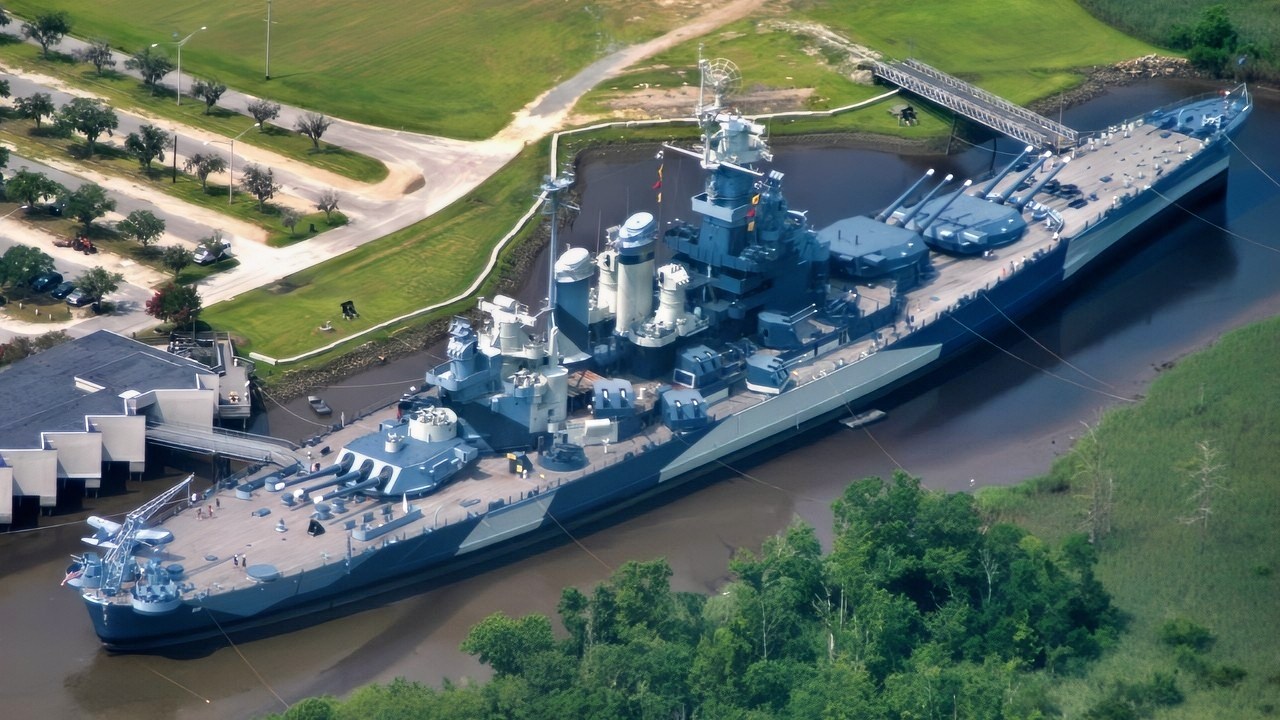
USS North Carolina Battleship. Image Credit: Creative Commons.
Not to be outdone, “Oley” Oldendorf was the U.S. commander during history’s last battleship vs. battleship engagement, the Battle of Surigao Strait phase of the Battle of Leyte Gulf on Oct. 25, 1944.
Oldndorf’s battleship fleet “crossed the T” of the fleet commanded by his Imperial Japanese Navy adversary, Vice Admiral Shōji Nishimura, sinking the IJN Fusō-class battleship Yamashiro and the heavy cruiser Mogami.
To add an element of sweet revenge, five of Admiral Oldendorf’s six battleships employed in the engagement had been sunk or damaged during the Pearl Harbor raid and subsequently raised or rebuilt, including the aforementioned West Virginia.
About the Author: Christian D. Orr, Defense Expert
Christian D. Orr is a Senior Defense Editor. He is a former Air Force Security Forces officer, Federal law enforcement officer, and private military contractor (with assignments worked in Iraq, the United Arab Emirates, Kosovo, Japan, Germany, and the Pentagon). Chris holds a B.A. in International Relations from the University of Southern California (USC) and an M.A. in Intelligence Studies (concentration in Terrorism Studies) from American Military University (AMU). He is also the author of the newly published book “Five Decades of a Fabulous Firearm: Celebrating the 50th Anniversary of the Beretta 92 Pistol Series.”