
U.S. Marine Corps FY2027 Reenlistment Bonuses: Some Retraining Deals Top $60,000
The U.S. Marine Corps is offering substantial reenlistment incentives – in some cases exceeding $60,000 – to enlisted Marines who agree to retrain into selected high-demand career fields under the fiscal year 2027 retention bonus program.
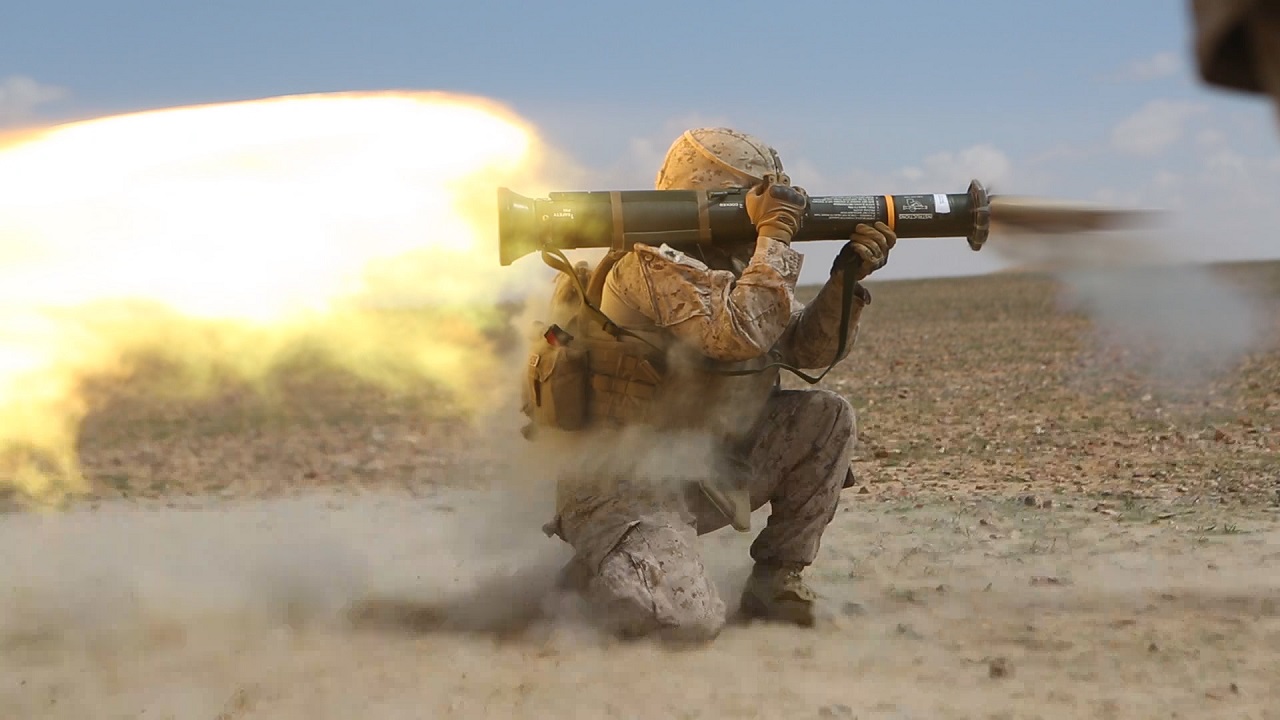
A Marine with Company G, 2nd Battalion, 7th Marine Regiment, Special Purpose Marine Air Ground Task Force – Crisis Response – Central Command, fires an AT4 antitank rocket launcher in the Central Command area of operations, March 23, 2015. The 2/7 Marines participated in a range that tests their ability to conduct an integrated combined arms assault against a simulated enemy position. (U.S. Marine Corps photo by Cpl. Will Perkins/Released)
The incentive is part of a service-wide push to retain talent and encourage experienced Marines to remain in service by moving into critical specialties like cyber operations, intelligence, influence operations, and unmanned aircraft support.
The bonuses are structured through what’s known as the “Selective Retention Bonus” (SRB) and related “kicker” programs, which combine traditional reenlistment pay with extra payments tied to lateral moves, whereby a service member moves from one Military Occupational Specialty (MOS) into another. Marines who reenlist in their current MOS may also qualify for smaller bonuses.
Officials say that the incentives are not designed to shrink the number of soldiers in traditional warfighting roles, like infantry, but to build depth in other MOSs that have fewer people and are becoming increasingly important. Speaking about the news, Maj. Jacoby Getty, a representative of the Marine Corps Manpower and Reserve Affairs, said that there are jobs the Marine Corps is “definitely trying to expand.”
“Those MOSes that are getting these bonuses, those are the low-density, highly critical demanding ones,” Getty added.
What the FY2027 Retention Bonus System Covers
The Marine Corps announced the FY2027 incentives through an administrative message outlining the details of the Selective Retention Bonus Program. In it, service members were informed that Marines whose current enlistment contracts expire between October 1, 2026, nd September 30, 2027, would be eligible for the bonus.
The SRB system was not only designed to provide lateral opportunities for individuals already serving, but to prevent experienced enlisted personnel from retiring. It includes standard reenlistment bonuses and additional payments tied to specific MOS transitions or career paths.
According to the announcement, Marines will be eligible for the payment only if they reenlist after the message is published.
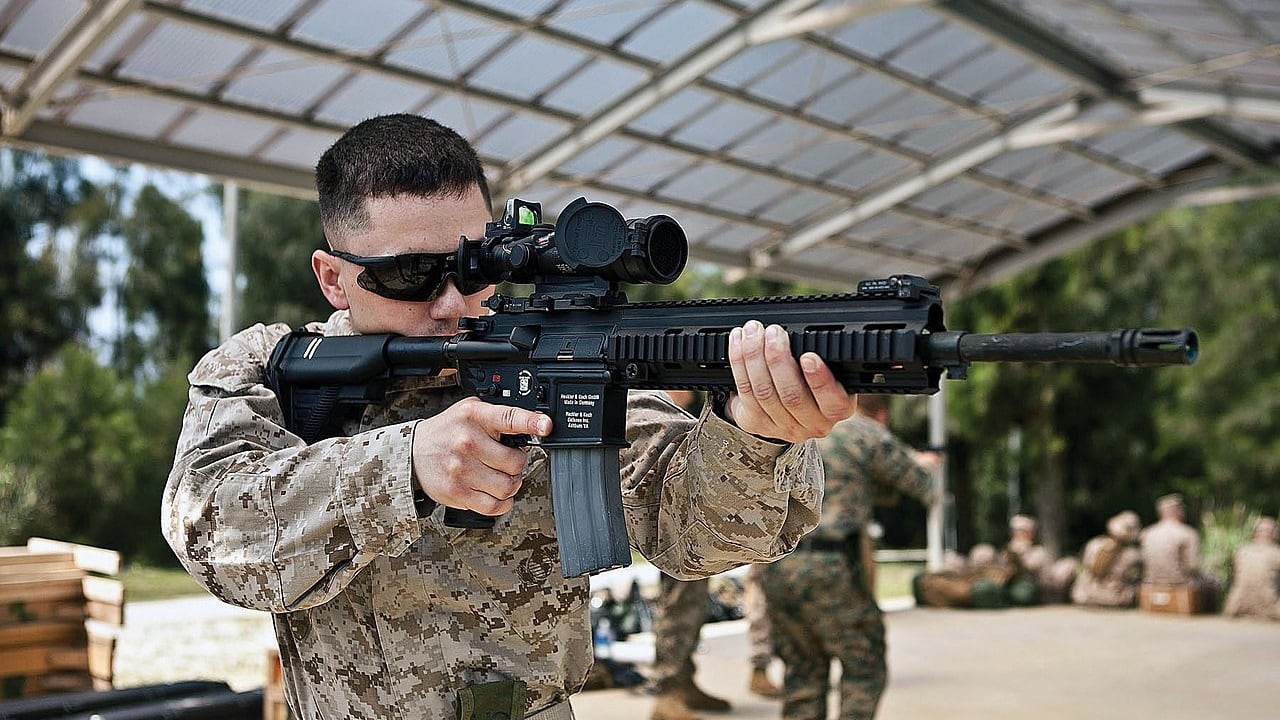
CAMP HANSEN — Lance Cpl. Zachary A. Whitman, a shooter with the III Marine Expeditionary Force detachment, familiarizes himself with the M27 Infantry Automatic Rifle in preparation for the Australian Army Skill at Arms Meeting 2012. AASAM is a multilateral, multinational event allowing Marines to exchange skills tactics, techniques and procedures with members of the Australian Army as well as other international militaries in friendly competition. (U.S. Marine Corps photo by Sgt. Brandon L. Saunders/released)
“Retaining our most experienced and qualified Marines remain one of the service’s highest priorities,” the official statement reads. “Retention goals are vital for shaping and sustaining the Marine Corps’ enlisted force. It is imperative the Marine Corps builds upon past successes and continues to prioritize retaining the best and most talented Marines.”
Up to $60,000 for Retraining
Though the official announcement largely describes bonus figures in the $50,000 range, there are circumstances in which Marines could be eligible for $60,000 or more by combining retraining incentives with other MOS bonus entitlements.
The size of individual bonuses depends largely on the area into which Marines move.
Service members can expect to receive the largest bonuses for moving into specialist fields, including becoming cyberspace warfare operators, counterintelligence and human intelligence specialists, influence operations specialists, unmanned aircraft technicians, and drone support experts.
The above fields are prioritized because they are considered “low-density,” meaning that fewer Marines currently occupy them, and because they are vital to emerging operational needs. As warfare changes, so too do the demands on Marines and other service members.
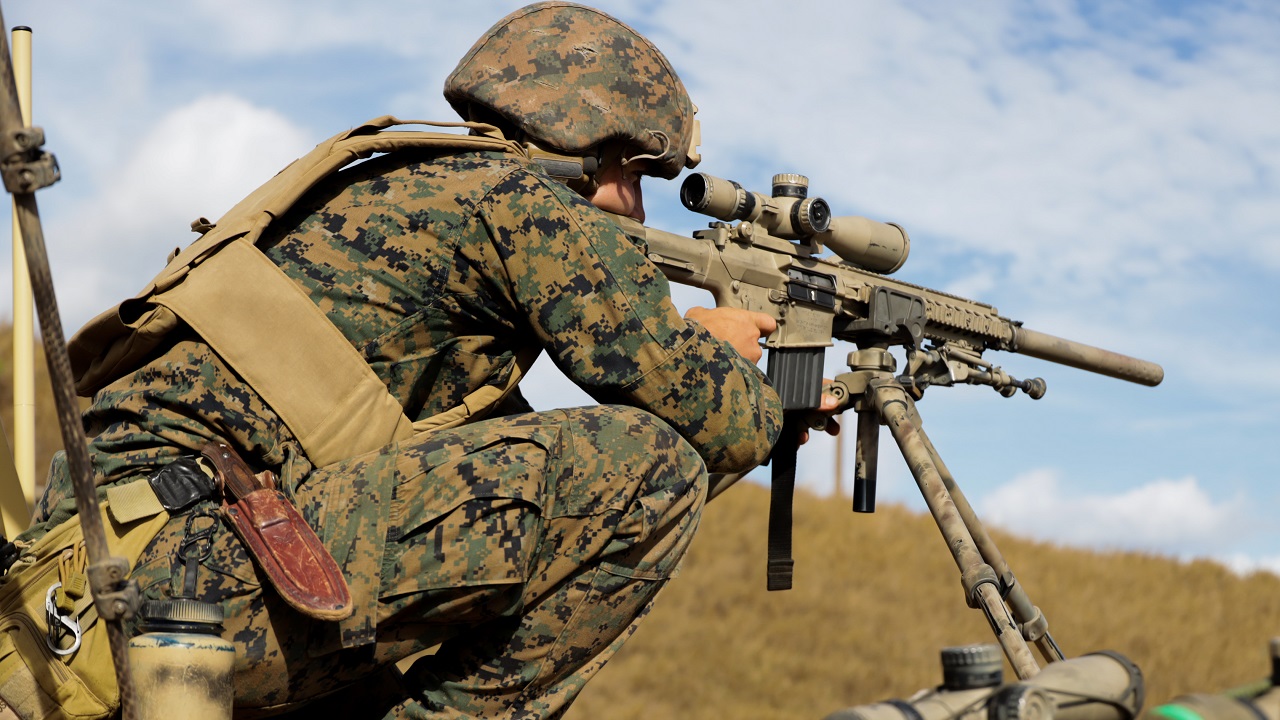
MARINE CORPS BASE HAWAII, Hawaii (July 6, 2022) U.S. Marine Corps Pfc. Darrel Ebaugh, a scout sniper with Weapons Company, Battalion Land Team, 3d Battalion, 4th Marine Regiment, Marine Air-Ground Task Force 7 (MAGFT-7), sights in on a target during a live-fire sniper range in support of Rim of the Pacific (RIMPAC) 2022, on Marine Corps Base Hawaii, July 6, 2022. Twenty-six nations, 38 ships, four submarines, more than 170 aircraft and 25,000 personnel are participating in RIMPAC from June 29 to Aug. 4 in and around the Hawaiian Islands and Southern California. The world’s largest international maritime exercise, RIMPAC provides a unique training opportunity while fostering and sustaining cooperative relationship among participants critical to ensuring the safety of sea lanes and security on the world’s oceans. RIMPAC 2022 is the 28th exercise in the series that began in 1971. (U.S. Marine Corps photo by Lance Cpl. Brayden Daniel)
Reports indicate that Marines retraining as influence operations specialists are most likely to receive the highest bonuses, likely exceeding $60,000, depending on rank and length of service.
Payments are not received immediately upon signing paperwork; Marines only receive the bonus after completing the required MOS training. If a Marine fails to complete the new MOS training, they can be redesignated or separated and receive no bonus, even if the new MOS itself is eligible for a bonus.
Reenlistment Kickers for Current Jobs
For Marines who choose to remain in their current MOS rather than retrain into a new specialty, there are still some retention incentives known as “kickers.”
Under the FY2027 program, kicker amounts vary by MOS and reenlistment term. Aircraft maintenance and related technical fields offer kickers of up to $15,000, aircraft readiness specialists up to $24,000, and fleet Marine Force infantry reenlistments are eligible for $7,000 for a two-year extension or $30,000 for a three-year extension. Additionally, air traffic control Marines may receive up to $40,000.
Those kickers are added on top of the base SRB payment tied to the participant’s existing MOS, if applicable. Martines can only receive one bonus option per fiscal year, however, even if they qualify for multiple incentives.
Marines are also limited to a total of $360,000 in retention bonuses over their entire career.
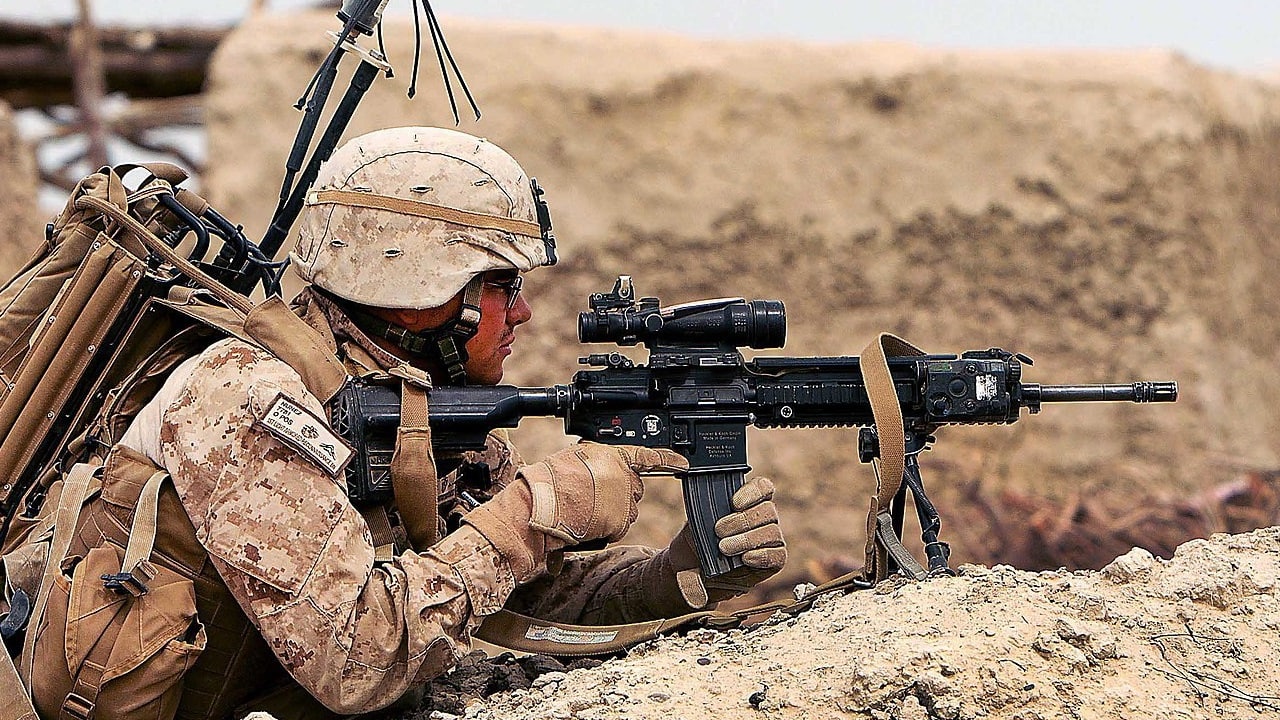
120322-M-PH863-005 U.S. Marine Corps Lance Cpl. Leobardo Nunez provides security during a census patrol through a village near Khan Neshin, Afghanistan, on March 22, 2012. Nunez is an infantry automatic rifleman assigned to Alpha Company, 1st Light Armored Reconnaissance Battalion. DoD photo by Cpl. Alfred V. Lopez, U.S. Air Force. (Released)
Critical Gaps Persist Despite Retention Successes
Despite the news that the Marine Corps hit its fiscal 2026 retention goal, some critical gaps persist.
According to a Marine Corps administration message closing the FY 2026 retention bonus program, leaders confirmed that the service had met its retention goals in September 2025, allowing the FY 2026 Selective Retention Bonus and Broken Service SRB programs to be closed before the start of the next fiscal year.
It was a breakthrough for the service, having met its goals “earlier than ever before,” achieving the benchmarks within the first few weeks after the fiscal year began on October 1, 2025.
Despite recent successes, however, leaders also acknowledge that a handful of critical MOSs remained open, particularly in specialties with high technical demand – the same fields that are now being targeted by the new lateral-move bonuses.
About the Author:
Jack Buckby is a British researcher and analyst specialising in defence and national security, based in New York. His work focuses on military capability, procurement, and strategic competition, producing and editing analysis for policy and defence audiences. He brings extensive editorial experience, with a career output spanning over 1,000 articles at 19FortyFive and National Security Journal, and has previously authored books and papers on extremism and deradicalisation.