
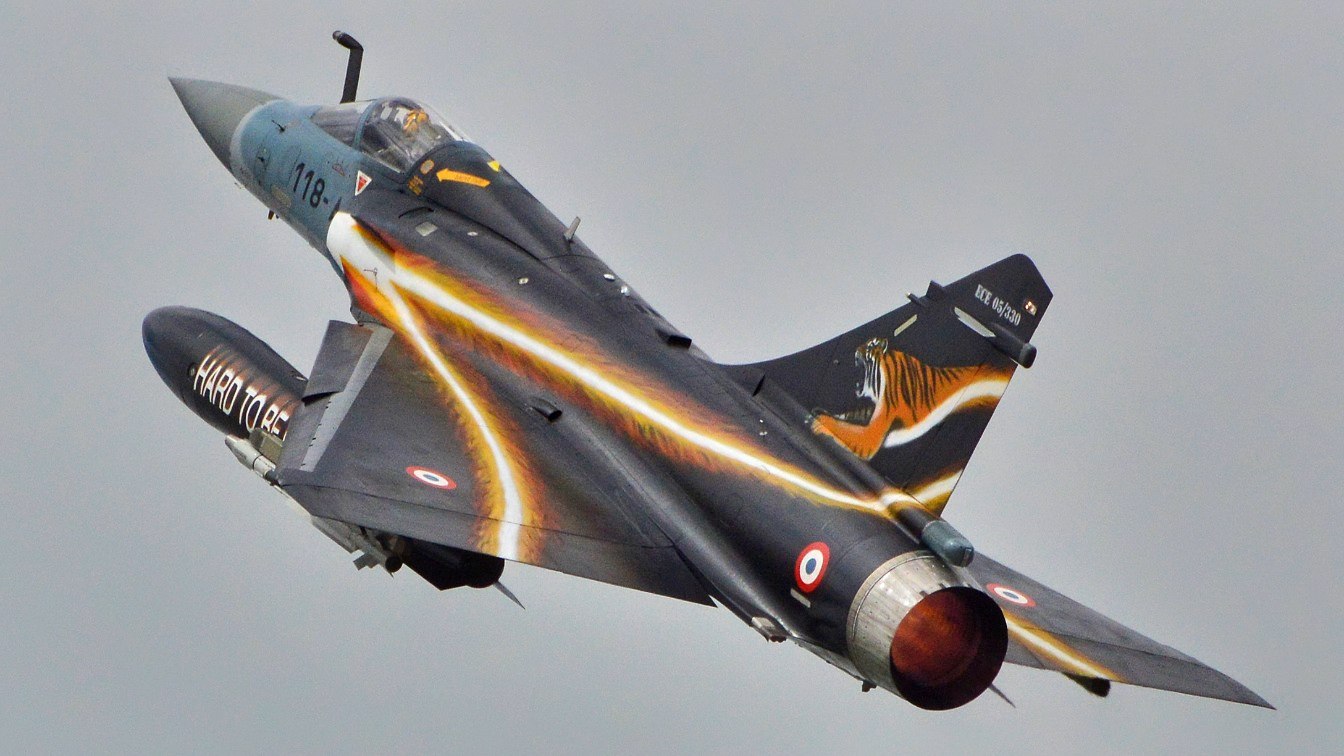
Summary and Key Points: Ukraine is sharpening the air-defense role of French-supplied Mirage 2000-5 fighters by pairing them with MICA missiles for medium-range intercepts.
-Photos indicate that at least one jet now carries MICA, moving beyond earlier Magic 2-only loads. With radar-guided and infrared variants, MICA’s roughly 60–80 kilometer reach lets pilots engage cruise missiles and drones earlier, easing pressure on ground-based interceptors and short-range defenses.
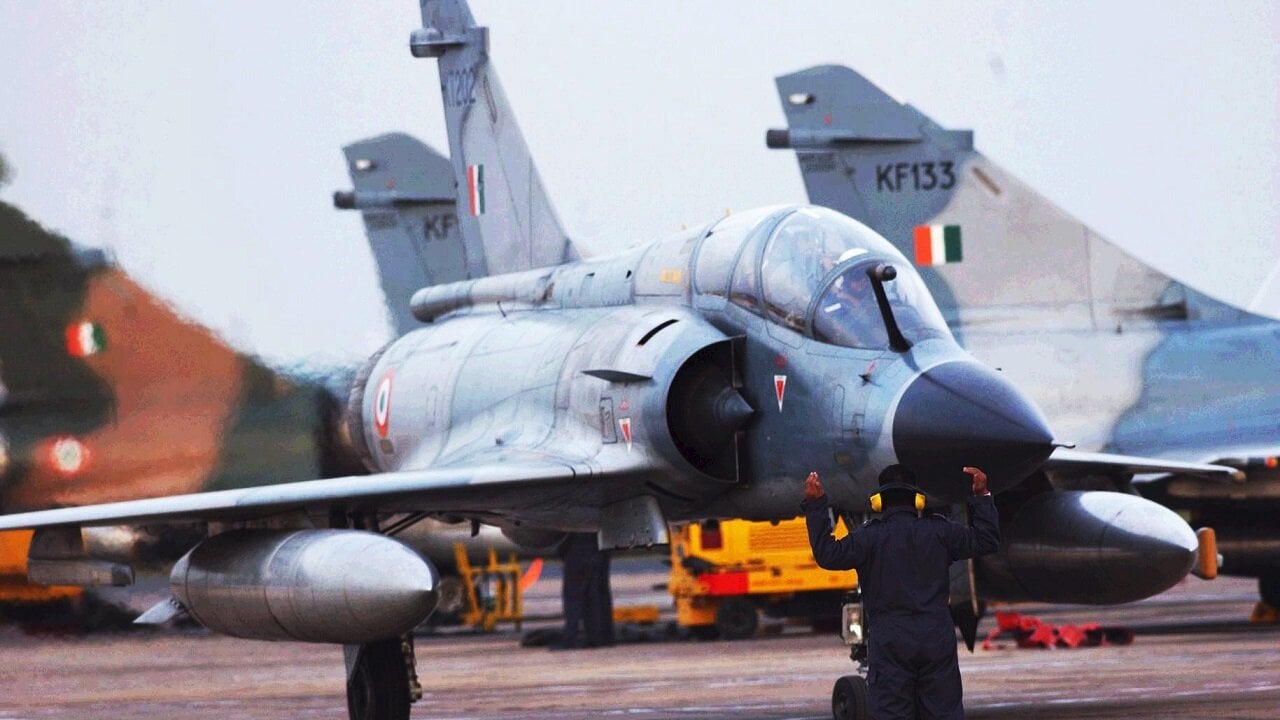
Mirage 2000. Image Credit: Creative Commons.
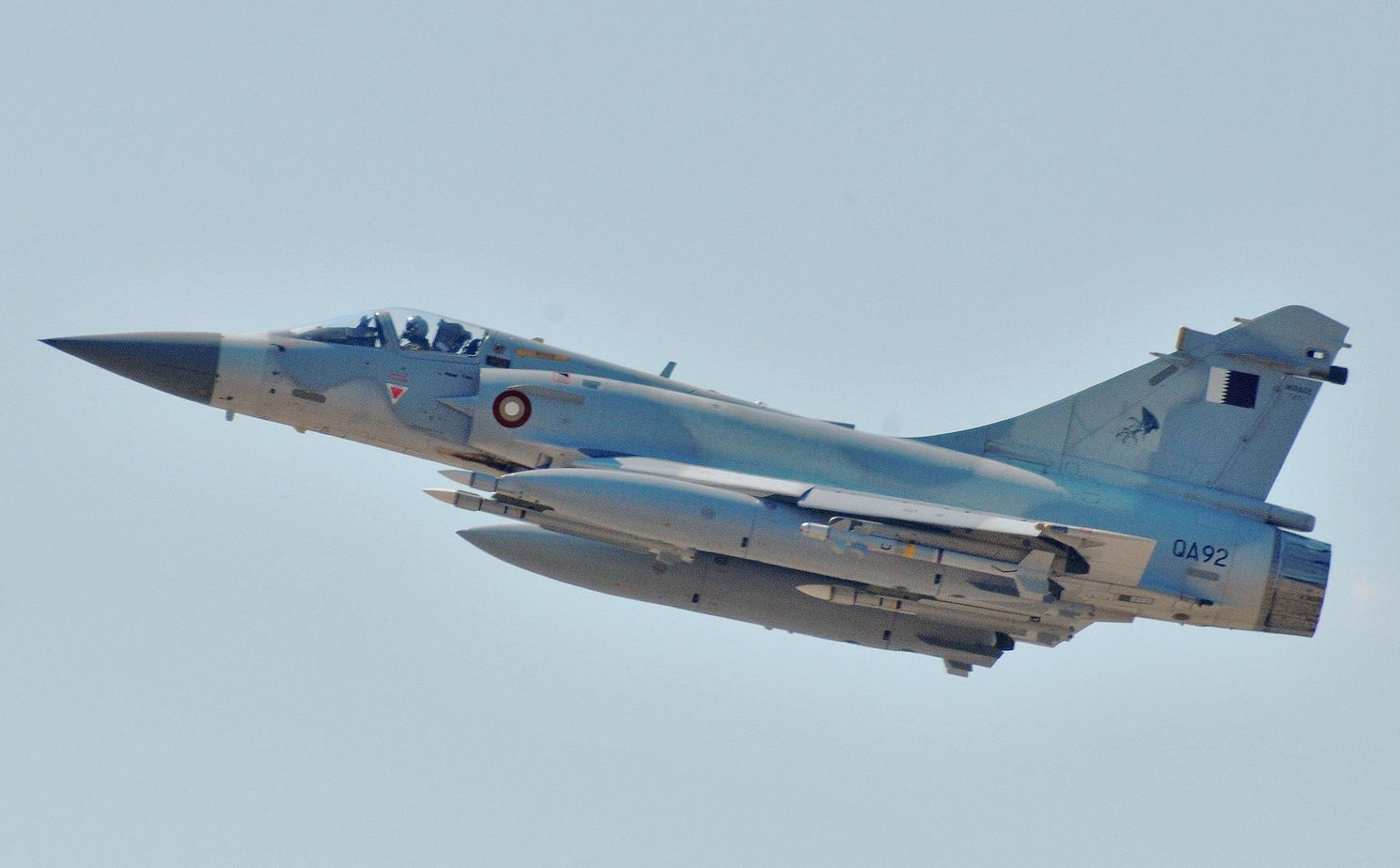
Mirage 2000-5.
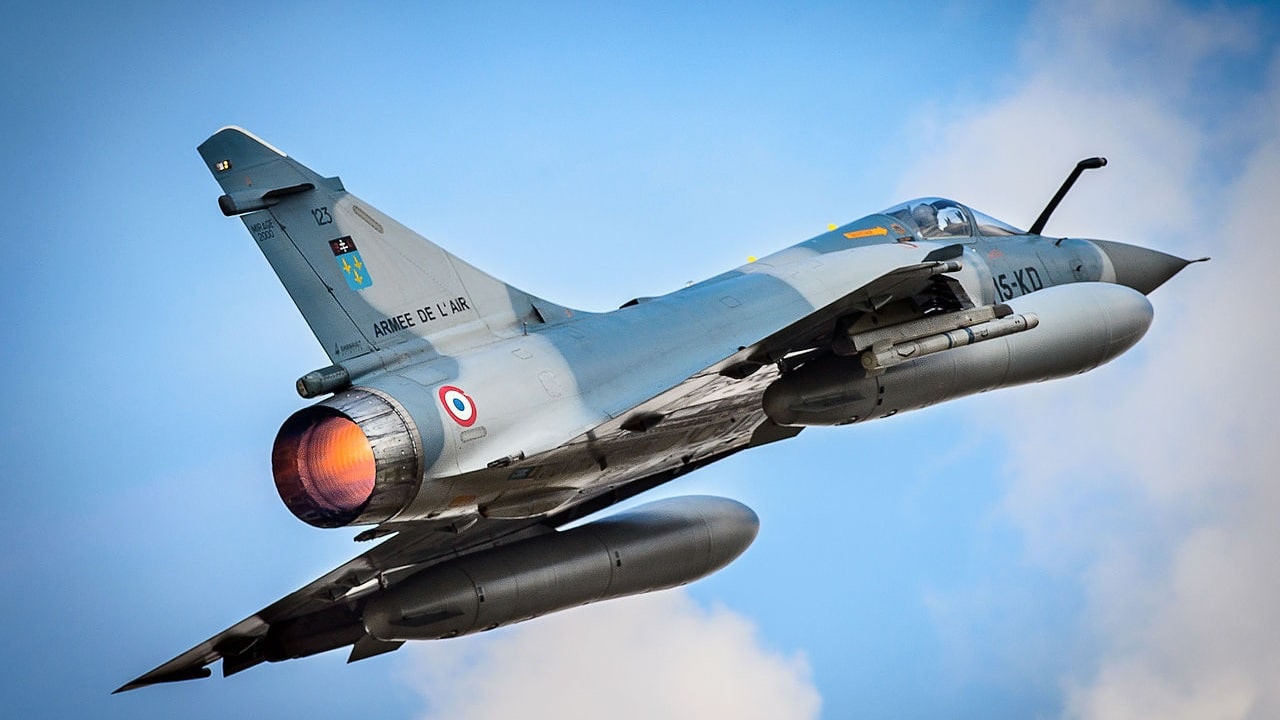
French Air Force Dassault Mirage 2000C take off from RAF Brize Norton.
-The shift fits into a broader effort to stretch air-defense stocks as Russia mixes massed drones with ballistic and cruise strikes, while partners refine systems like NASAMS and mobile launchers, and give Kyiv a new airborne layer over cities.
Ukraine’s Mirage 2000 Fighters Take On New Air Defense Role
Ukraine’s fleet of French-supplied Dassault Mirage 2000-5 fighters has recently been photographed and reported to be in operational service alongside the French medium-range MICA air-to-air missile, marking the first confirmed instance of the jets employing beyond-short-range weaponry in the ongoing conflict.
Previously, Ukrainian Mirages had been publicly documented to be in use with legacy Matra Magic 2 infrared missiles, which are limited in range and engagement capabilities. The MICA missile family, available in radar-guided and infrared variants, extends engagement range to roughly 60-80 kilometers depending on variant and launch parameters, and is designed to intercept a range of aerial threats, including cruise missiles and unmanned systems.
The news that the fleet is now equipped with better equipment means Ukraine’s Mirages can now perform medium-range intercepts that were previously impractical to achieve, thereby reducing reliance on shorter-range systems or on surface-to-air missiles. It also reflects the culmination of commitments made by France during the 2025 transfer of the fighter jets, which included pilot training and integration planning for Western-supplied weapons.
That change has practical implications for how Ukraine is now using these aircraft, particularly in missions focused on intercepting missiles and drones rather than traditional air-to-air combat.
Ukraine Grows Its Interception Capability
The integration of MICA missiles onto Ukrainian Mirage 2000-5 fighters represents a marked change in the aircraft’s interception capabilities. Earlier in the conflict, publicly available imagery and reports consistently showed Mirages equipped with Matra R550 Magic 2 short-range infrared missiles, a legacy weapon optimized for close dogfight engagements and more effective against slower, lower-altitude targets. Those missiles offer limited beyond-visual-range capability and require the launching aircraft to close in on the target, constraining its engagement options and increasing risk to the platform.
The MICA family, which is already in use by multiple Western air forces, provides much more: it brings both radar-guided and infrared guidance options and is a medium-range missile, meaning aircraft that use it can engage aerial threats at distances beyond visual range.
The radar-guided MICA EM variant, for example, includes an active seeker and fire-and-forget capability, allowing a pilot to launch the weapon and allow it to track its own target. That capability is particularly significant when confronting targets like Russian cruise missiles, which can approach at high subsonic speeds on predictable trajectories, as well as drones that can be used in saturation attacks.
Imagery released by Ukrainian sources confirms that at least one Mirage 2000-5F carrying a MICA missile is currently in service, effectively extending the aircraft’s interception range beyond what was possible with Magic 2 alone, allowing the engagement of threats before they reach the densest layer of ground-based air defense systems.
Why the New Capability Matters
The appearance of MICA-armed Mirage fighters in Ukraine comes as Russia intensifies air operations that combine the use of missiles alongside large numbers of unmanned aerial vehicles.
On January 13, reports described how Russia launched a major drone and missile bombardment of Ukraine over four days, targeting the power grid with almost 300 drones, 18 ballistic missiles, and seven cruise missiles across eight regions overnight. The attacks caused power outages and civilian casualties.
Additionally, Russia’s use of advanced systems like the hypersonic Oreshnik missile near Ukraine’s western border reveals the extent to which the threat environment has changed and is continuing to change.
Under these conditions, the capability to engage threats at medium range from fighter platforms serves a functional, and now crucial, purpose.
It allows Ukraine to address high-value aerial threats earlier in their flight paths, thereby reducing the burden on both ground-based missile defense systems and short-range interceptors. The integration of a missile with radar guidance and extended reach means pilots now have the option to move from reactive interception to addressing threats far earlier than they can at present.
That capability does not, however, negate the challenges Ukraine faces on its own – but it does allow Ukraine to better defend itself while it bolsters its air defense systems. Modern Western surface-to-air missile systems, electronic warfare assets, and integrated radar networks remain the backbone of Ukraine’s defense, and fighters comprise just one layer of it.
The timing of this new capability’s arrival matters. Just days after Russia’s recent heavy assaults, Ukraine is adapting other parts of its air defenses to relieve pressure on costly surface-to-air interceptors.
Norway is moving to integrate Ukrainian-made interceptor missiles into its NASAMS air defense batteries to boost supply and reduce per-missile costs, a decision that was announced by Norwegian officials on January 12.
At the same time, Ukrainian forces are employing novel systems like the U.S.-made mobile launcher known as “Tempest,” which Ukrainian Air Command says has shot down at least 21 Russian Shahed drones so far.
Ukraine’s air defenses are, then, being reconfigured on the ground and in the air, allowing its forces to better intercept drones, missiles, and low-altitude threats.
About the Author: Jack Buckby
Jack Buckby is a British researcher and analyst specialising in defence and national security, based in New York. His work focuses on military capability, procurement, and strategic competition, producing and editing analysis for policy and defence audiences. He brings extensive editorial experience, with a career output spanning over 1,000 articles at 19FortyFive and National Security Journal, and has previously authored books and papers on extremism and deradicalisation.