
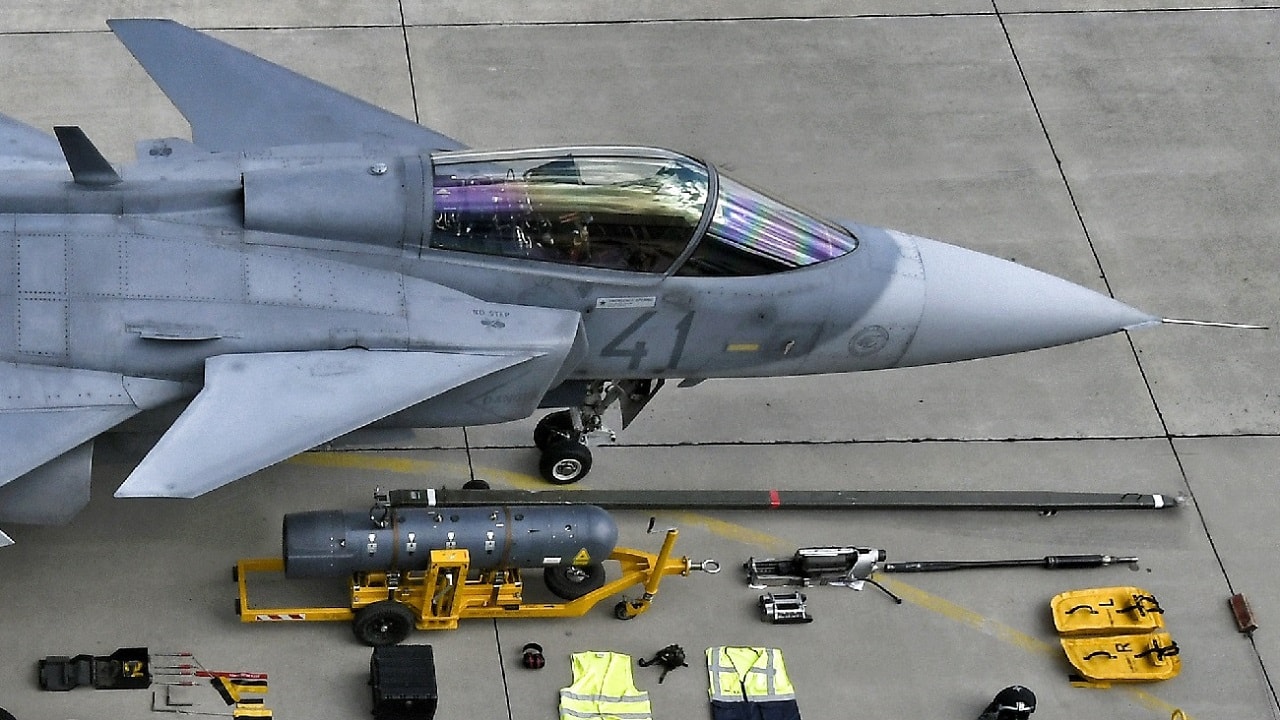
Synopsis: As of February 2026, Canada is weighing a high-stakes pivot toward a “mixed fleet” of F-35 Lightning IIs and Saab JAS 39 Gripen Es.
-While 16 F-35As have already been purchased, Prime Minister Mark Carney’s ongoing review of the remaining 72 aircraft highlights a shift toward European defense ties amid trade tensions with Washington.
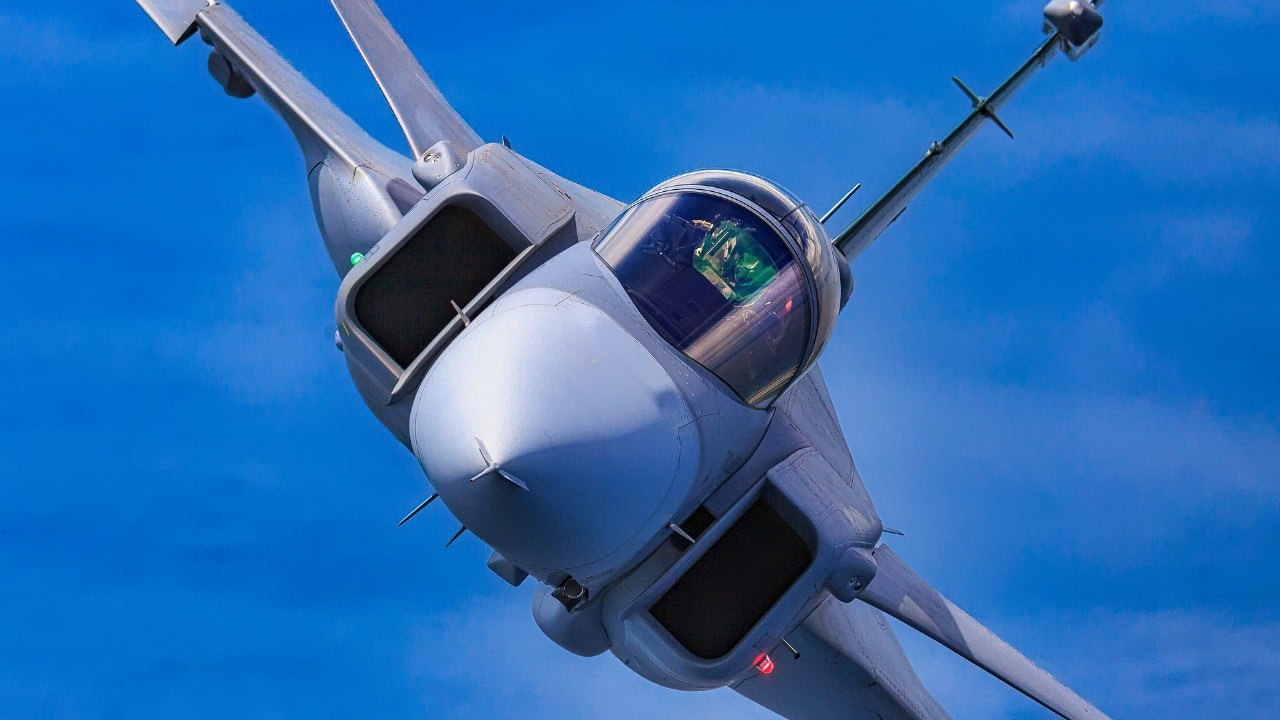
JAS 39 Gripen. Image Credit: Creative Commons.
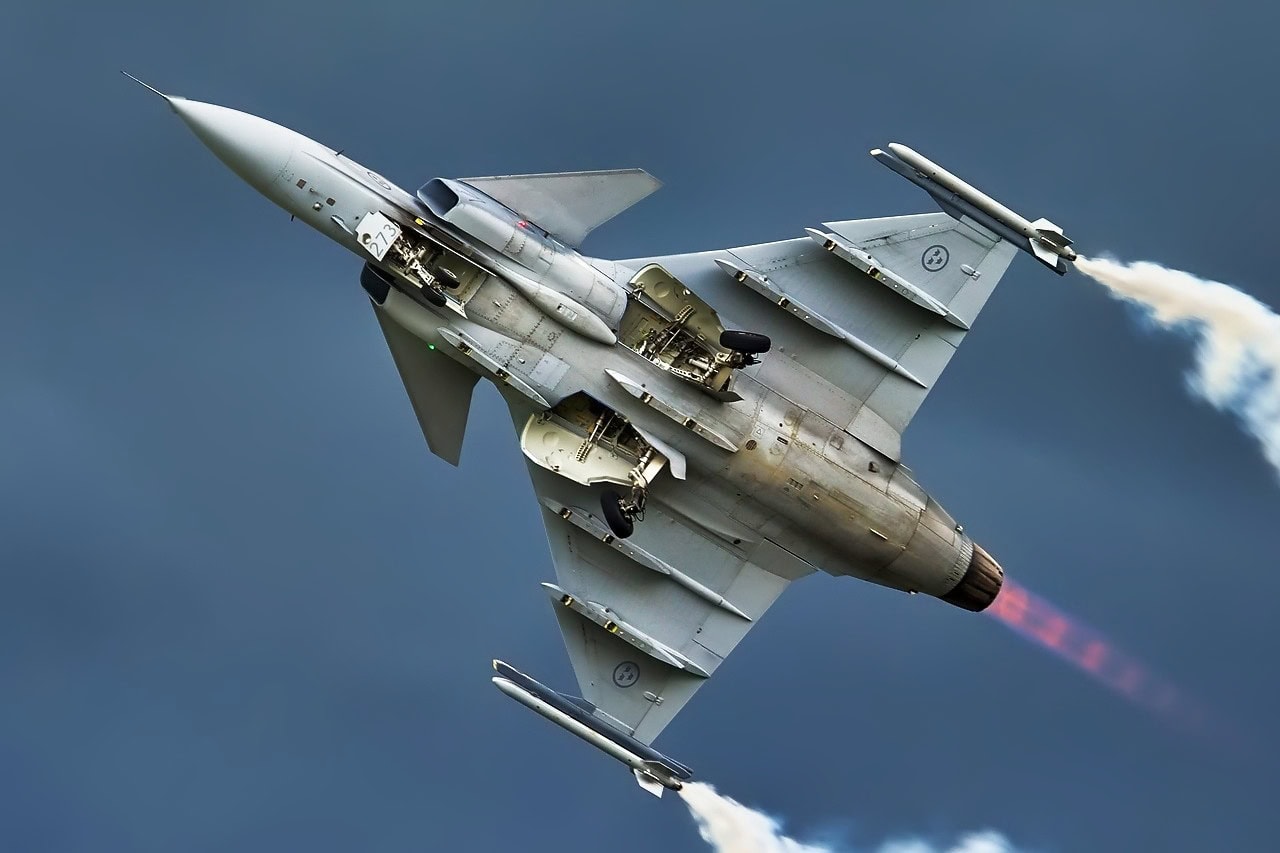
JAS 39 Gripen Fighter from Sweden.
-Critics argue the Gripen’s lower cost-per-flight-hour and superior Arctic readiness outweigh the F-35’s stealth advantages, which may exceed Canada’s sovereignty needs.
-However, the U.S. warns that abandoning the full F-35 order could fundamentally alter NORAD operations and Canadian airspace security.
Why Canada Might Ditch 72 F-35s for the Saab JAS 39 Gripen E
The political motivation behind Canadian Prime Minister Mark Carney’s decision to order a review into plans to procure 88 Lockheed Martin F-35 fighter jets from the United States is well documented at this point, but critics of the F-35 still assert that Saab’s alternate offer for its 4.5-generation fighter jets has merit.
A decision to cancel plans to order the final 72 F-35s to join the 16 already officially purchased could come at any time.
If that occurs, it will force Canada to operate a mixed fleet of fighter jets to replace its aging CF-18s.
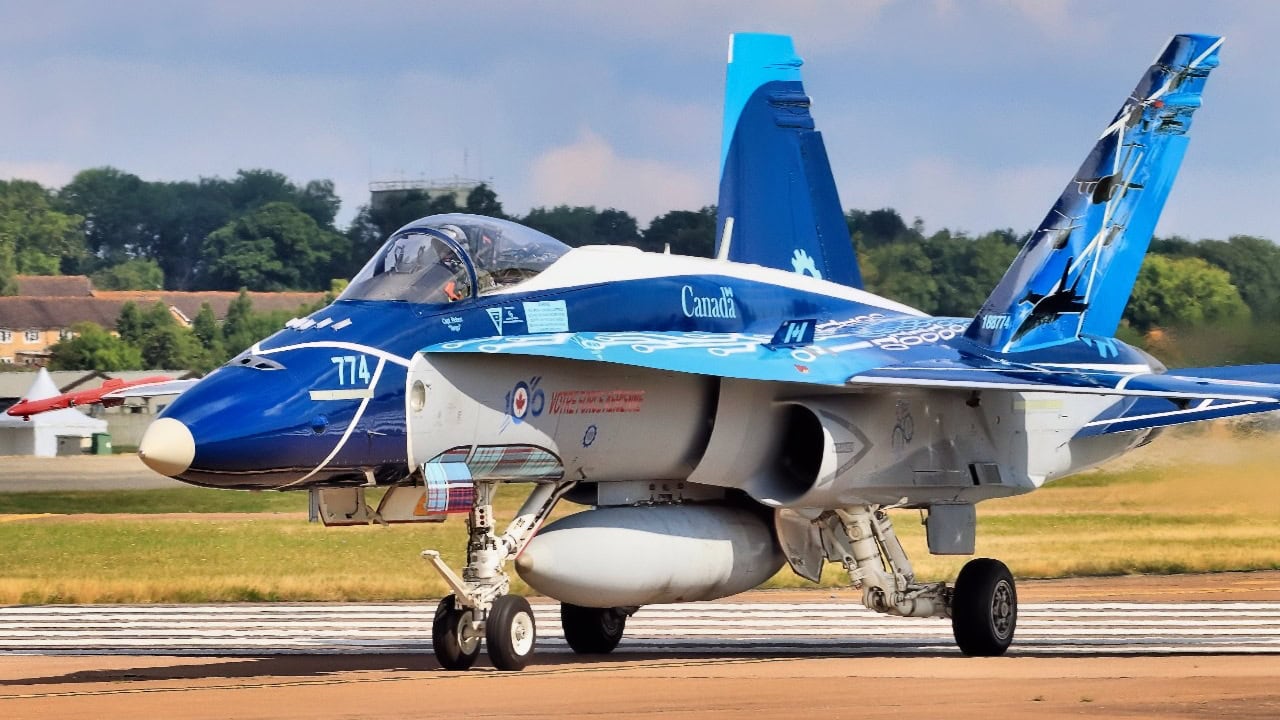
CF-18 Canada Air Force.
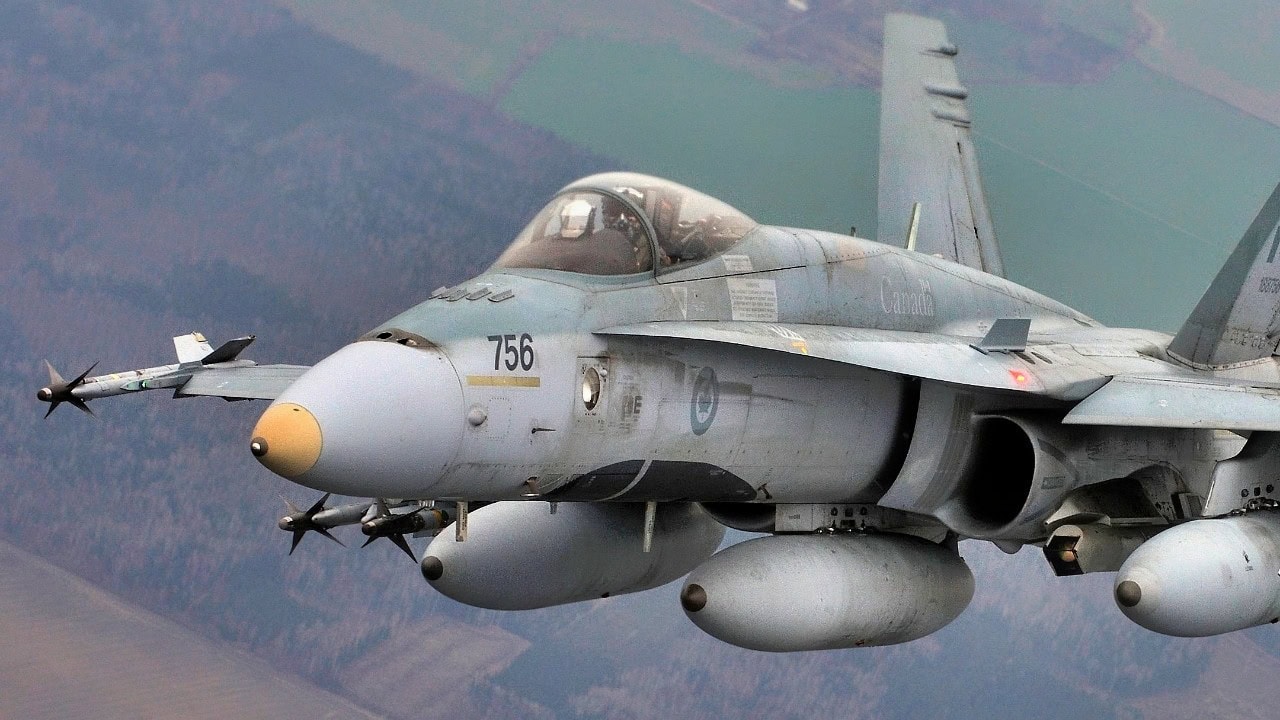
A CF-18 Hornet from the Canadian Air Task Force Lithuania flies over Lithuania on November 20, 2014 for the NATO Baltic Air Policing Block 36 during Operation REASSURANCE.
Doing so would incur a plethora of costs and logistical headaches for the Royal Canadian Air Force – but, as critics of the F-35 like to point out, there are technical reasons the Gripen may be better suited for Canada.
What the JAS 39 Gripen Is
The Saab JAS 39 Gripen is a fourth-generation multirole fighter developed in Sweden by aerospace firm Saab. It first entered service in the mid-1990s and has since evolved through multiple variants.
The latest iterations, the Gripen E and F, incorporate modern avionics, advanced sensors, and greater payload capacity over earlier C/D models.
The E-series uses a General Electric F414G engine, an AESA radar, Infrared Search and Track (IRST) sensors, and an improved electronic warfare (EW) suite, making it competitive with other 4.5-generation fighters.
Gripens are single-engine, supersonic fighters capable of performing air-to-air combat, ground attack, reconnaissance, and air defense missions. They can carry a range of weapons – from short-range IRIS-T missiles to long-range MBDA Meteor beyond-visual-range weapons – and feature modular avionics and datalink systems that enable rapid role switching.
The Gripen may not be a fifth-generation fighter, but not every customer needs that – and the platform’s customers include Brazil, South Africa, Thailand, Hungary, the Czech Republic, and recently, Colombia – the latter of which signed a multi-billion dollar deal for 17 Gripen E/F aircraft in late 2025.
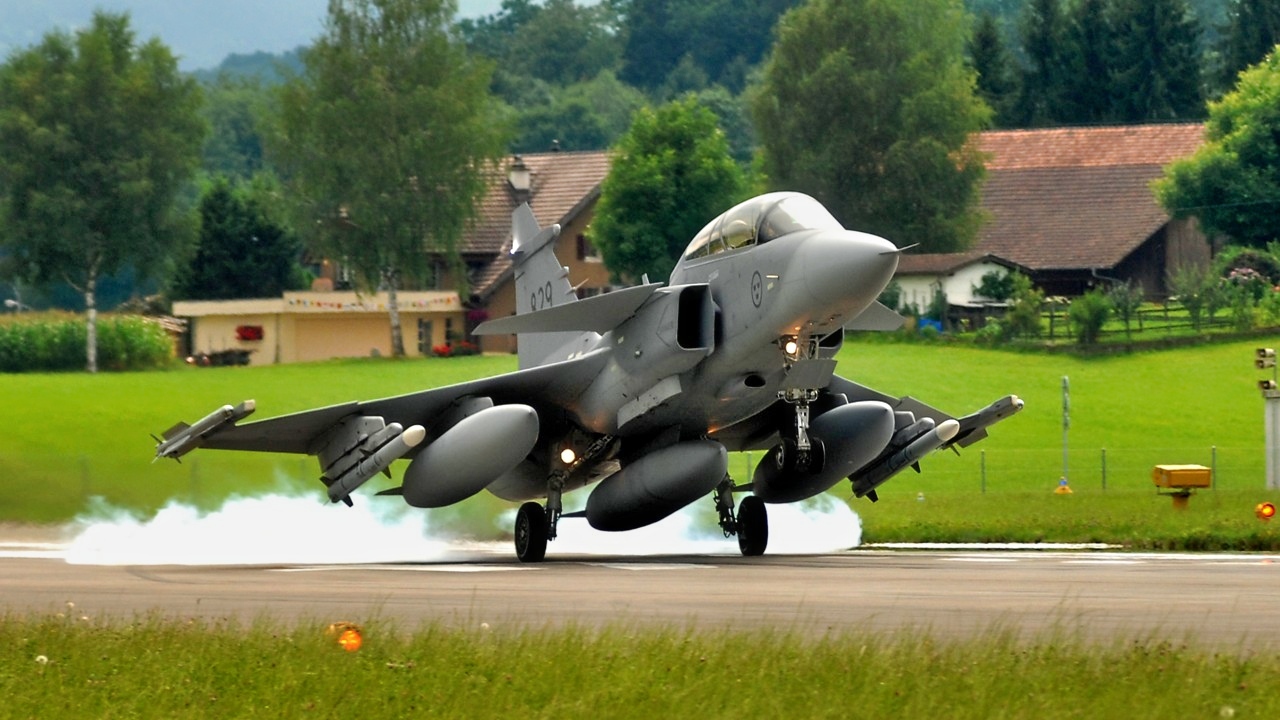
JAS 39 Gripen Fighter. Image Credit: Creative Commons.
Why Customers Like the JAS 39 Gripen
A defining characteristic of the JAS 39 Gripen program is its focus on affordability and low operational costs. The fighter was engineered for a smaller nation (Sweden) with limited defense budgets and a need to maintain high readiness.
Compared with many Western fighters, Gripens are significantly cheaper to acquire and sustain. While precise cost figures vary by contract and exact configuration, the Gripen’s lower cost per flight hour than platforms like the F-35 is frequently cited as one of its major benefits, not to mention its higher readiness rates in recent years.
That cost-efficient design is not only beneficial financially, but it also supports rapid turnarounds and reduced maintenance requirements – key for air forces with constrained manpower or wide, dispersed basing requirements.
Saab also promises sovereignty over sustainment and upgrades and, specifically for Canada, the establishment of long-term maintenance and manufacturing operations that could support 12,600 or more jobs.
In terms of capability, the Gripen may not be an F-35, but it’s plenty capable: the platform has earned respect for its operational versatility and agility. It uses an integrated avionics suite that fuses sensor data to support real-time decision making, and features electronic warfare (EW) systems – including radar, IRST, and counter-measure pods, all of which enhance its survivability in contested environments.
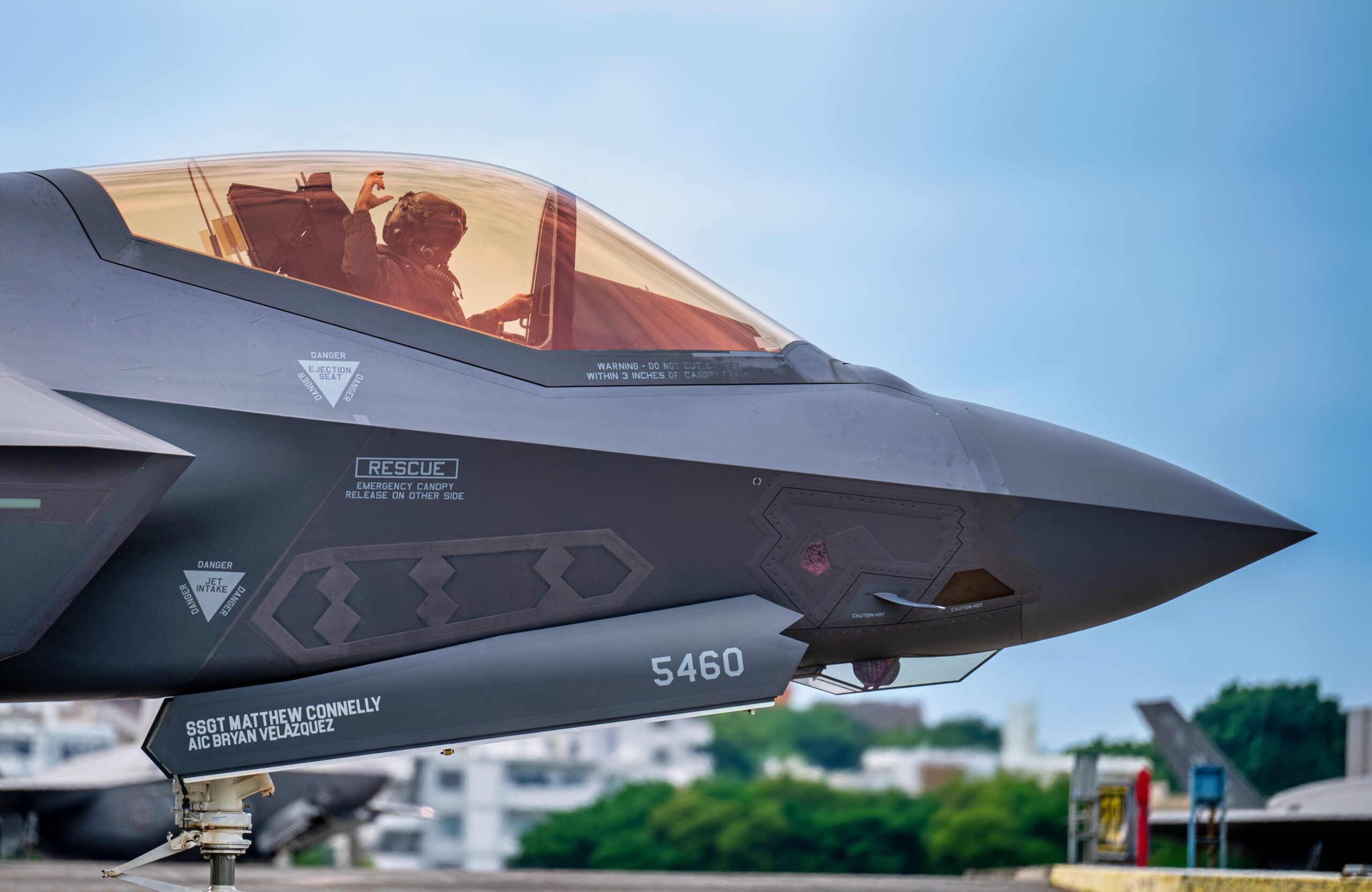
A U.S. Air Force F-35A Lightning II pilot assigned to the 355th Expeditionary Fighter Squadron taxis on the flightline at Marine Corps Air Station Futenma, Japan, during a routine 18th Wing readiness exercise at Kadena Air Base, Japan, May 6, 2025. The U.S. Air Force continues to work on its ability to meet new challenges in dynamic environments. In line with this direction, U.S. Pacific Air Forces is constantly evaluating and validating new warfighting concepts. (U.S. Air Force photo by Senior Airman Catherine Daniel)
While it is technically compatible with NATO-standard communications and datalinks, an argument that has arisen as Ottawa reconsiders the F-35 buy centers on whether the platform integrates sufficiently with existing systems to support Canada’s role in the North American Aerospace Defense Command (NORAD) agreement.
The United States says it doesn’t, but Gripen advocates argue Canada doesn’t need the additional stealth features the more expensive F-35 offers.
The Reason Canada Picks JAS 39 Gripen: It Doesn’t Need a High-Tech F-35 Stealth Fighter?
Does Canada need to proceed with its original plan to purchase 88 F-35s?
Geopolitical developments in the last two years have certainly changed the environment in which the deal is taking place.
Between a trade war and President Trump’s recent pressure over Greenland, Canada is increasingly looking across the Atlantic – and indeed the Pacific – to forge new relationships.
A decision to operate a mixed F-35/Gripen fleet could be understood politically, but from a technical capability perspective, Gripen advocates say the F-35 is simply more capable than Canada needs. Even if it means making Washington’s life difficult regarding NORAD.Canada’s obligations under the agreement are central to any fighter acquisition decision – and it did, in fact, play a role in the F-35 being chosen to begin with.
Defending Canadian and continental airspace across the Arctic – with its vast distances and limited infrastructure – is no light matter. NORAD modernization plans involve radar, satellites, and fast interceptors (jets) – all of which must effectively counter evolving threats from cruise missiles to hypersonic weapons.
Ottawa, along with senior Royal Canadian Air Force officials, agreed in 2022 that the F-35 was the best platform to meet those needs while also serving Canada’s national interests.
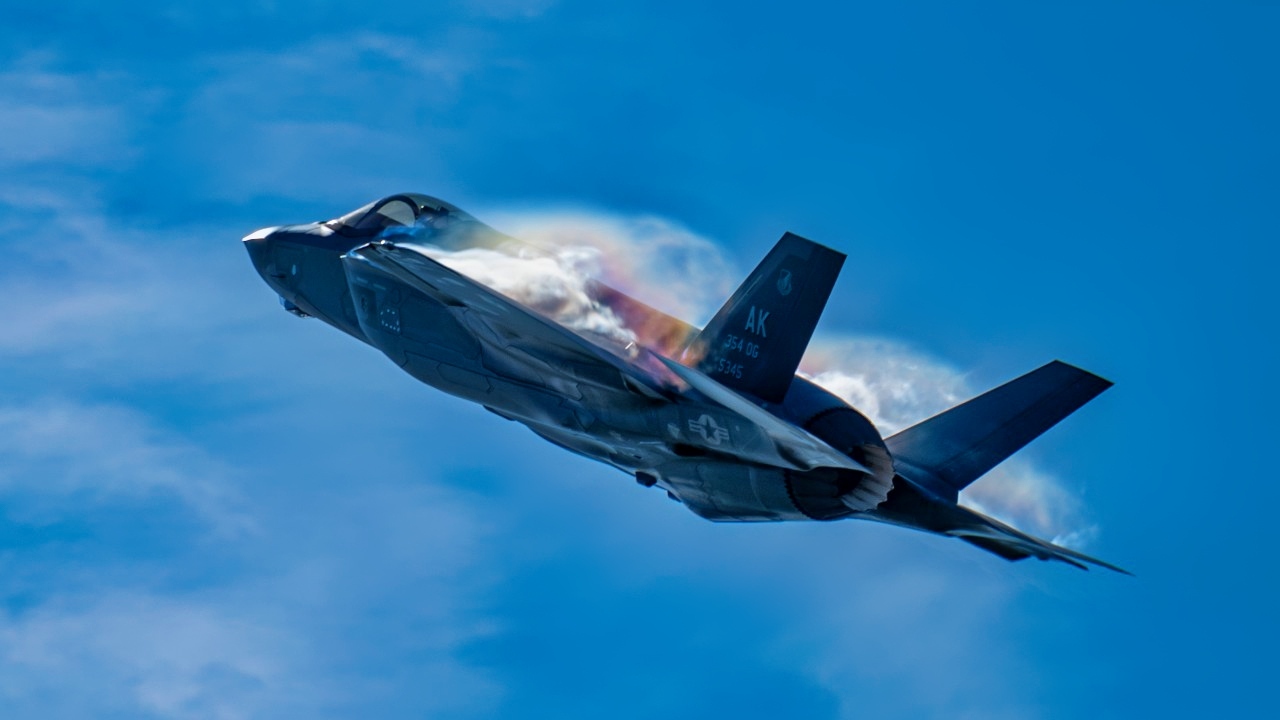
U.S. Air Force Maj. Kristin “BEO” Wolfe, F-35A Lightning II Demonstration Team pilot and commander, flies an aerial performance for the 2021 Arctic Lightning Air Show, July 30, 2021, Eielson Air Force Base, Alaska. The F-35 Demonstration Team utilized F-35s from the 354th Fighter Wing in order to showcase the combat capability of the Pacific Air Force’s newest F-35 units. (U.S. Air Force photo by Capt. Kip Sumner)
But the debate in Canada over the future of that deal took another turn recently when U.S. Ambassador Pete Hoekstra publicly warned that NORAD would need to be “altered” if Ottawa does not proceed with the full F-35 order – including the possibility of U.S. fighters operating in Canadian airspace to fill capability gaps.
Critics of the F-35 platform, however, say that Canada does not need all the advanced features a fifth-generation fighter offers to defend its airspace and that the Saab Gripen E is more than adequate for interception, patrol, maritime, and even NORAD air sovereignty operations.
Much of the F-35’s extra capabilities – including stealth – are also designed for high-end conflict scenarios that Canada is unlikely to face alone.
Canada and the F-35: The Bottomline For Now
If the F-35 wasn’t already struggling with readiness rate scandals, that reasoning from Canada might carry less weight – but not only does Canada not technically need all those capabilities for now, the F-35 platform is becoming increasingly expensive and more difficult to use.
The question for Ottawa is whether interoperability with the U.S. and the maintenance of the current NORAD deal are more or less important than entering into a new deal, establishing greater data sovereignty, and reducing reliance on the United States.
That is, of course, unless a war breaks out and Canada faces a high-end conflict for which it is not prepared.
About the Author:
Jack Buckby is a British researcher and analyst specialising in defence and national security, based in New York. His work focuses on military capability, procurement, and strategic competition, producing and editing analysis for policy and defence audiences. He brings extensive editorial experience, with a career output spanning over 1,000 articles at 19FortyFive and National Security Journal, and has previously authored books and papers on extremism and deradicalisation.