

Summary and Key Points: China’s long-anticipated Xi’an H-20 stealth bomber is the centerpiece of a strategic pivot from regional denial to global reach.
-Engineered with a flying-wing design similar to the U.S. B-2 Spirit, the H-20 is projected to carry both nuclear and conventional precision munitions over a 10,000-kilometer radius.
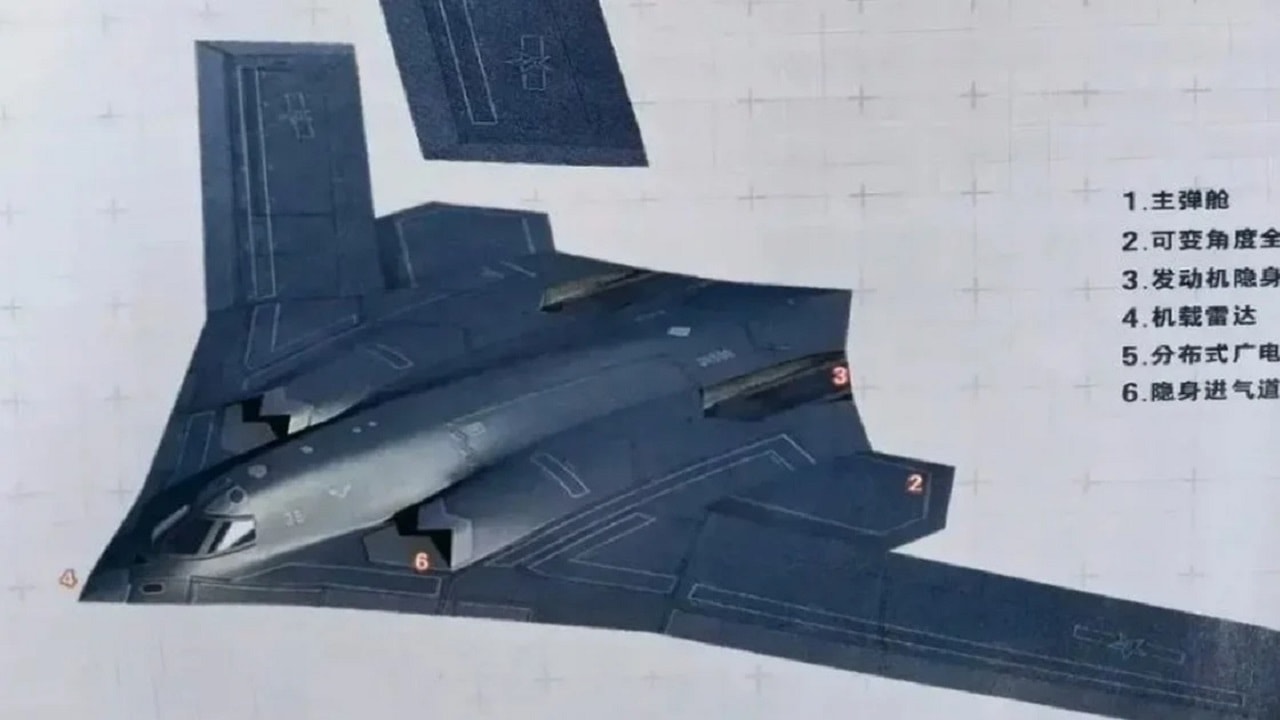
H-20 stealth bomber artist rendering. Image Credit: Creative Commons.
-This capability allows the PLAAF to contest the “Second Island Chain” and threaten vital U.S. hubs like Guam.
-While verifiable test flights have yet to be disclosed, the bomber’s imminent debut marks the completion of China’s nuclear triad and a significant challenge to the existing Indo-Pacific defense architecture.
In 2 Words: Game Changer
The B-21 Clone? Why the Xi’an H-20 Is China’s Ultimate Deterrence Gamble
There’s still a lot that the world doesn’t know about China’s long-anticipated Xi’an H-20 stealth bomber, but what we do know is that it is a central element of Beijing’s efforts to expand its long-range airpower. The People’s Liberation Army Air Force (PLAAF) has repeatedly signaled that the aircraft is nearly ready for its debut and operational deployment, but to date the bomber has not been officially disclosed.
But the world knows China is planning something, and its pursuit of the H-20 is unsurprising in the context of the broader shift in the country’s military and strategic posture. China is actively building a more complex and capable range of strike options.
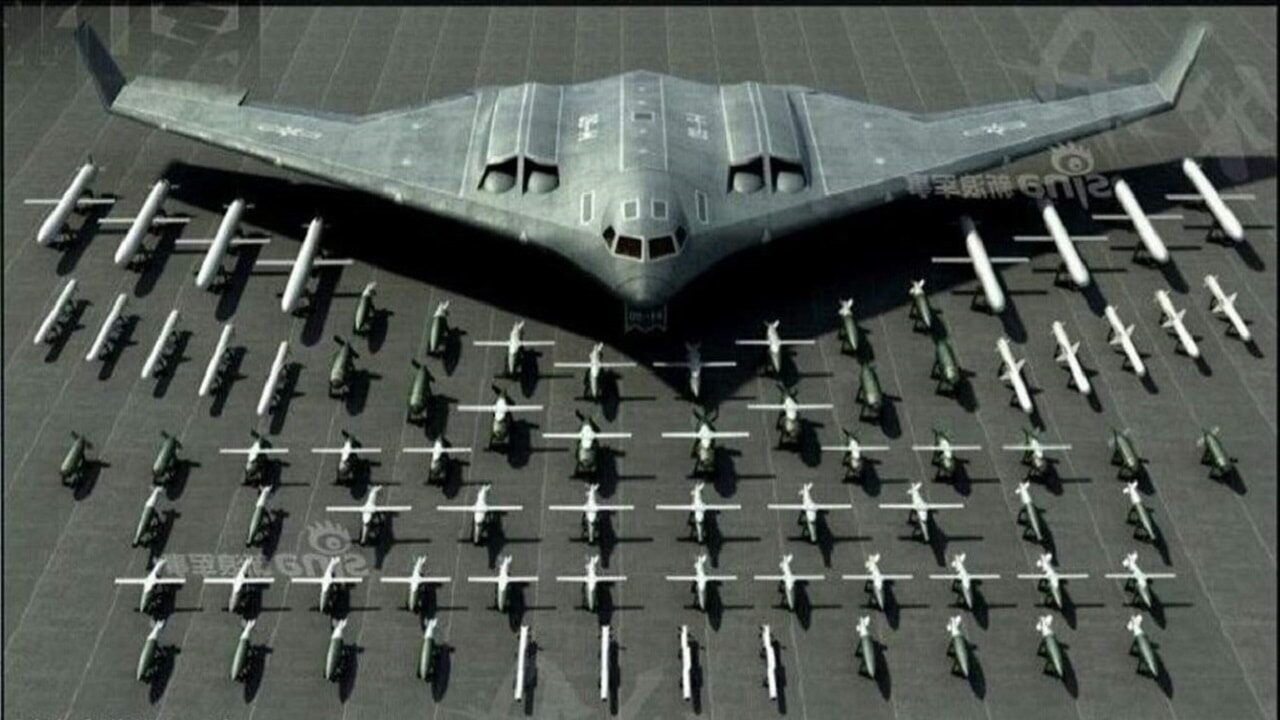
H-20 Stealth Bomber. Image Credit: Artist Rendering Chinese Internet.
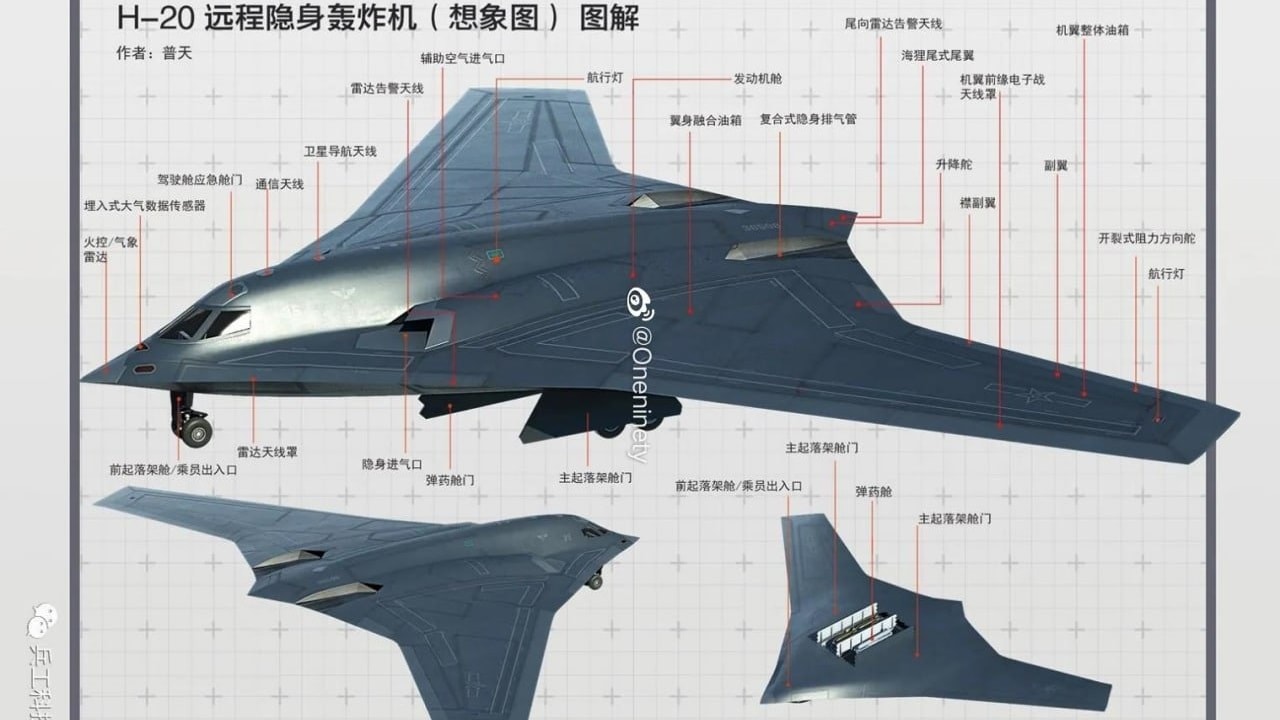
Artist Rendering of China’s H-20 Stealth Bomber. Image Credit: Chinese Internet.
China is looking to move beyond its anti-access/area-denial strategy and begin fielding a blue-water navy and an air force that can reach farther than ever. We know these things, but there remains significant uncertainty about the H-20’s exact capabilities and when the aircraft will enter service, both of which will affect defense planning in the Indo-Pacific.
What the H-20 Is, and What It’s Supposed to Do
The H-20 is a Chinese project to develop a long-range, stealth strategic bomber with a flying-wing design broadly similar to U.S. stealth bombers, including the B-2 Spirit and the next-generation B-21 Raider.
According to unclassified U.S. defense assessments, the bomber is being designed to carry both conventional and nuclear payloads, including potential long-range cruise missiles and precision munitions. Experts estimate a range exceeding 10,000 kilometers without refueling, enabling operations across the first and second island chains and potentially into the western Pacific. If those estimates turn out to be accurate, a range of this size would mark a significant expansion of China’s reach compared to its current bombers.
Experts are basing these estimations on knowledge of China’s exact geographic requirements, its technical capabilities, and intelligence.
Despite projections and statements from Chinese officials confirming that a new-generation bomber is under development, there is no confirmed evidence that the H-20 has conducted any test flights or entered production.
Chinese authorities have also not released official images or specifications for the aircraft, and reported imagery circulating on social media cannot be verified.
Why China Is Developing the H-20
China needs the H-20 for several reasons. The first is completing the air component of its nuclear deterrence. A dedicated stealth strategic bomber would allow the PLAAF to field a true air leg of a nuclear strike capability alongside its rapidly advancing land- and sea-based forces. China is working to rapidly update and modernize its nuclear-military infrastructure, and this is a crucial part of that process. In 2025, China publicly displayed components of its nuclear forces, including ICBMs, SLBMs, and air-launched capabilities.
Then, there’s the matter of extending long-range strike reach. Current Chinese bombers, including upgraded H-6 variants, have demonstrated the ability to conduct regional strikes, but they lack the survivability and deep-penetration capability of a true stealth bomber. The H-20 is intended to present a risk to distant targets, including logistics hubs and forward bases, and provide greater flexibility and range than existing aircraft.
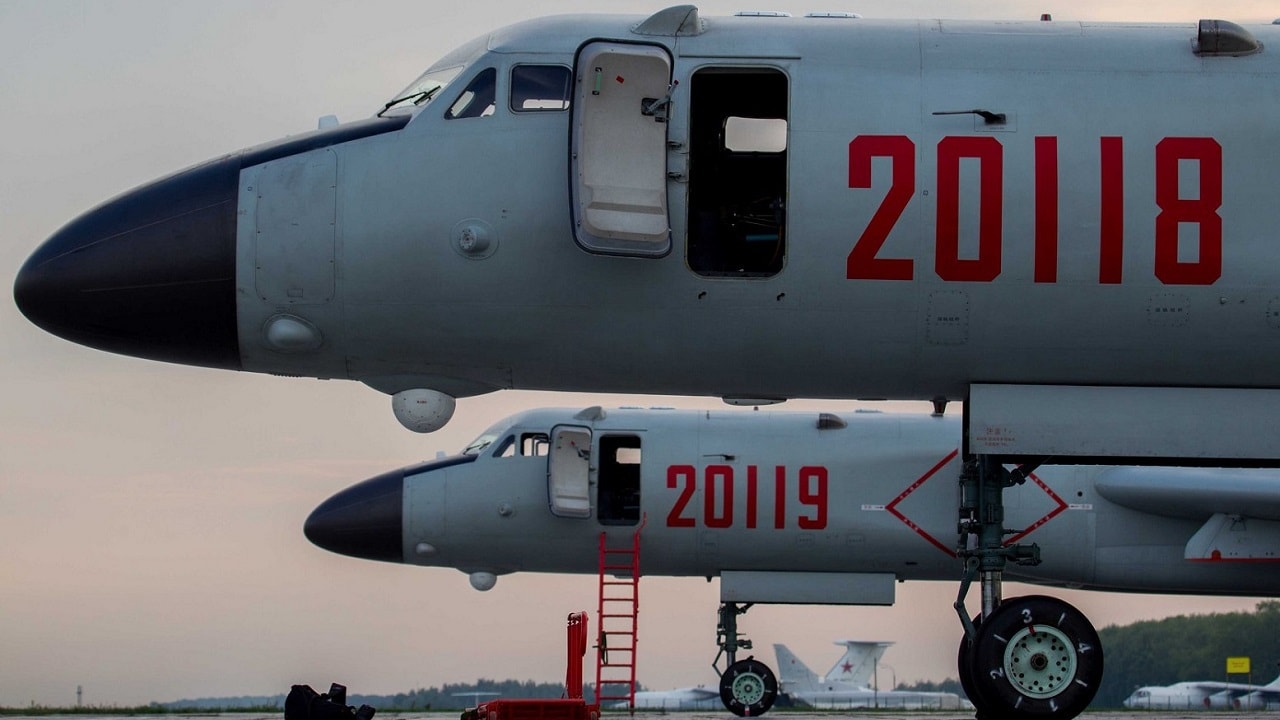
Image of Chinese JH-6 bombers on the ready. Image Credit: Creative Commons.
And third, it will enhance conventional deterrence and signaling by demonstrating to the West that it has the technical capability to produce these aircraft at scale and enter them into service. A stealth bomber capable of operating across the Indo-Pacific would give Beijing a signaling tool in crises without relying solely on ballistic missiles, potentially affecting how regional threats are perceived.
For example, should the H-20 reach even limited operational capability, U.S. planners would likely be forced to adjust Pacific bomber basing and dispersal to reduce vulnerability or address those problems in new ways.
A stealth bomber with an estimated range of 10,000 km could threaten Guam and other forward logistics hubs that are currently used as staging points for U.S. heavy bombers. It would be a huge undertaking, including new and more mobile basing and hardened shelters, and an increased use of allied airfields farther away from China’s strike envelope.
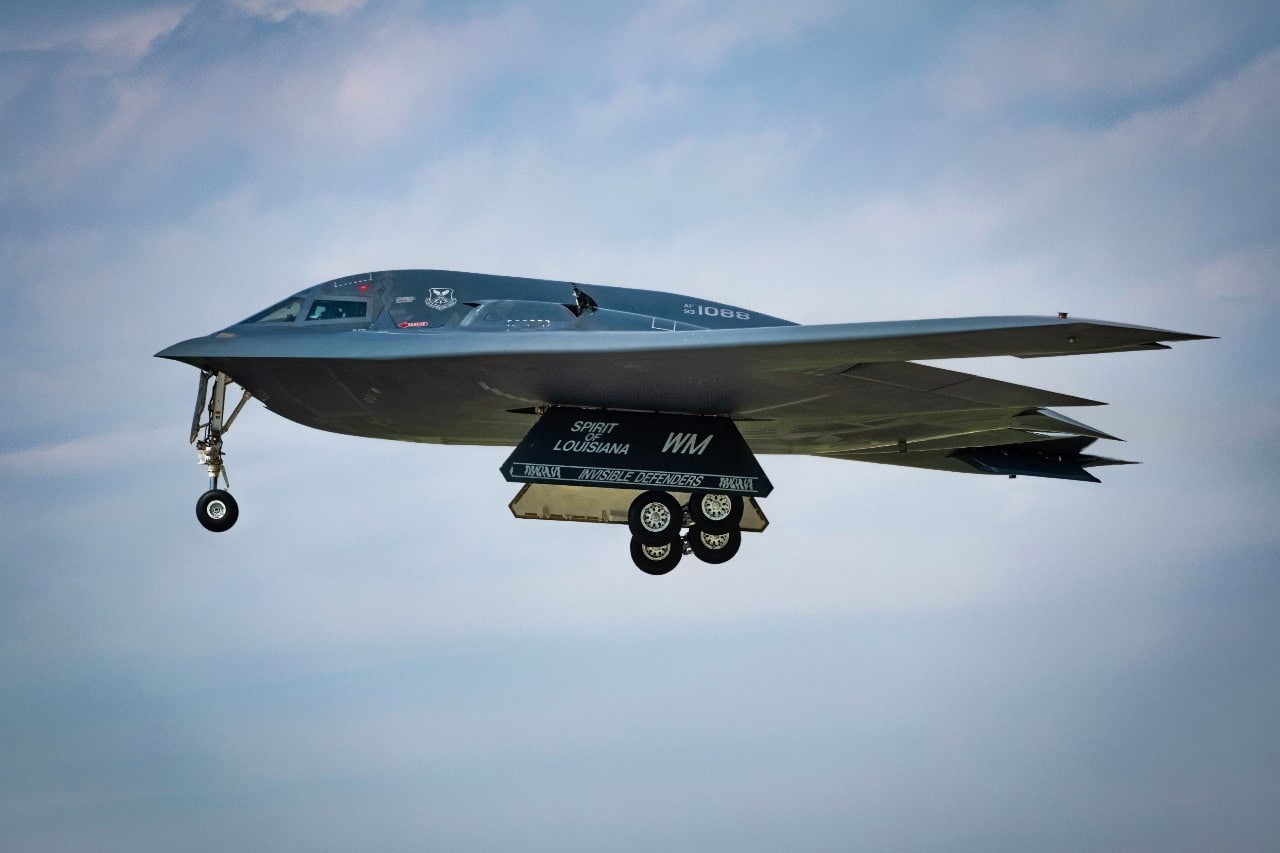
A B-2 Spirit stealth bomber departs from Whiteman Air Force Base, Missouri, April 16, 2025. The B-2 is capable of penetrating heavily defended air spaces and delivering conventional and nuclear munitions anywhere on the globe. (U.S. Air Force photo by Senior Airman Joshua Hastings)
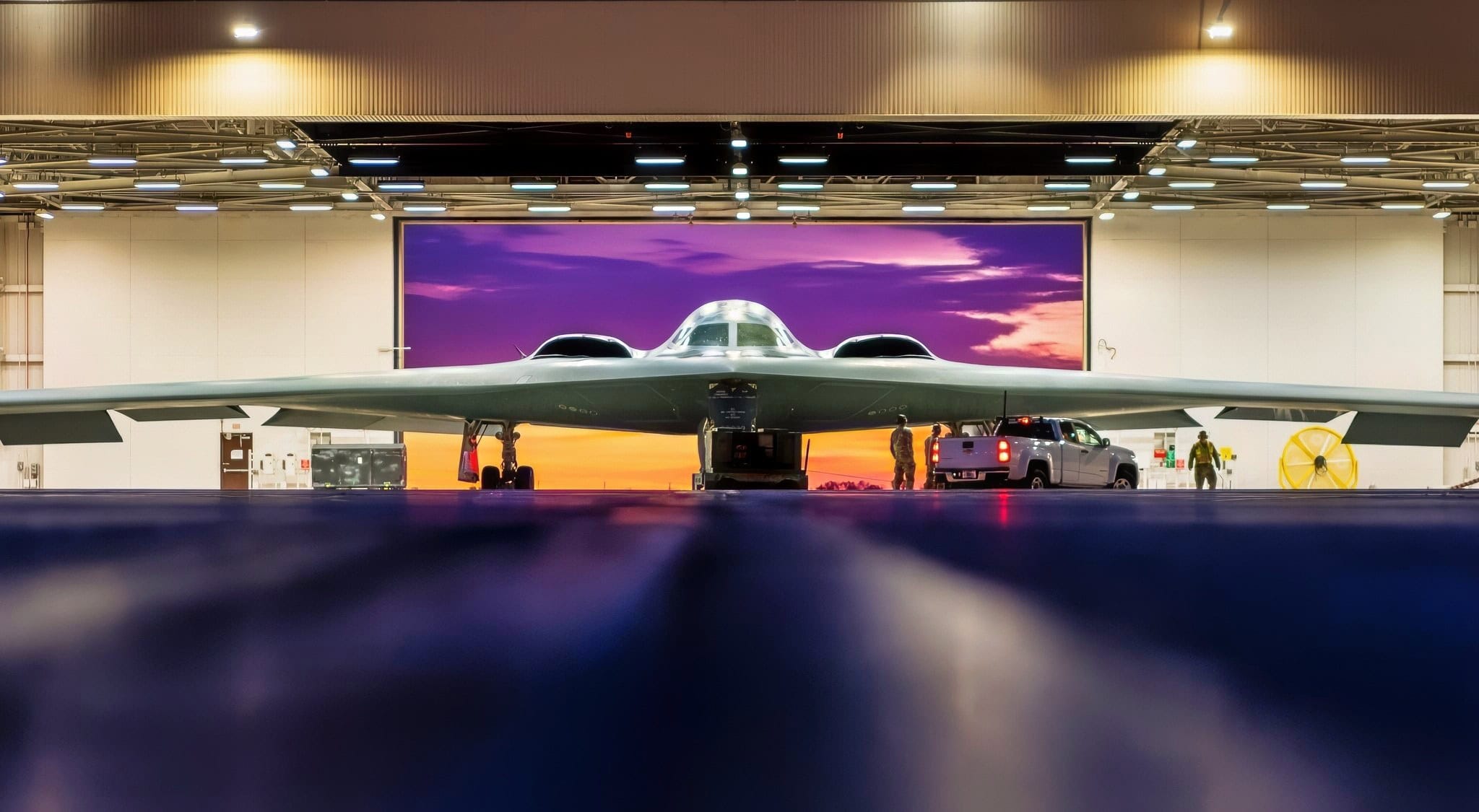
U.S. Airmen assigned to the 393rd Bomber Generation Squadron prepare a B-2 Spirit aircraft for flight during Exercise Global Thunder 26 at Whiteman Air Force Base, Missouri, Oct. 24, 2025. Global Thunder is an annual command and control exercise designed to train U.S. Strategic Command forces and assess joint operational readiness. (U.S. Air Force photo by Staff Sgt. Joshua Hastings)
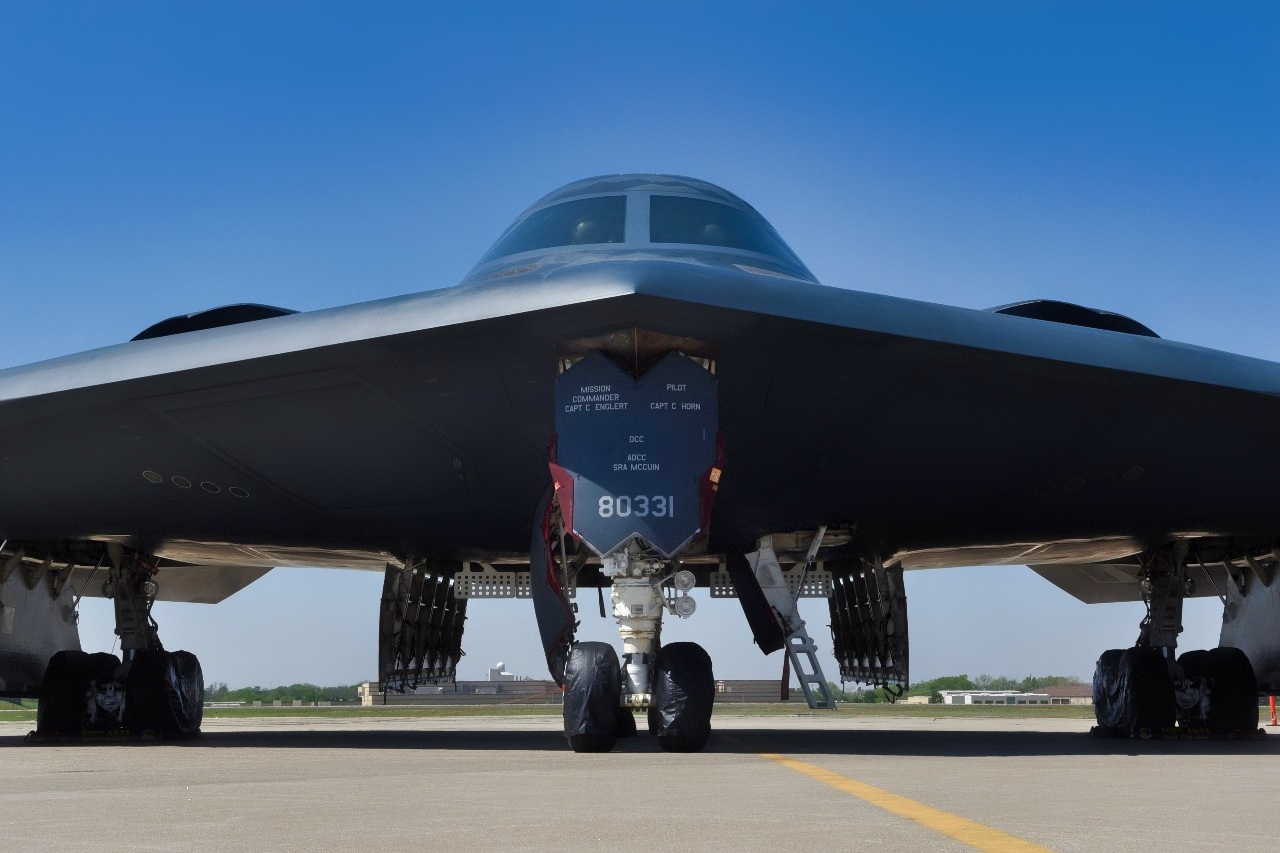
B-2A, serial #88-0331, ‘Spirit of South Carolina’ of the 509th Bomb Wing, Air Force Global Strike Command, on the parking ramp at Tinker Air Force Base, Oklahoma, during a visit April 11, 2017. The B-2A ‘stealth bomber’ visited the base to allow hundreds of personnel who work in direct support of the aircraft program through continuous software upgrades to see it in person and better understand the aircrafts’ role in the nation’s defense. (U.S. Air Force photo/Greg L. Davis)
What We Know About the Program So Far
While the development of a next-generation stealth bomber was first publicly acknowledged in 2016, details have been sparse since, and no official first-flight or entry-into-service date has yet been set. Chinese military officials have at times claimed that the aircraft is nearly ready, but no verifiable technical data or imagery are available.
In 2024 and 2025, media reports suggested China might be preparing to reveal the bomber, but this has not yet occurred. Additionally, unofficial reports and leaked satellite imagery have occasionally surfaced over the years, but none have been independently verified.
About the Author: Jack Buckby
Jack Buckby is a British researcher and analyst specialising in defence and national security, based in New York. His work focuses on military capability, procurement, and strategic competition, producing and editing analysis for policy and defence audiences. He brings extensive editorial experience, with a career output spanning over 1,000 articles at 19FortyFive and National Security Journal, and has previously authored books and papers on extremism and deradicalisation.

