

Summary and Key Points: Stephen Silver, an award-winning national security journalist, analyzes the rapid retreat of the Department of Veterans Affairs (VA) following the “Evaluative Rating: Impact of Medication” controversy.
-Published as an Interim Final Rule on February 17, 2026, the regulation sought to counter the Ingram v. Collins court decision by rating disabilities based on treated symptoms rather than untreated severity.
-This 19FortyFive analysis explores the fallout as Secretary Doug Collins and Deputy Secretary Paul Lawrence faced fierce opposition from the DAV, VFW, and Senator Tammy Duckworth, leaving the rule “frozen” but not formally rescinded.
The VA Medication Rule ‘Retraction’: Why the Disability Rating Freeze Fails to Calm Veterans
The Department of Veterans Affairs drew major controversy earlier this month when it announced a new rule called “Evaluative Rating: Impact of Medication,” which, as described by Task and Purpose, stated that veterans “will have their disability compensation evaluated based on whether their prescribed medication or treatment improves their illness or injury.”
“Specifically, this amendment clarifies that veterans should be compensated for the actual level of functional impairment they experience and, therefore, that the ameliorative effects of medication should not be estimated or discounted when evaluating the severity of a veteran’s disability at the time of the disability examination,” the language of the rule, published in the Federal Register, said.
The rule went into effect immediately and kicked off a new public comment period.
Veterans groups quickly denounced the new rule.
“They are going to be evaluated under this new criteria and potentially receive a lower disability rating based on this sudden interim rule, whereas last Friday, they likely would have gotten a higher evaluation because this rule wasn’t in place,” Michael Figlioli, the national service director for Veterans of Foreign Wars, told Task & Purpose in the first story.

A candidates assigned to Delta Company, Officer Candidates Class-221, breaks the surface of the murky water of ‘The Quigley’ at Brown Field, Marine Corps Base Quantico, Va., on March 15, 2016. The mission of Officer Candidates School (OCS) is to “educate and train officer candidates in Marine Corps knowledge and skills within a controlled, challenging, and chaotic environment in order to evaluate and screen individuals for the leadership, moral, mental, and physical qualities required for commissioning as a Marine Corps officer.” (U.S. Marine Corps Photo by Cpl. Patrick H. Owens/Released)
“It is unclear if and how VA is implementing this dramatic change and how it will impact the more than 6 million veterans currently receiving disability compensation, most of whom are taking at least one medication,” Colman Nee, Disabled American Veterans’ commander, said in that report.
Now, the VA has issued a surprising response: That they’re not planning to ever do anything with the rule.
“No Intention of Ever Doing Anything”
A follow-up story by Task and Purpose reported comments by VA Deputy Secretary Paul Lawrence, who was addressing a conference of Disabled American Veterans, and Lawrence made clear that the rule will not be enforced.
“Our intentions were to put out a rule, which we thought would clarify our processes,” Lawrence said at the conference. But obviously, it did not. So we withdrew the rule. And candidly, we have no intention of ever doing anything or talking about it ever again.”
Also at the conference, Lawrence, per T&P, expressed “disappointment” that veterans groups had reacted so negatively to the announcement of the rule, and the belief that the rule, as announced, was meant to cut benefits.

U.S. Army Soldiers assigned to Troop G, 2nd Squadron, 278th Armored Cavalry Regiment, Task Force Reaper fire a M1A2 Abrams tank within the U.S. Central Command’s area of responsibility during the Friendship 25 exercise, Feb. 12, 2025. Exercises like Friendship 25 develop U.S. and Royal Saudi Land Forces service members and enable increased military capacity to address threats to regional security. (U.S. Army Photo by U.S. Army Photo by Maj. Matthew Madden)
“We value your partnership,” Lawrence said at the conference. “We welcome where you disagree with us, in part because we know you’re special partners and we agree on so much together. So please, don’t speculate on our position about cutting benefits when our actions are so clear.”
How did DAV respond to these comments at their conference?
“Grandstanding is not our gig,” Barry Jesinoski, DAV’s national adjutant, said, per Task and Purpose. “Advocating for those that we serve is our gig. And when you have the ball, and we don’t know where it’s coming out, sometimes we’re going to have to respond.”
This followed reports that, a few days earlier, VA Secretary Doug Collins had declared on X that the rule “will not be enforced at any time in the future.” Collins said the VA will continue its public comment period on the rule.
“VA issued the rule to clarify existing policy and protect Veterans’ benefits in the wake of an ongoing court action. But many interpreted the rule as something that could result in adverse consequences,” Collins said in his X post.

A detail photo of the Medal of Honor at the Tomb of the Unknown Soldier, Arlington National Cemetery, Va., Mar. 25, 2025. The Ceremony was hosted by Maj. Gen. Trevor J. Bredenkamp, commanding general, Joint Task Force-National Capital Region and U.S. Army Military District of Washington. (U.S. Army photos by Sgt. Christopher Grey)
“While VA does not agree with the way this rule has been characterized, the department always takes Veterans’ concerns seriously. To alleviate these concerns, VA will continue to collect public comments regarding the rule, but it will not be enforced at any time in the future.”
Democratic Sen. Tammy Duckworth (D-IL), herself a veteran, responded on X to Collins’ statement.
“You called our concerns’ fake news’ just yesterday,” Duckworth wrote. “You’re backtracking because you know this new rule could hurt our heroes’ access to care, and Veterans across the country called you on your bull****. If you take Veterans’ concerns seriously, you’d rescind the rule entirely.”
Another Democratic senator also weighed in.
“That’s a pretty quick retreat for something you called fake news less than 24 hours ago,” Sen. Ruben Gallego (D-AZ) said, also on X.
What Happens Now?
What does this mean, legally?
“They’ve essentially frozen the rule, but they’ve already enacted it,” Anthony Kuhn, an attorney at the Tully Rinckey law firm, told Task and Purpose. “It is an enacted rule. But they’re not enforcing it right now. So, they’ve opened it up for comments. I think they received more than 10,000 comments immediately. Once the comment period closes out, they’ll go back and determine whether they’re going to continue the rule or whether they’re going to revoke it.”
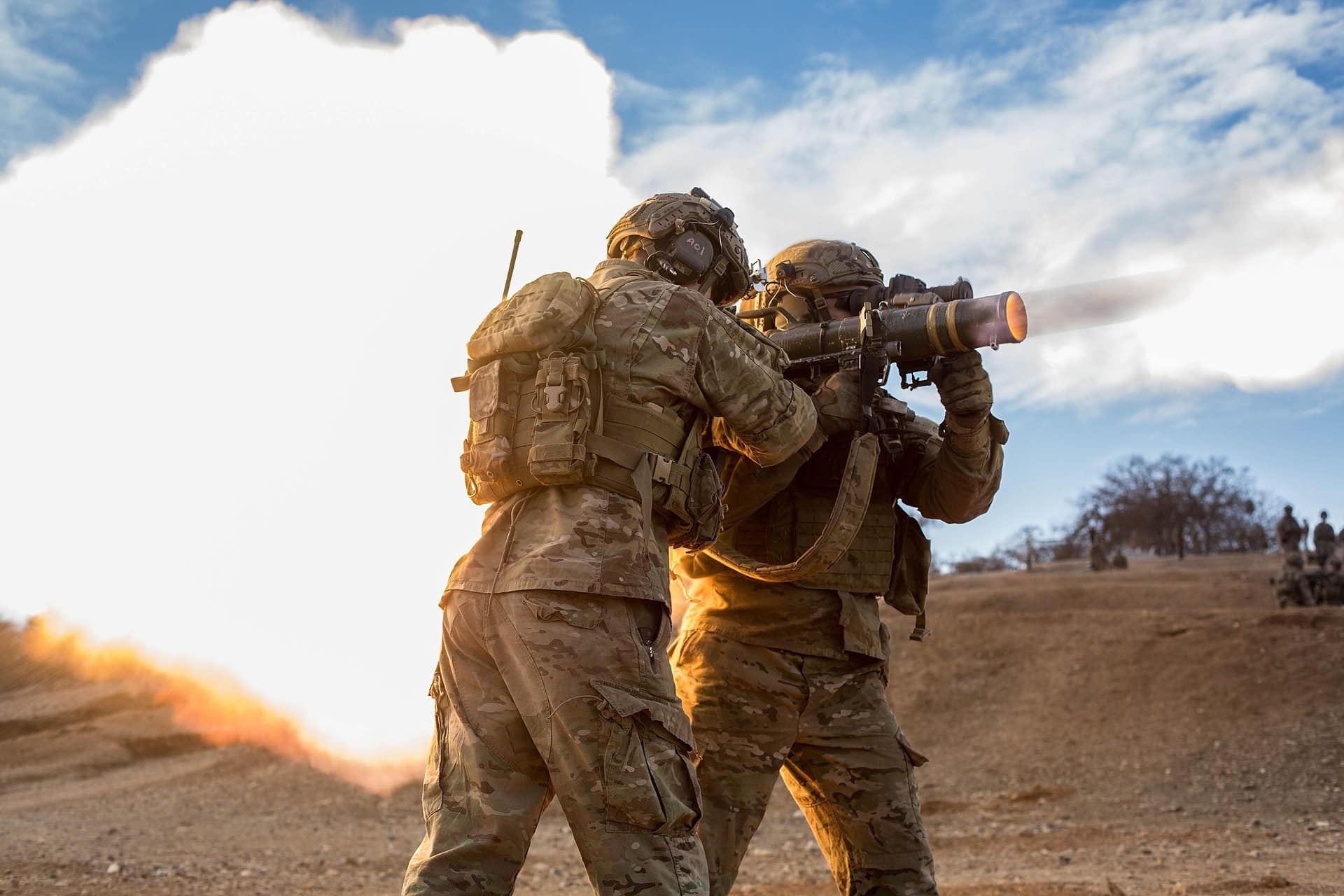
U.S. Army Rangers assigned to 2nd Battalion, 75th Ranger Regiment, fire off a AT-4 at a range on Camp Roberts, Calif., Jan 26, 2014. Rangers use a multitude of weaponry during their annual tactical training. (U.S. Army photo by Pfc. Rashene Mincy/ Not Reviewed)
Kuhn predicted that the rule would be formally revoked on April 20, or possibly after legal action later.
Military Times filled in a bit more background on how the rule came to be, reporting that the rule “was written in response to several court cases dating to 2012 that interpreted the VA’s existing regulations as limiting the consideration of medication’s effects. Those cases stipulated that the VA secretary could issue a regulation with strict parameters on including medication as part of the instructions for assigning disability ratings.”
“All this does is provide a perverse incentive for veterans to forego treatment,” Paul Jennings, an Army veteran and attorney for MilVet Law Firm, one of the plaintiffs in the suit, told Military Times about the original rule.
“It’s the VA — they’re there to take care of us … So, it’s quite unexpected when you get a rule published with immediate effect stating it’s an emergency because the VA has taken the approach that this will result in veterans getting higher ratings.”
About the Author: Stephen Silver
Stephen Silver is an award-winning journalist, essayist, and film critic, and contributor to the Philadelphia Inquirer, the Jewish Telegraphic Agency, Broad Street Review, and Splice Today. The co-founder of the Philadelphia Film Critics Circle, Stephen lives in suburban Philadelphia with his wife and two sons. For over a decade, Stephen has authored thousands of articles that focus on politics, national security, technology, and the economy. Follow him on X (formerly Twitter) at @StephenSilver, and subscribe to his Substack newsletter.