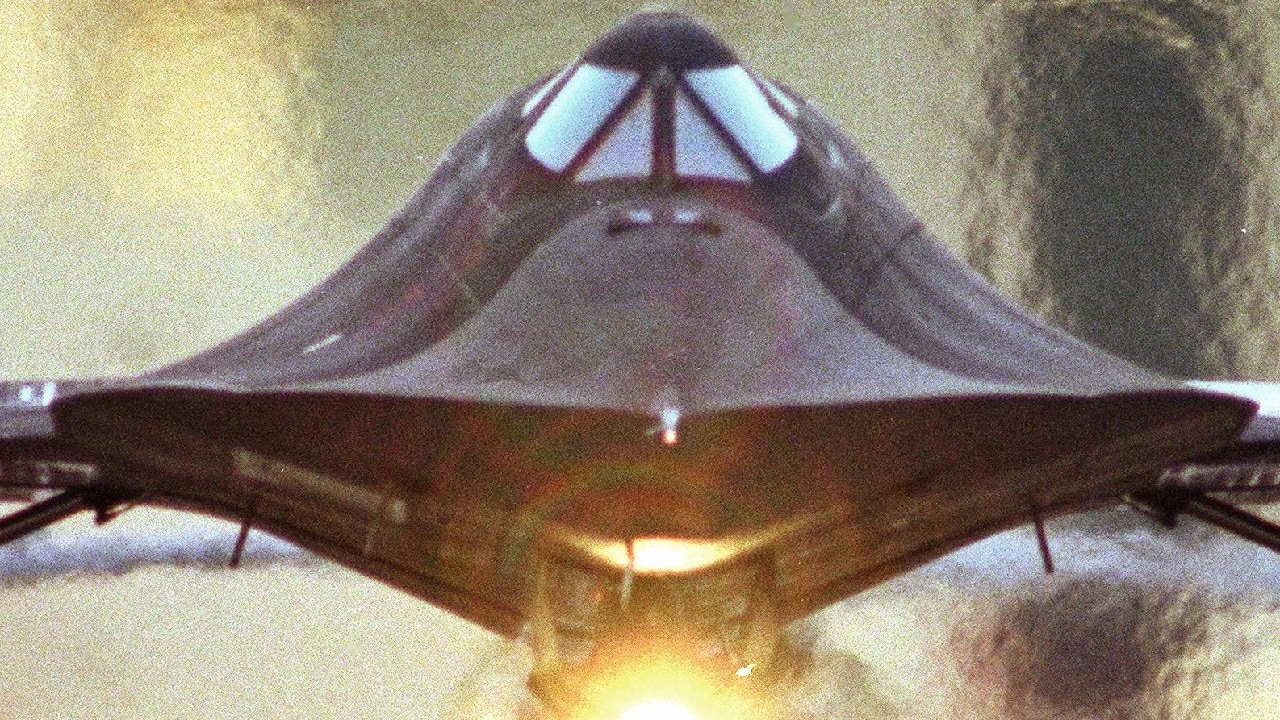
Summary and Key Points: Built to survive a world where the U-2 could be shot down, the SR-71 Blackbird was Lockheed’s Skunk Works answer to Soviet air defenses: speed, altitude, and smart engineering.
-Derived from the A-12, the Air Force’s two-seat SR-71 used a titanium-heavy structure to handle punishing heat and Pratt & Whitney J58 engines that blended turbojet and ramjet behavior at cruise.
-From bases like Kadena and later the United Kingdom, it collected intelligence across multiple flashpoints while setting enduring speed and altitude records.
-Rising costs, improving interceptors, and satellites ultimately pushed it out—before NASA gave it a final research encore.
SR-71 Blackbird: The Mach 3 Spy Plane That Outran Missiles
The SR-71 Blackbird is arguably one of the most iconic aircraft of the Cold War, if not all of history. It gained a reputation as one of the fastest manned aircraft in history, capable of exceeding Mach 3.
Developed by Lockheed Martin’s experimental Skunk Works division, the Blackbird was designed to replace older spy planes like the U-2, which could no longer reliably penetrate the Soviet Union’s airspace.
The SR-71 was built using a number of revolutionary engineering techniques, which helped cement its place as one of the fastest and technologically sophisticated aircraft of its time.
Development of the SR-71
The story of the SR-71 begins with the urgent need for a reconnaissance aircraft capable of surviving increasingly sophisticated air defenses during the Cold War.
When the CIA’s U-2, piloted by Gary Powers, was shot down over the Soviet Union, the United States recognized that subsonic, high-altitude reconnaissance aircraft were no longer sufficient for gathering intelligence in hostile airspace. Soviet air defenses had advanced to the point that a new solution was required.
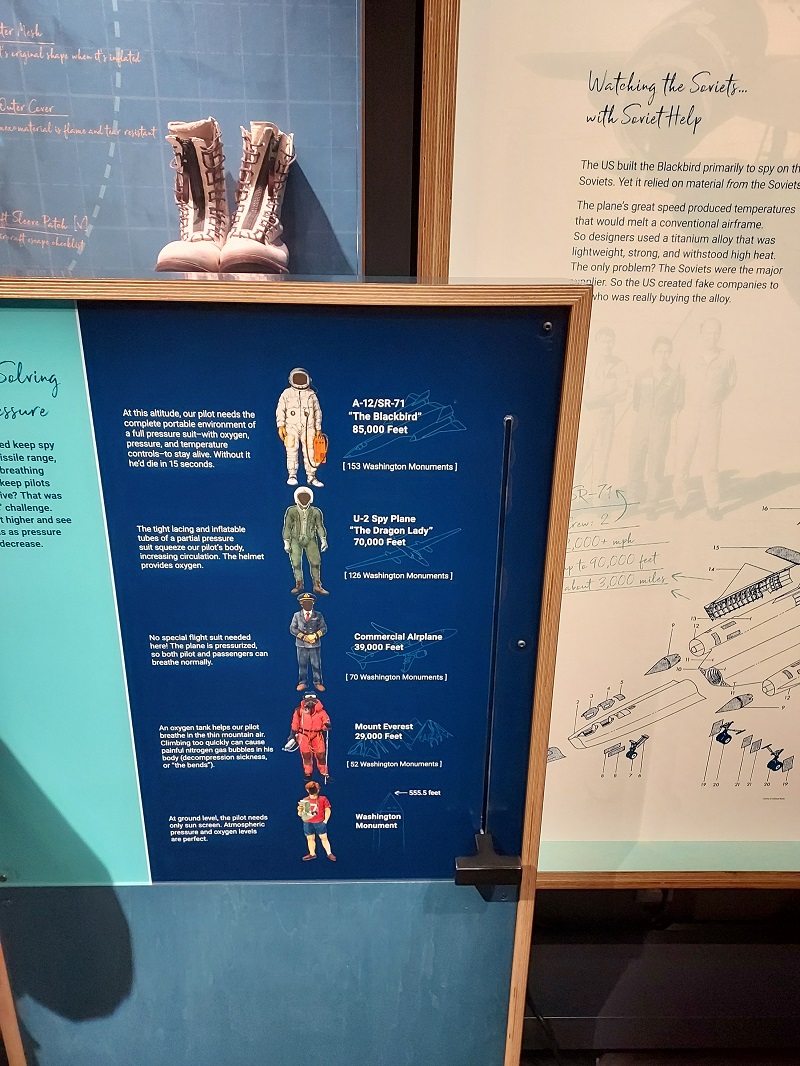
SR-71 Suit. 19FortyFive original image.
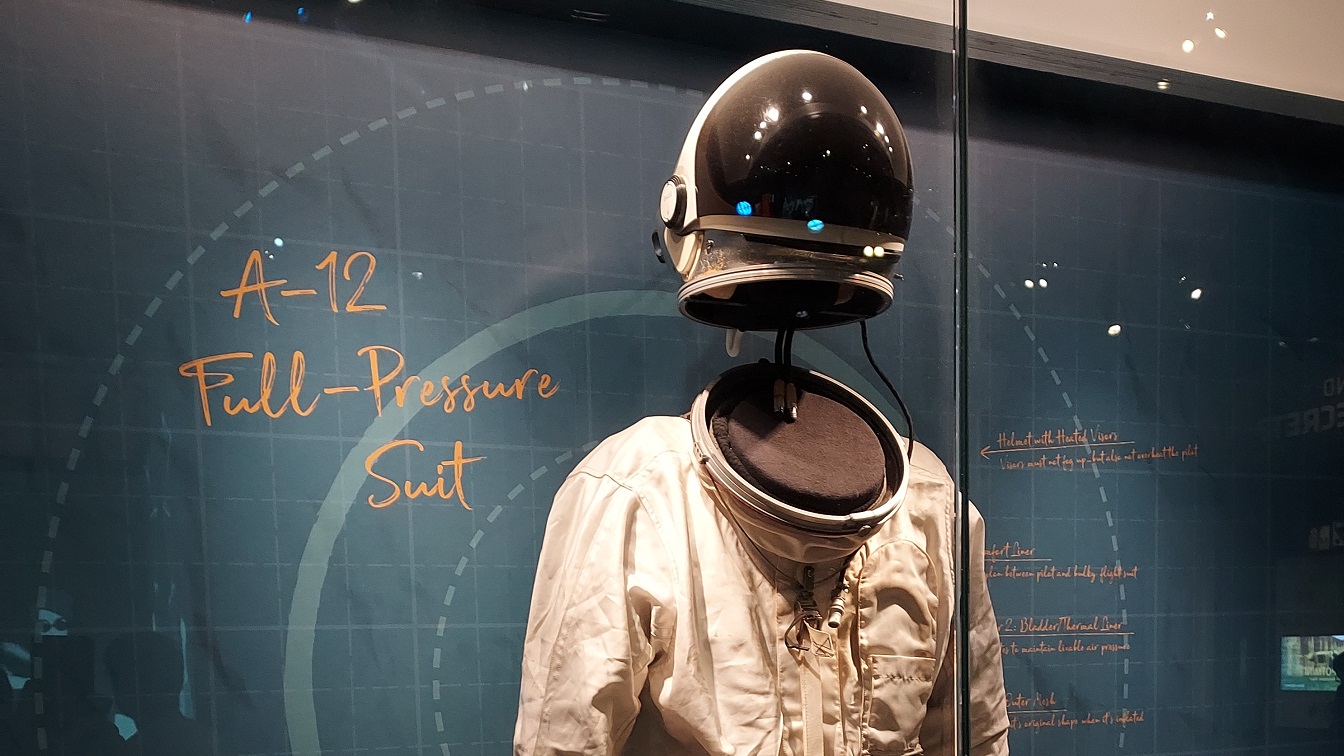
Flight suit. Image Credit: 19FortyFive Original Image.
The U.S. concluded that a new spy plane, one that could penetrate Soviet airspace at high speeds and evade missiles.
The responsibility for the project fell to Lockheed’s Advanced Development Projects (Skunk Works) division. Led by Clarence “Kelly” Johnson, the team had already been working in secrecy on the A-12 program, the first aircraft designed to cruise at Mach 3+ while incorporating early stealth features.
The A-12 first flew in April 1962 and provided a critical foundation for the SR-71. The U.S. Air Force, however, required a more capable variant capable of supporting a two-person crew and carrying more fuel and advanced reconnaissance equipment. Lockheed signed the initial contract to build the SR-71 on December 28, 1962.
What Made the Blackbird so Fast?
The SR-71’s design was unlike any previous aircraft. Approximately 85 percent of the aircraft’s structure was made from titanium, a metal chosen for its ability to withstand the intense heat generated during sustained Mach 3+ flight. The remaining structure consisted of composite materials to help reduce radar cross-section. The Blackbird’s long, narrow fuselage and swept-back chines contributed both to aerodynamic efficiency and early radar-evading characteristics.
Its dark blue-black exterior served a functional purpose as well: it helped dissipate heat and camouflage the aircraft during night operations, which eventually inspired the nickname “Blackbird.”
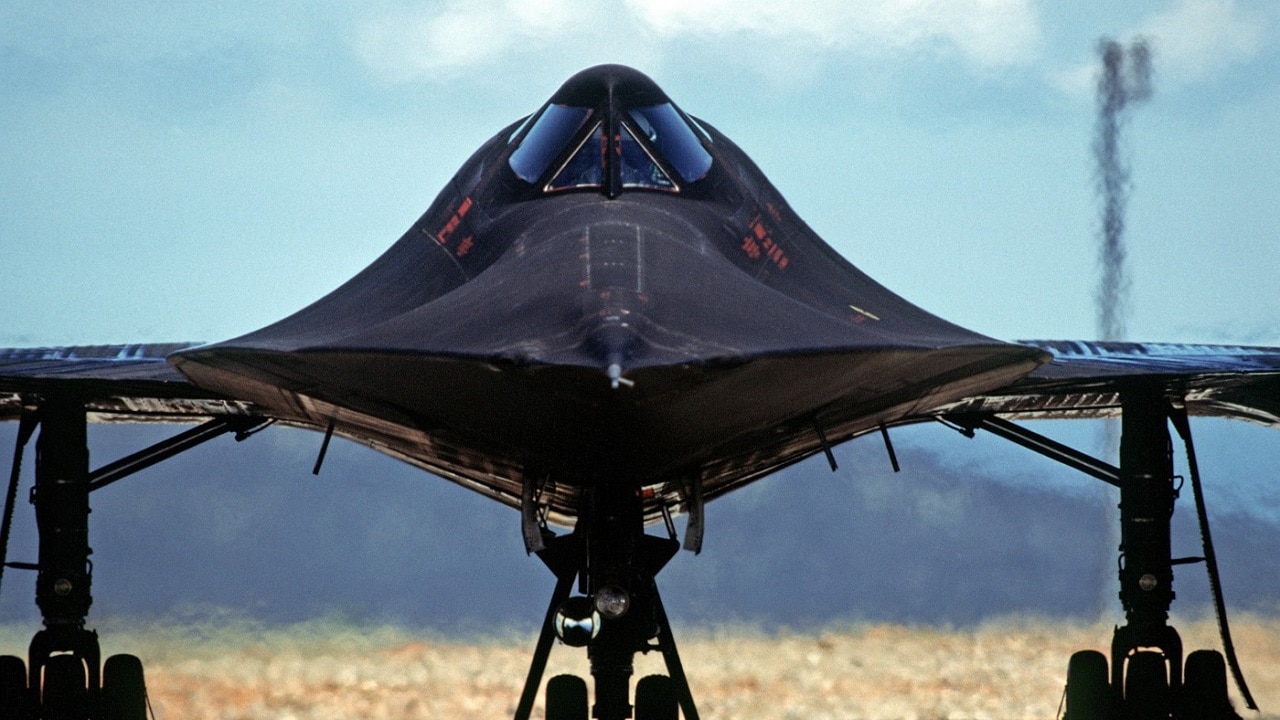
SR-71 Spy Plane. Image Credit: Creative Commons.
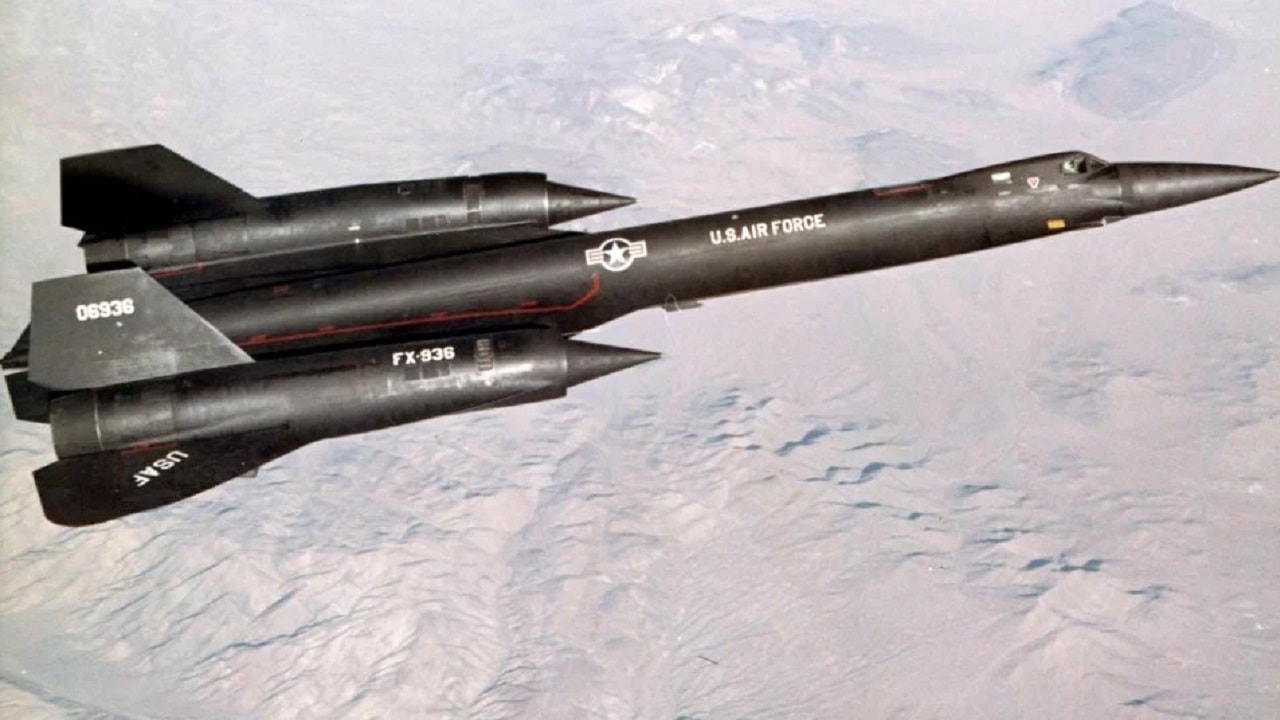
SR-71 Blackbird. Image Credit: Creative Commons.
The aircraft’s engines were another marvel of engineering. The Pratt & Whitney J58 powerplants, initially tested in 1957, used a hybrid turbojet/ramjet mode of operation that allowed the SR-71 to accelerate continuously at high altitudes. At cruising speed, the aircraft operated as a ramjet, with the engines bypassing large volumes of air directly into the afterburner.
At Mach 3.2 and altitudes above 85,000 feet, the SR-71’s performance enabled it to evade threats simply by outrunning them. Whenever a surface-to-air missile was launched at the aircraft, the standard evasive maneuver was to increase speed and outpace the missile.
SR-71: The Plane that Could Race the Sun
Operational missions began in the late 1960s, with the aircraft playing an essential intelligence-gathering role during the Vietnam War. Beginning in 1968, SR-71 missions were flown from Kadena Air Base, Okinawa, to observe activities over North Vietnam and Laos.
The Blackbird later supported reconnaissance operations over North Korea and along the periphery of the Soviet Union, particularly after flights began from RAF Mildenhall in the United Kingdom in 1976.
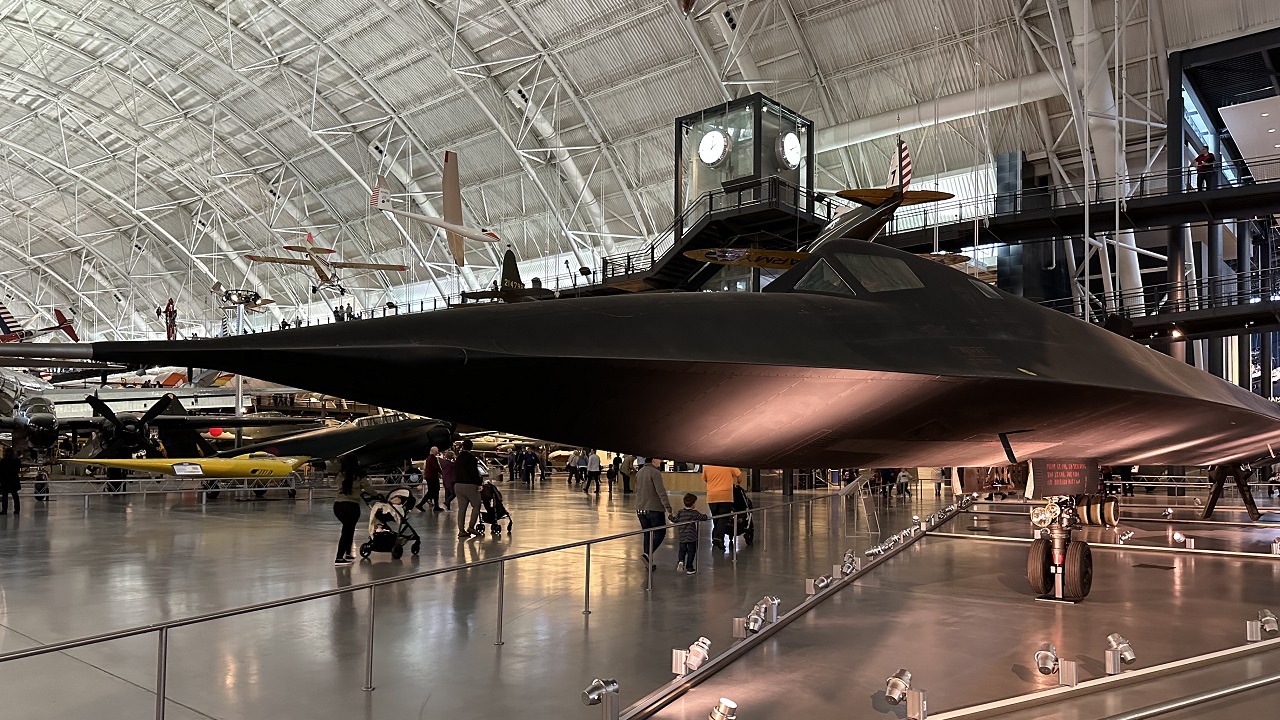
SR-71. SR-71 photo taken at the National Air and Space Museum. Taken by 19FortyFive on 10/1/2022.
These missions brought the aircraft close to Soviet airspace but never directly over it, as SR-71 flights were conducted overtly under U.S. Air Force markings rather than covertly under CIA control. Its reconnaissance missions also extended to Cuba, Nicaragua, Libya, Israel, and South Africa during periods of geopolitical tension.
Throughout its service life, the SR-71 has set and continues to hold numerous flight records. In 1974, it completed a transatlantic flight from London to New York in just 1 hour, 54 minutes, and 56 seconds, traveling at an astonishing 1,435.59 mph (for comparison, the Earth rotates at around 1,000 mph, meaning the SR-71 outpaced the Sun during its flight). Two years later, in 1976, it achieved an absolute altitude record of 85,068.997 feet and an absolute speed record of 2,193.167 mph (about Mach 3.3), accomplishments that remain unmatched by any air-breathing, manned aircraft as of 2026.
Why the U.S. Retired the Blackbird
By the late 1980s, the aircraft faced increasing scrutiny due to operating costs and a shifting strategic landscape. Several factors influenced the termination of the SR-71 program. First was the development of more advanced Soviet interceptors, such as the MiG-25 and later the MiG-31, which were not as fast as the SR-71 butcarried missiles advanced enough to pose a significant risk to the Blackbird. Secondly, surveillance satellites made the SR-71 practically redundant.
These satellites could photograph sensitive Soviet sites without entering the USSR’s airspace and without endangering any air crews. Third was the aircraft’s operating cost. With Soviet air defense increasing and spy satellites being launched into space, it no longer made sense to allocate precious resources to an advanced but ultimately unnecessary spy plane.
The Air Force’s SR-71 program was officially terminated on November 22, 1989, and the final departures from Kadena occurred in early 1990, followed by decommissioning at Beale Air Force Base shortly thereafter. Congress allocated funding in 1994 to reactivate several SR-71s, resulting in restored flights beginning in 1995, but the program was again short-lived.
NASA continued flying SR-71s throughout the 1990s, using them as research platforms for high-speed aerodynamics, propulsion studies, atmospheric science, and advanced instrumentation testing. NASA’s SR-71 flights included experiments with laser-based air-data sensors and measurements of atmospheric particles above 80,000 feet. NASA retired the SR-71 in 1999, marking its final operational deployment.
About the Author: Isaac Seitz
Isaac Seitz, a Defense Columnist, graduated from Patrick Henry College’s Strategic Intelligence and National Security program. He has also studied Russian at Middlebury Language Schools and has worked as an intelligence Analyst in the private sector.