
Summary and Key Points: A new bipartisan proposal would force the largest U.S. data centers to stop leaning on public utilities and instead secure dedicated power generation for their operations.
-The Guaranteeing Rate Insulation from Data Centers Act targets facilities that draw 20 megawatts or more, requires energy-use disclosure, and prioritizes residential customers during supply constraints.

Acting Secretary of Defense Patrick M. Shanahan, speaks with Senator Josh Hawley from Missouri, before delivering testimony to the Senate Armed Services Committee on the proposal to establish a United States Space Force at the Dirksen Senate Office Building, April 11, 2019. (DoD Photo by Navy Petty Officer 1st Class Dominique A. Pineiro)
-The push reflects growing alarm that AI and cloud computing are increasing electricity demand, triggering grid upgrades and new generation projects that utilities typically fund by spreading costs across all ratepayers.
-Supporters argue families should not subsidize server-farm expansion, while grid planners increasingly explore “bring-your-own-generation” models to protect reliability.
“Bring Your Own Power”: New Bill Targets AI Data Centers Over Your Electric Bill
A bipartisan bill introduced in Congress would require some of the nation’s largest data centers to generate their own electricity rather than relying on public utilities, marking one of the most aggressive federal efforts yet to regulate the growing energy footprint of artificial intelligence and cloud computing infrastructure.
Sens. Josh Hawley (R-MO) and Richard Blumenthal (D-CT) introduced the Guaranteeing Rate Insulation from Data Centers Act on Wednesday, February 11, arguing that ordinary households should not bear the cost of expanding power infrastructure needed to support massive server farms.
The proposal comes as electricity demand across the United States reaches record levels, driven largely by the rapid expansion of energy-intensive data centers powering AI models and cloud services. Federal energy forecasts now show U.S. electricity consumption is expected to continue rising through at least 2027, with computing centers identified as a primary driver of that growth.
Data centers already consume roughly 4% to 4.4% of all U.S. electricity, and projections suggest they could account for as much as 6.7% to 12% of national electricity use within just a few years. As utilities build new power plants to meet growing demand, lawmakers and regulators are facing the question: who should pay for powering America’s digital infrastructure?

Image Credit: Apple.

Apple iPhone. Image: Creative Commons.

iPhone 12 Pro Max. Image: Apple.
What Hawley’s Bill Will Require
The Guaranteeing Rate Insulation from Data Centers Act would require large data centers – typically those consuming 20 megawatts or more of electricity – to secure their own dedicated power generation rather than drawing entirely from shared utility infrastructure. The bill also requires operators to disclose their energy consumption and ensures that residential customers receive priority access to electricity during supply constraints.
Legislators backing the bill say that the goal is to prevent residential consumers from subsidizing the rapid expansion of energy-intensive computing facilities. Utilities traditionally recover the costs of building new power plants and related infrastructure by spreading the cost across all customers, including households. The proposed law will ensure that does not happen in this instance.
The legislation is the result of growing bipartisan concern that the energy demands of AI infrastructure could drive up electricity prices for families nationwide. Public power providers and utilities have acknowledged similar concerns, too.
If enacted, the bill would effectively shift responsibility for energy infrastructure expansion directly onto the companies driving the surge in demand – not households whose consumption remains unchanged.
Why Data Centers Consume So Much Electricity
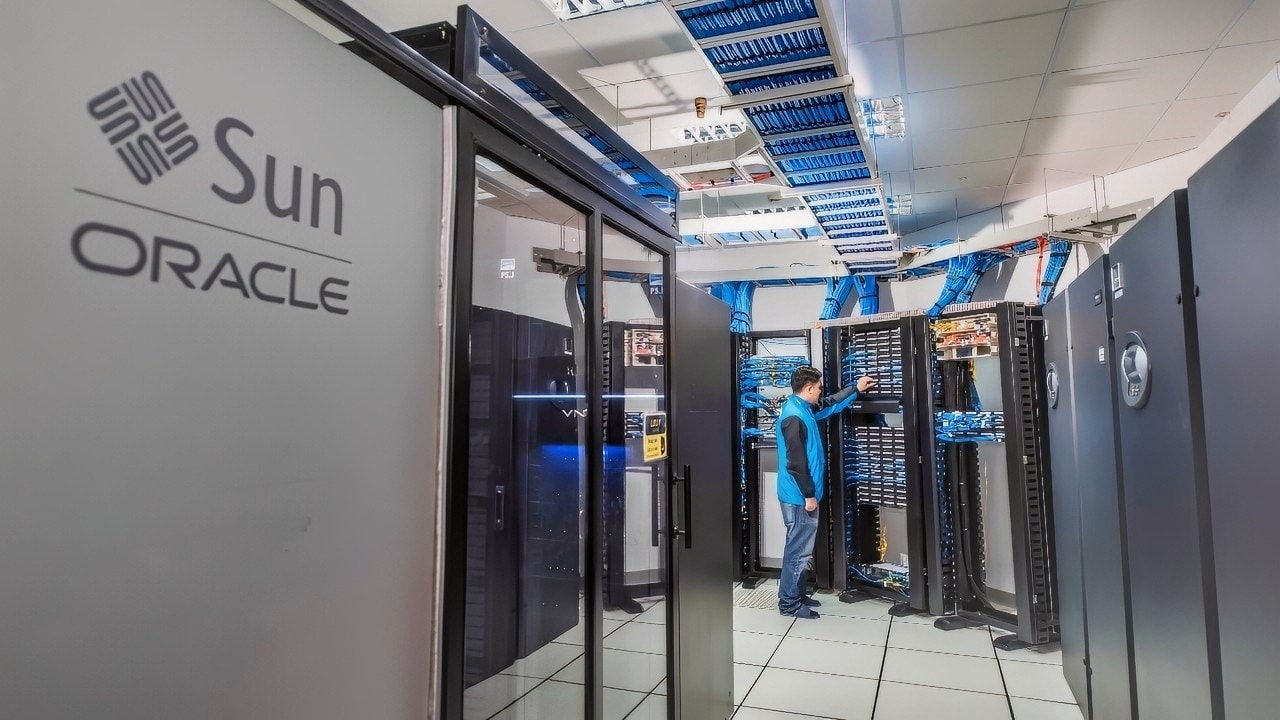
Data centers are specialized facilities that house thousands of computer servers, storage systems, and networking equipment to process and store digital information. These complex systems underpin everything that relies on the internet, from cloud computing and online banking to streaming platforms and artificial intelligence models.
Operating the facilities requires a substantial amount of electricity. Roughly 60% of data center energy use powers the servers themselves, while cooling systems – which prevent overheating from continuous operation – can account for up to 30% of total electricity consumption.
The rapid expansion of AI development and use has significantly increased power demand. Energy use by U.S. data centers rose from approximately 76 terawatt-hours in 2018 to 176 terawatt-hours in 2023, more than doubling in just five years. Some projections suggest demand could climb to 325-580 terawatt-hours annually by 2028, representing up to 12% of total U.S. electricity consumption.
Individual AI data centers can also place significant strain on regional grids. And as new data center construction accelerates nationwide, utilities must expand generation capacity – including natural gas plants, solar farms, and battery storage – to keep pace. At present, almost 3,000 new data centers are under construction or planned across the U.S.
Utilities Are Building New Infrastructure
The rapid increase in data center electricity demand is already forcing utilities to invest heavily in new infrastructure. Major U.S. utility Duke Energy recently announced plans to invest $103 billion in grid expansion and generation projects, citing rapid demand growth from new data center customers.
Some utilities have already secured gigawatts of new electricity commitments for data center operators, with additional large-scale projects planned or still being negotiated.
At the same time, regional grid operators are exploring policies that would require new data centers to supply their own generation capacity. PJM Interconnection, the largest U.S. power grid operator, has even proposed a “bring-your-own-generation” solution to ensure grid stability and prevent supply shortages.
Meanwhile, some technology companies have already begun investing directly in their own power infrastructure to anticipate regulatory changes and grid constraints. AI firm Anthropic, for example, recently pledged to cover 100% of the grid upgrade costs associated with its new data centers, rather than passing those costs on to utility customers.
But, as the new legislation makes its way through Congress, stories like this will likely fail to convince legislators that the problem can be solved without government intervention.
About the Author:
Jack Buckby is a British researcher and analyst specialising in defence and national security, based in New York. His work focuses on military capability, procurement, and strategic competition, producing and editing analysis for policy and defence audiences. He brings extensive editorial experience, with a career output spanning over 1,000 articles at 19FortyFive and National Security Journal, and has previously authored books and papers on extremism and deradicalisation.