
Summary and Key Points: Some Canadian travelers are being denied entry to the United States by U.S. Customs and Border Protection for reasons ranging from old criminal records—including pardoned cannabis convictions—to suspected unauthorized work and inconsistent explanations for travel.
-Reports describe tighter enforcement since last year, including deeper questioning, device inspections, biometrics such as facial scans and fingerprints, and longer detentions before travelers are turned back. For those deemed inadmissible, a path forward can involve the I-192 waiver process, which requires extensive documentation and can be costly.

Former President of the United States Donald Trump speaking with attendees at the 2022 Student Action Summit at the Tampa Convention Center in Tampa, Florida. Image by Gage Skidmore.
-Most crossings remain routine, but scrutiny appears higher in edge cases.
Some Canadians Are Being Denied U.S. Entry: The Records, Red Flags, and New Scrutiny
Some Canadian citizens are frequently denied entry into the United States by US Customs and Border Protection (CBP) due to criminal records (including old or pardoned cannabis convictions), suspected unauthorized work, or inconsistencies in travel purpose.
Recent reports indicate increased scrutiny, long detentions, and potential bans for minor infractions, sometimes requiring a costly I-192 waiver.
While many US and Canadian citizens cross the border back and forth with few issues, the United States has been tightening its “confusing” border rules which are being more strictly enforced by US Customs and Border Protection (CBP) since last year, including biometrics, facial scans, and fingerprinting of Canadians (which some security experts claim strips away their constitutional protections).
Facial Scans Are Now Employed by Over 100 Countries Upon Entry
Despite the criticism of the US use of facial scans, the United States is hardly alone in its use.
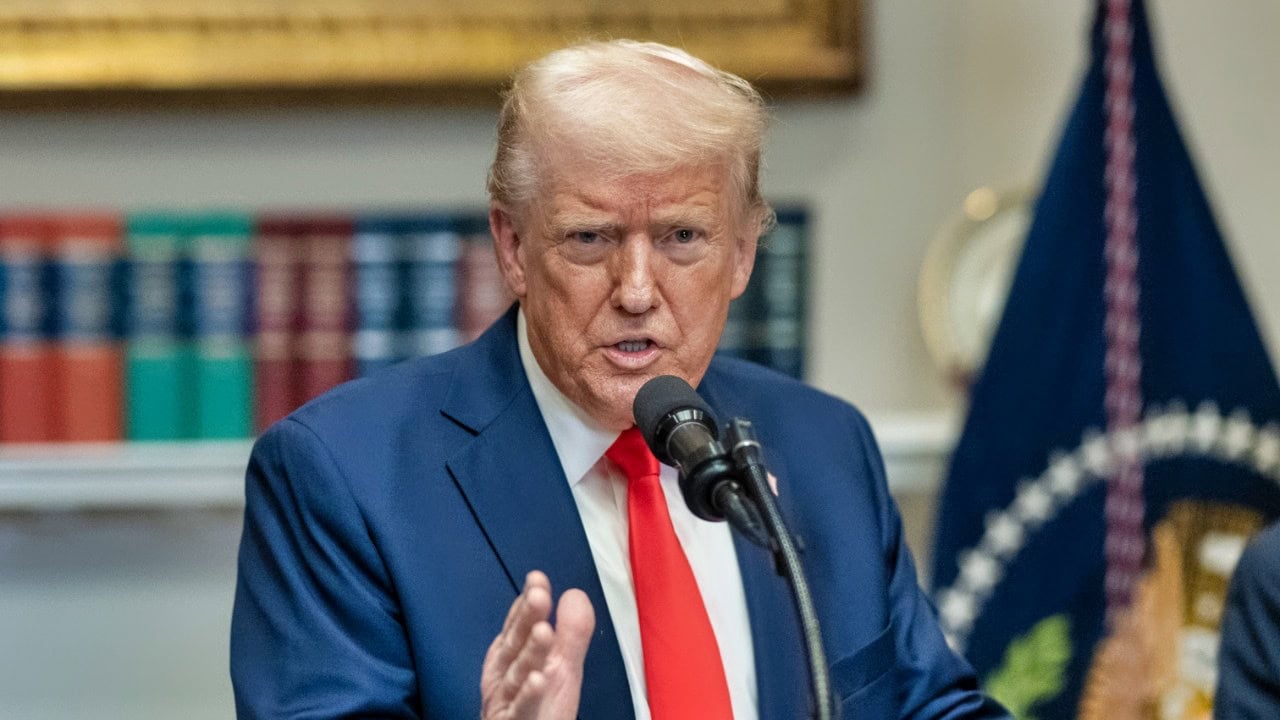
President Donald J. Trump makes an investment announcement, Monday, March 3, 2025, in the Roosevelt Room of the White House. (Official White House Photo by Molly Riley.)
Over 100 countries utilize or have approved facial recognition technology for border control or surveillance purposes.
As of late 2025, 29 European (Schengen Area) countries are implementing the Entry/Exit System (EES), which requires facial scans and fingerprints for non-EU travelers. Many other nations, including the USA, China, Japan, and Singapore, also employ facial recognition at entry points.
In the European Union (EU), 29 countries (including France, Germany, Italy, and Spain) are adopting automated facial imaging to replace passport stamps.
Facial recognition is used for surveillance or border management in over 100 countries, with 64 using it specifically for AI-driven surveillance.
These technologies are primarily used to enhance security, track entry/exit times, and prevent illegal overstays. According to Surfshark, 109 countries currently use facial recognition technology at entry points.
What Records Can Hold Back Entry Into The US
A criminal record or a cannabis conviction is being held against some travelers. Any record, even 30-year-old or minor convictions, can lead to denial.
Work authorization without a proper work visa is grounds for non-entry. Attempting to perform prohibited work—such as repairing equipment or working remotely—without a valid visa is a common reason for rejection.
The US is getting aggressive with its screening. Increased, in-depth questioning and inspection of electronic devices have been reported.
Previous misrepresentations are grounds for non-entry. Any perceived lie or inaccuracy in prior interactions may result in a permanent ban.
The Travel.com reported that one Canadian traveler said he was held by CBP three times “without explanation” and denied entry into the U.S. His rejection was a complete mystery, but some Canadians do learn why they’re not allowed into the U.S. the hard way, only when they’ve already planned their journey, spent money on plane tickets, or indeed arrived at the border only to be denied, detained, or sent back.
One traveler wrote, “I’m a Canadian citizen who has a criminal record from my teenaged days, back about 30 years ago,” but the United States can, and does refuse entry to Canadians (as well as other international visitors) with certain convictions, regardless of how many years have passed.
The US is not alone in that regard. Several years ago, I traveled with a group of Americans on a ferry from Maine to Canada. One American man in his 60s, had a cannabis conviction in his late teens prior to his being drafted and sent to Vietnam. Then, some 40 years later, Canadian authorities denied him entry into Yarmouth, Nova Scotia because of his conviction, which at the time was more serious than today.
Impact of Denial, And The Costly I-192 Waiver
Individuals may be detained, fingerprinted, and photographed before being turned away and deported.
One way to gain entry is through a waiver requirement. The I-192 waiver is a U.S. Customs and Border Protection (Form I-192, Application for Advance Permission to Enter as a Nonimmigrant) allows inadmissible Canadian citizens to temporarily enter the United States.
It is used to overcome grounds of inadmissibility, such as past criminal convictions (except certain drug offenses), fraud, or immigration violations.
It authorizes entry into the U.S. for temporary, non-immigrant purposes (e.g., tourism, business) despite a record that would otherwise result in denial at the border.
Applications must be filed online through the e-SAFE portal. It requires detailed documentation, including RCMP fingerprint checks, court records, and proof of rehabilitation. Approved waivers are generally valid for up to five years, though initial approvals may be shorter.
The cost of the I-192 Waiver is not cheap. The filing fee is $1,100 USD (as of late 2025/2026), payable by check or money order drawn on a U.S. bank.
Common Reasons for Application Of The I-192 Waiver
Criminal record (crimes of moral turpitude, multiple convictions).
A crime of moral turpitude is an act that deeply violates accepted moral standards, is often described as inherently base, vile, or depraved, and is contrary to duties owed to society.
These offenses typically involve dishonesty, fraud, or intentional harm to others, often resulting in severe consequences for non-citizens (deportation) and professionals (license revocation).
Drug-related offenses (except simple possession of under 30 grams of marijuana, which may sometimes not require a waiver, but most convictions do). Previous deportation or removal from the United States.
Once denied, future crossings may require special, advance permission, even for minor issues.
Although these instances of travelers being denied entry are rare, they receive significant media attention, especially as relations between Canada and the US have recently been strained. But it is not widespread, nor should it deter anyone from traveling back and forth.
About the Author: Steve Balestrieri
Steve Balestrieri is a National Security Columnist. He served as a US Army Special Forces NCO and Warrant Officer. In addition to writing on defense, he covers the NFL for PatsFans.com and is a member of the Pro Football Writers of America (PFWA). His work was regularly featured in many military publications