
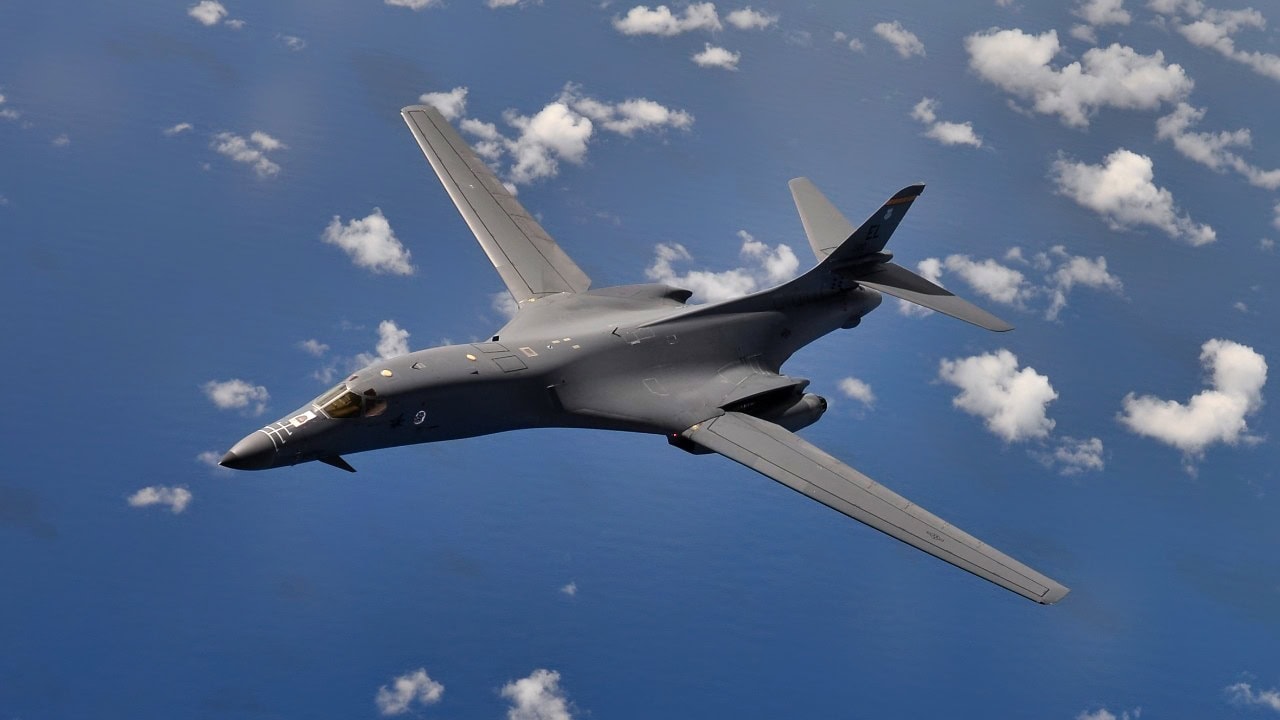
Synopsis: The B-1B Lancer was born as a Cold War nuclear penetrator, built for speed, low-level flight, and deep strikes against Soviet defenses.
-After the Cold War, its mission flipped—nuclear weapons came off the table, and sustained modernization turned the bomber into a high-volume conventional strike platform.
-Upgrades such as the Conventional Mission Upgrade Program expanded precision weapons carriage, added stand-off options like JASSM, and improved connectivity through systems like Link-16 and upgraded IFF.
-With refreshed avionics, cockpit improvements, and new pylons boosting weapons load, the B-1B remains a key bridge as the B-21 ramps up.
The B-1B’s Secret: Why This “Old” Bomber Still Matters Until the B-21 Arrives
The U.S. Air Force B-1B Lancer may be a product of the Cold War, but it is no relic: this is a bomber that has continually evolved over decades through a series of major upgrades, becoming a more capable weapon system than the one first delivered in the 1980s.
Originally built as a high-speed strategic bomber intended to penetrate enemy airspace with nuclear weapons, the B-1B today carries the largest conventional payload of any U.S. aircraft and remains central to long-range strike planning even as the next-generation B-21 prepares to enter service in the coming years.

The B-21 Raider was unveiled to the public at a ceremony December 2, 2022 in Palmdale, Calif. Designed to operate in tomorrow’s high-end threat environment, the B-21 will play a critical role in ensuring America’s enduring airpower capability. (U.S. Air Force photo)
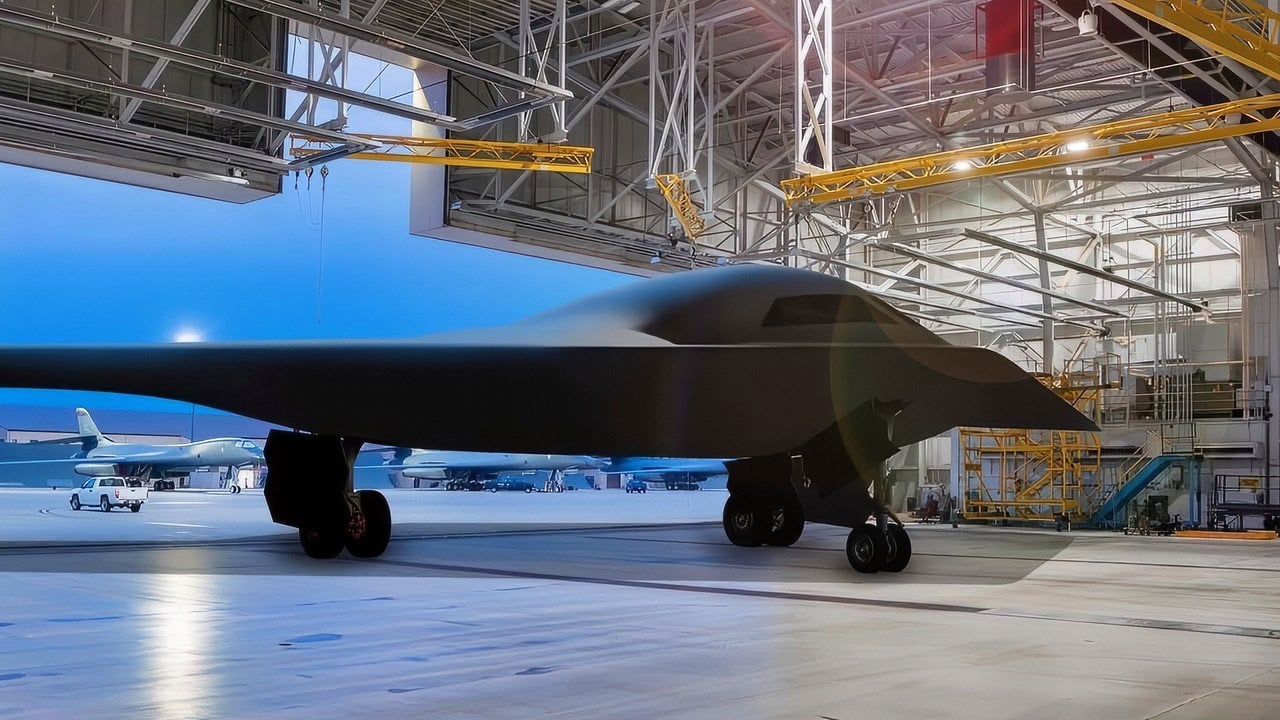
Artist rendering of a B-21 Raider in a hangar at Ellsworth Air Force Base, South Dakota, one of the future bases to host the new airframe. AFCEC is leading a $1 billion construction effort at Ellsworth to deliver sustainable infrastructure to meet warfighter demands for bomber airpower. (U.S. Air Force graphic)
That longevity and adaptability stem from both the aircraft’s original design and decades of updates to its avionics, weapons systems, communications, defensive technologies, and structural components. Each modernization effort has compounded the bomber’s lethality and survivability – as well as its mission flexibility – earning it a de facto “super” status among the nation’s working legacy airframes.
As the U.S. Air Force today balances its future capability needs with existing force requirements – and the structural limits caused by industrial base problems – the B-1B today proves how sustained investment can keep an aging fleet relevant far beyond its original design life, and fill critical gaps in the process.
What the B-1B Lancer Was Designed to Do
When the B-1 program began in the 1970s, U.S. defense planners sought to address a problem: how to penetrate Soviet territory despite the increasingly capable Soviet air defenses. The original concept – the B-1A – was intended as a Mach-2.2 supersonic strategic bomber with variable-geometry wings, capable of flying at low altitude to evade radar while carrying heavy payloads.
The B-1A never actually happened, however: a combination of political and budgetary pressures meant that the project was canceled before the aircraft ever entered production. The configuration was, however, later resurrected in the early 1980s with significant changes, and the platform became the B-1B Lancer. The new variant traded extreme speed capabilities for enhanced low-altitude performance and a reduced radar cross-section, and it ultimately entered operational service on October 1, 1986.
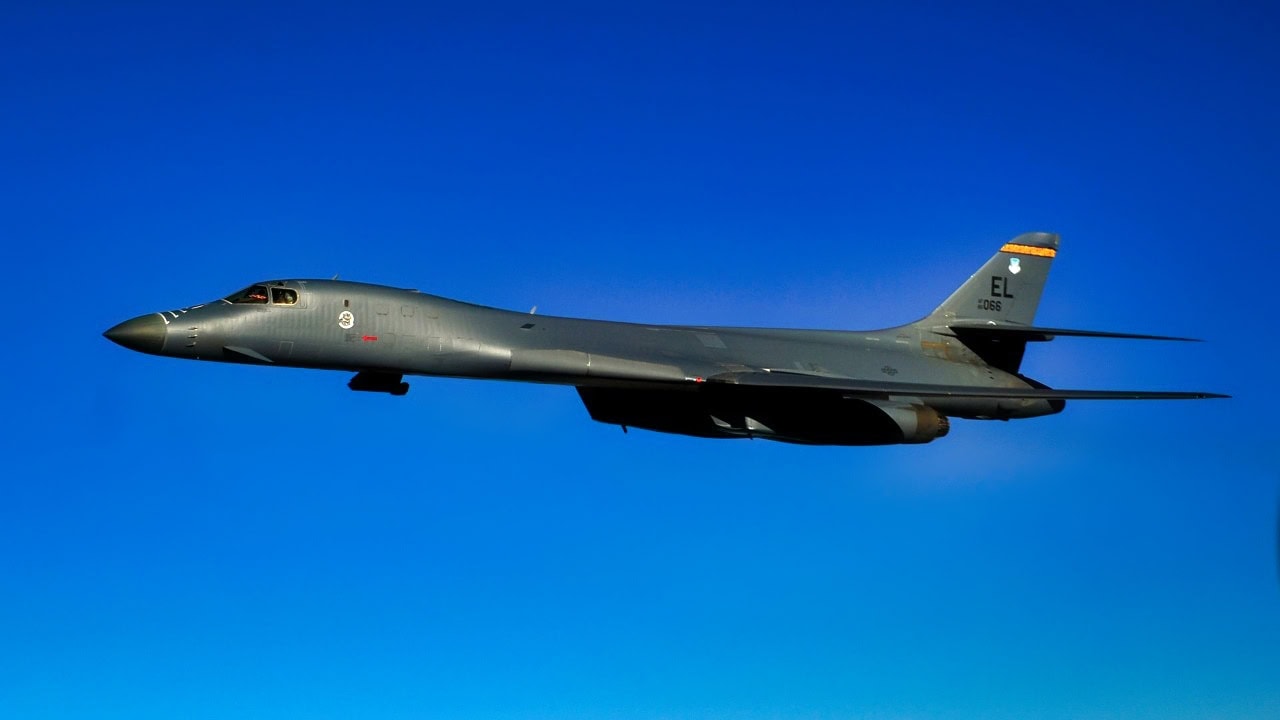
B-1B Lancer Bomber. Image Credit: Creative Commons.
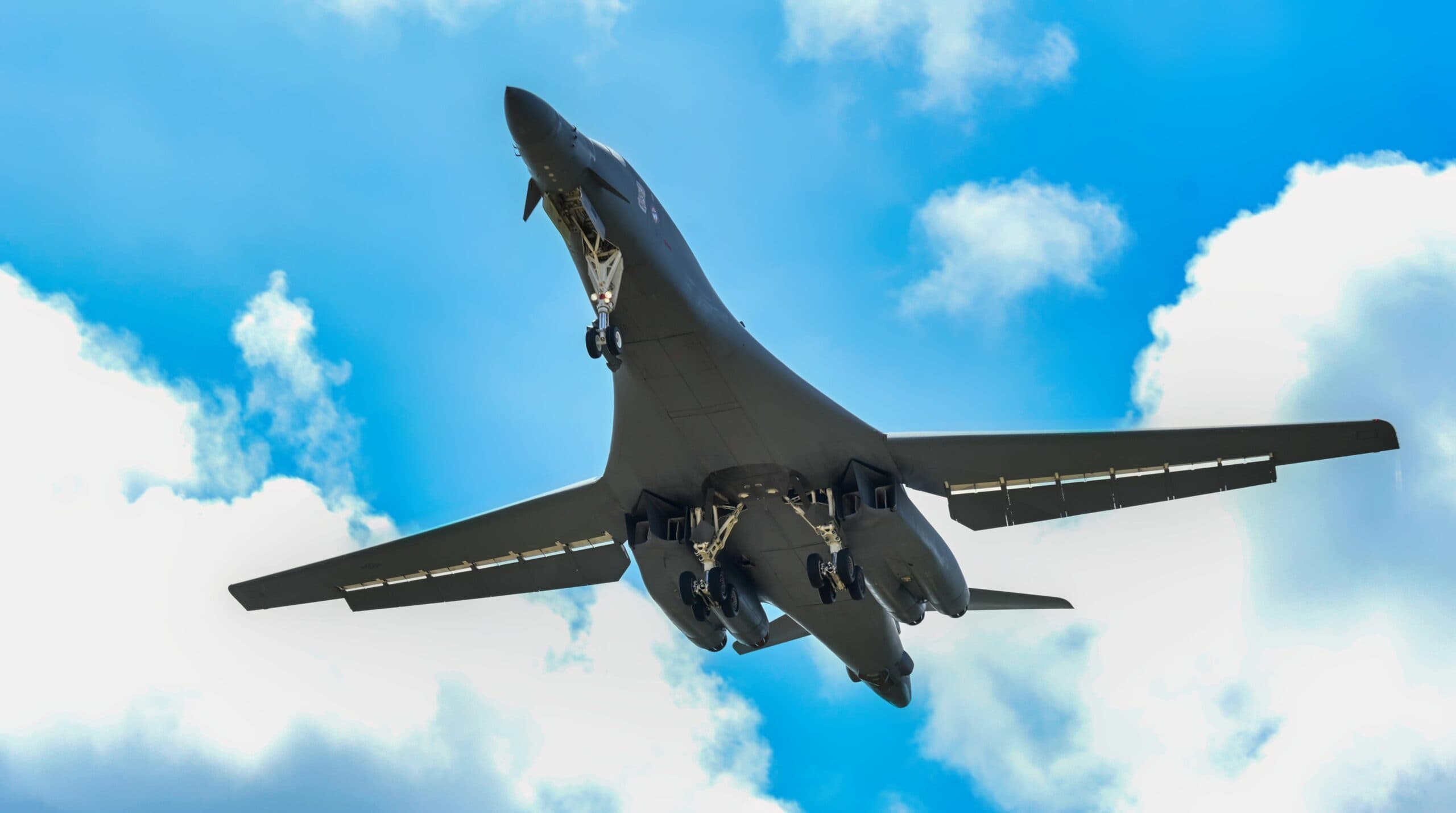
A U.S. B-1B Lancer assigned to the 34th Expeditionary Bomb Squadron, Ellsworth Air Force Base, S.D., ascends into the sky after conducting a “touch and go” maneuver during Bomber Task Force 25-1 at Andersen Air Force Base, Guam, Feb. 24, 2025. Bomber Task Force missions provide opportunities to train and work with our Allies and partners in joint and coalition operations and exercises. (U.S. Air Force photo by Airman 1st Class Alec Carlberg)
At conception, the B-1B was primarily intended as a strategic nuclear bomber under the Strategic Air Command, optimized to evade detection and deliver its payload deep into hostile territory.
Its four powerful turbofan engines and variable-sweep wings gave it a unique combination of range and speed, distinct from the slower B-52 Stratofortress and the stealth-oriented B-2 Spirit.
As the Cold War came to an end, though, so too did the U.S. Air Force’s strategic requirements – and the B-1B’s role shifted significantly.
The bomber’s nuclear mission was eliminated in the early 1990s, and it has since been retrofitted to focus solely on the delivery of conventional weapons.
How A Classic Bomber Became A Modern Strike Platform
Early in its post-Cold War life, the Air Force initiated the Conventional Mission Upgrade Program (CMUP), which adapted the bomber to carry global positioning system-guided munitions, cluster bombs and other precision weapons that were not part of its original equipment.
Over time, additional enhancements expanded the bomber’s range of weapons, allowing it to deliver not only traditional “iron bombs” (conventional air-dropped explosive weapons that lack guidance systems – also known as “gravity bombs”), but also cruise missiles like the AGM-158 JASSM and other stand-off systems at extended ranges.
In recent years, the aircraft’s modernization has accelerated through upgrades to its communications, avionics, and mission systems. New secure data links such as Link-16, along with improved identification friend-or-foe (IFF) systems, now allow B-1 crews to operate more effectively in networked battlespaces.
The aircraft can now exchange real-time information more effectively with other assets, much as modern systems do.
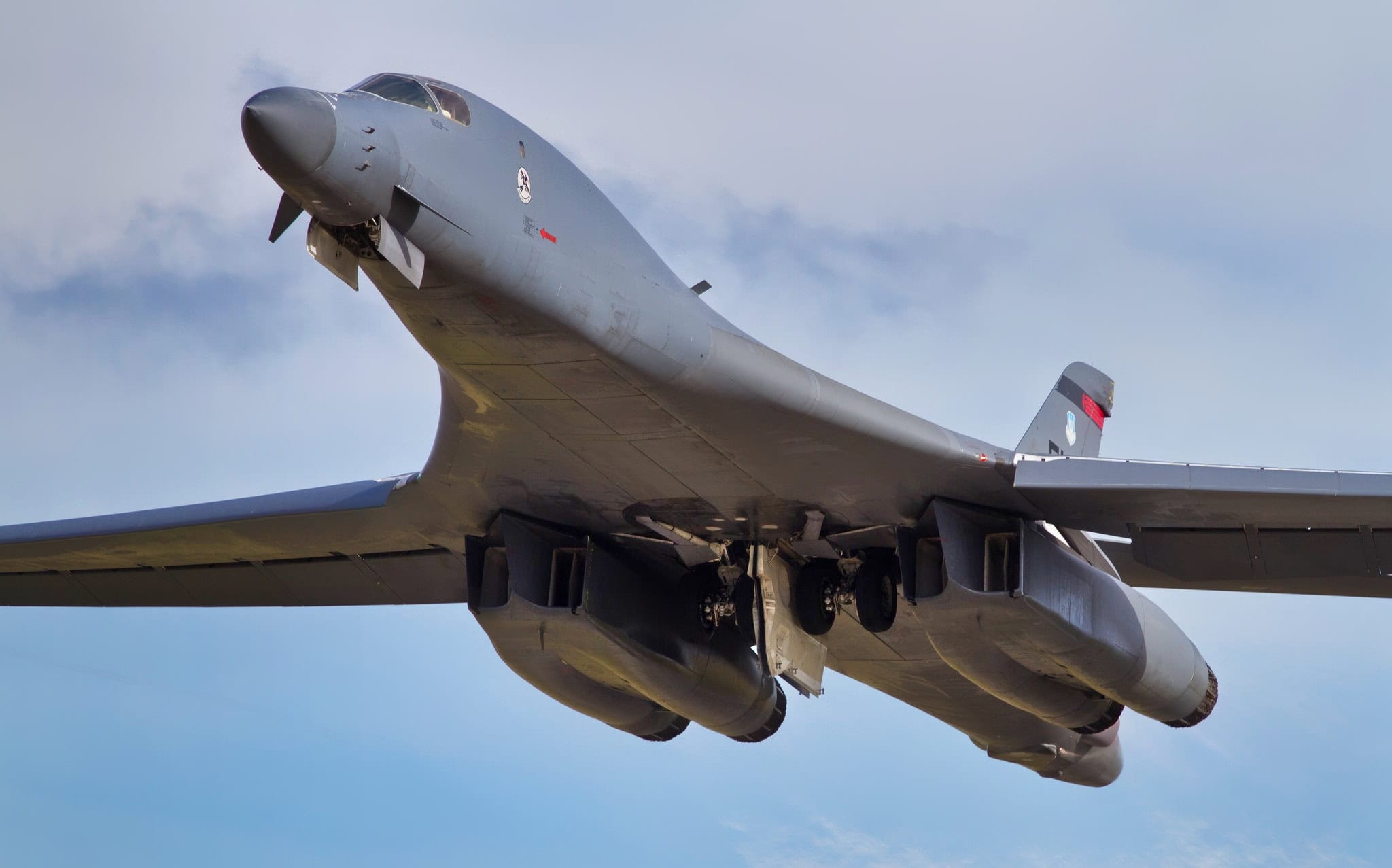
B-1B Lancer. Image Credit: Creative Commons.
The aircraft’s cockpit has also been reworked with modern displays and mission computers to reduce pilot workload and support more complex missions.
Perhaps more striking, however, are the physical modifications made to boost weapons capacity.
New external pylons now being integrated can expand the bomber’s carriage ability by up to 50 percent, and future compatibility with larger or next-generation weapons – including hypersonic munitions – is under study.
Those extensive upgrades have transformed the B-1B from its original Cold War role into a versatile, long-range strike platform capable of precision engagement and integration into modern joint force operations.
Why the B-1B Still Matters
Even as the Air Force fields newer systems, the B-1B remains indispensable for several reasons. It carries the largest conventional payload of any aircraft in the U.S. inventory, enabling massed-strike capability that few aircraft can match.
Its combination of range, payload, and speed makes it valuable for both immediate conflict response and deterrent posture in strategic competition with peer adversaries.
The B-1B also matters because of the congressionally mandated minimum requirements for bomber inventories, which aim to ensure that the United States retains sufficient long-range strike capability at all times.
Congress evaluates bomber force size and readiness as part of the annual defense authorization and appropriations processes, and as the U.S. Air Force awaits the next-generation B-21 Raider, the B-1B – and its extensive upgrades – continue to fill the gap.
About the Author: B-1B Lancer
Jack Buckby is a British researcher and analyst specialising in defence and national security, based in New York. His work focuses on military capability, procurement, and strategic competition, producing and editing analysis for policy and defence audiences. He brings extensive editorial experience, with a career output spanning over 1,000 articles at 19FortyFive and National Security Journal, and has previously authored books and papers on extremism and deradicalisation.