

Summary and Key Points: The SR-71 Blackbird remains the benchmark for manned speed and altitude, designed to survive Cold War air defenses by outrunning threats rather than fighting them.
-Officially, it cruised around Mach 3.2 at over 80,000 feet, using titanium construction to manage heat and Pratt & Whitney J58 engines that behaved like a hybrid turbojet-ramjet at high speed.
-Yet the Blackbird’s true top-end capability is still debated. Some former pilots, including Brian Shul, have described bursts beyond Mach 3.5, fueling speculation that published numbers were conservative to protect operational secrets and complicate adversary planning.
SR-71 Blackbird Speed Debate Summed Up in 1 Number: Mach 3.2 vs. Mach 3.5
Few aircraft in history have inspired as much fascination as the Lockheed SR-71 Blackbird. Developed during the Cold War by Lockheed’s secretive Skunk Works division, the SR-71 is still the fastest air-breathing manned aircraft ever operated. The Blackbird was capable of sustained flight above Mach 3 and altitudes exceeding 80,000 feet.
Its officially published cruising speed was Mach 3.2—more than three times the speed of sound—but aviation historians and those who worked with the aircraft have long debated whether the aircraft could fly significantly faster.
Some former pilots, including Brian Shul, have described flights faster than Mach 3.5, suggesting that the aircraft’s true performance may have gone beyond the officially disclosed figures. Claims such as Shul’s have fueled decades of speculation over whether Mach 3.5 could be reached only in exceptional circumstances as an emergency capability, or whether it was a routine but classified operating speed.
The debate is interesting because, unlike conventional military aircraft, the SR-71 was designed to travel as fast as possible; speed was a strategic necessity at the time.
Why the SR-71 Was Built for Speed
The SR-71 Blackbird was developed in the early 1960s at the height of Cold War tensions between the United States and the Soviet Union. Its primary mission was strategic reconnaissance: photographing military installations and troop movements deep inside enemy territory.

Front view of Lockheed SR-71A (Blackbird, s/n 61-7972, A19920072000) on display at the National Air and Space Museum’s Steven F. Udvar-Hazy Center, Chantilly, Virginia.
Earlier reconnaissance aircraft, such as the U-2, had proven vulnerable to surface-to-air missiles, and a U-2 was shot down over the Soviet Union in 1960. The SR-71 was designed to solve that vulnerability not through cutting-edge stealth or weapons, but by flying so high and so fast that enemy missiles could not catch it. Operating routinely at altitudes between 80,000 and 85,000 feet, the aircraft surveyed enormous areas while remaining beyond the reach of most interceptors.
At those altitudes and speeds, the aircraft could cover over 100,000 square miles of terrain in a single hour, providing intelligence at a scale unmatched by earlier platforms. The philosophy behind the design of the aircraft was thus: If it is detected, the SR-71 can accelerate and outrun any threat that targets it.
The need for speed as a primary defense is what drove one of the most ambitious aerospace engineering efforts ever undertaken.
The Engineering That Makes Mach 3 Cruising Possible
Flying at Mach 3 placed enormous physical demands on not only the aircraft’s shell, but on its powerful Pratt and Whitney J-58 engines. At speeds exceeding 2,200 miles per hour, friction with the atmosphere generates temperatures of hundreds of degrees. Specialized materials and designs are needed to ensure such a fast plane is safe to fly.
The SR-71 was constructed largely from titanium, a metal capable of withstanding extreme heat without losing strength. The Pratt & Whitney engineers were just as revolutionary. While conventional jet engines operate as turbojets, the J58 engines switched into a hybrid mode at high speeds and behaved partially like a ramjet—a propulsion system that becomes more efficient as speed increases.
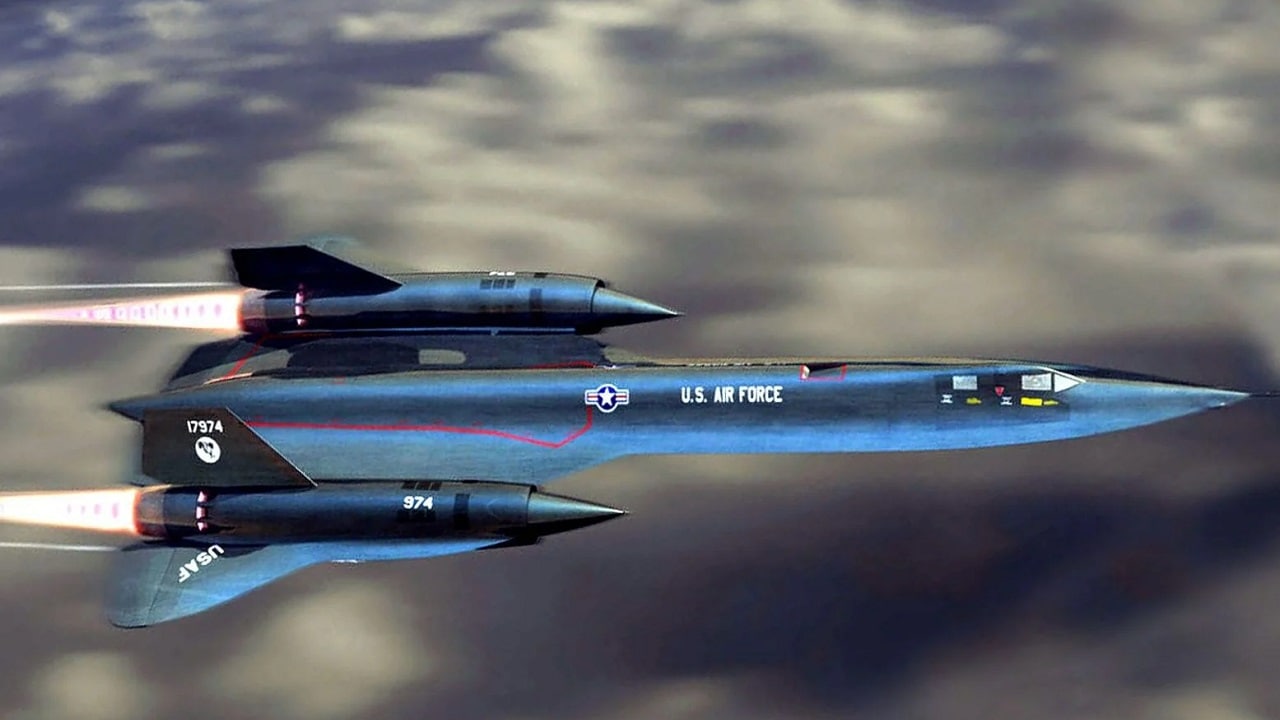
SR-71 Spy Plane. Image Credit: Creative Commons.
That design allowed the aircraft to maintain sustained supersonic cruise—not just brief bursts of extreme speed. The SR-71 was specifically designed to cruise efficiently at Mach 3.2, making it uniquely capable of operating continuously at speeds that most aircraft could only reach temporarily.
What Speed Could It Really Reach?
Despite its official speed record of Mach 3.3, many observers suggest that the SR-71 could actually fly significantly faster under certain conditions. Pilots say the same thing. Indeed, Shul claims the aircraft exceeded Mach 3.5 during a mission over Libya in 1986 while evading a missile. The jet’s true limits may not have been fully explored, or disclosed.
Lockheed engineers and historians, however, have long insisted that Mach 3.2 was the safe operational limit for the aircraft, and that is a better metric than whatever the aircraft’s actual maximum speed may be. Operating faster than Mach 3.2 could place additional thermal stress on the aircraft’s structure and engines, thereby shortening its service life.
Cold War secrecy explains why no one really knows for sure.
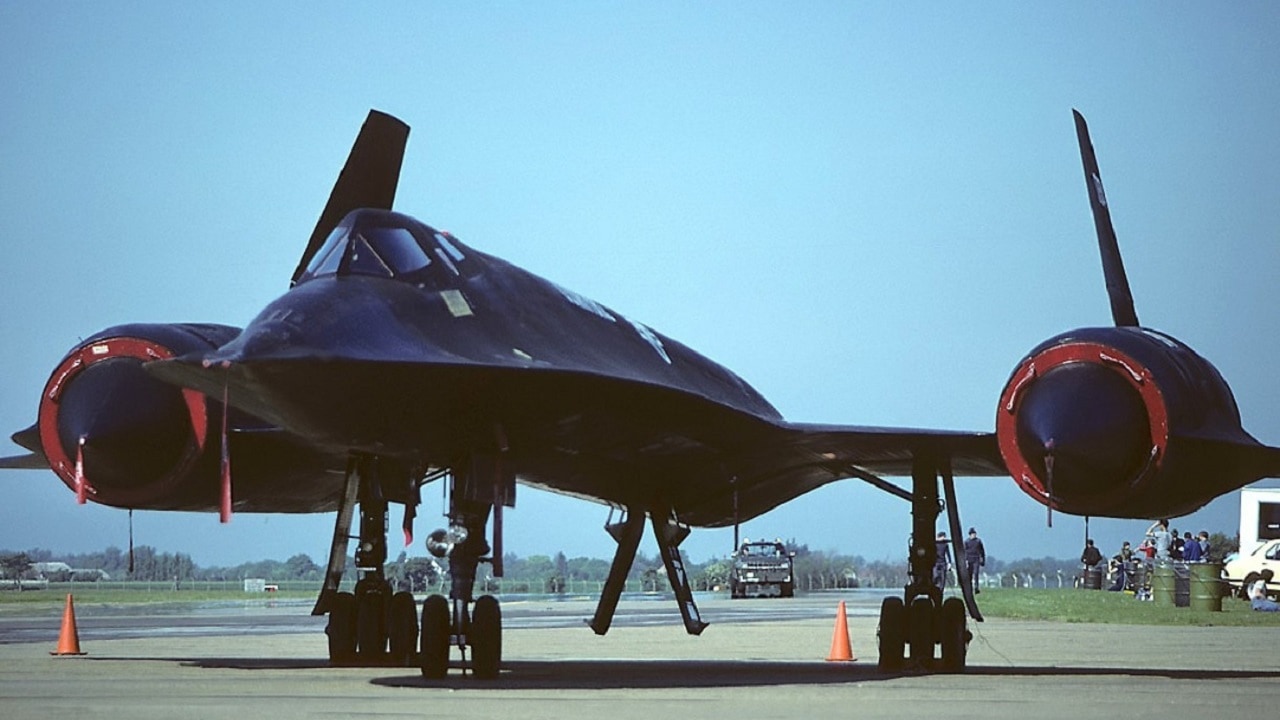
Image of SR-71 Spy Plane. Image Credit: Creative Commons.
Because speed was central to the aircraft’s survivability, revealing its true capabilities could have allowed adversaries to design weapons specifically capable of intercepting it. Official performance figures, therefore, could have been deliberately conservative.
But even at Mach 3.2, there was nothing capable of catching up with the SR-71 at the time. Consider this: Mach 3.5, the speed at which the SR-71 is said to have flown over Libya, is roughly 2,680 mph—fast enough to travel from New York to Los Angeles in about 70 minutes.
About the Author: Jack Buckby
Jack Buckby is a British researcher and analyst specialising in defence and national security, based in New York. His work focuses on military capability, procurement, and strategic competition, producing and editing analysis for policy and defence audiences. He brings extensive editorial experience, with a career output spanning over 1,000 articles at 19FortyFive and National Security Journal, and has previously authored books and papers on extremism and deradicalisation.