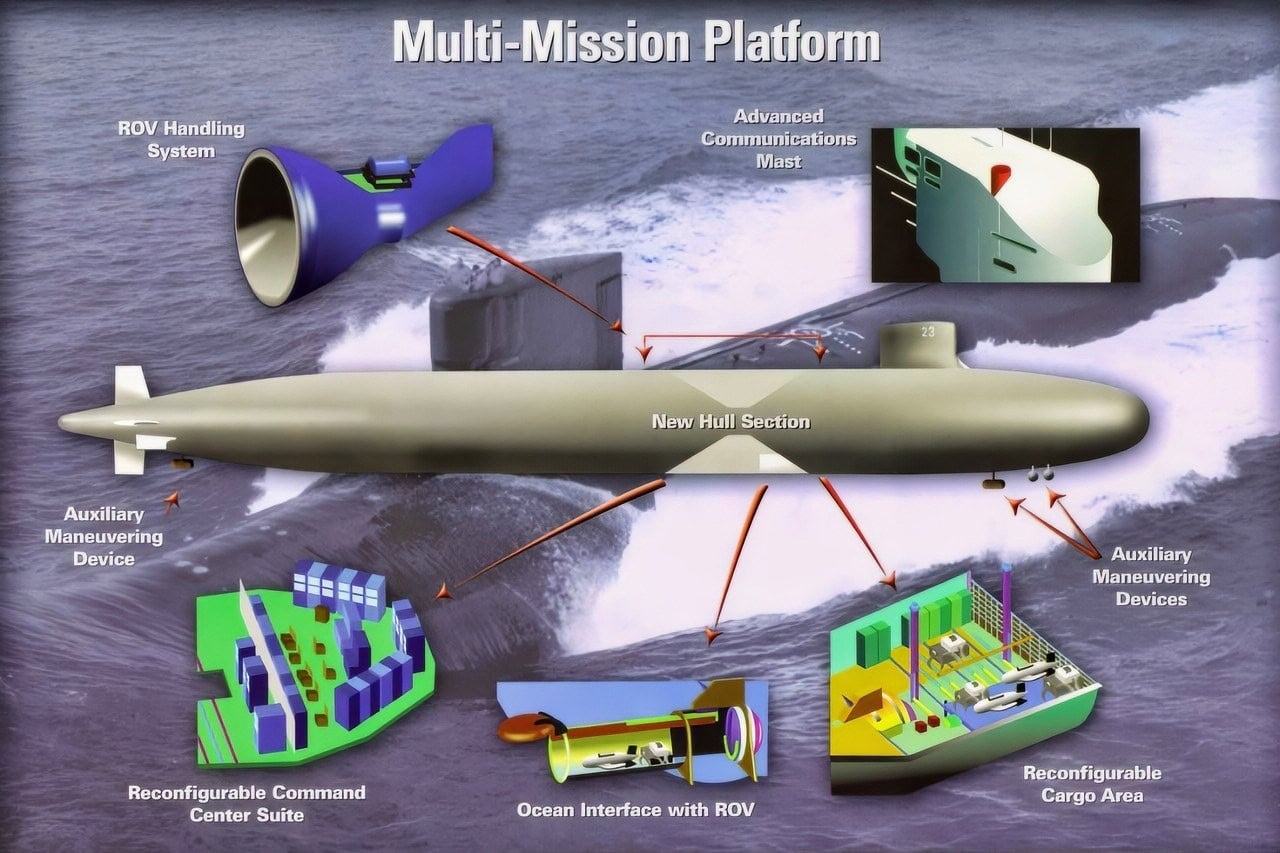
Summary and Key Points: Brandon J. Weichert, Senior National Security Editor and iHeartRadio host, analyzes the strategic fallout of the Seawolf-class (SSN-21) procurement failure.
-Designed to counter advanced Soviet threats, the program was slashed from 29 hulls to just three following the Cold War, leaving the USS Seawolf, USS Connecticut, and USS Jimmy Carter to carry the burden of the Navy’s most classified missions.
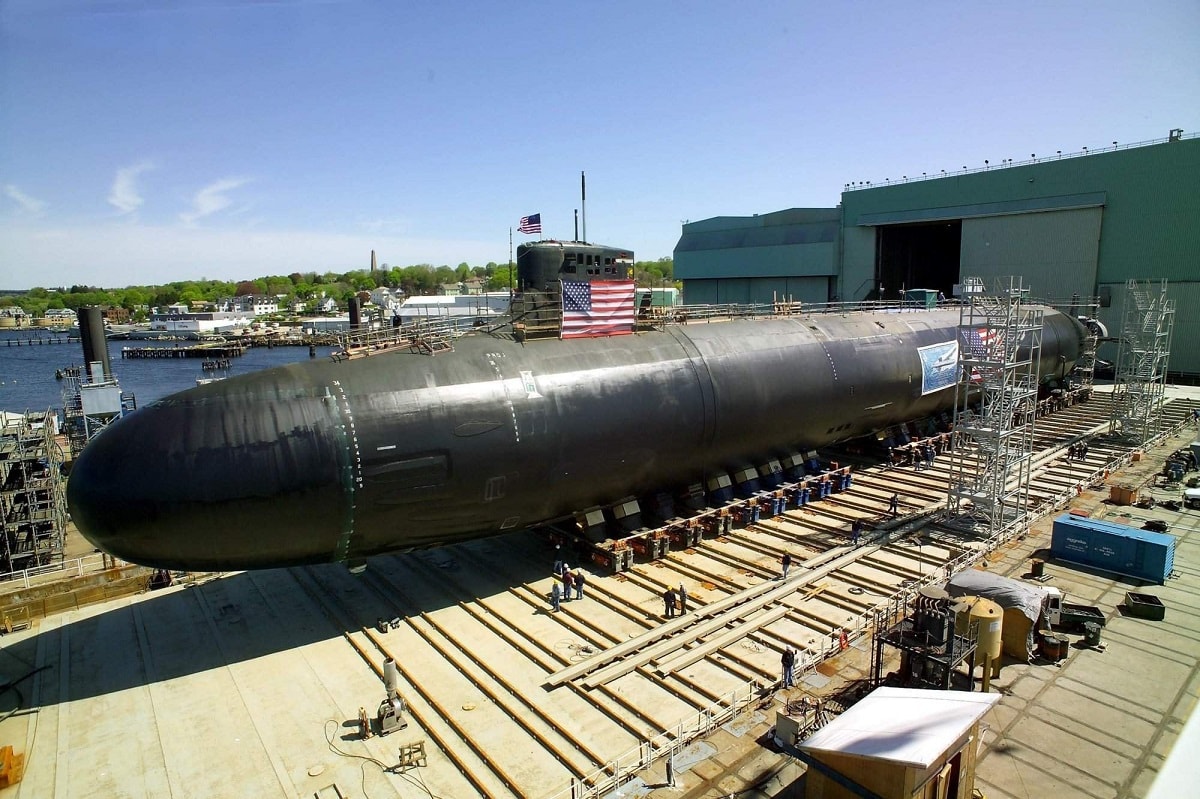
Seawolf-Class. Image: Creative Commons.
-This 19FortyFive report explores how the “sticker shock” of the $3.5 billion price tag led to the smaller Virginia-class, creating a quantitative gap as China builds the world’s largest submarine force.
3 vs. 29: The Trillion-Dollar Failure to Build America’s Ultimate Attack Submarine, the Seawolf-Class
While the Cold War is correctly remembered as a fearful era in which the world’s two superpowers, the United States and Soviet Union, danced around a nuclear knife’s edge for decades, there were some interesting upsides to that constant competition, notably in the development of advanced weapons and platforms.
The Illusion of Permanent Peace
Although the Cold War’s bloodless end was a blessed time to be alive, the sudden collapse of the Soviet Union as a threat dislocated many important U.S. military programs. Understandably, Congress wanted to pull back from lavishing tax dollars on a military that was no longer required to fight a nuclear third world war on short notice.
But when classical geopolitics returned to the forefront, the United States found itself behind the curve.
Seawolf: The Submarine Built for Dominance
The United States, at the end of the Cold War, had been developing the Seawolf-class attack submarine.
It is undoubtedly the most sophisticated submarine the United States had ever built. The goal was to create a fleet of 29 Seawolf-class attack submarines (SSNs) that would have replaced the U.S. Navy’s iconic Los Angeles-class SSNs.
That idea died when the threat of the Soviet Navy died. Instead of getting 29 Seawolf-class subs, the Navy got only three. Afterward, the production line was shuttered, and plans for the remaining subs were scuppered.
The Peace Dividend That Hollowed Out the Navy
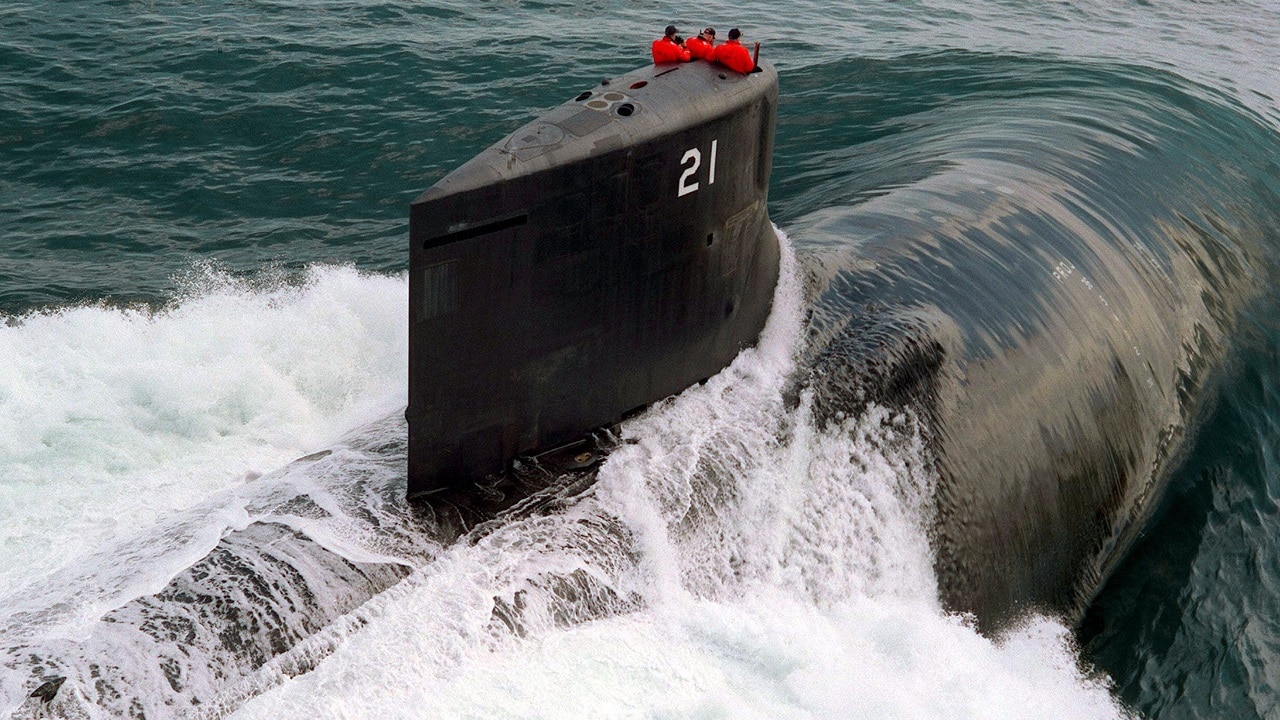
The U.S. Navy’s newest attack submarine, USS Seawolf (SSN 21), conducts Bravo sea trials off the coast of Connecticut in preparation for its scheduled commissioning in July 1997.
Today, the Navy disproportionately relies on those three Seawolf-class submarines for a variety of classified operations. These submarines do everything from undersea surveillance to conducting risky patrols deep inside enemy territory.
Had a force of 29 been constructed, the United States today would be leagues ahead of their near-peer rivals, such as China and Russia. Instead, the Americans are forced to rely upon three subs, with one of them, the USS Connecticut (SSN-22), being out of commission for another year after it crashed into an underwater mountain in the South China Sea in 2021.
The loss of the Connecticut for the last several years has significantly hamstrung the U.S. Navy’s undersea operations.
To be fair, there was a degree of sticker shock among the members of Congress who, in their post-Cold War euphoria, could not justify splurging $3.5 billion per submarine. They favored the creation of a smaller, cheaper attack submarine, the Virginia-class.
Quantity vs. Quality: The Seawolf-Class Dilemma
The Virginia-class program has suffered through all manner of complications, including scheduling issues and significant cost overruns.
Had the Navy and Congress simply stuck to their guns and funded the original Seawolf-class order fully throughout the relatively peaceful 1990s, the Navy would not be in the rut that it is in.
The Navy lacks enough submarines and surface warships, and the effects of the shortage are now being exacerbated by the mass production of China’s naval forces. There is a near-constant need to have a finite number of U.S. Navy subs and warships seemingly everywhere at once.
The Seawolf-class would have ameliorated this problem and ensured a greater degree of stability globally.
This is not just about the end of the Cold War catching the bean counters in the Pentagon off-guard. The failure to build a requisite number of Seawolf-class submarines is another of many failures of the Pentagon bloated acquisitions process. It was a failure to take account of the basic needs for the Navy.
The Coming War Will Be Won by Shipyards, Not Sailors
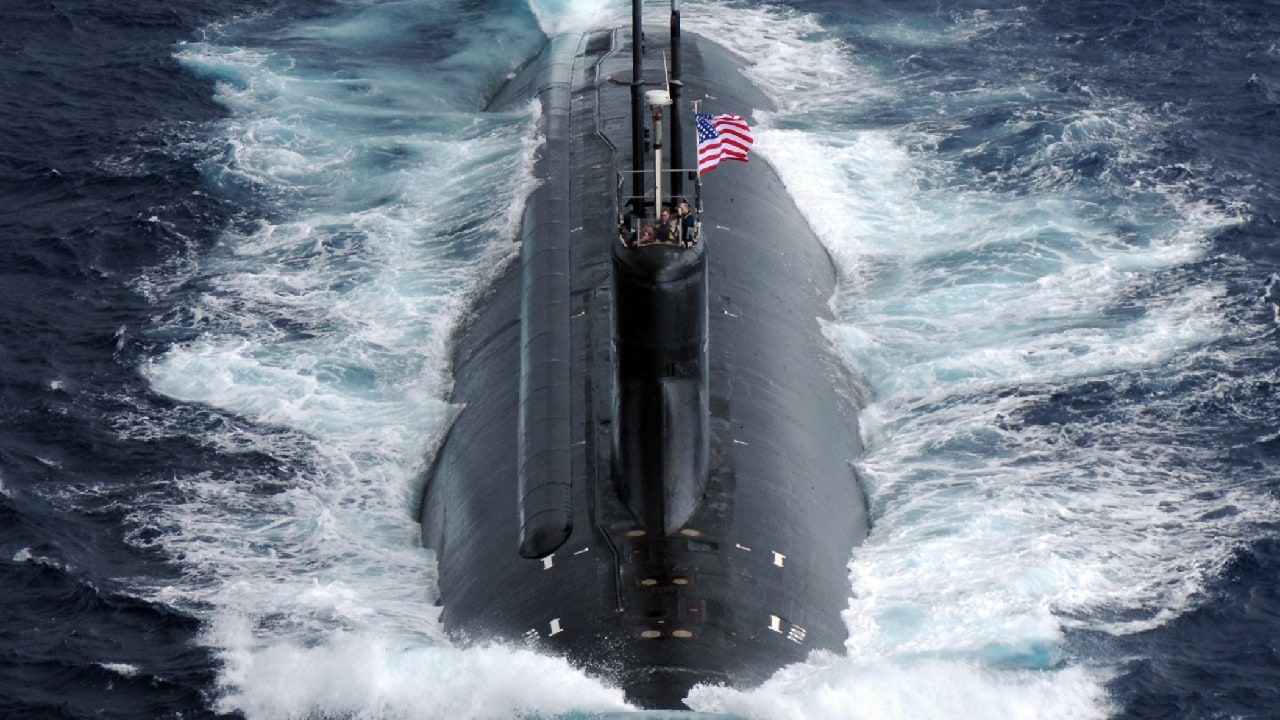
The Seawolf-class fast-attack submarine USS Connecticut transits the Pacific Ocean during Annual Exercise. ANNUALEX is a yearly bilateral exercise with the U.S. Navy and the Japan Maritime Self-Defense Force.
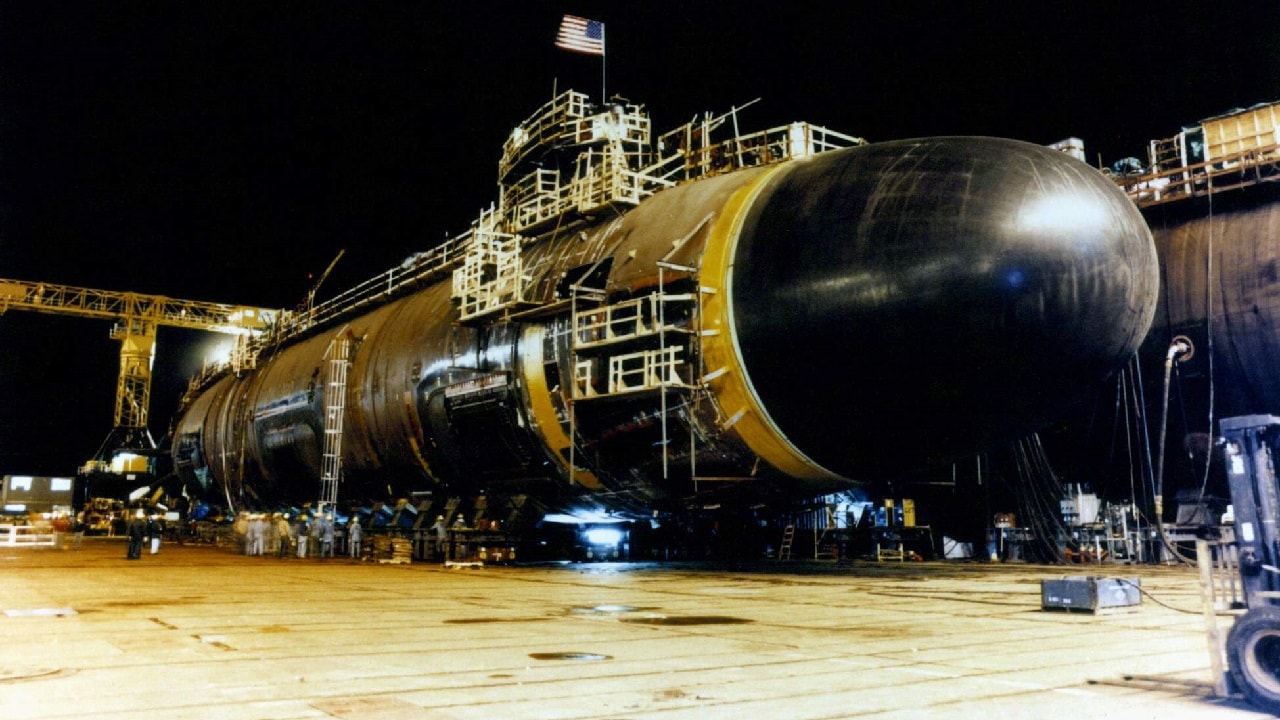
The first of a revolutionary new class of fast attack submarine, the Seawolf (SSN-21). Shown during construction at the Electric Boat Division of General Dynamics Corporation in Groton, Conn. She was christened by Margaret Dalton, wife of Secretary of the Navy John H. Dalton, on June 24, 1995.
It shouldn’t have mattered that the Soviet Navy was no longer a threat. Unless the Pentagon and Congress were prepared to make the case that the submarine was no longer important in the 1990s, they should have pressed ahead with the program—even if it meant cutting programs that Congress and the Defense Department believed were more important.
At the core of such decision-making is a failure to understand and appreciate the importance of undersea warfare. It was important 35 years ago. It is even more important today.
Meanwhile, China has in short order created the second-largest submarine force. It is on track to becoming the largest sub force, just as China now has the world’s largest overall fleet.
Skill is a key factor in naval warfare, and I still believe the seamanship of U.S. Navy personnel is better than that of the Chinese. But that gap may close over time, and quantity is also important. The next major war will be determined not by superior seamanship and better submarines. It will be determined by superior mass production capabilities.
About the Author: Brandon J. Weichert
Brandon J. Weichert is the Senior National Security Editor at 19FortyFive.com. He was previously the senior national security editor at The National Interest. Weichert is the host of The National Security Hour on iHeartRadio, where he discusses national security policy every Wednesday at 8pm Eastern. He hosts a companion show on Rumble entitled “National Security Talk.” Weichert consults regularly with various government institutions and private organizations on geopolitical issues. His writings have appeared in numerous publications, among them Popular Mechanics, National Review, MSN, and The American Spectator. And his books include Winning Space: How America Remains a Superpower, Biohacked: China’s Race to Control Life, and The Shadow War: Iran’s Quest for Supremacy. Weichert’s newest book, A Disaster of Our Own Making: How the West Lost Ukraine, is available for purchase wherever books are sold. He can be followed via Twitter/X @WeTheBrandon.