
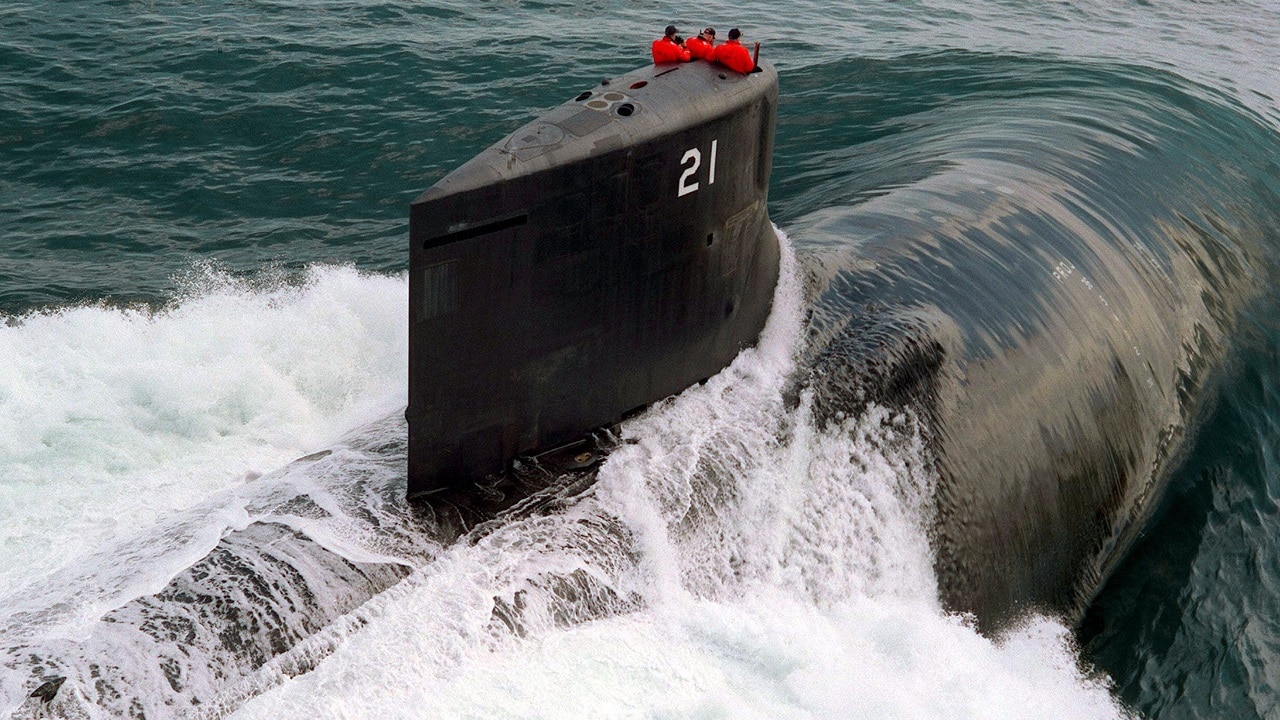
Summary and Key Points: As of February 2026, the U.S. Navy faces a critical “submarine squeeze” as aging attack boats retire faster than Virginia-class replacements arrive.
-To bridge this gap, the Navy is shifting from experimental UUV research to operational deployment of Unmanned Undersea Systems as a combat-ready layer.
-By offloading routine ISR, seabed monitoring, and mine warfare to autonomous platforms like the Orca XLUUV, the Navy aims to free up its limited SSN fleet for high-value missions.
-This 2026 strategy prioritizes “operational density” and coercive friction to maintain sea denial in the First Island Chain.
Submarine Crisis: Why the U.S. Navy is Ditching “Science Projects” for Combat-Ready UUVs in 2026
The U.S. Navy is entering a submarine squeeze that it cannot close before Attack boats are retiring on schedule. New ones are arriving late. The boats that remain are being stretched thinner across a Pacific that is not shrinking. If Washington is serious about keeping sea denial credible in the Western Pacific, the Navy has to stop treating unmanned undersea systems as a science project and start using them as a bridging layer that buys time, injects uncertainty, and frees scarce SSNs for the missions only they can perform.
That requires a plan built for wartime utility, not peacetime experimentation.
What the Navy Should Be Trying to Achieve
Start with the standard. The near-term goal is not to build a robotic substitute for an attack submarine. That impulse leads straight into the same trap the fleet is already in: exquisite platforms, slow output, limited numbers, and risk aversion in a crisis.
The goal is operational density. The Navy should increase the frequency of forward deployments, without tying up an SSN. It should be pushing attack submarines up the value chain so they spend less time on routine sensing and more time on what changes campaign geometry: tracking hostile submarines, holding surface groups at risk, and delivering strikes from inside contested waters.
The second goal is coercive friction. A smaller SSN fleet can still impose denial if it forces China’s navy to spend more time screening, searching, and second-guessing. Undersea warfare is a domain of uncertainty. The United States should be generating more of it.

The Virginia-class submarine USS Vermont (SSN 792) makes her way up the Thames River and past Fort Trumble and the Coast Guard Cutter Borque Eagle as she returns home to Submarine Base New London on Thursday, December 24, 2020. The nineteenth and newest Virginia-class submarine she is the third U.S. Navy ship to be named for the Green Mountain State. (U.S. Navy Photo by John Narewski/Released)
The third goal is persistence in the places that matter. The First Island Chain is not an abstraction on a briefing slide. It is a live operating environment composed of chokepoints, transit corridors, patrol boxes, and acoustic approaches, where early warning and cueing determine whether U.S. forces arrive informed or blind. Presence in those waters is not symbolic. It is functional. It shapes reaction time, tracking confidence, and escalation control in the opening hours of a crisis.
If the Navy cannot surge enough hulls to maintain that persistence, it needs something else already forward. Not surge presence, but pre-positioned awareness. A sensing grid is in place before the shooting starts.
The UUV Jobs That Actually Matter
A useful unmanned underwater vehicle is one that saves SSN time. That is the organizing principle for bridging the gap. The question is not what unmanned systems can do in theory. It is what missions they can absorb that would otherwise consume finite attack-boat availability.
The first priority is persistent ISR. Large and extra-large UUVs should be tasked with remaining forward for extended periods, monitoring key approaches, and gathering baseline signatures. That is not glamorous, which is exactly why it should be automated. Every long ISR patrol done by an uncrewed platform is one less patrol consuming a crewed boat’s finite availability.
The second priority is seabed work. Survey, monitoring, and infrastructure awareness are becoming core undersea missions. They are also labor-intensive. Uncrewed systems can map, revisit, and monitor with a patience that crews cannot sustain at scale. That matters in a theater where seabed infrastructure is both a sensor layer and a target set.
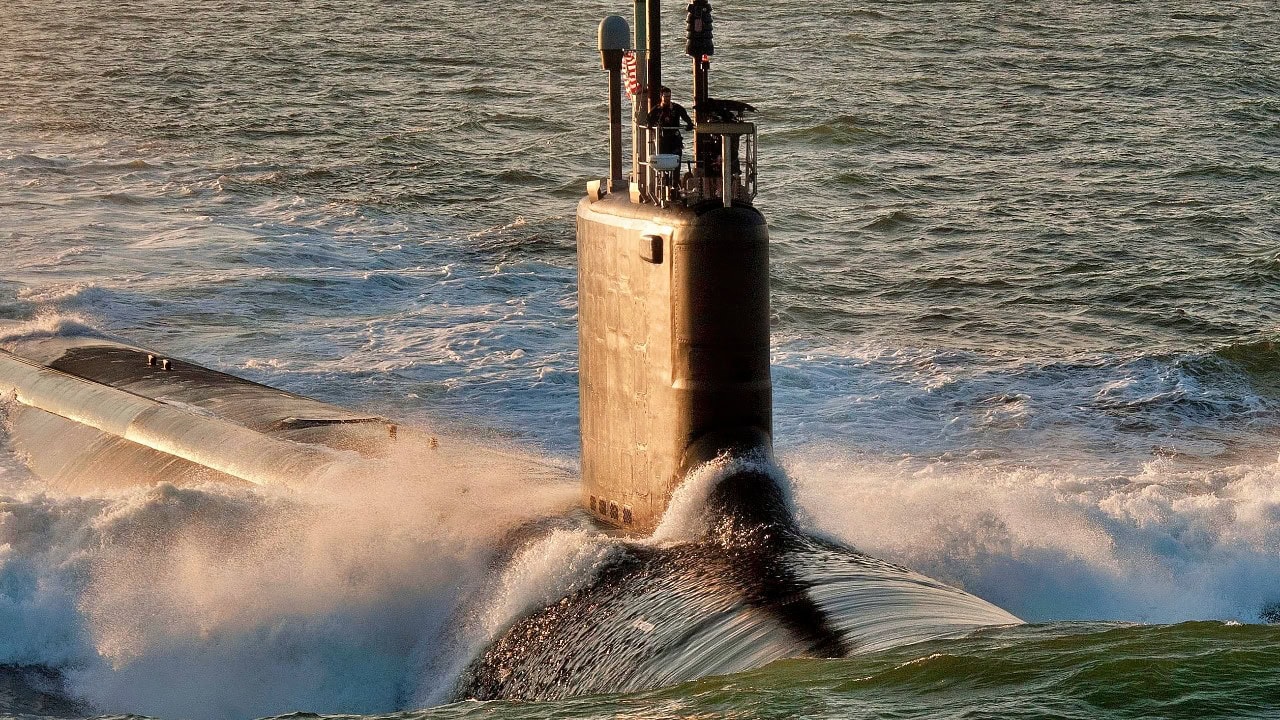
U.S. Navy Virginia-Class Submarine.
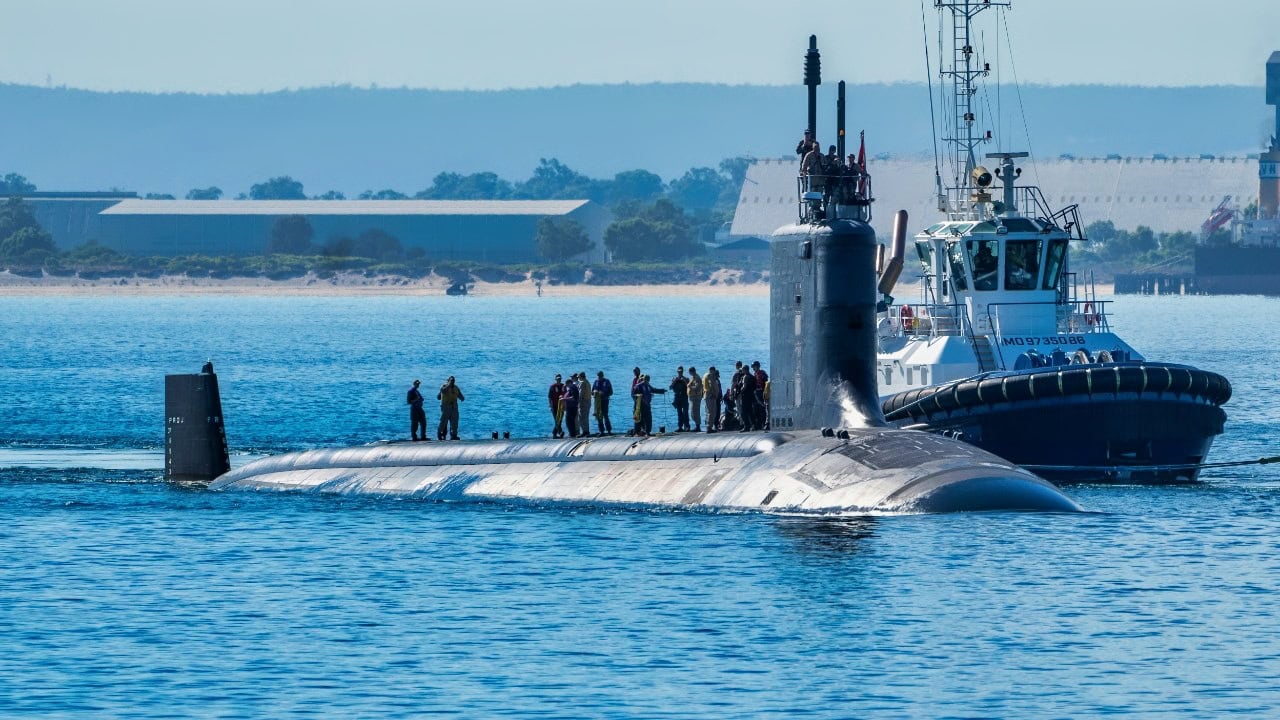
Western Australia, Australia (Feb. 25, 2025) The Virginia-class fast-attack submarine USS Minnesota (SSN 783) prepares to moor at HMAS Stirling, Western Australia, Australia, Feb. 25, 2025. Minnesota arrived in Western Australia kicking off the first of two planned U.S. fast-attack submarine visits to HMAS Stirling in 2025. Minnesota is currently on deployment supporting the U.S. 7th Fleet, the U.S. Navy’s largest forward-deployed numbered fleet, operating with allies and partners in preserving a free and open Indo-Pacific region. (U.S. Navy photo by Lt. James Caliva)
The third priority is mine warfare. Mining is one of the most cost-effective ways to impose denial in confined waters. It is also an operational tax when it requires scarce crewed platforms to lay or inspect. UUVs should be built and procured to take on that burden, with mission modules designed for rapid swap-in and replacement.
Then comes deception. If the SSN fleet is smaller than the war plan assumes, the Navy should make the enemy believe it is larger. Decoys, signature emulation, and false contact generation are not parlor tricks. They are a way to push Chinese ASW forces into a permanent expenditure cycle, with more time spent chasing contacts and less time spent escorting invasion shipping.
If the Navy is going to bridge a submarine trough, these are the missions that bridge it.
Make the Unmanned Layer Real
None of this works without the unglamorous pieces. That is where most “autonomy revolutions” die.
The Navy should prioritize forward sustainment and recovery. An unmanned platform that must return across the Pacific for maintenance is not a bridging capability. It is a demonstration vehicle. The fleet needs launch and recovery options closer to the fight, plus a maintenance concept that treats UUVs as consumable systems with fast regeneration, not museum pieces that require bespoke care.
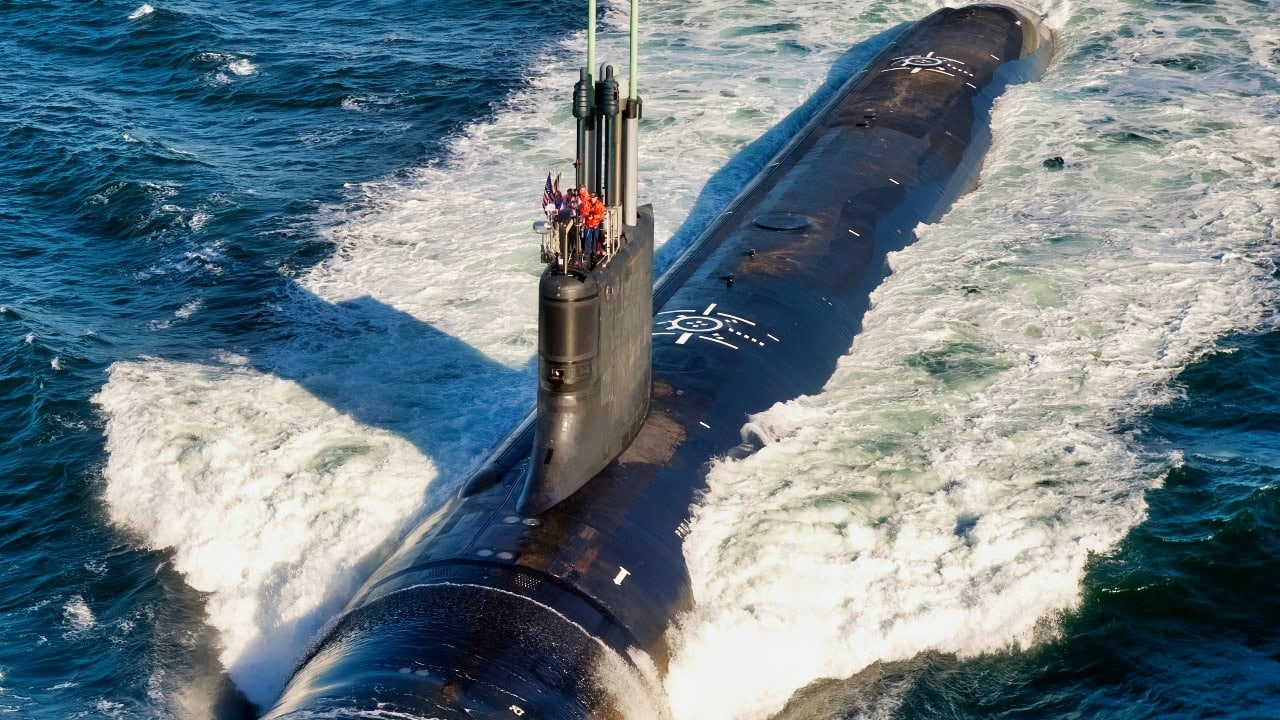
Virginia-Class Submarine.

HMS Talent Royal Navy Submarine
Doctrine has to catch up. Underwater communications are limited by physics. A UUV concept that assumes constant connectivity will fail in war. The Navy should design missions that can execute when communications links are intermittent, with clear authorities for sensing and tracking under communications denial. Weapon release is a separate and more complex issue, and it will remain tightly bound. That is fine. The stopgap value is not autonomous lethality. It is persistent sensing, early warning, and deception.
Procurement matters too. The bridging layer requires quantity. The Navy should aim for “good enough” systems bought in meaningful numbers, with modular payloads and rapid replacement. If UUV programs drift toward high-cost perfection, the bridging layer will arrive in boutique form, defeating the purpose.
What the Navy Is Doing Now
Directionally, the Navy is moving the right way. It has invested in extra-large UUV concepts, and it is testing platforms designed for long endurance. It has also signaled greater attention to seabed competition and distributed maritime sensing. Those are the right instincts for a force facing an SSN inventory trough.
The problem is tempo and scale. Too much of the effort still looks like peacetime technology development rather than near-term operational fielding. The toughest issues remain underdeveloped: forward sustainment, recoverability, and a doctrine built for communications denial. The Navy has been willing to buy prototypes. It has been slower to build the enabling architecture that makes those prototypes matter on day one of a crisis.
There is another drag factor that the Navy does not control. The submarine industrial base is strained. Work backlogs have accumulated. The fleet is also trying to deliver strategic ballistic-missile submarines on a schedule that allows little slippage. Under those conditions, unmanned undersea systems are not a luxury. They are a hedge against the real world.
Even the alliance picture reinforces the need for a bridging layer. The United States has made strategic commitments that lean on undersea power, while domestic debates continue over how many attack submarines can be spared for partners without cutting into U.S. warfighting requirements. That tension is not going away.
Scaffolding, or Another Missed Cycle
Unmanned undersea systems will not replace SSNs. They will not chase down hostile submarines at speed, then linger for months, then deliver a magazine of strike, all while staying ahead of a thinking adversary. That is the job of an attack boat.
But the Navy does not need UUVs to be attack boats. It needs them to be time-savers, contact-makers, and uncertainty machines. It requires a forward grid that maintains denial credibility as the SSN force passes through its narrowest point. If the Navy treats UUVs as bridging scaffolding and buys them in numbers, with forward sustainment and doctrine that assumes the link will fail, the fleet can blunt the operational consequences of the submarine trough.
If it does not, autonomy will become another impressive capability that looks sharp on slides, tests well in peacetime, and appears too thin when the Pacific compresses timelines. The gap in submarines is an arithmetic problem. Unmanned systems cannot change the arithmetic. They can change what the arithmetic means when the first week of a crisis decides whether deterrence holds.
About the Author: Dr. Andrew Latham
Andrew Latham is a non-resident fellow at Defense Priorities and a professor of international relations and political theory at Macalester College in Saint Paul, MN. You can follow him on X: @aakatham. Dr. Latham writes a daily column for 19FortyFive.com.