
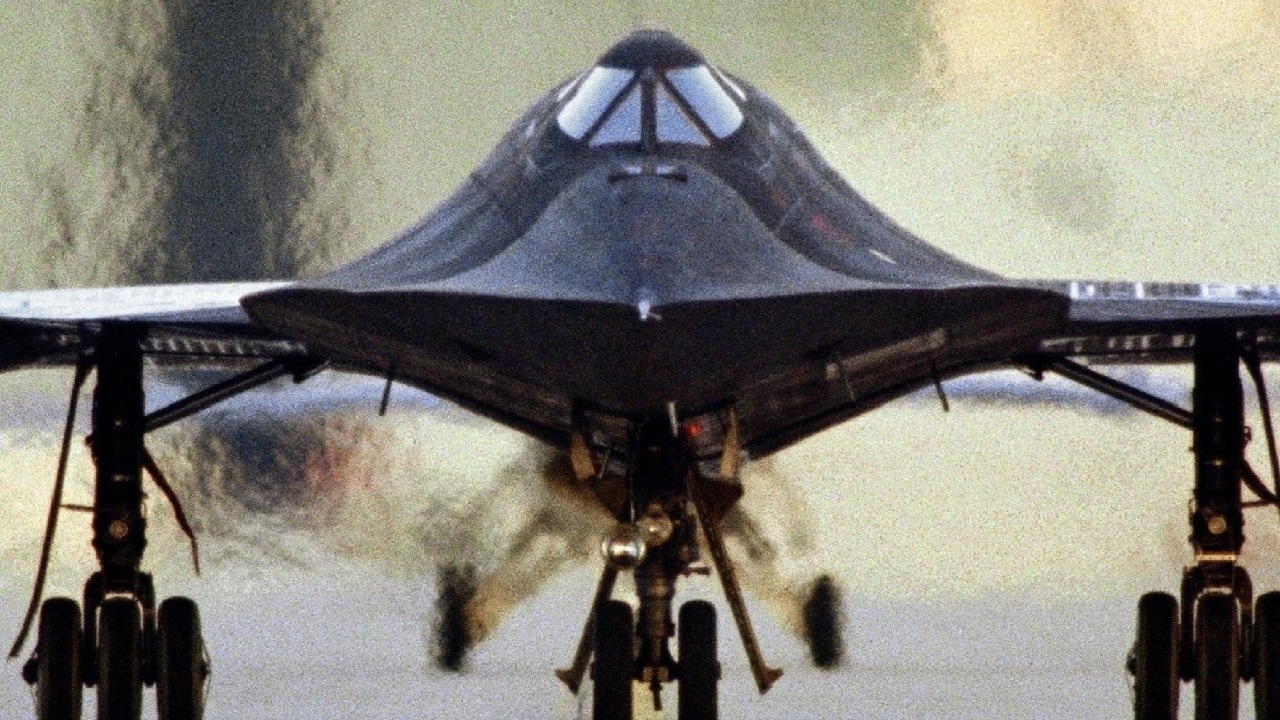
Synopsis: The Lockheed SR-71 Blackbird, designed by the legendary Kelly Johnson, remains an unmatched icon of strategic reconnaissance.
-Operating at altitudes of 85,000 feet and speeds exceeding Mach 3.2, the Blackbird was so fast it famously outran more than 4,000 missiles without a single hit.
-In a remarkable 1970s mission, pilot David Peters proved the jet was “faster than the Earth’s rotation” by taking off from Okinawa on a Saturday morning and landing in California on the preceding Friday afternoon.
-Six decades after its first flight, its records for transcontinental and transoceanic speed remain unbroken.
The Friday Night Paradox: Why the SR-71 Landed 17 Hours Before it Took Off
We all know that the SR-71 was fast, blisteringly fast. Former Naval Flight Officer Luke Diaz wrote for Simple Flying that the SR-71 retains its spot as the fastest known crewed, air-breathing jet to be formally put into service.
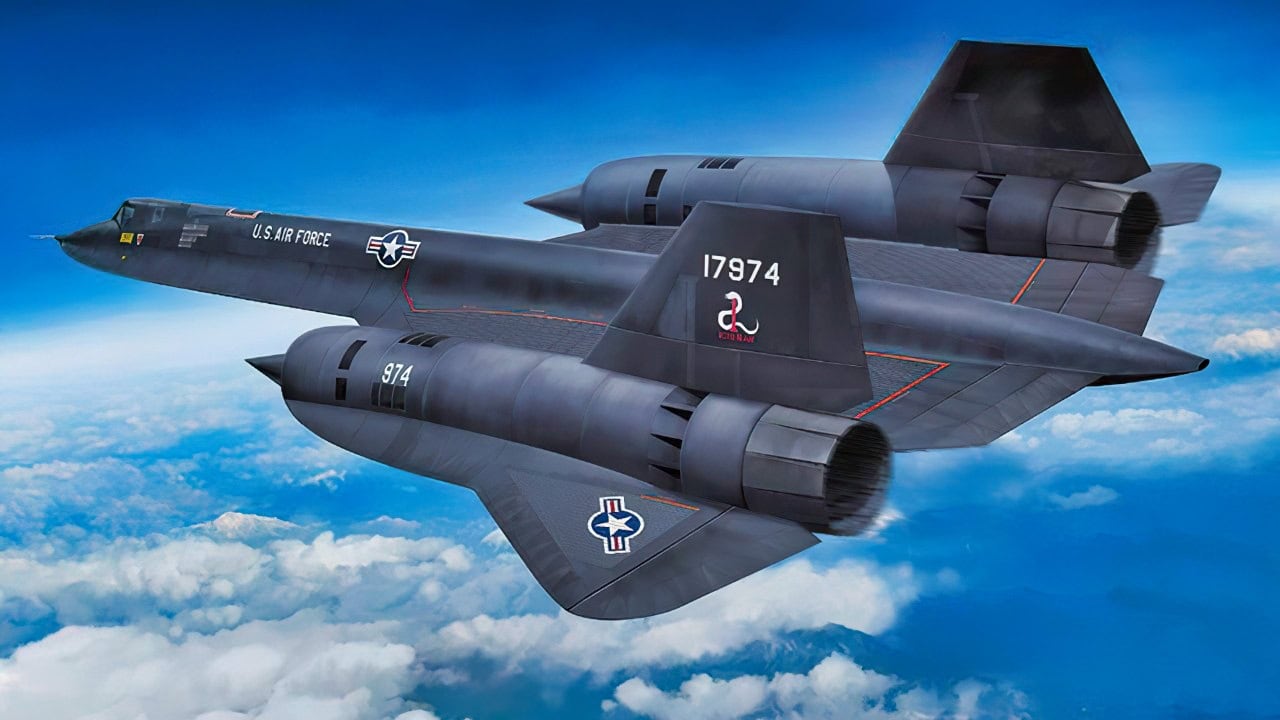
SR-71 Blackbird. Image Credit: Creative Commons.
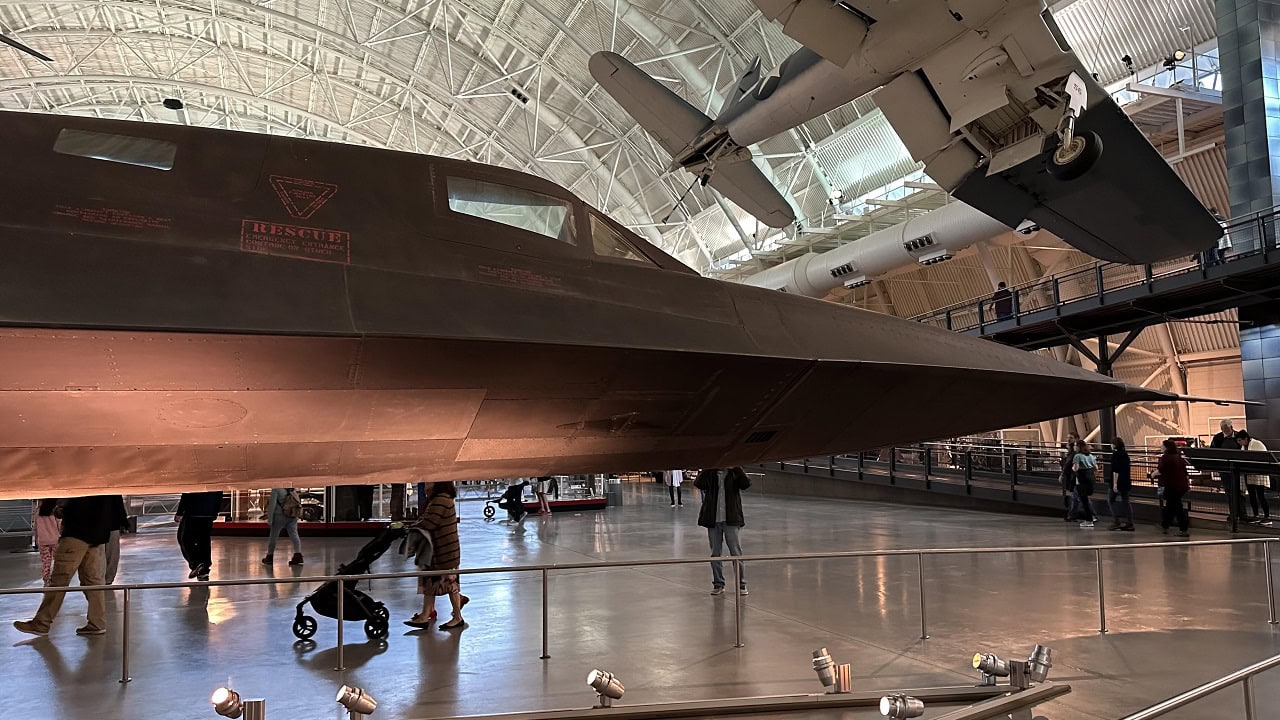
SR-71. SR-71 photo taken at the National Air and Space Museum. Taken by 19FortyFive on 10/1/2022.
But flying through time? That is exactly what happened when two pilots took off from Kadena AFB in Okinawa on a Saturday morning at 1000 hrs. and then landed at Beale AFB in California on Friday evening in time for Happy Hour at the Officers’ Club at 1630 hrs.
As David Peters, an SR-71 pilot, said, “I am really tired of hearing the ‘LA speed story,’ so I thought I would relay a mission that gives real perspective to the speed of the Blackbird.”
The SR-71 Was Decades Ahead Of Its Time:
The SR-71 Blackbird is a fantastic aircraft. It was designed and built by Clarence “Kelly” Johnson’s Lockheed “Skunk Works” in Burbank, California. It was intended to be a long-range, high-altitude, Mach 3+ strategic reconnaissance aircraft.
Kelly Johnson, the man behind Skunk Works, is a legend in the aircraft industry. He is akin to what John M. Browning was to arms designers.
The CIA approached Johnson about finding a replacement for the U-2 spy plane, which could fly at extreme altitudes but was slow. Johnson’s Skunk Works produced the aircraft, which was first called the YF-12.
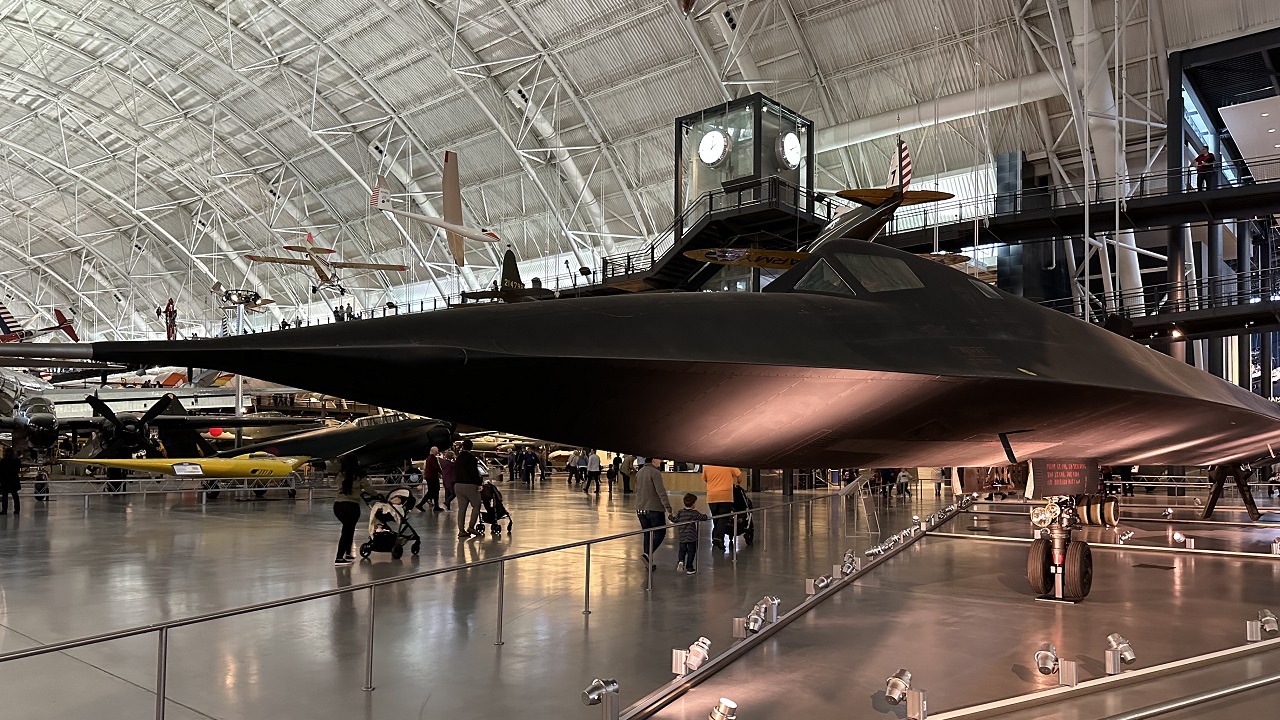
SR-71. SR-71 photo taken at the National Air and Space Museum. Taken by 19FortyFive on 10/1/2022.
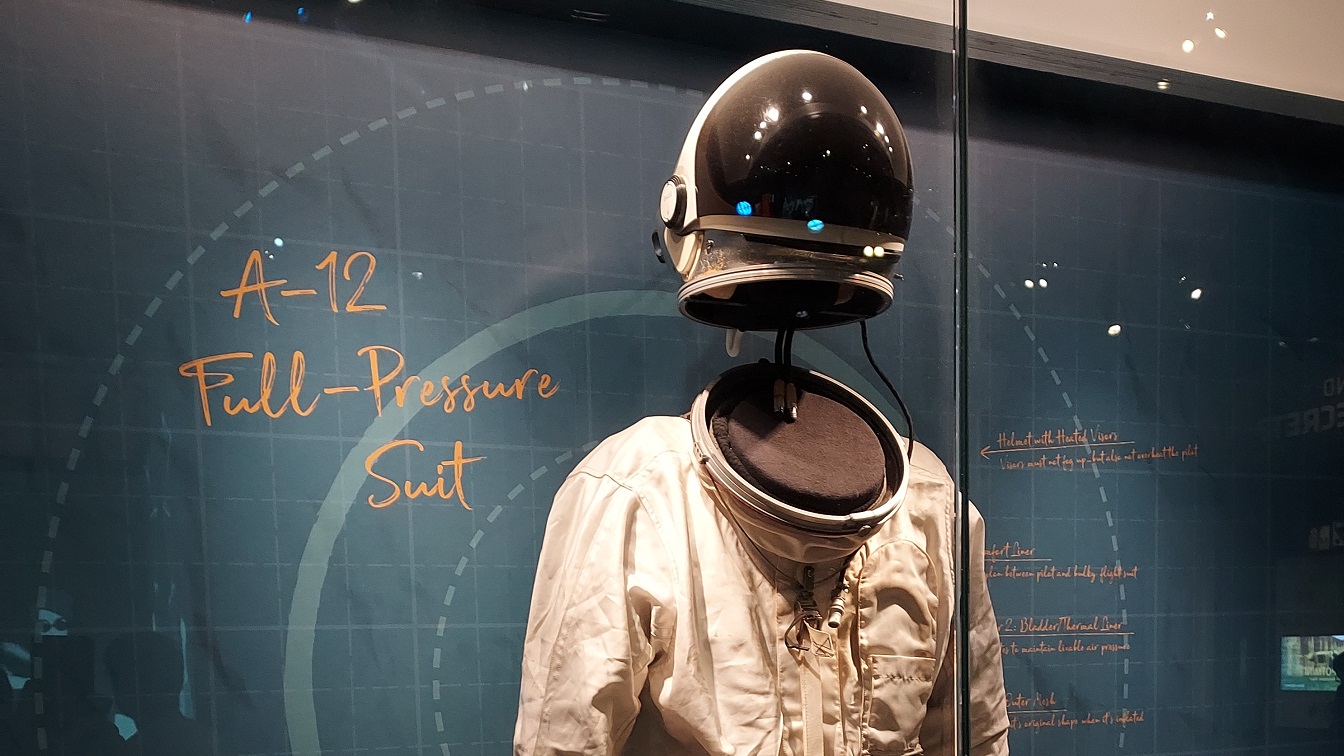
Flight suit. Image Credit: 19FortyFive Original Image.
However, General Curtis LeMay, the Air Force Chief of Staff, wanted it renamed the SR-71, with the SR referring to the aircraft type as “Strategic Reconnaissance.”
A total of 32 SR-71s were built: 29 SR-71As, two SR-71Bs, and one SR-71C. Johnson designed the aircraft with the smallest possible radar cross-section, one of the earliest attempts at stealth. Two Pratt & Whitney J-58 engines powered it, allowing it to reach Mach 3.2+, or about 2,200 mph. The service ceiling was 85,000 feet.
Faster Than The Earth’s Rotation
The story was told by an SR-71 pilot, David Peters, who said that he and his RSO, Ed Bethart, were scheduled to fly a Blackbird home from its TDY stay in Okinawa to California.
Another Blackbird had arrived to replace Peters’ aircraft, and they welcomed the crew at the Kadena O’Club on Friday evening. And on Saturday morning, Peters and Bethart were due to take off for the US.
“We got up Saturday morning and got ready to go home,” he said, as quoted by Linda Sheffield-Miller at the Aviation Geek Club. Departure was scheduled for 1000. Everything went well, and we departed right on time. Headed out to do a pass through the Korean DMZ, then into the tankers in the Sea of Japan,” Peters said, providing a matter-of-fact perspective on the Blackbird’s incredible range and the speed at which it traveled.
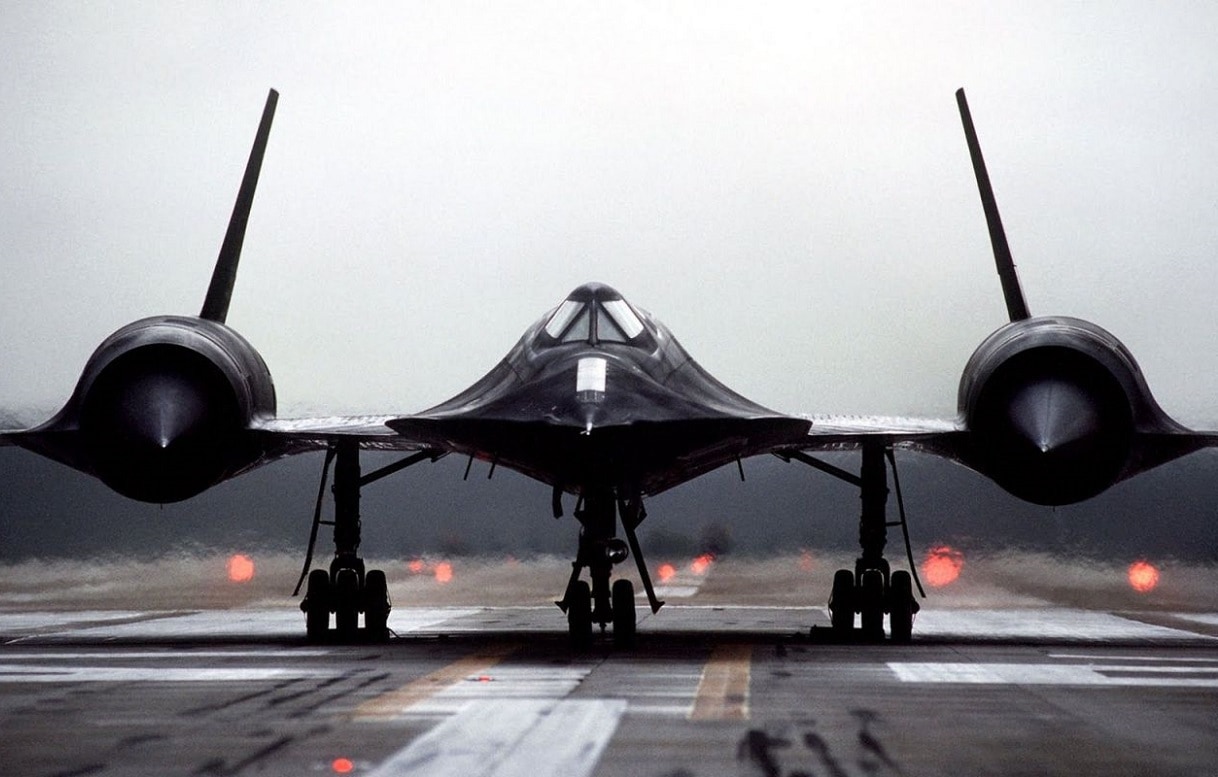
SR-71. Image: Creative Commons.

SR-71. Image: Creative Commons.
“Good refueling and climb out headed for the Sea of Okhotsk and the Kamchatka peninsula of Russia, and from there to more tankers off of Adak in the Aleutian Islands. Another good refueling and on to Beale AFB, California.
“We arrived with a low approach, pulled up into a closed pattern, and landed. Following de-suiting and debrief, we deposited our classified flight documents, jumped in a car, and arrived at the officers’ club for Friday night happy hour at 1630, 17.5 hours before we left Kadena.
“Try that in any aircraft other than the SR-71. Besides, this is actually a true story,” Peters said.
The SR-71 Blackbird Is “Still The One”
Tip of the cap to Orleans. The SR-71 first flew in 1964. President Johnson had just taken office after President Kennedy was assassinated less than a year before. The “British Invasion” was in full swing, with the Beatles on the Ed Sullivan Show. The Ford Mustang and the G.I. Joe were introduced.
The SR-71 set the world record for the quickest flight between London and New York in 1974. It also became the fastest air-breathing manned aircraft in 1976. The SR-71 was retired in 1989 for political reasons, and NASA used it as a research platform until 1999. And as of 2025, it still holds many aviation records.
The Special Reconnaissance (spy) aircraft was the target of more than 4,000 missiles launched at it during its service, and was never hit. In the two-seat cockpit, one person would operate the high-resolution cameras and reconnaissance technology while the other would pilot the plane.

SR-71 Blackbird. Image Credit: Creative Commons.
In addition to its unique shape, the Blackbird incorporated several other stealth features. Its distinctive blue-black paint was intended to reduce heat emission and help it blend with night skies, as well as giving it its iconic nickname.
It redefined speed, as it could fly from Los Angeles to Washington in one hour and four minutes. And it flew from London to New York in one hour and 54 minutes.
And some 62 years later, the SR-71 is still the king of the crewed, air-breathing aircraft.
Because so much of its service life was blanketed by security classifications, one has to wonder how many other stories by Blackbird pilots are out there waiting to be told.
About the Author: Steve Balestrieri
Steve Balestrieri is a National Security Columnist. He served as a US Army Special Forces NCO and Warrant Officer. In addition to writing on defense, he covers the NFL for PatsFans.com and is a member of the Pro Football Writers of America (PFWA). His work was regularly featured in many military publications.