
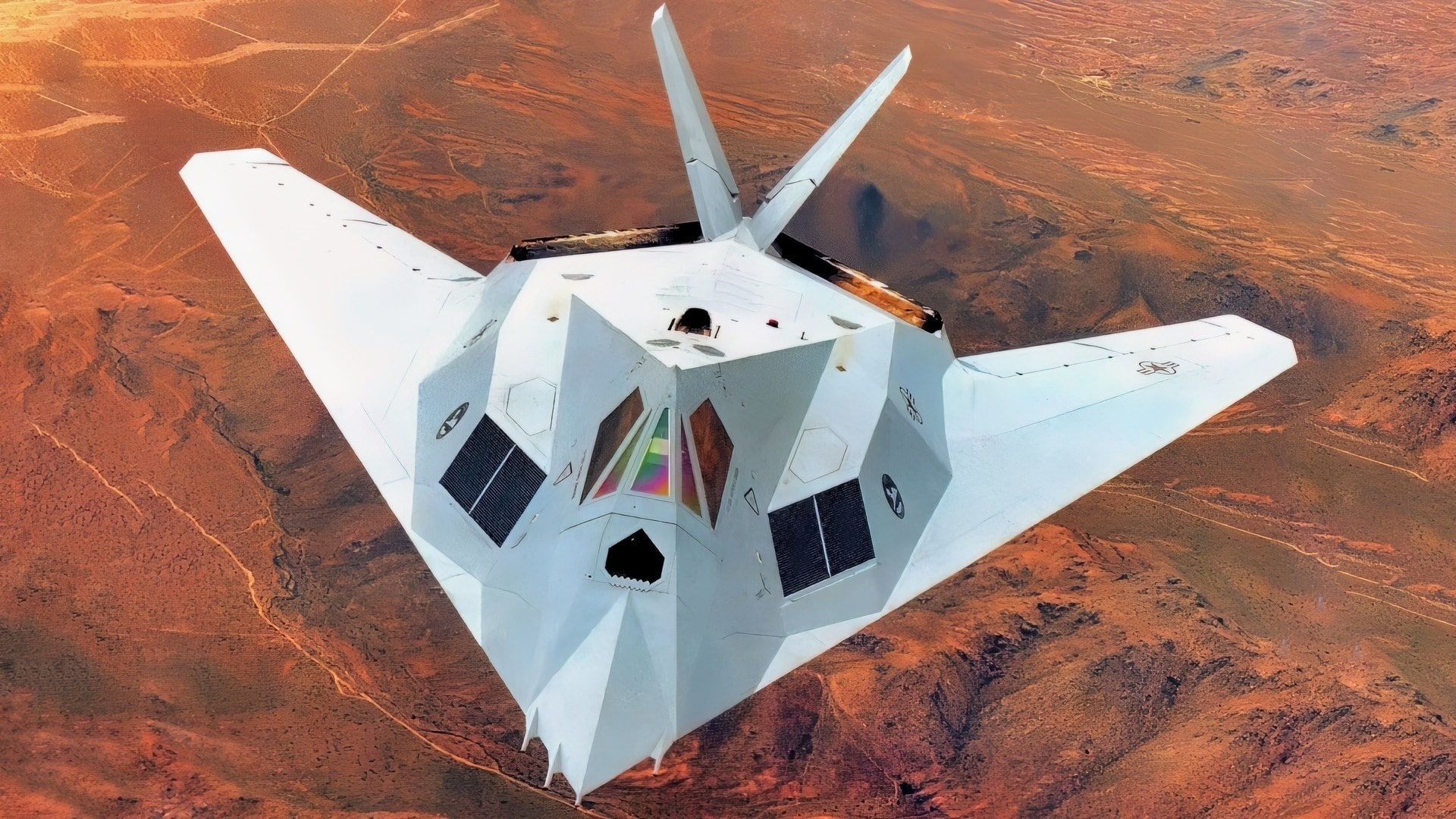
Summary and Key Points: Defense analyst Jack Buckby evaluates the F-117 Nighthawk, the world’s first operational stealth aircraft.
-Developed by Lockheed’s Skunk Works, the F-117 utilized a faceted design to minimize its radar cross-section.
F-117 Image: Creative Commons.
-This report analyzes the March 27, 1999, loss of Vega 31, piloted by Lt. Col. Dale Zelko, to a Serbian S-125 Neva (SA-3) missile battery commanded by Zoltan Dani.
-Buckby explores the tactical failures—including predictable flight paths and the “bomb bay door” radar spike—that allowed an aging missile system to achieve a historic kill, concluding that the F-117’s 2026 test role remains vital for validating current stealth counters.
The Ghost Still Flies: Why the F-117 Nighthawk is Still Refueling Over California in 2026
The Lockheed Martin F-117 Nighthawk officially retired from U.S. Air Force service in 2008, but the aircraft continues to appear in the skies decades later.
In 2025, aviation observers photographed F-117s refueling from a KC‑46 Pegasus tanker over California, highlighting that the supposedly retired stealth jet still flies in test and training roles.
Those sightings have revived discussion about the unusual legacy of the aircraft – the world’s first operational stealth aircraft and one of the most secretive programs of the Cold War, too. When it made its public debut in the late 1980s and demonstrated its capabilities during the 1991 Gulf War, the jet quickly developed a reputation as almost untouchable in enemy airspace.
But that reputation was shaken dramatically during the 1999 Kosovo War. In March of that year, Serbian air-defense forces managed to shoot down an F-117 during NATO’s bombing campaign against Yugoslavia.
The incident stunned military observers worldwide and became the only confirmed combat loss of a stealth aircraft.
And that story is still an important lesson about warfare today, proving that while stealth technology reduces the chance of detection, it does not make an aircraft invisible…or invincible.
The Aircraft That Changed Air Warfare
The F-117 Nighthawk was developed during the Cold War by Lockheed’s famous Skunk Works division as part of a secret program to create an aircraft capable of evading radar detection.
The jet first entered service with the U.S. Air Force in 1983 and remained classified for several years before being publicly acknowledged in 1988.
Despite its designation as a “fighter” aircraft, the F-117 was not designed for air-to-air combat. Instead, it was built as a precision-strike aircraft capable of penetrating heavily defended airspace and destroying high-value targets with guided bombs.
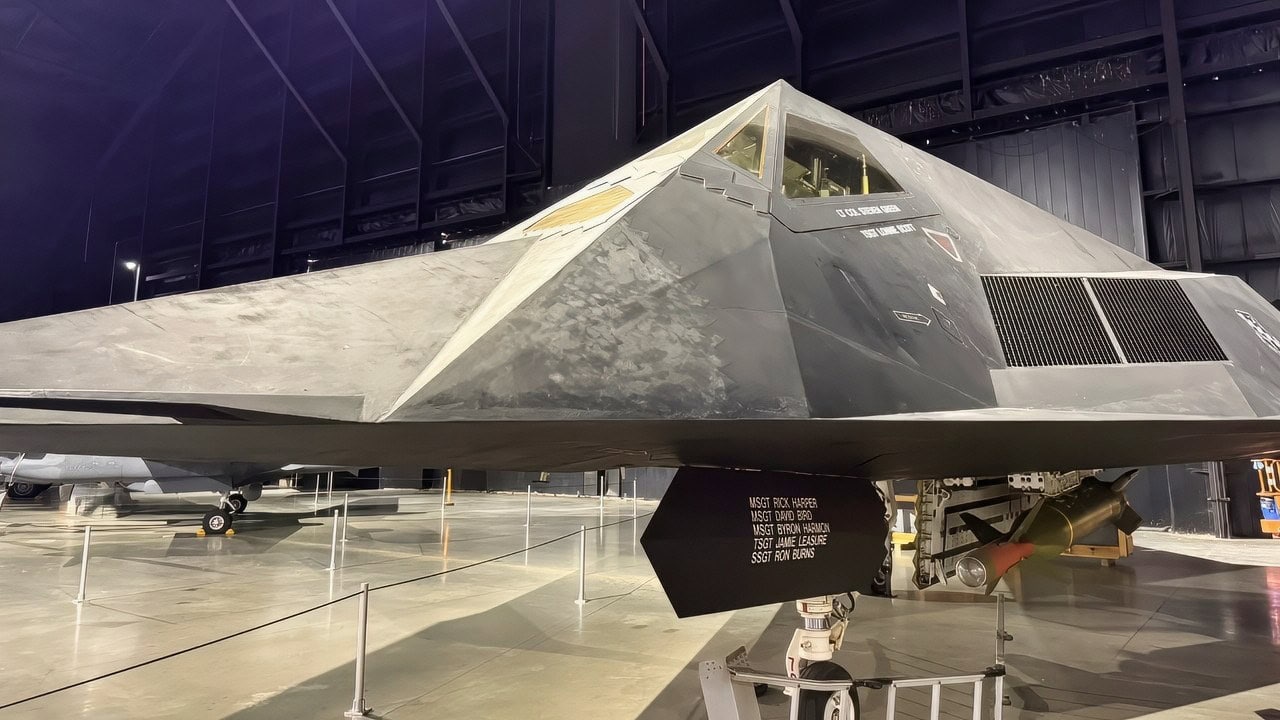
F-117A Nighthawk at USAF Museum. Image taken by 19FortyFive Owner, Harry J. Kazianis.
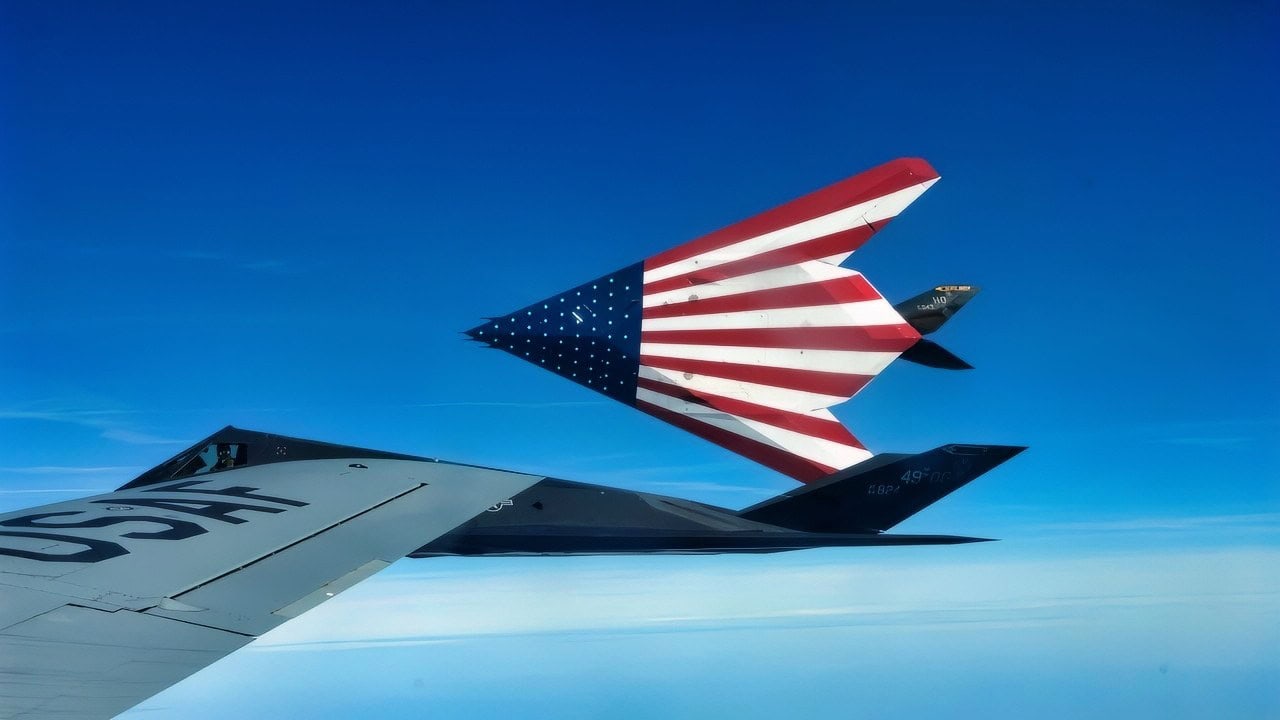
Pilots from the 121st Air Refueling Wing of the Ohio Air National Guard based at Rickenbacker IAP, refuel a pair of F-117 Stealth Fighters from the 49th Fighter Wing based at Holloman AFB in New Mexico. The aircraft is being retired and this was the last refueling operation of The Pilots on this mission were Major Paul Hughes, Captain Danny Slater and the Boom Operator was MSgt Bob Derryberry. The photographs are by SMSgt Kim Frey of the 121st ARW. The aircraft were at Wright Patterson AFB where the F-117 program is managed for an informal retirement ceremony. The F-117 is being replaced by the F-22 Raptor which also uses stealth technologies to avoid detection.
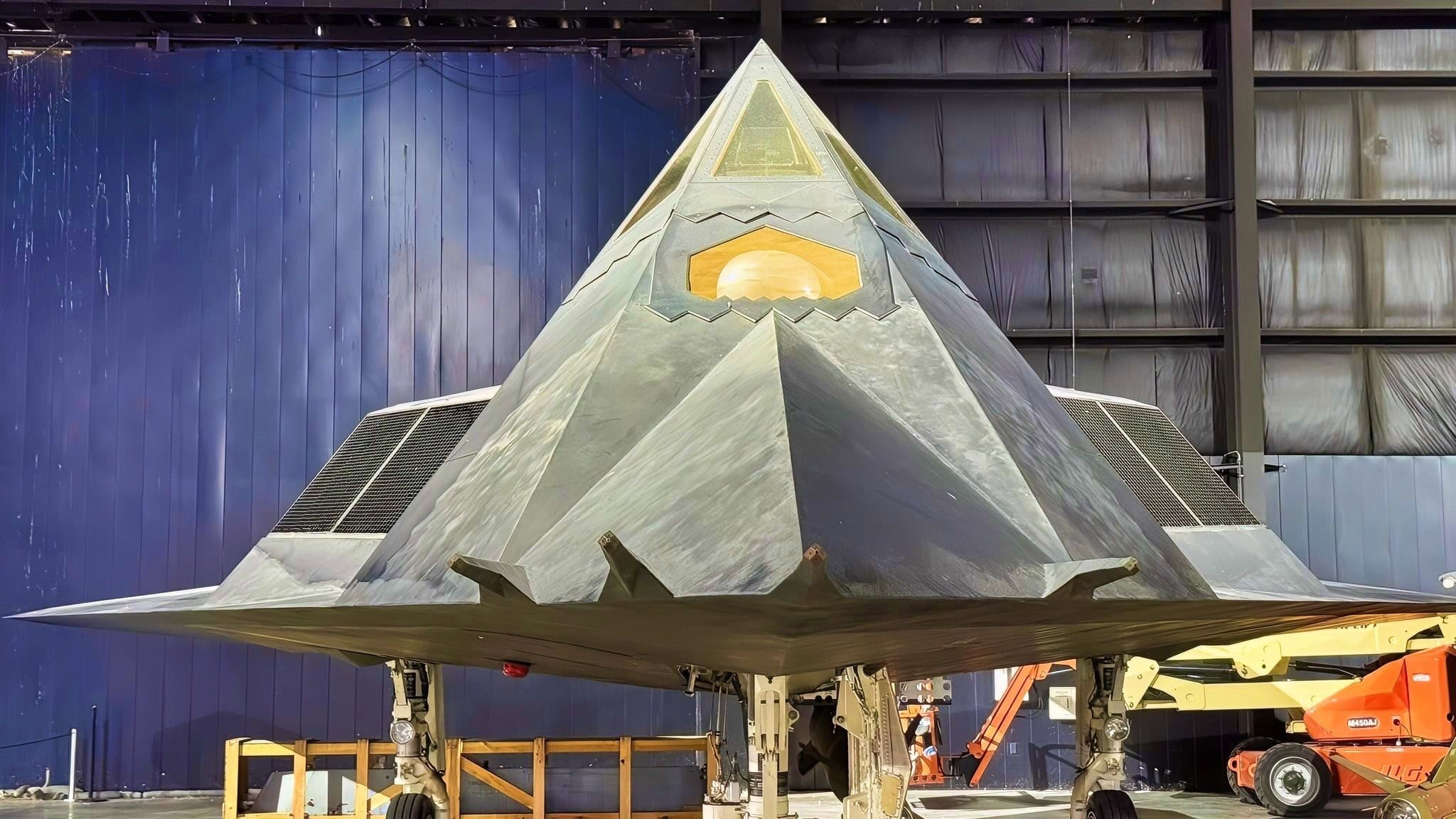
F-117 Nighthawk Stealth Fighter Harry Kazianis Photo from the U.S. Air Force Museum back in July of 2025.
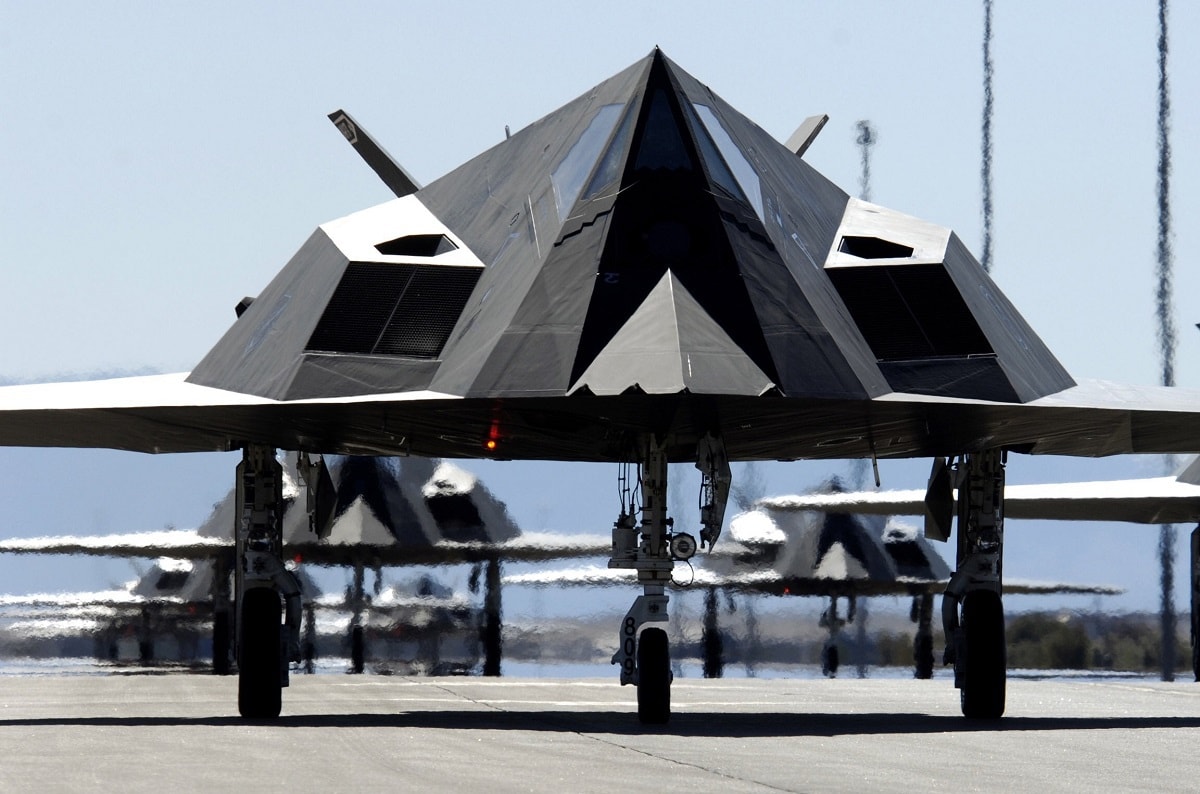
The aircraft’s distinctive faceted shape helped deflect radar signals away from the emitter, dramatically reducing its radar cross-section. Combined with radar-absorbing materials and careful mission planning, this design allowed the aircraft to approach targets that conventional aircraft could not safely reach.
The Nighthawk really proved itself during the 1991 Gulf War, where it carried out precision strikes against Iraqi command centers and air-defense systems. The aircraft flew hundreds of combat missions during the conflict, often striking heavily defended locations in Baghdad without being shot down.
By the late 1990s, the F-117 had become one of the most recognizable symbols of America’s technological military capabilities. But that reputation would soon face a surprising challenge over Serbia.
The Night the F-117 Was Shot Down
On March 27, 1999, NATO was conducting Operation Allied Force, a large air campaign designed to force the Yugoslav government to withdraw forces from Kosovo. During the operation, stealth aircraft were frequently used to strike heavily defended targets early in the campaign.
That night, an F-117 with the callsign “Vega 31” was flying a strike mission over Serbia. The aircraft was piloted by U.S. Air Force Lt. Col. Dale Zelko, a veteran of earlier combat operations
As the aircraft returned from the bombing run, a Yugoslav air defense system detected the stealth jet and launched surface-to-air missiles. The missiles came from a Soviet-designed S-125 “Neva” system, known to NATO as the SA-3 “Goa.” The missile battery belonged to the 3rd Battalion of the Yugoslav Army’s 250th Air Defense Missile Brigade, commanded by Lt. Col. Zoltan Dani. Multiple missiles were fired during the engagement, with one detonating near the aircraft and several damaging it. Zelko was forced to eject from the jet, and it soon crashed near the village of Budanovci, northwest of Belgrade.

Four F-117 Nighthawks fly in formation during a sortie over the Antelope Valley recently. After 25 years of history, the aircraft is set to retire soon. As the Air Force’s first stealth fighter, the F-117 is capable of performing reconnaissance missions and bombing critical targets, all without the enemy’s knowledge. (Photo by Bobbi Zapka)
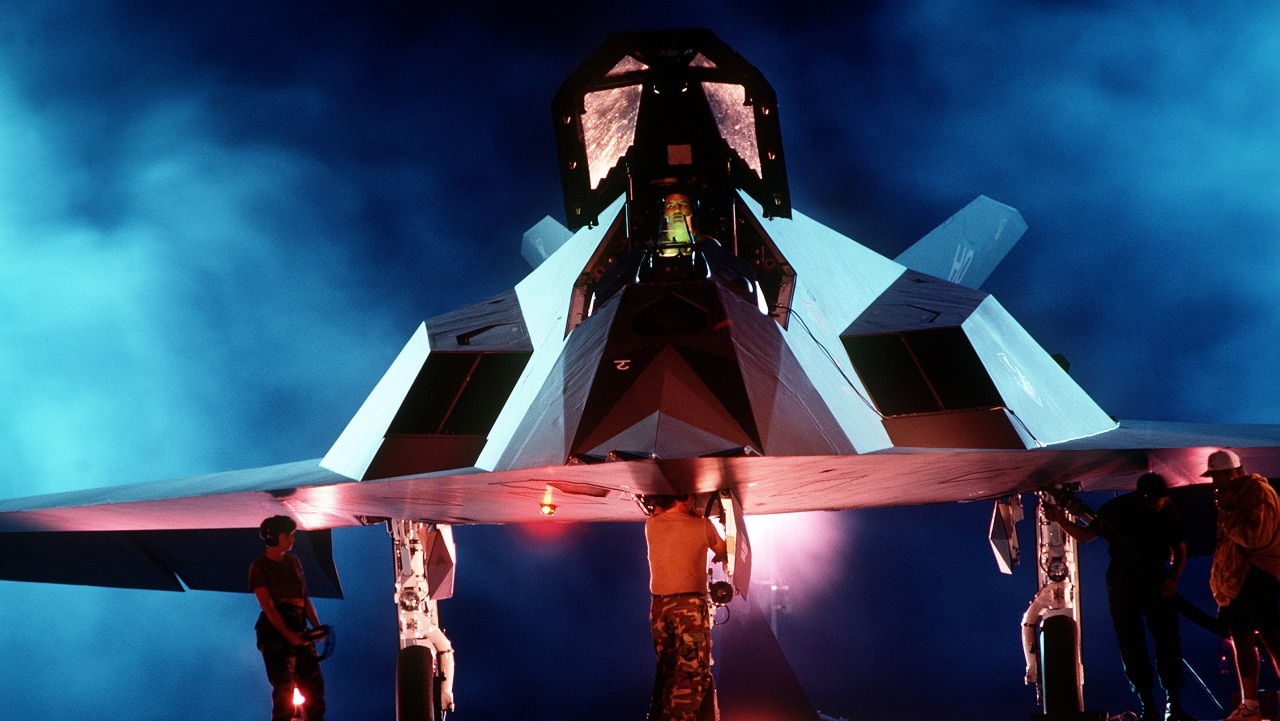
A back lit front view of a F-117A Stealth Fighter aircraft. From Airman Magazine’s February 1995 issue article “Streamlining Acquisition 101”.
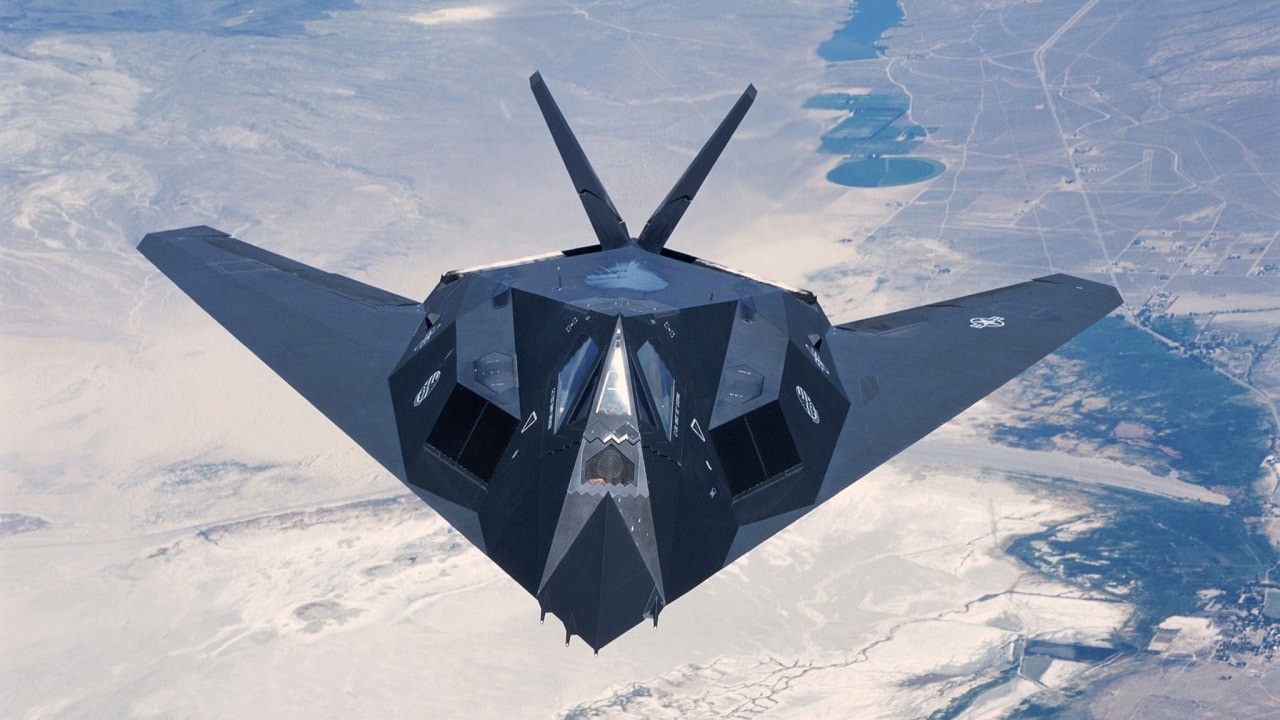
F-117. Image Credit: Creative Commons
The pilot was later recovered by search-and-rescue forces after several hours on the ground. And although Zelko survived the incident, the aircraft was destroyed and became a part of history.
How An Old Missile Beat A Stealth Aircraft
So, how did this happen? How did an old missile system beat the world’s first stealth aircraft when the technology was brand new? The SA-3 missile system was, after all, originally developed in the 1950s and widely deployed during the Cold War.
But despite the system’s age, it proved capable because the Serbian air defense crew employed several tactics that helped them overcome the advantages of stealth technology.
First, the unit carefully studied NATO flight patterns.
By observing previous strikes, they were able to predict likely routes that stealth aircraft might use when approaching targets. And, they also used a missile battery with limited radar emissions. NATO aircraft routinely carried anti-radiation missiles designed to destroy radar sites, so the Serbian operators turned their radars on only briefly to avoid detection.
The F-117 was a “revolutionary first step” that proved stealth could work, but its 1999 loss provided the blueprint for how modern adversaries (like Russia and China) attempt to “counter-stealth” today.
When the F-117 appeared in range, the operators activated their radar for just a short burst – long enough to track the aircraft and launch missiles before NATO forces could respond.
Some observers and analysts have even suggested over the years that the aircraft may have been more visible to radar when it opened its bomb bay doors during the mission, temporarily increasing its radar signature.
And it was that combination of careful observation, disciplined radar use, and a measure of luck that allowed the missile battery to achieve what many thought was impossible.
About the Author: Jack Buckby
Jack Buckby is a British researcher and analyst specialising in defence and national security, based in New York. His work focuses on military capability, procurement, and strategic competition, producing and editing analysis for policy and defence audiences. He brings extensive editorial experience, with a career output spanning over 1,000 articles at 19FortyFive and National Security Journal, and has previously authored books and papers on extremism and deradicalisation.