
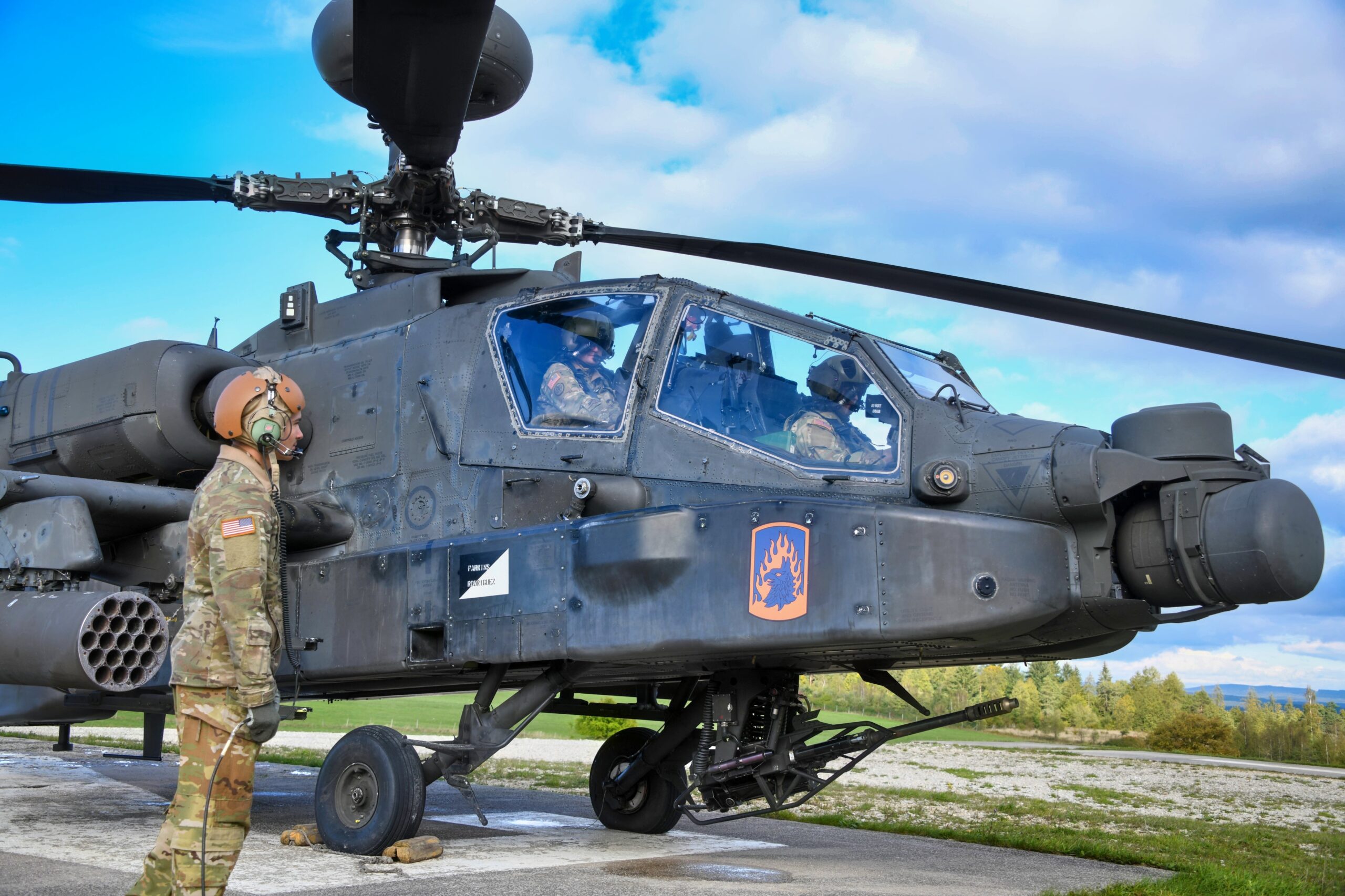
Summary and Key Points: The AH-64 Apache has made a surprising return to the front lines during the ongoing conflict with Iran.
-Originally designed as a Cold War tank killer, the iconic helicopter is now being deployed by Gulf allies to hunt down fast-attack boats and intercept Iranian Shahed drones over the Strait of Hormuz.
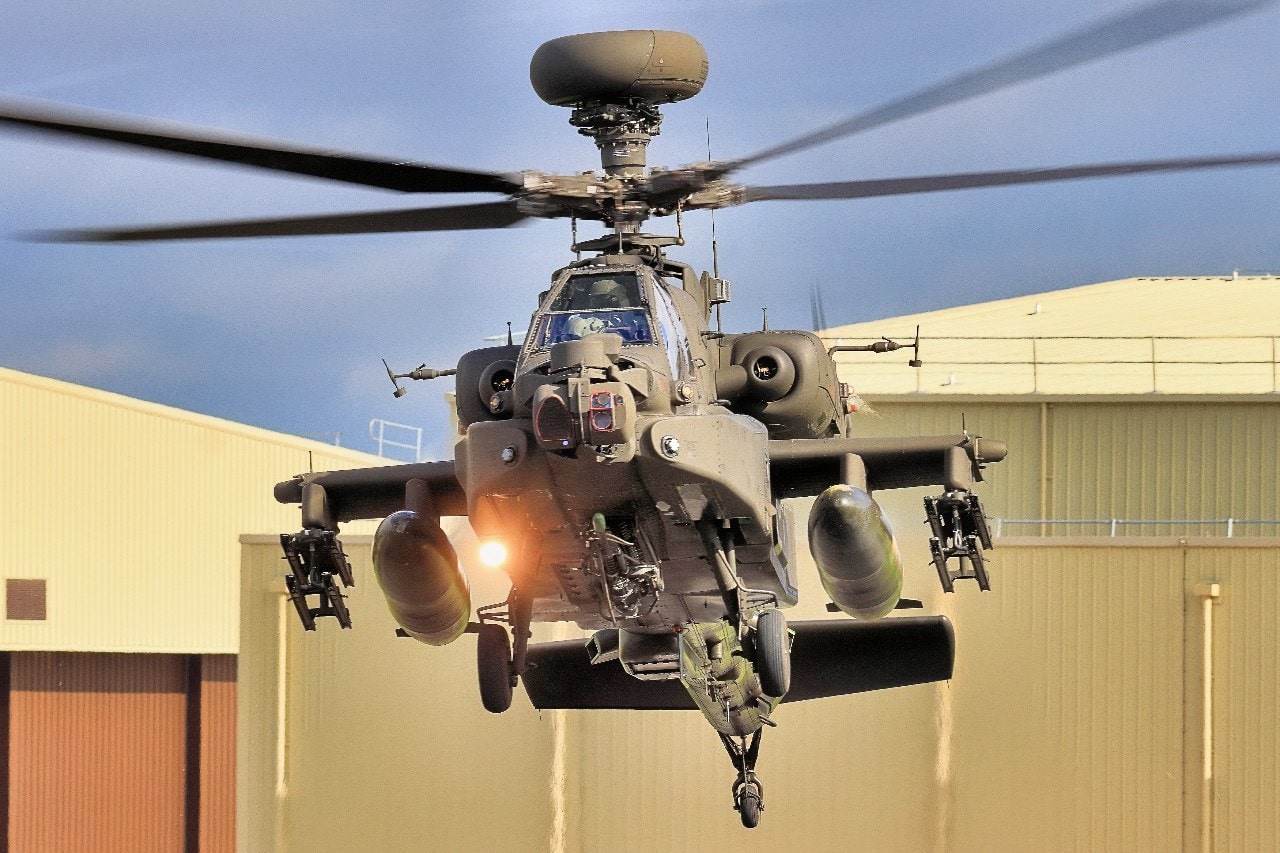
AH-64E Guardian.
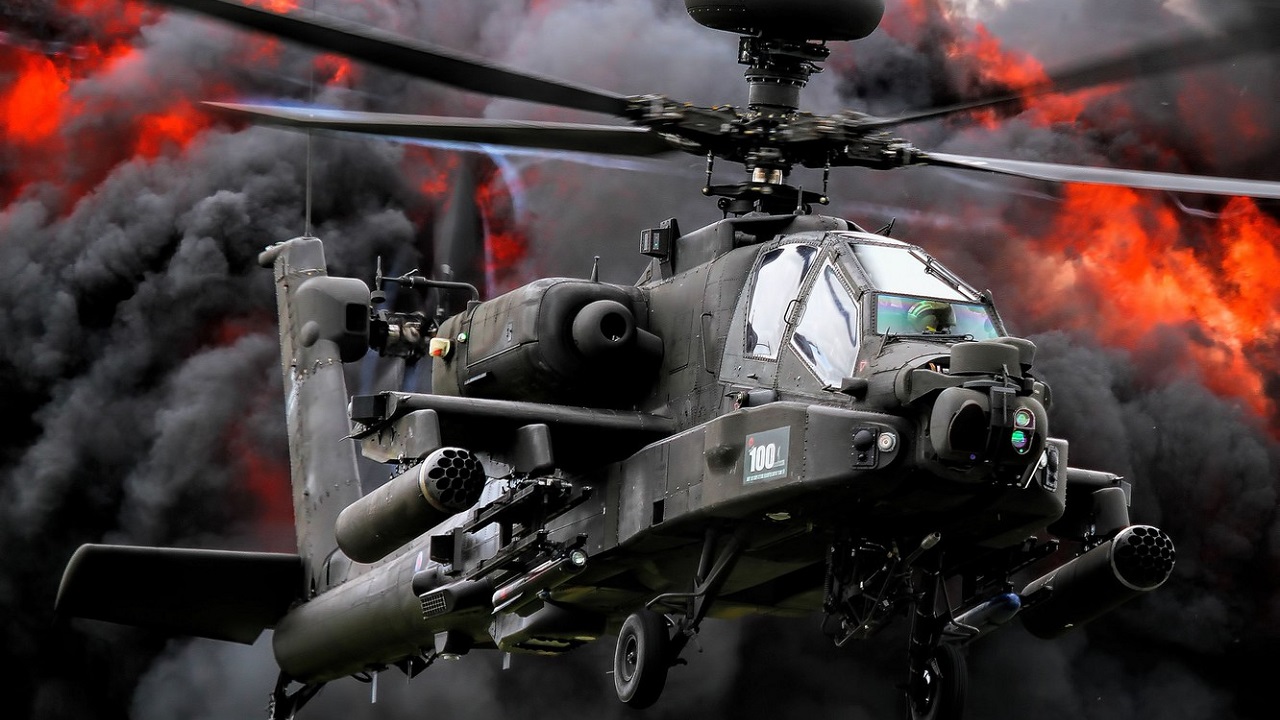
AH-64 helicopter. Image Credit: Creative Commons.
-Using its 30-mm chain gun and a mix of advanced missiles, the Apache is proving its incredible versatility in a completely new era of asymmetric drone warfare.
The AH-64 Apache Is Back in Action, Thanks to the Iran War
“I’m baaack! And I’m better than ever…”
Thus goes the opening line to the ring entrance music for WWE personality Eric Bischoff. It could also be the theme song for the AH-64 Apache attack helicopter.
The Apache made its maiden flight in September 1975 and entered into official operational service with the U.S. Army in 1986. Since then, it has become, in this former Air Force officer’s professional opinion, one of the top-three most successful helicopter gunships of all time, along with the Russian-made Mi-24 “Hind” and the U.S. Marine Corps AH-1W Whiskey Cobra.
We had heard fairly little about the Apache since the ignominious U.S. withdrawal from Afghanistan in 2021. But now, she’s back in action as part of the war effort against Iran—not as a tank killer, but as a drone killer.
On Thursday, General Dan “Raizin” Caine spoke at a press conference covered the next day by the Wall Street Journal:
“Air Force Gen. Dan Caine, chairman of the Joint Chiefs of Staff, revealed the operation in a Pentagon news conference Thursday, saying heavily armed A-10 warplanes, known as the Warthog, along with Apache attack helicopters, were flying missions over the strait or off the southern coast of Iran.
“‘The A-10 Warthog is now engaged across the southern flank, targeting fast-attack watercraft in the Strait of Hormuz,’ he told reporters at the Pentagon. He added that the Apaches ‘have joined the fight on the southern flank.’”
According to WSJ, Caine said some allies were using Apaches to “handle one-way attack drones,” one of the most effective weapons Iran has used to hit neighboring Arab states and their energy infrastructure across the Persian Gulf.
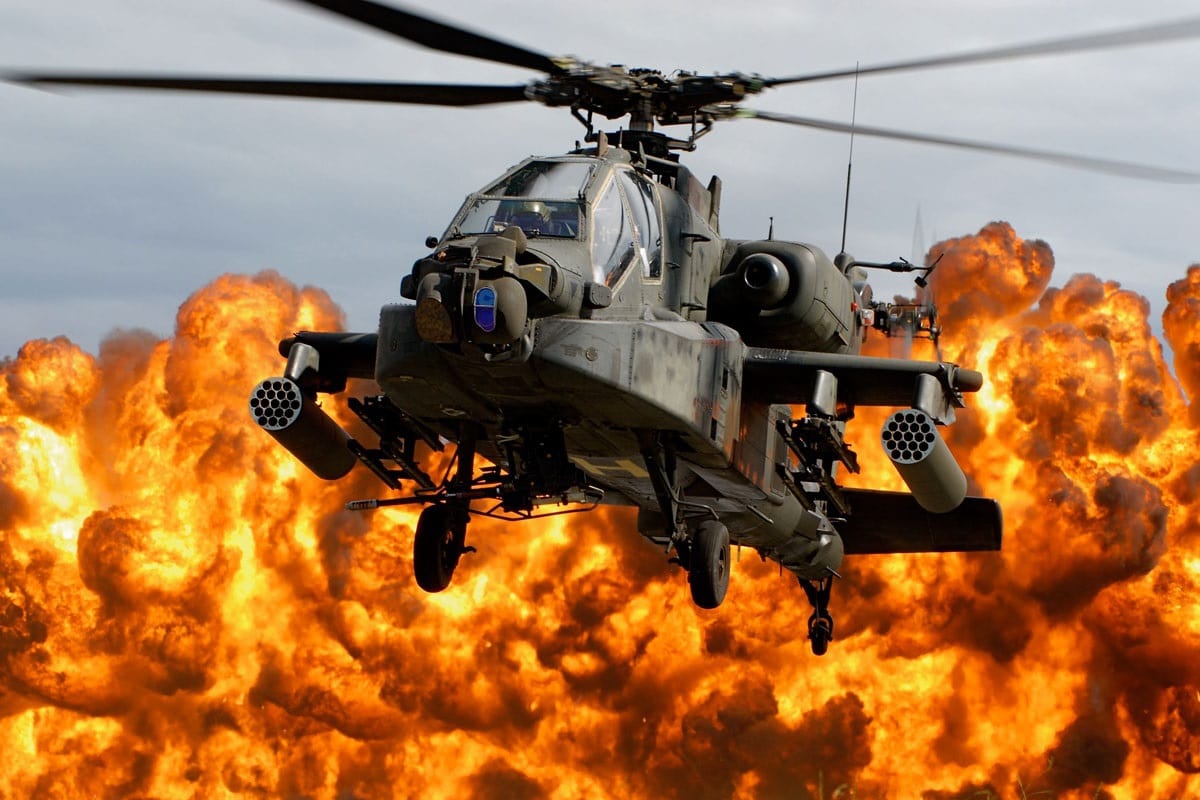
AH-64 Apache Helicopter. Image: Creative Commons.
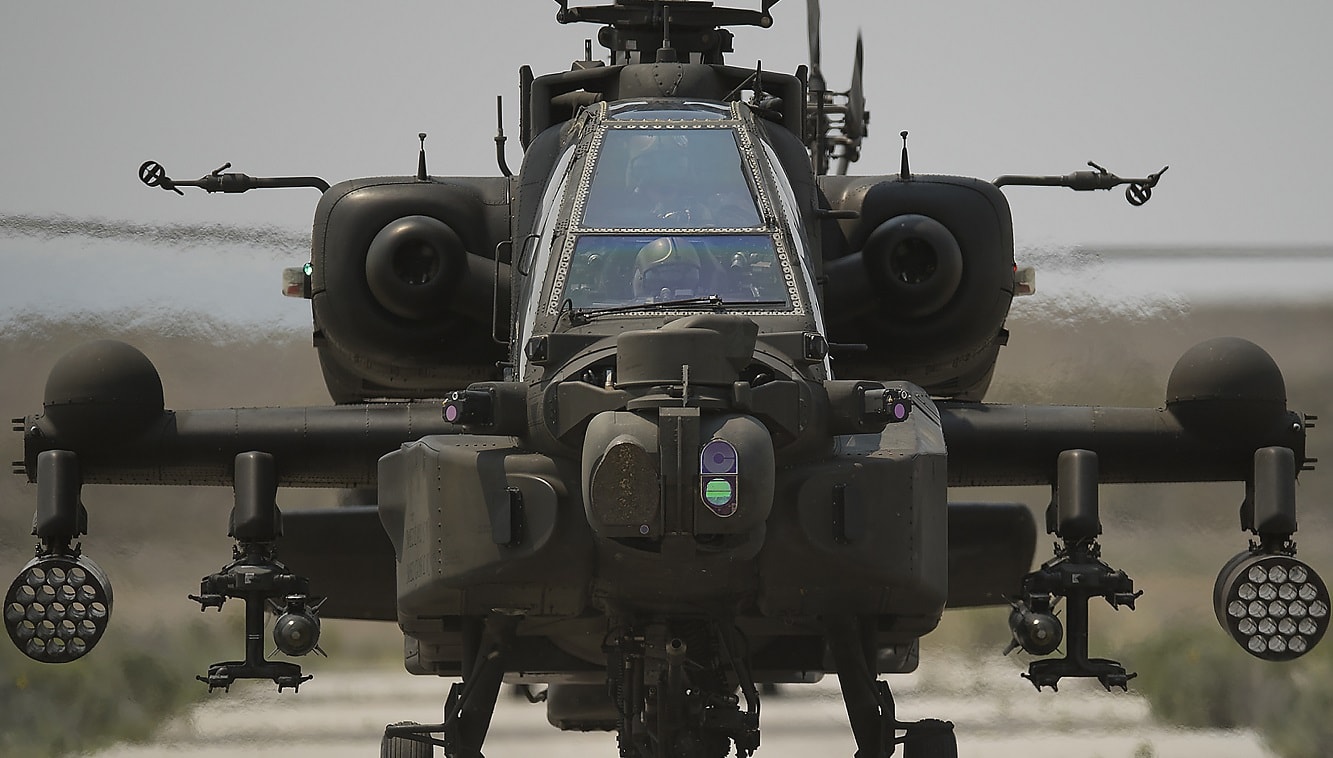
The second AH-64 Apache rolls onto the taxiway and to the takeoff pad.
The Idaho Army National Guard’s Orchard Combat Training Center was host to elements of the Republic of Singapore Air Force during July. Based in Arizona, The Singapore contingent operates eight AH-64 Apache Helicopters as part of the Peace Vanguard Task Force.
The Apache is an attack helicopter with a tandem cockpit for a crew of two. It features a nose-mounted sensor for target acquisition and night vision systems. It is armed with a 30 mm M230 chain gun. It also features four hardpoints mounted on stub-wing pylons for carrying armament, typically a mixture of AGM-114 Hellfire missiles and Hydra 70 rocket pods. The Apache’s first flight took place in 1975 and was formally introduced into the U.S. Army in 1986.
A-10s and Apaches have for several days been blowing up Iranian fast-attack boats that have been harassing commercial shipping in the strait, according to a U.S. official quoted by the Wall Street Journal.
Deeper Dive
The part about unnamed allies using the Apache is certainly interesting. Israel has Apaches—specifically, 26 AH-64A airframes and 22 AH-64Ds, according to the World Directory of Modern Military Aircraft—but the Israelis certainly don’t need any anonymity at this point.
More than likely, General Caine is alluding to one or more of the Gulf Cooperation Council nations that are also foreign military sales customers of the Apache but are still trying to avoid participation in the Iran war beyond a purely defensive role. These nations include Saudi Arabia, Kuwait, Qatar, and the United Arab Emirates.
In any event, the Apache’s ability to adapt from tank killer to drone destroyer and boat buster is a testament to the warbird’s versatility and flexibility. And the importance of these new roles for the Apache cannot be overstated, especially given the deadly menace that is Iran’s Shahed drone. Among other things, it was a Shahed strike that killed six U.S. soldiers at a command centre in Port Shuaiba, Kuwait.
Apache Anti-Drone Arrows
So then, what specific weapons are the Apache using to kill the Iranian drones?
According to a report by The Aviationist, the chopper’s chin-mounted M230 Bushmaster 30-mm chain gun appears to be the primary weapon. Built by Northrop Grumman, the Bushmaster has a rate of fire of 625 rounds per minute and is capable of destroying targets 4,000 meters away.
But that’s not the only proverbial arrow in the Apache’s quiver. Back in November 2025, U.S. Army Apache drivers demonstrated their ability to detect, track, and defeat unmanned aircraft systems (UASs) during Operation Flyswatter, a live-fire event at Marine Corps Air Station New River, North Carolina.
During that event, a South Carolina Army National Guard Apache crew scored 13 kills in 14 engagements against UASs using not just their chain gun, but JAGM and Hellfire missiles, as well as Hydra rockets.
About the Author: Christian D. Orr, Defense Expert
Christian D. Orr is a Senior Defense Editor. He is a former Air Force Security Forces officer, Federal law enforcement officer, and private military contractor (with assignments worked in Iraq, the United Arab Emirates, Kosovo, Japan, Germany, and the Pentagon). Chris holds a B.A. in International Relations from the University of Southern California (USC) and an M.A. in Intelligence Studies (concentration in Terrorism Studies) from American Military University (AMU). He is also the author of the newly published book “Five Decades of a Fabulous Firearm: Celebrating the 50th Anniversary of the Beretta 92 Pistol Series.”