
Summary and Key Points: National security analyst Jack Buckby evaluates the revival of the U.S. Navy’s electromagnetic railgun.
-Formerly a high-profile project for the Zumwalt-class destroyers, the program was paused in 2021 due to barrel degradation and power constraints.
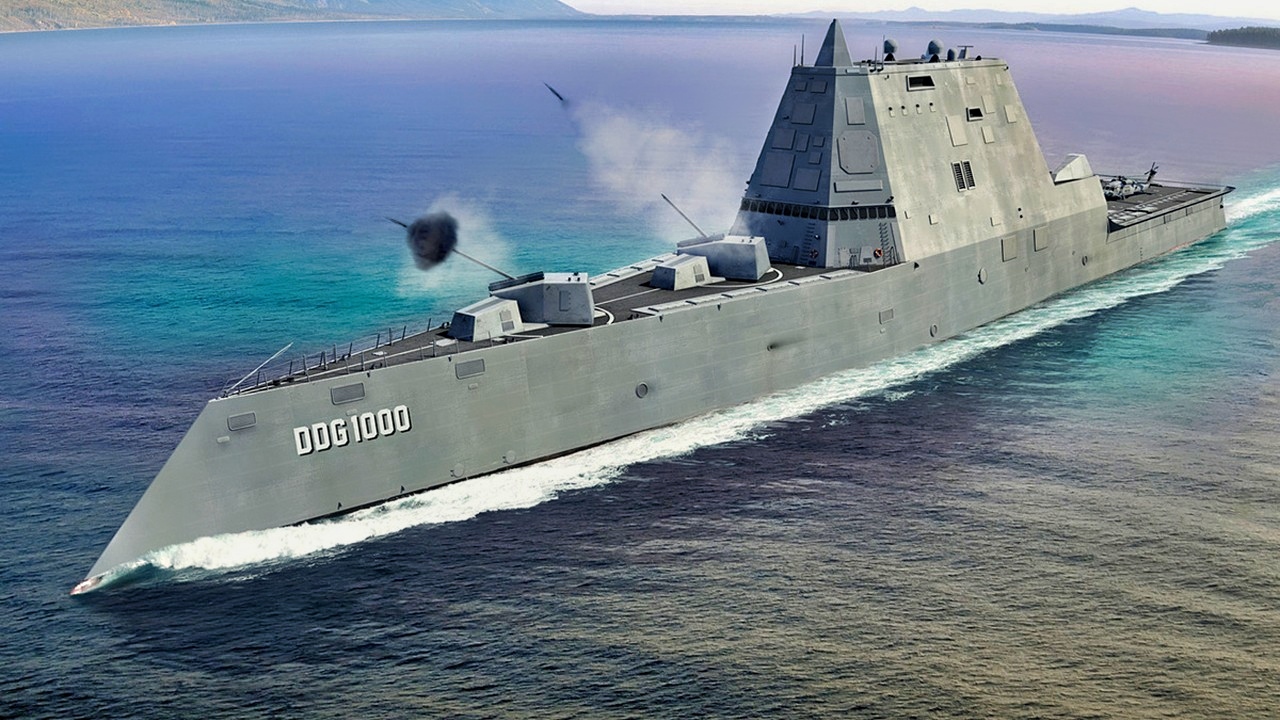
Zumwalt-Class U.S. Navy Destroyer. Image Credit: Creative Commons.
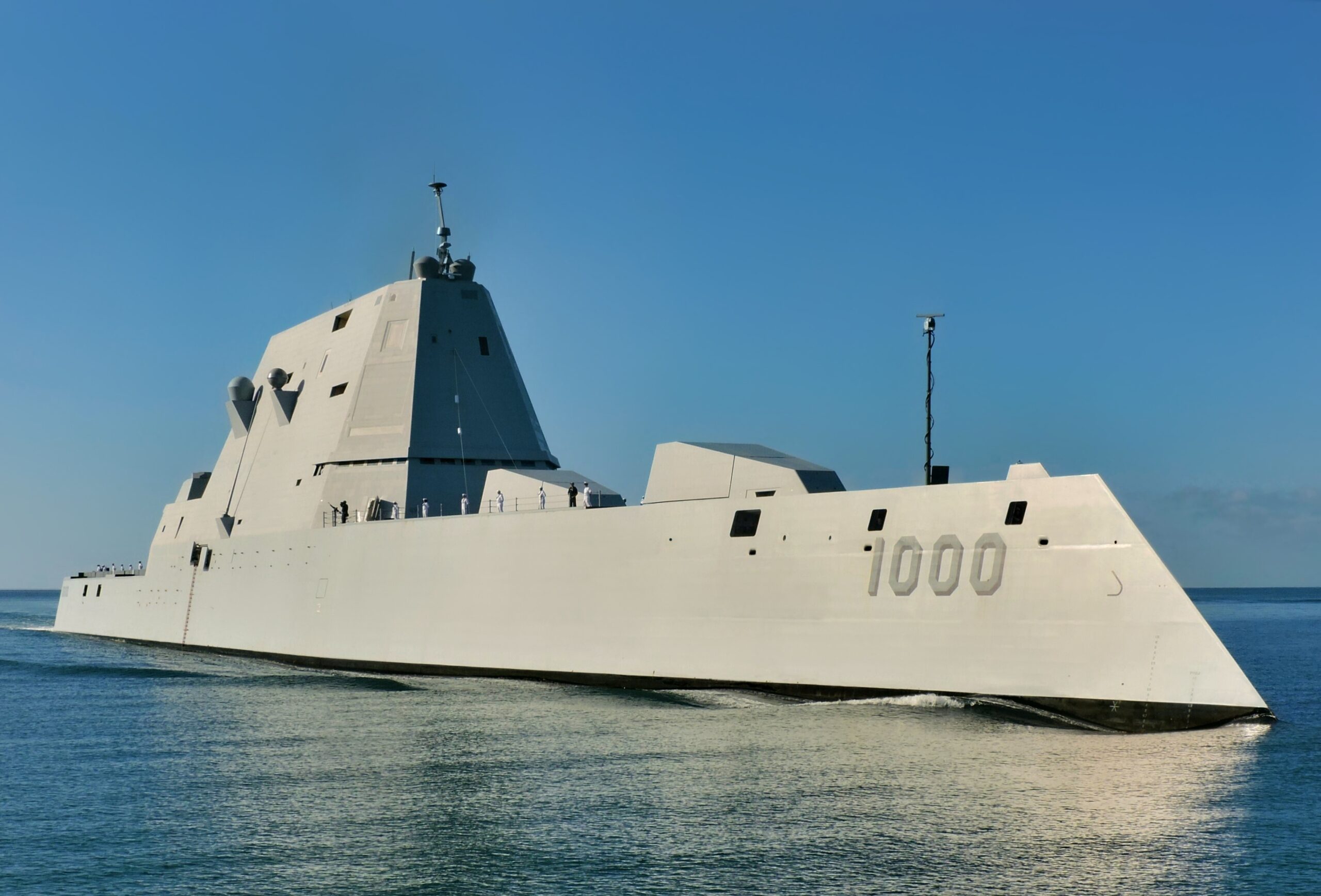
Zumwalt-Class Destroyer U.S. Navy. Image Credit: Creative Commons.
-However, 2026 reports confirm that NSWC Dahlgren conducted a three-day trial in early 2025 to support the Joint Hypersonic Transition Office.
-This report analyzes the use of railguns as a cost-effective testbed for hypersonic materials and sensors at Mach 6–7, concluding that the “Flying Rail” has transitioned from a primary weapon system to a vital accelerator for Long Range Hypersonic Weapon (LRHW) development.
Pentagon Revives Railgun Research After Years of Silence
The U.S. Navy has resumed testing an electromagnetic railgun prototype at White Sands Missile Range in New Mexico, reviving a once-high-profile weapons program that was effectively shelved only a few years ago.
The live-fire testing of its prototype railgun reportedly took place during a three-day trial campaign in February 2025, but the activity only became public after it was referenced in a Naval Surface Warfare Center report summarizing technical work carried out during the year.
The railgun had previously been one of the Navy’s most ambitious experimental weapons projects, but the service effectively shelved the program in 2021 after spending more than $500 million over roughly 15 years to develop a viable system.
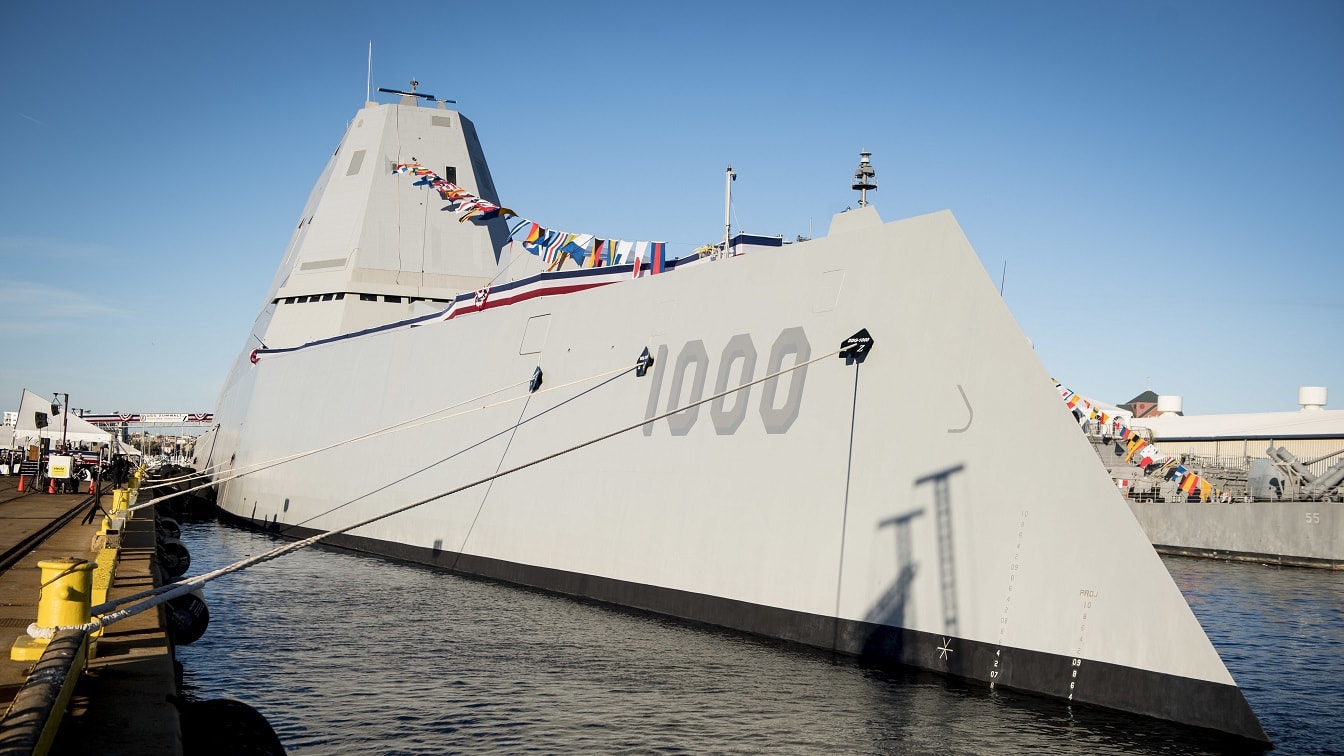
(Oct. 15, 2016) The Navy’s newest and most technologically advanced warship, USS Zumwalt (DDG 1000), is moored to the pier during a commissioning ceremony at North Locust Point in Baltimore. (U.S. Navy photo by Petty Officer 1st Class Nathan Laird/Released)
The latest tests were reportedly carried out by engineers working with Naval Surface Warfare Center Dahlgren Division and White Sands Detachment personnel, who used the railgun to launch high-velocity projectiles while collecting data on structural stress and the behavior of extreme-speed projectiles. The work was conducted in support of the Pentagon’s Joint Hypersonic Transition Office, which is responsible for pushing hypersonic weapons research across the U.S. military.
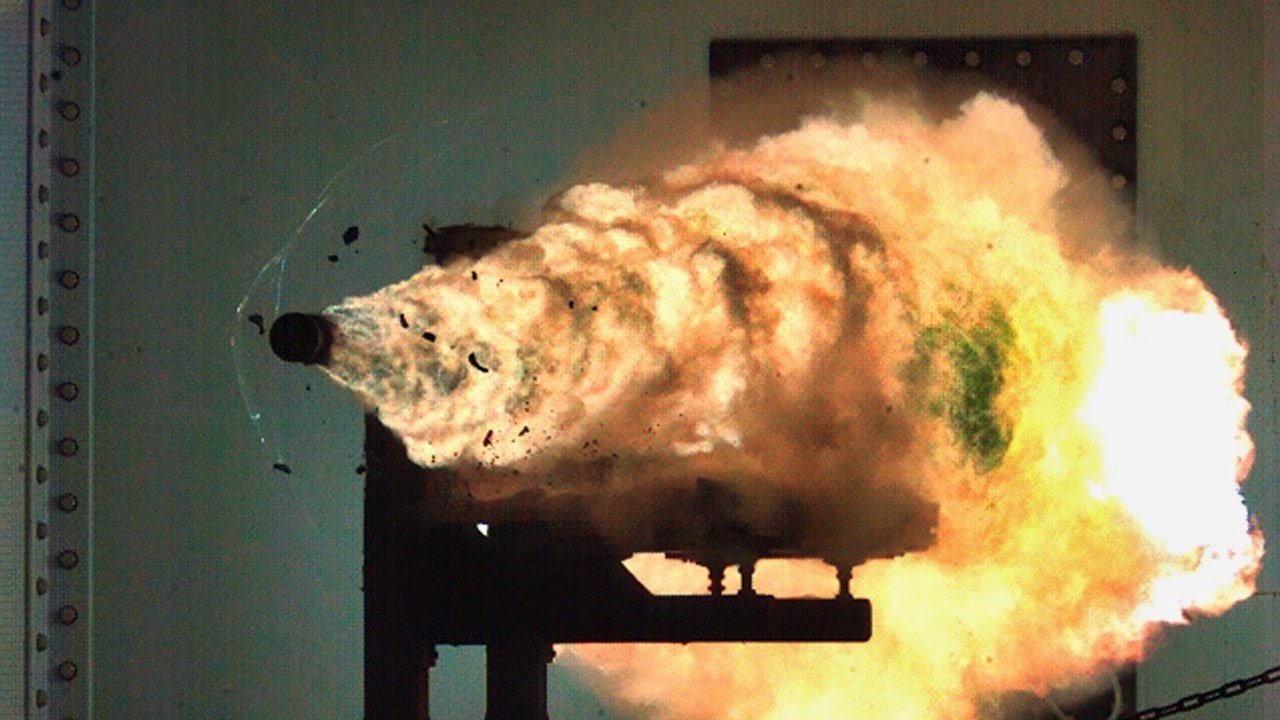
Electromagnetic railguns use powerful electric currents rather than gunpowder to accelerate metal projectiles along two rails at extremely high speeds – often approaching Mach 6 and 7 – allowing them to strike targets with enormous kinetic energy.
Although the Navy once envisioned railguns as a solution for ships, potentially putting targets more than 100 miles away within reach, the latest tests suggest the technology may now be finding a new role as a research tool for hypersonic weapons.
The news could give the previously abandoned system a second life within the Pentagon’s research programs.
The Rise and Fall of the Navy’s Railgun Ambitions
The U.S. Navy’s railgun program began in the mid-2000s as part of an effort to develop next-generation naval artillery.
The Office of Naval Research launched the program in 2005 with the goal of producing a weapon capable of firing projectiles more than 100 miles using electromagnetic acceleration instead of conventional propellants, not only making artillery fire more dangerous for adversaries but also making launches more efficient.
Early testing at the Naval Surface Warfare Center in Dahlgren, Virginia, produced impressive results. By 2010, the Navy demonstrated a railgun shot delivering more than 30 megajoules of energy – roughly the kinetic equivalent of detonating several kilograms of explosives.
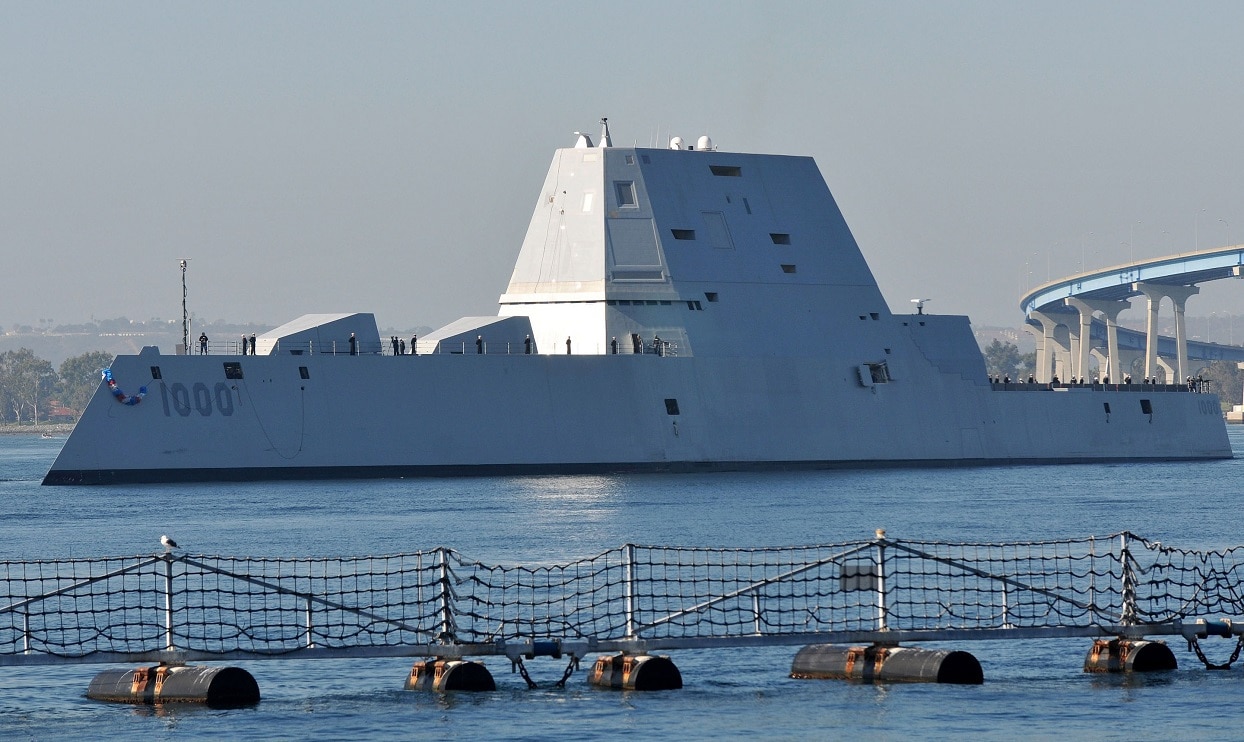
FROM 2016: The U.S. Navy’s newest warship, USS Zumwalt (DDG 1000) passes Coronado bridge on its way to Naval Base San Diego. Zumwalt is the lead ship of a class of next-generation multi-mission destroyers, now homeported in San Diego. (U.S. Navy photo by Petty Officer 3rd Class Anthony N. Hilkowski/Released)

USS Zumwalt.
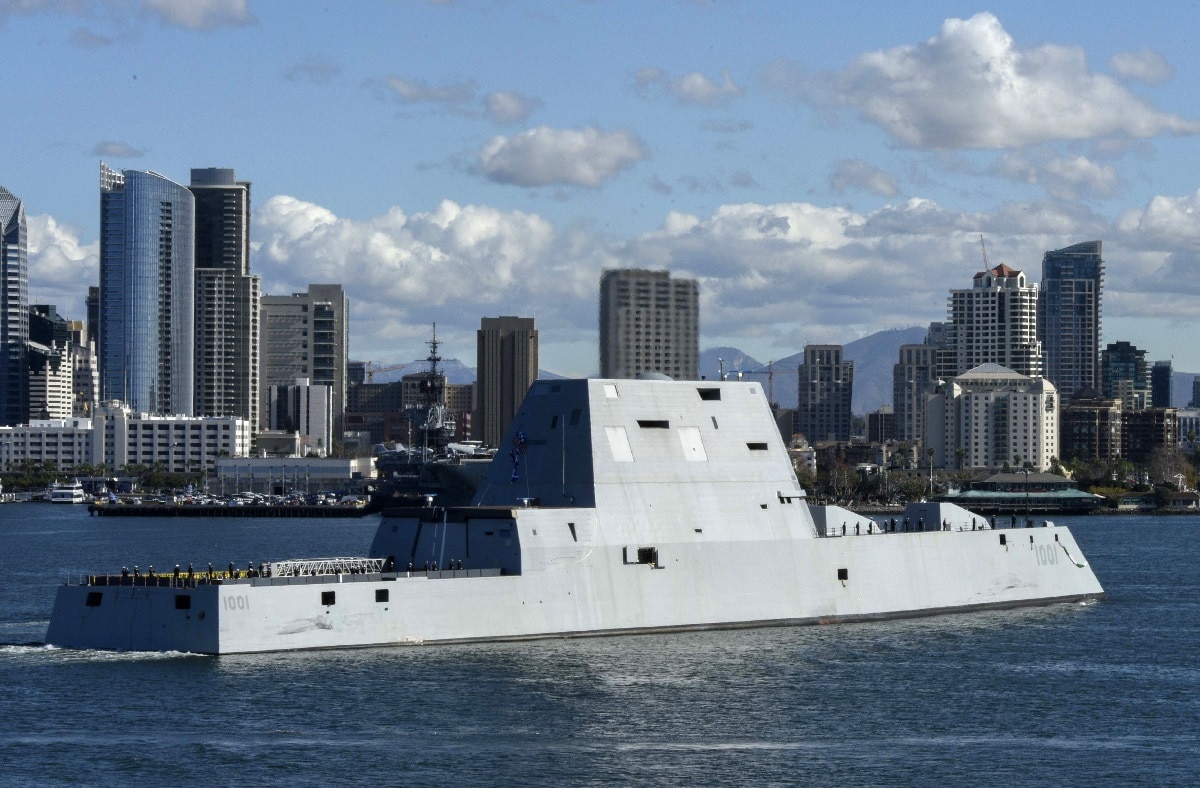
SAN DIEGO (Dec. 7, 2018) The Pre-Commissioning Unit (PCU) Michael Monsoor (DDG 1001) arrives in homeport of San Diego. The future USS Michael Monsoor is the second ship in the Zumwalt-class of guided- missile destroyers and will undergo a combat availability and test period. The ship is scheduled to be commissioned into the U.S. Navy Jan 26, 2019 in Coronado, Cailf. (U.S. Navy photo by Mass Communication Specialist Seaman Apprentice Nicholas Huynh/Released)
The concept attracted enormous attention at the time. Navy planners envisioned installing railguns on new warships, including the Zumwalt-class destroyers, whose massive onboard power-generation systems were theoretically capable of meeting the weapon’s electrical demands.
However, turning a laboratory prototype into an operational weapon proved far more difficult than some initially expected. The intense electrical currents required to launch the projectiles, in theory, made launching more efficient, but they actually caused severe wear on the rails. In some tests, barrels degraded after only a few dozen shots, meaning meaningful firing rates in combat could not be achieved without constant hardware replacement.
Combined with budget pressures and shifting priorities toward hypersonic missiles and directed-energy weapons, those challenges ultimately led the Navy to terminate the program in 2021 and place the remaining hardware into storage.
Railguns Matter Again
Despite the cancellation of the project, the Navy never completely abandoned railgun research. The prototype launcher was reportedly moved from Dahlgren to the White Sands Missile Range in 2019 for further experimentation, where the Army manages one of the United States’ largest weapons-testing facilities.
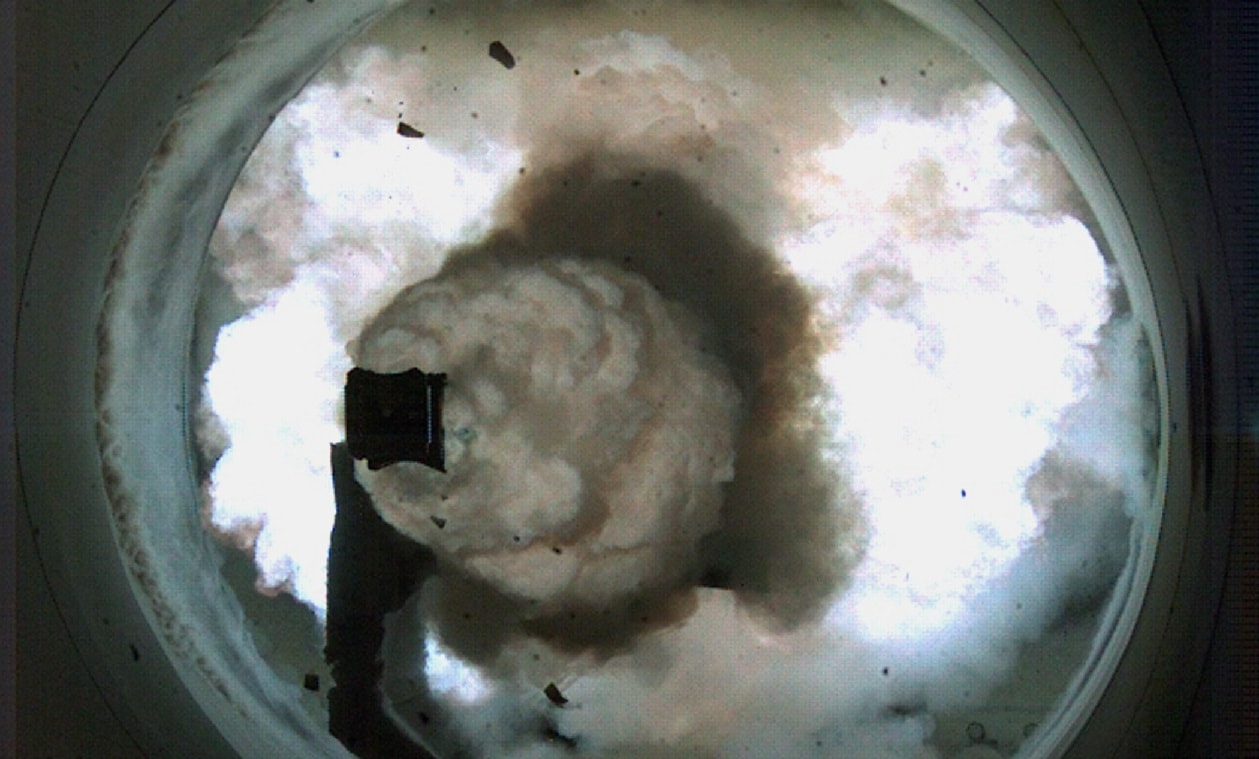
DAHLGREN, Va. (Dec. 10, 2010) High-speed camera image of the Office of Naval Research Electromagnetic Railgun located at the Naval Surface Warfare Center Dahlgren Division, firing a world-record setting 33 mega-joule shot, breaking the previous record established Jan. 31, 2008. The railgun is a long-range, high-energy gun launch system that uses electricity rather than gunpowder or rocket motors to launch projectiles capable of striking a target at a range of more than 200 nautical miles with Mach 7 velocity. A future tactical railgun will hit targets at ranges almost 20 times farther than conventional surface ship combat systems. (U.S. Navy photo/Released)
The recently confirmed February 2025 tests suggest that the weapon is now being used to support new research and could therefore influence future weapons systems on new vessels.
Hypersonic weapons, typically defined as systems that fire projectiles at speeds exceeding Mach 5, have become a major focus of U.S. military modernization. The U.S. Army’s Long Range Hypersonic Weapon, for example, is designed to deliver boost-glide warheads traveling at extreme speeds and ranges exceeding 2,000 miles.
Railguns could also help researchers test materials, flight conditions, and sensors associated with hypersonic speeds without requiring full-scale missile launchers. Because electromagnetic launch systems can accelerate projectiles to similar velocities, they provide a relatively cost-effective way to study how payloads behave under intense heat and pressure.
So while the weapons may ultimately prove useful in and of themselves, the fact that they are also useful for research purposes seems to explain why they have returned to testing.
About the Author: Jack Buckby
Jack Buckby is a British researcher and analyst specialising in defence and national security, based in New York. His work focuses on military capability, procurement, and strategic competition, producing and editing analysis for policy and defence audiences. He brings extensive editorial experience, with a career output spanning over 1,000 articles at 19FortyFive and National Security Journal, and has previously authored books and papers on extremism and deradicalisation.

