
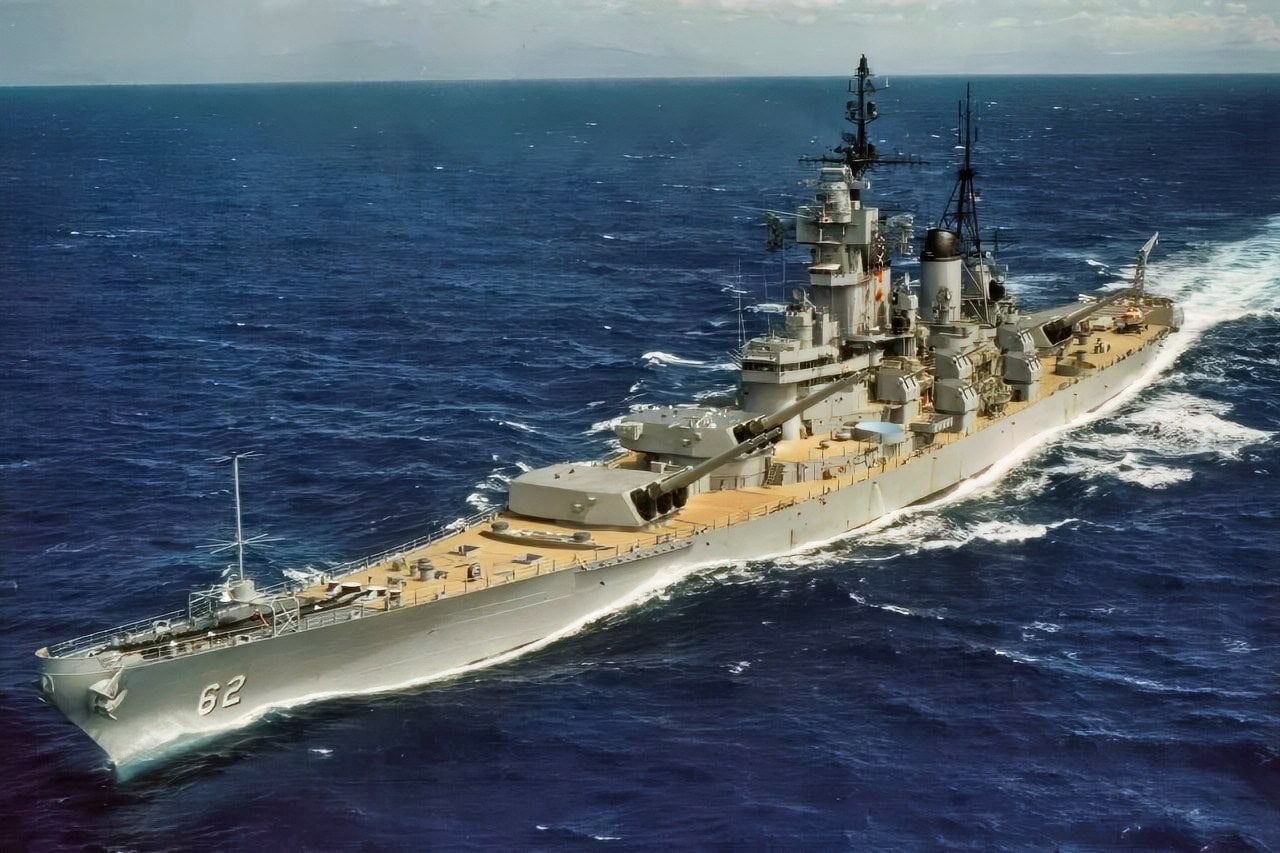
2,200 Missiles vs. The U.S. Navy: The “Kinetic Missile Fight” Is Coming for the Trump-Class Battleship
The type of future warfare I predict in East Asia is the “Kinetic Missile Fight.” If a conflict occurs, the U.S. Navy and Air Force will engage the People’s Liberation Army’s equivalent service branches. This means several hundred missiles that will endanger U.S. military installations, runways, command and control centers, and other flight infrastructure on land. Then, numerous American ships are in danger of a Chinese missile attack.
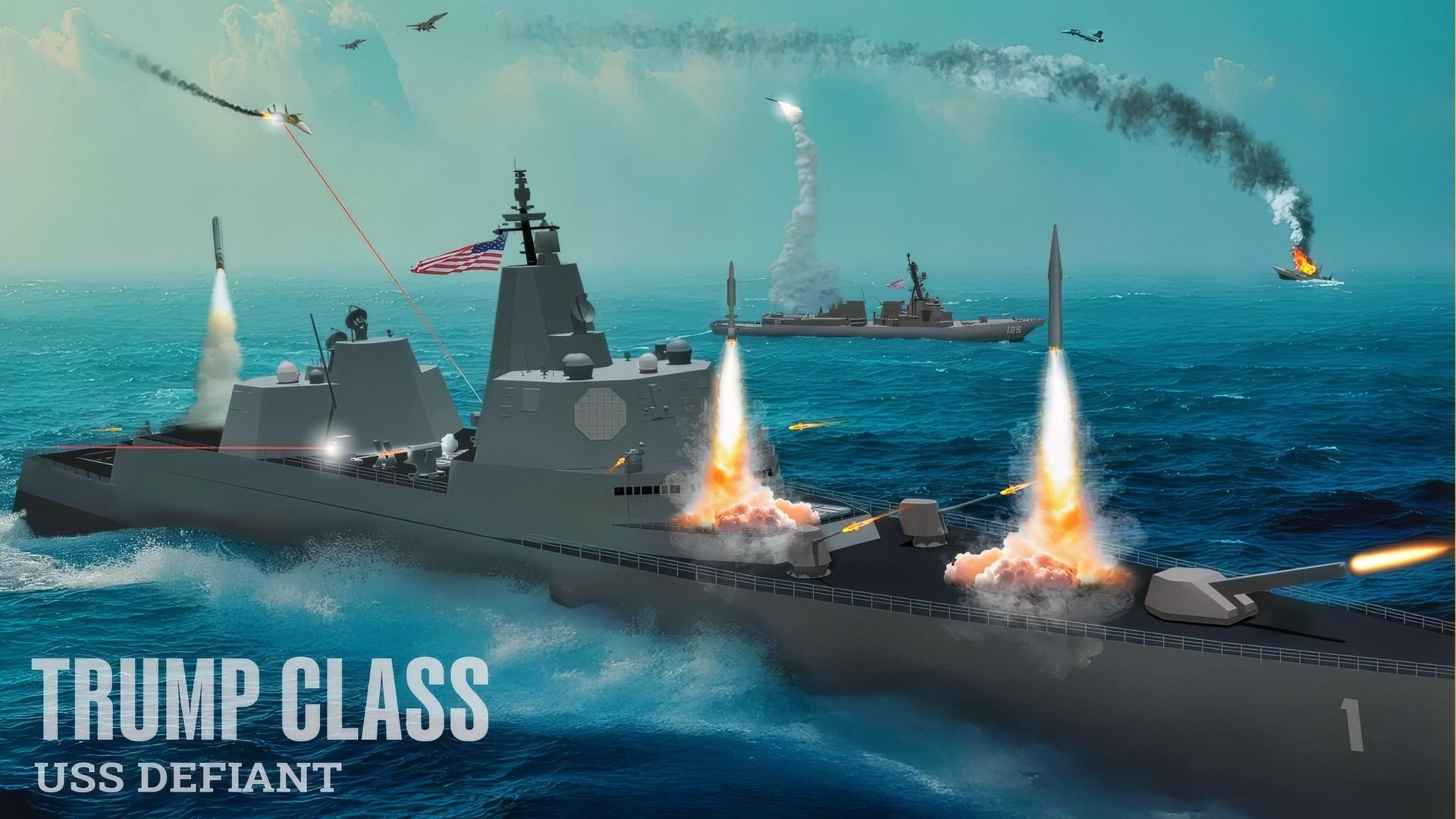
Trump-Class Battleship USS Defiant. Image Credit: Creative Commons.
Keeping the U.S. Down and Out
U.S. aircraft carrier strike groups cannot operate as they once did because of China’s already effective anti-access/area-denial strategy. The days of the United States being able to deploy two carrier strike groups in the Taiwan Strait the way President Bill Clinton ordered in 1996 during a crisis are long gone.
U.S. ships must remain out of range of Chinese missiles, and carrier strike groups are expected to benefit from the new MQ-25 Stingray drone tanker, which will extend the range of F-35C Lightning IIs and F/A-18 E/F Super Hornets. The Navy’s proposed sixth-generation fighter, known as the F/A-XX, is urgently needed to counter anti-access/area-denial capabilities.
Using the Assassin’s Mace to Decapitate the Americans
The Chinese also conduct the Assassin’s Mace stratagem. This is an asymmetric “David versus Goliath” strategy that features anti-ship and land-attack missiles. This will prevent the U.S. Navy from operating effectively in the First Island Chain, particularly in the South China Sea, where freedom of navigation is already being challenged by the People’s Liberation Army Navy (PLAN).
The future of Taiwan also hangs in the balance. How will the United States react to a potential Chinese invasion or blockade of the island? The Chinese have hundreds of missile launchers located on the eastern part of the country that can devastate both Taiwan and U.S. Navy vessels or Air Force installations.
The New Missile Gap
This force of missiles includes the ship-killing DF-17, DF-21D, and DF-26B, along with the newer and more sophisticated YJ-series like the YJ-17, YJ-18, and YJ-19 ship-launched and air-launched projectiles. The Americans must face facts that they could lose an aircraft carrier to these missiles.
There are over 2,200 ballistic and cruise missiles in the People’s Liberation Army Rocket Force. That’s enough to saturate a carrier strike group and overwhelm the Aegis Combat System that creates a protective shield around U.S. ships.
Emergence of Ship-Killing Capabilities
The Assassin’s Mace anti-ship missile strategy goes back to the late 1990s and early 2000s. This is when I committed myself to becoming a Northeast Asia analyst. My former colleague at The George Washington University of International Affairs, Professor David Shambuagh, wrote a seminal 2003 book about the Chinese military. By focusing on discarded Chinese military manuals available in bookstores on the Mainland, Shambaugh obtained better intelligence about the Chinese armed forces than the CIA or DIA produced for a few years. This is where I first learned about China’s carrier-killing missiles like the Russian-made Sunburn.
The Chinese have come along since then with the Assassin’s Mace strategy, and this is a worry. The next strategy employed by the People’s Liberation Army Navy and Air Force is known as “Grey Zone Warfare.” These are actions that fall short of a shooting war but are more dangerous than peaceful relations.
This means that the PLAN and PLAAF are always ready to surround Taiwan with ships or encroach on the island’s airspace with their best fighter jets, airborne early warning airplanes, and bombers. We have not seen the end of Grey Zone Warfare, and it was best executed during training exercises at the end of last year that had many wondering if Xi Jinping would order an attack on the island.
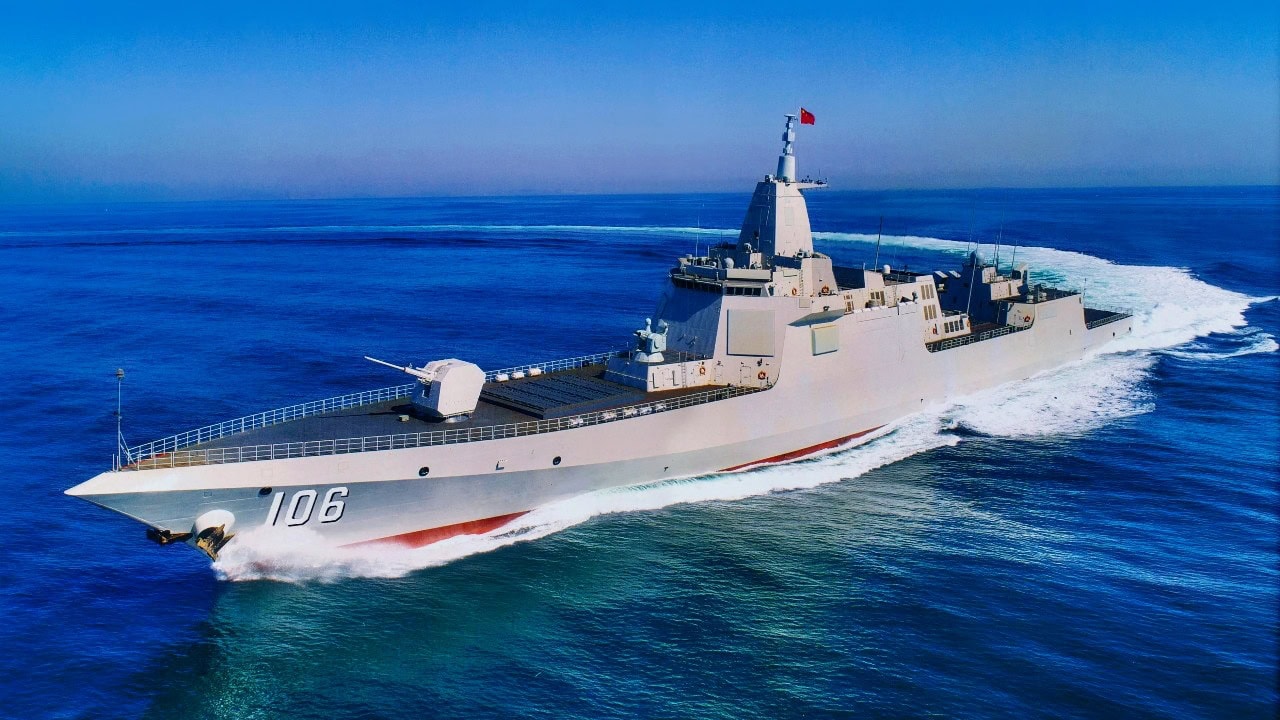
Type 055 Destroyer from China. Chinese Navy Handout/State Media.
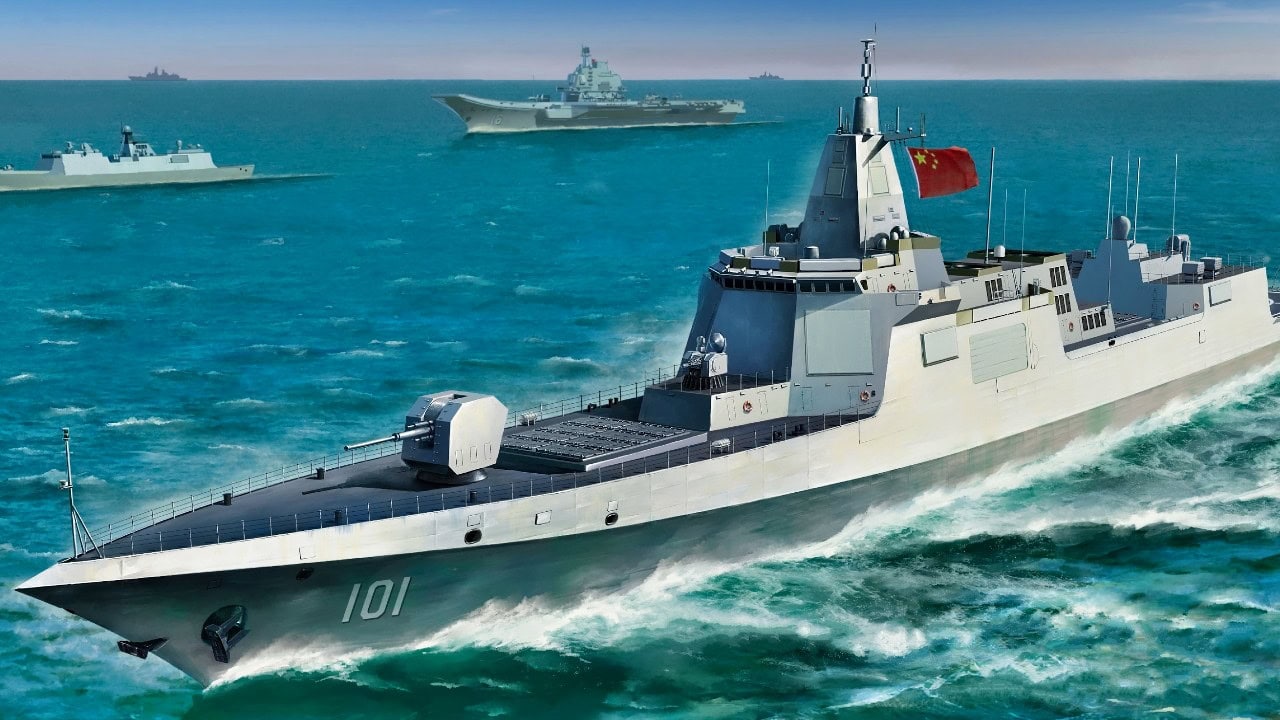
Chinese Navy Warship Created by Artist. Image Credit: Creative Commons.
Can the Golden Fleet Answer Back
With all of these headaches in the Indo-Pacific, where does that leave the United States? President Donald Trump’s national security team has an answer. Policy makers are looking at deterring China with a beefed-up Navy that would include the “Golden Fleet” and a new battleship called the Trump-class or USS Defiant.
The White House’s National Security Strategy and the Department of Defense’s National Defense Strategy aim to keep the peace in East Asia by deterring China with new ships that would help the Navy face down China and operate freely in the First Island Chain.
The Golden Fleet would have additional frigates and replenishment ships, plus a new escort aircraft carrier. There could be a dozen innovative submarines to support armadas commanded and controlled by the Trump-class battleship.
How Survivable Will the Trump-class Be?
The Trump-class definitely has heavy armaments. There will be 128 Mark 41 Vertical Launching System cells and plans for a 32-megajoule electromagnetic railgun, with sufficient capacity for 12 Conventional Prompt Strike hypersonic missiles. There will also be two 5-inch guns on board with a close-in weapons system for anti-missile capability.
Would this ship be survivable against an overwhelming missile strike? The Trump-class would need a laser system to disable incoming projectiles that could fire unlimited “shots” at a large flight of missiles. These directed energy schemes assume that the apparatus will always be operational. However, they generate substantial heat and require a significant amount of electrical power. Laser systems are thus still unproven.
When the Trump-class would sail with a carrier strike group, would there be enough SM-3 and SM-6 missile interceptors to knock down the initial bevy of incoming missiles? These interceptors would be depleted quickly and would be expensive and time-consuming to reproduce. Could the Golden Fleet provide the logistical ships to keep the American interceptors from running out?
The Houthi Test Case
That was the problem when the U.S. Navy used two aircraft carrier strike groups in the Red Sea and the Gulf of Aden against the Iranian-backed Houthi rebels who were firing missiles and drones against American and allied shipping last year. The Navy learned that the supply of interceptors could run low. The Chinese are expected to have better missiles and more skilled operators than the Houthis.
The two U.S. security strategies call for a boosted defense industrial base that could see 250,000 new shipyard workers in the coming years. That would be sufficient personnel to build several Trump-class battleships, and additional skilled workers would be needed to produce intercepting missiles and lasers to counter Chinese projectiles, but it is not clear that the Golden Dome and Trump-class battleships have the support in Congress for such a naval buildup.
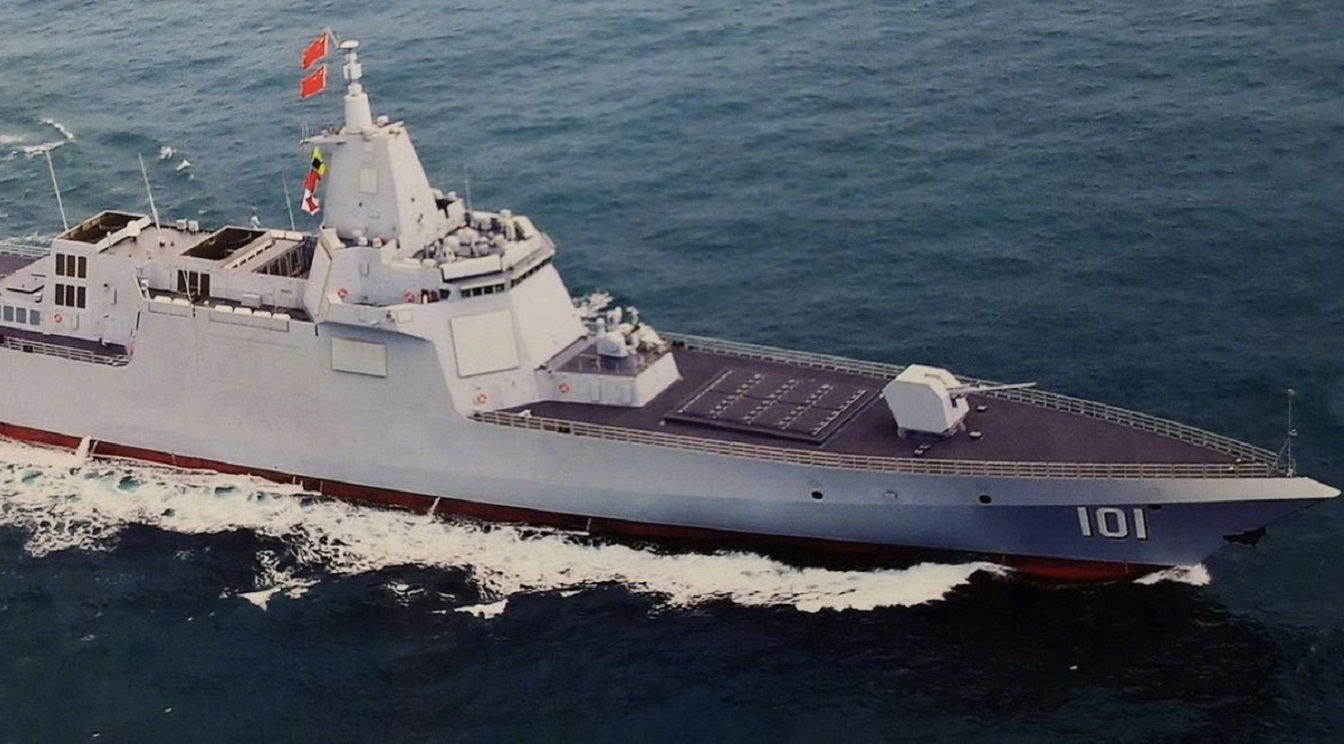
China Navy Destroyer. Image Credit: Creative Commons.
The Democrats could win the White House and retake the Senate and House of Representatives in the coming years, leading to the likely cancellation of the Trump-class.
The Yuck Factor Price Tag for the Trump-Class
Then there is the cost factor. One Trump-class battleship could cost over $13 to 18 billion, according to the Congressional Research Service. That would make lawmakers on Capitol Hill recoil in shock and place the program in jeopardy.
What Is the String Of Pearls?
Meanwhile, China has one more strategic trick up its sleeve. Xi Jinping envisions that his navy and air force will establish military bases that enable global reach beyond China’s near abroad. This means a series of installations, such as the current one in Djibouti in the Horn of Africa. This is called the “String Of Pearls” strategy, and if China were to create a true “Blue Water” navy, its military could further endanger the Trump-class. There could also be anti-access/area-denial capabilities in the Middle East and North Africa.
The Golden Feet is a highly aspirational concept, and there may not be sufficient funding and labor to build it. China is closely examining the Trump-class and plans to develop more projectiles to win the Kinetic Missile Fight.
The new American battleship needs to find a way to improve its missile protection against the ship-killers employed by China. The Aegis Combat System is effective, but SM-3 and SM-6 interceptors could be depleted quickly and would need to be restocked, given the over 2,000 Chinese missiles on hand.
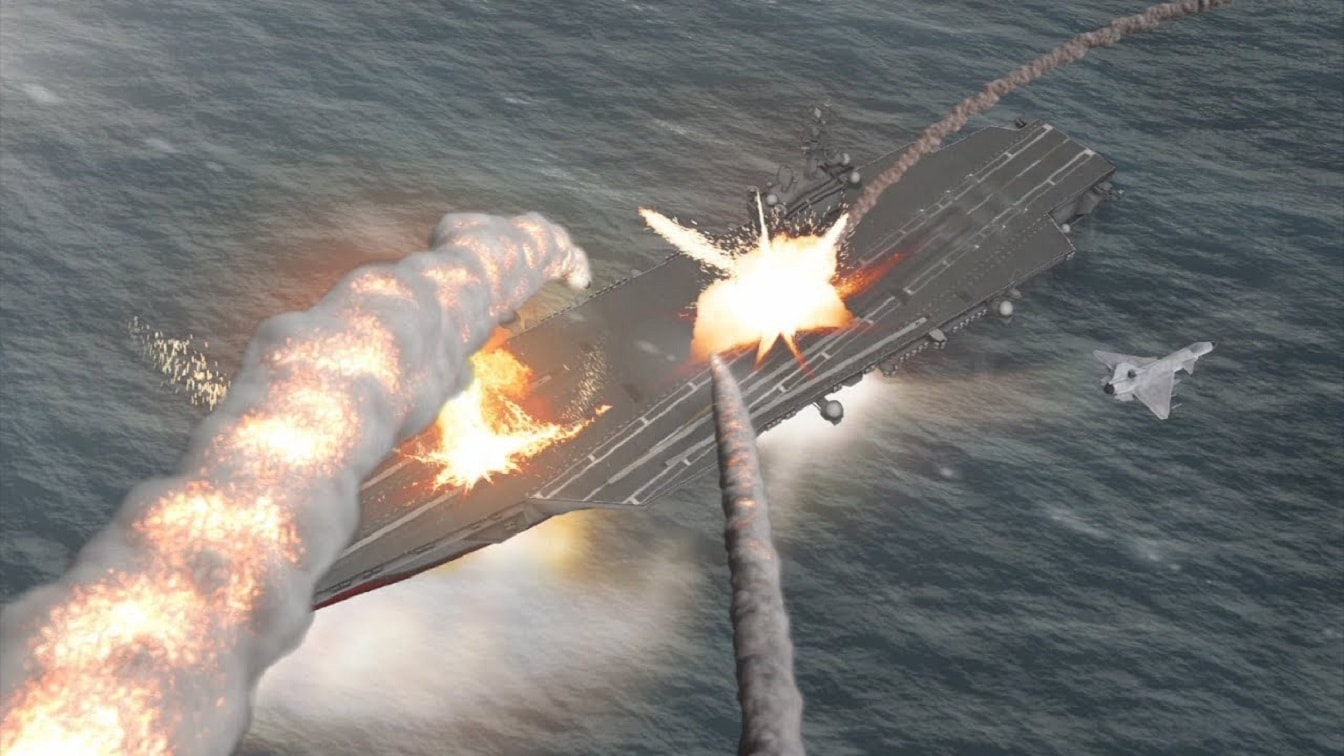
YouTube Screenshot of a Simulation of China Firing a DF-21 ASBM.
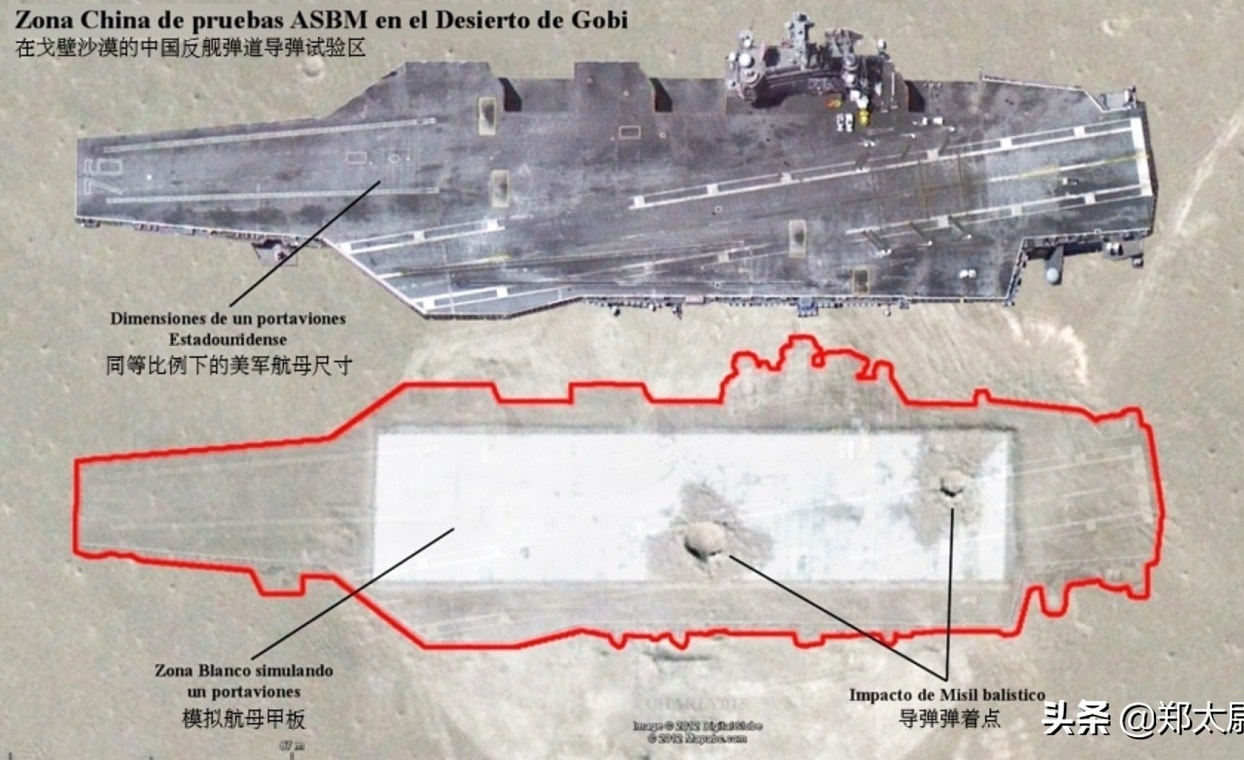
Image from the now closed WantChinaTimes. This shows a mock attack on a U.S. Navy aircraft carrier.
Making Sure China Cannot Strategically Overwhelm the U.S.
Neither the Department of Defense nor the White House mentions the missile situation with China. Both documents are not lengthy and merely calls for the buildup of deterrent capabilities without being specific about what the Americans need for defensive countermeasures against Assassin’s Mace, anti-access/area-denial, Grey Zone Warfare, and the String of Pearls strategy.
Just calling for deterrence is not enough. The Americans need to be more precise and specific about what they need to do in a Kinetic-Missile Engagement. The future of warfare in the Indo-Pacific portends danger, and the Golden Fleet and one new Trump-class battleship are unlikely to alter the overall threat posed by China.
About the Author: Dr. Brent M. Eastwood
Author of now over 3,000 articles on defense issues, Brent M. Eastwood, PhD is the author of Don’t Turn Your Back On the World: a Conservative Foreign Policy and Humans, Machines, and Data: Future Trends in Warfare plus two other books. Brent was the founder and CEO of a tech firm that predicted world events using artificial intelligence. He served as a legislative fellow for US Senator Tim Scott and advised the senator on defense and foreign policy issues. He has taught at American University, George Washington University, and George Mason University. Brent is a former US Army Infantry officer. He can be followed on X @BMEastwood.