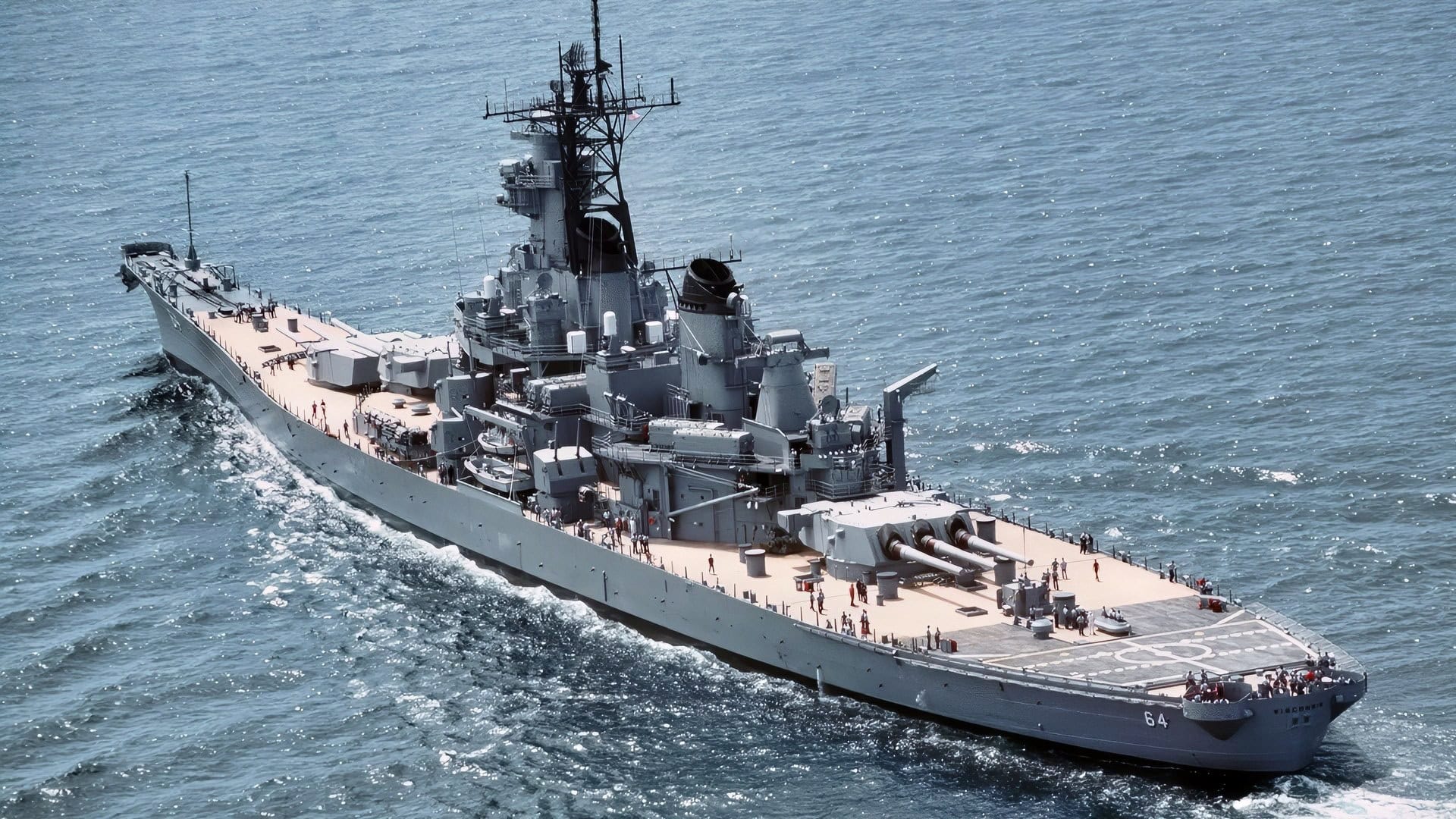
Summary and Key Points: A new Congressional Research Service report examines the Navy’s proposed guided-missile battleship program, BBG(X), widely framed as the Trump-class centerpiece of a “Golden Fleet.”
-The concept promises a conventionally powered surface combatant carrying an unusually heavy mix of missiles, guns, lasers, and future weapons.
-But cost and industrial capacity loom as the defining constraints. The piece argues the first ship—BBG-1 USS Defiant—could reach roughly $13.5 billion, rivaling a Ford-class carrier, as shipyard inflation and labor shortages worsen.
-It also warns that if the buy shrinks, per-ship costs could spiral—repeating the DDG-1000 pattern and producing “battleships that never sail.”
Trump-Class Battleship: CRS Says BBG(X) Could Cost $13.5 Billion Per Ship
On January 16, the Congressional Research Service (CRS) released a report on the U.S. Navy’s proposed guided-missile battleship (BBG-X) program, or known as the Trump-Class battleships. The document considers a number of issues concerning the project, including details that have until now provoked little public discussion.
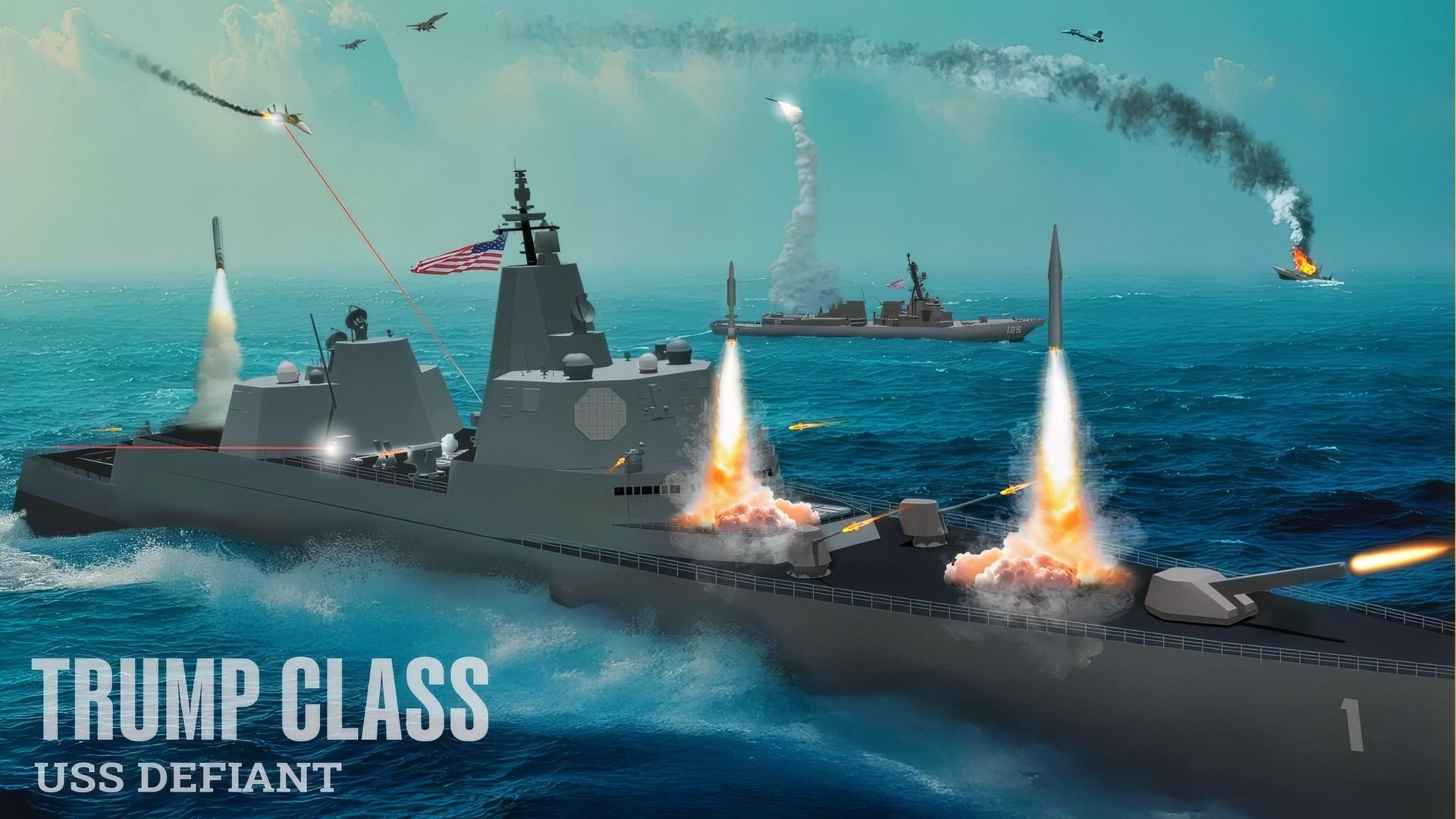
Trump-Class Battleship USS Defiant. Image Credit: Creative Commons.
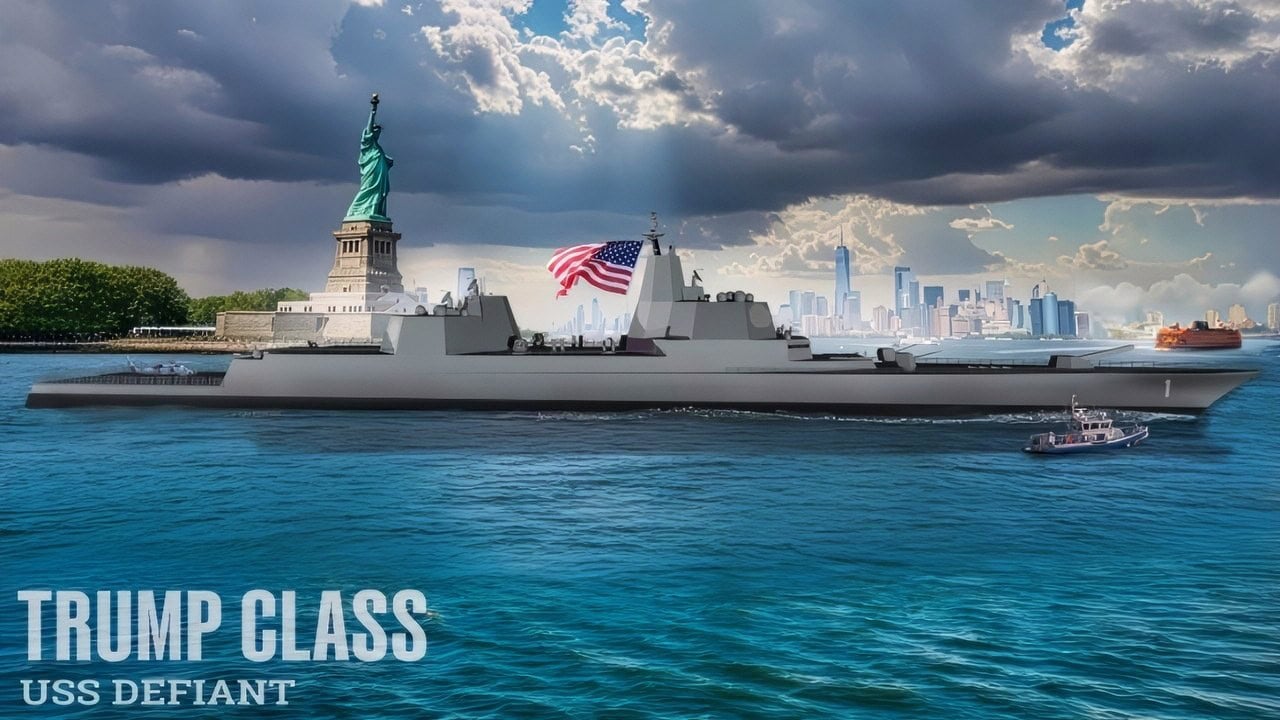
Trump-Class Battleship. Image Credit: Creative Commons/White House.
These ships are the signature naval initiative of the current Donald Trump administration—the proposed “Trump-class” battleship. This surface combatant is supposed to be the most visible component of a revitalized U.S. Navy that Trump refers to as the “Golden Fleet.”
“Golden” may be an apt term indeed, because these ships as planned may be unaffordable. The BBG-X’s per-unit price will be far greater than the now-cancelled Constellation-class frigate that was meant to fulfill the same role.
In a December 2025 essay for CSIS, Mark Cancian writes that there is “little need” for discussion of the relative merits of the BBG(X) “because this ship will never sail. It will take years to design, cost $9 billion each to build, and contravene the Navy’s new concept of operations, which envisions distributed firepower. A future administration will cancel the program before the first ship hits the water.”
Mounting Costs and Constraints
The projected cost of the Trump-class “might be even higher because of inflation in the shipbuilding sector. For example, building the battleship will require thousands of experienced shipyard workers, even as there is a labor shortage, and shipyards are bidding against each other for personnel.”
Confirming Cancian’s assessment is a January 13 report quoting U.S. Secretary of the Navy, John Phelan, calling for U.S. shipyards to hire a quarter-million more shipyard workers over the next decade—that will be necessary before the Golden Fleet can be built in the first place.
“Systems don’t build ships. People do,” Phelan told USNI News. “A quarter of the shipyard workforce is retirement eligible within five years. Over the next decade, shipbuilders and suppliers will need to hire roughly 250,000 skilled workers to meet demand. That means apprenticeships, vocational training, accelerated pipelines and partnerships with local communities. It also means paying fair wages … consistent build schedules so shipyard workers can have lifetime careers. AI and automation do not replace the workforce.”
The demand for shipbuilding talent will be higher than it has been in decades, but those doing the hiring must compete with other shipyards, as well as civilian-sector employers in all categories of skilled labor: welding, riveting, metal working, wiring and electrical systems, and milling machine operators. This will only raise the price per ship as shipyards offer more competitive wages.
The first ship of this class, the BBG-1, which is to be christened the USS Defiant, would likely cost about 10 times as much as the Constellation ships—about $13.5 billion. This is about the same as the cost of a Ford-class aircraft carrier.

Image taken by Harry J. Kazianis aboard the USS Iowa on August 15, 2025. Image is of a painting of the USS Iowa of the Iowa-Class. USS New Jersey is also a Iowa-Class battleship.
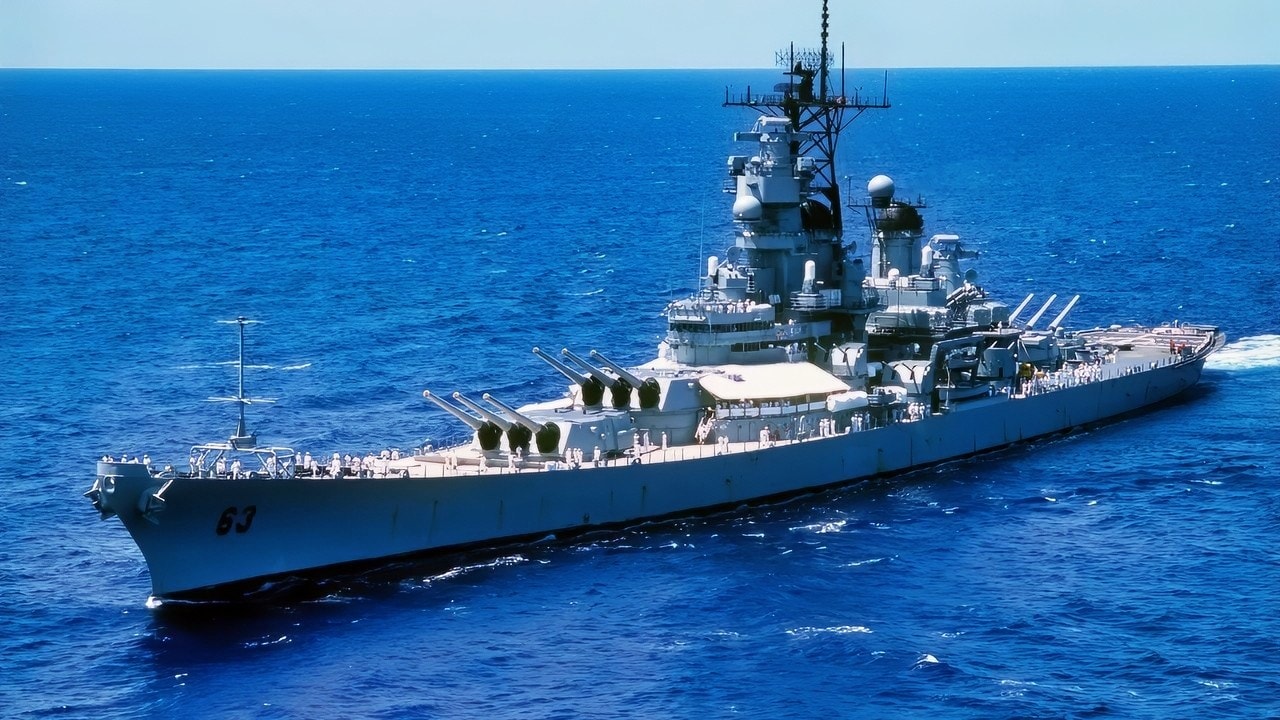
Iowa-Class Battleship Sailing. Image Credit: Creative Commons.
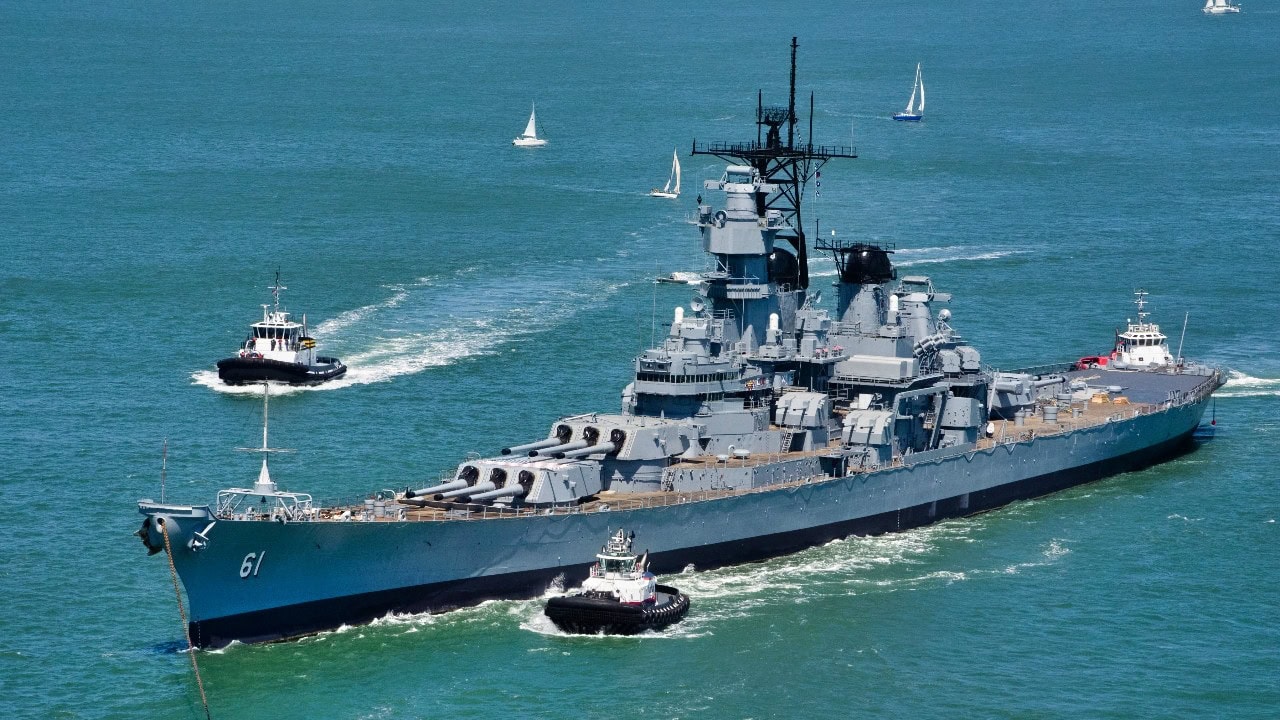
Iowa-Class Battleship Heading Into Port for U.S. Navy. Image Credit: Creative Commons.
Operational Scenarios: Will This Ever Sail?
The designation of BBG(X) describes the mission profiles the vessels will be slated to carry out. BB means battleship, G means it is akin to a guided-missile cruiser, and the X means it is an unfinished design.
The CRS report notes that the ships would not use nuclear propulsion and would carry a variety of current and future weapons options.
“BBG(X) would be conventionally powered (i.e., “fossil-fueled”) ships armed with a combination of missiles, guns, lasers and other weapons that would be greater in aggregate than the combination of weapons on the Navy’s current cruisers and destroyers,” the CRS report said.
But, as Cancian points out, the cost-effectiveness of these ships would also depend on how many are built.
“The Navy will commit to 2 of these ships, then 10, and eventually perhaps a total of 20–25,” he writes in the CSIS report. “This is a risky acquisition strategy because ships get much cheaper the more that are built.
“The object lesson is the DDG-1000 class, which was originally intended to number 18–24, later cut back to 10, and finally reduced to 3 ships. The BBG program will replicate this contraction if it fails. The cost per DDG-1000 rose from an estimated $2.3 billion to $3.6 billion (fiscal year 2005 dollars)—$5.6 billion in FY 2025 dollars. That excludes $14.4 billion in development costs (FY 2025 dollars).”
Should the Trump-class follow a similar path, the price per vessel could rocket to an inconceivable number. They would thus become impractical and, as Cancian writes, “battleships that would never sail.”
About the Author: Reuben F. Johnson
Reuben F. Johnson has thirty-six years of experience analyzing and reporting on foreign weapons systems, defense technologies, and international arms export policy. Johnson is the Director of Research at the Casimir Pulaski Foundation. He is also a survivor of the Russian invasion of Ukraine in February 2022. He worked for years in the American defense industry as a foreign technology analyst and later as a consultant for the U.S. Department of Defense, the Departments of the Navy and Air Force, and the governments of the United Kingdom and Australia. In 2022-2023, he won two awards in a row for his defense reporting. He holds a bachelor’s degree from DePauw University and a master’s degree from Miami University in Ohio, specializing in Soviet and Russian studies. He lives in Warsaw.