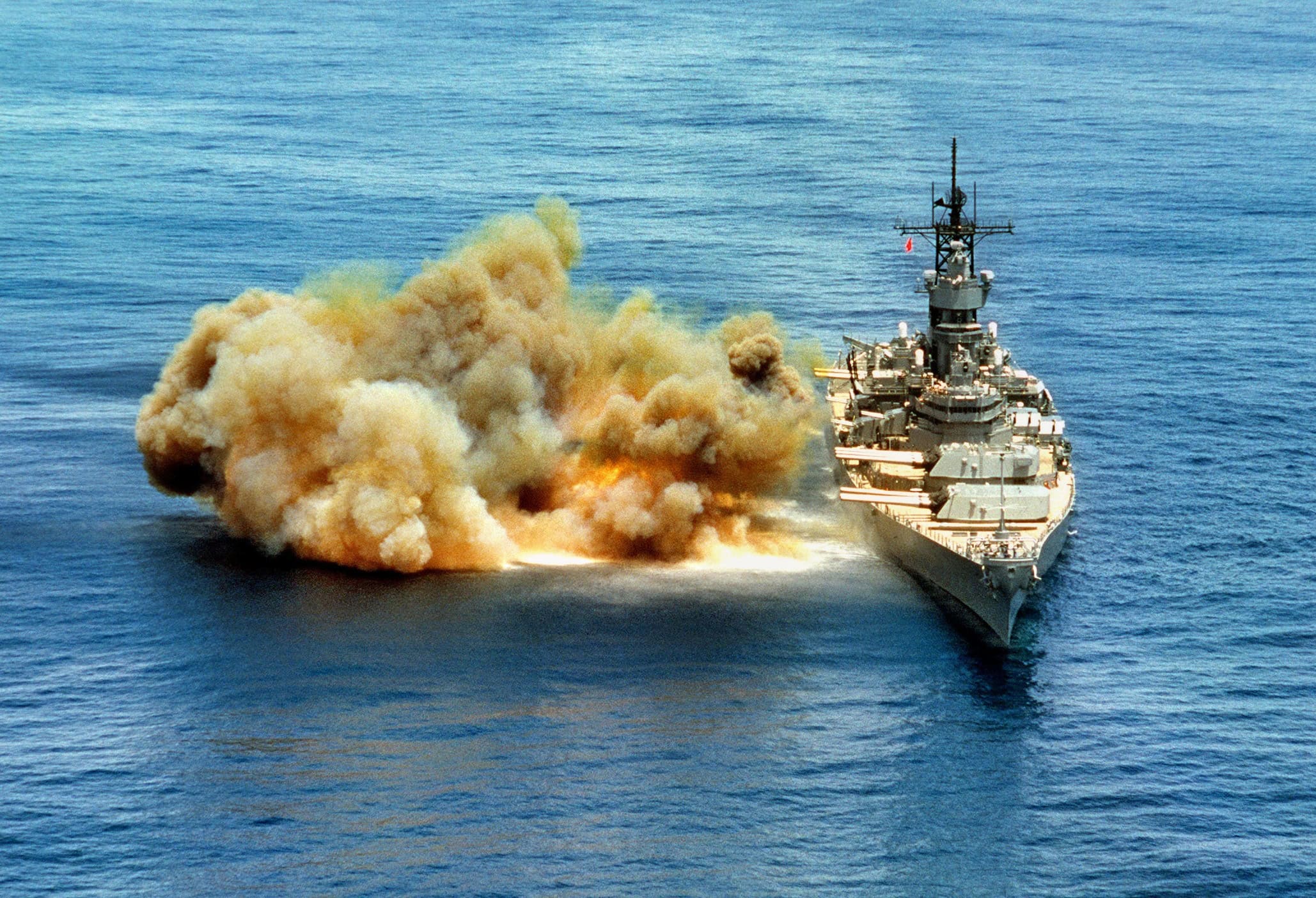
Trump-Class Battleship With Nuclear Capability: More Options, More Risk
There is little question that a new Trump-class of battleships could fill a massive “firepower” void in the Naval arsenal, given the retirement of four Ohio-class Guided Missile Cruisers and the slowed pace of Virginia-attack submarine arrivals.
Beyond this, however, is the pressing and strategically vital question as to whether these next-generation battleships should be armed with “nuclear” weapons capability.
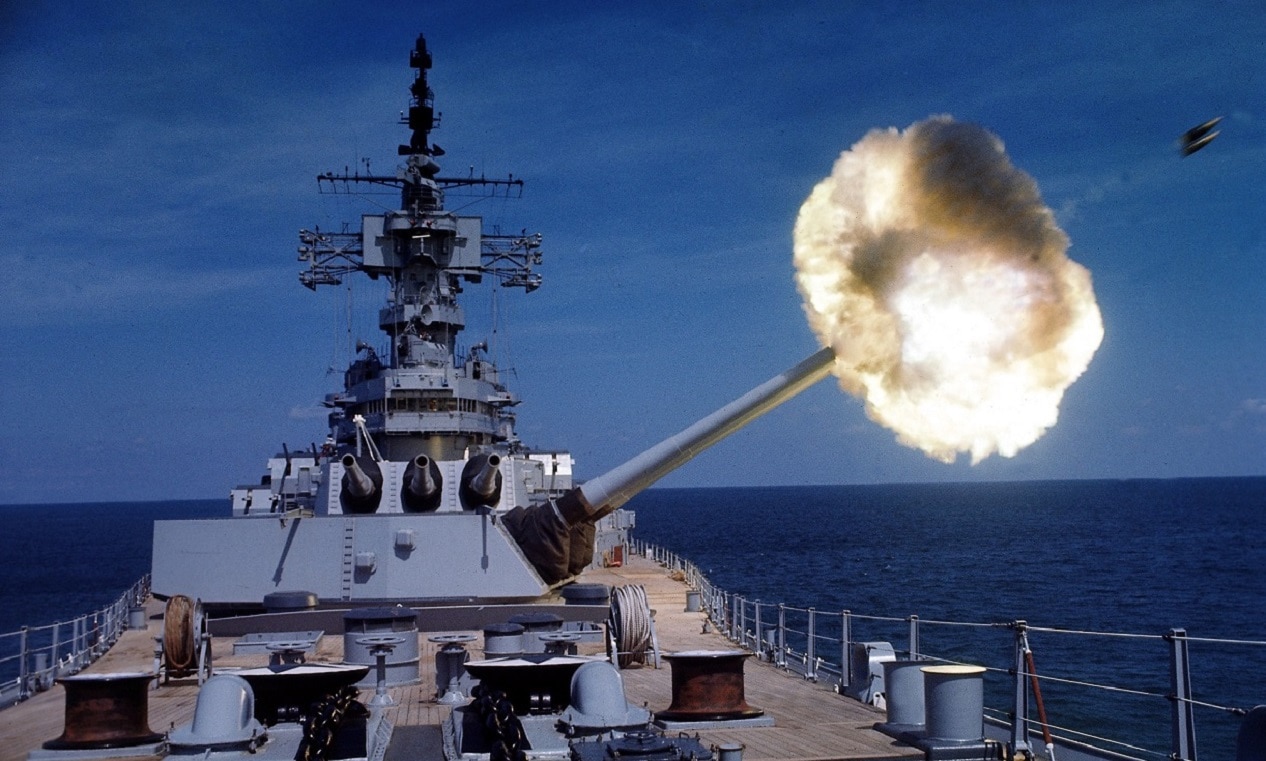
USS New Jersey Iowa-Class Battleship. Image Credit: US Navy.
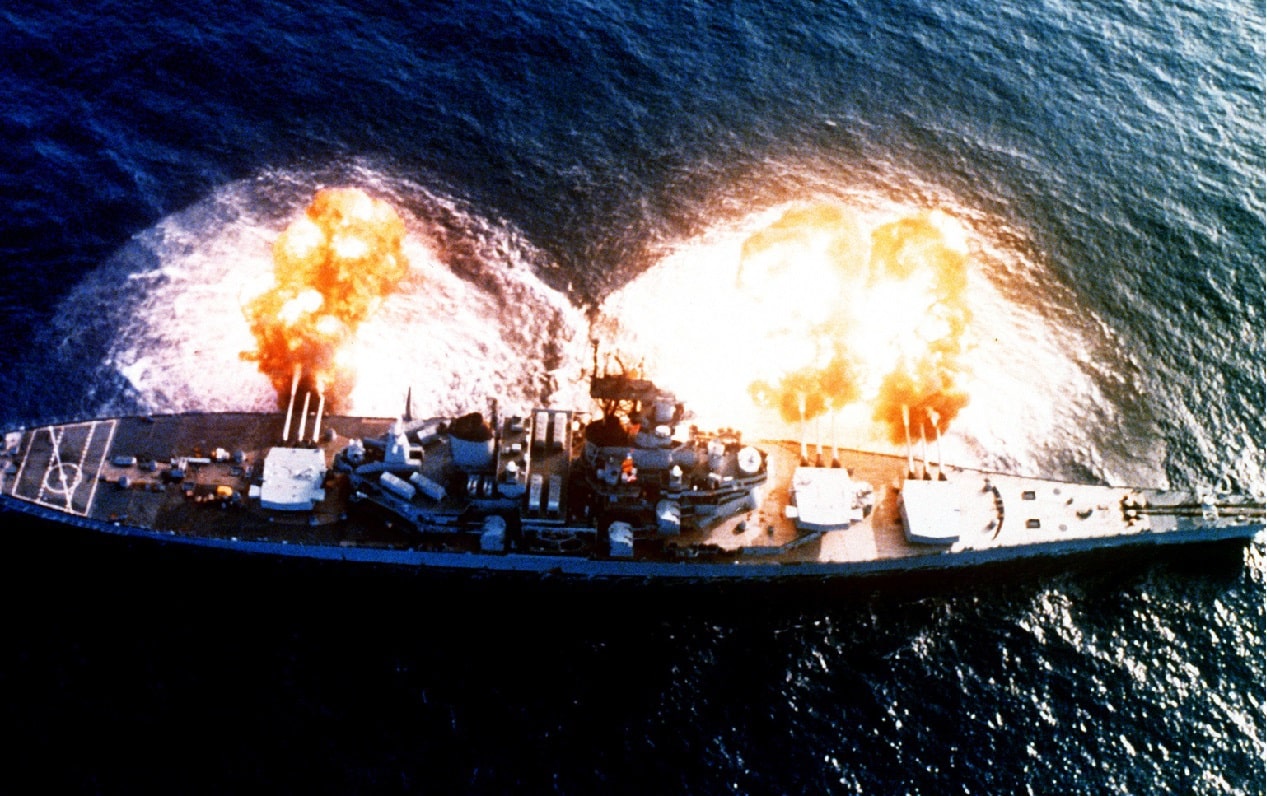
An overhead view of the battleship USS NEW JERSEY (BB-62) firing a full broadside to starboard during a main battery firing exercise.
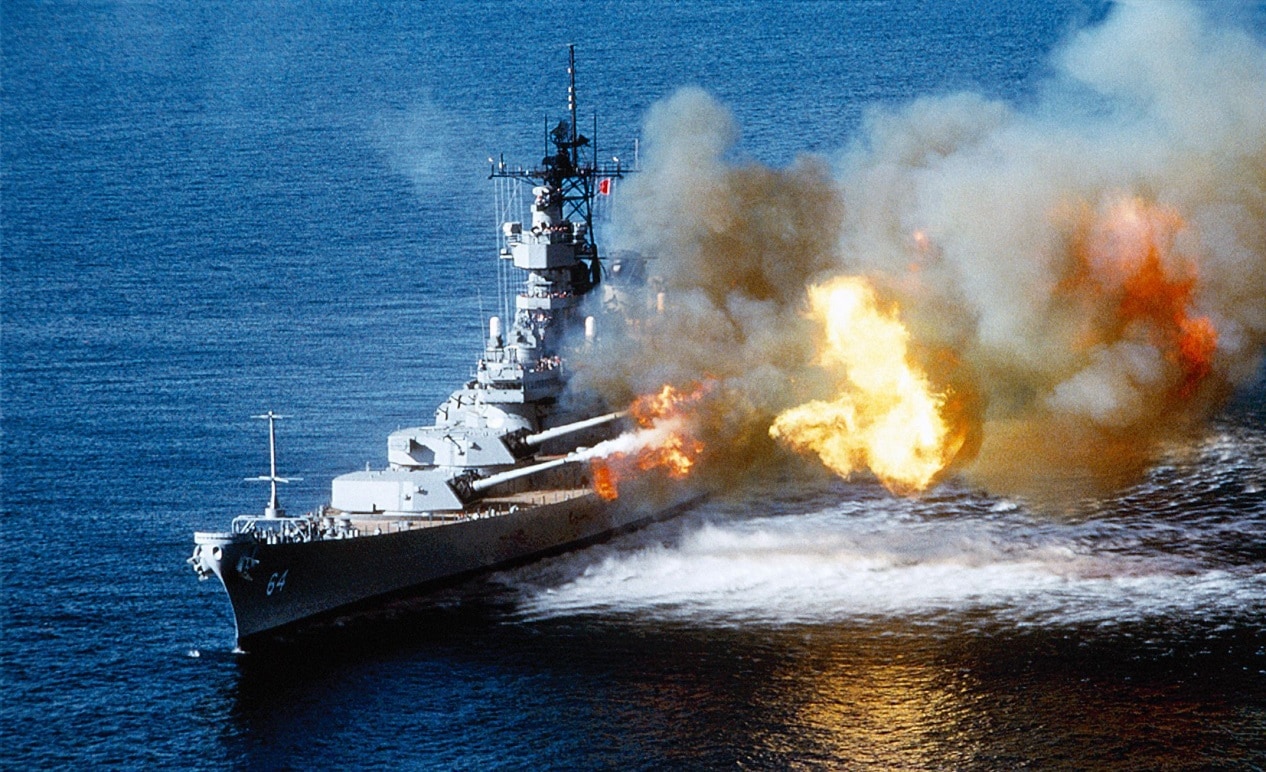
Iowa-class. Image Credit: Creative Commons.
There are many variables to consider, as some might express concern that arming battleships with tactical or low-yield nuclear weapons might lower the threshold to nuclear war.
There is also the serious concern that, in a given contingency, a conventional strike could be “misinterpreted” as a nuclear attack, which could unintentionally provoke a nuclear response.
Dual Armament
This question, related to dual-use weapons, has been very much on the radar for the Pentagon and Congressional decision-makers, as it has been central to questions about the air-launched Long-Range Stand-Off weapon, a now-developing dual-use, nuclear-capable cruise missile expected to arm the B-52 and B-21.
Additionally, could the fast-emerging ship-fired hypersonic Conventional Prompt Strike weapon be misconstrued or mistaken to be a surface-launched nuclear weapon?
The CPS is expected to arm Navy destroyers as soon as 2026, and it seems conceivable that the weapon could be configured for “dual use,” much like the LRSO, meaning it could operate with both conventional and nuclear warheads.
Conversely, adding nuclear retaliatory strike capabilities from the sea could introduce critical variables into the deterrence equation and give commanders and high-level decision-makers more options to hold an adversary at risk.
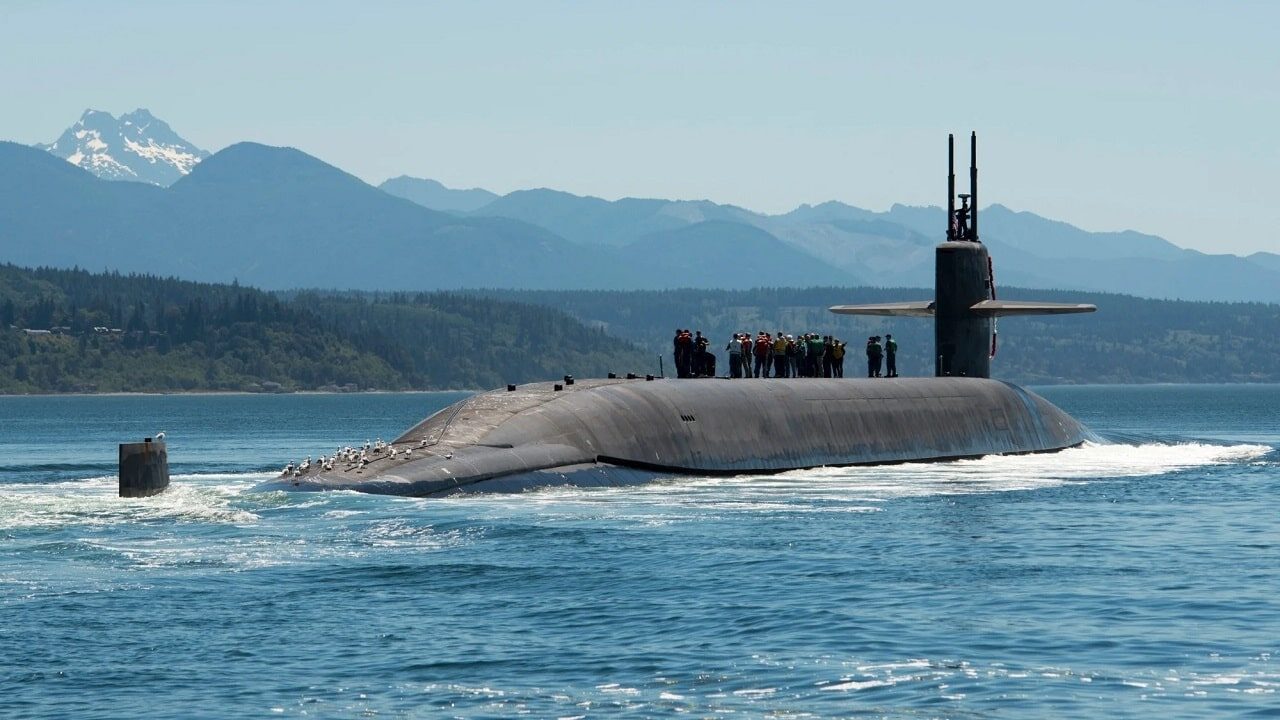
Ohio-Class. Image Credit: U.S. Navy.

An artist rendering of the future U.S. Navy Columbia-class ballistic missile submarines. The 12 submarines of the Columbia-class will replace the Ohio-class submarines which are reaching their maximum extended service life. It is planned that the construction of USS Columbia (SSBN-826) will begin in in fiscal year 2021, with delivery in fiscal year 2028, and being on patrol in 2031.
Of course, the nuclear-armed Columbia-class submarines ensure a massive, catastrophic second-strike capability in the event the US is attacked with nuclear weapons.
They lurk quietly in the dark depths of the ocean, strategically positioned to quickly destroy any nation or non-state actor that launches a nuclear attack.
Essentially, the promise of total nuclear destruction and annihilation keeps the peace. A nuclear-capable battleship might, in addition, further fortify this second-strike capability, which is fundamental to security and nuclear deterrence.
Mobile, Maritime Surface Nuclear Option
While the US is certainly not inclined to launch a nuclear strike in any capacity, the mere existence of nuclear weapons attacks from the surface of the ocean introduces yet another mobile maritime variable to the nuclear triad.
Should land-based ICBMs and even the air-launched portion of the nuclear triad be disabled or crippled in any capacity, then the prospect of surface-launched nuclear retaliation could potentially fill a void or add a needed fortification to the US nuclear deterrence posture.
Low-Yield Reality
Yet another part of the rationale for possibly arming Trump-class Battleships with nuclear weapons pertains to the simple reality that growing numbers of “low-yield” nuclear weapons already exist.
Following directives outlined in the 2018 Nuclear Posture Review published during the first Trump administration, the Pentagon has succeeded in adding a low-yield variant of the submarine-launched Trident II D5 and, more recently, resurrected a submarine-launched nuclear cruise missile effort.
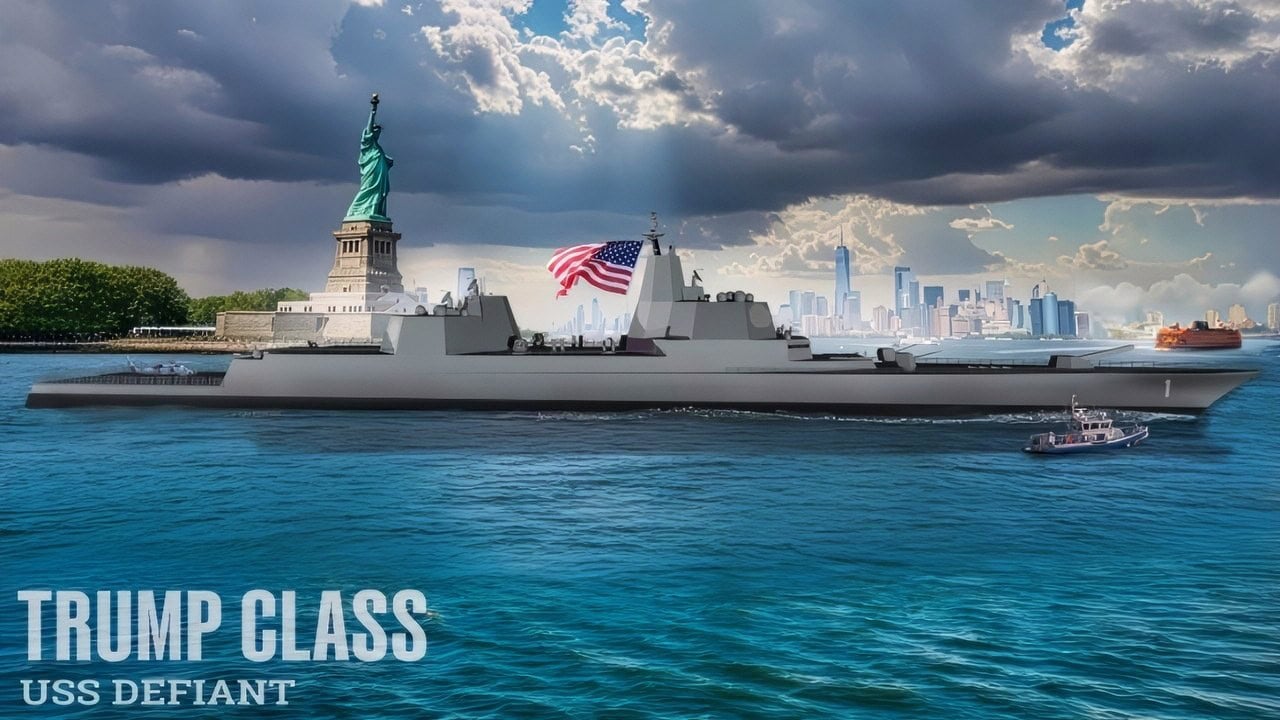
Trump-Class Battleship. Image Credit: Creative Commons/White House.
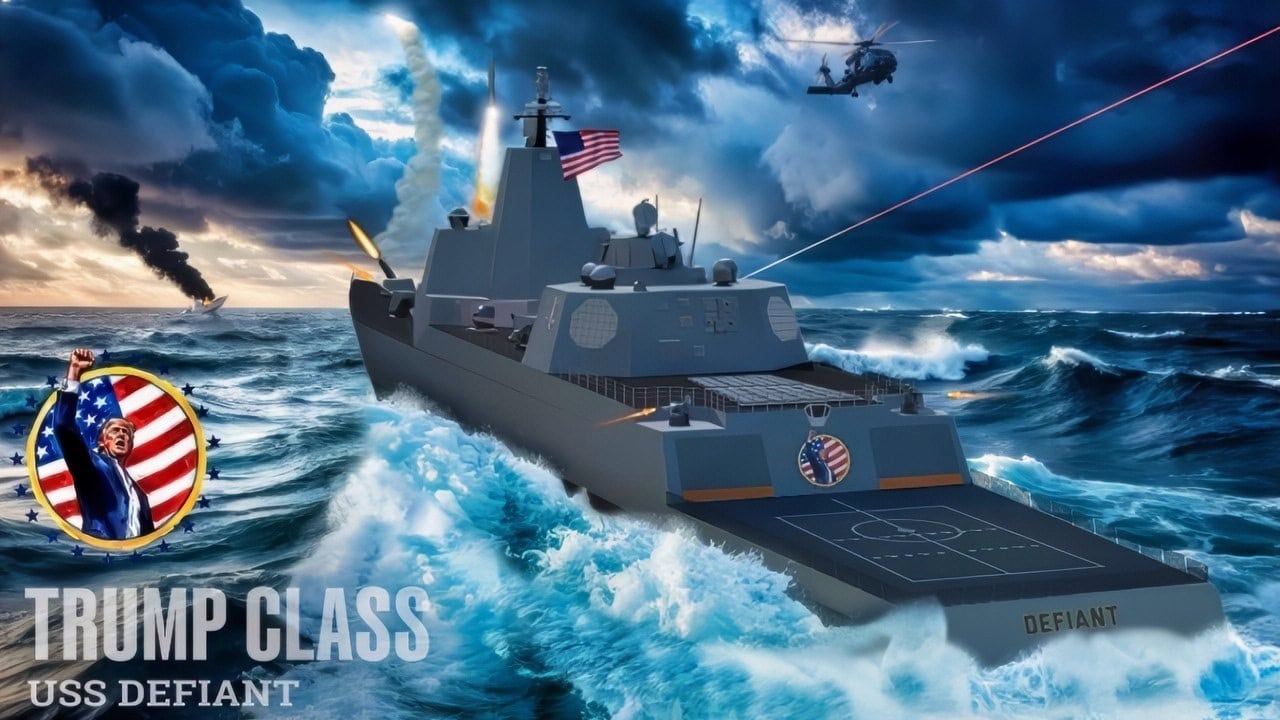
Trump-Class Battleship. Image Credit: Creative Commons/White House Photo.
The strategic thinking central to adding low-yield weapons is not to increase the likelihood of any nuclear exchange but rather to further ensure it does not happen by giving decision makers the widest possible sphere of options with which to hold an enemy at risk.
By extension, the idea is not to contemplate a “limited” nuclear exchange, but rather to ensure that potential adversaries are aware of the full complement of nuclear weapons options available to the US President.
About the Author: Kris Osborn
Kris Osborn is the President of Warrior Maven – Center for Military Modernization. Osborn previously served at the Pentagon as a highly qualified expert in the Office of the Assistant Secretary of the Army—Acquisition, Logistics & Technology. Osborn has also worked as an anchor and on-air military specialist at national TV networks. He has appeared as a guest military expert on Fox News, MSNBC, The Military Channel, and The History Channel. He also has a Masters Degree in Comparative Literature from Columbia University.