

Key Points and Summary – America’s sea-based nuclear deterrent now hinges on the Columbia-class SSBN, a program projected at roughly $348 billion over its lifecycle.
-As shipyards struggle with delays, workforce gaps, and component shortages, schedule slips threaten the handoff from aging Ohio-class boats.
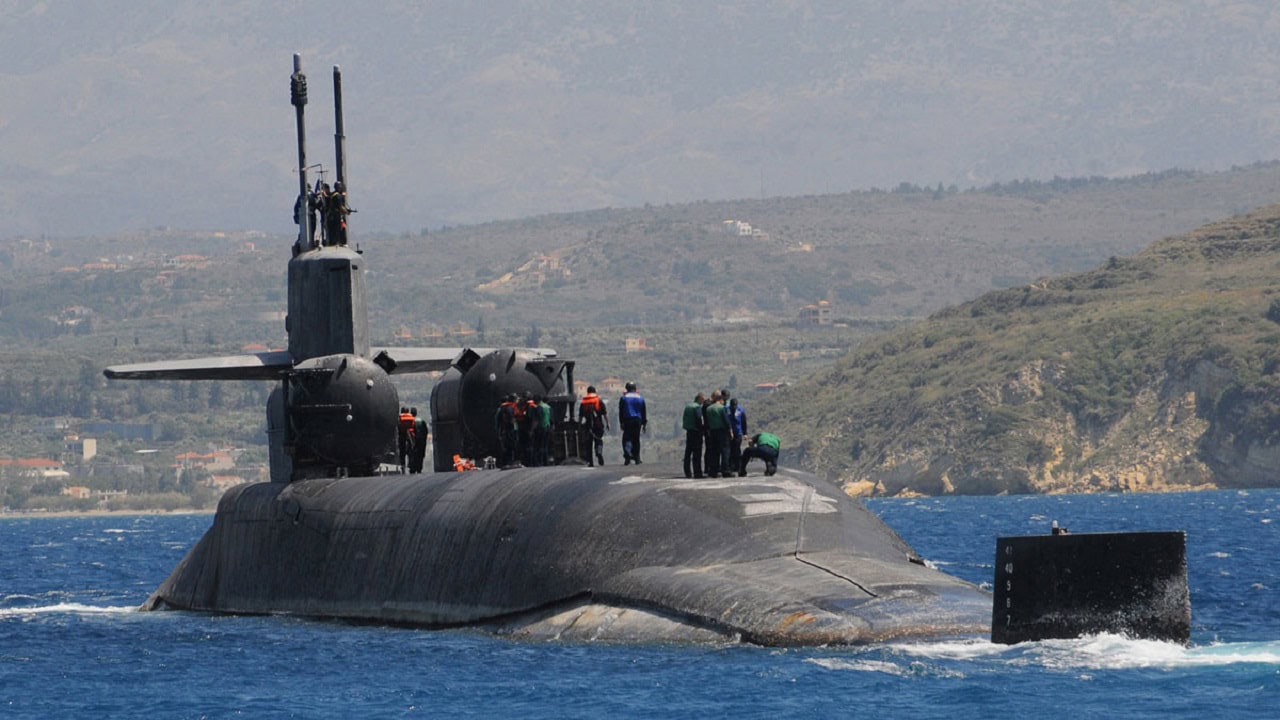
Ohio-Class SSGN. Image Credit: U.S. Navy.
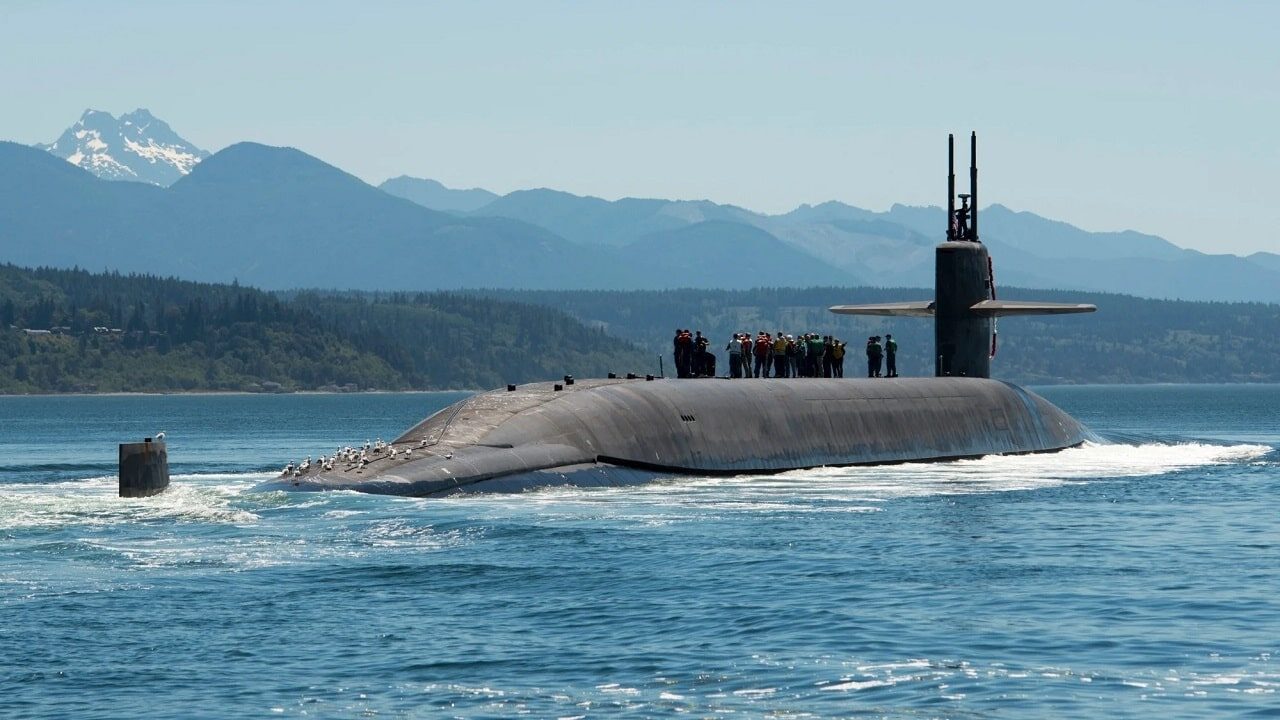
Ohio-Class. Image Credit: U.S. Navy.
-Every overrun also squeezes the rest of the Navy—Virginia-class procurement, surface modernization, and munitions stockpiles—forcing painful tradeoffs between nuclear and conventional strength.
-Yet Columbia is indispensable: submarines remain the triad’s most survivable leg.
The Columbia-Class Crunch: Shipyard Delays Could Squeeze the Ohio Replacement
A thinning SSBN force would invite adversary probing, unsettle allies, and erode deterrence credibility. Washington has no fallback plan, so discipline and capacity must meet the moment—fast now.
American sea-based nuclear deterrence now depends on a program that has crept into the stratosphere in terms of price tag. The Columbia-class ballistic-missile submarine—long billed as the most important shipbuilding effort in modern Navy history—will now cost an estimated $348 billion over its lifecycle.
At a moment when the defense industrial base is visibly strained, shipyards are falling behind schedule across multiple programs, and the Navy cannot afford another foundational failure, the Columbia program’s creeping costs and schedule pressures carry risks measured not merely in dollars but in the credibility of the nation’s nuclear deterrent. The uncomfortable truth is that Washington has no margin for error: these submarines are simultaneously unaffordable, indispensable, and arriving later than the strategic environment demands.
The Strategic Heart Of American Deterrence
The heart of the matter is this: the Columbia boats are the backbone of the United States’ most survivable nuclear force. Nothing else in the arsenal matches the stealth, persistence, and operational reach of an SSBN.
They sit beneath the waves, hidden from adversary sensors, forming the one leg of the nuclear triad that no rival can plausibly neutralize in a first strike. In a world defined by rising great-power rivalry and accelerating technological disruption, survivability is the ultimate guarantor of strategic stability.
To understand why these submarines matter, one must recognize how quickly the deterrence landscape is shifting. China is sprinting toward nuclear parity. Russia, despite economic decay, continues to modernize its arsenal, expand its undersea forces, and test NATO’s resolve on its northern flank.
Even North Korea now fields capabilities unthinkable a decade ago. In such a world, the credibility of American deterrence depends on a sea-based force that can hide, endure, and strike if necessary. The Columbia-class is designed precisely for that mission—and there is no substitute waiting in the wings.
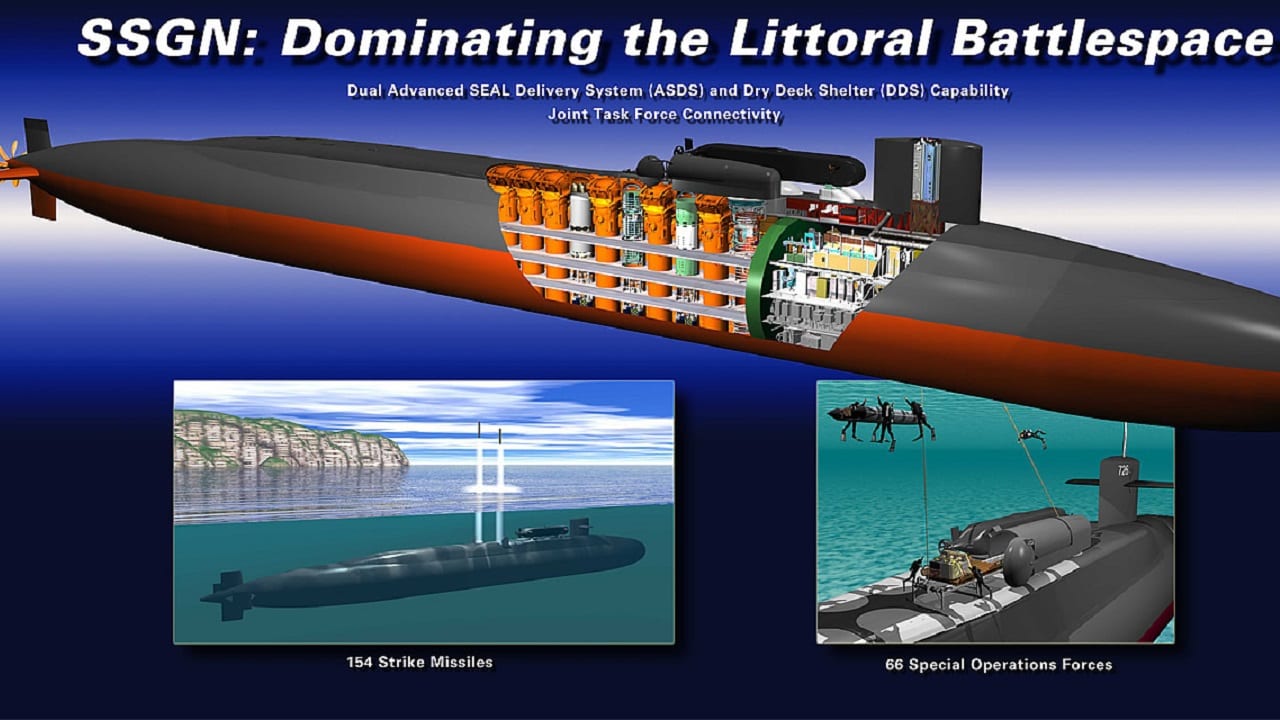
Ohio-class SSGN. Image Credit: US Military.
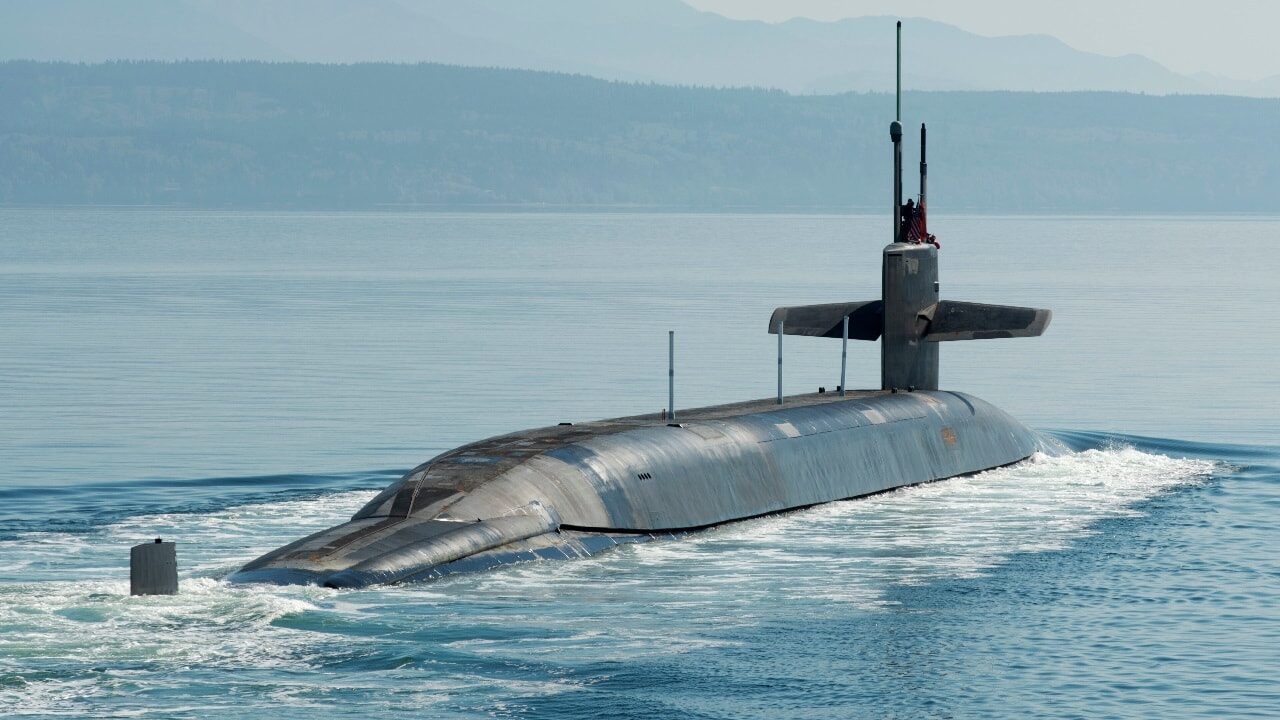
The Blue crew of the ballistic-missile submarine USS Henry M. Jackson (SSBN 730) transits the Hood Canal as it returns home to Naval Base Kitsap-Bangor following a routine strategic deterrent patrol on Sept. 30, 2015. US Navy photo.
The Cost Spiral And Its Consequences for the Navy
The problem is that the Columbia program is now entangled in the same procurement dysfunction that has plagued nearly every major US weapons program of the past two decades. Its projected cost has climbed further into the hundreds of billions of dollars, with acquisition and construction estimates rising as schedule performance falters.
Its schedule is under strain before the first boat has entered service. And the industrial base responsible for building it is the same fragile ecosystem already buckling under the weight of aircraft-carrier delays, attack-submarine backlogs, and a workforce stretched far beyond capacity.
This is not simply a budgetary nuisance. Every dollar overrunning the Columbia program is a dollar pulled from attack-submarine procurement, surface-fleet modernization, or the munitions stockpiles that recent wars have shown are far too thin.
A single SSBN program is now distorting the Navy’s entire shipbuilding plan, compressing choices and leaving admirals to choose between strategic nuclear deterrence and the conventional fleet required to deter China in the Indo-Pacific. That is the definition of strategic risk.
The Industrial Base Strain—And Why It Matters
The shipbuilding sector’s struggles amplify the danger. The yards tasked with building the Columbia are the same ones failing to deliver Virginia-class submarines on time.
Workforce shortages, component delays, and quality-control lapses ripple across programs, raising the risk that the first Columbia boat will enter service late—and that later boats will follow even further behind. Yet the Ohio-class SSBNs the Columbia is meant to replace are aging out of service with no flexibility left in the schedule.
Given how closely Columbia’s schedule aligns with Ohio retirements, even a delay of a year or two would stress the deterrent force to the edge of what planners consider acceptable, compressing the margin for continuous at-sea coverage and forcing painful trade-offs elsewhere in the fleet.
That would hand US competitors an opportunity they have not had in decades: a window in which the sea-based leg of America’s nuclear triad is stretched thin, predictable, and potentially more vulnerable. The adversaries planning around American resolve would notice—and they would probe.
The Strategic Risks Of Failure
Failure here would echo across the global balance of power. A compromised SSBN fleet would embolden strategic revisionists, unsettle allies, and erode the psychological bedrock of deterrence: the certainty that the United States can absorb any first strike and retaliate with devastating force.
No element of US military power is more intimately tied to geopolitical stability than its ballistic-missile submarines. If the Columbia program falters, the cascading effects would be felt from the Arctic to the South China Sea.
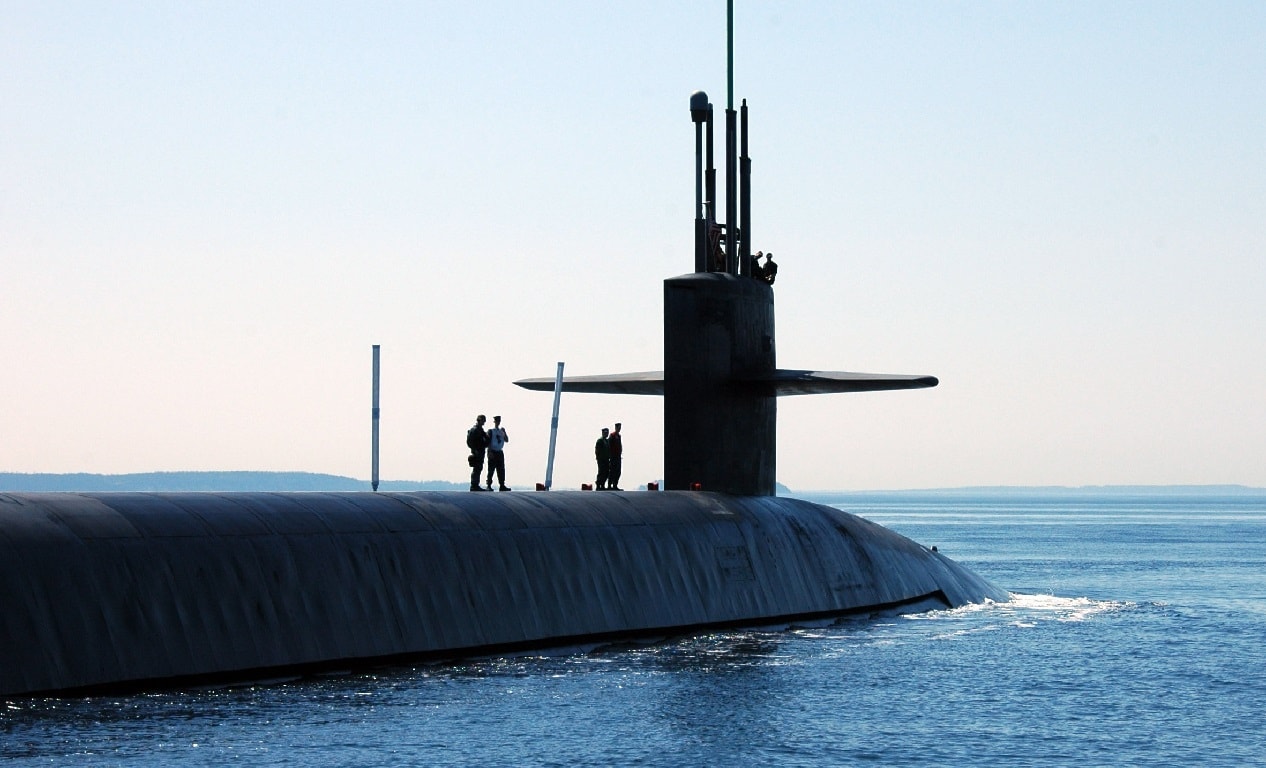
STRAIT OF JUAN DE FUCA, Wash. (Aug. 12, 2012) The Ohio-class ballistic missile submarine USS Nebraska (SSBN 739) prepares to conduct a personnel transfer as it returns to its homeport of Naval Base Kitsap-Bangor, Wash. (U.S. Navy photo by Lt. Ed Early/Released)
For all the talk of hypersonics, AI-enabled targeting, and exotic strategic concepts, the logic of deterrence remains grounded in something elemental: an adversary’s belief that a nuclear attack would be suicidal.
That belief rests on submarines that the adversary cannot find. If delays, overruns, or industrial underperformance place that survivability at risk, the consequences will arrive not first as a crisis, but as a shift in the way competitors calculate their options.
The Columbia-Class Challenge Ahead—And The Necessity Of Getting It Right
The United States must therefore treat the Columbia program not as another shipbuilding project but as a national strategic imperative. It requires disciplined management, congressional seriousness, and a recognition that the cost—vast as it is—is the down payment on preventing great-power war. The bill is enormous because the consequences of failure are immense.
The Columbia-class submarines will be the most expensive warships ever built, and their price tag will continue to test political patience. Yet the cost of letting this program stumble would be far higher.
A brittle deterrent invites miscalculation, and miscalculation is the oldest precursor to catastrophe in international politics. The Columbia-class is expensive because it must anchor the strategic stability of a world entering a dangerous new phase.
The real question is not whether the United States can afford these submarines—but whether it can afford the world that would emerge without them.
About the Author: Dr. Andrew Latham
Andrew Latham is a non-resident fellow at Defense Priorities and a professor of international relations and political theory at Macalester College in Saint Paul, MN. You can follow him on X: @aakatham.