MANILA – While the ceasefire might be holding in the Iran war, Team Trump, at least before the latest diplomatic breakthrough, had other ideas. Although there are no concrete indications that a final decision had been taken, indications were that the US Donald Trump Administration was exploring options for using ground troops in Iran. These plans could have included the invasion of islands along Iran’s coast as a precursor to opening the Strait of Hormuz and keeping it secure for the free passage of shipping.
And now that the Strait of Hormuz is still not open as it was before Operation Epic Fury, those plans could be back in play.
Boots on the Ground Could Be Coming for Strait of Hormuz Opening
If a ground invasion of this nature were to take place, several key islands have been suggested as the most likely locations for US amphibious operations:
Kharg Island, which has featured in numerous news reports, is one of the most likely targets for just such a US force landing. According to news reports in the past 48 hours, the US has now struck some 50 military targets on the island by air in what looks like a potential preparation for an invasion.
Thus far, attacks on this small island have been limited to military installations, as it also functions as Iran’s main oil-trading facility in the northern Persian Gulf. Destroying that industrial infrastructure is not yet considered a mission-critical objective.
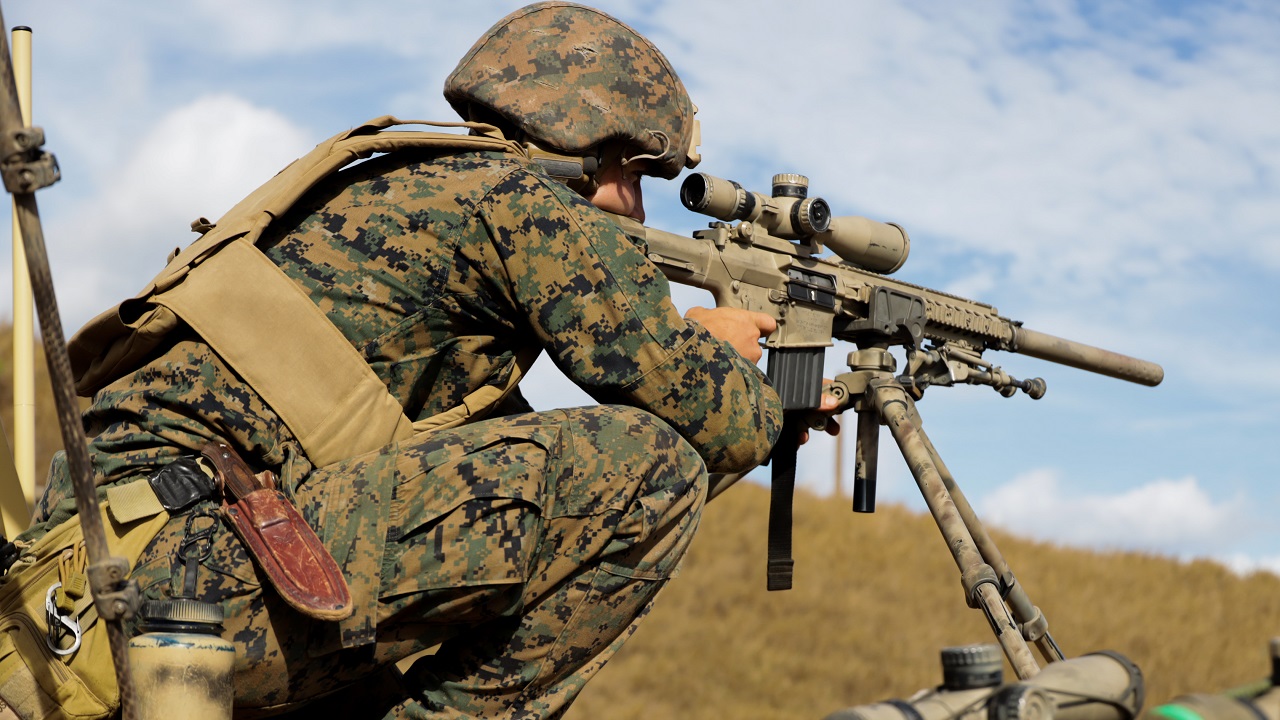
MARINE CORPS BASE HAWAII, Hawaii (July 6, 2022) U.S. Marine Corps Pfc. Darrel Ebaugh, a scout sniper with Weapons Company, Battalion Land Team, 3d Battalion, 4th Marine Regiment, Marine Air-Ground Task Force 7 (MAGFT-7), sights in on a target during a live-fire sniper range in support of Rim of the Pacific (RIMPAC) 2022, on Marine Corps Base Hawaii, July 6, 2022. Twenty-six nations, 38 ships, four submarines, more than 170 aircraft and 25,000 personnel are participating in RIMPAC from June 29 to Aug. 4 in and around the Hawaiian Islands and Southern California. The world’s largest international maritime exercise, RIMPAC provides a unique training opportunity while fostering and sustaining cooperative relationship among participants critical to ensuring the safety of sea lanes and security on the world’s oceans. RIMPAC 2022 is the 28th exercise in the series that began in 1971. (U.S. Marine Corps photo by Lance Cpl. Brayden Daniel)
Instead, the scenario for the US military is to take over the island or just blockade any access to it to shut down what remains of Iran’s oil economy entirely. This would, in theory, create greater leverage to force Tehran into a ceasefire arrangement.
Larak Island, off the coast of Iran in the Strait of Hormuz, is home to a series of Iranian military bunkers.
These and other installations on the island are used to attack shipping and other targets in the Persian Gulf.
Then there is Abu Musa Island, which is territory claimed by both Iran and the United Arab Emirates, a US ally. This island is located at the western entrance to the Strait of Hormuz.
Additional Iran Military Options: Take the Uranium
Aside from these islands, other reports are that Trump was weighing the options for dispatching US special operations troops to seize or destroy Iran’s stockpile of what is thought to be 440.9 kilograms of 60 percent-enriched uranium.
The details are not publicly known, but this near-weapons-grade material is supposedly buried in very deep sites, in scattered locations across Iran.
The International Atomic Energy Agency Director General, Rafael Grossi, has recently revealed that at least half of that enriched nuclear material is being stored in an underground facility near the Isfahan nuclear complex.
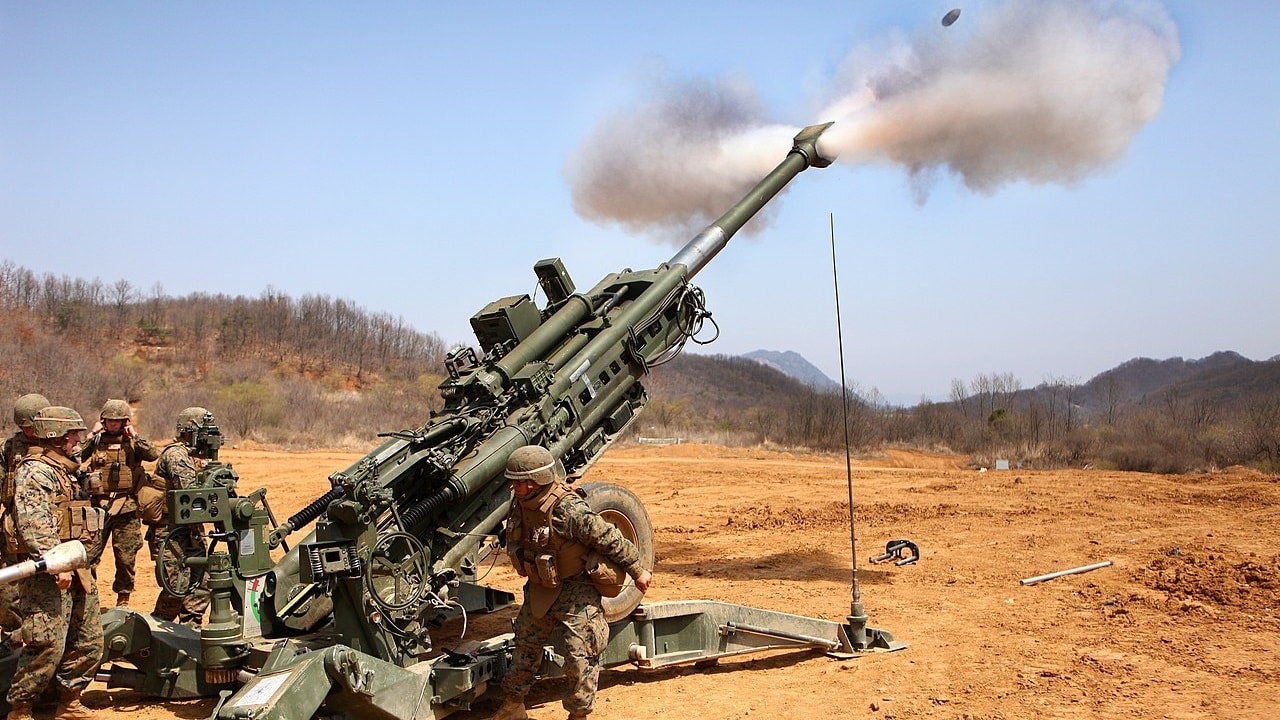
U.S. Marines with Alpha Battery, 1st Battalion, 12th Marine Regiment, 3rd Marine Division, III Marine Expeditionary Force attached to 3rd Marine Regiment, 3rd MarDiv, III MEF, fire the M777A2 155mm howitzer in support of a combined arms live-fire exercise at Rodriguez Live-Fire Complex during Korean Marine Exchange Program 13-5, part of Ssang Yong 13 in the Republic of Korea April 17, 2013. The CALFEX illustrates how the annual exercise Ssang Yong supports ongoing efforts to strengthen combat readiness in both U.S. and ROK forces. (U.S. Marine Corps photo by Lance Cpl. Jose D. Lujano III MEF PAO/Released)
If Trump were to activate one of the military options on the table, there would be different potential operations, depending on how much risk the administration is prepared to take.
One obvious course would be a set of air strikes that would essentially mirror those of last year’s Operation Midnight Hammer.
But while this is the least politically-risky course of action, there is evidence to suggest that there are limitations to the use of the famous US “bunker-busting” weaponry – like the GBU-57 Massive Ordinance Penetrator.
Air strikes using the MOP and other weapons would likely only bury this material and make it (hopefully) unreachable, but would not eliminate it entirely.
Problematic Ground Operations
Operations that involve “boots on the ground” could secure this material, retrieve it from these sites, and relocate it outside Iran.
But to carry out this mission in this manner is rated far more complicated; it would require large numbers of US troops and would be logistically challenging in the extreme.
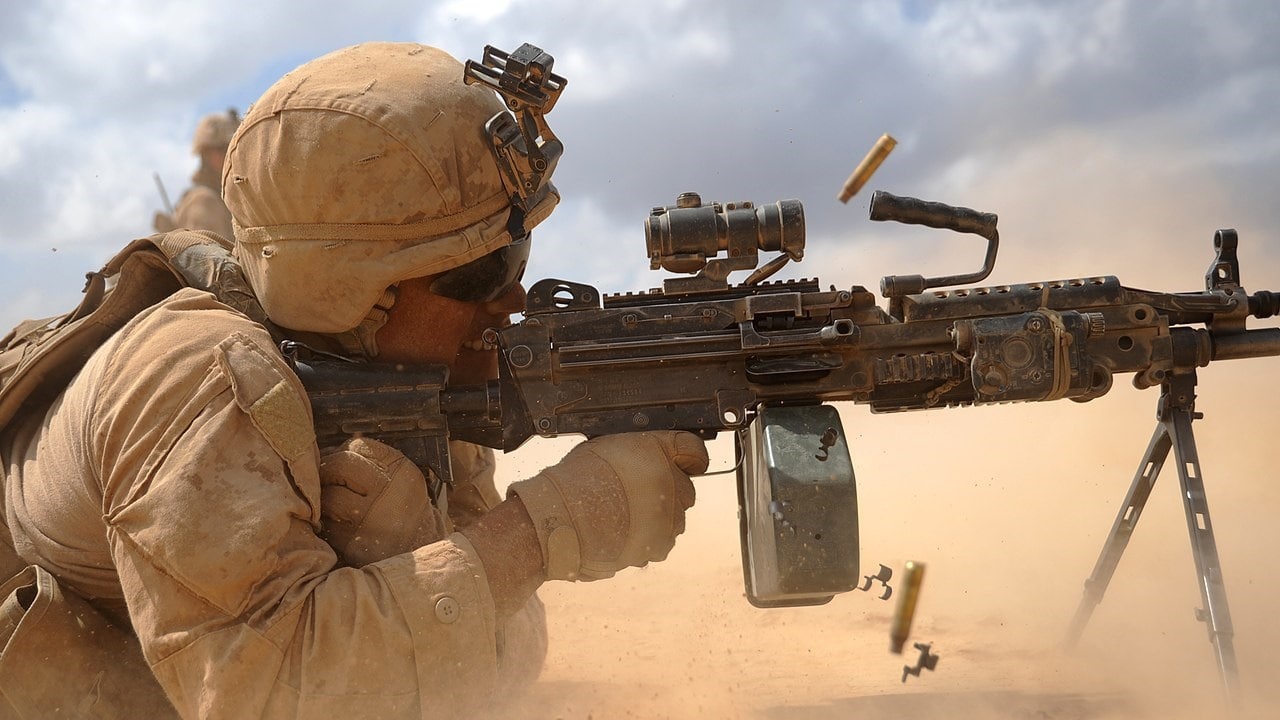
Lance Cpl. Luther Sackett, a rifleman from Rockyford, Co., engages targets during a live-fire and maneuver exercise here Jan. 29. Sackett, and other Marines with Light Armored Reconnaissance Platoon, Weapons Company, Battalion Landing Team 2/4, 11th Marine Expeditionary Unit, conducted live-fire weapons shoots and trained with the French Army Jan. 28-Feb. 5.
According to a recent report on missions briefed to the White House, a foolproof operation would require flying in excavation equipment.
Then a runway would have to be constructed for the cargo planes that would be flown in to remove the radioactive material.
That “build a runway” requirement may become even more extensive after the two MC-130 aircraft that were flown into Iran this past week to rescue a US Weapon Systems Officer (WSO) from a downed US Air Force (USAF) F-15E were unable to take off from the air strip where they landed.
The US Special Ops personnel ended up having to blow up the two aircraft to prevent their on-board equipment from being compromised.
Then three other aircraft had to be flown in to evacuate the crews and all the other personnel who had originally deployed for the mission.
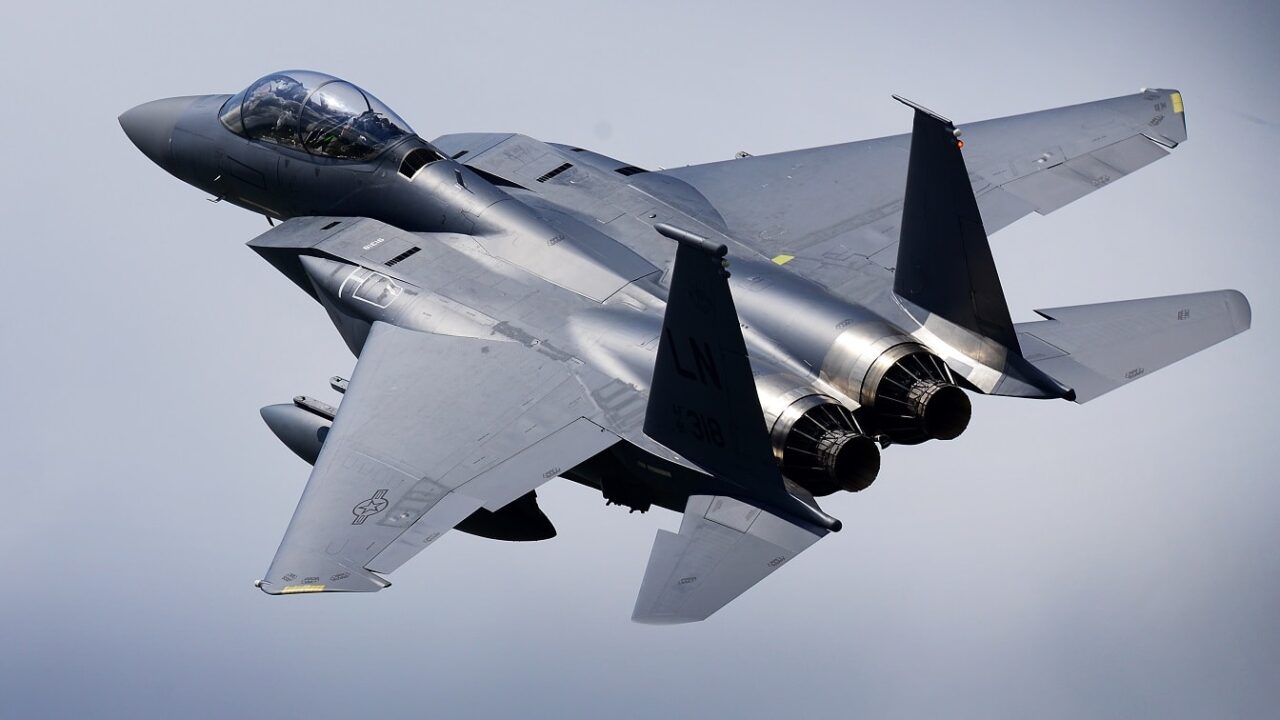
An F-15E Strike Eagle assigned to the 492nd Fighter Squadron flies over Royal Air Force Lakenheath, England, May 10. The 492nd trains regularly to ensure RAF Lakenheath brings unique air combat capabilities to the fight. (U.S. Air Force photo/ Tech. Sgt. Matthew Plew)
Any invasion force launched against any facilities in Iran would be even more complicated. It would likely include infantry and armored vehicles, and would be a plus-up to the 5,000 Marines and thousands of paratroopers from the 82nd Airborne Division that have already been dispatched to the region.
A profile on the overall risks of invading the Iranian islands and possibly the coast as well describes it as likely to be a high-casualty option.
The authors describe the operation as requiring a massive, sustained effort to dismantle deeply entrenched anti-ship missile systems.
Invading these sites is possible, but there are also significant dangers that it could result in high US casualties from low-cost Iranian drones/missiles. It could also require a long-term, resource-intensive occupation – what has become referred to within the US military as “mission creep.”“This would be one of, if not the largest, most complicated special operations in history,” said Mick Mulroy, a former deputy assistant secretary of defense and retired CIA and Marine officer who spoke to the Washington Post on the mission plans. “It’s a major risk to the force.”
About the Author: Reuben F. Johnson
Reuben F. Johnson has thirty-six years of experience analyzing and reporting on foreign weapons systems, defense technologies, and international arms export policy. Johnson is the Director of Research at the Casimir Pulaski Foundation. He is also a survivor of the Russian invasion of Ukraine in February 2022. He worked for years in the American defense industry as a foreign technology analyst and later as a consultant for the U.S. Department of Defense, the Departments of the Navy and Air Force, and the governments of the United Kingdom and Australia. In 2022-2023, he won two awards in a row for his defense reporting. He holds a bachelor’s degree from DePauw University and a master’s degree from Miami University in Ohio, specializing in Soviet and Russian studies. He lives in Warsaw.