
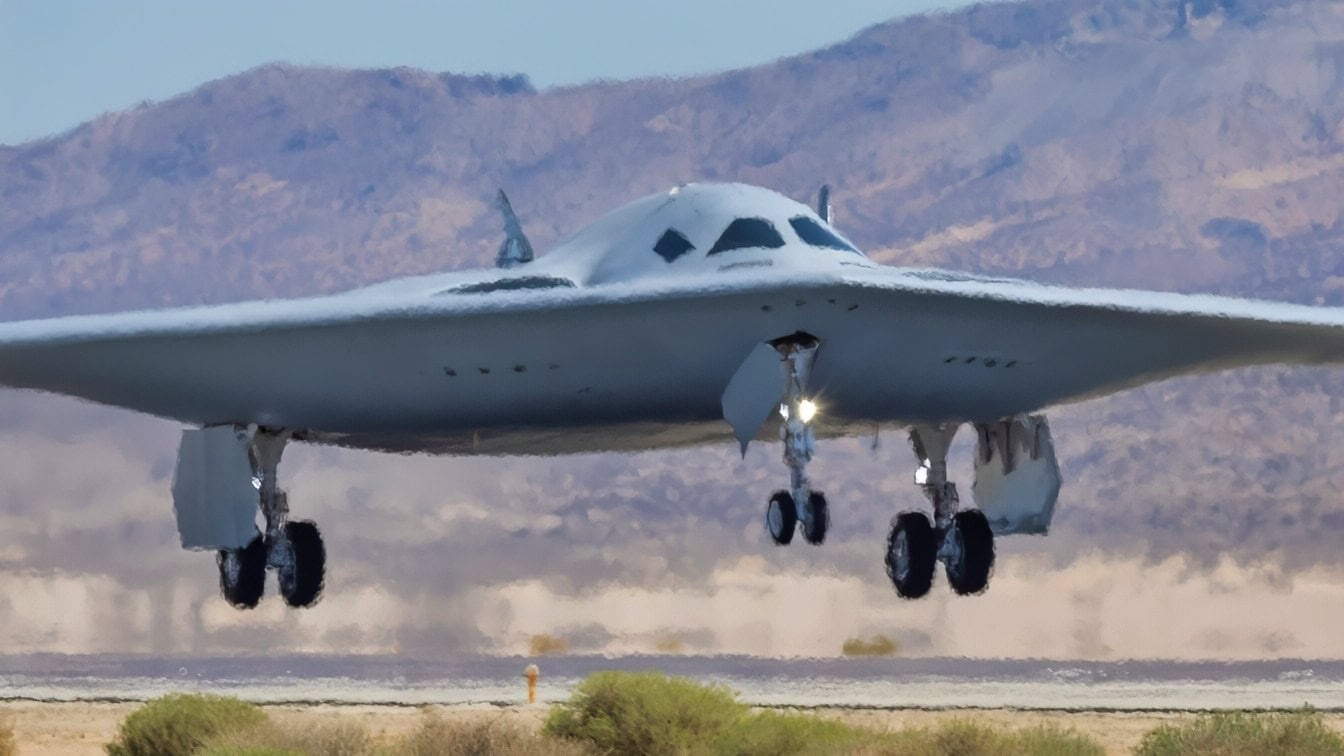
Today’s world of “near-peer”/Great Power competition, between the United States of America, the Russian Federation, and the People’s Republic of China (PRC), is very much a game of one-upmanship, particularly in the stealth warplane arms race…and the counter-stealth detection race. Russia and China alike have recently fielded air defense systems that can supposedly detect and/or destroy America’s 5th Generation F-22 Raptor and F-35 Lightning II stealth fighters (both of which are Lockheed Martin “Skunk Works” division products). And now the PRC has just upped the ante via a new radar system, the PADJ-X, which can allegedly compromise America’s next-generation stealth bomber, the Northrop Grumman B-21 Raider.
So, how much veracity is there to this lofty PADJ-X claim?
How big a proverbial grain of salt do we need to consume with this supposedly game-changing revelation?
Bottom Line Up Front (BLUF)
News on this disturbing development (assuming that it’s a legitimate claim and not a mere PRC propaganda ploy) comes to us courtesy of Zhang Tong of the South China Morning Post (SCMP) in a January 7, 2026, article titled “China’s stealth design software PADJ-X finds potential flaws in B-21 bomber configuration.”
To wit, “The “all-in-one” PADJ-X software system, based on adjoint optimisation technology, was unveiled last month in a paper published by the peer-reviewed Acta Aeronautica et Astronautica Sinica…Using PADJ-X to analyse the B-21’s configuration, the research team found that the Northrop Grumman bomber – currently going through intensive US Air Force test flights – might fall short in aerodynamics and stability, according to the paper.
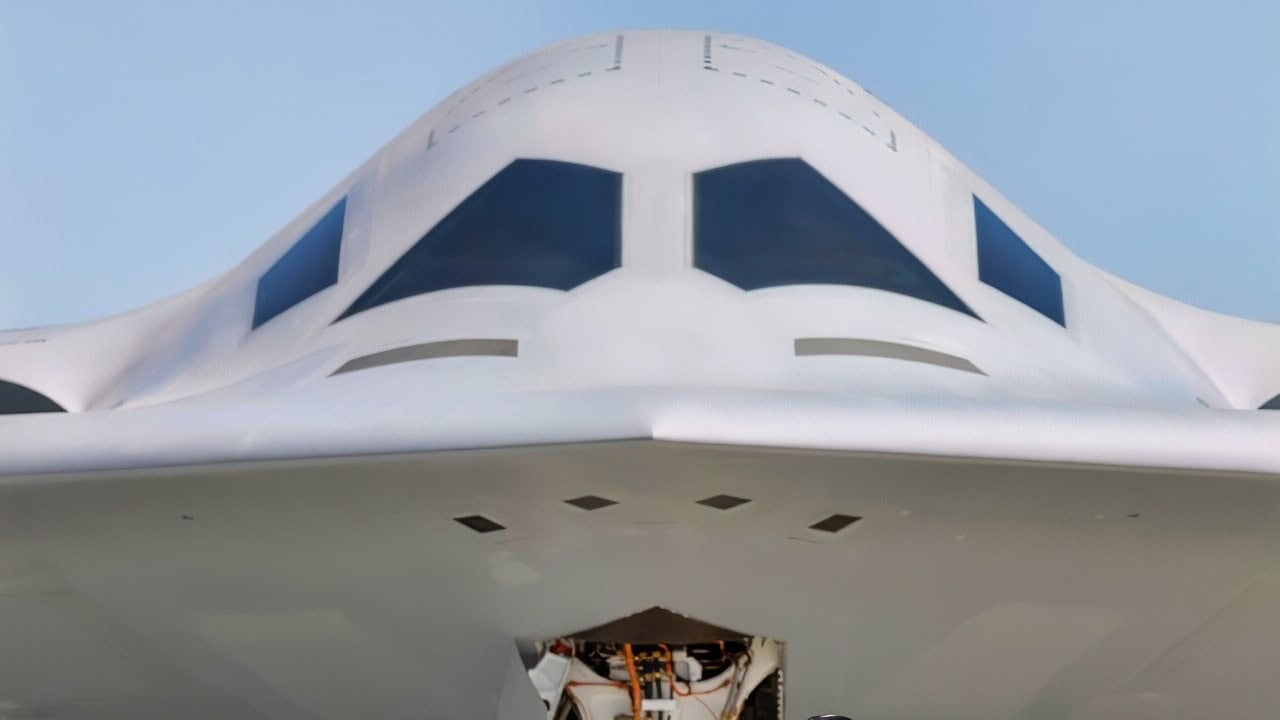
U.S. Air Force Airmen with the 912th Aircraft Maintenance Squadron prepare to recover the second B-21 Raider to arrive for test and evaluation at Edwards AFB, Calif., Sept. 11, 2025. The arrival of a second test aircraft provides maintainers valuable hands-on experience with tools, data and processes that will support future operational squadrons. (U.S Air Force photo by Kyle Brasier)
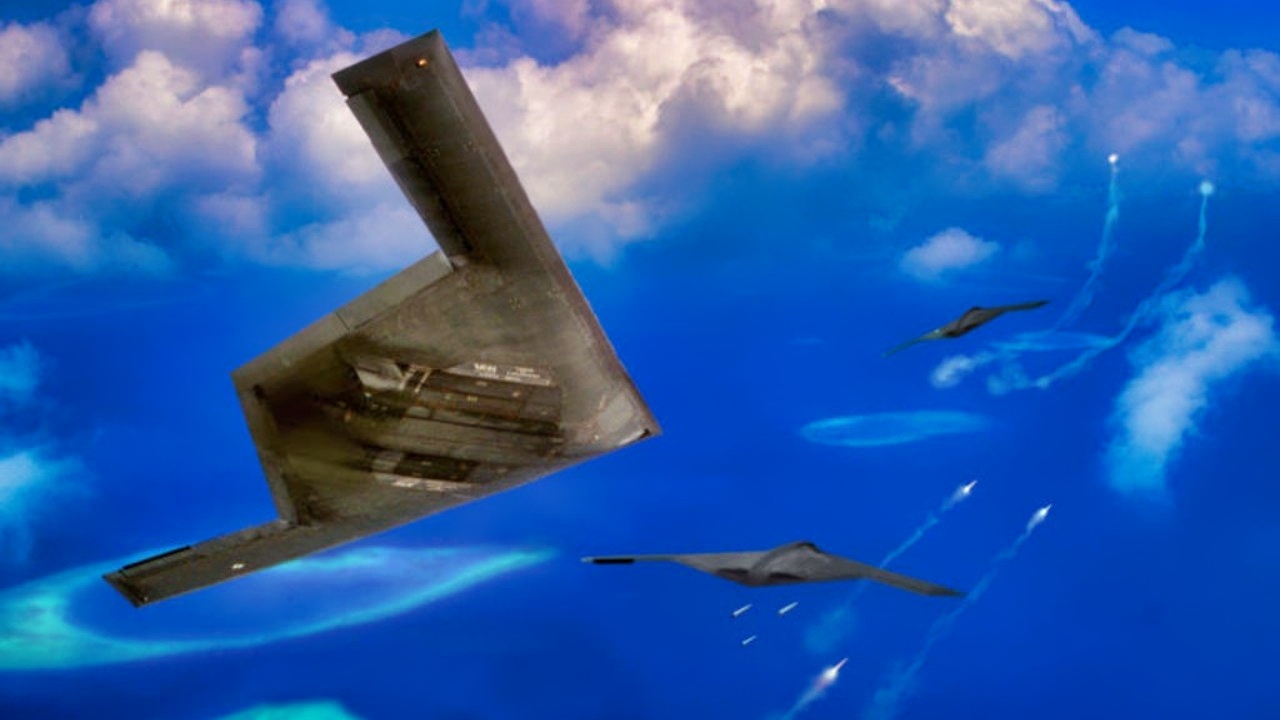
B-21 Raider Bomber. Artist Rendition/Creative Commons.
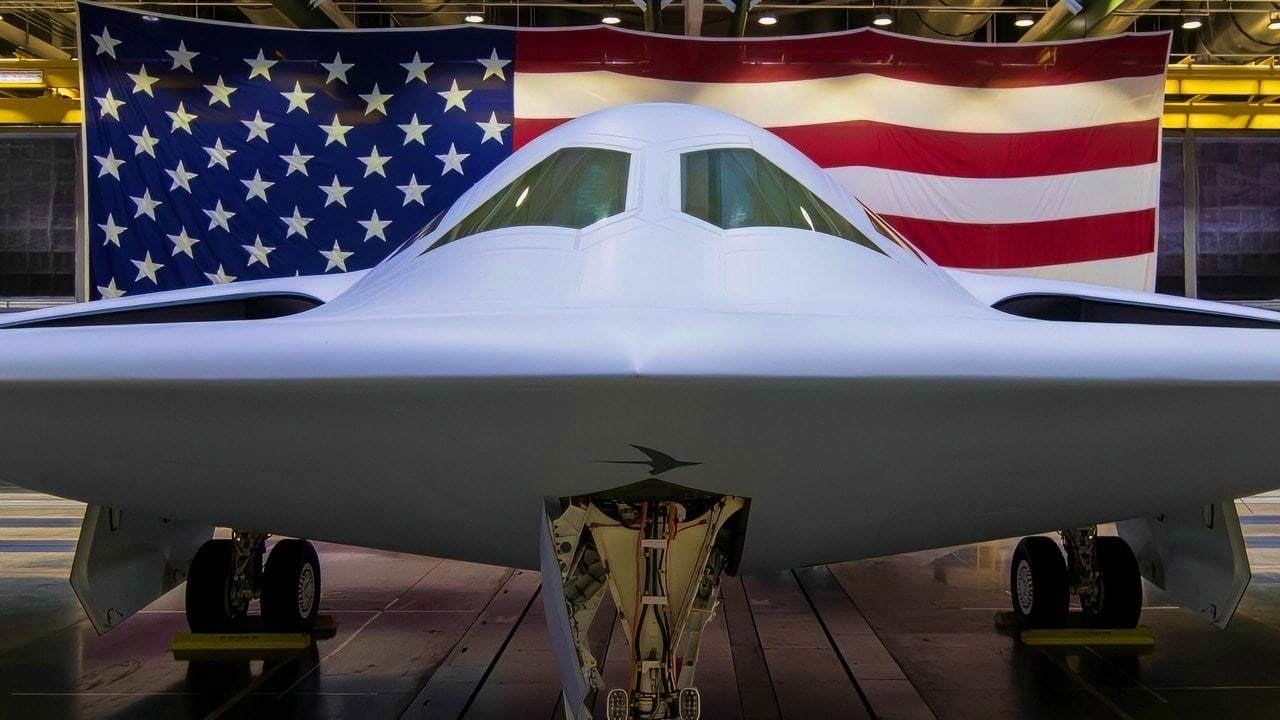
The B-21 Raider was unveiled to the public at a ceremony on December 2, 2022, in Palmdale, Calif. Designed to operate in tomorrow’s high-end threat environment, the B-21 will play a critical role in ensuring America’s enduring airpower capability. (U.S. Air Force photo)
Sidebar Source Note
Regarding that Acta Aeronautica et Astronautica Sinica publication, don’t let its Latin-sounding title fool you.
It is, in fact, a Chinese semimonthly journal, published since 1965.
In other words, it’s a state-controlled mouthpiece and not an independent, impartial, agenda-free academic journal.
Digging Deeper
Huang Jiangtao from the China Aerodynamics Research and Development Centre and his team arrived at their conclusions from several simulations, including the US Navy’s X-47B stealth drone, which was canceled in 2015 but remains classified 11 months later.
Assuming the PADJ-X puff piece is to be accepted at face value, this highly touted software is based on adjoint optimization technology, an algorithmic method that allows thousands of design parameters to be adjusted simultaneously and integrates five major disciplines into a single framework: aerodynamics, propulsion, electromagnetics, infrared signature (IR), and sonic boom.
This is an outside-the-box departure from conventional approaches that rely on repeated trial-and-error simulations, which are costly and often produce only incremental improvements.
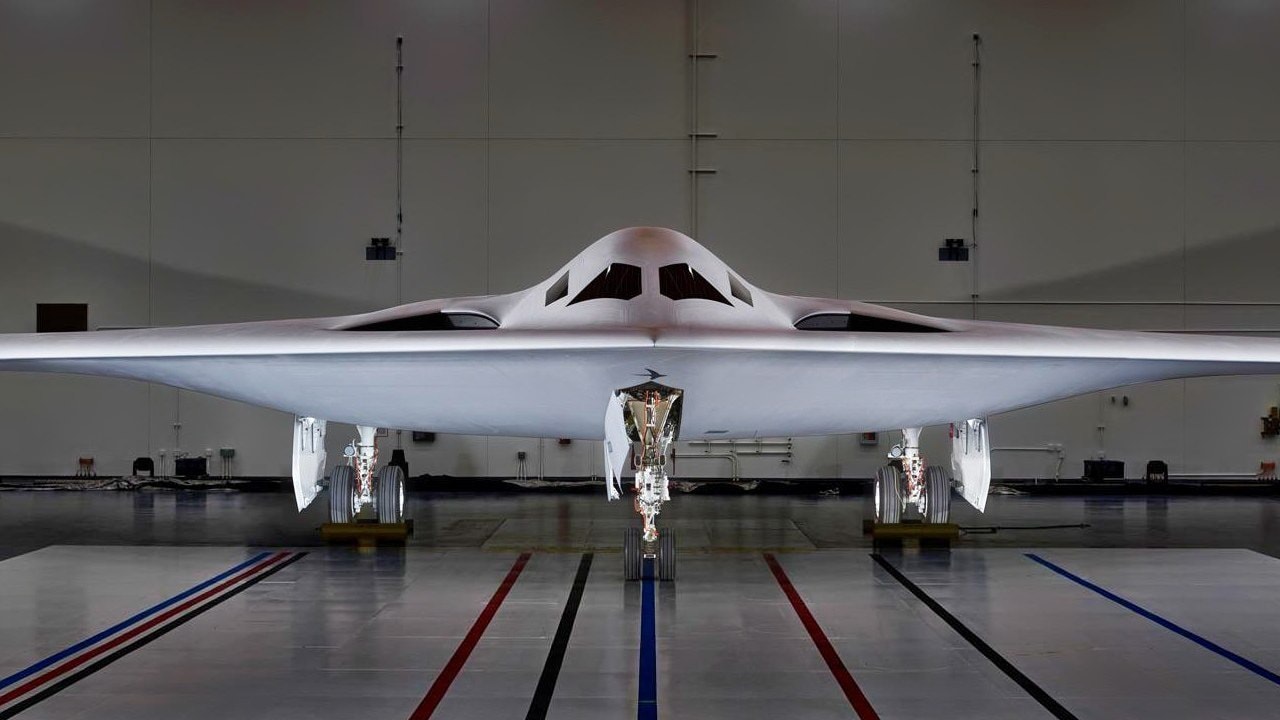
B-21 Raider Bomber U.S. Air Force.
At the risk of getting too far into the proverbial weeds for our dear readers who aren’t either engineering techno-geeks and/or hardcore Tom Clancy fans, here’s the what and how of the Chinese research team’s simulated experiments with the B-21:
-Applying 288 parameters in their simulations, Huang et al reported that aerodynamic optimization increased the aircraft’s lift-to-drag ratio by about 15 percent and significantly reduced shock-wave effects
-The pitching moment, a measure of longitudinal stability, improved from 0.07 to nearly zero, a change that would theoretically allow smoother, more stable flight with less need for constant control input.
Claim Credibility Concerns
By the PRC research team’s own admission, there were some flaws in the research tools and methodologies, as their findings were based on theoretical models and publicly inferred shapes rather than classified design data.
Actual performance characteristics of the B-21, of course, remain very hush-hush and “Secret Squirrel,” especially considering that the warbird hasn’t officially entered into operational status yet.
Moreover, this isn’t the first time that Chinese scientists have claimed the ability to compromise U.S. stealth warbird technology:
–In early 2025, researchers from the Changchun Institute of Optics, Precision Mechanics, and Physics, China claimed that they had developed a system that could tracking the F-35 by picking up on the intense heat signature produced by the fighter’s Pratt & Whitney F135 engine, using high-altitude drones equipped with infrared sensors, backed by China’s BeiDou satellite network (their version of GPS), and thus detect the Lightning II strike from over 1,100 miles away
–Fast-forward to mid-March 2026, and Jingan Technology—an ostensibly “private” Chinese defense firm— claimed that its Jingqi war monitoring system intercepted radio signals from B-2 bombers over Iran on the second day of the Operation Epic Fury bombing campaign
So far, none of these claims has been independently verified yet, and therefore, in the professional opinion of this former U.S. Air Force officer, none of them passes the proverbial “smell test” just yet. Time will tell.
Of course, that doesn’t mean that the stealth warplane drivers of America and her allies in the Indo-Pacific region can afford to get complacent yet. One need only look as far back as 1999, when the Serbs managed to shoot down an F-117 Nighthawk stealth attack plane (aka the “Stinkbug”) during Operation Allied Force. Luckily, the pilot survived and evaded capture, but it was a major source of bragging rights for the Serbs and a concurrent major shock for the U.S. aerial warrior community.
About the Author: Christian D. Orr
Christian D. Orr is a Senior Defense Editor. He is a former Air Force Security Forces officer, Federal law enforcement officer, and private military contractor (with assignments worked in Iraq, the United Arab Emirates, Kosovo, Japan, Germany, and the Pentagon). Chris holds a B.A. in International Relations from the University of Southern California (USC) and an M.A. in Intelligence Studies (with a concentration in Terrorism Studies) from American Military University (AMU). He is also the author of the book “Five Decades of a Fabulous Firearm: Celebrating the 50th Anniversary of the Beretta 92 Pistol Series,” the second edition of which was recently published.