
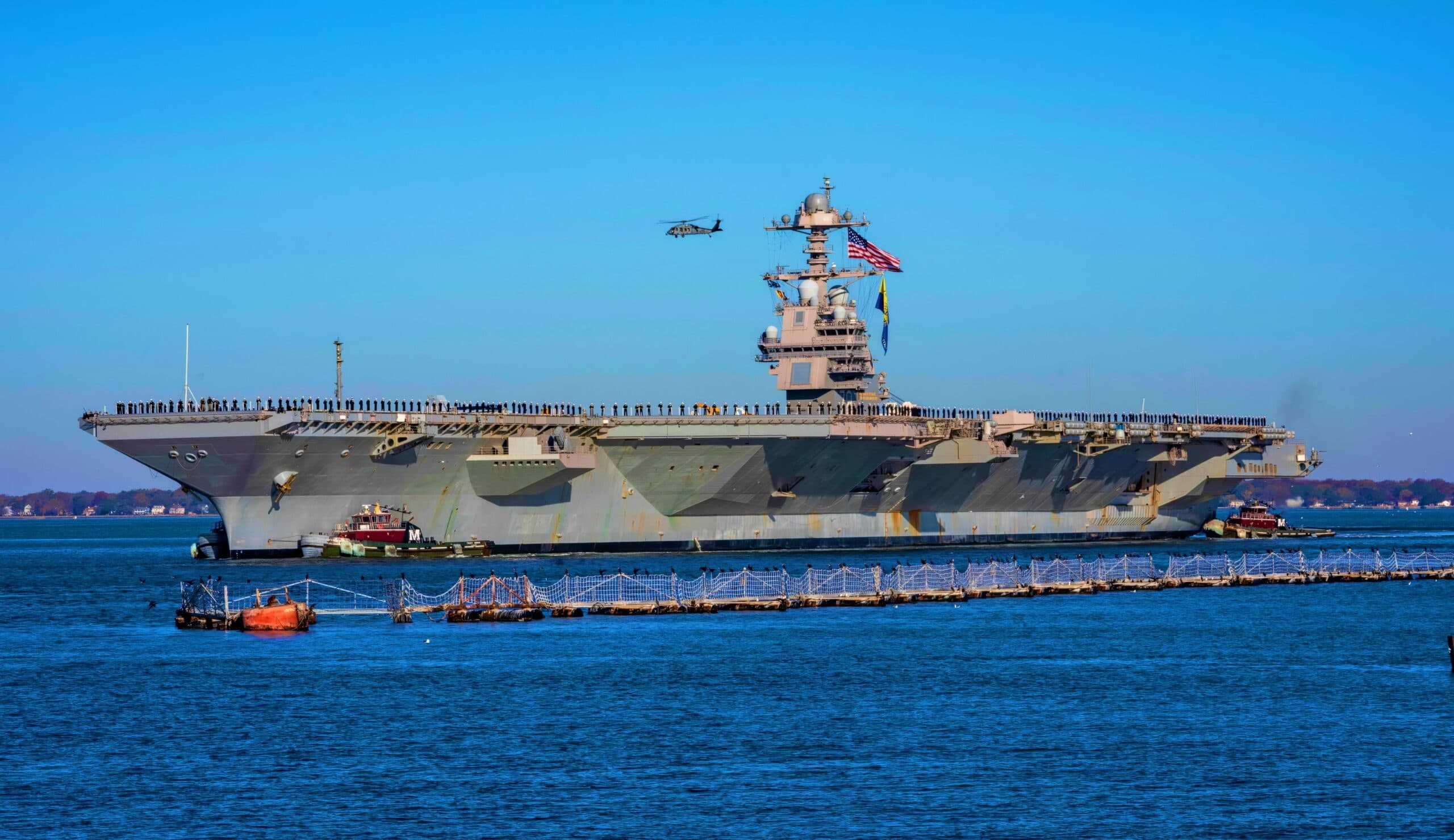
So, are aircraft carriers just obsolete battleships that should be turned into museums? The Iran war has given us some keen insight into this question, and the answers will surely make the U.S. Navy quite happy.
Aircraft Carriers as the New Battleship: Not a Good Comparison
US aircraft carriers, notably the USS Gerald R. Ford and USS Abraham Lincoln, have operated as central, highly resilient, and mobile command hubs in the 2026 conflict with Iran.
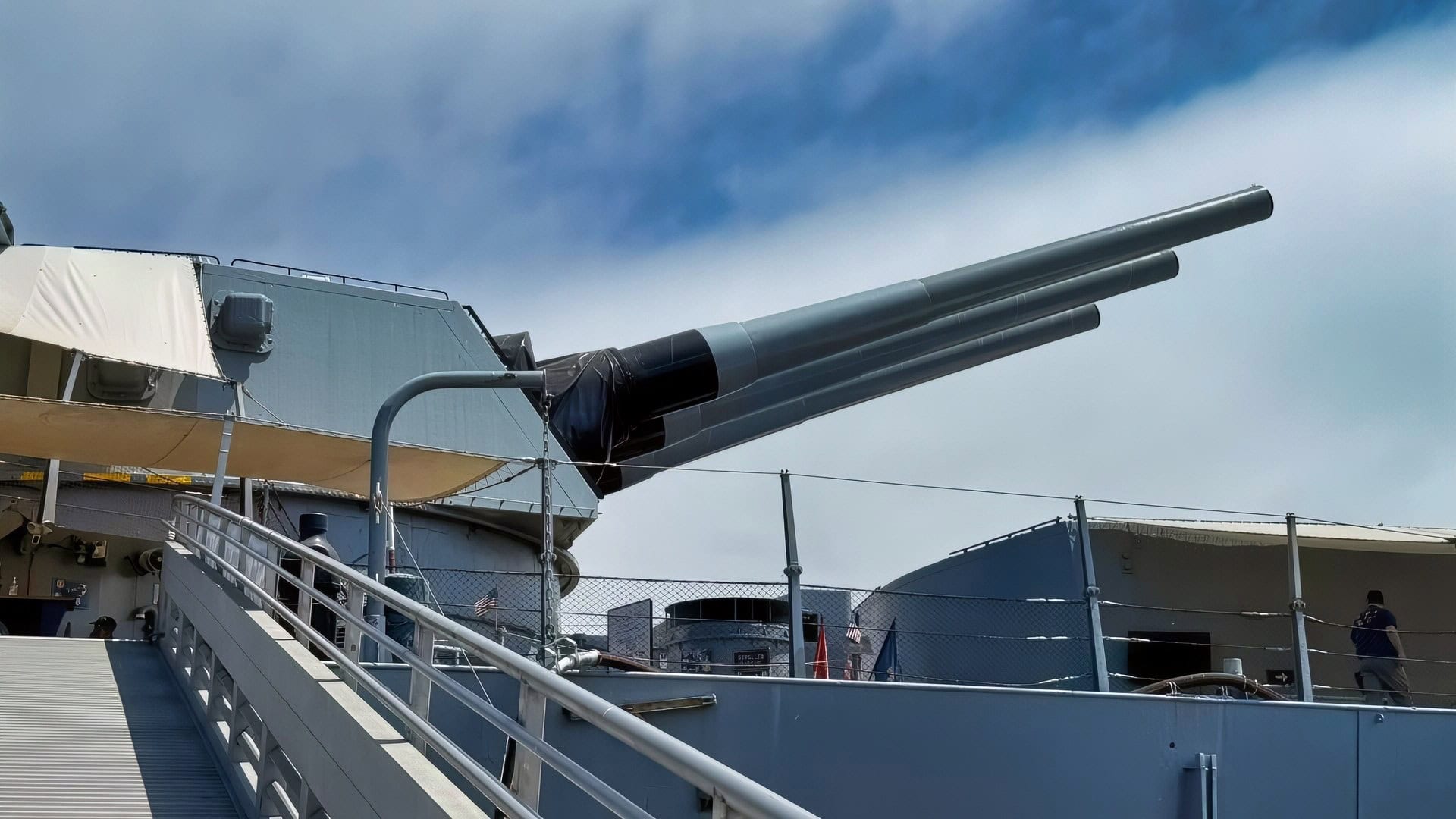
Iowa-Class 16-Inch Gun August 2025 19FortyFive Image. Taken by Harry J. Kazianis.
Utilizing advanced defenses, EW (electronic warfare), and standoff weapons, they have effectively conducted sustained, long-range strikes from outside immediate coastal threats while operating under a very high stress operational tempo.
The Navy’s carriers are a central part of the US effort, as they’ve maintained constant air patrols alongside deployed US Air Force aircraft, flying about 800 sorties a day.
While many question the viability of aircraft carriers in modern warfare scenarios due to the advent of hypersonic missiles, equating them to the vulnerable battleships of old, the US carriers have shown that the age of the carrier is far from over.
Operating Outside The Range of Most Iranian Ballistic Missiles:
The US carriers have been operating, for the most part, hundreds of miles from Iran’s shoreline. That isn’t being overly cautious, but it illustrates how the Navy has mastered the delicate balance of reach, survivability, and long-range strike capabilities.
The Iranians have spent decades developing and purchasing (from China) anti-ship missile systems and maritime strike capabilities intended to deter large naval vessels, such as American carriers, from approaching their coastline.
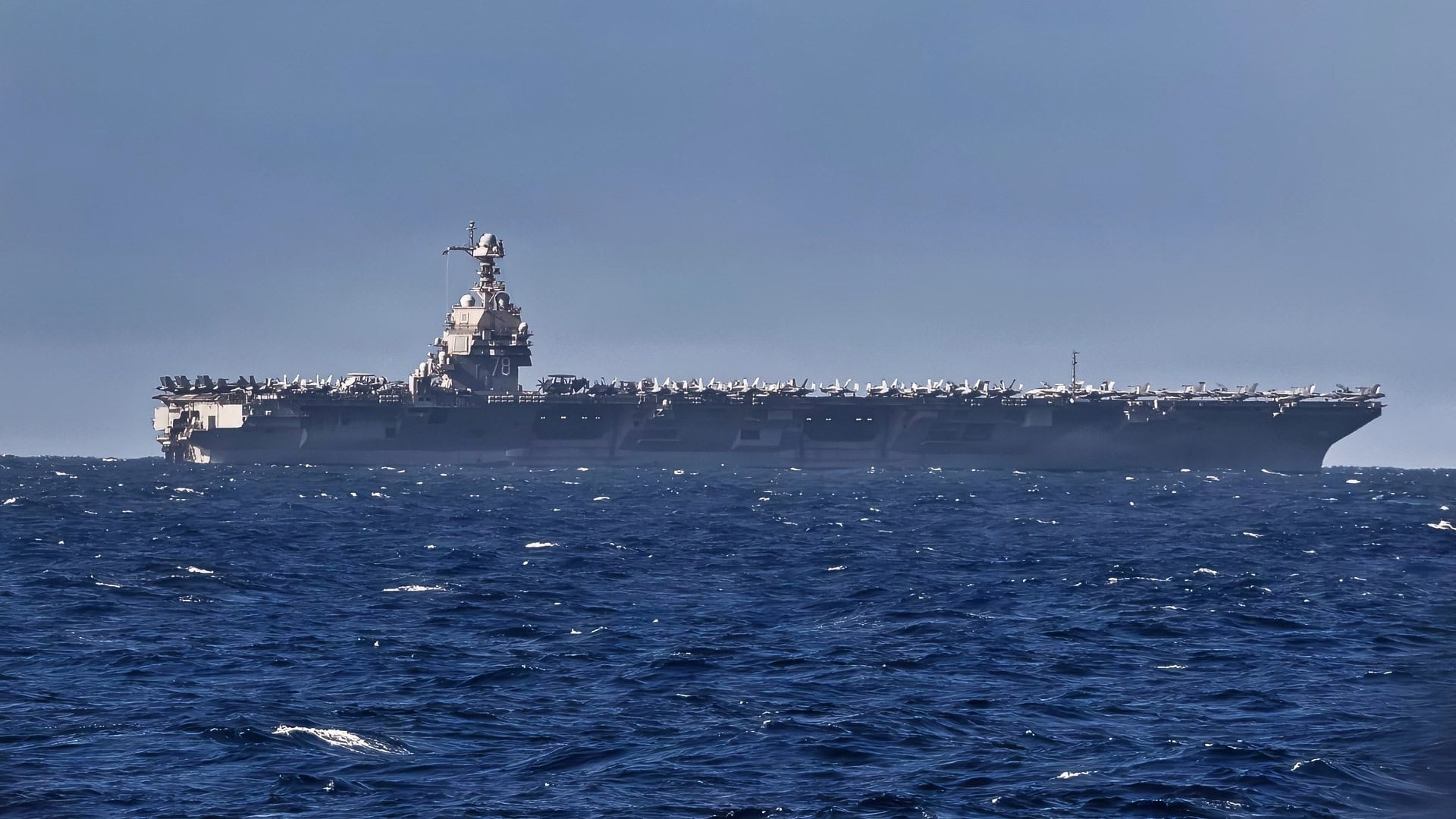
The world’s largest aircraft carrier, USS Gerald R. Ford, as seen from Arleigh Burke-class guided missile destroyer USS Bainbridge (DDG 96) before a replenishment-at-sea with Henry J. Kaiser-class fleet replenishment oiler USNS Kanawha (T-AO 196) while underway during Operation Epic Fury, Mar. 8, 2026. (U.S. Navy Photo)
But operating at the distances they have, the Navy’s carriers have been able to reduce their own exposure to many of Iran’s missiles while using the long-range strike capabilities to hammer the enemy’s defenses.
Naval strike aircraft, such as the F/A-18 Super Hornet, operate with aerial refueling tankers to increase their ranges while using standoff weapons to strike enemy targets hundreds of miles away.
US Navy Aircraft Carriers Have Been Very Effective In Airstrikes Against Iran:
American F/A-18E/F Super Hornets have been highly effective as the “workhorse” of Operation Epic Fury, conducting extensive strike missions against Iranian air defenses and weapons factories.
Despite the thousands of sorties flown, none have been shot down, despite Iran’s claims that one was hit, although there was one instance of a near miss.
Of course, Russia, with its regime-controlled “news” service TASS, has reported that US carriers have been rendered ineffective in Iran.
An “expert” with the Institute of Law and National Security at the Russian Presidential Academy of National Economy and Public Administration, Alexander Stepanov, told Tass that the use of aircraft carriers proved costly and ineffective because they could be deployed relatively safely only outside the range of precision weapons.
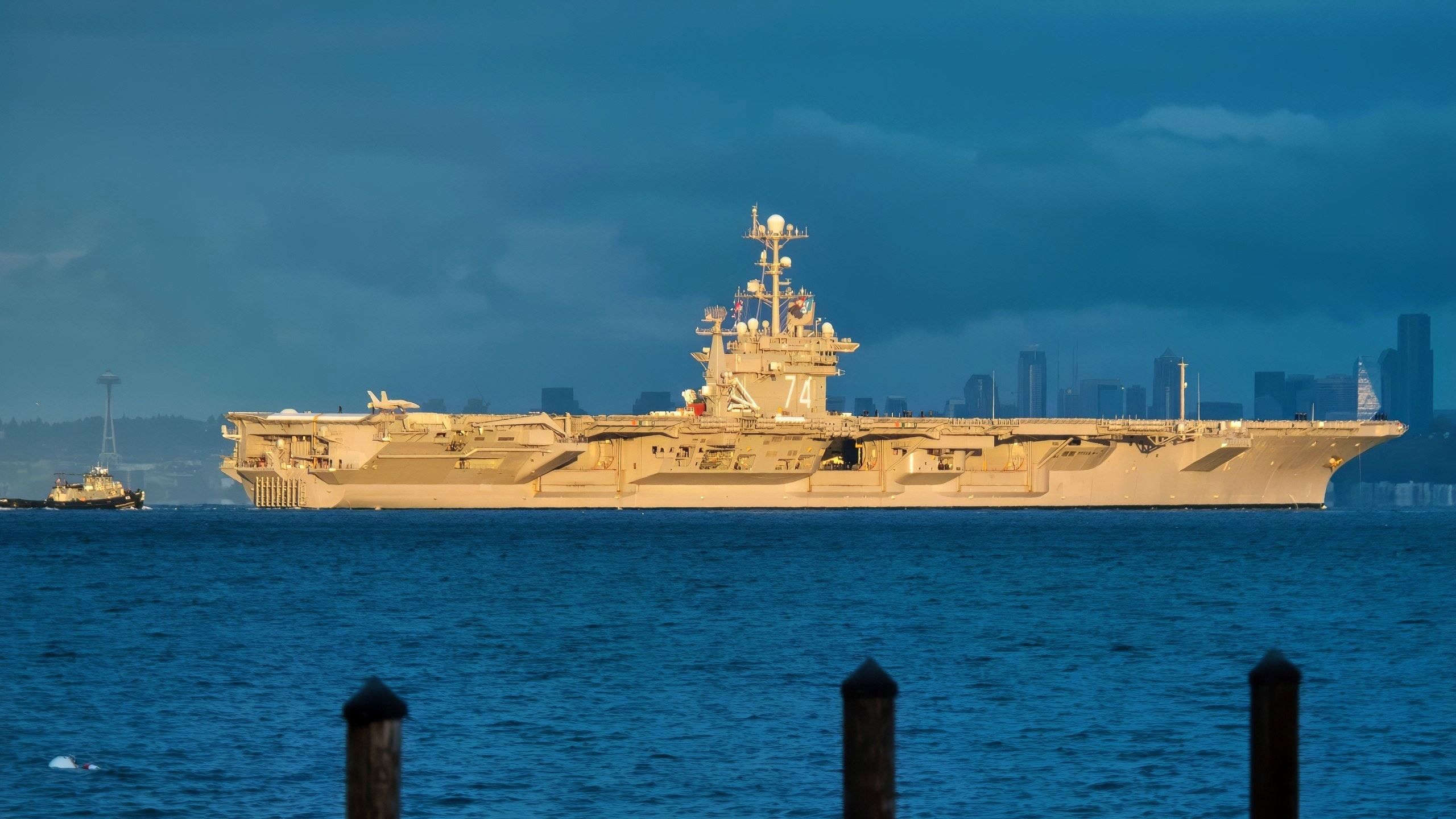
MANCHESTER, Wash. (November 3, 2017) USS John C. Stennis (CVN 74) transits Elliott Bay with Seattle in the background as it gets underway from Naval Base Kitsap’s Puget Sound Naval Shipyard and Intermediate Maintenance Facility. Stennis is underway conducting training as it continues preparing for its next scheduled deployment. (U.S. Navy photo by Mass Communication Specialist 2nd Class Vaughan Dill/Released)
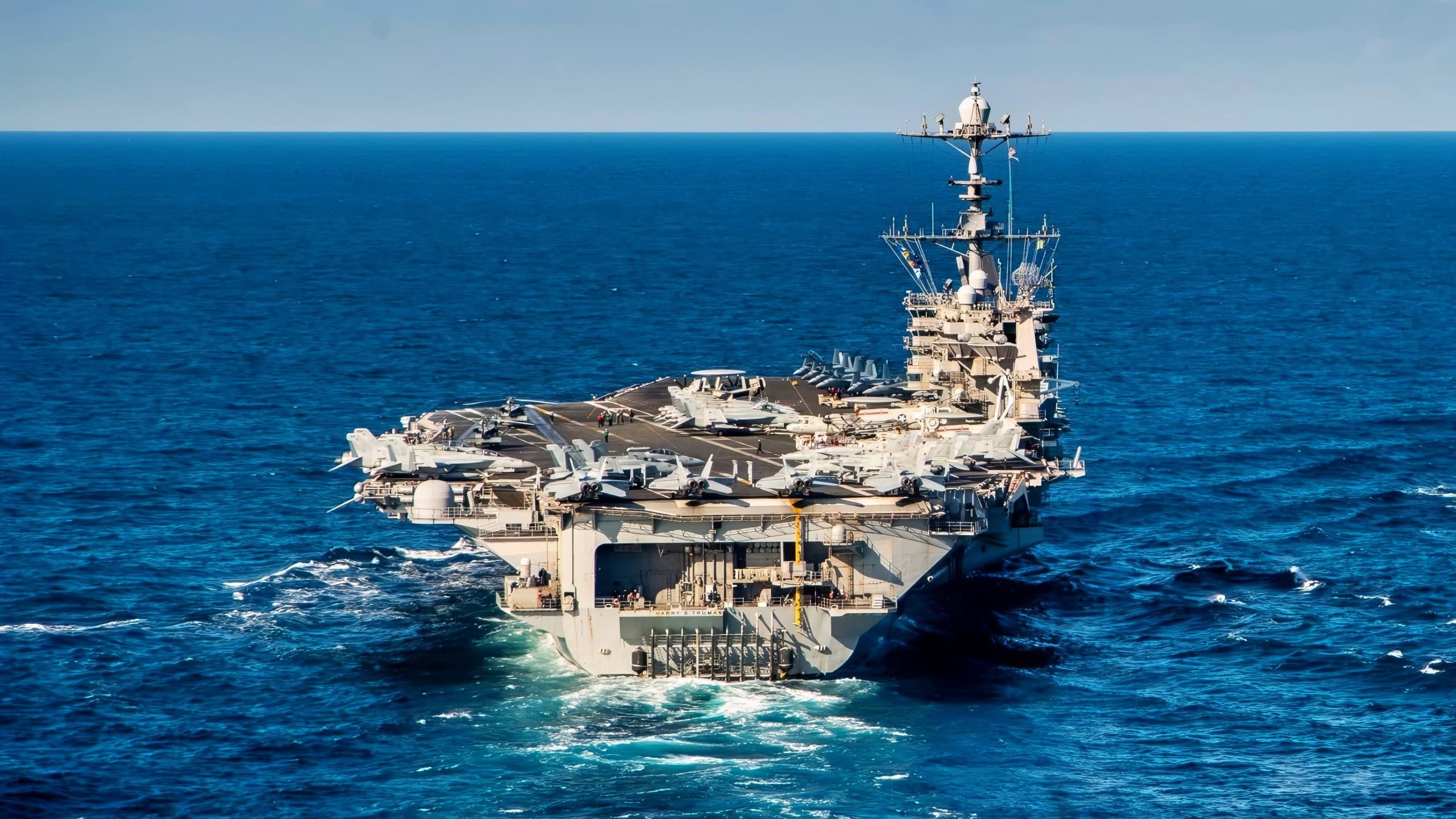
MEDITERRANEAN SEA (Jan. 22, 2021 The Arleigh Burke-class guided-missile destroyer USS Gravely (DDG 107) breaks away from the Nimitz-class aircraft carrier USS Harry S. Truman (CVN 75) following a replenishment-at-sea exercise, Jan. 22, 2022. The Harry S. Truman Carrier Strike Group is on a scheduled deployment in the U.S. Sixth Fleet area of operations in support of naval operations to maintain maritime stability and security, and defend U.S., allied and partner interests in Europe and Africa. (U.S. Navy photo by Mass Communication Specialist 3rd Class Bela Chambers)
“As a result, far cheaper Iranian long-range precision systems managed to paralyze two US carrier strike groups with a combined value of about $50 billion,” he said. A look at Iran’s shattered defenses and lack of control of their own airspace would tend to blow that argument out of the water.
Carrier Defenses Have Evolved With Modern Threats:
The U.S. military continues to develop and field countermeasures to address the threat posed by these missiles.
The US will continue to use a layered defense strategy. A carrier strike group isn’t a single ship. An American carrier strike group will have at least three surface combatants, such as Ticonderoga-class guided missile cruisers or Arleigh Burke-class guided missile destroyers.
These warships pack heavy air-defense firepower, including Standard Missiles 2, 3, and 6, as well as RIM-162 Evolved Sea Sparrow Missiles (ESSM). An Arleigh Burke-class destroyer, for example, can carry nearly 100 missiles and a Ticonderoga-class nearly 125, airborne early warning, electronic attack, decoys, and fighters, where they use a multi-layered defense system that includes:
To intercept ballistic missiles at different phases of flight, the Navy uses different weapons.
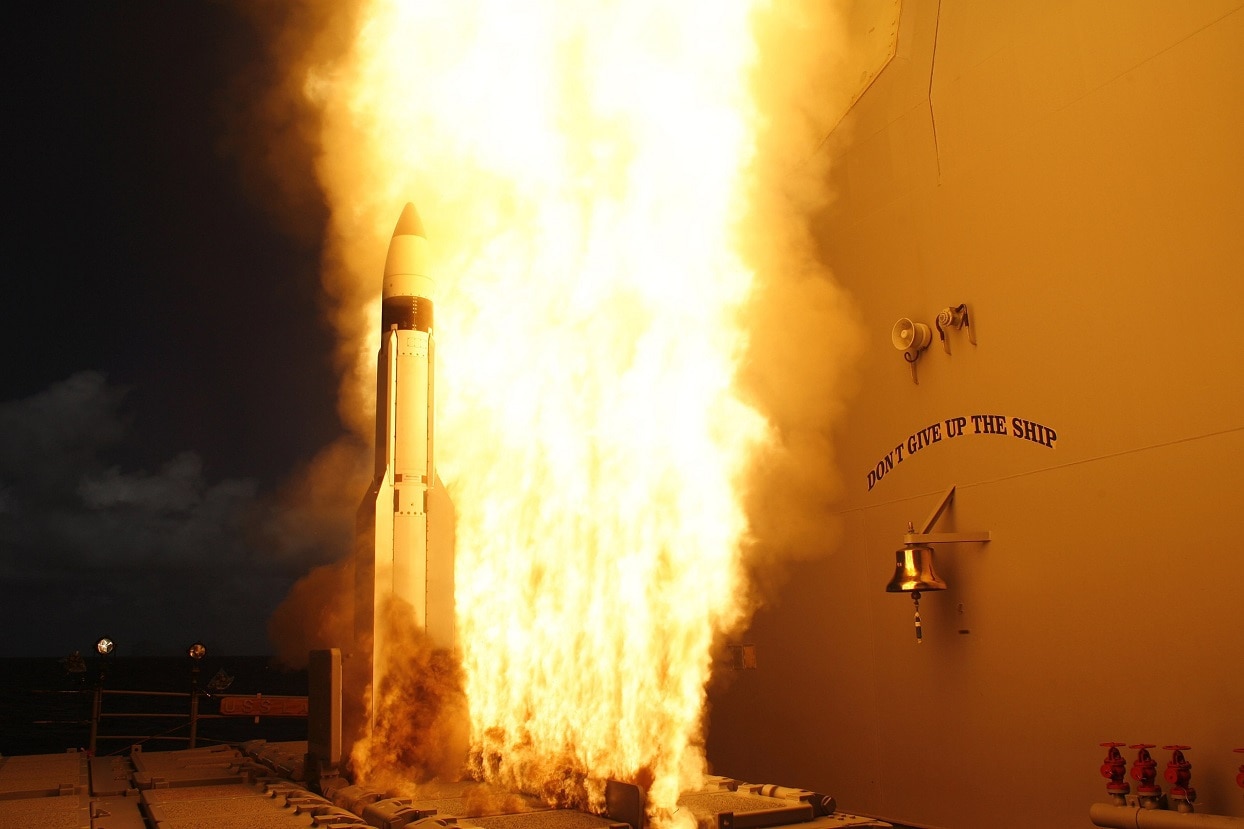
PACIFIC OCEAN (April 26, 2007) – A Standard Missile-3 (SM-3) is launched from the Aegis-class guided missile cruiser USS Lake Erie (CG 70), during a joint Missile Defense Agency, U.S. Navy ballistic missile flight test. Approximately three minutes later, the SM-3 intercepted a unitary (non-separating) ballistic missile threat target, launched from the Pacific Missile Range Facility, Barking Sands, Kauai, Hawaii. Within moments of this launch, the USS Lake Erie also launched a Standard Missile-2 (SM-2) against a hostile air target in order to defend herself. The test was the eighth intercept, in 10 program flight tests. The test was designed to show the capability of the ship and its crew to conduct ballistic missile defense and at the same time defend herself. This test also marks the 27th successful hit-to-kill intercept in tests since 2001. U.S. Navy photo (RELEASED)
Electronic Warfare (EW): EA-18G Growler aircraft can blind or jam sensors and data links. Nulka active decoys and other shipborne deception tools can pull seekers off real targets in the terminal phase.
Close-in Weapons Systems are a last line of defense. The Phalanx CIWS is a rapid-fire, computer-controlled, radar-guided gun that can defeat anti-ship missiles and other close-in threats on land and at sea.
Newer technologies, such as the MQ-25 Stingray unmanned refueling drone, can extend the range of carrier-based aircraft, allowing the carrier strike group to operate further from an enemy’s missile range.
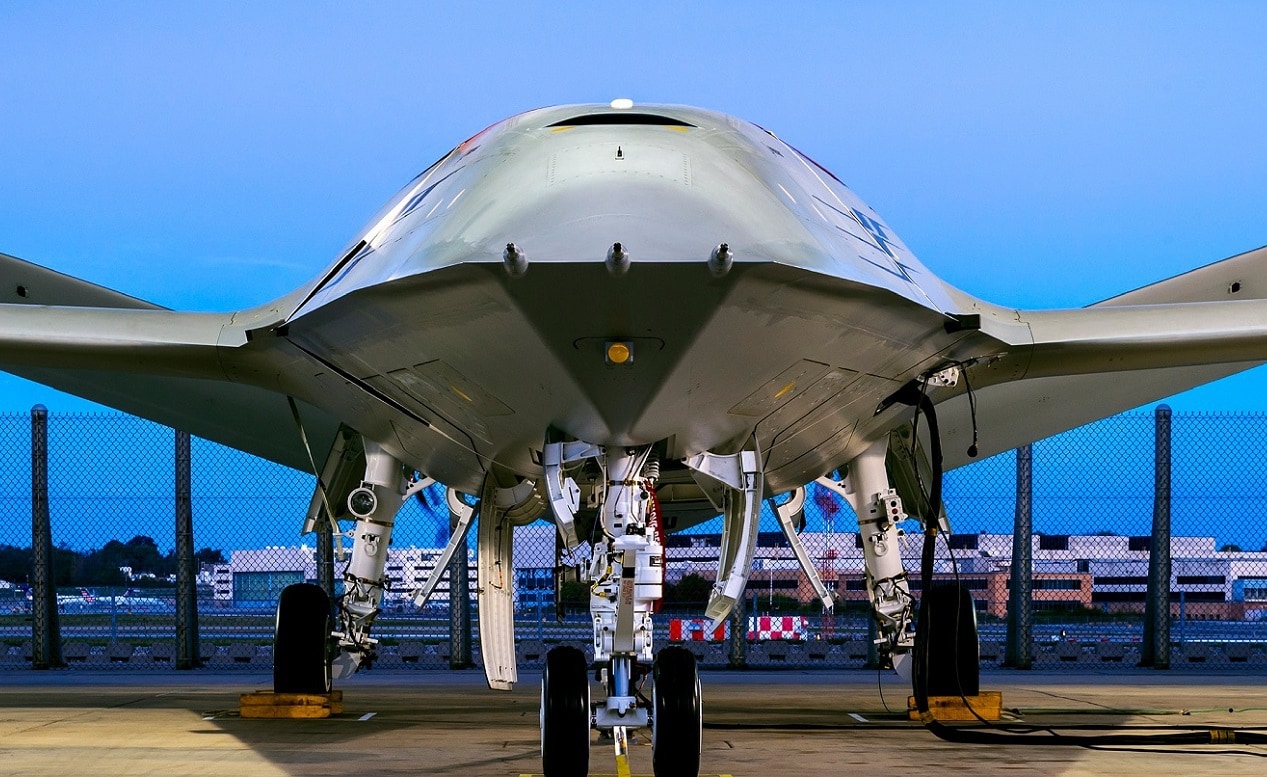
MQ-25. Image Credit – Creative Commons.

Image: Creative Commons.
Targeting And Hitting A Moving Target Is No Easy Feat:
Accurate targeting also depends on the missile systems’ ability to track a moving American vessel and penetrate newer, more advanced missile systems.
The Chinese will have to fuse efforts to use satellites, over-the-horizon radars, airborne and maritime scouts, and drones to track and fix US aircraft carriers. While it sounds easy, it has never been proven in combat. This will also entail sending course corrections while the missiles are in flight.
There are reports that the Chinese have already supplied Iran with CM-302 Anti-ship missiles and that none of them hit any US warships.
According to Global Defense, China already sent 50 CM-302 anti-ship missiles, six HQ-16B surface-to-air missiles, 1200 FN-6 MANPADS, 300 Sunflower-200 Kamikaze drones, three HQ-9B anti-ballistic missile systems, and 50 HQ-9 anti-satellite missiles. This package was worth $5 billion.
However, GD reported that US CENTCOM had intercepted most of the CM-302s with US SM-3 and SM-6 anti-aircraft missiles. Apparently, some of the missiles malfunctioned in mid-flight and failed to reach the target due to technical glitches.
The Aircraft Carrier Is Still A Vital Power Projection Platform
In many possible conflicts around the globe, most potential enemies (such as Iran) don’t have near the A2/D2 capabilities that China possesses, so the carrier would still have an important role for decades to come.
As the conflict has shown so far, even with modern missiles, hitting a carrier is no easy feat.

USS Missouri Iowa-Class Battleship Broadside. Image Credit: Creative Commons.
However, many naval officers believe carriers today are even more survivable than in the Cold War. and the Navy has been constantly upgrading its ability to fight a shooting war against China.
The aircraft carrier age is not over. They continue to prove their worth in the current conflict with Iran. And the US’s biggest potential enemy, China, also values the carrier. They’re now building their fourth carrier and have plans to have a fleet of nine by 2035.
About the Author: Steve Balestrieri
Steve Balestrieri is a National Security Columnist. He served as a US Army Special Forces NCO and Warrant Officer. In addition to writing on defense, he covers the NFL for PatsFans.com and is a member of the Pro Football Writers of America (PFWA). His work was regularly featured in many military publications.