
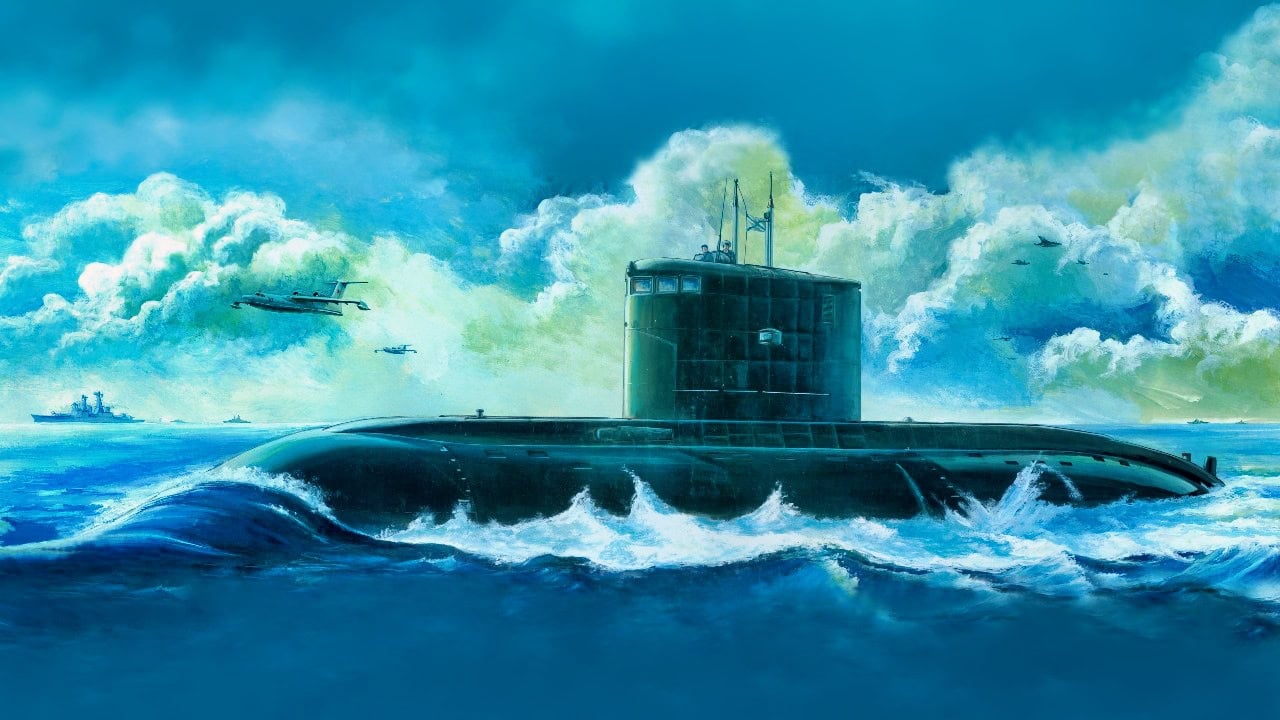
The White House says Iran now has ‘zero submarine vessels.’ But Defense Secretary Hegseth confirmed only 11 submarines destroyed out of 25 — leaving as many as 10 North Korean-designed mini-subs potentially unaccounted for in the same waters where the Navy is running a blockade.
The Iran Submarine Question:
Operation Epic Fury, aka Operation Roaring Lion, i.e., the joint U.S.-Israeli military operation against the theocratic terrorist regime in Iran, has been underway for 1.5 months now, and it has proved to be particularly devastating for the Islamic Republic of Iran Navy (IRIN; Nirū-yē Dəryâyi-yē Ərtēš-ē Žomhūri-yē Ēslâmi-yē Irân [NEDAZA]), which has been nearly completely wiped out.
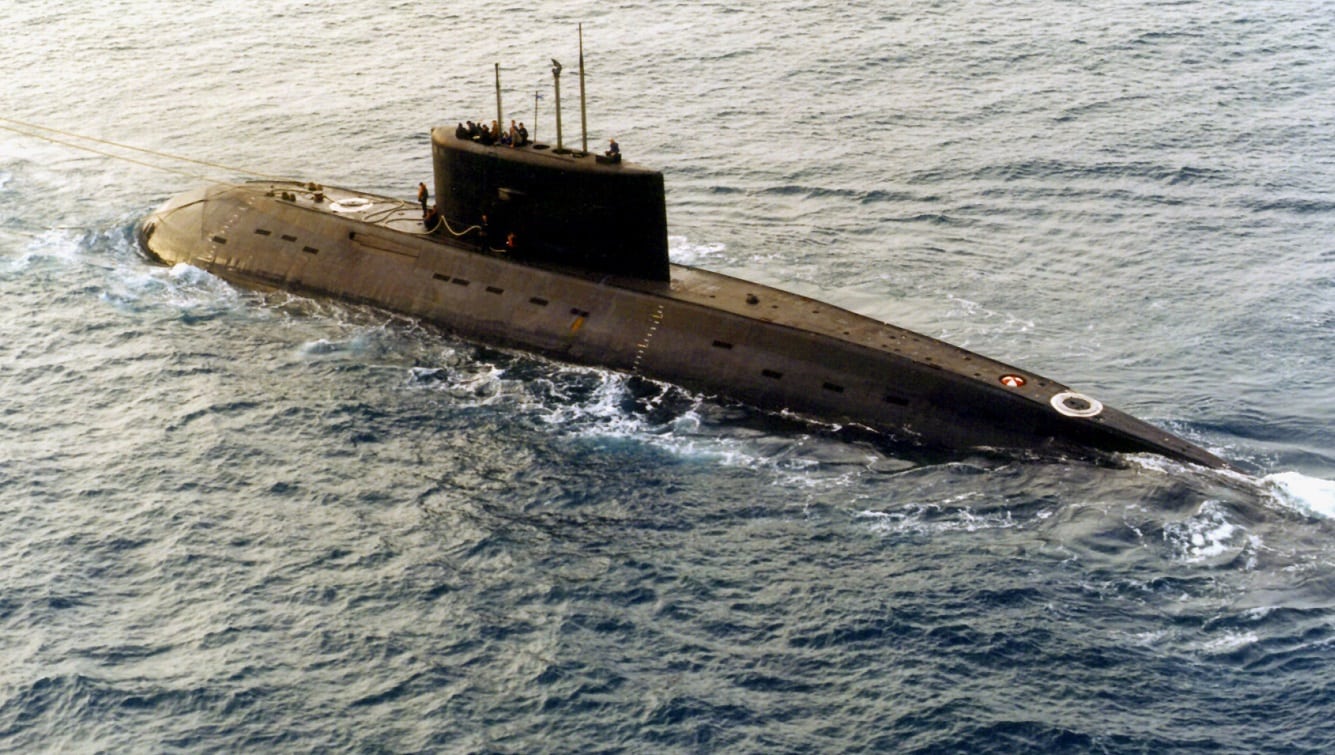
A Russian-built, Kilo-class diesel submarine purchased by Iran, is towed by a support vessel in this photograph taken in the central Mediterranean Sea during the week of December 23. The submarine and the support ship arrived at Port Said, Egypt, on Tuesday and were expected to begin transiting the Suez Canal today, Jan. 2, 1996. Ships and aircraft from the U.S. NavyÕs Sixth Fleet are tracking the submarine, which has been making the transit on the surface. This is the third Kilo-class submarine the Iranians have purchased from Moscow. DoD photo
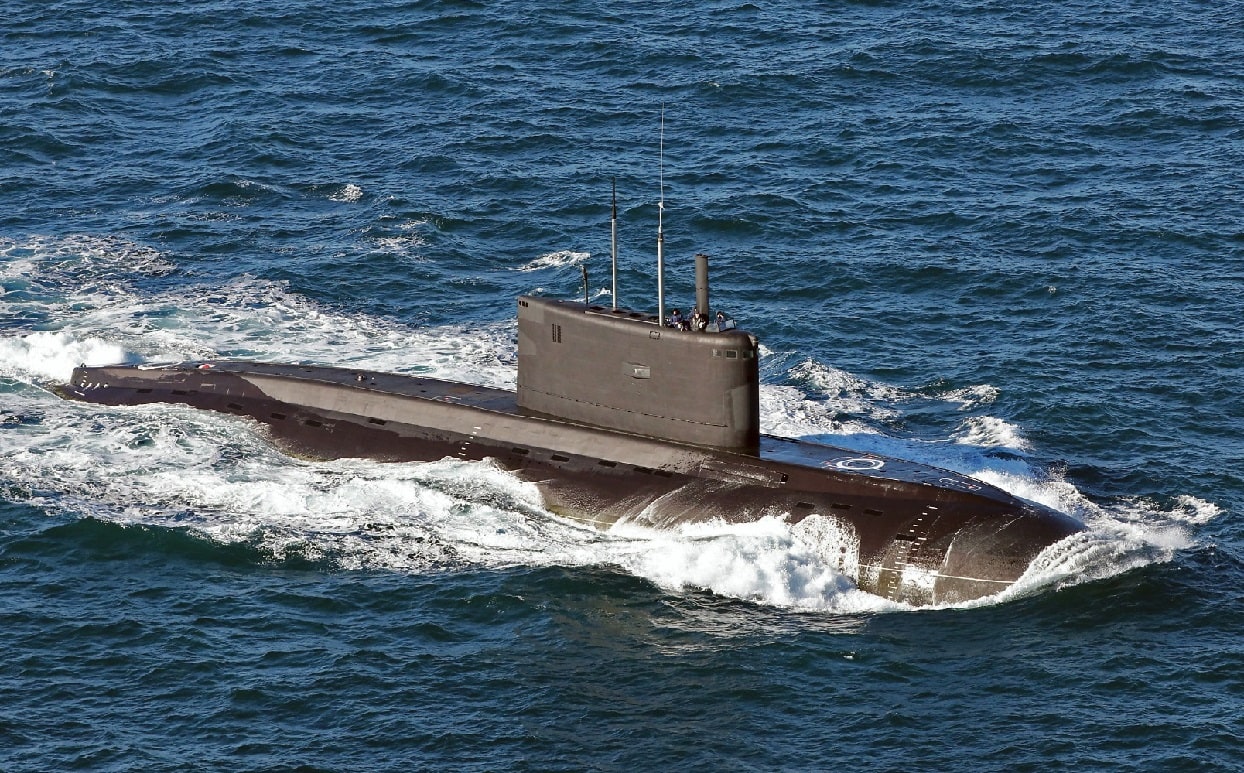
Kilo-class Submarine. Image Credit: Creative Commons.
Much of the Western media coverage has focused on the destruction of the IRIN’s surface warship fleet, especially the sinking of the frigate IRIS Dena by the U.S. Navy’s Los Angeles-class attack submarine USS Charlotte (SSN-766).
But speaking of submarines, what about the NEDAZA’s own submarine fleet?
What, if anything, is still left of that sub fleet, and what damage can it still inflict on commercial shipping and USN assets alike?
If you’ll forgive a really bad pun here, let’s take a deeper dive into Iranian submarine capabilities, shall we?
IRIN/NEDAZA Submarine Fleet Prewar Numbers
According to the World Directory of Modern Military Warships (WDMMW), the Iranian Navy had a total of 25 submarines at the beginning of the year; this in turn constituted 37 percent of the IRIN’s total strength of 67 hulls, ranking it 19th out of 40 national naval powers tracked by the WDMMW site. That 25-sub aggregate was divvied as follows:
-3 x Cold War-era, Soviet-designed Kilo-class diesel-electric submarines, renamed the Tareq-class for IRIN purposes. (NOTE: “Kilo-class” is the NATO reporting name; the Russians themselves designated them Project 877 Paltus [“Halibut”], Project 636 Varshavyanka, and Project 636.3.) Reportedly, only one of those three Tareqs was fully operational, namely IRIS Taregh (S901).
-1 x Fateh-class diesel-electric submarine; IRIN’s lone homegrown full-size sub
-1 x Chinese-made Nahang-class diesel-electric midget submarine
-20 x Ghadir-class homegrown diesel-electric midget sub
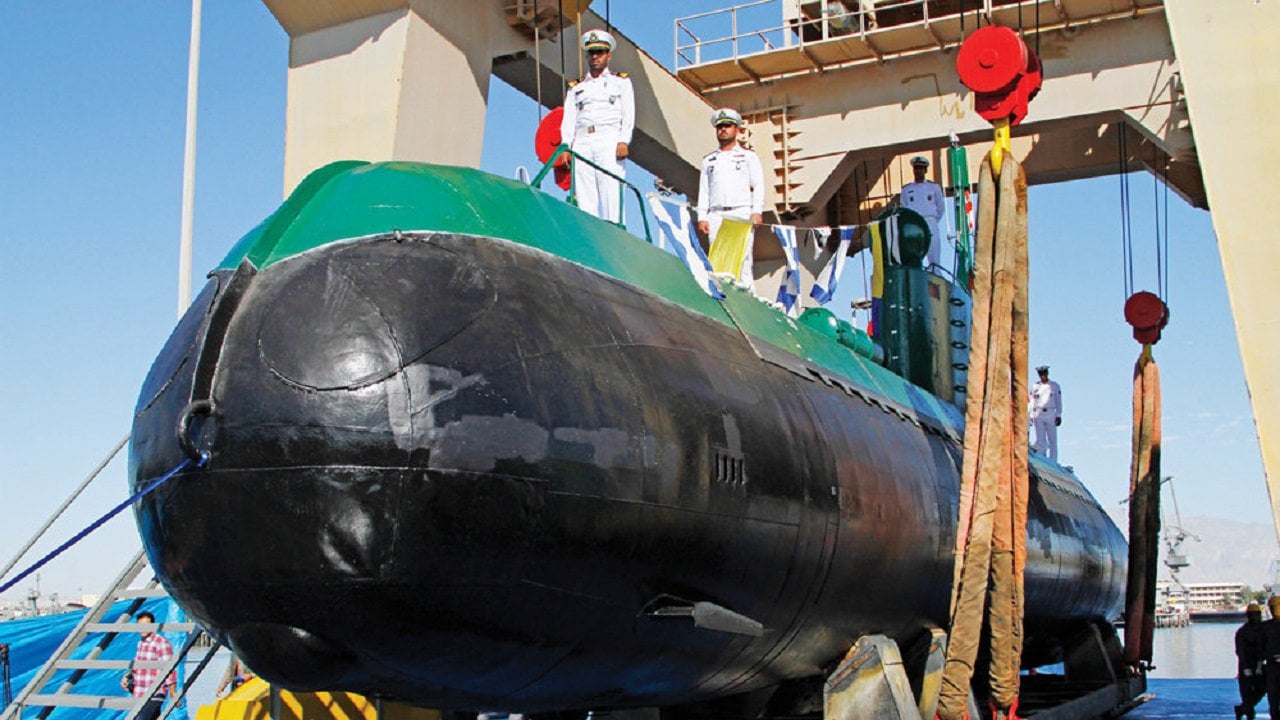
Ghadir Submarine. Image Credit: Iran State Media.
As for the current strength, as noted by Fatima Bahtić of NavalToday.com in an April 8, 2026, report, White House Press Secretary Karoline Leavitt stated in a briefing that day that “Despite once being the largest undersea force in the Middle East, Iran now has zero submarine vessels.”
IRIN/NEDAZA Midget Subs: Ghadir and Nahang
Meanwhile, back on March 20, specifically regarding the Iranian minisubs. U.S. Secretary of War Pete Hegseth stated that “their submarines – they once had 11 – are gone.”
The potential problem is that, if we take Mr. Hegseth’s quoted statistic at face value, it still leaves ten Iranian minisubs with the potential to menace military and commercial vessels alike in the Strait of Hormuz. The Ghadir-class boats (based on the North Korean Yono-class submarine), introduced in 2007, have a 125-ton displacement, a maximum submerged speed of 8 knots (9.2 mph; 15 km/h), and are capable of carrying both missiles and torpedoes.
Meanwhile, the 2006-vintage 115-ton Nahang-class has no torpedo tubes, though it may be able to carry mines or torpedoes externally; its primary mission is likely to be transporting special operations forces such as the Takavaran (“attack-trooper”) commandos. Estimated top speed is betwee between 8 knots (9.2 mph; 15 km/h) and 12 knots (14 mph; 22 km/h)
IRIN/NEDAZA Full-Size Subs: Tareq (Kilo) and Fateh
The IRIS Taregh was reportedly sunk at her berth in Bandar Abbas Naval Base. Taregh, along with her (apparently non-operational) sister ships IRIS Nooh (S902) and IRIS Yunes (S903), was acquired from the Russian Federation in 1992 (the year after the collapse of the Soviet Union).
These warships displace 3,000 tons, have a max submerged speed of 17 knots (19.5 mph, 31. 4 km/h); weaponry-wise, they wield six 533mm tubes for torpedoes and Jask-2 anti-ship cruise missiles (ASCMs), and they can also lay mines.
As for IRIS Fateh (S920), Admiral Brad Cooper, senior commander for U.S. Central Command (CENTCOM), reported the sinking of that warship back on March 3.
Officially commissioned in February 2019, the Fateh displaced 600 tons, with top submerged speed reportedly ranging from 14 knots (16.11 mph; 25.9 km/h) to 23 knots (26.4 mph, 42.5 km/h).
As with the Tareq/Kilo-class, this boat was armed with six 533mm tubes for torpedoes and ASCMs, as well as minelaying capability.
Postscript: Besat/Qaem-Class
This homegrown class of undersea boats is conspicuous by its absence from the WDMMW roster. So, we instead turn to the Nuclear Threat Institute (NTI), a project of the James Martin Center for Nonproliferation Studies (CNS) at the Middlebury Institute of International Studies at Monterey.
Last September, NTI reported that “Iran started construction of these semi-heavy, diesel-electric vessels in 2008. According to the Iranian press, these submarines will have a displacement weight of 1300 tons and will be equipped with torpedoes, ASCMs, and surface-to-air missiles. In April 2023, the IRIN commander stated that the first Besat-class submarine would join the fleet within one to two years. However, as of August 2025, these submarines have yet to enter service.”
About the Author: Christian D. Orr
Christian D. Orr is a Senior Defense Editor. He is a former Air Force Security Forces officer, Federal law enforcement officer, and private military contractor (with assignments worked in Iraq, the United Arab Emirates, Kosovo, Japan, Germany, and the Pentagon). Chris holds a B.A. in International Relations from the University of Southern California (USC) and an M.A. in Intelligence Studies (with a concentration in Terrorism Studies) from American Military University (AMU). He is also the author of the book “Five Decades of a Fabulous Firearm: Celebrating the 50th Anniversary of the Beretta 92 Pistol Series,” the second edition of which was recently published.