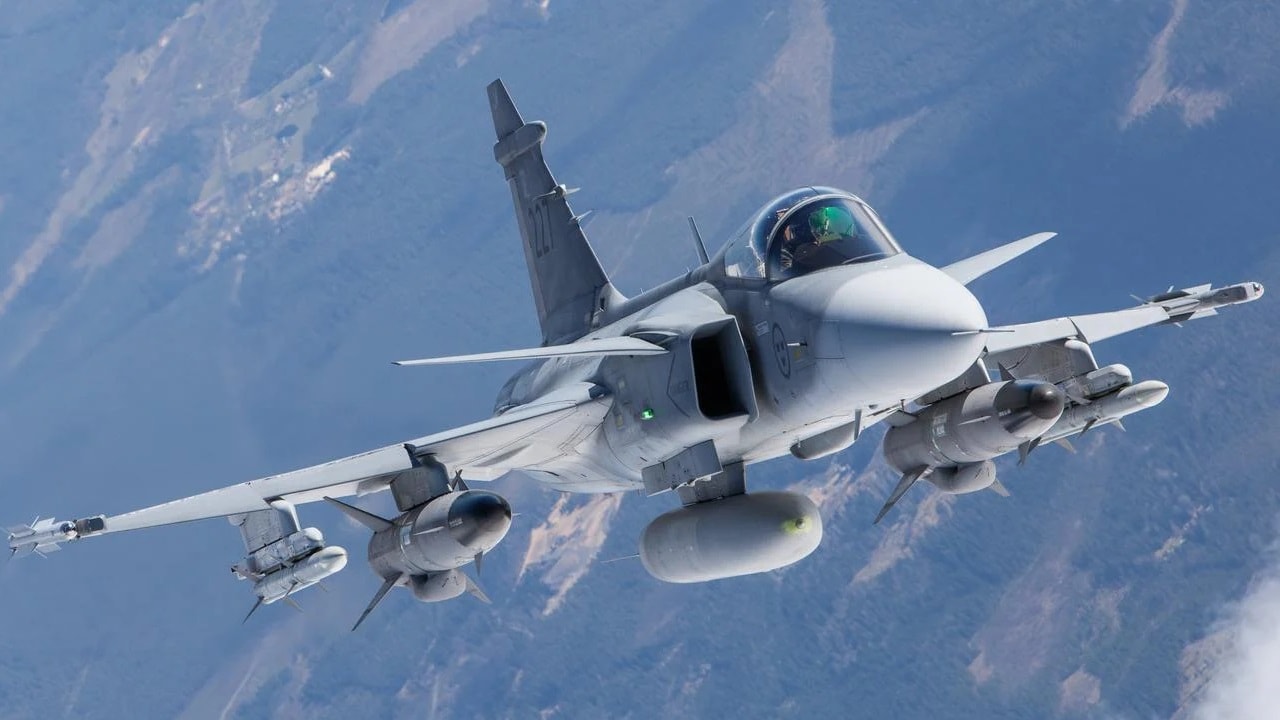
One Tempting Offer: JAS 39 Gripen Jets Could Be Made in Canada by 2031
It is no secret that relations between Canada and the United States have somewhat soured of late. Is it any surprise, therefore, that a Swedish firm is tempting Ottawa to opt for its fighter jet deal instead of Washington’s?
Saab chief executive Micael Johansson claims that his company’s JAS 39 Gripen jet could be delivered from a Canadian factory in just five years if Ottawa gives it a chance.
His offers come amidst Canada’s prolonged review of its F-35 plans. The issue is clearly far from being settled politically, even if much of the procurement machinery is already moving ahead.
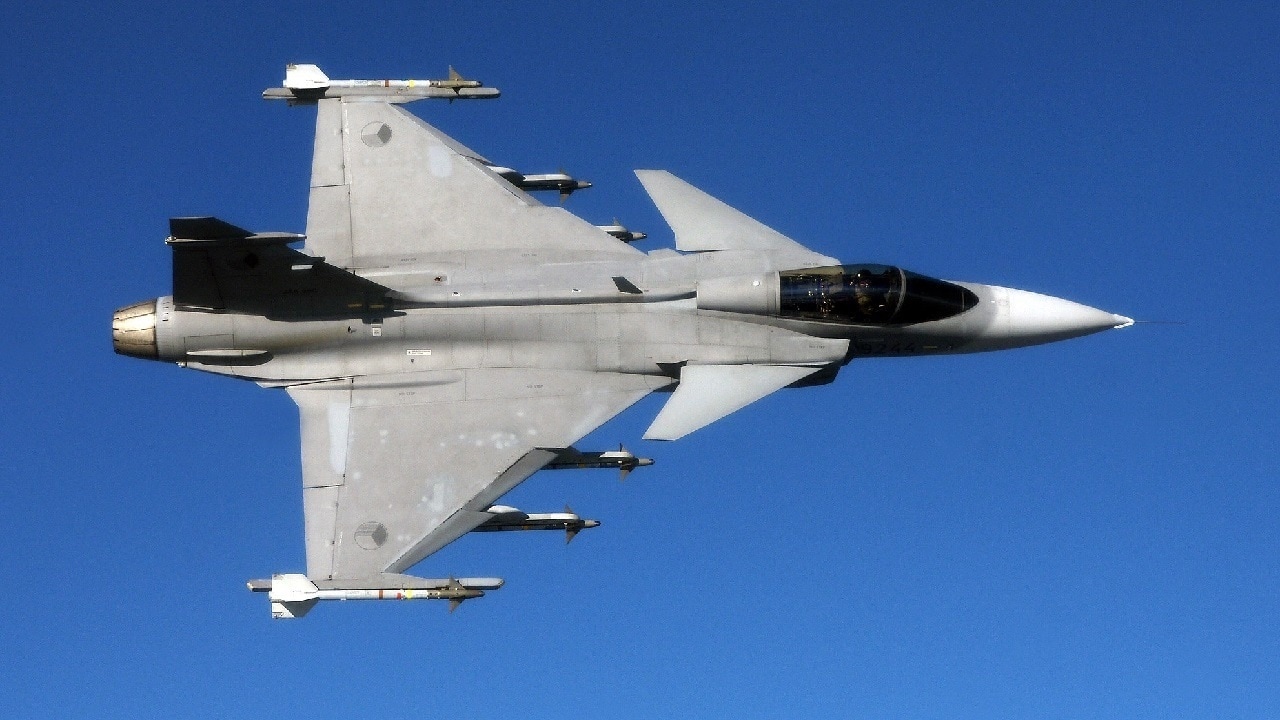
JAS 39 Gripen. Image Credit: Creative Commons.
JAS 39 Gripen is “Totally Credible”
Johansson told CTV’s “Question Period” show that delivering a Canadian Gripen in that timeframe is “absolutely credible” and “absolutely doable,” despite being challenged about the slower pace of Saab’s program in Brazil.
His argument is that Canada starts from a much stronger industrial base – but Brazil, meanwhile, had to build up more of the local framework from scratch. Canada already has deep aerospace infrastructure, experienced suppliers, and an established industrial footprint that Saab says could support faster assembly and technology transfer.
Ottawa’s fighter review, launched by Prime Minister Mark Carney in March 2025, has dragged on well past the several-month timetable the government originally floated.
Canada originally committed to buying 88 F-35As to replace its aging CF-18 fleet, but the Carney government reopened the file amid a wider effort to reduce dependence on American suppliers during a period of unusually sharp friction in relations, with Canadians’ confidence in the U.S. leadership at its lowest in two decades.
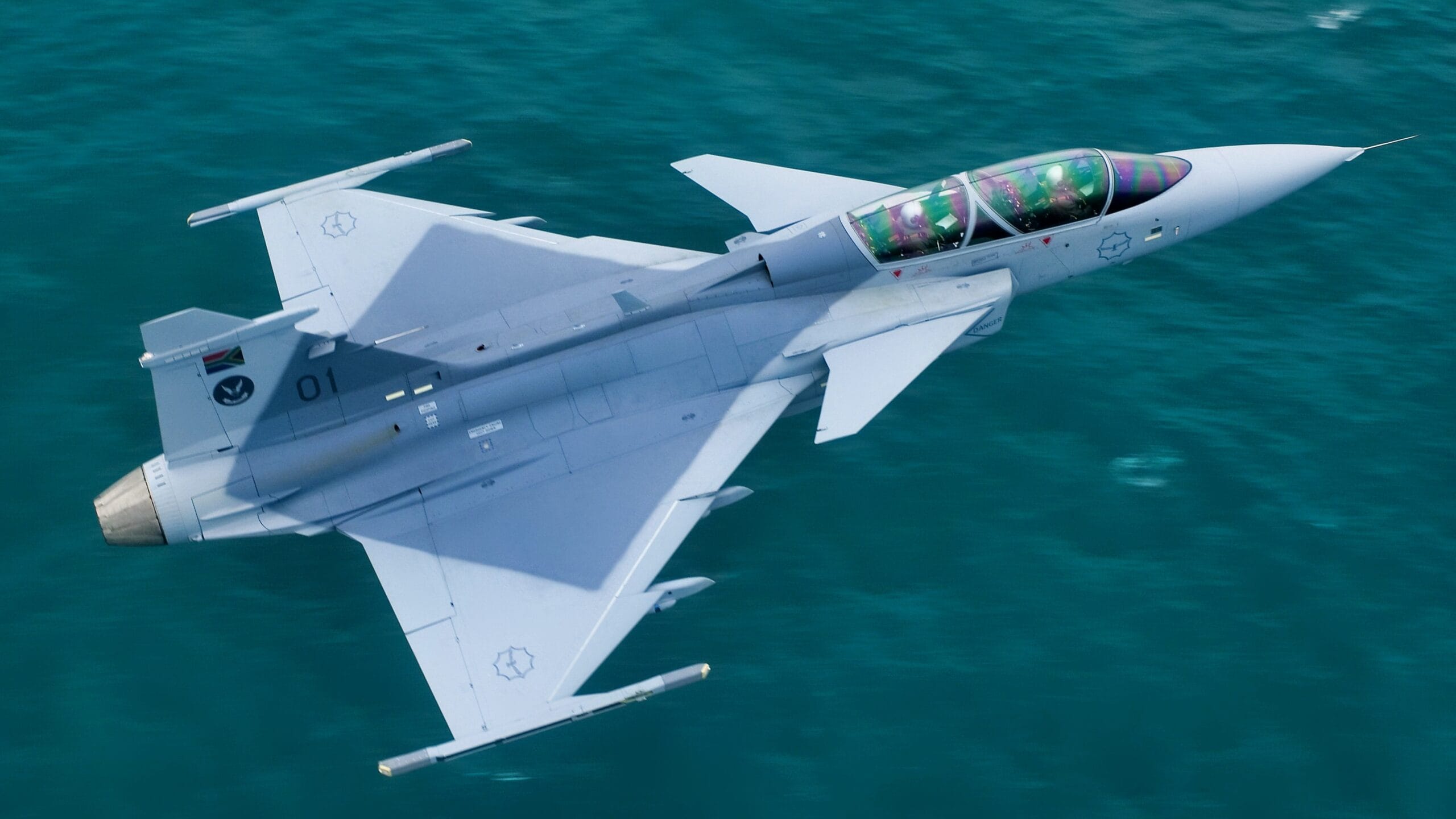
JAS 39 Gripen Fighter. Image Credit: Creative Commons.
NORAD Chief: F-35s Not ‘Needed’
Last week, another major factor emerged after Gen. Gregory Guillot, head of NORAD, told the US Senate Armed Services Committee that fifth-generation fighters like the F-35 were “frankly” not needed to defend North American airspace.
Carney, quizzed over Guillot’s remarks on Tuesday, did not dispute them directly, saying only that there are “a range of views.”
Saab is trying to exploit that ambiguity by presenting the Gripen not merely as an aircraft, but as an industrial strategy. Johansson recently described talks with Ottawa as “quite intensive,” with Saab providing detailed information on affordability, delivery speed, infrastructure, and industrial participation.
Saab is also pairing its Gripen offer with a wider package that includes local assembly in Canada, potential GlobalEye airborne early warning aircraft, and a broader role for Canadian industry. Saab says Gripen and GlobalEye production in Canada could support more than 12,000 jobs.
Saab also recently announced a partnership with Canadian AI firm Cohere tied to its GlobalEye campaign, and has leaned heavily on Bombardier’s role because the GlobalEye platform is based on the Canadian-built Global 6000 and 6500 business jets.
In other words, Saab is making a deliberate appeal to the “build in Canada” instinct that has become highly politically attractive within the past year.
Aviation Week claimed in February that Saab was even considering a Canadian Gripen production line that could serve not just domestic demand but future export customers as well.
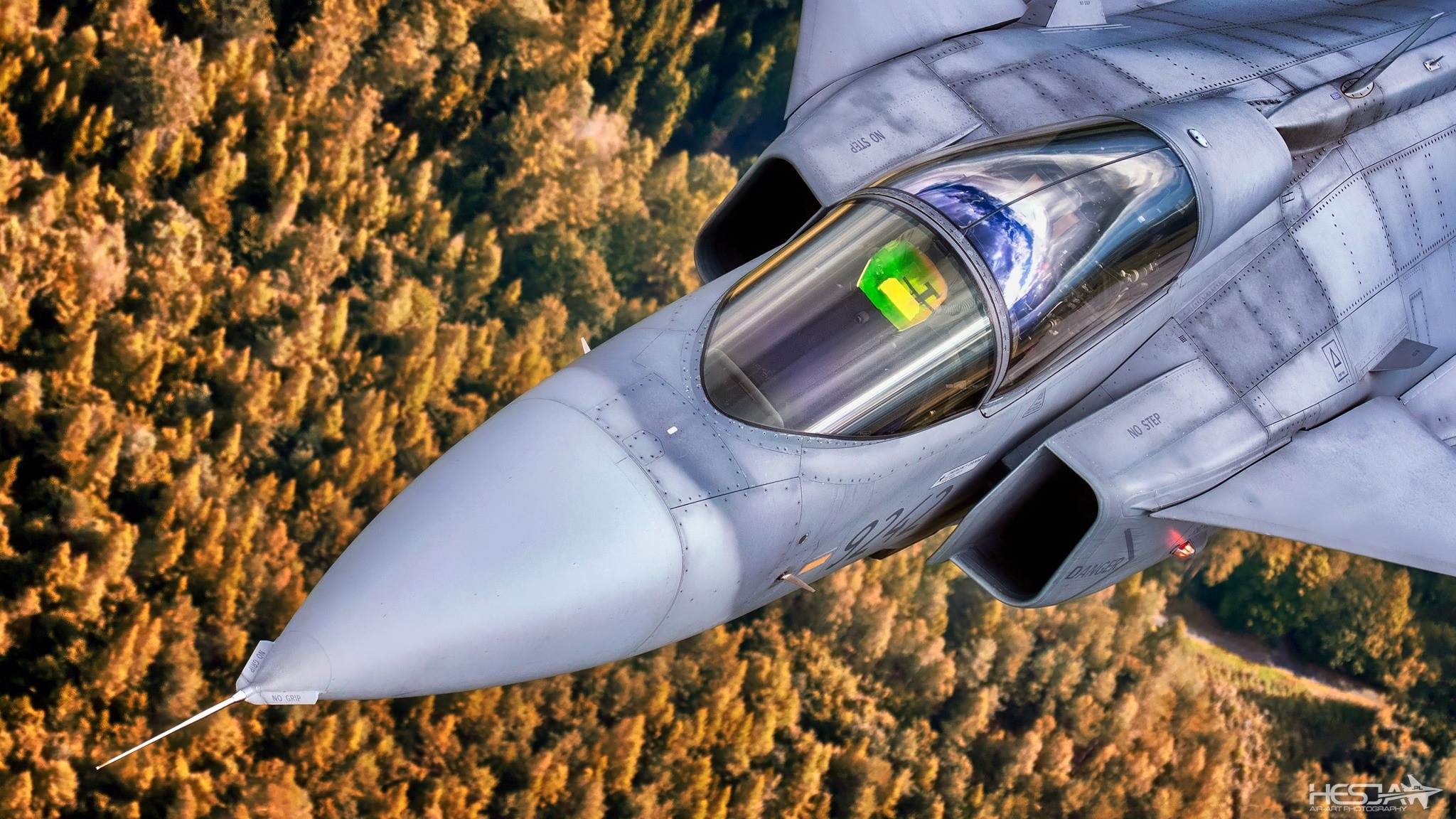
JAS 39 Gripen. Image Credit: Creative Commons.
Still, this will not necessarily be the best option in the long run. Writing for the National Post, Richard Shimooka, a Senior Fellow at the Macdonald-Laurier Institute, has explained that U.S. President Donald Trump’s “words and actions are a radical departure from the deeply embedded foundations of American foreign policy,” and that Ottawa should not react too hastily to his public posturing.
Shimooka also claims that the costs of setting up new Gripen production lines would outweigh any uptick in jobs, nor are these jets as “capable” as the F-35. It is also the case that essential elements of the Gripen, “including its core avionics”, are manufactured in the U.S. in any case.
Canada Considers Mixed Fighter Jet Fleet
None of this means the F-35 is about to be displaced. Ottawa has already signed for the first 16 aircraft, and the government has also made long-lead payments on a further 14 jets in order to preserve production slots.
That is one reason why the mixed-fleet option could now be more plausible than an outright reversal. Johansson himself even acknowledged to CTV that the key issue is whether Canada eventually makes the “political decision” to operate both the F-35 and the Gripen rather than relying on a single type.
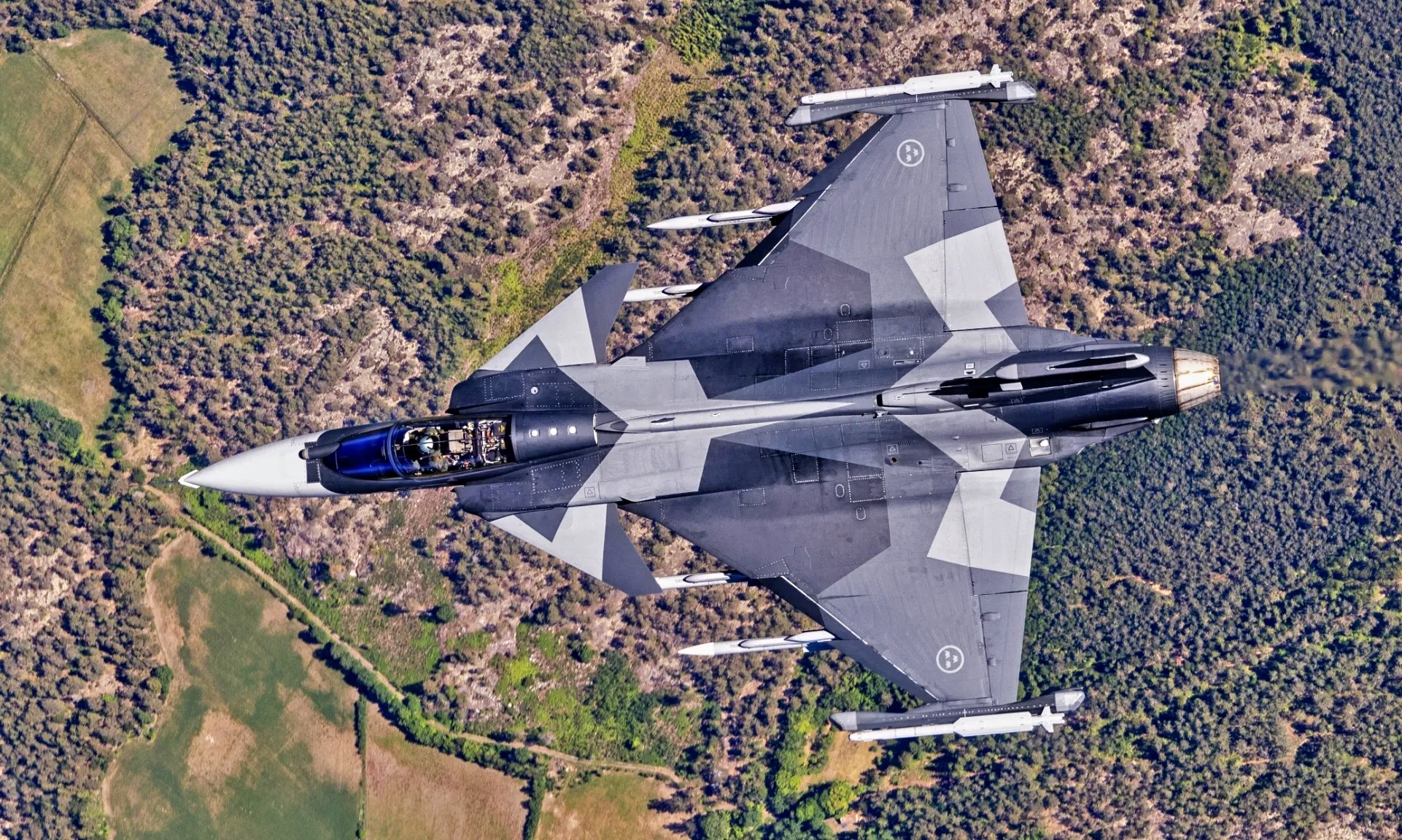
Saab JAS 39 Gripen E. Image from Saab.
Writing in an opinion piece for The Chronicle Herald, journalist Scott Taylor has argued that Royal Canadian Air Force leadership remains firmly attached to the F-35 and has continued to behave as though the review is largely a political mishap rather than a real question.
He pointed to the reported long-lead payments for additional aircraft and senior RCAF figures visiting Lockheed Martin’s Fort Worth line as evidence that institutional momentum still runs strongly in one direction.
MORE: The F-35 Is Done Being a Punching Bag
About the Author: Georgia Gilholy
Georgia Gilholy is a journalist based in the United Kingdom who has been published in Newsweek, The Times of Israel, and the Spectator. Gilholy writes about international politics, culture, and education. You can follow her on X: @llggeorgia.