
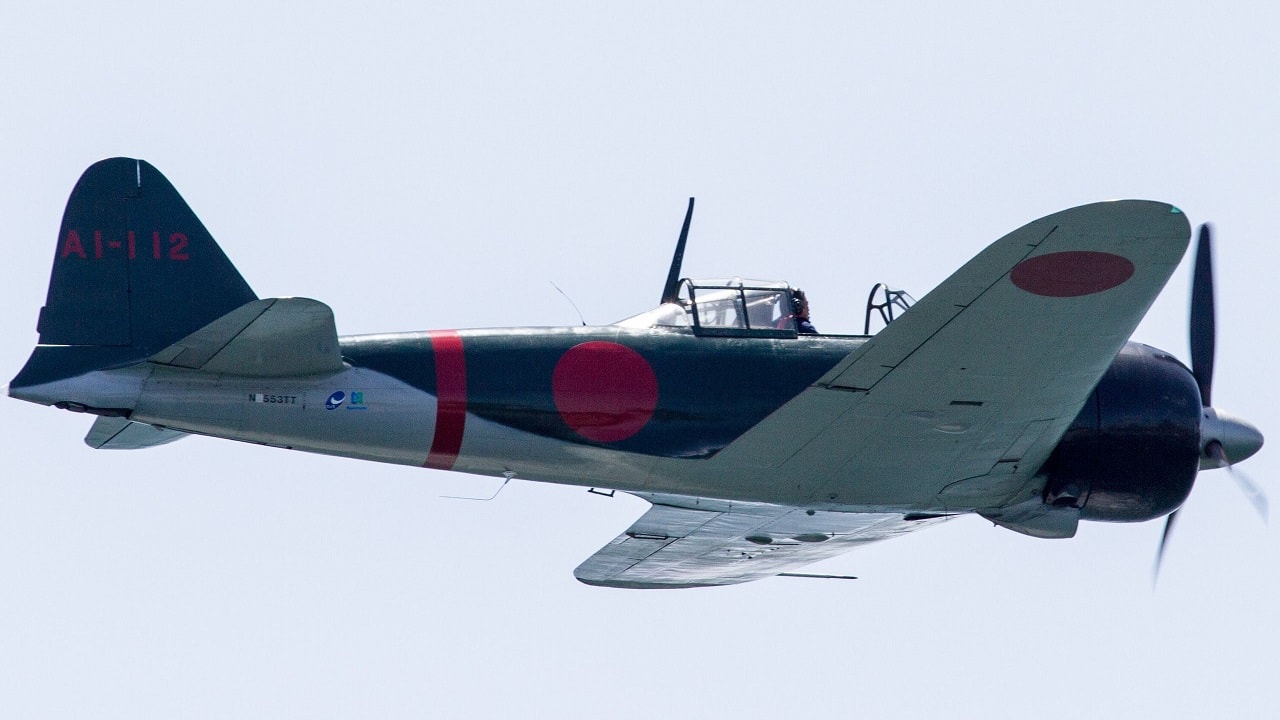
The A6M Zero Entered Service in Imperial Year 2600 — The Name Became So Famous Allied Pilots Applied It to Every Japanese Fighter
There is a strong (though not universal) consensus for America’s P-51D Mustang, and understandably so, as it was able to escort Allied heavy bombers for the entire round trip to and from the heart of Axis capitals in Berlin and Tokyo alike.
One could also reasonably make the case for the P-47 Thunderbolt (flown by America’s top two aces of the European Theatre), the P-38 Lightning (flown by America’s all-time top two aces), the F4U Corsair (“Whistling Death”), and the F6F Hellcat.
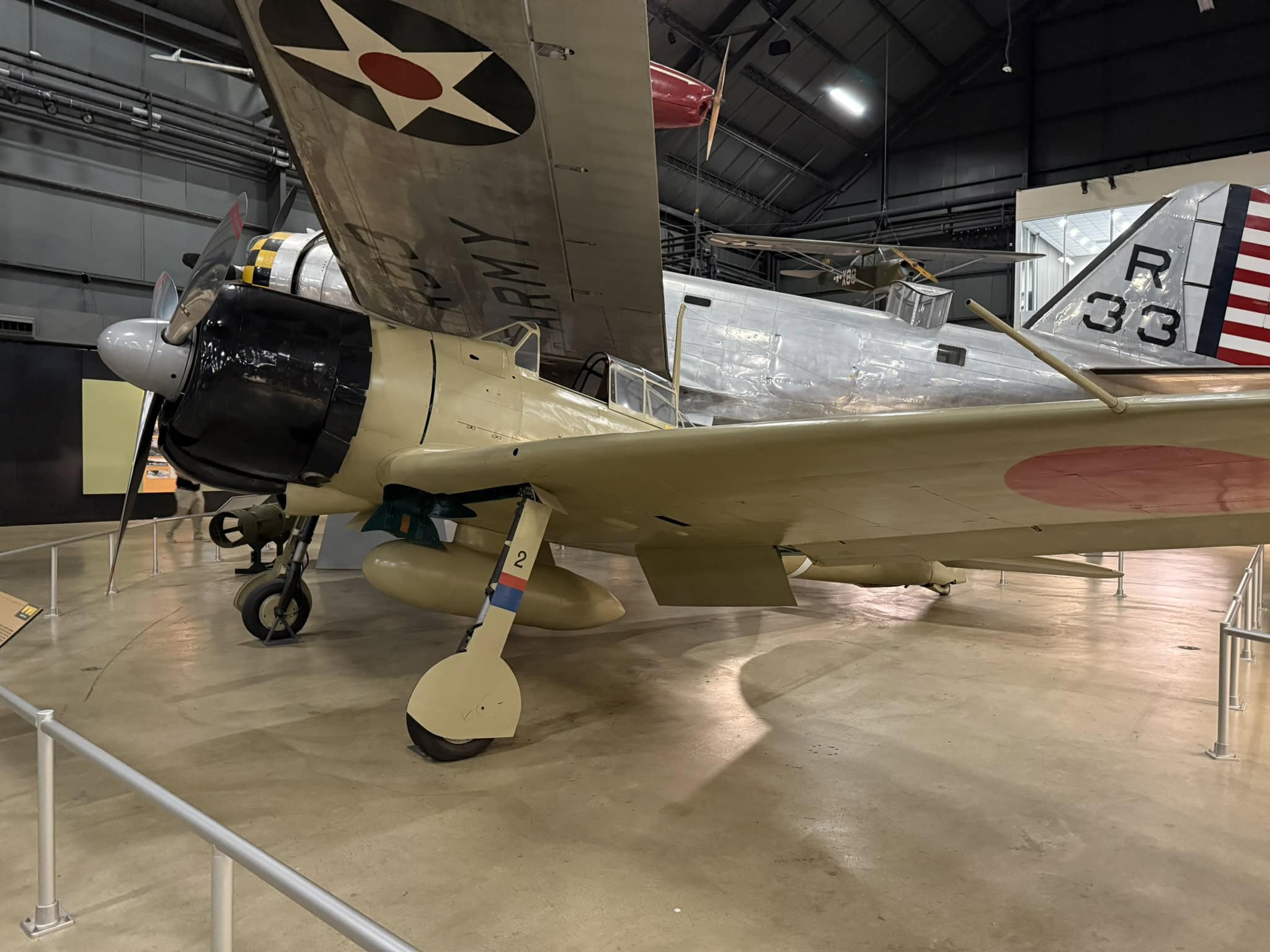
Japan Zero Fighter. Image Credit: 19FortyFive.com Taken at the National Museum of the U.S. Air Force.
However, one must not forget the wartime truism of “the enemy gets a vote.”
The Axis powers produced more than their fair share of contenders for the title of “Best WWII Fighter,” and at least during the initial years of the war, Imperial Japan’s most famous warbird, the Mitsubishi A6M Zero, was indeed the dominant fighter of the Pacific Theatre.
Initial History
The Zero was so (in)famous to the Allies that its name practically became a generic one applied to Imperial Japanese fighter planes in general, for example, the Imperial Japanese Army Air Service’s Nakajima Ki-43 Hayabusa (“Peregrine Falcon;” Allied codename “Oscar”) was unofficially nicknamed the “Army Zero,” as the actual Zero was strictly an Imperial Japanese Navy (IJN) asset.
But how did the A6M gain that fame in the first place?
It was manufactured by Mitsubishi Heavy Industries, a company still very much involved in defense production, as seen in the modern F-2 “Viper Zero” (keeping the Zero name alive via the present-day Japan Air Self-Defense Force’s [JASDF] homegrown license-built version of the F-16 Fighting Falcon) and F-15J Peace Eagle jet fighters.
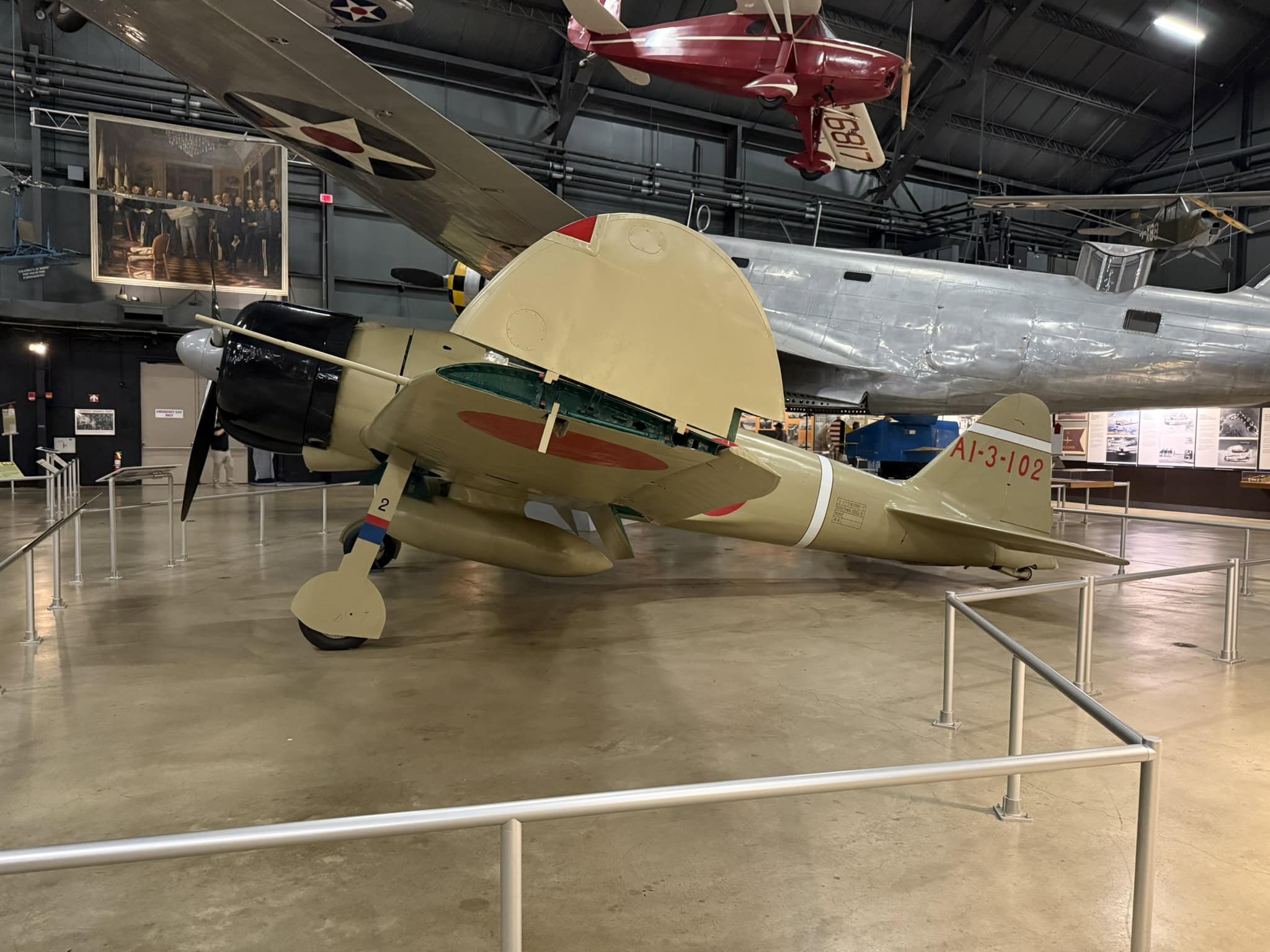
Japan Zero Fighter. Image Credit: 19FortyFive.com Taken at the National Museum of the U.S. Air Force.
The Zero’s chief designer, Jiro Horikoshi, began his work in 1937, and his soon-to-be iconic mechanical magnum opus made its maiden flight on April 1, 1939, and officially entered into operational service with the IJN Air Service on July 1, 1940.
As for the moniker, Russell Lee of the Smithsonian Air and Space Museum explains, “The Japanese official designation was Rei Shiki Sento Ki (Type 0 Fighter). Type 0 referred to the year of the emperor’s reign when production of Zero fighters began in 2600 on the imperial calendar (Julian calendar year 1940). Pilots called it the Zero even after the official codename became ‘Zeke’ in 1942.“
Tech specs included a fuselage length of 29 feet 9 inches, a wingspan of 39 feet 4 inches, a height of 10 feet, an empty weight of 3,704 pounds, a maximum takeoff weight of 6,164 pounds, a max airspeed of 331 miles per hour, and a max range of 1,010 nautical miles.
Armament-wise, the warplane had two 7.7 mm Type 97 machine guns in the engine cowling, and two 20 mm Type 99-1 Mk 3 cannon in the wings.
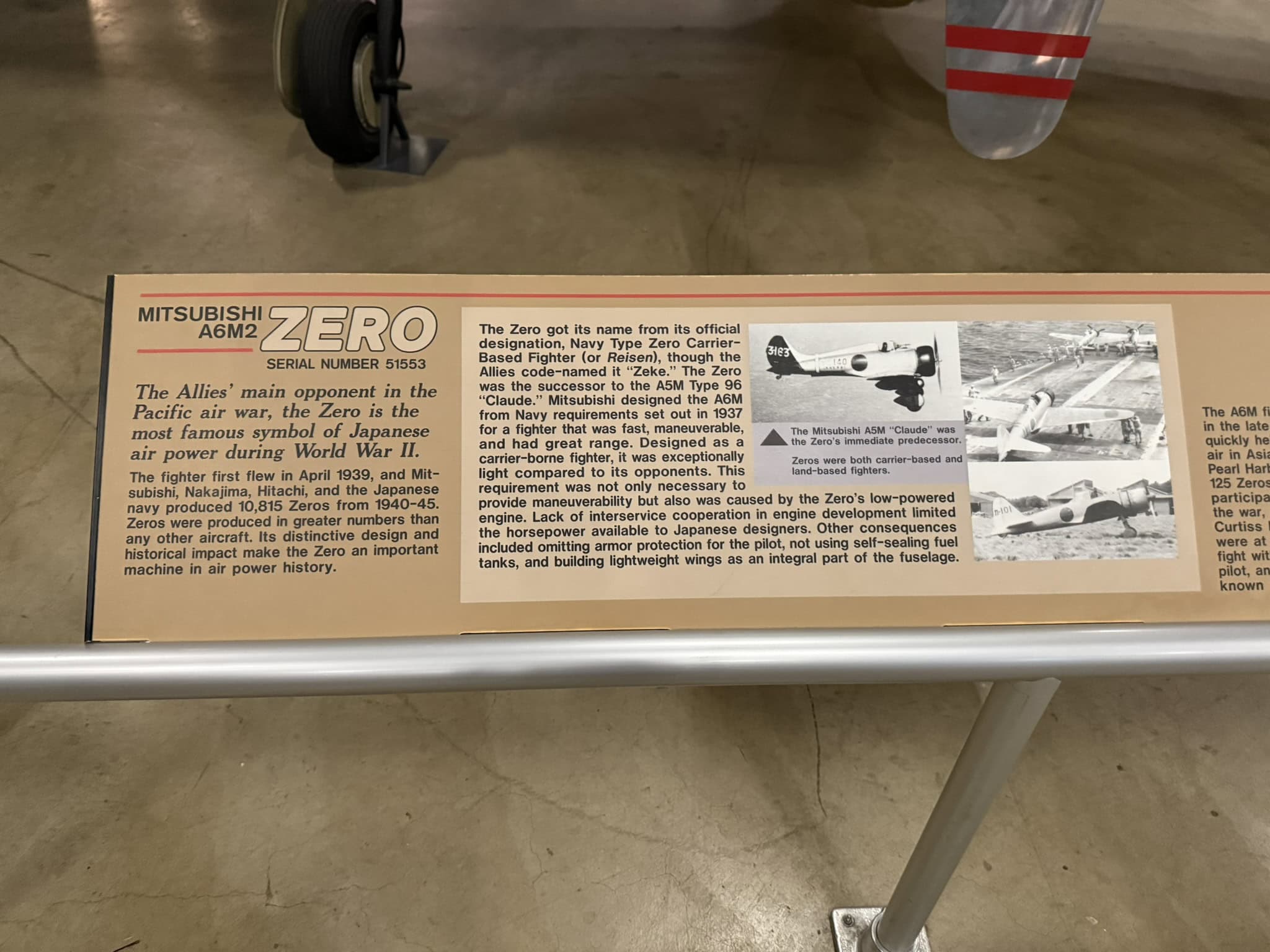
Japan Zero Fighter. Image Credit: 19FortyFive.com Taken at the National Museum of the U.S. Air Force.
Those of you who are fellow fans of the TV series “Baa Baa Black Sheep” aka “Black Sheep Squadron,” in which North American T-6 Texans were mocked up to portray Zeroes, may recall the series only depicted the plane’s machine guns and conveniently overlooked the far more powerful (though slower-firing) cannons. Gotta love Hollywood hokum, eh?
Combat Performance: The Early Terror of the East (and Southeast) Asian Skies
“You can save those g*d*mn Zeroes for those other g*dd*mn heroes/Distinguished Flying Crosses do not compensate for losses …You can save those Mitsubishis for those other sons of bitches/’Cause I’d rather lay a woman than be shot down in a Grumman…” Thus goes the cynical and morbidly humorous WWII aviation song “I Wanted Wings.”
The gallows humor reflects on the healthy respect that Allied aviators held for that deadly Japanese fighter.
Early in the war, no Allied fighter could match the Zeke’s speed and maneuverability, and it established a mind-boggling initial air-to-air kill ratio of 12:1. The Zero was first “blooded” in combat in July 1940, and it made an immediate impact (both literally and figuratively) with thirteen land-based A6M2s shooting down twice their number of Soviet-built Polikarpov I-16 Ishak (“Little Donkey) and I-153 Chaika (“Gull”) fighters in a three-minute engagement.
Arguably, the most famous Zero pilot was Lt. (j.g.) Saburo Sakai, Japan’s third-ranking ace, whose exploits were discussed in his bestselling “autobiography,“ “Samurai!” which was actually ghostwritten by Martin Caidin and Fred Saito.
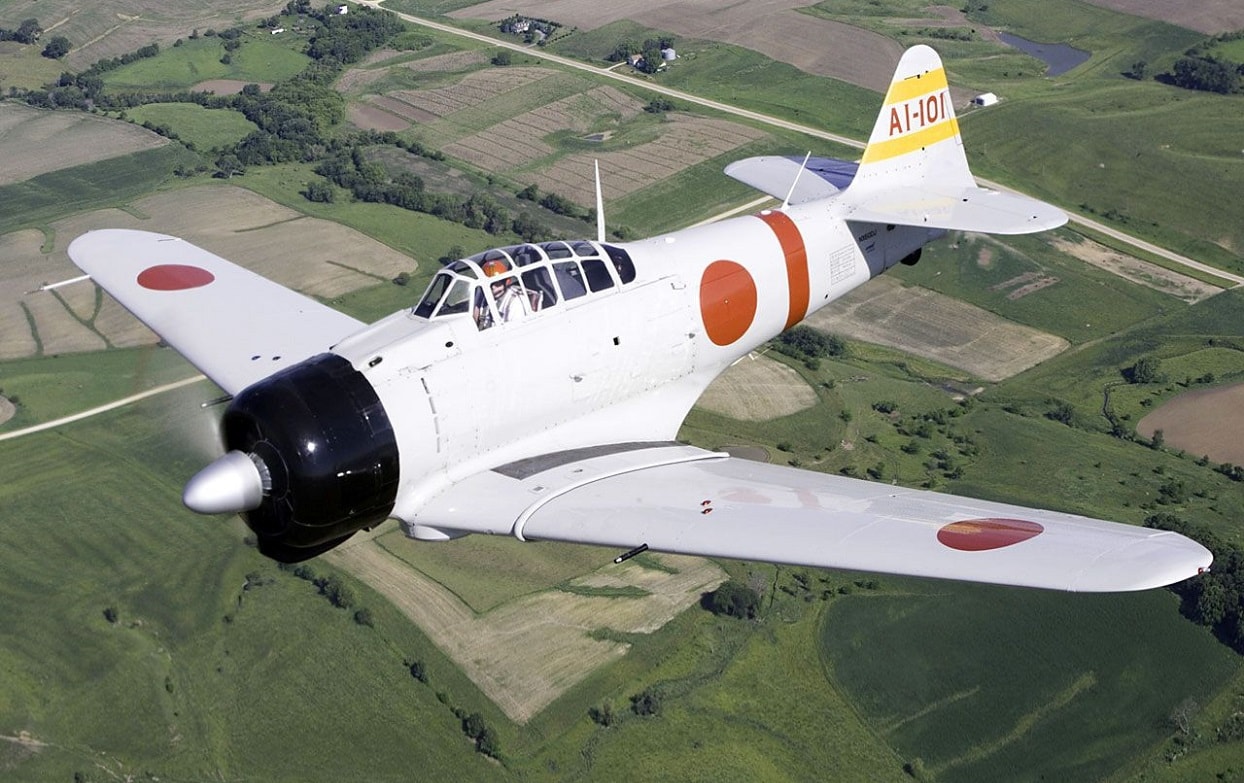
Japan’s World War II Zero Fighter. Image Credit: Creative Commons.
(DISCLAIMER: There are some controversies about the factual accuracy of some of the book’s claims, which, with all due respect to the late Mr. Caidin, seemed to be a recurrent pattern for that prolific writer’s books.)
Though the Zero was already familiar to the fighter jocks of the American Volunteer Group (AVG)—better known as the Flying Tigers—prior to the official U.S. entry into WWII, it was during the Day of Infamy, i.e., the December 7, 1941 Pearl Harbor raid, that the fighter truly became infamous to the American combat aviator community as a whole.
Therein, the Zeros—proving fighter escort to the Aichi D3A “Val” dive bombers and Nakajima B5N “Kate” torpedo bombers—shot down eight American warplanes and three civilian planes.
Luckily for the Allied cause, the Zero’s reign of terror wouldn’t last forever.
By 1943, the U.S. Army Air Forces started fielding the aforementioned Lightning, whilst the U.S. Navy and Marine Corps began wielding the aforementioned Hellcat and Corsair.
These Johnny-come-lately fighter planes finally matched the Zeke’s speed and maneuverability while also maintaining the survivability advantages bestowed by their predecessors’ (e.g., F4F Wildcat, P-40 Warhawk) armor and self-sealing fuel tanks.
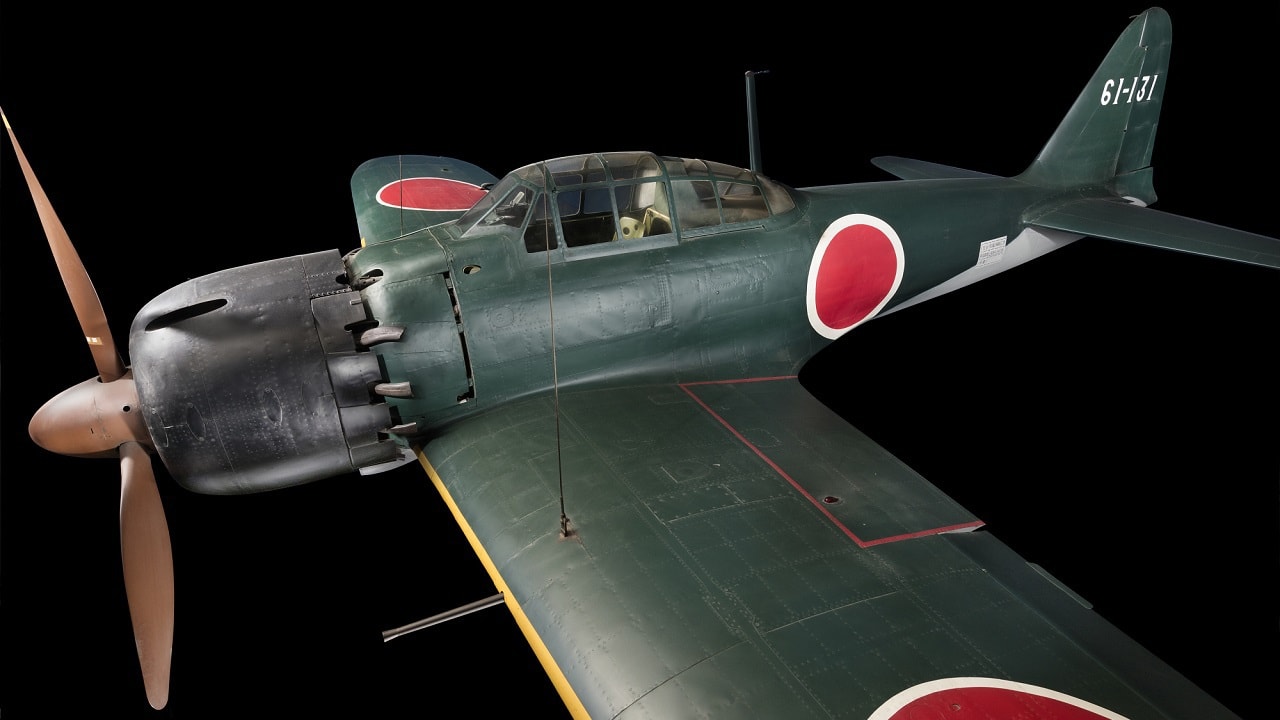
Japan Zero Fighter. Image Credit: Creative Commons.
The Zeke’s lack of armor and self-sealing fuel tanks meant that it had a tendency to light up like a Roman candle when hit by a burst of .50 caliber machine gun fire (and in the case of the P-38, 20mm cannon fire for good measure).
Where Are They Now?
Of the 10,939 A6Ms built, roughly 30 survive today in seven countries.
Only five of those Zeroes are airworthy, and only one of that quintet has the original Sakae engine: an A6M5 with the Planes of Fame Air Museum in Chino, California.
About the Author: Christian D. Orr, Defense Expert
Christian D. Orr is a Senior Defense Editor. He is a former Air Force Security Forces officer, Federal law enforcement officer, and private military contractor (with assignments worked in Iraq, the United Arab Emirates, Kosovo, Japan, Germany, and the Pentagon). Chris holds a B.A. in International Relations from the University of Southern California (USC) and an M.A. in Intelligence Studies (with a concentration in Terrorism Studies) from American Military University (AMU). He is also the author of the book “Five Decades of a Fabulous Firearm: Celebrating the 50th Anniversary of the Beretta 92 Pistol Series,” the second edition of which was recently published.