
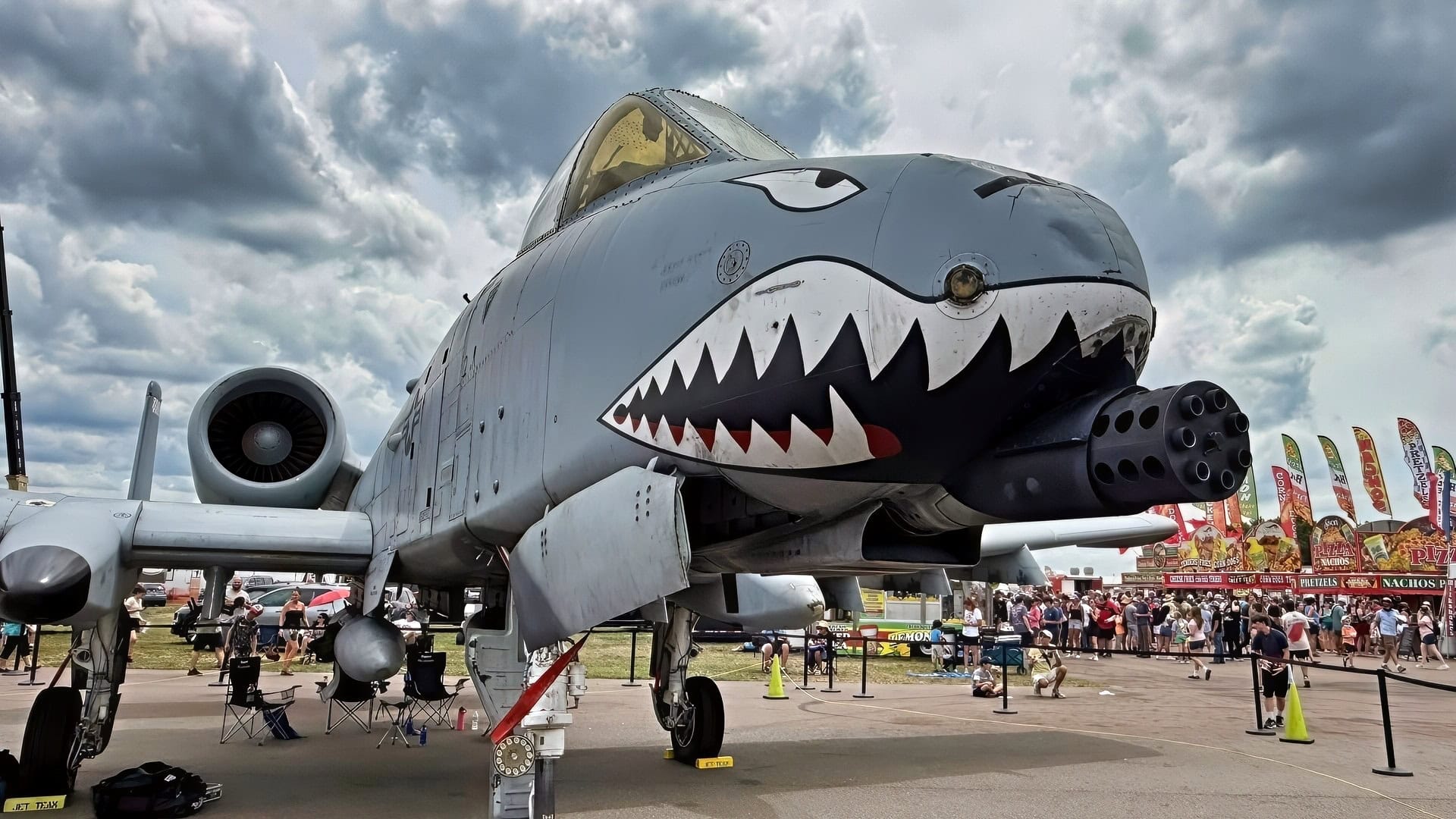
At the Sun ’n Fun Airshow in Lakeland, Florida, the A-10 Warthog was on display for up-close access. And you bet 19FortyFive was there to take all the photos we could. The aircraft is visually distinctive, rugged, and purpose-built—not nearly as sleek as a fighter. No, the A-10 was designed around killing tanks and surviving a low and slow flight profile above enemy territory, and the aircraft’s aesthetics reflect that design intent. But what does the aircraft actually feel like to fly?
A-10 Warthog: The Flying Gun
Pilots describe an aircraft that is built around the GAU-8 Gatling gun.
The design reality is essentially gun first, airplane second—a unique hierarchy in the world of aviation.
The feel in flight is heavy but stable; the A-10 is not nimble or ultra-responsive like an F-16. Instead, the A-10 feels like a weapons platform, not a pure fighter.
The control response uses hydraulic controls as the primary system, with manual reversion for backup (a rare feature).
The stick feel is deliberate—not twitchy—which requires firm inputs. At low speed, the A-10 offers excellent stability.
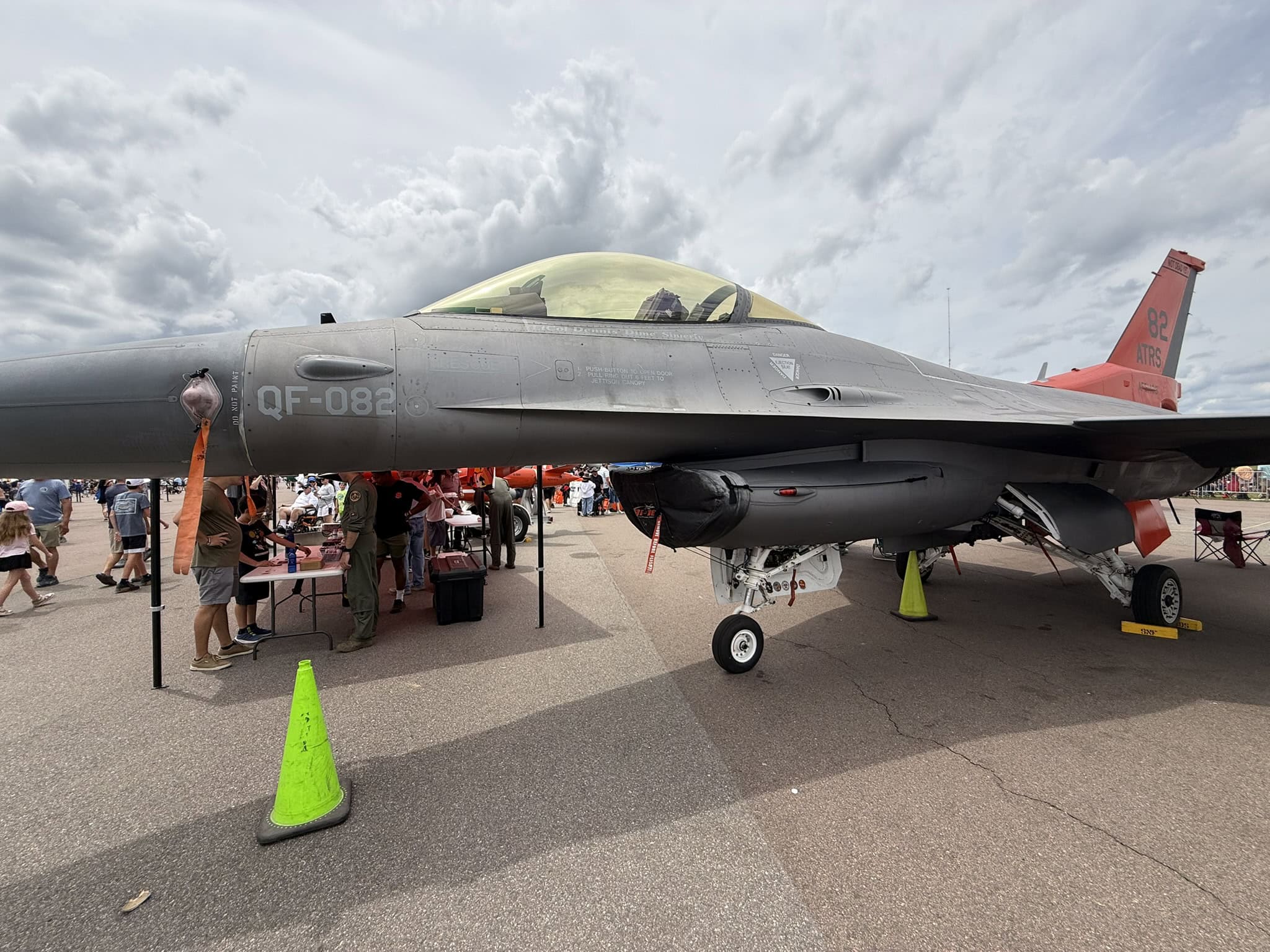
F-16. Image Credit: 19FortyFive.com Taken 4/19/2026.
This is because the aircraft was designed with straight wings for slow, loitering over the battlefield, facilitating Close Air Support (CAS).
The A-10 makes wide turns, which are not optimized for dogfighting. But the aircraft’s low-altitude control is extremely precise, which is fantastic for terrain-following and visual targeting. Basically, the A-10 was optimized for control and survivability at low altitude, not for speed or agility, and the control responses reflect that choice.
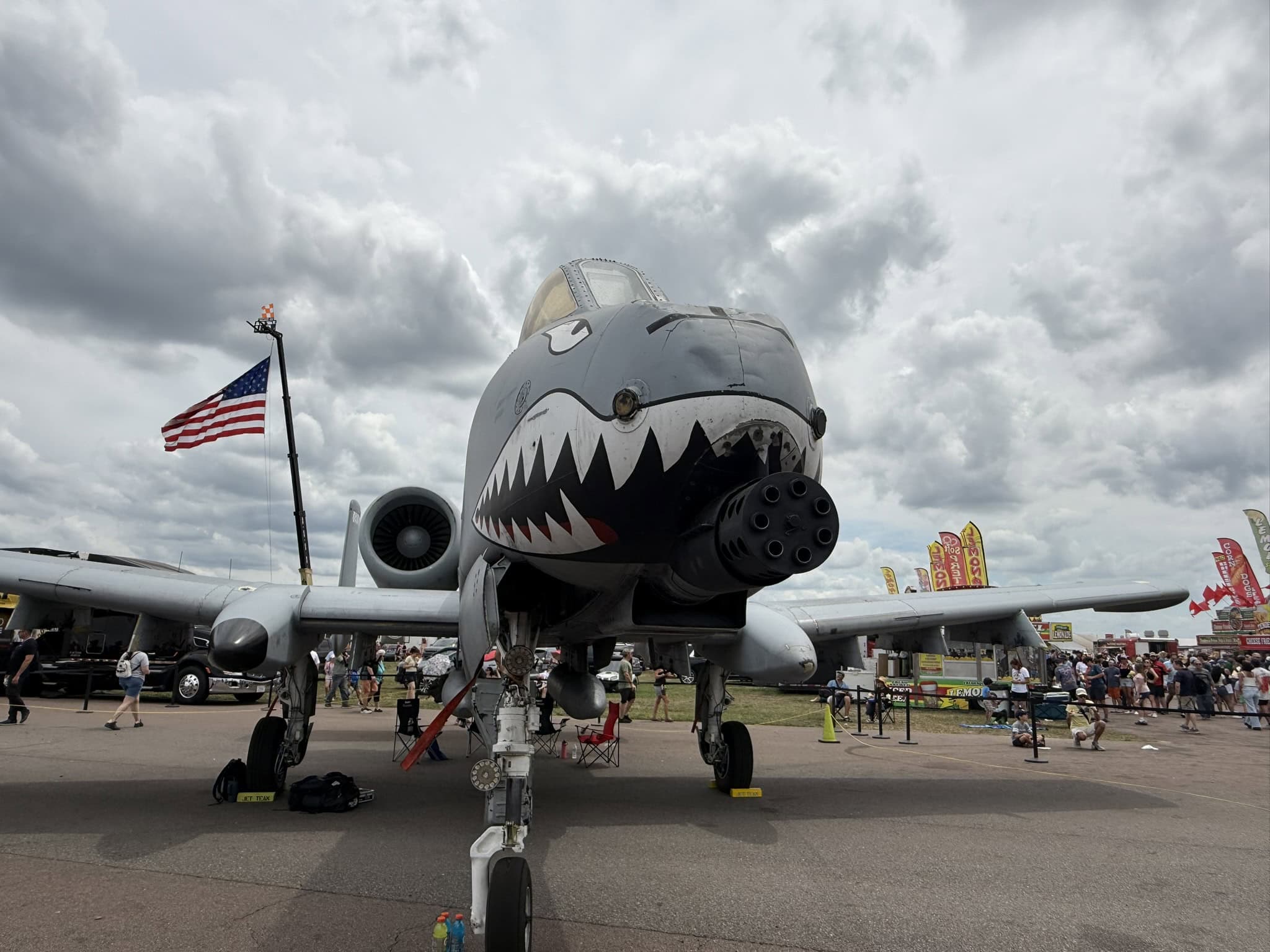
A-10 Warthog Sun’ and Fun Airshow 19FortyFive. Taken 4/19/2026.
The A-10 features two TF34 turbofan engines, mounted high to reduce IR signature and protect the engines from debris.
The TF34 offers only modest thrust and a humble top speed of just 420 miles per hour.
The throttle response is smooth but not aggressive. Climb performance is limited. Clearly, the A-10 is not about speed, but about persistence and control.
Firing the Gun
The GAU-8 Avenger, around which the A-10 was built, fires 3,900 rounds per minute. When the pilot depresses the trigger to activate the GAU-8, the entire aircraft vibrates and noticeably decelerates.
The recoil of the Gatling gun creates a massive force, and basically, the aircraft “rides” the gun. But the GAU-8 is extremely precise. The pilot fires in short, controlled bursts, which can be absolutely devastating on target. Few aircraft integrate a weapon and airframe so completely as the A-10 and the GAU-8.
Cockpit Experience
Cockpit visibility from the A-10 is excellent, owing to the bubble canopy. The pilot sits encased within a titanium “bathtub” of armor to prevent shrapnel penetration.
The avionics are modernized but still simple, allowing for a focus on ground support.
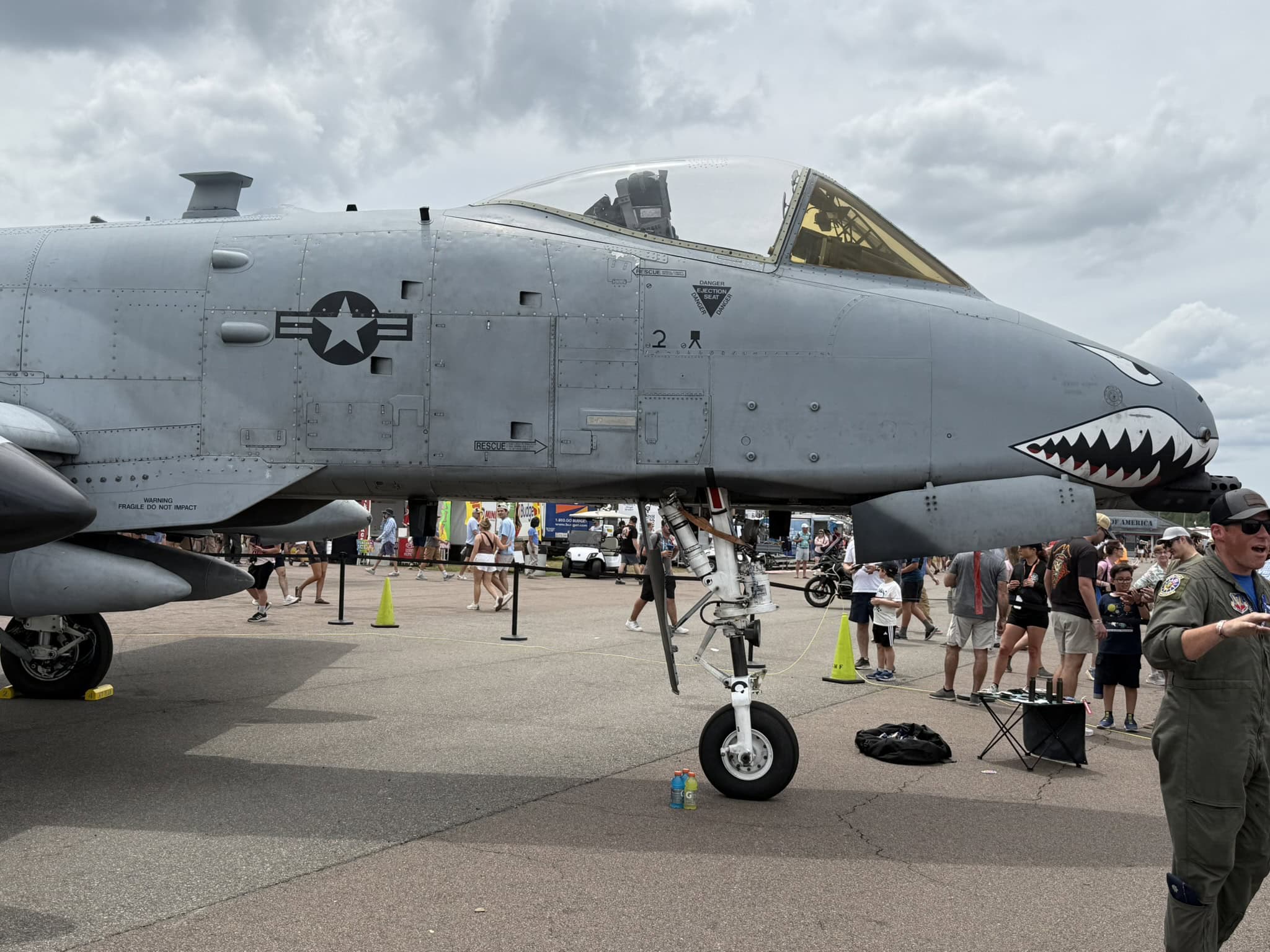
A-10 Warthog Sun’ and Fun Airshow 19FortyFive. Taken 4/19/2026.
The pilot’s workload is geared towards maintaining a high situational awareness outside of the cockpit; the pilot remains visually engaged with their surroundings, not head down in dials and systems.
Essentially, the A-10 cockpit was designed for direct battlefield awareness, not abstract sensor fusion or button-pushing.
Survivability and Damage Tolerance
One of the A-10’s most renowned features is its ability to sustain damage and keep flying.
The titanium bathtub, of course, protects the pilot and systems.
The dual hydraulic systems—with a manual backup—offer unmatched redundancy. Indeed, the A-10 can still fly even after severe damage. The A-10 was designed to get hit and keep flying, and has proven this ability many times in modern conflicts in Iraq and Afghanistan.
Tactically, the A-10 is used for CAS missions, keeping a low altitude and slow speed, which often puts the aircraft in harm’s way, in situations where damage is possible, indeed likely. Spending long time periods on station, loitering, further increases the A-10’s likelihood of sustaining damage. So to enable the presence and persistence over battlefields that the A-10 was designed to offer, the A-10 must also demonstrate high-end survivability.
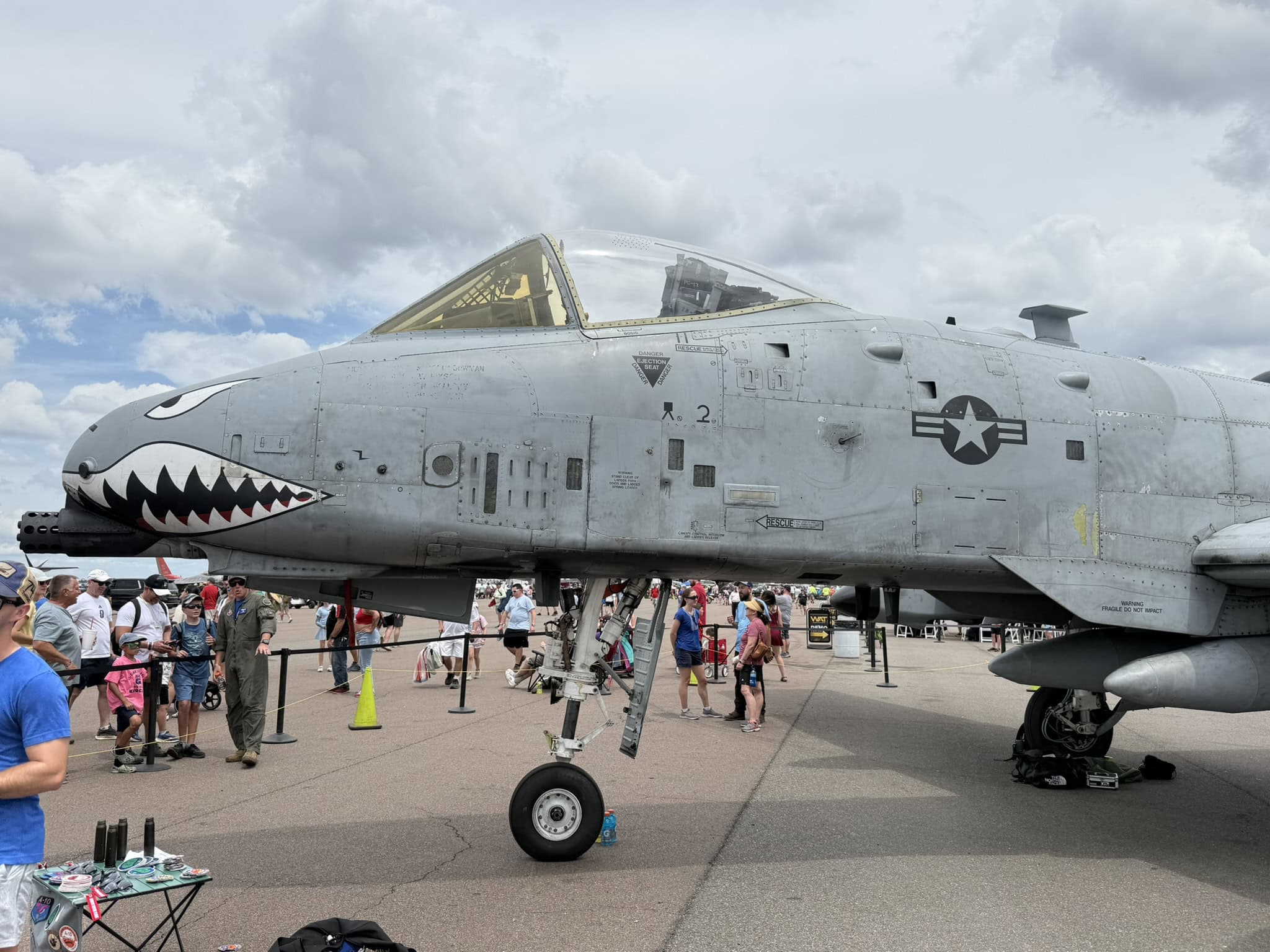
A-10 Warthog Sun’ and Fun Airshow 19FortyFive. Taken 4/19/2026.
Of course, the A-10 was not built to outrun threats; it is slow, making it vulnerable to MANPADS and SAMs. Further, the A-10’s air-to-air capability is limited. So while the aircraft is dominant in permissive environments, it is vulnerable in contested environments.
In sum, the pilot’s verdict holds that the A-10 is not glamorous—but highly respected. The aircraft does exactly what it was built to do, and it does it well.
About the Author: Harrison Kass
Harrison Kass is a writer and attorney focused on national security, technology, and political culture. His work has appeared in City Journal, The Hill, Quillette, The Spectator, and The Cipher Brief. He holds a JD from the University of Oregon and a master’s in Global & Joint Program Studies from NYU. More at harrisonkass.com.