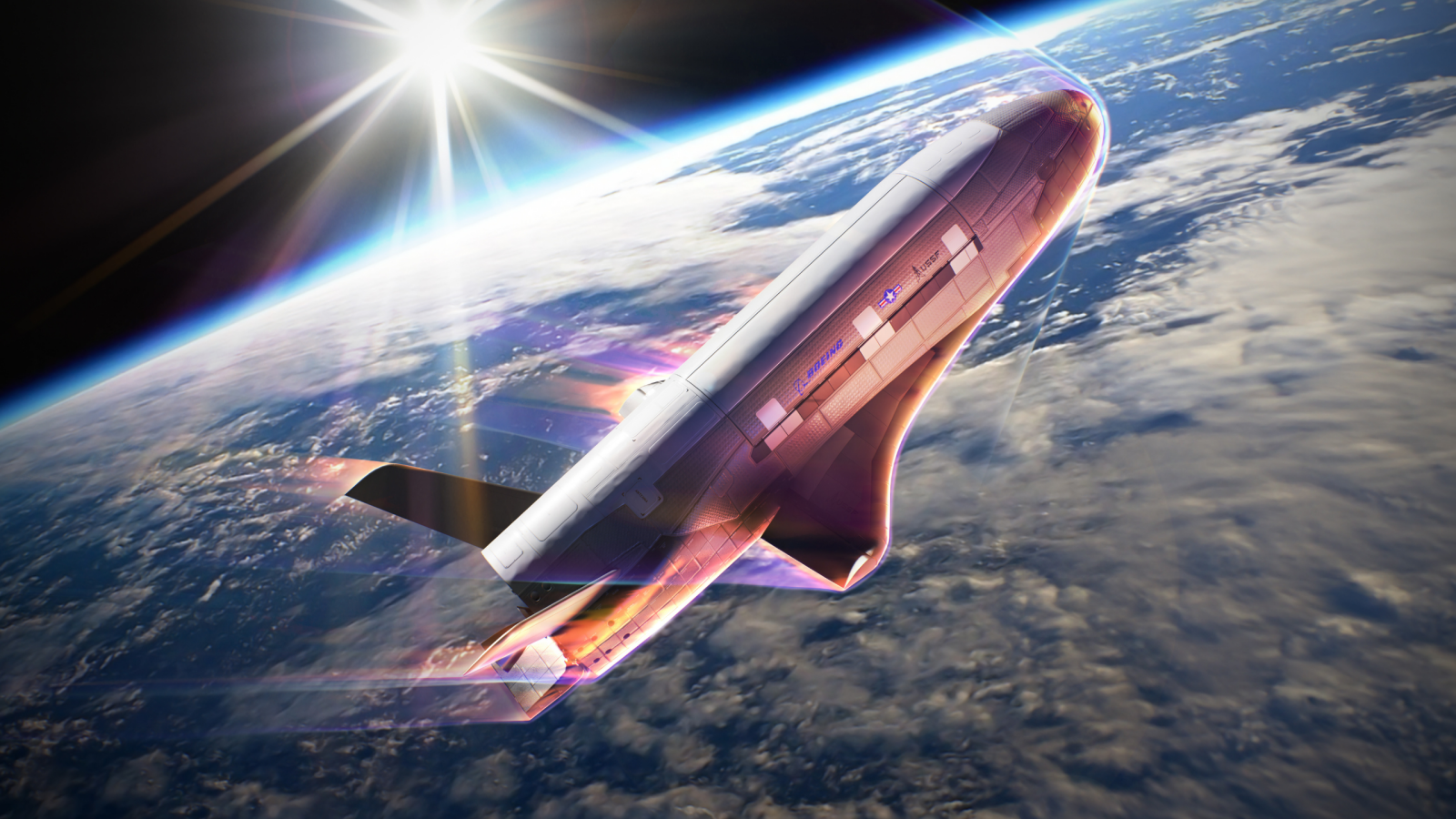
The U.S. Space Force’s X-37B just completed its eighth mission after spending over 900 days in orbit with a shuttered payload bay doing classified work nobody outside the Pentagon fully understands. China operates an eerily similar spacecraft called the Shenlong — and both vehicles may be capable of something far more consequential than experiments.
The X-37B Looks Like a Mini Space Shuttle. Its Missions Are Fully Classified.
19FortyFive staff have spent a lot of time looking at Space Shuttle exhibits and the X-40A at the National Museum of the U.S. Air Force (see the video below of our walkaround tour). Those important platforms led to this: the X-37B.
The X-37B is a small, reusable, unmanned spacecraft built by Boeing and operated by the U.S. Space Force.
While it is outwardly similar to the space shuttle—though significantly smaller—the X-37B was designed as an orbital test vehicle. Speculation about what exactly it does while in space has run rampant.
Boeing’s spacecraft can support “a wide range of experiments and missions, making it a versatile and valuable asset in space experimentation,” the company explains. “The X-37B’s autonomous reentry capability ensures safe and reliable returns, enabling quick refurbish, reprocess, and refly cycles.
This adaptability supports a variety of scientific and technological advancements, contributing to the future of space exploration.”
But the X-37B’s experimental, reusable nature lends itself well to conducting experiments for government and military agencies.
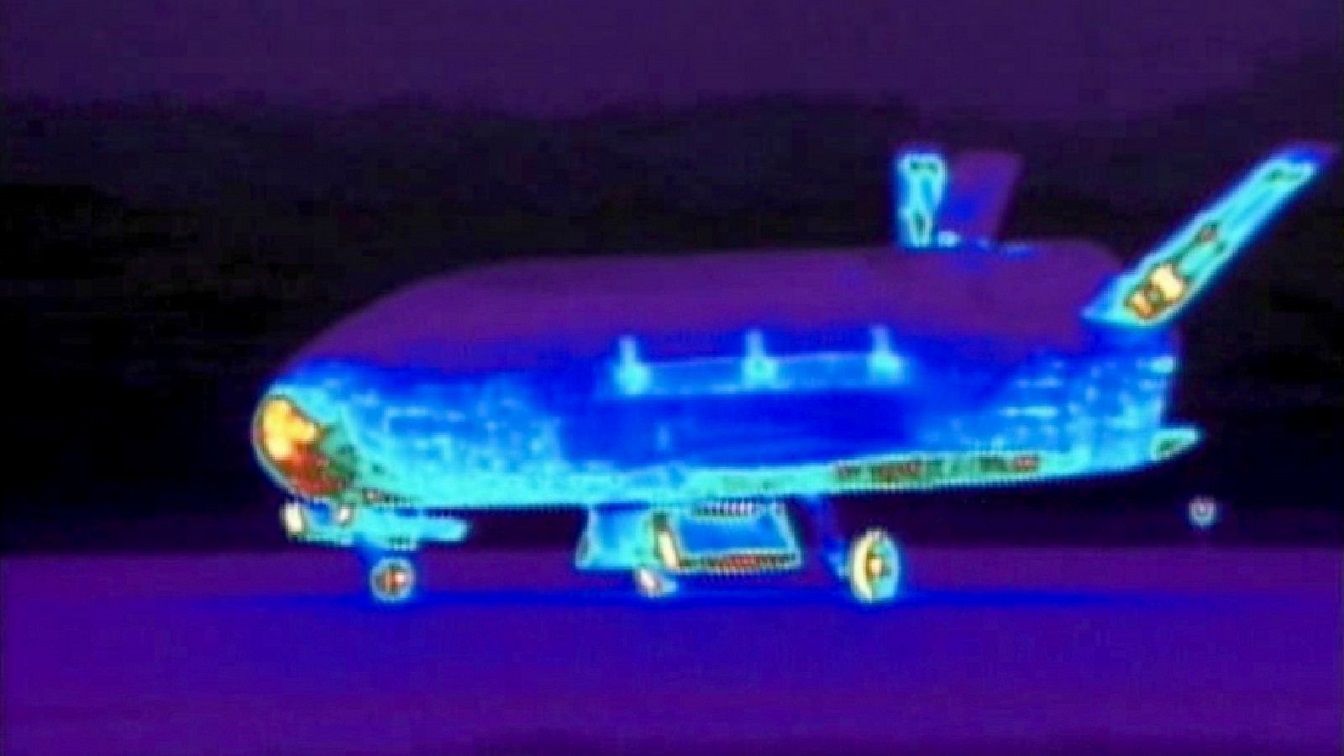
X-37B. Image Credit: NASA YouTube/Screenshot.
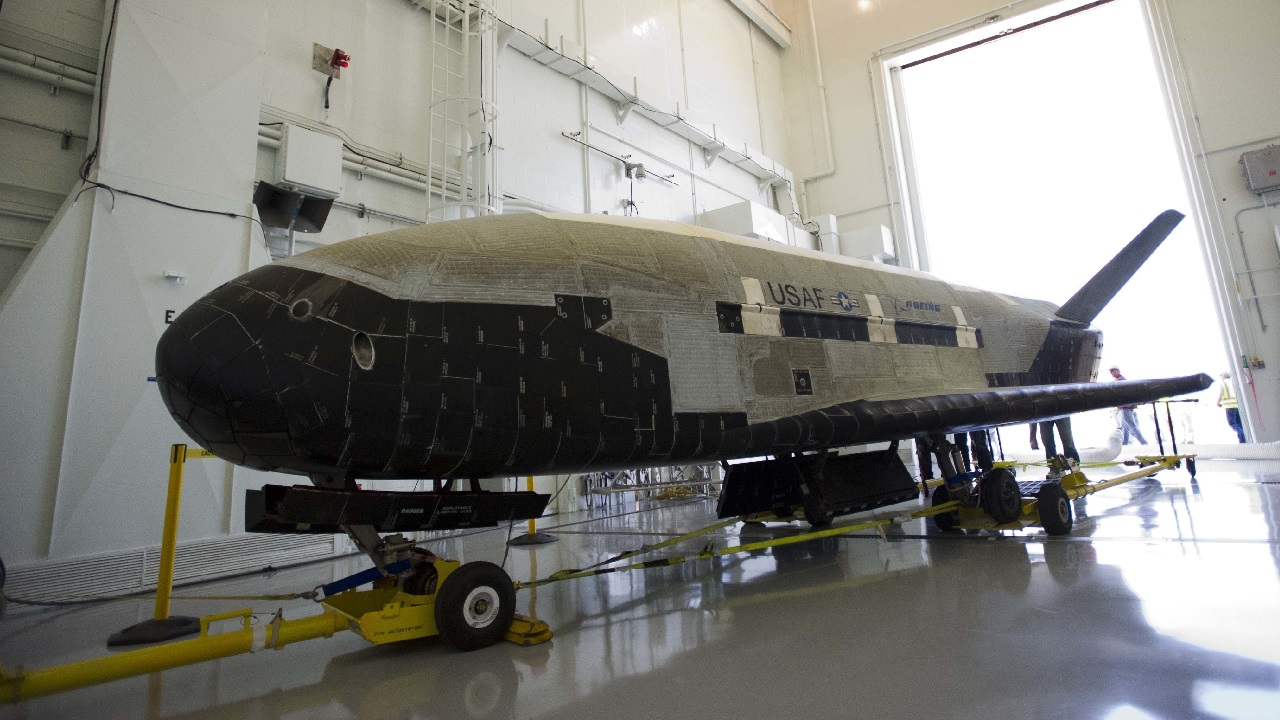
The X-37B Orbital Test Vehicle (OTV), the Air Force’s unmanned, reusable space plane, landed at Vandenberg Air Force Base at 5:48 a.m. (PDT) June 16. OTV-2, which launched from Cape Canaveral Air Force Station, Fla., March 5, 2011, conducted on-orbit experiments for 469 days during its mission. The X-37B is the newest and most advanced re-entry spacecraft. Managed by the Air Force Rapid Capabilities Office, the X-37B program performs risk reduction, experimentation and concept of operations development for reusable space vehicle technologies. (photo credit: Boeing)
Naturally, the types of missions the X-37B conducts are classified, but publicly acknowledged X-37B operations have included aerobraking maneuvers that harness atmospheric drag during reentry to slow and conserve fuel. A number of other experiments are also possible, thanks in part to the X-37B’s long endurance while in space.
The X-37B’s missions have become steadily longer. Early flights lasted less than 100 days, but more recent flights have lasted more than 900 days. The X-37B’s shuttered payload bay shields from view whatever it carries.
Its ability to change orbits and its presumed maneuverability hint at its purpose.
Eighth Space Mission
The X-37B recently completed its eighth space mission. Boeing disclosed some of the experimental research it conducted, which included “hosting publicly disclosed experiments including laser communications, a quantum inertial sensor, and NASA material exposure research tied to inflatable heat shield technology.”
The key to the spacecraft’s usefulness is its reusability, a factor that drives cost savings and efficiency.
“Reusability only matters if it keeps delivering value mission after mission,” senior Boeing management explained. “The X-37B gives our government partners a proven platform they can keep building on, one that helps them test advanced technologies in orbit, bring hardware home, and turn what they learn into more capable future systems.”
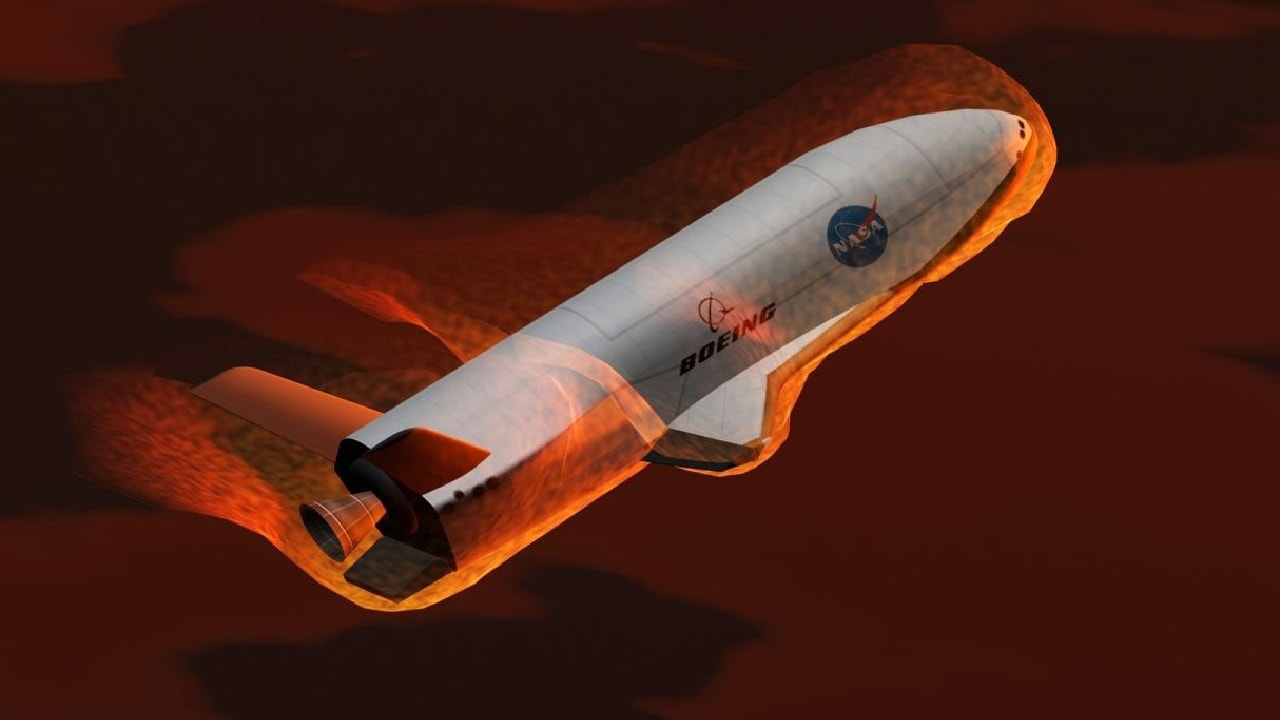
X-37B. Image Credit: NASA.
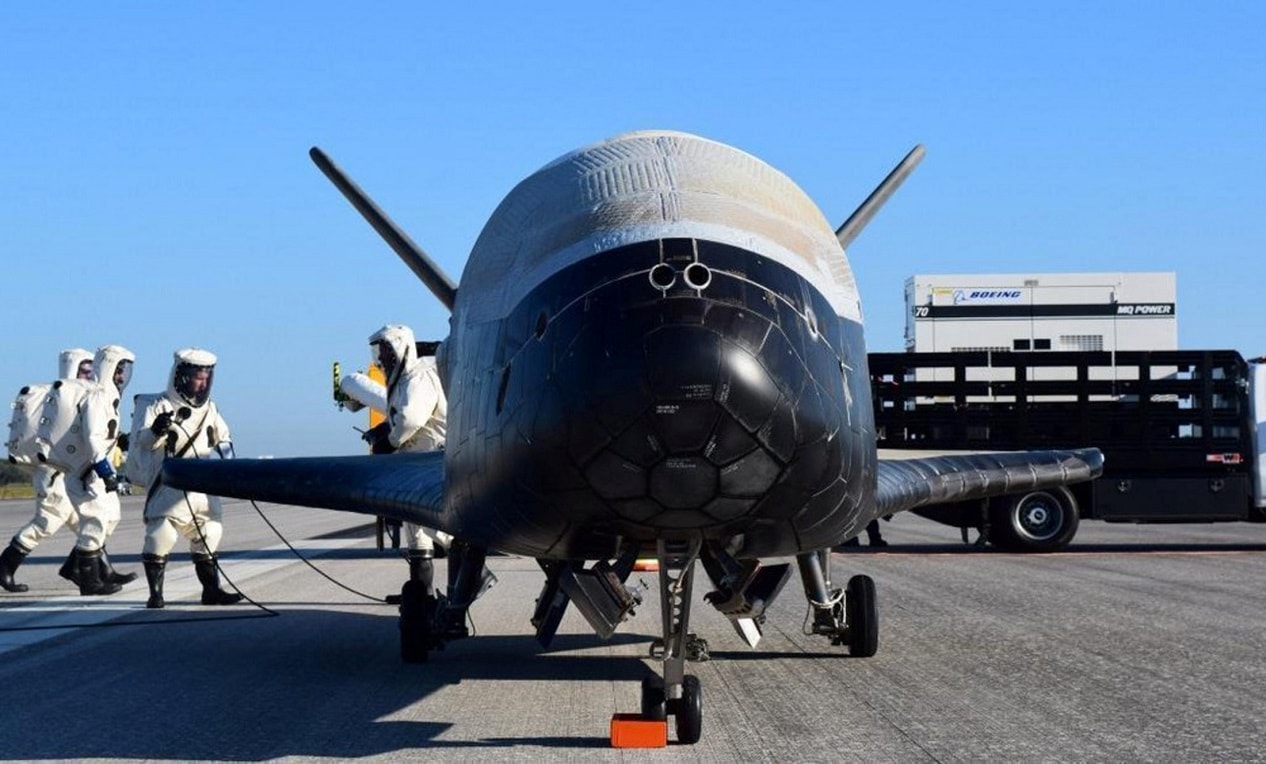
The U.S. Airforce’s X-37B Orbital Test Vehicle mission 4 after landing at NASA’s Kennedy Space Center Shuttle Landing Facility in Cape Canaveral, Florida, U.S., May 7, 2017. U.S. Air Force/Handout.
Though certainly novel in the United States, it is not unique. There is a very similar spacecraft in development in China.
Made in China
The Chinese operate an eerily similar spacecraft called the Shenlong. Broadly similar to its X-37B counterpart, the Chinese program seems to be moving in a similar direction.
“Proximity operations usually grab the attention of space watchers, as they can serve nefarious purposes. The ability to manoeuvre close to other satellites is seen as dangerous for several reasons: the asset could eject a projectile close to another satellite, damaging it as a result, eavesdrop on another satellite’s signals or even disrupt them,” a paper published by the Royal United Services Institute opined.
“However,” RUSI continued, “close-proximity manoeuvres are not always nefarious in nature – they are in fact needed if we want to operate in a sustainable space environment, as these technologies also enable refuelling and general maintenance of satellites, thereby increasing their lifetime in orbit and helping to reduce space debris.”
The kinds of maneuvers and capabilities that RUSI described would be hugely useful for clearing the space of debris and junk that can rip apart satellites.
Long-dead satellites, discarded rocket parts, and other pieces of junk in orbit can wreak havoc on satellites—even small bits of debris can cause significant damage. Spacecraft like the Shenlong may very well help clear parts of space cluttered with refuse—but could also manipulate or destroy enemy assets in space.
Full Steam Ahead
The X-37B is a signal that the United States is rapidly investing in operational flexibility in space—not just launching satellites, but also conducting high-level experiments with a reusable aircraft.
Given the spacecraft’s wide range of applications—from clearing space debris and conducting experiments, to potentially manipulating satellites and other in-orbit objects—it is difficult to determine what the X-37B’s future will be.
Given China’s apparent interest in spacecraft like the X-37B, the race in space is heating up.
Spacecraft like the X-37B, given their reusable and experimental nature, might not be the exact future of unmanned space flight, but they will almost certainly contribute to future space projects.
BONUS: X-40A – What We Saw At the National Museum of the U.S. Air Force
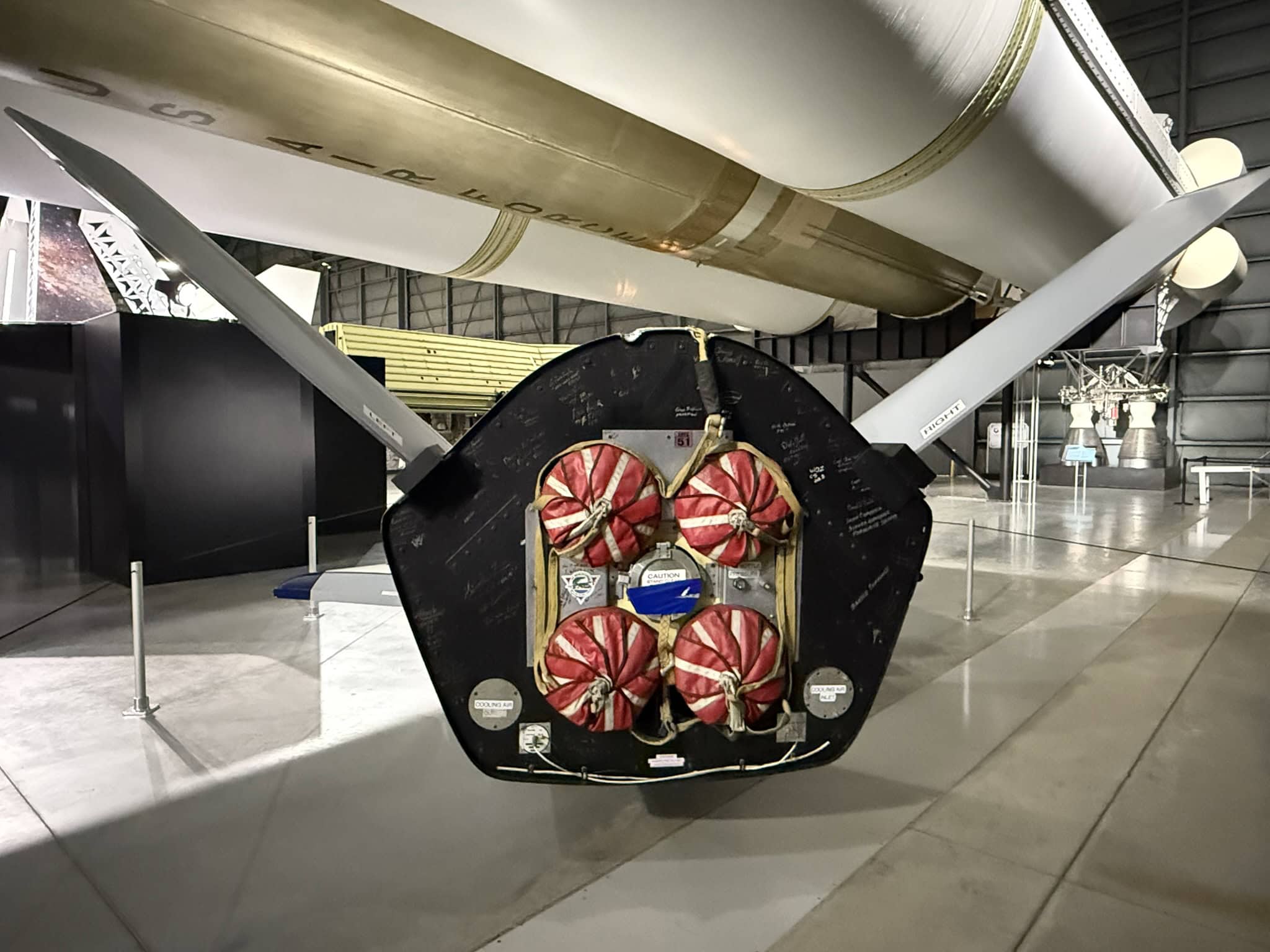
X-40A. Image by Harry J. Kazianis by 19FortyFive.com from the National Museum of the U.S. Air Force.
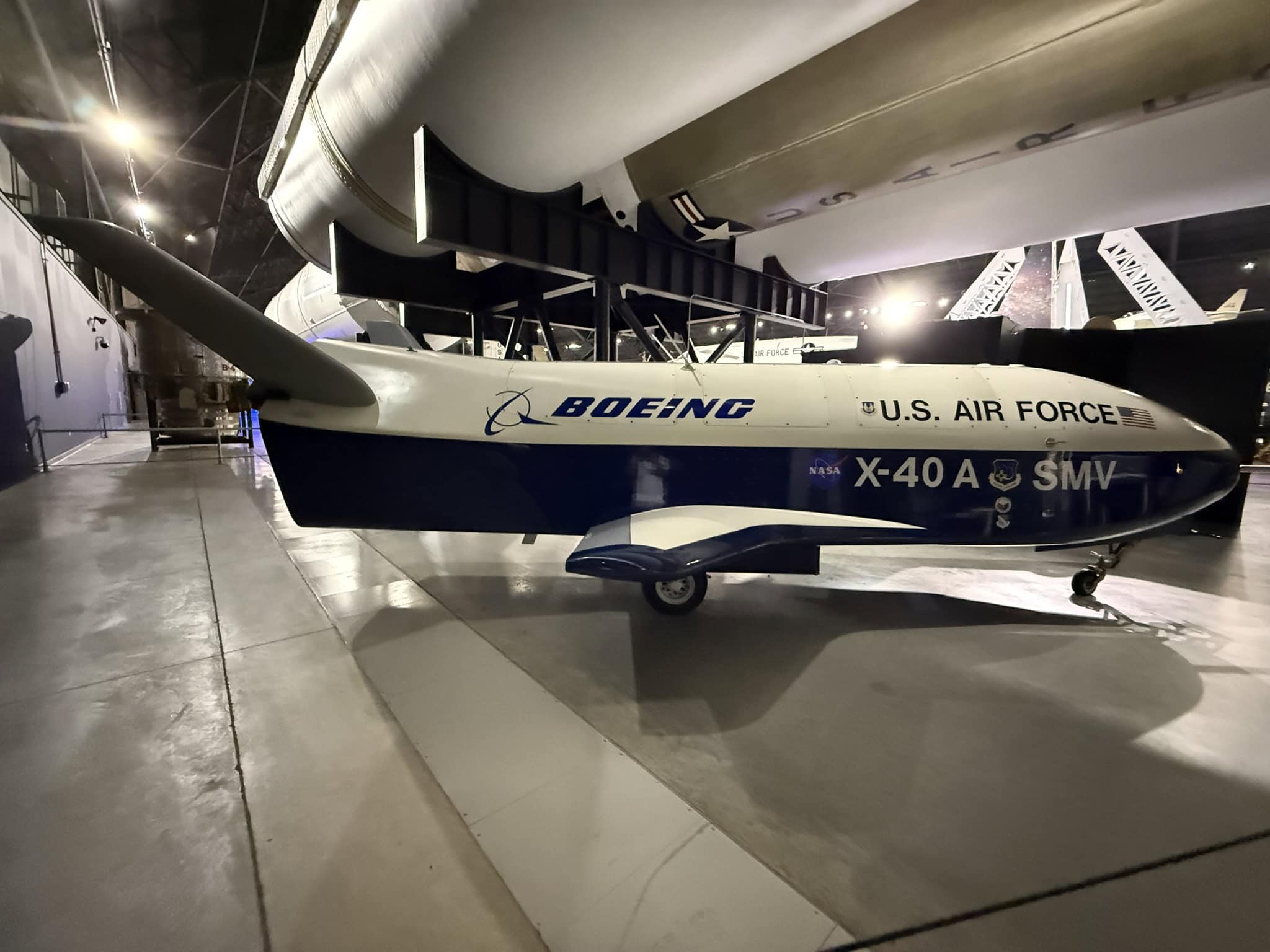
X-40A. Image by Harry J. Kazianis by 19FortyFive.com from the National Museum of the U.S. Air Force.
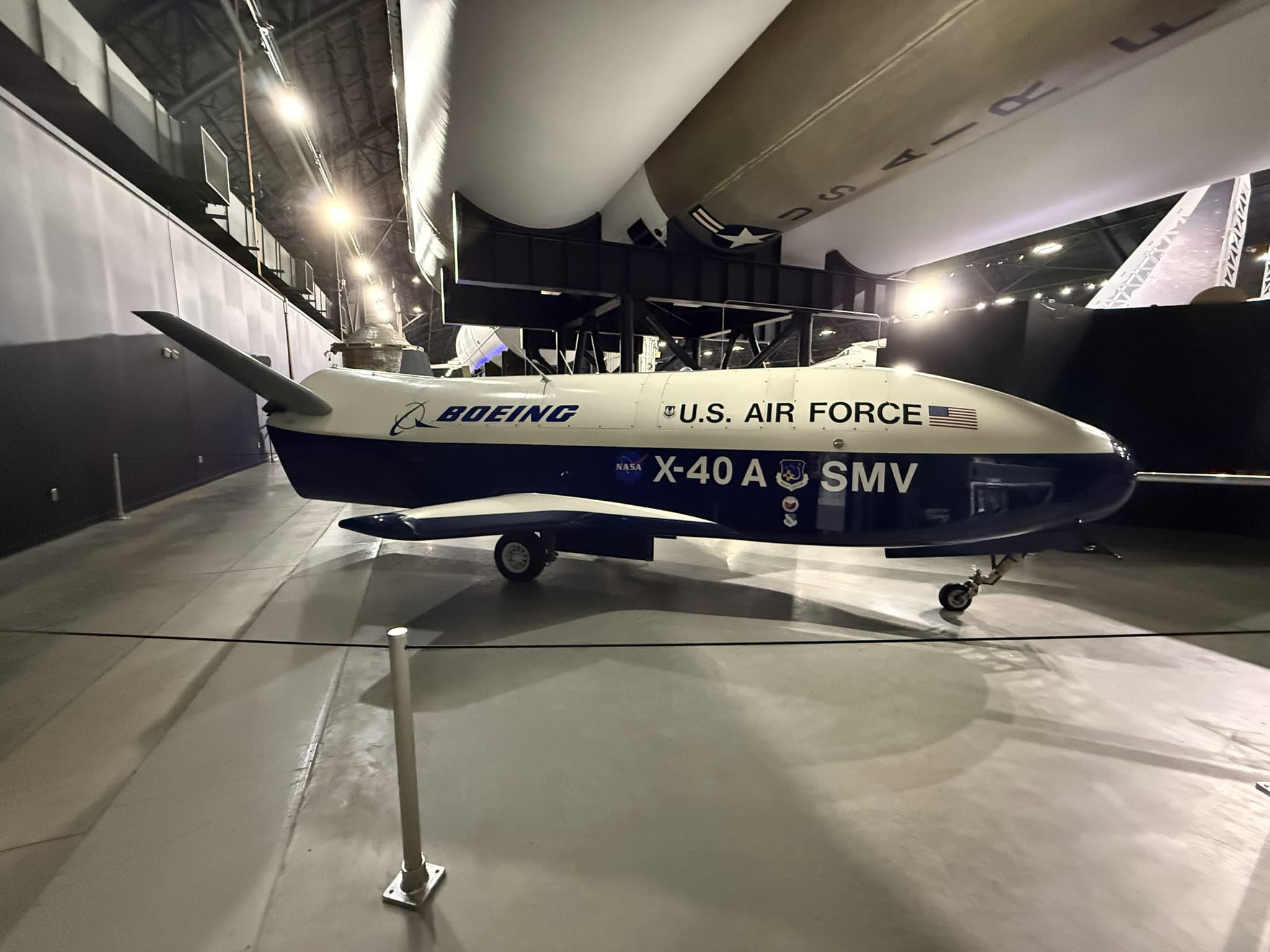
X-40A. Image by Harry J. Kazianis by 19FortyFive.com from the National Museum of the U.S. Air Force.
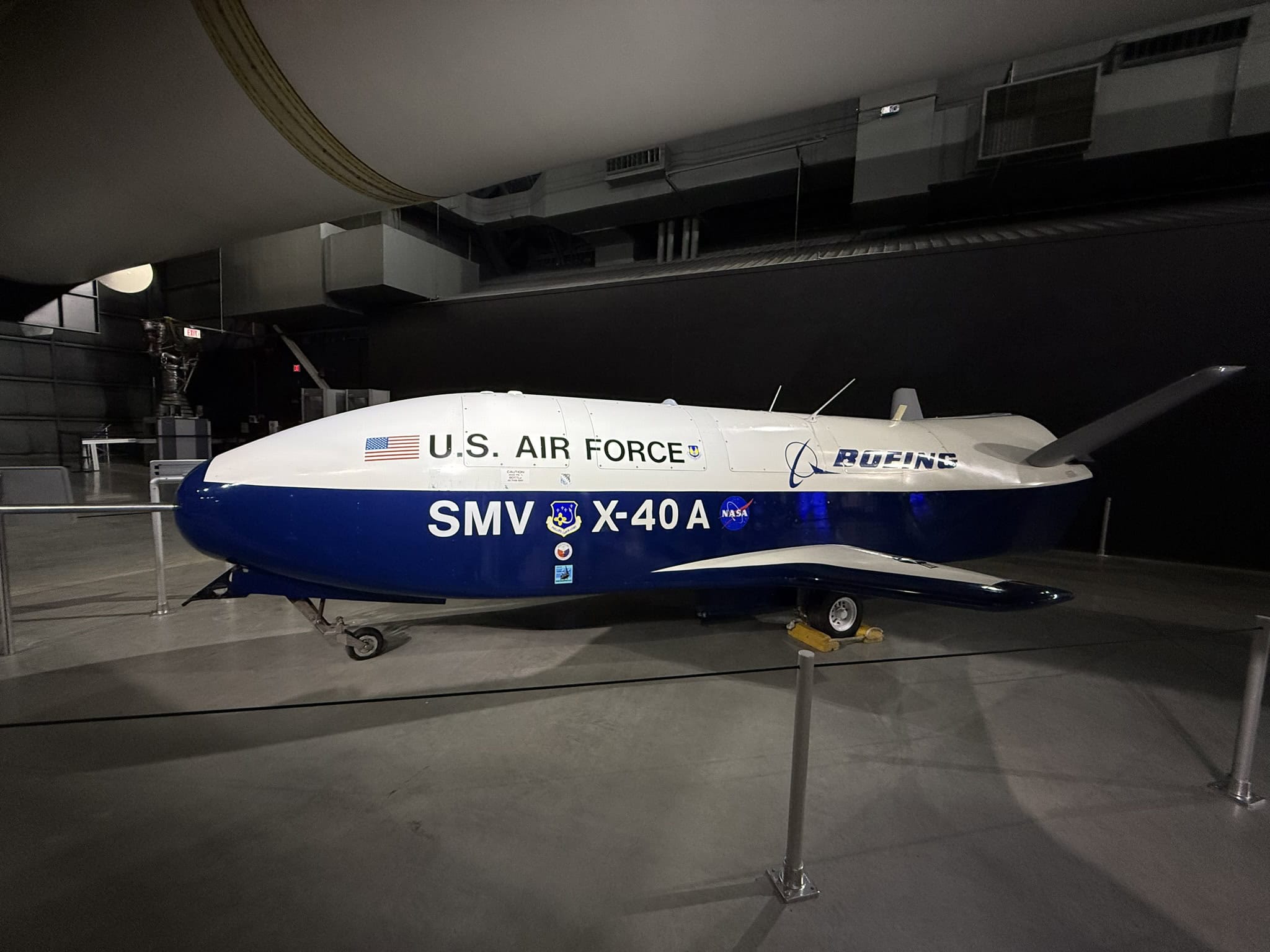
X-40A. Image by Harry J. Kazianis by 19FortyFive.com from the National Museum of the U.S. Air Force.
About the Author: Caleb Larson
Caleb Larson is an American multiformat journalist based in Berlin, Germany. His work covers the intersection of conflict and society, focusing on American foreign policy and European security. He has reported from Germany, Russia, and the United States. Most recently, he covered the war in Ukraine, reporting extensively on the war’s shifting battle lines from Donbas and writing on the war’s civilian and humanitarian toll. Previously, he worked as a Defense Reporter for POLITICO Europe. You can follow his latest work on X.