
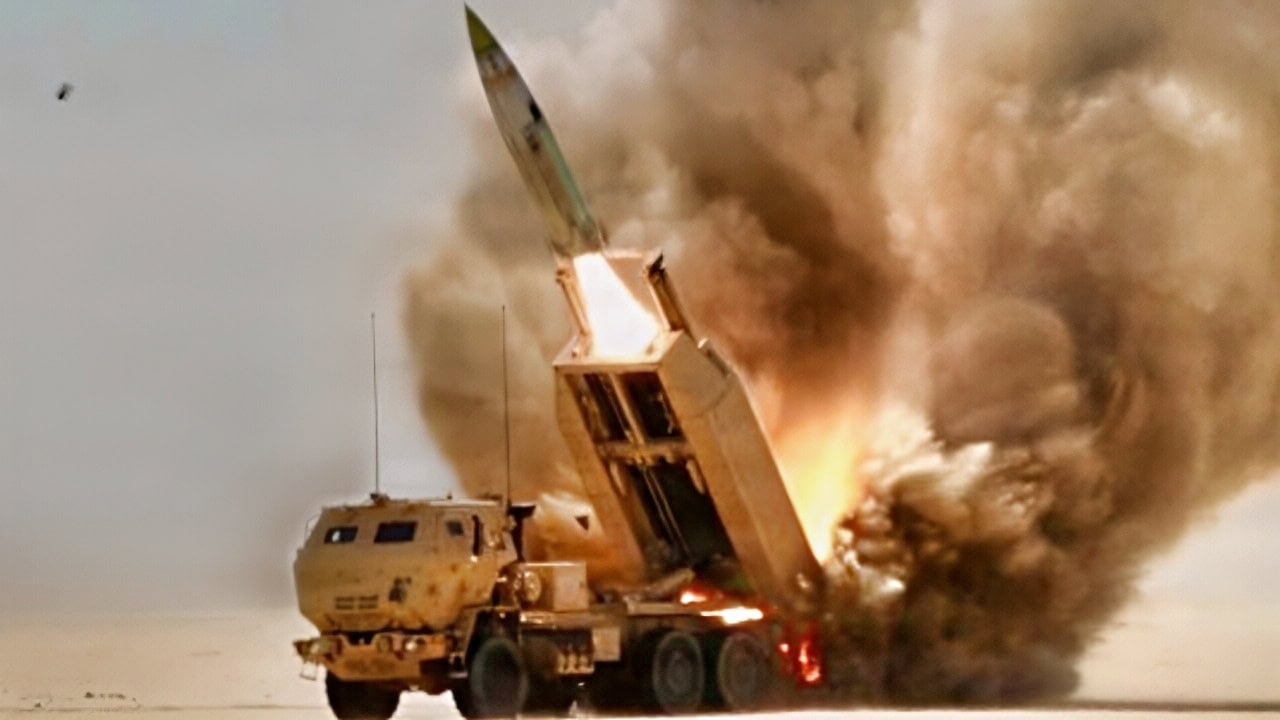
Let me take you back to the summer of 2022. Lockheed Martin’s High Mobility Artillery Rocket System, a wheeled launcher carrying a single rocket pod where its older tracked cousin, the M270, carries two, had served quietly in Iraq and Afghanistan and against the Islamic State. Useful, unremarkable, the kind of system only artillery officers loved. Ukraine changed that in a matter of weeks. What followed reshaped the system’s reputation, the global market for long-range firepower, and, by this year, the way America itself fights.
The HIMARS of 2026 is a different phenomenon from the HIMARS of early 2022, and tracing how it got there tells you why nearly every Western-aligned military on earth now wants one.
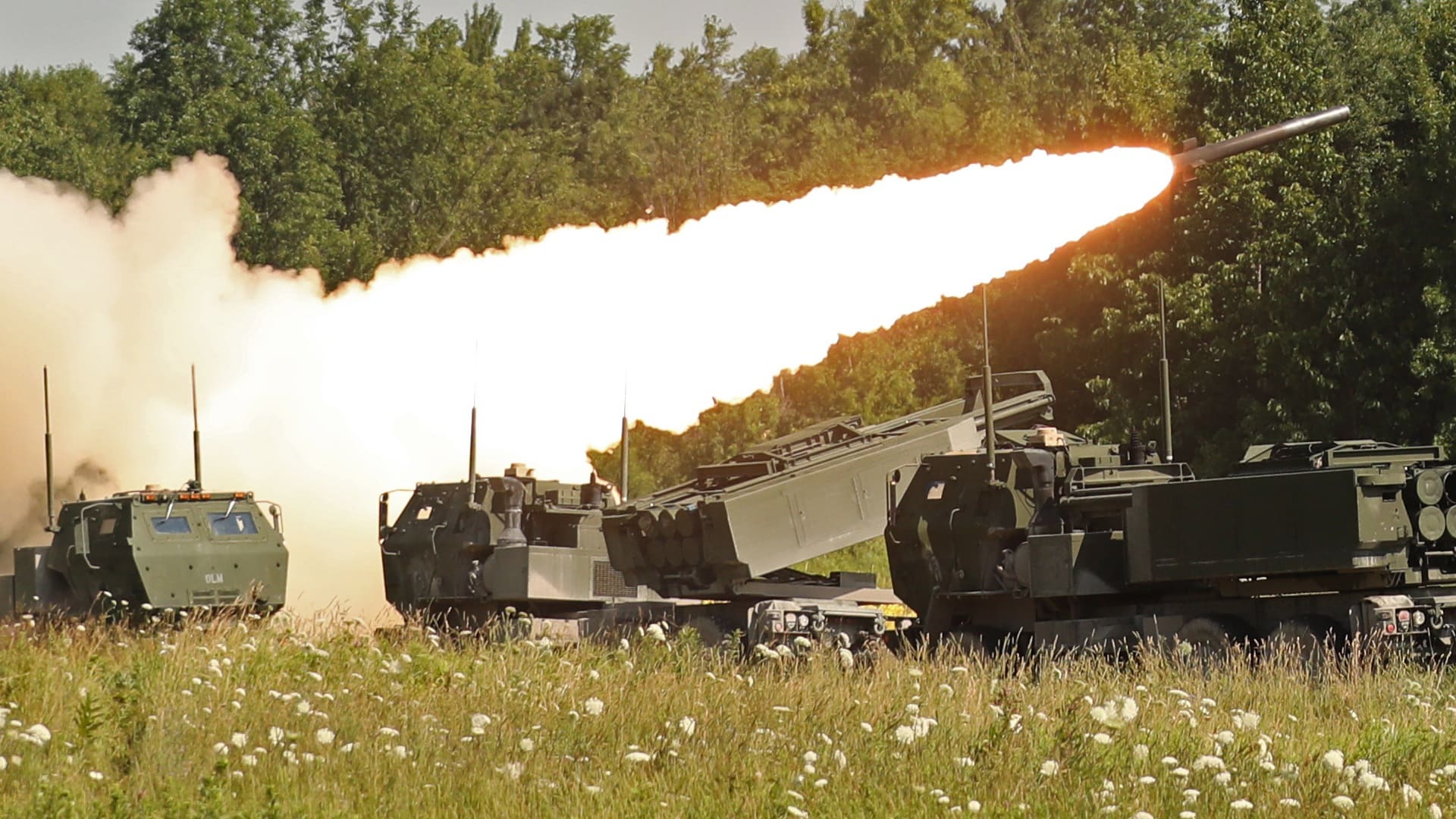
197 Field Artillery Regiment of New Hampshire fires rockets at Fort Drum in preparation for an upcoming deployment
What HIMARS Actually Did in Ukraine
The impact came from a specific combination: range, precision, and the good sense to keep moving.
Firing GPS-guided GMLRS rockets out to roughly 43 miles, HIMARS let Ukrainian forces reach targets that had been sitting comfortably behind the front, and Kyiv used it to take apart the logistics that keep a big conventional army fighting. Ammunition depots, fuel stores, command posts, rail junctions deep in Russian-held territory, all of it became reachable, and the precision meant one launcher could kill a target that used to demand a massed barrage.
The Pentagon’s own assessment that summer was blunt for an official statement, with senior defense officials saying the systems were making an impact on the conflict. The strategic effect was the real prize. Russia had to drag its supply dumps and headquarters back out of range, stretching its own logistics and starving its offensives.
You did not have to take Washington’s word for it. The other side said so. Russian military commentators expressed rare public alarm as the strikes landed, with the prominent hardliner Igor Girkin conceding large losses in both men and equipment in under a week and complaining that Russian air defenses were proving ineffective against the barrages, according to reporting by the independent Moscow Times. And the launchers kept surviving. HIMARS is built to shoot and scoot, firing and relocating before counter-battery fire arrives, and Moscow spent months claiming kills it could not prove.
The Demand That Followed
Battlefield reputation turned into purchase orders, and the scale of it caught even Lockheed Martin off guard. The company doubled the annual production of the launcher, rolling out 96 vehicles in 2024, and still could not keep up.
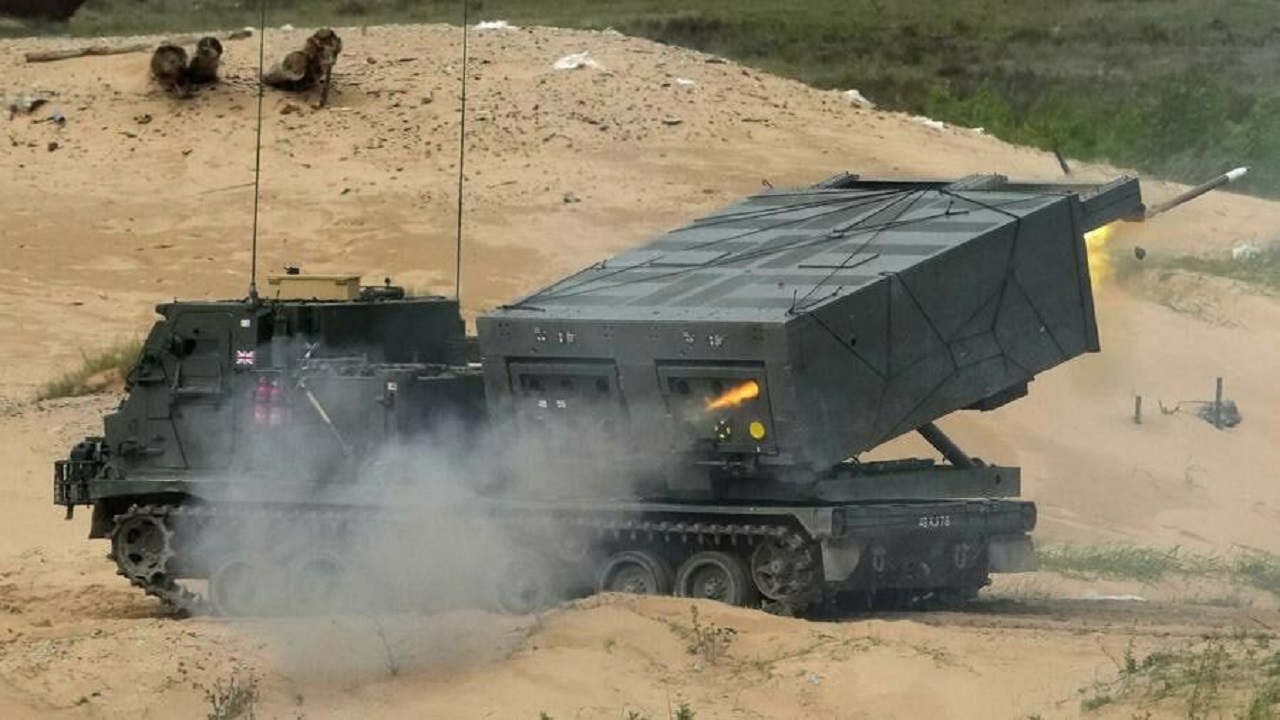
HIMARS. Image Credit: British Army.
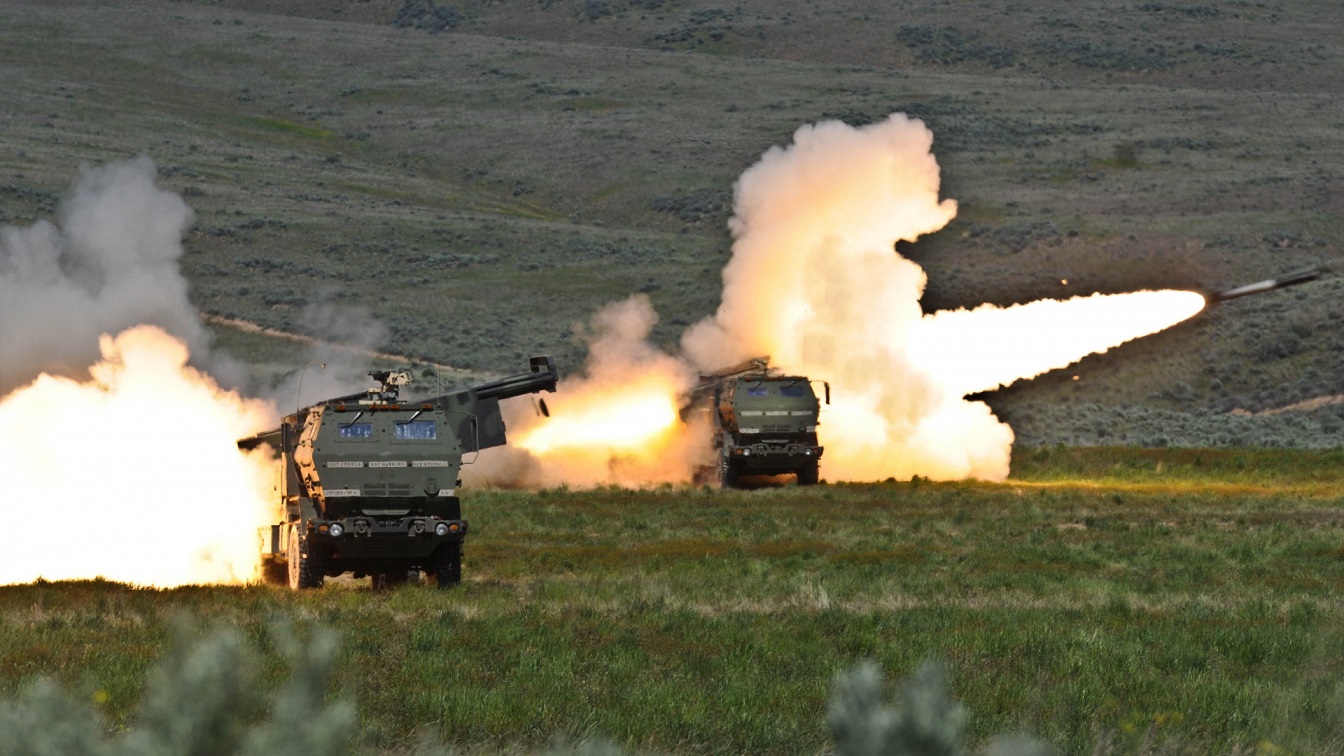
HIMARS. Image Credit: U.S. Military.
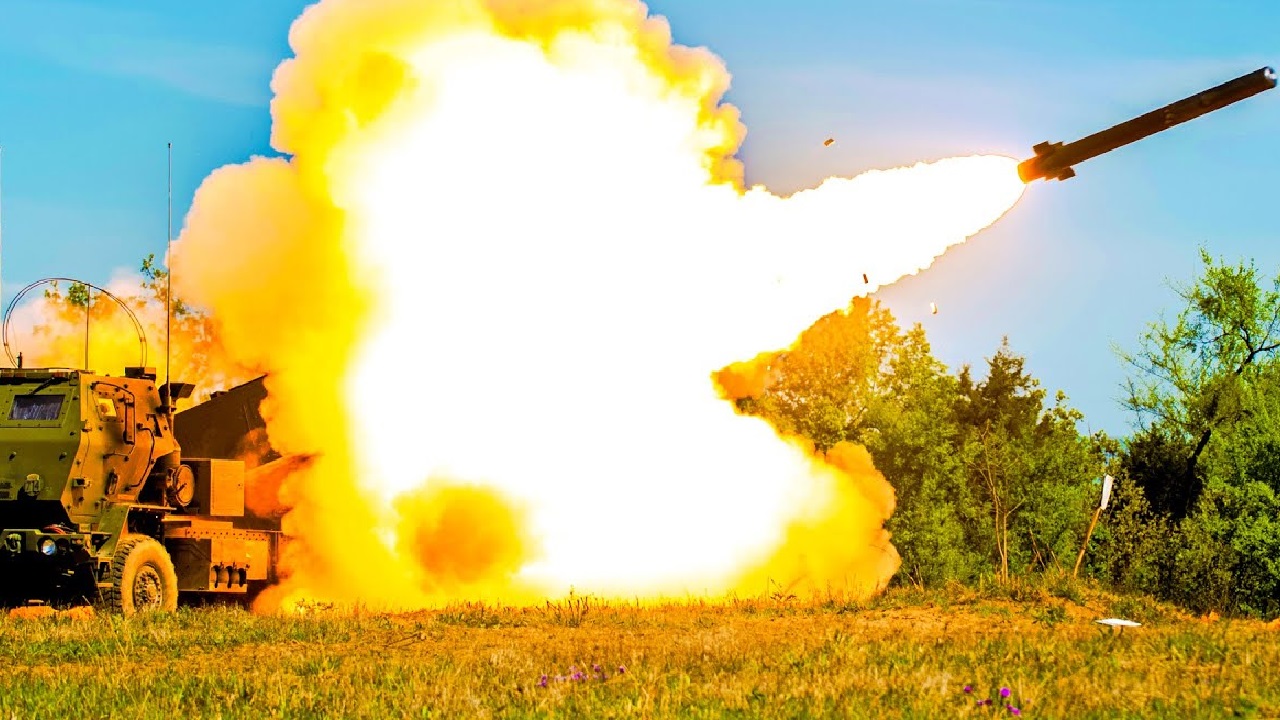
HIMARS Attack. Image Credit: Creative Commons.
The orders came from everywhere at once. Poland signed a framework for hundreds of launchers, much of it to be assembled domestically under its Homar-A program, one of the largest HIMARS deals ever struck. Estonia signed. Lithuania became a first-time operator. Romania and Australia accelerated their programs, and the Pentagon kept awarding new production contracts to refill American stocks while feeding the allied queue. Canada picked HIMARS for its long-range fires program, with a sale worth roughly $1.75 billion covering 26 launchers and their munitions, reportedly moving to contract in early 2026.
Here is the detail that shows how hot the demand is: there is a waiting list. Estonia’s defense minister has publicly pressed for earlier delivery slots because launchers continue to be prioritized for Ukraine. Ukraine’s war turned an American niche capability into the benchmark every allied artillery arm measures itself against, and long-range precision fires went from a nice-to-have into a core requirement across NATO and the Pacific in about three years flat.
No Longer a Ukrainian Weapon
Then came 2026, and the clearest proof of how far this system has traveled. On February 28, American and Israeli forces opened a major campaign against Iran, and within days, U.S. Central Command released unclassified footage of M142 launchers firing tactical ballistic missiles at Iranian targets as part of what Washington calls Operation Epic Fury. Understand what that footage showed: HIMARS operating not as battlefield artillery but as a theater-level deep-strike platform, geolocated firing from Bahrain across the Persian Gulf into Iran, and used against Iranian warships, with the chairman of the Joint Chiefs telling reporters that ATACMS missiles fired from the launchers sank multiple vessels, including a submarine.
The campaign also delivered the milestone that points to the future. Among the weapons fired was Lockheed Martin’s Precision Strike Missile, the PrSM, the ATACMS replacement, making its first-ever combat debut. Two numbers explain why that matters. PrSM reaches at least 310 miles against ATACMS’s roughly 190, and a HIMARS pod carries two of them, where it carried a single ATACMS, doubling each launcher’s magazine. Analysts were quick to draw the bigger map. CSIS missile expert Tom Karako predicted that every ally with a HIMARS launcher will want the longer-reaching missile loaded in it, and the same extended reach is exactly what makes the system central to Pacific planning against China, where the U.S. Army has been rehearsing rapid HIMARS insertions onto islands and firing from unexpected coastlines. A launcher that made its name against Russian supply depots is now a signaling tool against Tehran and a rehearsed piece of any Taiwan contingency. That is a remarkable arc for a system most people could not name four years ago.
The Limits Behind the HIMARS Success
Now, the honest part: HIMARS is not a wonder weapon, and pretending otherwise does nobody any favors.
Russia adapted. GPS jamming degraded the accuracy of GMLRS rockets and forced munition updates. Ukraine took to deploying wooden decoy launchers to soak up Russian missiles, and several real ones were eventually lost to Iskander strikes and first-person-view drones as Russian targeting improved. The survivability edge is real. It is not absolute, and a patient enemy with good sensors can find and kill these launchers.
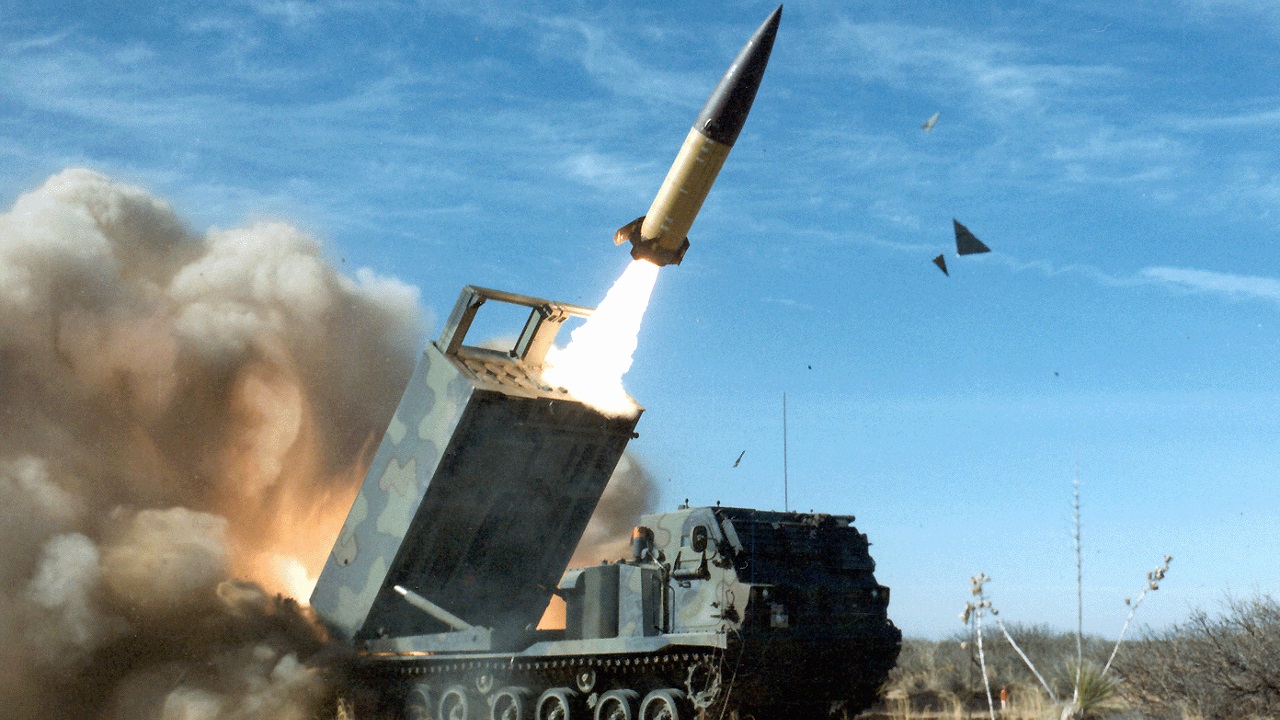
ATACMS firing back in 2006. Image Credit: U.S. Army.
The deeper constraint has been ammunition, and I would argue it matters more than anything the Russians did.
A launcher without rockets is an expensive truck, and the supply of GMLRS and ATACMS has repeatedly been the limiting factor, squeezed between Ukraine’s consumption, the need to rebuild American war reserves, and the periodic political fights in Washington that stalled resupply. Even the PrSM, now combat-proven, was budgeted for a purchase of just 45 missiles in the Army’s fiscal 2026 request, a number that looks almost comical against the demand its debut created.
The bottom line is a paradox the whole Western defense industrial base now has to live with. HIMARS proved so effective that demand for the launchers and everything they fire outstrips what the factories can produce, and the argument over whether the system works is over.
The question that remains is whether Lockheed Martin and its suppliers can build enough of it, fast enough, for a world that watched Ukraine and made up its mind.
MORE – P-61 Black Widow: The Best WWII Fighter?
About the Author: Harry J. Kazianis
Harry J. Kazianis (@Grecianformula) was the former Senior Director of National Security Affairs at the Center for the National Interest (CFTNI), a foreign policy think tank founded by Richard Nixon based in Washington, DC. Harry has over a decade of experience in think tanks and national security publishing. His ideas have been published in the NY Times, The Washington Post, The Wall Street Journal, CNN, and many other outlets worldwide. He has held positions at CSIS, the Heritage Foundation, the University of Nottingham, and several other institutions related to national security research and studies. He is the former Executive Editor of the National Interest and the Diplomat. He holds a Master’s degree focusing on international affairs from Harvard University.