
A new security environment in Central Europe is emerging, primarily driven by two Russian invasions of Ukraine: the first in 2014, which resulted in Moscow’s annexation of Crimea, and the second in 2022, which has triggered the most violent full-scale war in Europe since 1945.
This conflict has fundamentally altered Europe’s security landscape. With the second war in Ukraine entering its fifth year and no clear resolution in sight, the ripple effects of Putin’s decision to invade again—perhaps his biggest strategic mistake—are already being felt across the continent.
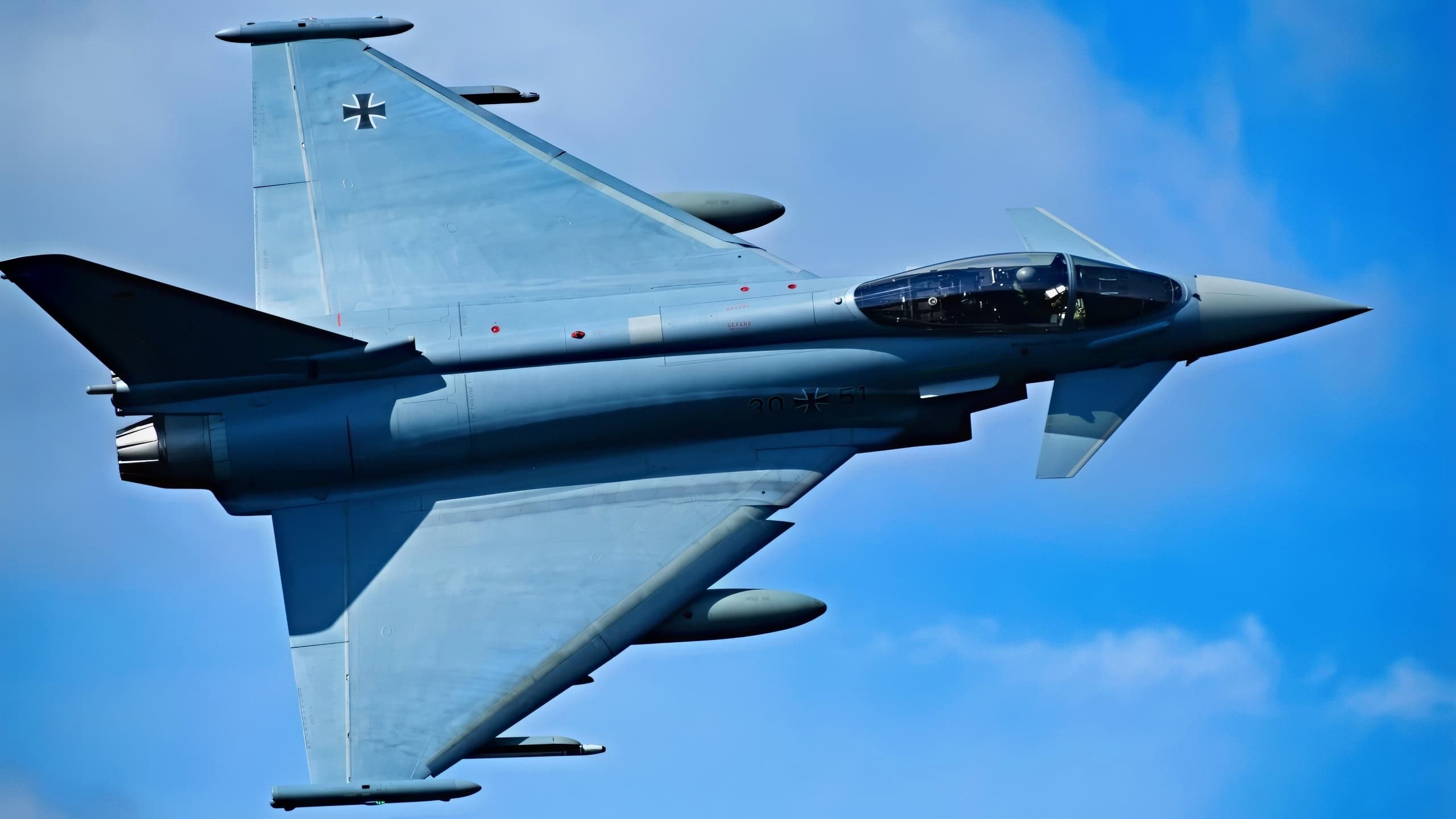
A German Air Force pilot, assigned to the German Air Force Weapons School, conducts strafing runs with an Eurofighter Typhoon in conjunction with U.S. Air Force Joint Terminal Attack Controller assigned to 2d Air Support Operations Squadron identifying targets on the ground at the 7th Army Training Command’s Grafenwoehr Training Area, Germany, June 9, 2021. (U.S. Army photo by Kevin Sterling Payne)
A key factor in this shift is the evolving German-Ukrainian partnership and the rapidly worsening Polish-Ukrainian relationship, which, until recently, was considered the main focus of Western efforts to support Ukraine. These two relationships—between Germany and Ukraine, and Poland and Ukraine—also indirectly influence German-Polish relations.
The Polish-Ukrainian Break
Poland, long recognized as a key logistical hub and a strong supporter of Western aid to Kyiv, is now embroiled in an increasingly bitter confrontation with Ukraine. This escalation was triggered by Kyiv’s decision to name one of its military units after the Ukrainian Insurgent Army (UPA), a World War II military group responsible for the mass killing of Poles in Volhynia and Eastern Galicia, which resulted in about 100,000 Polish civilian deaths, including women and children.
In response to Kyiv’s decision to honor the UPA, in June 2026, Polish President Karol Nawrocki revoked President Volodymyr Zelensky’s Order of the White Eagle, Poland’s highest honor. Since then, the relationship has further worsened, with retaliatory actions from Ukraine.
Meanwhile, as the crisis in Polish-Ukrainian relations deepens, Berlin is positioning itself to become Ukraine’s primary long-term economic partner and ally within the EU, shaping both Germany’s relationship with Poland and the future of Polish-Ukrainian ties.
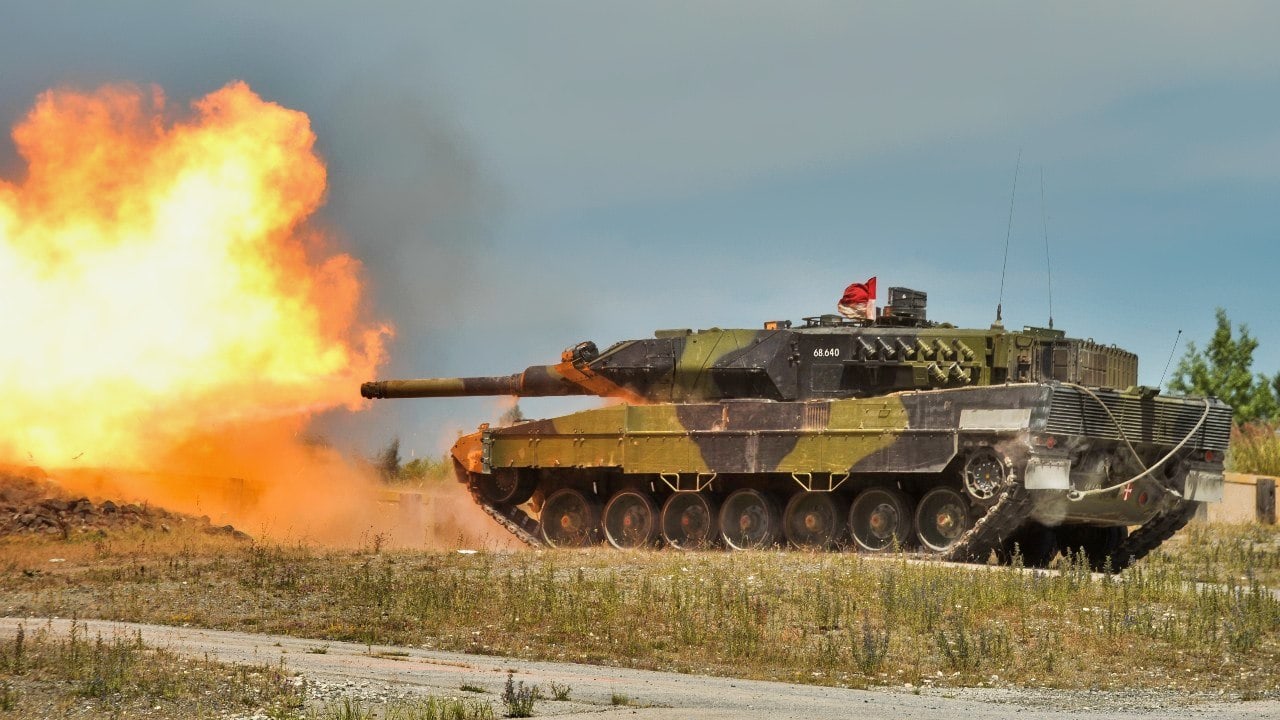
A Royal Danish Army Leopard 2 tank fires at a target during a live-fire exercise at the 7th Army Joint Multinational Training Command’s Grafenwoehr Training Area, Germany, July 04, 2014. The 7th Army JMTC provides dynamic training, preparing forces to execute Unified Land Operations and contingencies in support of the Combatant Commands, NATO, and other national requirements.
(U.S. Army photo by Visual Information Specialist Markus Rauchenberger/released),
Germany’s Strategic Positioning
Several factors favor Berlin over Warsaw in its relations with Ukraine. Germany is Europe’s largest economy and can mobilize significantly more private investment for Ukraine than Poland. German firms are already positioning themselves for Ukraine’s reconstruction across sectors such as manufacturing, energy, railways, logistics, and industrial equipment. There are also clear signs that Germany’s defense industry will work closely with Ukraine’s to leverage its battlefield experience and innovation.
The future of Ukraine’s relations with the EU is another key variable. Despite the official optimism from Brussels, Ukraine is unlikely to join the European Union anytime soon, if at all, but its economy is expected to become heavily integrated into EU supply chains, with Germany remaining the main industrial hub.
Another reason favoring Berlin as Ukraine’s top European economic partner over Poland is that German banks and export credit agencies have significantly greater financial capacity than their Polish counterparts. Once postwar reconstruction accelerates, it wouldn’t be surprising if Germany became Ukraine’s largest foreign investor among European countries.
How Germany Closed the Gap on Poland
It is also worth noting that when it comes to security and defense, while Berlin lagged behind Poland in the early years of the Ukraine war, it has since positioned itself to exert more influence in Kyiv.
In 2022, Poland clearly had greater political influence in Ukraine than Germany. As Ukraine’s main logistics hub, Poland transferred substantial amounts of military equipment early on, accepted millions of refugees, and consistently pushed for stronger Western support for Ukraine. Germany, on the other hand, suffered reputational damage due to its initially hesitant response, its limited military aid to Ukraine, and the legacy of its failed Russia policy, which, some argued, appeased Putin and precipitated his decision to launch the second invasion.
Since then, however, the balance has shifted. Germany now provides Ukraine with some of the largest financial and military aid packages in Europe. It has effectively taken a leading role in EU policy toward Ukraine and wields significant influence within the EU on Ukraine-related issues.
Meanwhile, Polish-Ukrainian relations have become more complicated due to disputes over agricultural imports, trucking, border transit, and domestic politics related to historical memory, especially regarding the killing of Polish citizens during World War II by the UPA.
Why Poland Still Cannot Be Replaced
However, the German-Polish “competition for Ukraine” remains unresolved, despite Berlin’s political and economic advantages, because Poland remains crucial to Ukraine’s security.
Even amid current disagreements and rising tensions, Ukraine depends heavily on supply routes through Poland, on military logistics, on cooperation between the two countries’ armed forces, and on NATO’s eastern flank infrastructure. No other nearby country plays as vital an operational role in supporting Ukraine’s war effort as Poland does. Additionally, many Ukrainian military leaders have built strong working relationships with their Polish counterparts during the war that are likely to last.
What Comes Next
The outcome of the current tensions between Kyiv and Warsaw will greatly influence the broader strategic landscape in Central Europe. It is quite possible that Germany could become Ukraine’s largest economic partner in Europe in the coming years, and perhaps its most influential sponsor within the EU. However, Poland remains Ukraine’s most important immediate security partner on NATO’s eastern flank.
Poland’s influence in Kyiv will depend directly on how NATO evolves and how the alliance defines its future relations with Ukraine. True, France, the UK, and the Nordic countries also remain important players in different areas, but none can match the significance of the Kyiv-Berlin and Kyiv-Warsaw relationships.
Although Germany is clearly Ukraine’s main partner today, its influence has limits. Many Ukrainians still remember Berlin’s pre-2022 policy toward Russia, including support for the Nord Stream 1 and 2 pipelines and years of Berlin’s dealings with Moscow over the heads of Central and Eastern Europeans. Trust between Ukraine and Germany has improved recently, but it hasn’t been fully restored.
Similarly, Poland’s influence in Ukraine should not be underestimated. Geography cannot be changed, and even if German investment in Ukraine far exceeds Polish investment, Ukraine will continue to rely on Poland as its primary land bridge to NATO and much of Europe.
The Deeper Strategic Question
In the final analysis, the key question moving forward is not whether Germany is surpassing Poland across the board, but whether Ukraine’s center of gravity is gradually shifting from its wartime dependence on Poland toward peaceful integration into the German-dominated European economic system.
How this process unfolds remains to be seen, but Ukraine is likely to continue relying on Poland as its main security gateway for at least the next decade. This is a plausible trajectory with major implications for Poland’s future influence in Central Europe.
It doesn’t mean that German-Ukrainian and Polish-Ukrainian relations will always be smooth; far from it, as Ukraine is nearly bankrupt. Several issues in Ukraine’s relations with the EU will persist and could become more contentious, especially regarding agricultural imports, reconstruction contracts, labor migration, and overall economic competition. Here, the critical variable will be when and how the war in Ukraine ultimately ends.
Ukraine’s Postwar Military Weight
Another important factor to consider is that Ukraine is likely to emerge from the war with one of Europe’s largest and most experienced militaries. This will shift the regional military balance. If Ukraine survives and rebuilds its economy, Poland will no longer be the only major land power on NATO’s eastern border. Depending on their policies, Warsaw and Kyiv could become allies, rivals, or both in shaping the new security landscape of Central and Eastern Europe.
The biggest uncertainty over the next decade is Ukraine’s postwar political development at home and how Moscow’s role in Europe will change after the war, depending on how the war’s eventual end will impact Russia’s ruling circles.
History as a Guide—and a Warning
If Ukraine emerges from the war as a sovereign and independent country despite territorial losses and human costs, the map of Eastern and Central Europe will change, making Polish-Ukrainian reconciliation a priority. History shows that rivalries can shift over generations; after all, France and Germany fought three major wars in 70 years, yet today they are close allies. Conversely, former allies have sometimes become rivals.
While some regional competition between Poland and postwar Ukraine is inevitable, it probably won’t pose a serious military threat to Poland, especially if Ukraine not only successfully restores its economy but also integrates with Europe. And while Poland should monitor Ukraine’s military capabilities—as it should with all neighboring countries—it is Russia, not Ukraine, that will remain Poland’s main security concern for the foreseeable future. The same applies to Ukraine, where Russia will remain the primary threat to the country’s survival.
That threat runs through Belarus as well. As Russia continues to use Belarus as a forward operating base against both Ukraine and NATO’s eastern flank, it underscores why the Kyiv-Warsaw security relationship—however strained—cannot be allowed to collapse.
A larger strategic challenge for Warsaw will likely be managing its relationship with a stronger, more confident Ukraine while maintaining the partnership formed during the war. Conversely, Kyiv must always remember the region’s map and why maintaining good cooperative relations with Warsaw is in its best interest. Lastly, in its relations with both countries, Berlin should always be mindful of Germany’s historical burden in Central Europe.
About the Author: Dr. Andrew A. Michta
Andrew A. Michta is Professor of Strategic Studies at the Hamilton School at the University of Florida, a Nonresident Senior Fellow at the Atlantic Council in Washington, D.C., and a Visiting Fellow at the Hoover Institution at Stanford University. The views expressed here are his own.