
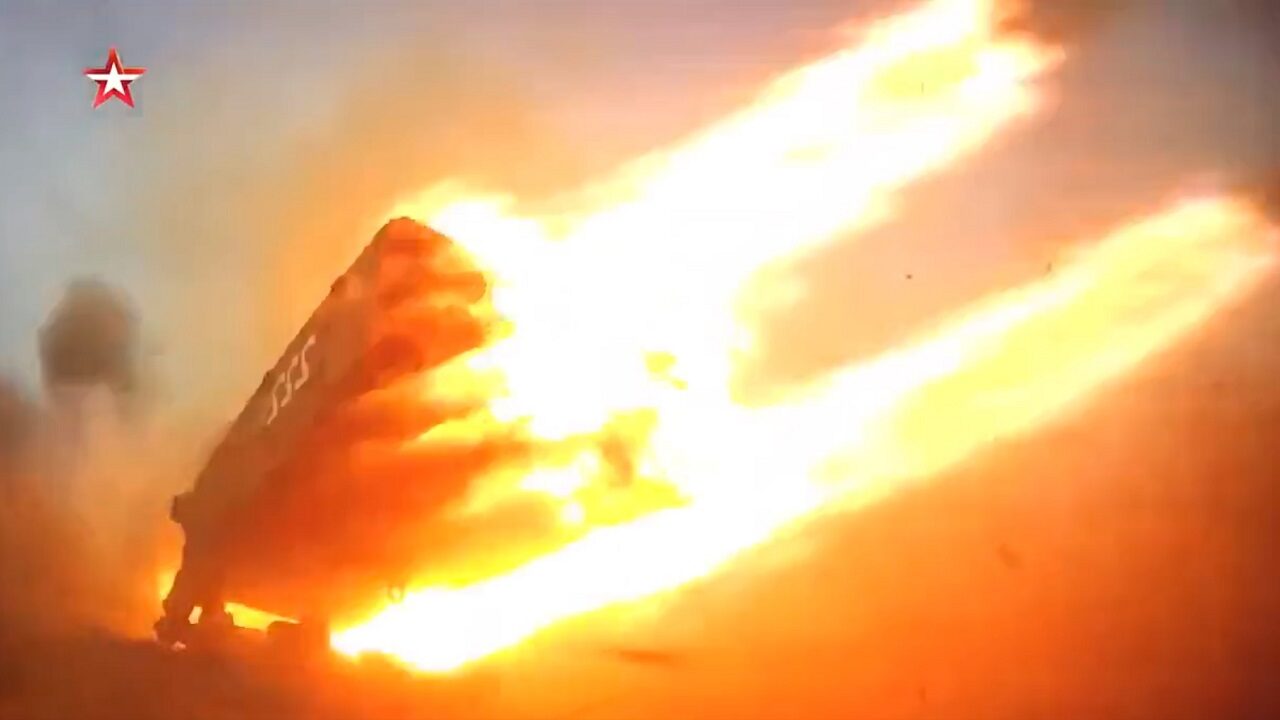
Russia over the weekend launched a wave of ballistic missile attacks, which Ukrainian President Volodymyr Zelensky described as “one of the largest Russian ballistic missile attacks to date,” directed at Kyiv.
“Kyiv and the Kyiv region were the Russians’ primary target.
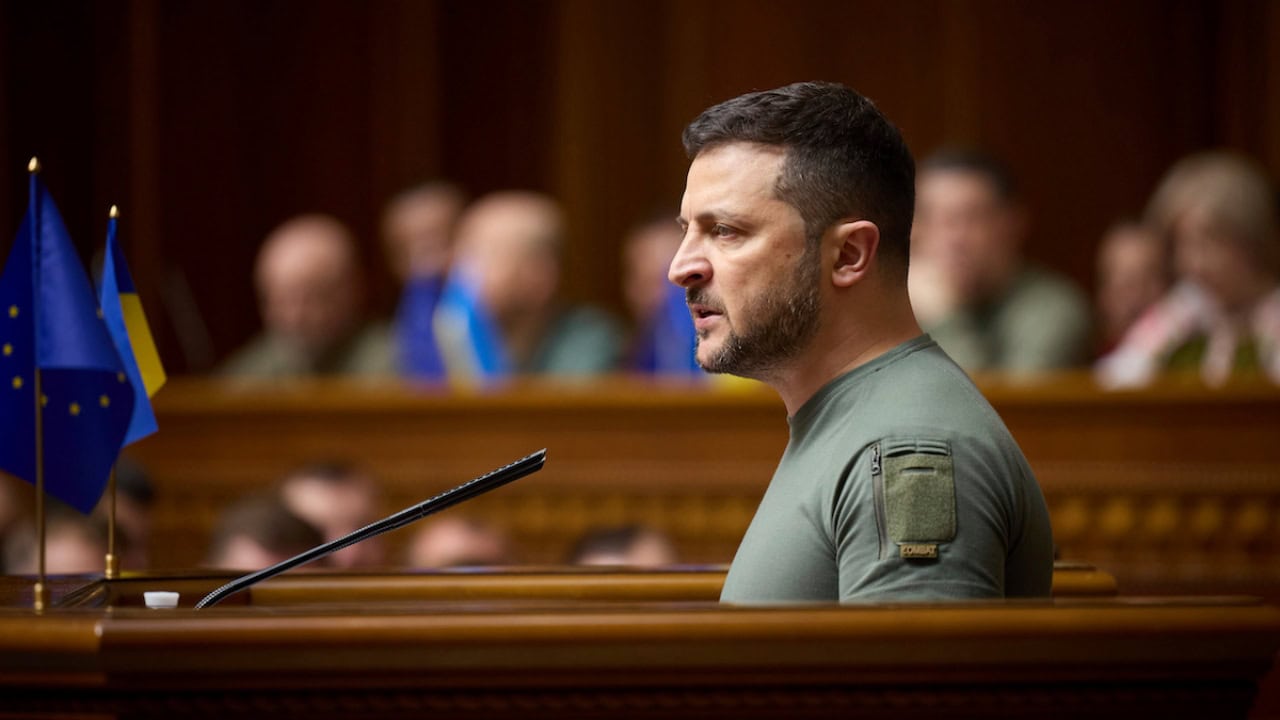
President Zelensky of Ukraine. Image Credit: Creative Commons.
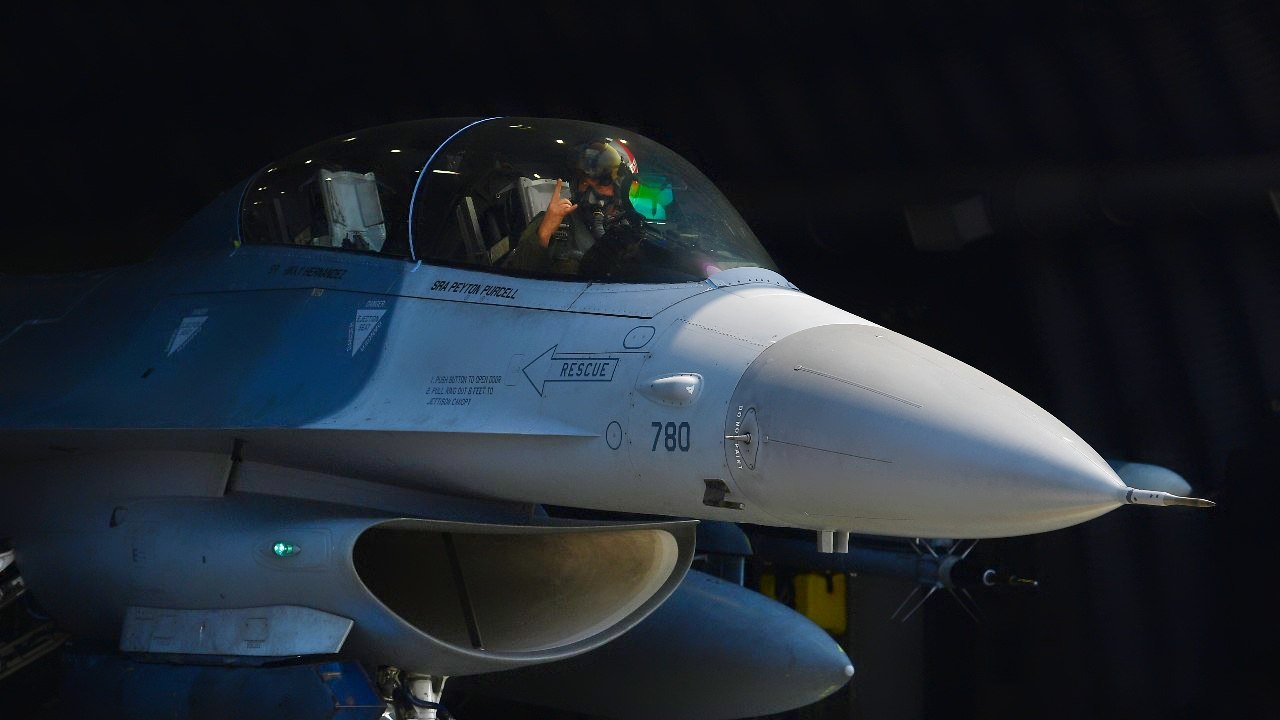
Capt. Michael Terry, 36th Fighter Squadron F-16 pilot, prepares to launch at Osan Air Base, Republic of Korea, July 9, 2020. The 36th Aircraft Maintenance Unit and the flight line operators wokred to make this aircraft mission-capable after being grounded for 186 days. (U.S. Air Force photo by Senior Airman Noah Sudolcan)
They had been preparing this attack for several days, stockpiling missiles. The threat, of course, remains even now, and this must be taken into account.
Russia is placing its wagers on ballistic missiles, and it is because of them that Putin still believes in his war,” the Ukrainian leader said in a social media post.
Zelensky went on to call for further assistance from allies in providing air defense systems.
The BBC reported on the casualties.
“Four people were killed in the north-eastern city of Kharkiv, and an elderly woman died in the capital Kyiv. There were two more fatalities in Zaporizhzhia in the south and one in Sumy in the north-east,” the report said.
Additionally, the report cited the Ukrainian military, claiming that air defenses in Kyiv had succeeded in shooting down 18 out of 41 incoming missiles.
Ukraine Strikes Back
Meanwhile, the BBC also reported that Ukraine had some success this weekend in retaliating.
“Ukraine said it had hit three Russian oil tankers in the Black Sea, and three oil depots in the southern Stavropol region,” the report said.
“Precise hits on three Russian ‘shadow fleet’ tankers were recorded in the Black Sea.
I thank every one of our units that is helping to spread the realization within Russia that this war must be brought to an end,” Zelensky added in a social media post.
Ukraine also, over the weekend, succeeded in launching drone attacks at a pair of warehouses owned by Wildberries, the online retailer that is seen as Russia’s answer to Amazon.
Eight people were killed and 62 injured in those attacks, according to Russian officials cited by the BBC.
The company’s CEO, Tatyana Kim, is one of Russia’s only female billionaires. She said of one of the attacks that “seven people working the night shift died on the spot.”
Per Zelensky, the attacks were aimed at “major logistics facilities” which Russia uses to “supply sanctioned components for drone production and navigation equipment.”
How to Stop Ballistic Missiles
So how can Ukraine defend itself against ballistic missile attacks? Ukraine has requested the ability to produce Patriot missiles, with President Donald Trump stating earlier this month that he will grant Ukraine the license to do so.
The New York Times reported that a Ukrainian company called Fire Point is “rolling missiles off assembly lines and stockpiling them with plans to shoot down Russian ballistic missiles.”
Fire Point produces drones and also a cruise missile known as the Flamingo.
However, the Times noted that “knocking ballistic missiles out of the sky is a much harder task.
Experts cautioned that building a missile defense like the U.S.-made Patriot system — the only weapon provided to Ukraine that is proved to regularly intercept ballistic missiles — is extremely complicated.”
Fabian Hoffmann, a senior research fellow at the Norwegian Institute for Defense Studies in Oslo, described that type of missile defense to the Times as “the Champions League of missile manufacturing.”
“The most challenging type of missile you’ll ever build is a missile system meant to intercept high-velocity missiles,” Hoffmann added.
The analysis, published before this weekend’s attacks, noted that Russia is on pace to set a record for most ballistic missile attacks in a single month.
Help From Greece?
According to Defense Express, which cited the Greek publication Kathimerini, Greece is under pressure from the EU and NATO to transfer some of its Patriot missiles to Ukraine.
“It remains unclear what Athens’ stance is on such a plan, but Greece has generally maintained a cautious position. Although it has supplied Ukraine with weapons, including Sea Sparrow missiles for Ukrainian FrankenSAM air defense systems, Athens has often justified its refusal to transfer certain types of weapons by arguing that they are needed for its own defense,” the report said.
At the “Coalition of the Willing” meeting earlier this month, nine nations endorsed an effort to assist with production of Ukraine’s Freyja interceptor system.
Those countries were Denmark, France, Germany, Italy, the Netherlands, Norway, Spain, Sweden and the United Kingdom.
About the Author: Stephen Silver
Stephen Silver is an award-winning journalist, essayist, and film critic, and contributor to the Philadelphia Inquirer, the Jewish Telegraphic Agency, Broad Street Review, and Splice Today. The co-founder of the Philadelphia Film Critics Circle, Stephen lives in suburban Philadelphia with his wife and two sons. For over a decade, Stephen has authored thousands of articles that focus on politics, national security, technology, and the economy. Follow him on X (formerly Twitter) at @StephenSilver, and subscribe to his Substack newsletter.