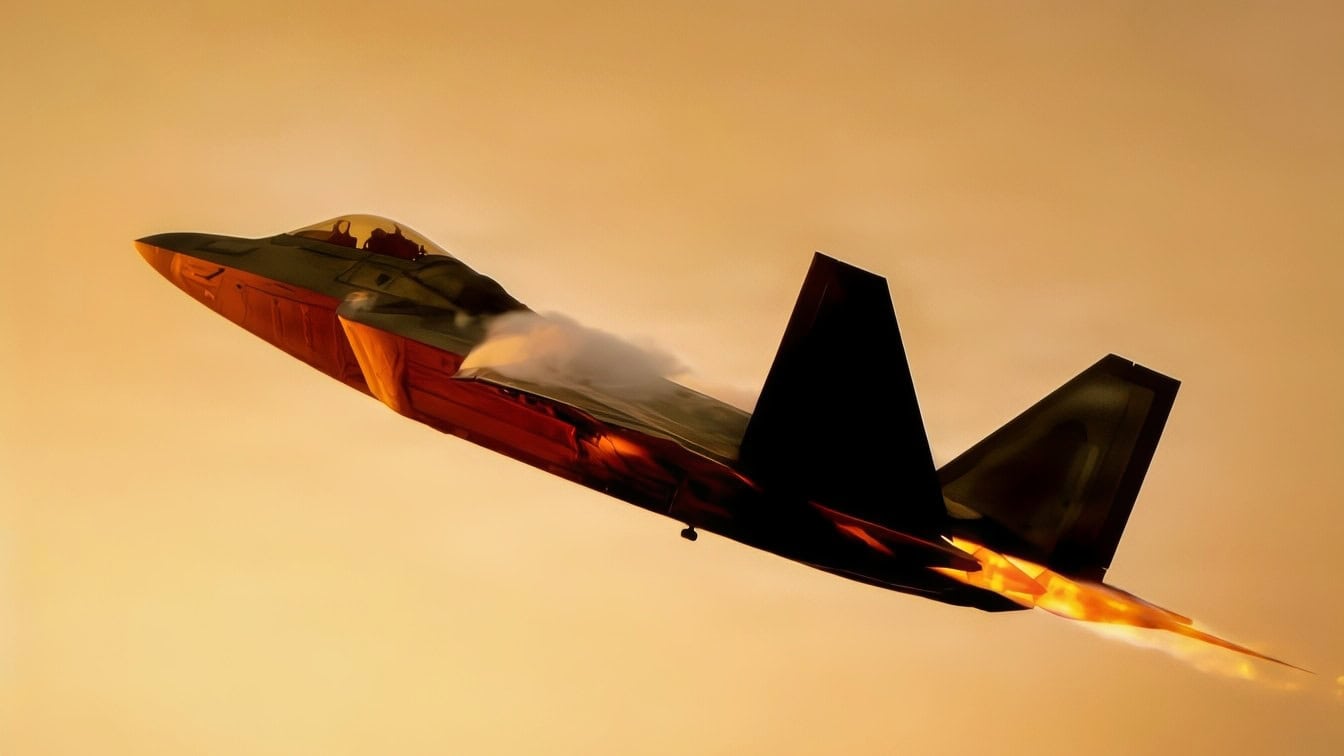
The F-22 Raptor remains one of the world’s most impressive warplanes. It is America’s primary air superiority warplane. Although it was designed at the tail end of the Cold War and didn’t enter Air Force service until 2005, the F-22 still captures the imagination of aviation enthusiasts everywhere. Yet, it is not impervious to enemy attack. Sure, it has world-class stealth. And its weapons package is well-balanced. What’s more, the plane’s firepower is enhanced with the next-generation sensor and electronic warfare (EW) packages.
F-22 Raptor: Not Impervious
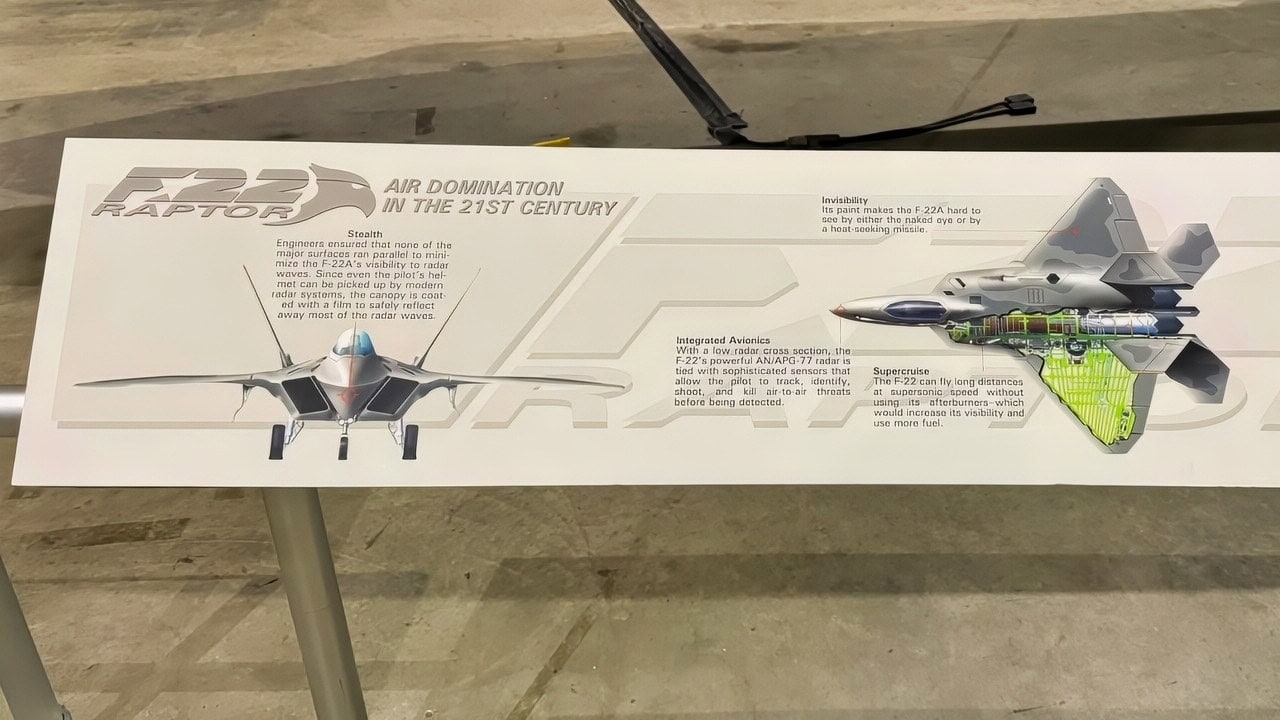
F-22 Raptor Diagram from National Museum of the U.S. Air Force. Image Credit: Harry J. Kazianis.
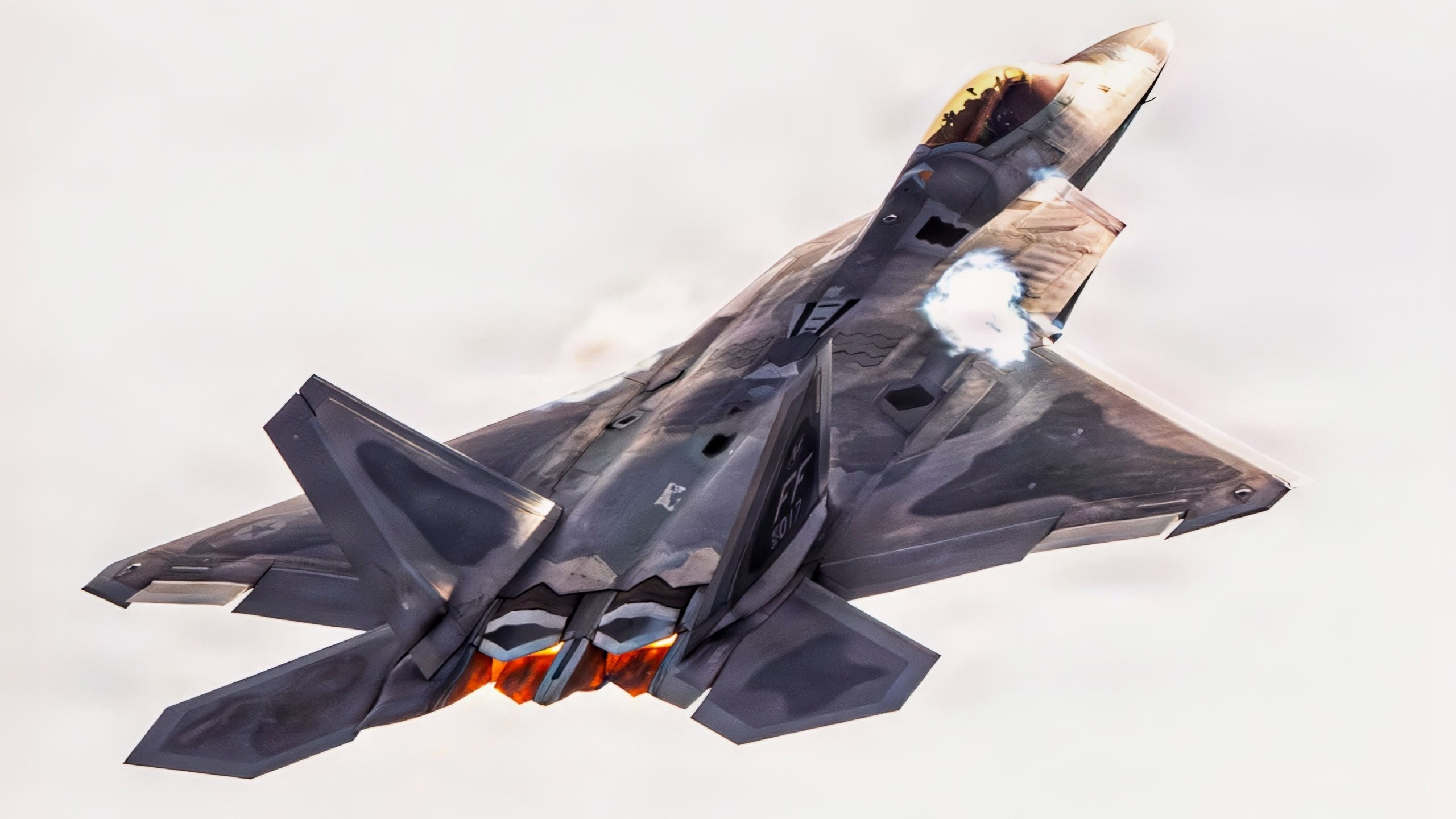
U.S. Air Force Capt. Nick “Laz” Le Tourneau, pilot and commander of the F-22 Raptor Aerial Demonstration Team, performs a practice demonstration for the 2026 Heritage Flight Training and Certification Course at Davis-Mothan Air Force Base, Arizona, March 1, 2026. The Heritage Flight Training and Certification Course is an annual event where military and civilian pilots train together to fly in formations, showcasing both modern and vintage military aircraft. These flights are performed at airshows across the country to honor the service and contributions of every U.S. Airmen, past and present, while educating the general public on the importance of the U.S. Air Force and its mission. (U.S. Air Force photo by Staff Sgt Mary Bowers)
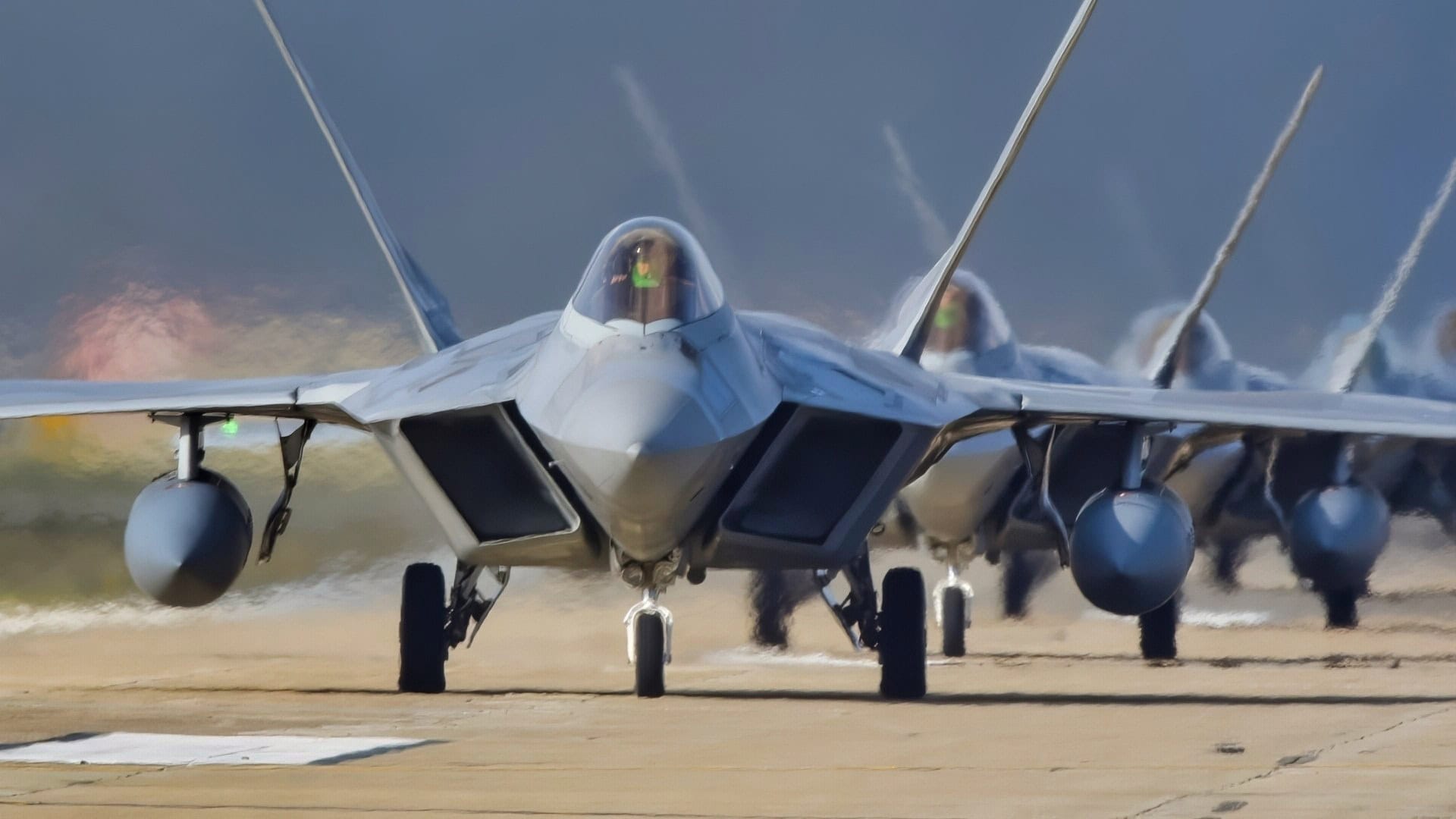
F-22 Raptors from the 1st Fighter Wing and 192nd Fighter Wing, participate in a total force exercise at Joint Base Langley-Eustis, Virginia, Feb. 28, 2019. Both wings partnered with the 633rd Air Base Wing during the Phase I exercise to showcase their readiness and deployability of the F-22s. (U.S. Air Force Photo by Tech Sgt. Carlin Leslie)
Despite being developed around the simple notion that the Air Force required a plane that could detect an enemy aircraft before the enemy aircraft could detect the F-22, other systems have emerged in the last few decades.
They are now readily available to enemy militaries that threaten the F-22.
Further, US rivals have had ample time to prepare to face the advanced F-22 in combat and have developed tactics to overcome the F-22’s advantages.
The F-22’s most proficient method of attack remains in the beyond visual range (BVR) domain.
Indeed, this is the most important capability, given how BVR warfare has defined both the War in Ukraine and the Iran War.
Any future conflict with China, for example, will only see these trends persist.
At the same time, the most straightforward way an enemy could shoot down an F-22 would be in a dogfight.
If an opponent survived long enough to get within visual range of the Raptor, some of the advantages that the F-22 relies on would be significantly degraded.
This was proven during exercises involving French Rafales held in the United Arab Emirates in 2009.
In fact, video showing a French Rafale maneuvering into a firing position against a Raptor during simulated combat was jarring for the US Air Force because the Rafale is a fourth-generation plane that lacks the technological accouterments of the fifth-generation stealth air-superiority Raptor.
Three years later, though, the Germans demonstrated a similar feat during exercises in Alaska.
At that time, German pilots closed with Raptors in their Eurofighter Typhoons (another fourth-generation warplane), forcing close-range engagements that made the F-22’s various advantages matter less.
Still, thanks to its thrust-vectoring engines, the Raptor remains maneuverable in close-range dogfighting.
The stealth is what matters less, because enemy pilots can see the F-22 and respond to it accordingly.
Plus, the advent of infrared-guided missiles means a fighter doesn’t have to have conventional radar lock to attack the F-22 at closer ranges, meaning the plane’s stealth matters less.
Another 2009 exercise over Nellis Air Force Base between a US Navy EA-18G Growler (a fourth-generation electronic warfare plane) and an Raptor showed how advanced electronic attack can break down whatever advantages an F-22 has when push comes to shove.
Reports indicated that the Growler used its advanced EW capabilities to confuse the Raptor while exploiting superior positioning during the attack to acquire a simulated AMRAAM shot.
Math Can Be a Problem for the F-22
There’s also the problem of math. The US government prematurely shuttered the F-22’s production line for financial reasons in the wake of the 2008 Great Financial Crisis.
So, there are a finite number of F-22s available today, and its supply chain is constrained, too.
While the F-22s are lethal at BVR and operate in relatively small numbers, if enemy planes got within visual range of the F-22s, those older planes could outnumber the F-22s and overwhelm whatever defenses the fifth-generation warplanes possessed.
A2/AD Hell Awaits?
What’s more, anti-access/area-denial (A2/AD) capabilities have grown to such a point that even the mighty stealth of the F-22 could prove insufficient when faced with advanced air defense systems, like the Russian S-400.
These air defense systems employ radars, command systems, and other advanced surface-to-air missiles (SAMs) to overcome the challenge posed by the F-22’s stealth.
Plus, the S-400 can engage targets as far out as 400 kilometers.
Recent history offers multiple examples of how even relatively primitive radars can, when used in unique and innovative ways by wily operators, detect advanced American stealth planes.
There is no record of Raptor stealth being penetrated by these means. But the Air Force does worry that such low-tech methods could be used effectively in combat.
For instance, in certain cases, lower-frequency radars can detect stealth planes, allowing a missile to be guided to the target.
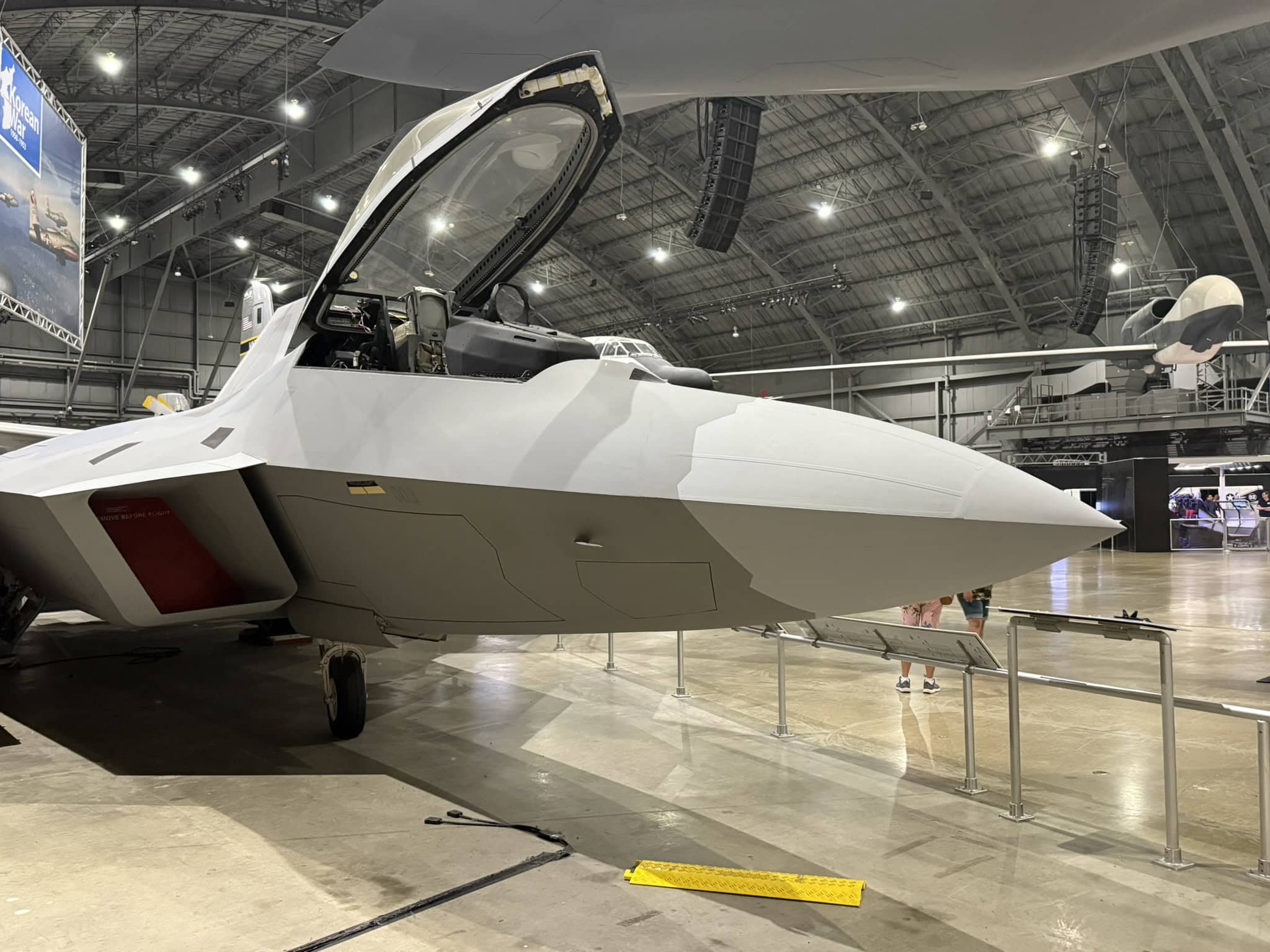
F-22 Raptor Photo Take At the National Museum of the U.S. Air Force. 19FortyFive.com Photo.
Of course, the F-22’s shape and advanced radar-absorbent materials complicate this process.
Still, an integrated air-defense network could overcome these F-22 stealth advantages by combining information from multiple sensors across the entire radar frequency band.
Long-range surveillance radars could be paired with shorter-range fire-control radars to contribute to tactical success in taking down an F-22.
Of course, this would be a herculean task.
But, given the finite supply of the Raptor and the damage to American morale that losing even one of these planes in combat would provide, an enemy would be foolish not to try such a complex attack on the US Air Force plane.
All this is still theoretical.
A Gentle Reminder
The 2009 and 2012 exercises merely demonstrate that, when pushing older aircraft to their operational limits under near-perfect simulation conditions, pilots can acquire a firing solution on the Raptor.
Under the stress of combat, though, that remains to be seen.
Further, the S-400 has never demonstrated a real capability to hold the F-22 hostage.
Nevertheless, American F-22 pilots must be prepared for the day when the enemy gets within range of the F-22.
The technological advantages and the stealth of the F-22 make it a hard target to kill. These capabilities do not, however, make the plane impervious.
About the Author: Brandon J. Weichert
Brandon J. Weichert is the Senior National Security Editor at 19FortyFive.com. He also manages The Weichert Brief on Substack. Weichert also hosts “National Security Talk” on Rumble. He is the author of four bestselling national security books, the most recent of which is A Disaster of Our Own Making: How the West Lost Ukraine (Encounter Books). Follow him via Twitter/X @WeTheBrandon.