
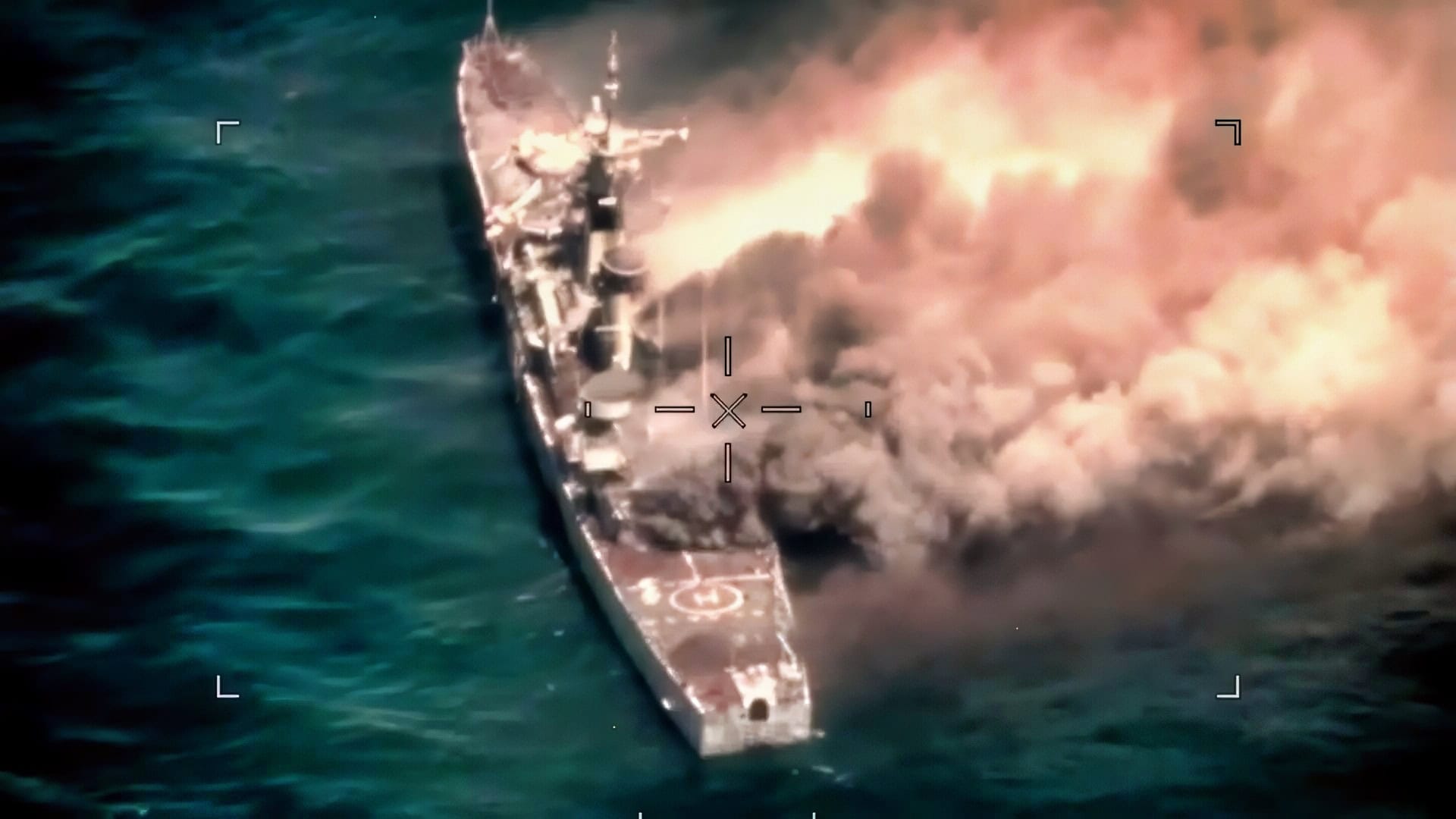
RIMPAC Put a $1.3 Billion Warship Against $5 Million in Missiles and a QUICKSINK Bomb – USS Tarawa cost roughly $1.3 billion in 2024 dollars when the five-ship construction program is averaged and adjusted for inflation. On July 19, 2024, American and allied forces sank the 39,000-ton amphibious assault ship off Kauai after confirmed attacks involving a Long-Range Anti-Ship Missile, an Australian Naval Strike Missile and a U.S. Air Force QUICKSINK weapon.
How a 39,000-ton US Navy Amphibious Assault Ship Went Down in a Drill
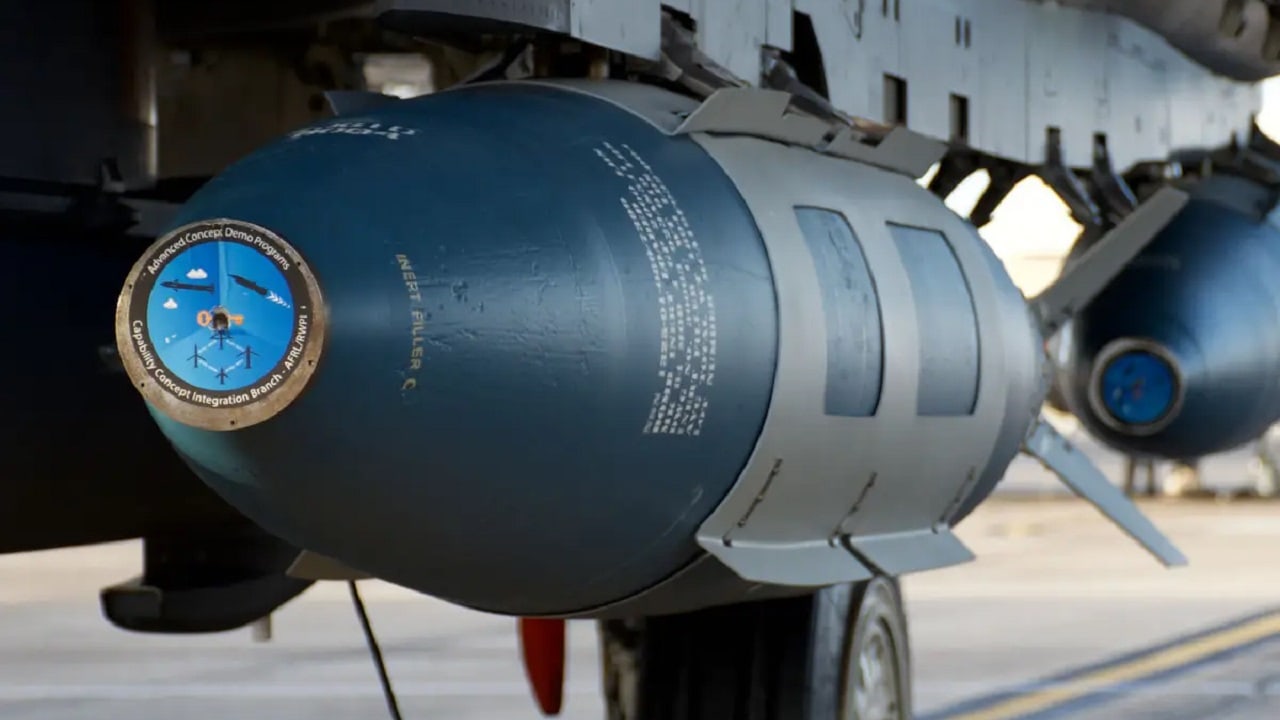
Quicksink Smartbomb. Image Credit: Creative Commons.
The two confirmed missiles carried a combined benchmark price of about $5.1 million under U.S. fiscal 2024 procurement estimates. The LRASM program average was roughly $3.1 million per missile, while the Naval Strike Missile contract average was about $1.9 million. The $5.1 million comparison captures only those two rounds, not the QUICKSINK weapon, aircraft, ship, crews, towing, range support, or target preparation.
Tarawa was built to land Marines ashore while operating aircraft and landing craft from a single hull. The 820-foot ship combined a full-length flight deck, hangar, troop spaces, vehicle storage and a floodable well deck. It could embark roughly 1,900 Marines and looked like a small aircraft carrier because aviation was central to its amphibious mission.
Ingalls Shipbuilding laid the keel in Pascagoula, Mississippi, in November 1971. Tarawa entered service on May 29, 1976, supported Operation Desert Shield, Operation Iraqi Freedom and cyclone relief in Bangladesh, and left commission in March 2009. The Navy struck the ship from its register in April 2024 and towed it more than 50 nautical miles from northern Kauai into water 15,000 feet deep.
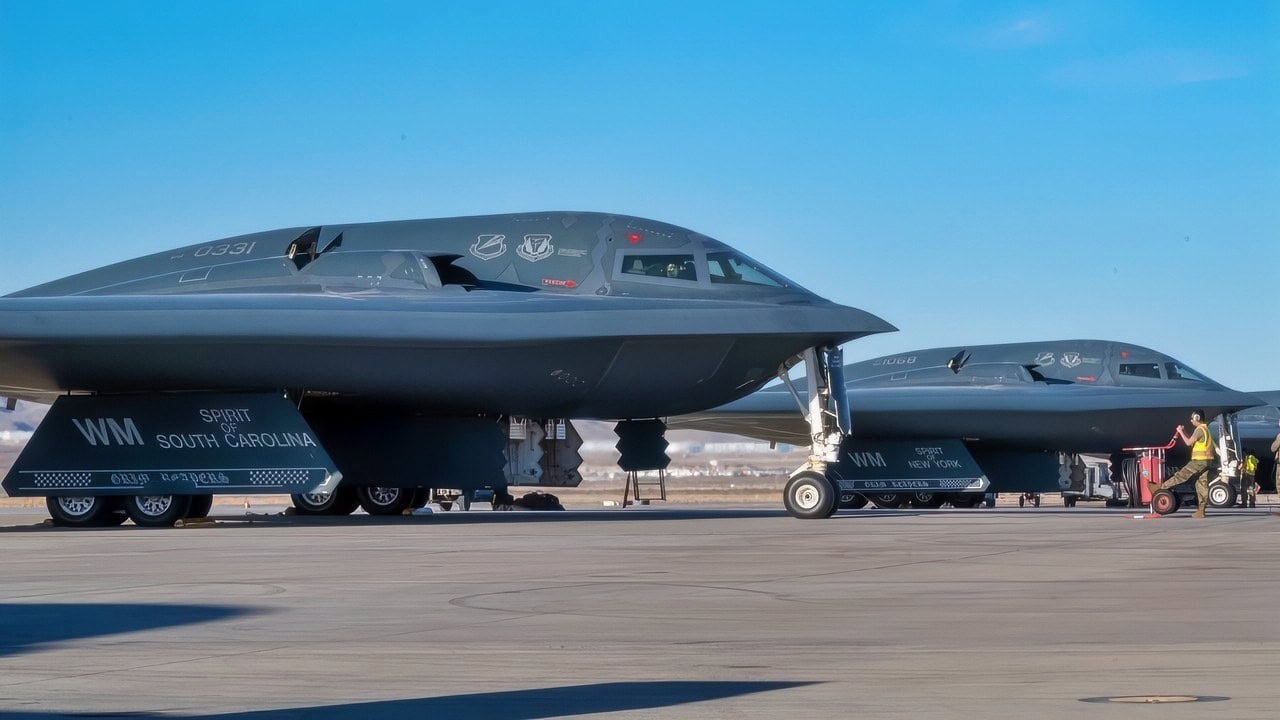
Three B-2 Spirit stealth bombers prepare for departure during Exercise Bamboo Eagle at Nellis Air Force Base, Nevada, Feb. 10, 2025. Bamboo Eagle incorporates multiple mission scenarios, preparing aircrews for complex operational challenges. (U.S. Air Force photo by Senior Airman Bryson Sherard.)
The $1.3 Billion Construction Figure Is a Conservative Proxy
A Government Accountability Office review placed the estimated completion cost of five Tarawa-class LHAs at about $1.5 billion in July 1979. Dividing that total equally produces $300 million per ship. Applying the Bureau of Labor Statistics consumer price index raises the average to approximately $1.3 billion in 2024 dollars.
That method could understate the leadership. GAO found that LHA-1 required 14.3 million labor hours, compared with 10.7 million estimated for the fifth ship after the yard improved production. No clean public record provides one final audited invoice for Tarawa alone, so the class average is more defensible than a falsely precise figure.
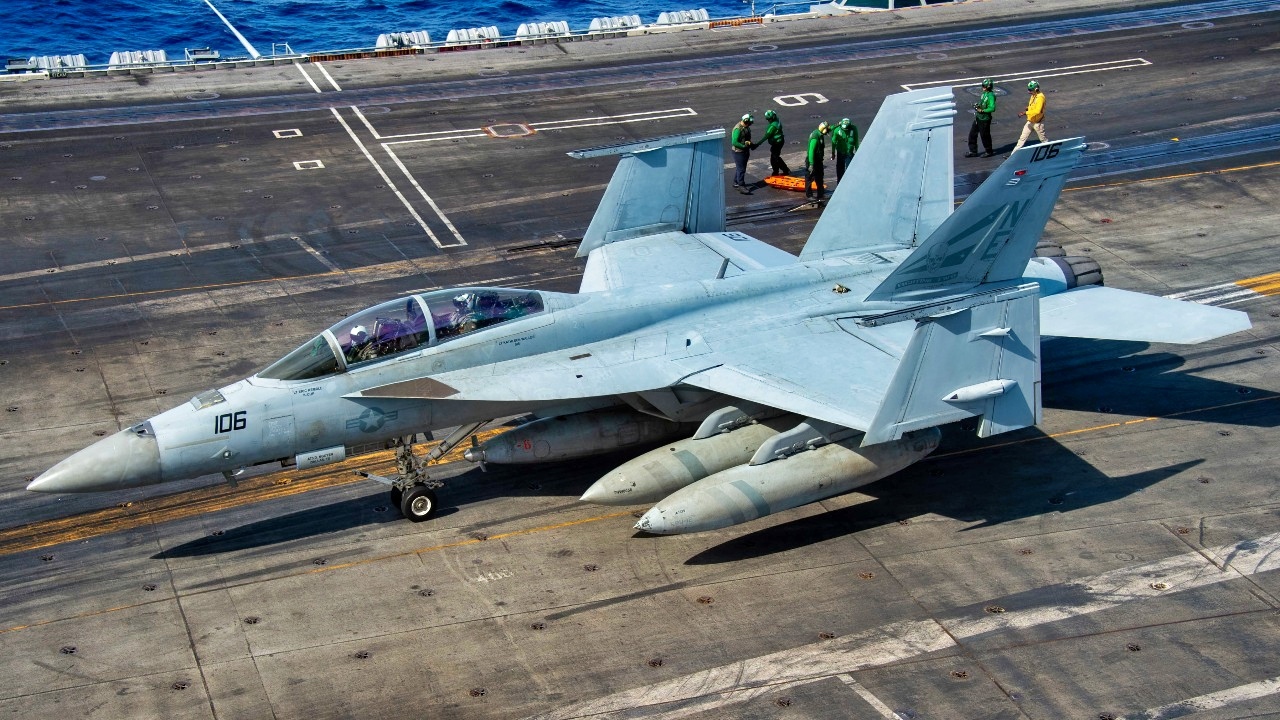
(Dec. 30, 2021) An F/A-18F Super Hornet, assigned to the “Bounty Hunters” of Strike Fighter Squadron (VFA) 2, taxis on the flight deck of Nimitz-class aircraft carrier USS Carl Vinson (CVN 70), Dec. 30, 2021. Carl Vinson Carrier Strike Group is on a scheduled deployment in the U.S. 7th Fleet area of operations to enhance interoperability through alliances and partnerships while serving as a ready-response force in support of a free and open Indo-Pacific region. (U.S. Navy photo by Mass Communication Specialist 3rd Class Jeff D. Kempton)
Three Weapons Tested Three Routes to a Large Ship
A Navy F/A-18F Super Hornet launched the stealthy LRASM, giving a carrier air wing a long-range weapon built to find and strike defended surface targets. HMAS Sydney conducted the Royal Australian Navy’s first Naval Strike Missile firing during RIMPAC, an important step in replacing Harpoon.
The carrier-launched LRASM attack and the Australian shot tested two allied kill chains against the same large hull.
A B-2 Spirit also demonstrated QUICKSINK, an Air Force effort to adapt an air-delivered precision bomb for maritime attack at far lower cost than a purpose-built cruise missile. The program grew from cooperation between the Air Force Research Laboratory and the Navy and addresses the need for larger inventories of affordable precision weapons during a prolonged naval campaign.
The public record confirms those three weapons. It does not provide a complete Tarawa-specific strike list, the number of hits or confirmation that every missile and gun shown across RIMPAC’s two SINKEX events struck Tarawa. Harpoon and Hellfire imagery also covered the separate sinking of ex-USS Dubuque.
The Final Sinking Was Only One Part of the Test
The official goals were tactics, targeting, live firing, planning, communications and coalition precision strike. A real steel hull gives weapons crews and engineers evidence a simulator cannot fully reproduce: how blast and fragmentation enter compartments, how flooding spreads, which parts of the ship fail first and how repeated hits interact.
Large surface ships have been lost since 1945, but no U.S.-style big-deck amphibious assault ship comparable to Tarawa has been sunk in combat.
Modern navies therefore rely heavily on modeling, smaller targets and controlled tests when estimating how a 39,000-ton aviation ship responds to current weapons.
Sinking also sets a higher standard than defeating a ship operationally. Damage to propulsion, electrical power, the flight deck, aviation elevators, command spaces or the well deck could remove an amphibious assault ship from a campaign while the hull remained afloat. That distinction matters when judging what the RIMPAC strike demonstrated.
Tarawa Was Not Fighting Back
The target carried no crew, active radar, electronic warfare, interceptors or escort screen.
No damage-control teams were pumping flooded spaces, fighting fires or restoring power. Environmental preparation also removed petroleum and other hazardous material before the exercise.
Those conditions cut in both directions. The absence of damage control made it harder to stop the progressive flooding.
The removal of aviation fuel, ammunition, aircraft and vehicles also eliminated many sources of secondary fire and explosion that would exist aboard a loaded ship in combat.
The earlier USS America survivability test and later accounts of how long a large carrier absorbed controlled damage illustrate why tonnage and compartmentation matter.
Tarawa also gave the Air Force a platform for testing a lower-cost maritime strike option without risking an operational ship.
The Navy has not released the complete hit sequence, the elapsed time between the first strike and the final plunge, or its classified assessment of which weapon caused the decisive flooding.
About the Author: Harry J. Kazianis
Harry J. Kazianis (@Grecianformula) was the former Senior Director of National Security Affairs at the Center for the National Interest (CFTNI), a foreign policy think tank founded by Richard Nixon based in Washington, DC. Harry has over a decade of experience in think tanks and national security publishing. His ideas have been published in the NY Times, The Washington Post, The Wall Street Journal, CNN, and many other outlets worldwide. He has held positions at CSIS, the Heritage Foundation, the University of Nottingham, and several other institutions related to national security research and studies. He is the former Executive Editor of the National Interest and the Diplomat. He holds a Master’s degree focusing on international affairs from Harvard University.

