The common sentiment in the West about the degree to which the People’s Republic of China (PRC) is making it possible for Russia to continue its war in Ukraine is one of concern and aggravation.
The level of support has some officials now advocating a European response in the form of more forceful measures in response to Beijing’s activity.
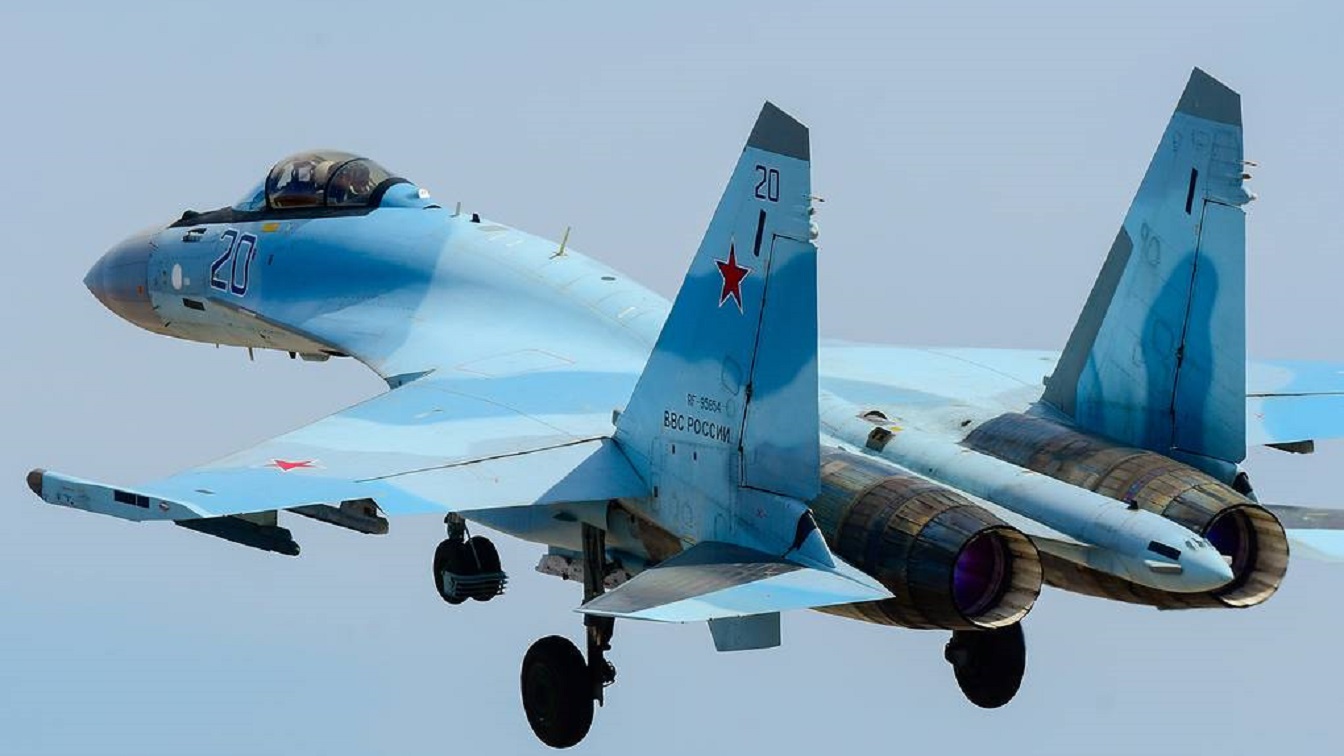
Su-35S fighter. Image Credit: Russian State Media.
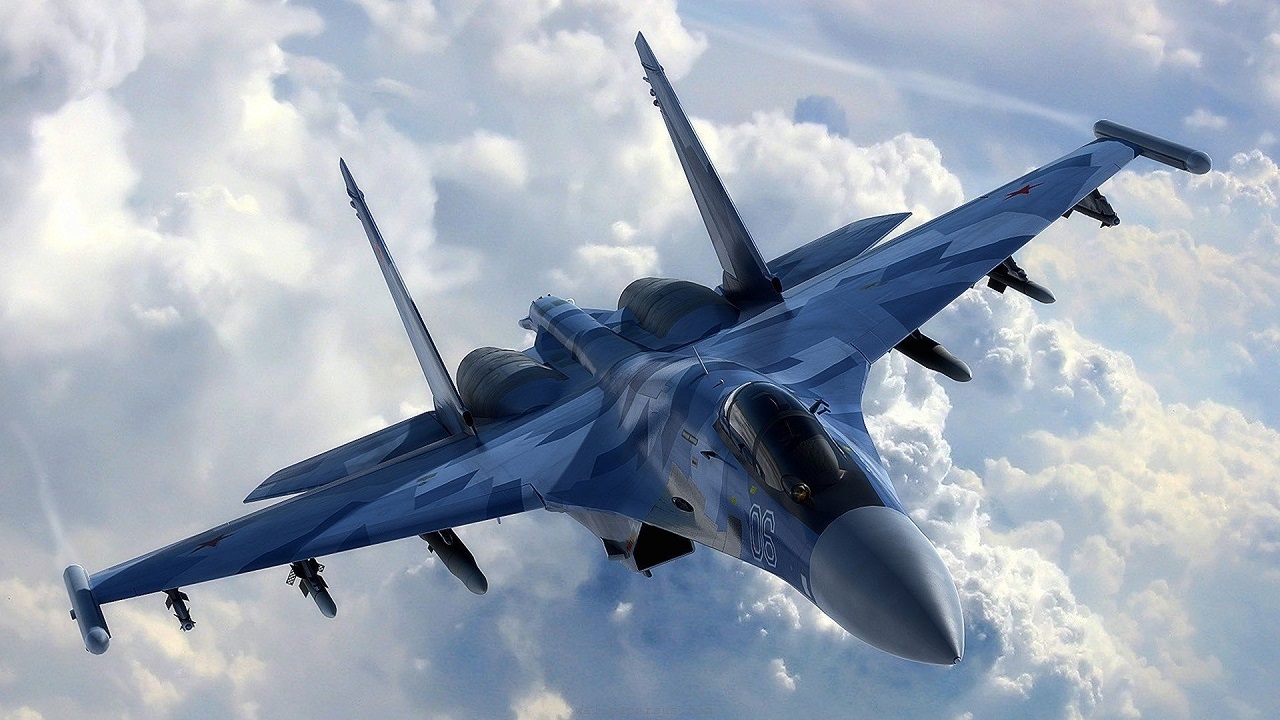
Artist rendering of a Russian Su-35 fighter. Image Credit: Creative Commons.
An essay from March 2026 from the European Council on Foreign Relations describes the situation as it is described in European foreign policy circles:
“Since Russia’s invasion of Ukraine, China has emerged as a key enabler of the war machine.
This occurs not only through the export of dual-use goods, including critical microelectronics and drone components, but also via an expanding energy trade that is bankrolling Russia’s war economy.”
Among other items, the PRC supplies critical drone components such as lithium-ion batteries, fiber optic cables, and electric motors, which are distributed through third-party networks like the Russian e-commerce giant Wildberries.
The PRC also provides specialized chemicals, machine tools, and raw materials that directly support Russian defense production.
Beijing is also transmitting satellite imagery, intelligence, and targeting information that support Russian missile and drone attacks.
Russia’s war on Ukraine would have ground to a halt a long time ago without increasing and nearly limitless financial, trade, technological, and industrial production assistance from the PRC.
These activities significantly detract from the support given to Ukraine by Western nations.
The number of Ukrainian civilians being killed in Russian missile strikes and cities being wiped off the map also keeps increasing.
Russia is now continuously dependent on the PRC on multiple levels. This puts Moscow into an asymmetric partnership with Beijing, with the senior partner in the seat of power.
Too Dependent to Quit
The unfortunate position for the junior partner – Russia, in this case – is that the senior partner gets to call the shots.
And it is the senior partner who ultimately benefits from the arrangement.
The 1990s marked the beginning of what would become burgeoning Russia-PRC defense industrial cooperation.
Chinese military enterprises were busy reverse-engineering Russia-designed weapon platforms.
They then built illegal copies of those systems, the most high-profile example being the Shenyang J-11B fighter aircraft that was a copy of the Russian Sukhoi Su-27.
In the early days of this “partnership,” Russian defense firms were beyond resentful at this blatant theft of their intellectual property, but kept largely quiet.
They were in too dire a financial state to jeopardize the cash flow from China.
Years later, the resentment became public when Russian defense export officials finally lashed out. “Unauthorized copying of our equipment abroad is a huge problem. There have been 500 such cases over the past 17 years,” said Yevgeny Livadny on 14 December 2019.
He was, at the time, the Russian weapons conglomerate Rostec’s chief of intellectual property projects. “China alone has copied aircraft engines, Sukhoi planes, deck jets, air defense systems, portable air defense missiles, and analogs of the Pantsir medium-range surface-to-air systems,” he said.
But Russia kept increasing its military business with China anyway.
As an editor of a well-known Russian defense journal, Andrei Frolow stated at the time, “It’s always bad when someone copies your weapons without permission,” he said. “But I think it’s fair to say that since Russia continues to cooperate militarily with China, this [theft of intellectual property issue] is not very critical [for Russia].”
It’s Not All About MDO – It’s About Beijing’s Ability to Wage Nuclear War
Whatever their level of dependency was the case almost two decades ago, it pales in comparison to the situation today.
In return for Beijing making Russian President Vladimir Putin’s war continuing ad infinitum possible, Moscow is now likely providing its Chinese war production supplier with the proverbial crown jewels of Russian defense technology.
Items that have been on the PRC’s wish list for decades but were being held back due to Moscow’s concerns about Russia’s own national interests are now likely being handed over with almost no limitations imposed.
Unlike copies of fighter aircraft or air defense systems, these technologies will significantly accelerate the PRC’s ability to wage strategic nuclear war.
One of the more ominous implications concerns the PRC’s development of nuclear-powered submarines.
The world’s largest maritime force, the People’s Liberation Army Navy (PLAN), now operates only six nuclear-powered boats out of a fleet of 60.
The US Navy today has a clear advantage with 70 nuclear-powered submarines.
But Rear Admiral Michael Brookes, currently the head of US naval intelligence, told a congressional hearing in March that, with Russian assistance, China could be operating 80 submarines by 2035, half of which would be nuclear-powered.
He also expects that newer PLAN nuclear subs would see “substantial advancements in nuclear-reactor design, sensor performance, weapons integration and noise-quieting technologies”.
In the current day, focus on the Ukraine war tends to center on what one retired US intelligence official calls “MDO”, an acronym for “Missiles, Drones and Oil,” the three industries most commonly covered in news reports.
What is really at stake in the long term are weapon systems far more serious and destructive – and they will be made in China.
About the Author: Reuben F. Johnson
Reuben F. Johnson has thirty-six years of experience analyzing and reporting on foreign weapons systems, defense technologies, and international arms export policy. Johnson is the Director of Research at the Casimir Pulaski Foundation. He is also a survivor of the Russian invasion of Ukraine in February 2022. He worked for years in the American defense industry as a foreign technology analyst and later as a consultant for the U.S. Department of Defense, the Departments of the Navy and Air Force, and the governments of the United Kingdom and Australia. In 2022-2023, he won two awards in a row for his defense reporting. He holds a bachelor’s degree from DePauw University and a master’s degree from Miami University in Ohio, specializing in Soviet and Russian studies. He lives in Warsaw.