
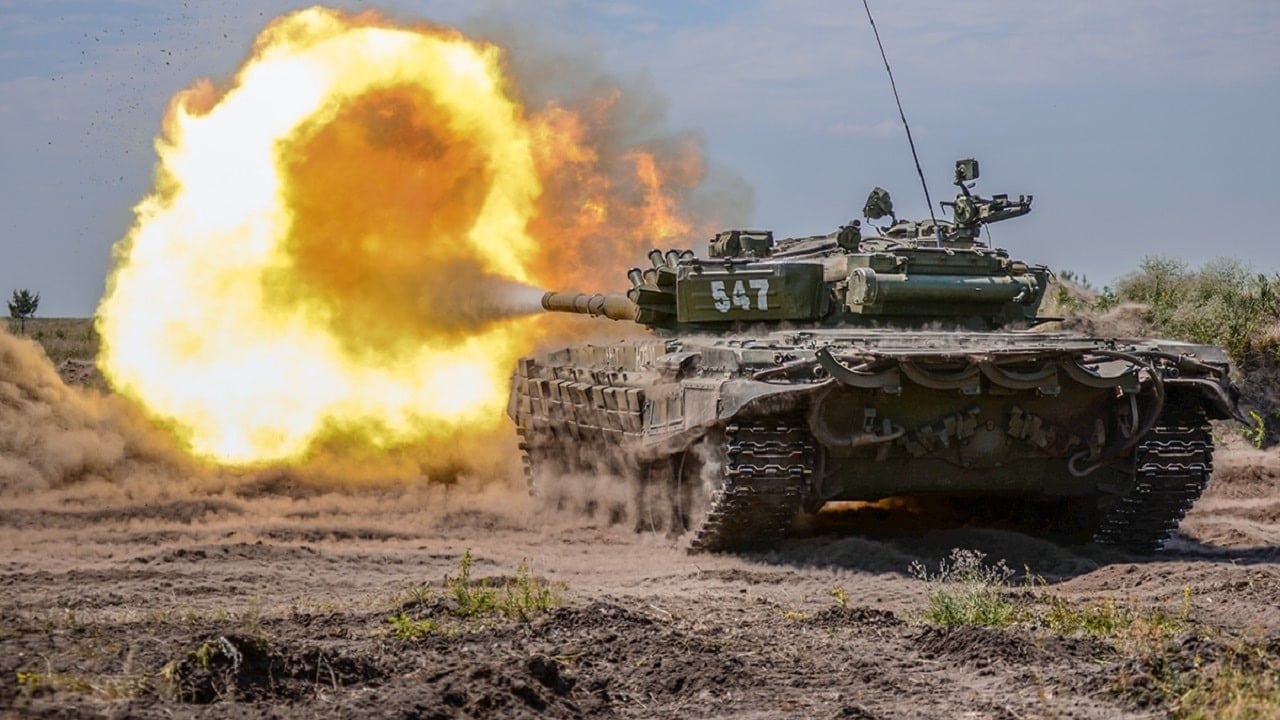
Iran Signed a $2.2 Billion T-72 Deal. It Received 422 Tanks – Iran’s armored forces still rely heavily on the T-72, a Soviet-designed tank Tehran first encountered as an Iraqi weapon during the Iran-Iraq War. The best recent public estimate, cited from the International Institute for Strategic Studies, places about 480 T-72S tanks in Iranian service. That is an inventory estimate, not a count of vehicles ready to fight.
The clearest acquisition record begins with a November 13, 1991, agreement between Iran and Russia. The $2.2 billion package called for licensed production of 1,000 T-72S tanks and 1,500 BMP-2 infantry fighting vehicles, plus ammunition, factory equipment, technical assistance, and parts. Russia built a tank plant at Dorud, which began production on July 8, 1997.
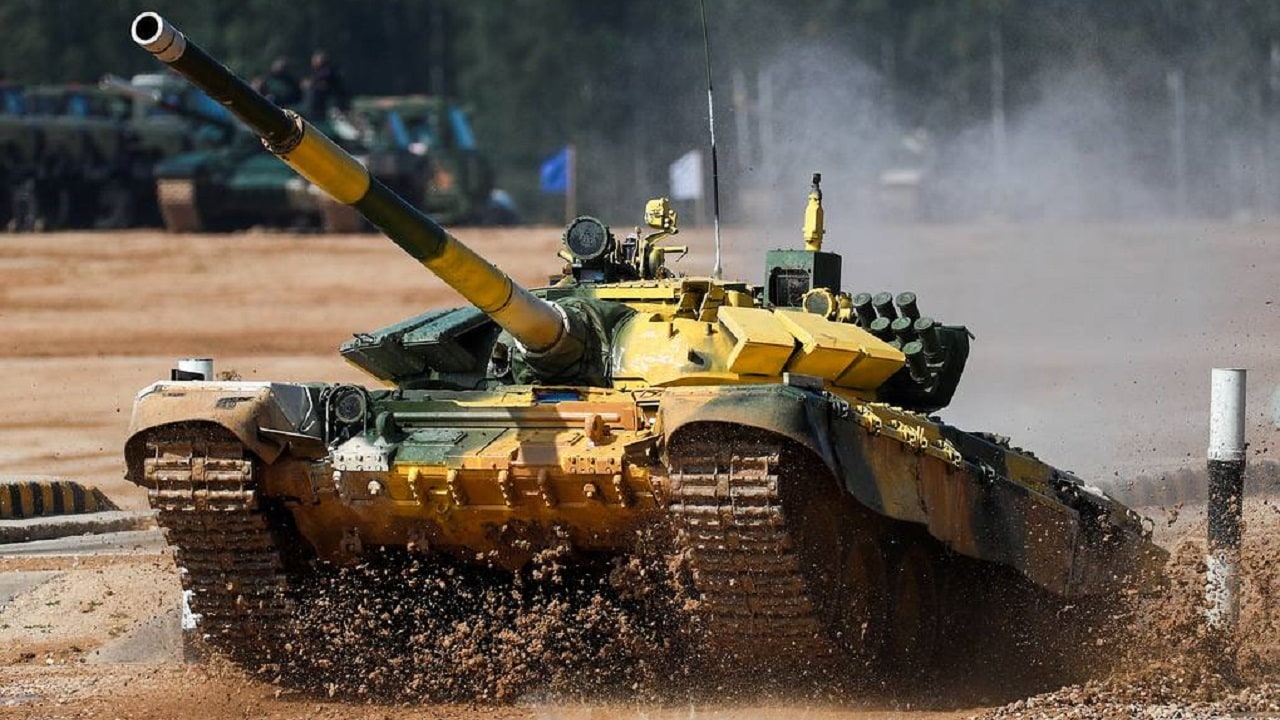
Russian T-72 tank. Image Credit: Creative Commons.
The contract was never completed.
Russian records cited by the Moscow Defense Brief show that Iran received 422 T-72S tanks and 413 BMP-2s between 1993 and 2000 for a combined $668 million. The original package was only about 30 percent fulfilled after U.S. pressure helped produce the Gore-Chernomyrdin restrictions on Russian arms transfers to Iran.
No defensible public figure isolates the price of Iran’s T-72 fleet from the BMP-2s, ammunition, licensed-production rights, and industrial support included in the contracts. Dividing $668 million by 422 tanks would create a misleading unit cost because much of the money was spent on other equipment and infrastructure.
Iran First Met the T-72 as an Iraqi Enemy
Iraq fielded T-72s during the 1980-1988 war, while Iran depended heavily on American M60s and British Chieftains inherited from the Shah. Revolutionary purges, embargoes, and years of attrition damaged Iran’s armored formations. A CSIS review estimated that Iran lost 40 to 60 percent of its major land weapons during the final battles of 1988.
The T-72 offered a postwar answer. It was newer than much of Iran’s mixed tank inventory, used a three-person crew, and supported licensed local assembly. The program also reduced dependence on Western suppliers that had stopped supporting the Shah’s equipment after the 1979 revolution.
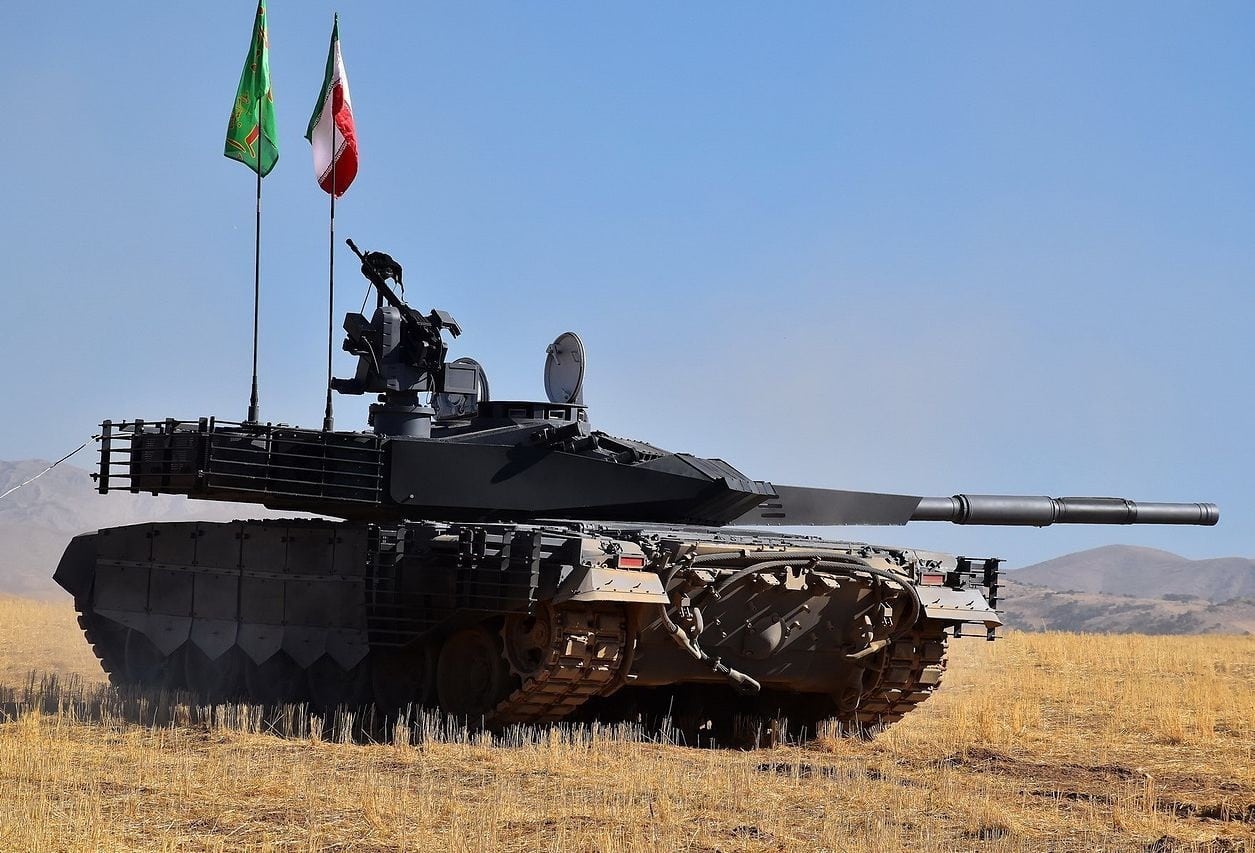
Iranian tank. Image: Creative Commons.
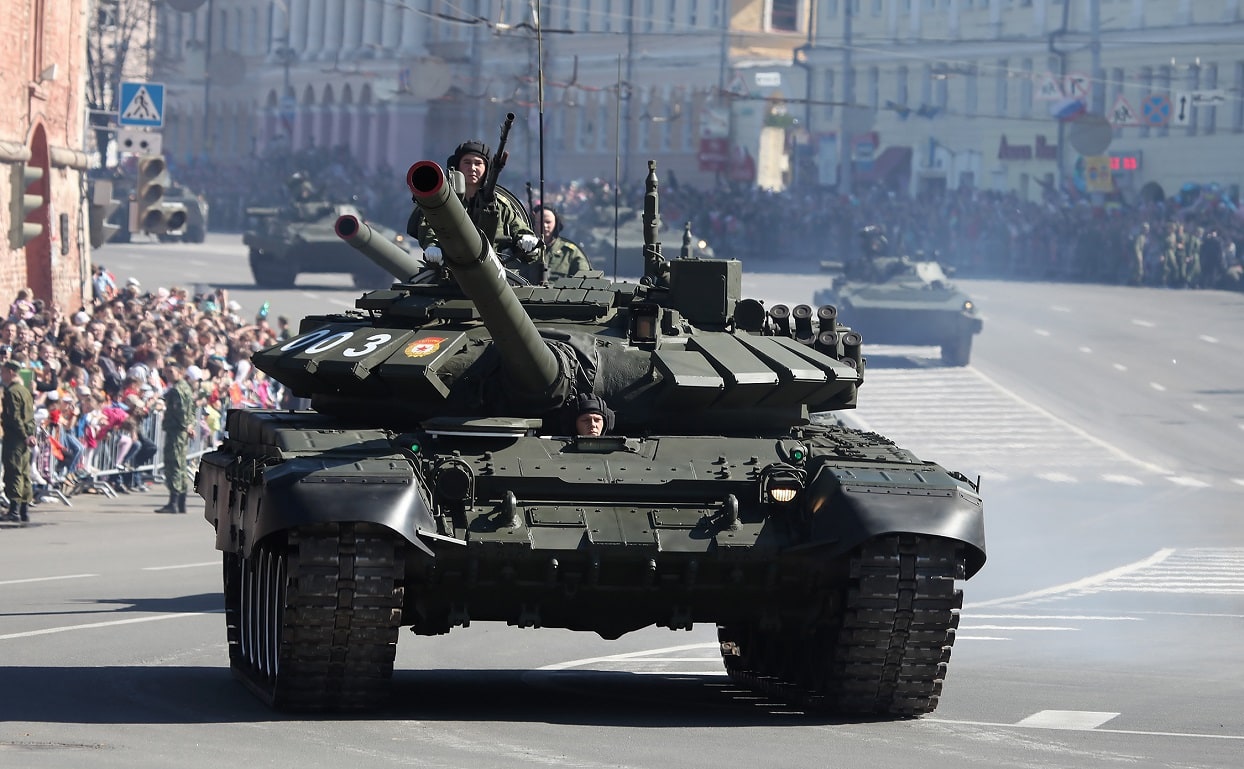
Iran Tank. Image Credit: Vitaly Kuzmin/Creative Commons.
The T-72S Gave Iran a Standard Postwar Tank
The export T-72S weighs about 44.5 metric tons and carries a three-person crew because an automatic loader replaces the fourth crew member. Its main weapon is a 125mm smoothbore gun with 45 rounds, backed by a 7.62mm coaxial machine gun and a 12.7mm weapon on the turret. Published specifications list the top road speed at around 60 kilometers per hour and the range at around 500 kilometers.
Those numbers made the T-72 easier to transport and support than many heavier Western tanks. The design also gave Iran a common chassis for training, ammunition, repair, and later upgrades. The smaller silhouette and autoloader came with a serious tradeoff: ammunition stored inside the fighting compartment creates a risk of catastrophic explosions after armor penetration.
Iranian T-72s Have a Limited Documented Combat Record
Most of Iran’s standardized T-72S force arrived after the ceasefire with Iraq, so it did not fight the 1980s war as a major Iranian formation. Some captured or transferred T-72s were reported in Iranian hands earlier, but public records do not support a reliable fleet total or detailed combat history.
In 2015, Bellingcat identified an Iranian-camouflaged T-72S near Tikrit during operations against the Islamic State. The available imagery did not establish whether the crew belonged to Iran, Iraq or an Iran-backed militia. The sighting showed that Iranian-standard armor had moved beyond Iran’s borders, not who controlled the tank in battle.
The broader combat history of the T-72 family shaped Tehran’s view of the platform. It had enough firepower and mobility for regional warfare, but the Gulf War and Ukraine experience exposed the importance of thermal sights, modern ammunition, active protection, and combined-arms support.
Karrar Upgrades Reworked Iran’s Existing T-72s
Iran opened a T-72 upgrade line at the Bani-Hashem Armor Industrial Complex near Dorud in August 2020. Janes reported that the displayed T-72M1 had extensive turret modifications, thicker frontal protection, and a remote weapon station. Photographs showed several tanks under construction but did not establish the scale of production.
The package borrowed features from the Iranian Karrar tank, itself derived from the T-72. Iranian officials described electro-optical fire control, a laser rangefinder, a ballistic computer, night vision, and a remotely operated machine gun. Iran has displayed several configurations, suggesting a gradual modernization effort rather than one uniform fleet standard.
That approach follows the logic behind other T-72 modernization programs: keep a proven hull, then improve sights, armor, communications, and weapons. It does not eliminate the basic vulnerability created by the carousel autoloader and the ammunition carried in the crew compartment, a problem that also affects newer T-90 variants.
Iran’s T-72 Fleet Remains Useful but Exposed
Iran’s 2025 and 2026 wars with Israel and the United States produced no verified T-72 tank battles. The campaigns centered on air strikes, missiles, drones, and naval operations rather than a ground invasion. No public damage assessment lists Iranian T-72 losses from those wars.
Open-source imagery from August 1, 2026, showed three T-72M or T-72M1 tanks being transported toward Abadan. The movement was assessed as a limited defensive repositioning by the 92nd Armored Division, not preparation for a large cross-border attack.
The tanks still provide mobile firepower for territorial defense, especially when supported by infantry, artillery, engineers, and drones. Their survival on a modern battlefield depends on camouflage, dispersal, electronic warfare, and short exposure times. Cheap FPV drones have made older armor increasingly vulnerable, even when add-on protection improves resistance to traditional anti-tank weapons.
As of August 12, Tehran had not published how many of the roughly 480 T-72S tanks remained operational, how many had received Karrar-standard upgrades, or whether any were lost during the 2025 and 2026 conflicts.
About the Author: Harry J. Kazianis
Harry J. Kazianis (@Grecianformula) was the former Senior Director of National Security Affairs at the Center for the National Interest (CFTNI), a foreign policy think tank founded by Richard Nixon based in Washington, DC. Harry has over a decade of experience in think tanks and national security publishing. His ideas have been published in the NY Times, The Washington Post, The Wall Street Journal, CNN, and many other outlets worldwide. He has held positions at CSIS, the Heritage Foundation, the University of Nottingham, and several other institutions related to national security research and studies. He is the former Executive Editor of the National Interest and the Diplomat. He holds a Master’s degree focusing on international affairs from Harvard University.

