
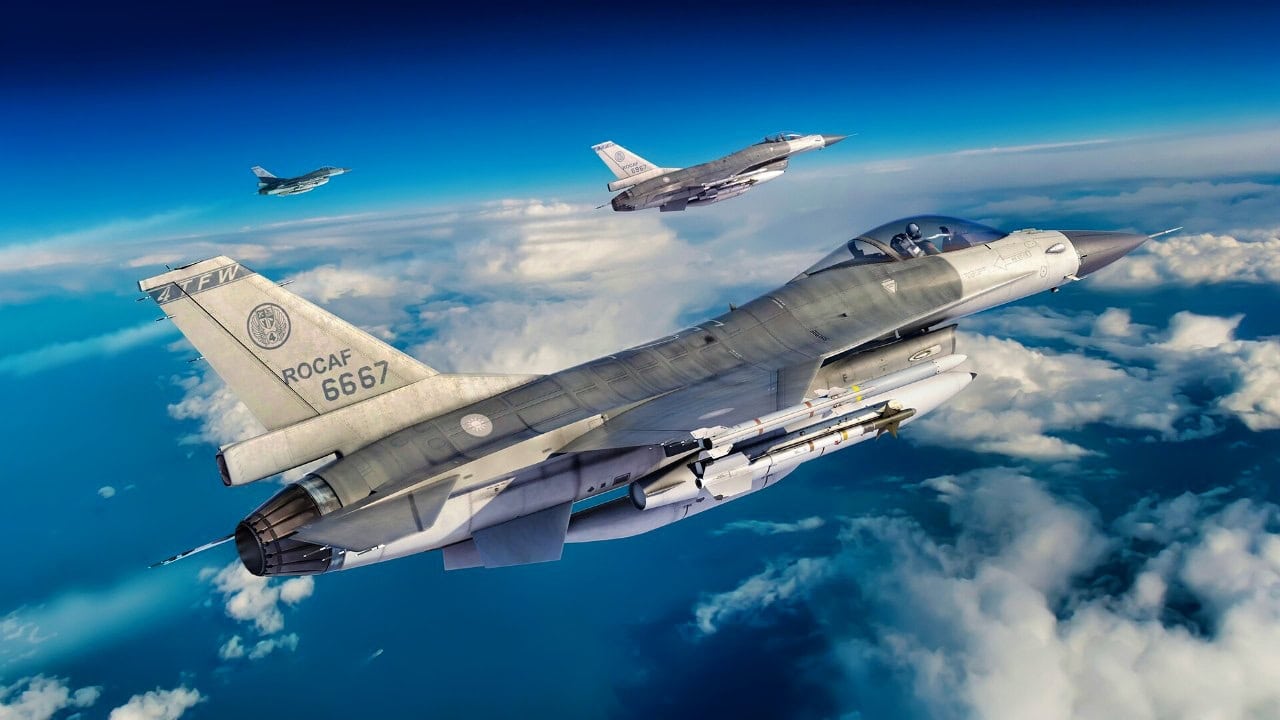
On Thursday, Taiwan’s legislature brought a months-long fight over its drone force to a vote. President Lai Ching-te’s government wanted a six-year, NT$210 billion special budget for roughly 210,000 military drones, arguing Taiwan needed the unmanned mass that reshaped Ukraine and the Middle East.
The opposition, which controls the legislature, said no, and passed its own instead: up to NT$240 billion over six years, funded through the annual budget and run by the economics ministry, not defense.
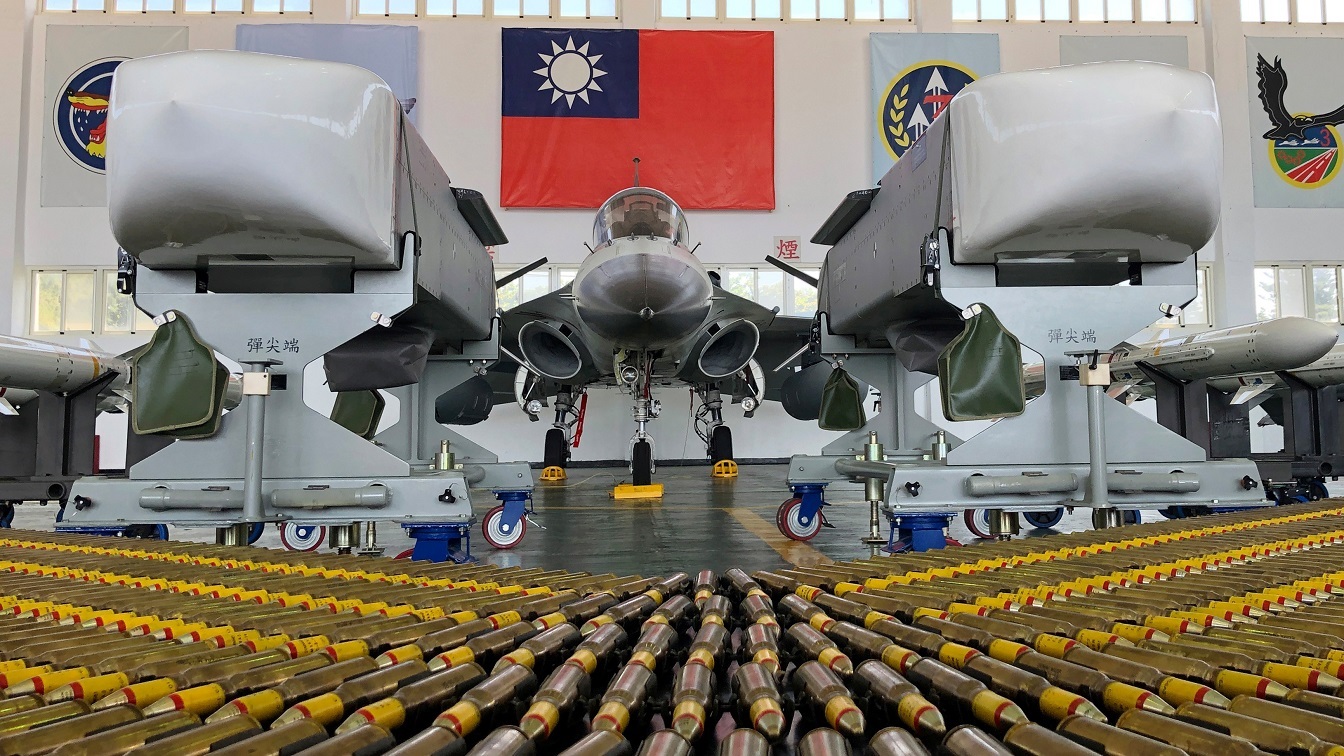
Taiwan Missiles. Image Credit: ROC Government.
The fight was mostly about mechanics: which ministry runs the money, and whether funding comes as a single multi-year authorization or year-by-year appropriations.
The KMT argued that a large order risks arriving already out of date, since drone technology evolves quickly
The government says its plan already calls for staged purchases and regular upgrades under that authorization, not a single bulk buy.
The Drone Question for Taiwan We Must Ask
Both sides can be right about the financing and still miss the question that matters.
Two hundred thousand drones is a number built to be repeated. It sounds like the figure that turns an amphibious landing into the “hellscape” concept a U.S. admiral coined in 2024 and Taiwan has since embraced.
What it doesn’t tell you is whether Taiwan can still generate that hellscape three weeks in, after China has spent its opening strikes hunting the factories, ports, and communications nodes the system runs on. That’s the real question, and Thursday’s vote barely touched it.
Image: Creative Commons.
Militaries have made this mistake before.
American commanders in Vietnam tracked enemy body counts as a stand-in for progress, as if attrition could be measured like inventory.
The number was precise and almost worthless: it said nothing about whether the other side could keep fighting.
Taiwan’s drone debate risks the same error in reverse, fixating on how many systems Taipei owns on day one rather than whether it can keep fielding them a month in.
A Flow, Not a Stock
Ukraine is the reason Taiwan is having this argument, and the lesson from Kyiv is genuine.
Cheap, expendable drones have made the modern battlefield brutally transparent, turning vehicles, supply columns, and fixed positions into targets that used to hide. Lai’s government invokes it constantly, correctly.
Ukraine also demonstrates something less comforting: a drone war consumes drones continuously. Systems get jammed, shot down, or wear out, and frequencies shift to defeat Russian jamming, so software has to shift too.
A large stockpile in January is spent by summer unless a production line keeps refilling it.
Ukraine can manage that partly because it sits on a landmass connected by rail and road to Poland, Romania, and a friendly Europe beyond.
Taiwan is an island China would like to isolate before the fighting starts.
There’s a wrinkle worth flagging here: a Center for Strategic and International Studies analysis last year found China still produces roughly 90 percent of the world’s sintered rare earth magnets, used in the small motors that power most drones, citing U.S. Commerce Department figures.
Build the airframe in Taichung, avoid every Chinese component you can find, and the motor probably still owes something to a Chinese supply chain.
A drone industry built on Taiwanese soil doesn’t solve that problem by itself, since it, too, can be squeezed long before a single missile crosses the Strait.
What Han Kuang Already Knows
Taiwan’s military planners are already working on this problem. The gap sits between what they understand and what Taiwan’s political debate actually measures, not inside the planning itself.
This year’s Han Kuang exercises, Taiwan’s largest annual war games, ran for ten days in August around the premise that China would hit Taiwan’s support systems first.
The drills tested decentralized command in case Chinese strikes take out central communications, and slowed mobile internet to simulate a jammed network.
For the first time, the defense ministry rehearsed relocating the Armaments Bureau’s 202nd Arsenal in Taipei and mobilizing civilian factories responsible for “whole-system assembly,” moving both toward the rear under simulated attack.
Nor is Taiwan building this out of a cottage industry.
The economics ministry said in May that domestic manufacturers can already assemble around 15,000 drones a month, with a goal of exceeding 100,000 by 2030.
That’s real capacity, and it undercuts any story of Taipei caught flat-footed.
It doesn’t settle the harder question, though.
Fifteen thousand drones a month is a peacetime figure, produced with electricity that stays on, ports that stay open, and components that arrive on schedule.
Whether that output survives a Chinese campaign designed to take those things away is a question nobody has answered yet, probably not even the people running the factories.
The Calculus in Beijing
A fixed inventory is a planning problem the PLA can solve on paper.
Chinese commanders who know roughly how many drones Taiwan starts with can estimate how fast those systems get jammed, destroyed, or cut off from their operators, and plan a campaign timeline around it.
A large stockpile raises the price of invasion.
It doesn’t cap the timeline, because the timeline was never about the stockpile.
A force that keeps regenerating breaks that calculation.
If Taiwanese drones are still finding targets over a beachhead in week three, Chinese units moving supplies inland, widening a lodgment, or reopening a captured port stay exposed the whole time.
The question a PLA planner actually has to answer is whether Taiwan can put new drones in the air faster than China can knock down the old ones, and that number is much harder to pin down than a warehouse count.
That uncertainty is worth more to Taiwan’s deterrent than the headline number ever will be.
No one serious thinks it makes an invasion impossible.
It stretches the likely cost and duration beyond anything a Chinese planning staff can confidently bound, which is exactly the variable a staff officer cannot quantify.
What Washington Should Measure
Washington should avoid making the same mistake.
Support for Taiwan is easy to evaluate in the way most defense assistance is evaluated: by counting what got delivered, drones, missiles, contracts signed.
That’s an easy line for a press release, and it’s the wrong measurement here.
A better standard is whether assistance makes Taiwan’s drone force harder to exhaust, not simply bigger.
In practice, that means pairing finished systems with something less visible: helping secure non-Chinese sources for the materials that keep production running once a war starts.
It won’t make as good a headline as another arms package, but it comes closer to what would matter three weeks into a fight.
After the First Salvo
Taiwan’s legislators will keep arguing about NT dollars, which ministry runs the program, and whether today’s drones will look obsolete by the time they arrive.
Those fights are real, and nobody should wave them off.
But they are arguments about the easy part.
The hard part starts the day Chinese missiles hit the first production facility, and it will be measured in a currency nobody debated on Thursday: not how many drones Taiwan had, but how many it could still put into the air a month later, a number Beijing would have to guess at until the war made it obvious.
About the Author: Dr. Andrew Latham
Andrew Latham is a professor of international relations and political theory at Macalester College in Saint Paul, MN. You can follow him on X: @aakatham.