
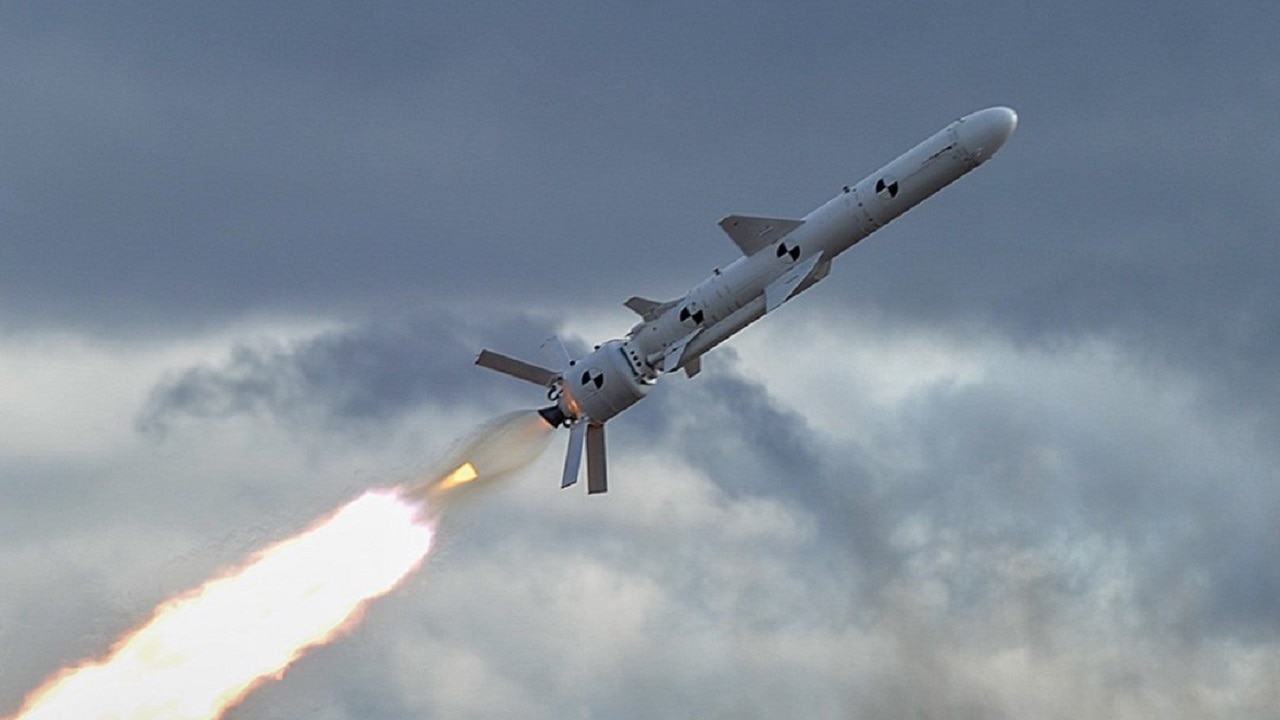
As Ukraine and Russia ramp up their strike campaign against each other, Ukraine is currently developing its own ballistic missiles to drastically increase its long-range capabilities.
The missiles are currently being developed by Fire Point, Ukraine’s premier drone manufacturer. Not much is currently known about the upcoming “FP-7” and “FP-9” ballistic missiles, but according to President Zelenskyy, the missiles are expected to enter operational service by the Fall.
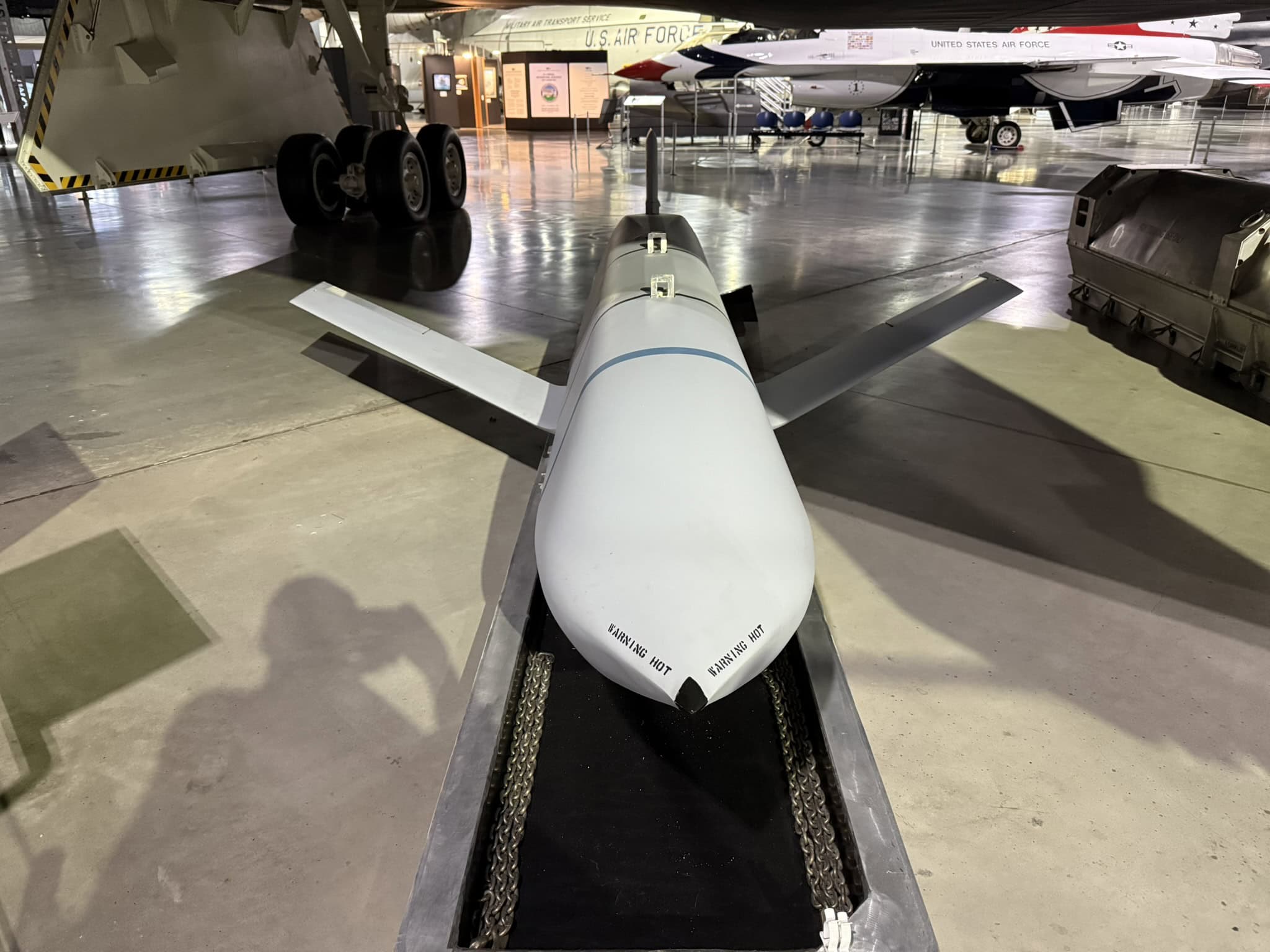
JASSM Missile. 19FortyFive Image.
The introduction of these new missiles represents the most formidable long-range strike weapons that Kyiv has developed over the course of the war and will likely be seen as a red line by Moscow.
Home-Made Ballistic Missiles
In an interview with Ukraine’s state-run telethon on the evening of Aug. 8, President Zelenskyy stated that the new ballistic missiles were expected to be ready in 2-3 months.
Previously, the only ballistic missiles in Ukraine’s inventory were American-made ATACMS tactical ballistic missiles for the HIMARS MLRS system.
These missiles, while highly capable in their own right, were limited by their small numbers and by U.S.-imposed constraints. preventing Ukraine from striking deep behind enemy lines.
The new FP-9, on the other hand, is expected to reach as far as Moscow.

Ukraine tanks fighting. Image Credit: Creative Commons.
The missiles are currently being certified by the Ministry of Defense, a process that should be completed by next month, Fire Point told Reuters.
One of the main questions for the program is how many missiles Ukraine can produce. Obviously, the program is heavily reliant on components and funding from Western allies. “As for their large-scale use, I can’t say, because some things do not depend on Ukraine,” Zelenskyy said. “It is the same with Russian ballistic missiles: they contain components from other countries. The same applies to our ballistic missiles — there are few such components, but some do come from other countries.”
According to Ukrainian intelligence, Russia has ramped up production of its ballistic missiles and is currently producing upwards of 65 missiles per month.
A Domestic Patriot Alternative?
A variant of Ukraine’s upcoming FP-7 ballistic missile is currently being tested as an anti-ballistic-missile interceptor under the “Freya program” in collaboration with nine European countries.
As Kyiv currently struggles with a crippling shortage of PAC-3 interceptor missiles, Zelenskyy is turning to his home industrial base to fill the gaps.
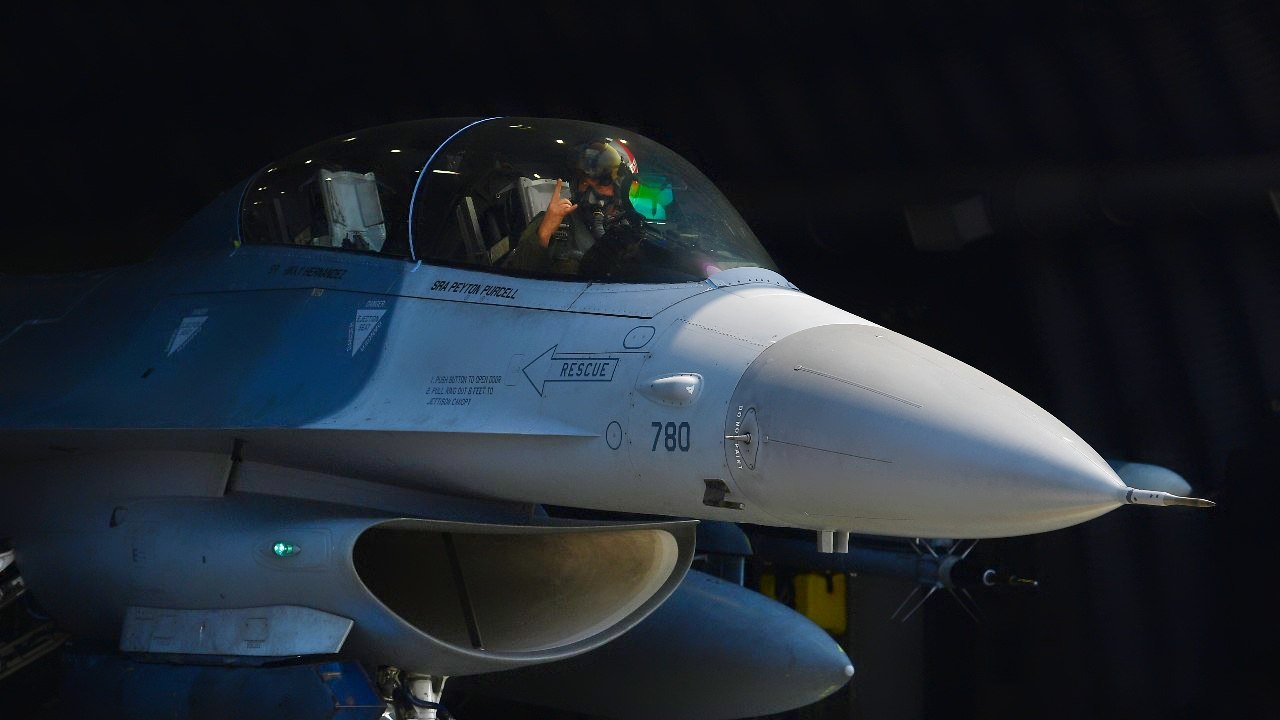
Capt. Michael Terry, 36th Fighter Squadron F-16 pilot, prepares to launch at Osan Air Base, Republic of Korea, July 9, 2020. The 36th Aircraft Maintenance Unit and the flight line operators wokred to make this aircraft mission-capable after being grounded for 186 days. (U.S. Air Force photo by Senior Airman Noah Sudolcan)
The missile is expected to make its first interception by mid-2027, if not later. “We are trying to squeeze in the program that usually takes 20 to 30 years to develop in a few years, and this is not something that you can do within a matter of three months,” said Iryna Terekh, the CEO of Fire Point.
There are legitimate concerns to be had as to whether Ukraine has the technical know-how to produce ballistic missile interceptors, especially when its industrial zones are under constant threat of Russian missiles.
Further exacerbating these concerns is the somewhat shady nature of Fire Point.
Known for producing FP-1 and FP-2 drones, Fire Point is considered by many to be one of the most important defense companies in Ukraine and is crucial to the country’s defense.
Last year, however, the company came under fire for embezzlement allegations, culminating in Ukraine’s largest wartime corruption scandal.
The company first came under scrutiny from the National Anti-Corruption Bureau in 2025, when it was listed as one of the largest recipients of Ukraine’s drone budget.
The exact details of the investigation are too much to go into, but long story short: Fire Point may or may not be embezzling state funds to fill the pockets of several of Zelenskyy’s cabinet members. The investigations are still ongoing.
Ukraine’s Next Flamingo
Fire Point’s newest ballistic missiles (setting aside the corruption allegations) are on track to become the next FP-5 Flamingo. The Flamingo is a domestically produced missile marketed for its low cost and heavy payload (around 1,150 kilograms).
The missile made headlines in the West as a potential game-changer and a sign of Ukraine’s developing wartime technological expertise.
Now, with several different ballistic missile programs underway, Kyiv is set to expand its arsenal against Russia and put more pressure on Moscow to end the war.
That said, if the missiles are indeed accepted into service, they should not be expected to be built in large numbers, at least not at first.
There is, however, a dual meaning to my saying that the FP-7 and FP-9 are set to become the next Flamingos.
Despite the media buzz the FP-5 generated upon its unveiling, the missile’s performance has so far been underwhelming.
According to open-source information, Ukraine launched 10 attacks using FP-5 cruise missiles in July, culminating in around 60 missiles in total.
Of those 60 missiles, only two managed to impact their targets in attacks against Kirov. Flamingos were used successfully in 2026; however, it did not take long for the Russians to develop reliable countermeasures, and since then the Flamingo’s success rate has taken a dive.
Against conventional missiles, Russia’s air defenses are highly effective.
Similarly, Ukraine’s ballistic missiles may score a few hits immediately after their introduction, but it likely won’t take long for Russia to adapt and render the missiles nearly ineffective. Of course, we might soon just find out who wins this battle in the sky.
About the Author: Isaac Seitz
Isaac Seitz, a Defense Columnist, graduated from Patrick Henry College’s Strategic Intelligence and National Security program. He has also studied Russian at Middlebury Language Schools and has worked as an intelligence Analyst in the private sector.