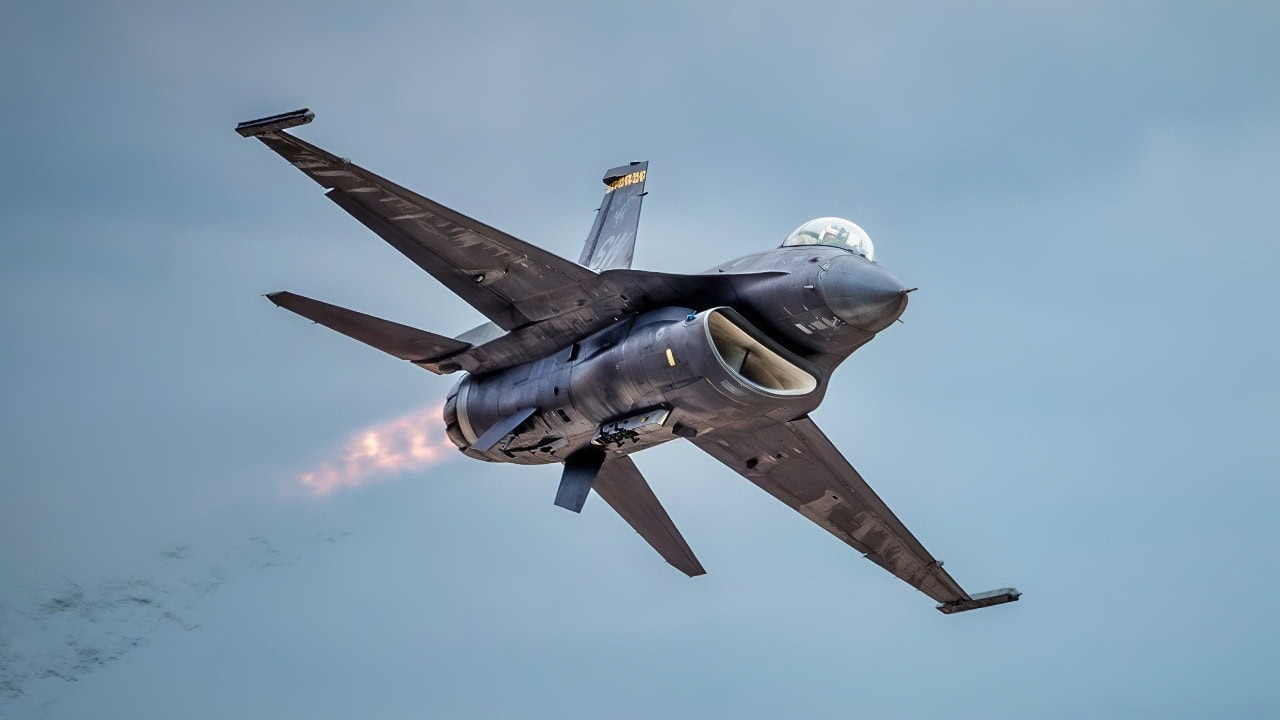
One of the U.S. Air Force’s older fighters is now undergoing testing that may pave the way for the next generation of aircraft flown and otherwise assisted by artificial intelligence.
The aircraft in question? One of the most widely produced warplanes of the Cold War, still in service today with the United States and its allies: the F-16. And, as you likely guessed, over the years, we have seen a few F-16 Fighting Falcons up close, and have included photos of those visits here for your viewing pleasure.
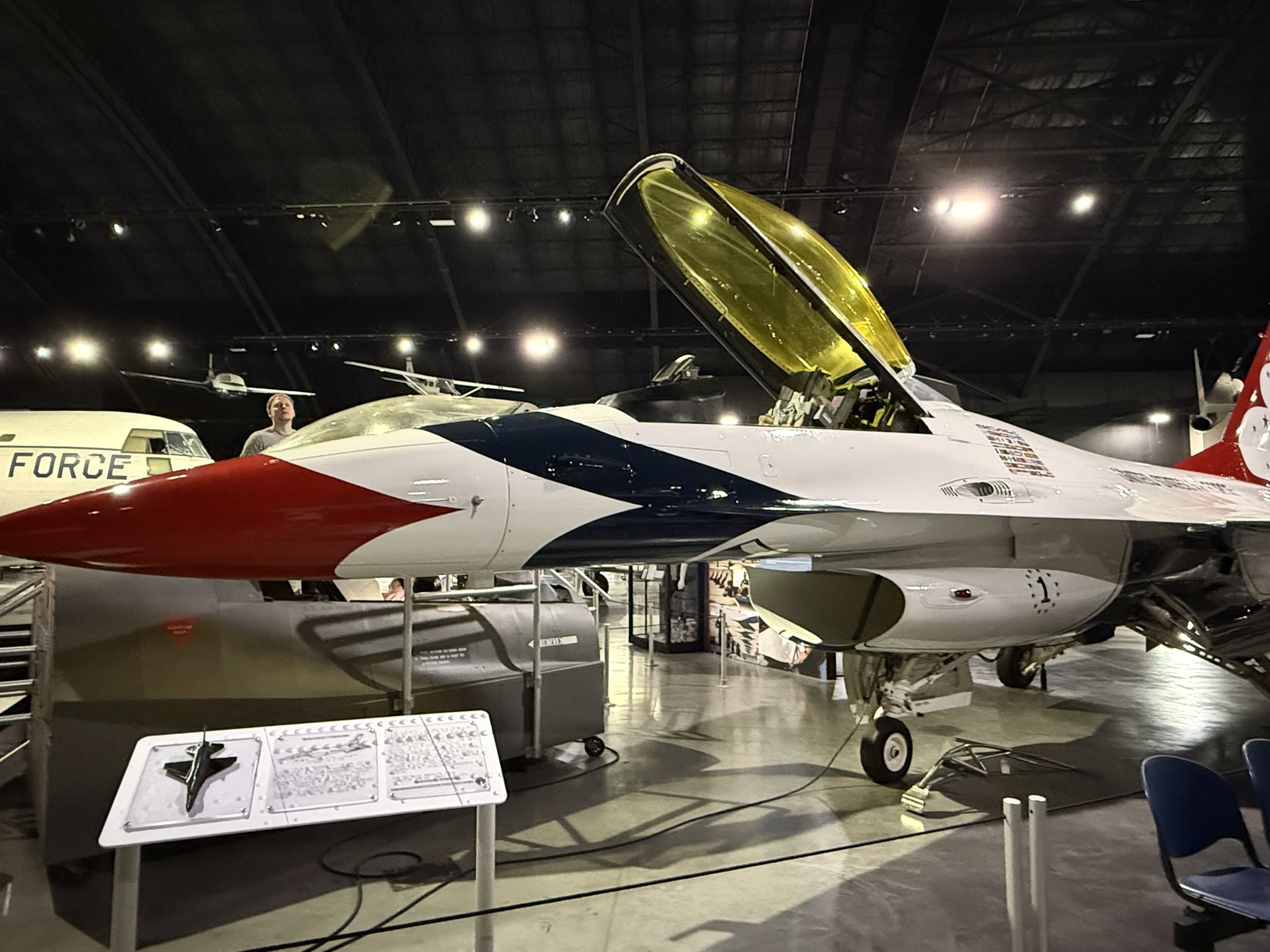
F-16 Fighter. 19FortyFive.com Image from the National Museum of the U.S. Air Force.
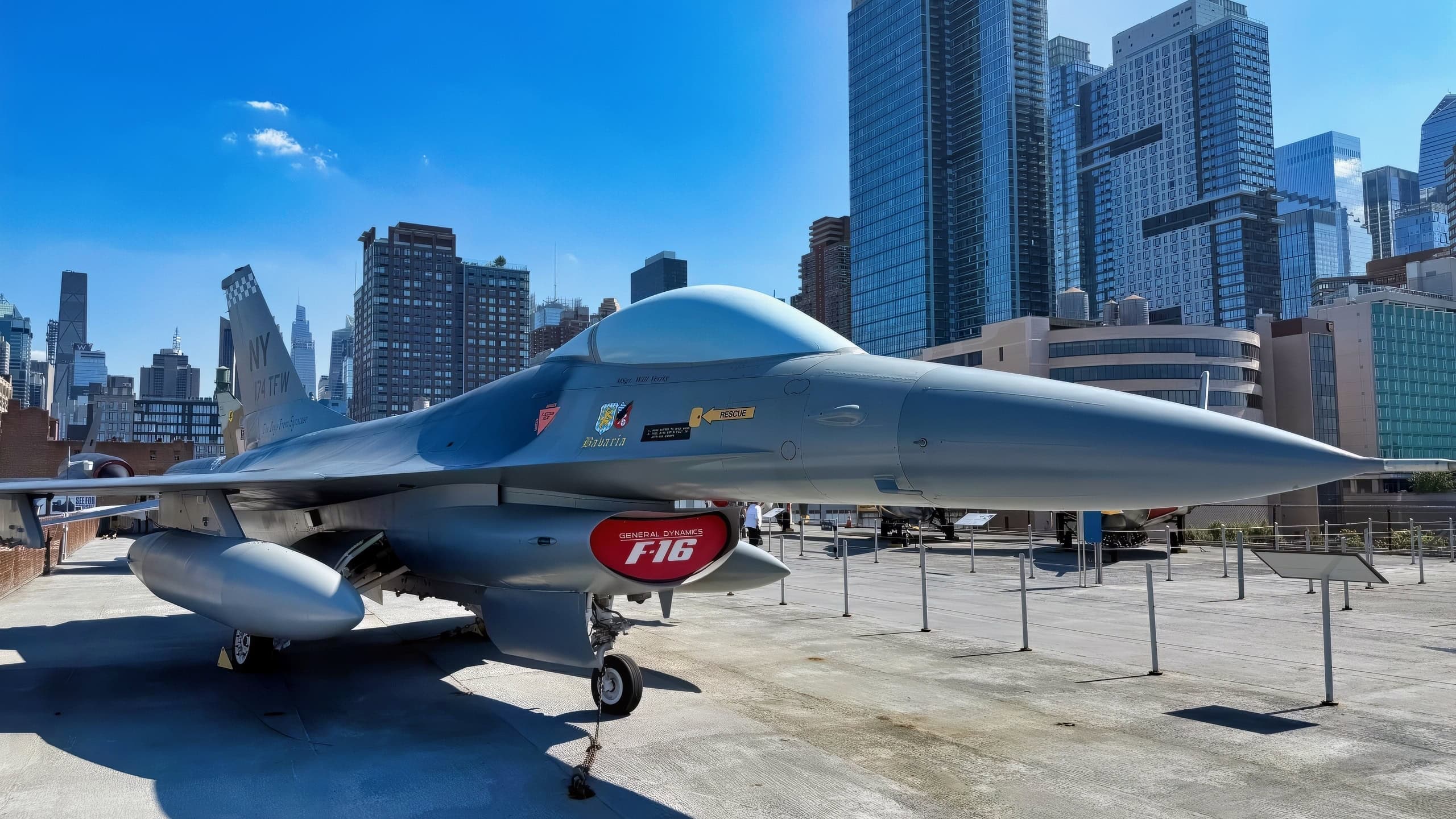
F-16 Fighter On USS Intrepid. 19FortyFive.com Image.
Viper Experimentation and Next-generation Operations Model Program
A group of F-16s has been converted to fly autonomously as part of the Viper Experimentation and Next-generation Operations Model program, known by its acronym VENOM, a joint program shared by DARPA and the U.S. Air Force.
“These groundbreaking flight tests of VENOM-modified F-16s advance the infrastructure needed to develop trusted, autonomous air combat capabilities,” explained Brigadier General James Valpiani, a DARPA program manager, in a DARPA statement.
“The Air Force and DARPA team has automated flight controls and sensors on a standard F-16 without changing the jet’s core software.
This enables an efficient pipeline for developing dominant AI for aerial combat, allowing us to rapidly innovate for the warfighter.”
The core of the modifications integrated into the modified F-16s is the VENOM Autonomy Kit.
According to DARPA, the kit interfaces with the fighter’s mission systems and flight controls, allowing pilots to instantly toggle between pilot-in-the-loop and AI control.
“The emerging threat environment, especially as it relates to aerial combat, is growing increasingly complex,” General Valpiani added.
“AI has tremendous potential to help humans manage this complexity in beyond-visual-range combat, but many hard questions remain concerning the performance and trustworthiness of combat AI in the extreme fog and friction of modern warfare.
The AIR program aims to apply cutting-edge combat agents to operationally relevant scenarios to address these questions and field war-deterring, war-winning capabilities to our warfighters.”
In the future, the modified VENOM F-16s will be a major founding part of continued AI research conducted by DARPA under the auspices of their Artificial Intelligence Reinforcements program.
Eventually, the program hopes to evaluate multiple AI-piloted aircraft simultaneously, gleaning valuable flight data that will likely inform future unmanned programs, including the broader Collaborative Combat Aircraft umbrella.
General Valpiani further explained that today’s aerial combat environment is highly complex and will only become more complicated.
Artificial intelligence can cut through the fog of combat and make crucial, split-second decisions that could mean the difference between life and death and between victory and defeat.
A New Life for the Vanguard of the Cold War?
The selection of the F-16 was no accident.
DARPA chose that fighter for the VENOM program because it bridges a laboratory demonstrator or computer simulation and actual combat.
Previous initiatives involving the X-62A VISTA showed that an artificial intelligence agent could reliably fly a fighter during a dogfight, but VENOM poses a harder, more relevant question.
Can the autonomy procedure by AI be successfully mated onto an ordinary operational combat aircraft — without an extensive rebuild of its subsystems?
The F-16 is particularly well-suited to answer the question.
It is a mature aircraft with a robust industrial base. Despite its Cold War vintage, it is also highly maneuverable thanks to its fly-by-wire controls.
It is well understood and can draw upon a deep pool of pilots, maintainers, and depot support.
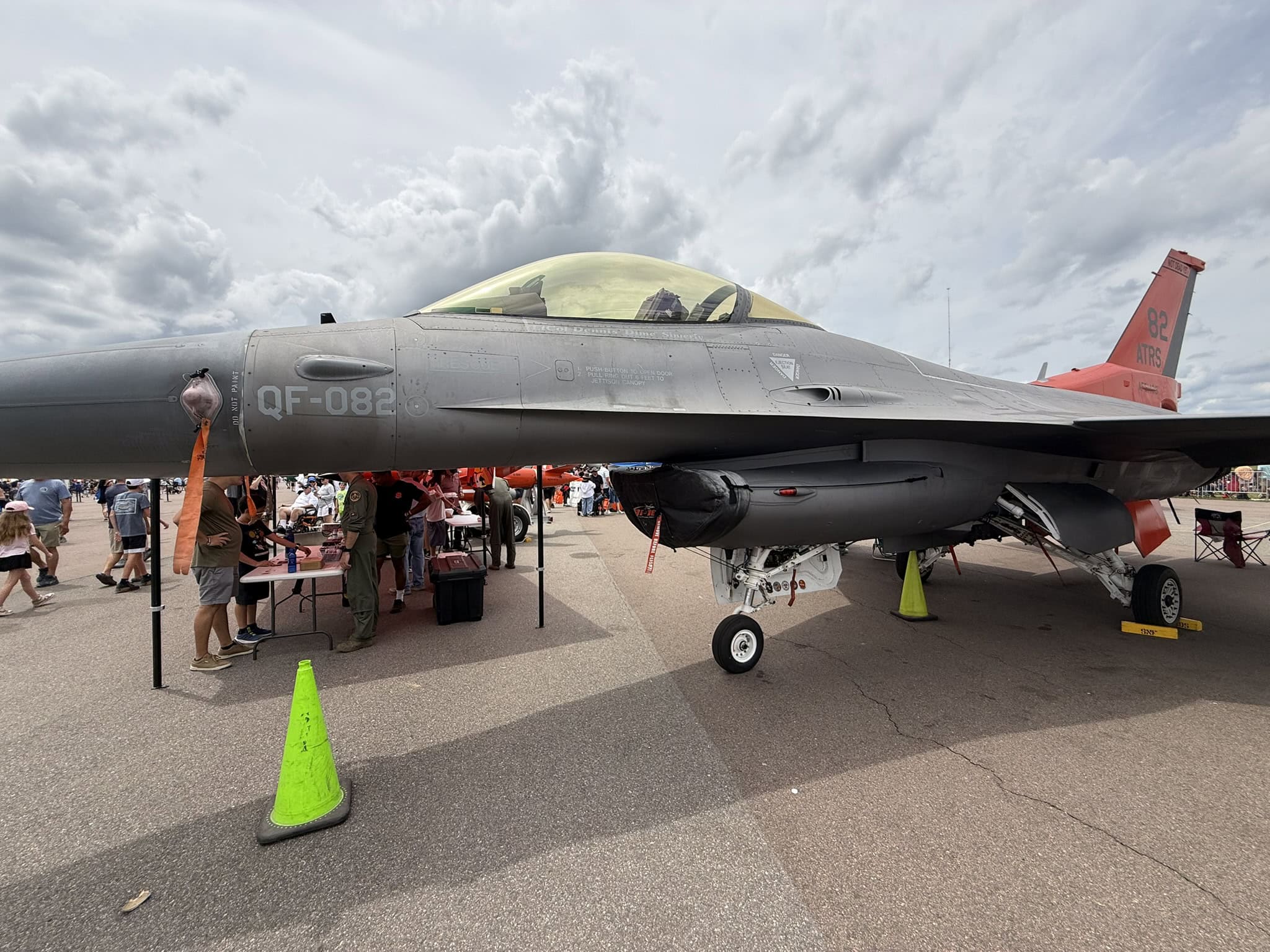
F-16. Image Credit: 19FortyFive.com Taken 4/19/2026.
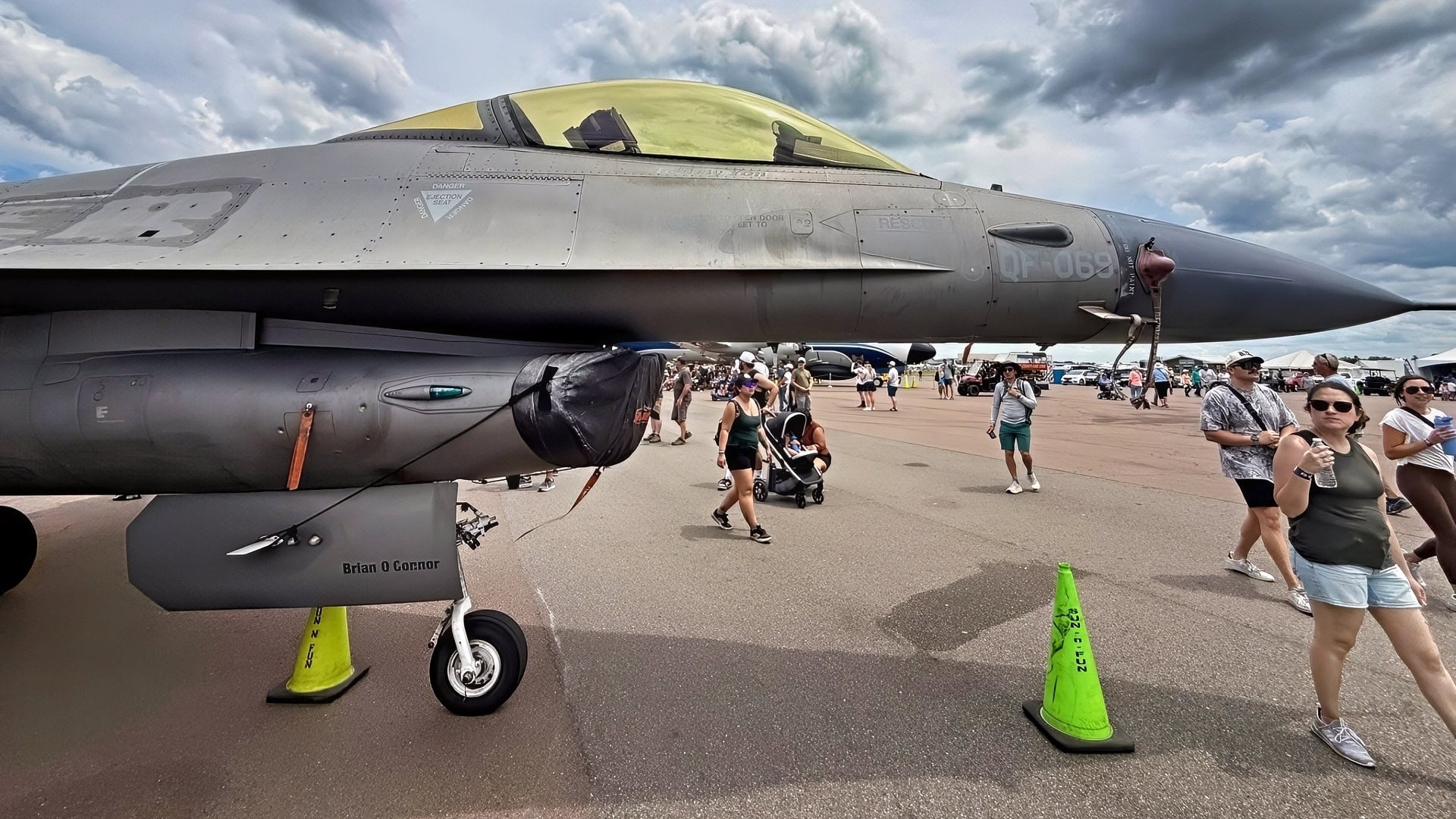
F-16 Fighter Lakeland Florida 19FortyFive.com Image. Taken on 4/19/2026.
Economically, the F-16 is an astute choice for training AI algorithms on the unpredictable nature of combat flight rather than predictable computer simulations.
But of equal importance, the VENOM Autonomy Kit interfaces directly with the aircraft’s controls and mission systems without altering the F-16’s core software at all.
During flight testing, a pilot stays aboard and can monitor the AI pilot while the test proceeds, taking over only when necessary.
The effort is not aimed at making crewed F-16s evaporate from air wings entirely, but at establishing a method for developing and validating autonomous aircraft that could inform other future programs.
For future Collaborative Combat Aircraft, the rewards would be cheaper, unscrewed aircraft that can scout, carry a range of weaponry, or otherwise complicate an opponent’s defense calculations.
The F-16 VENOM is, therefore, not an end in itself, but instead the beginning of the future of the next generation of unmanned, artificially assisted combat aircraft.
It’s a remarkable sunset for one of the stalwarts of American combat aircraft.
About the Author: Caleb Larson
Caleb Larson is an American multiformat journalist based in Berlin, Germany. His work covers the intersection of conflict and society, focusing on American foreign policy and European security. He has reported from Germany, Russia, and the United States. Most recently, he covered the war in Ukraine, reporting extensively on the war’s shifting battle lines from Donbas and writing on the war’s civilian and humanitarian toll. Previously, he worked as a Defense Reporter for POLITICO Europe. You can follow his latest work on X.