
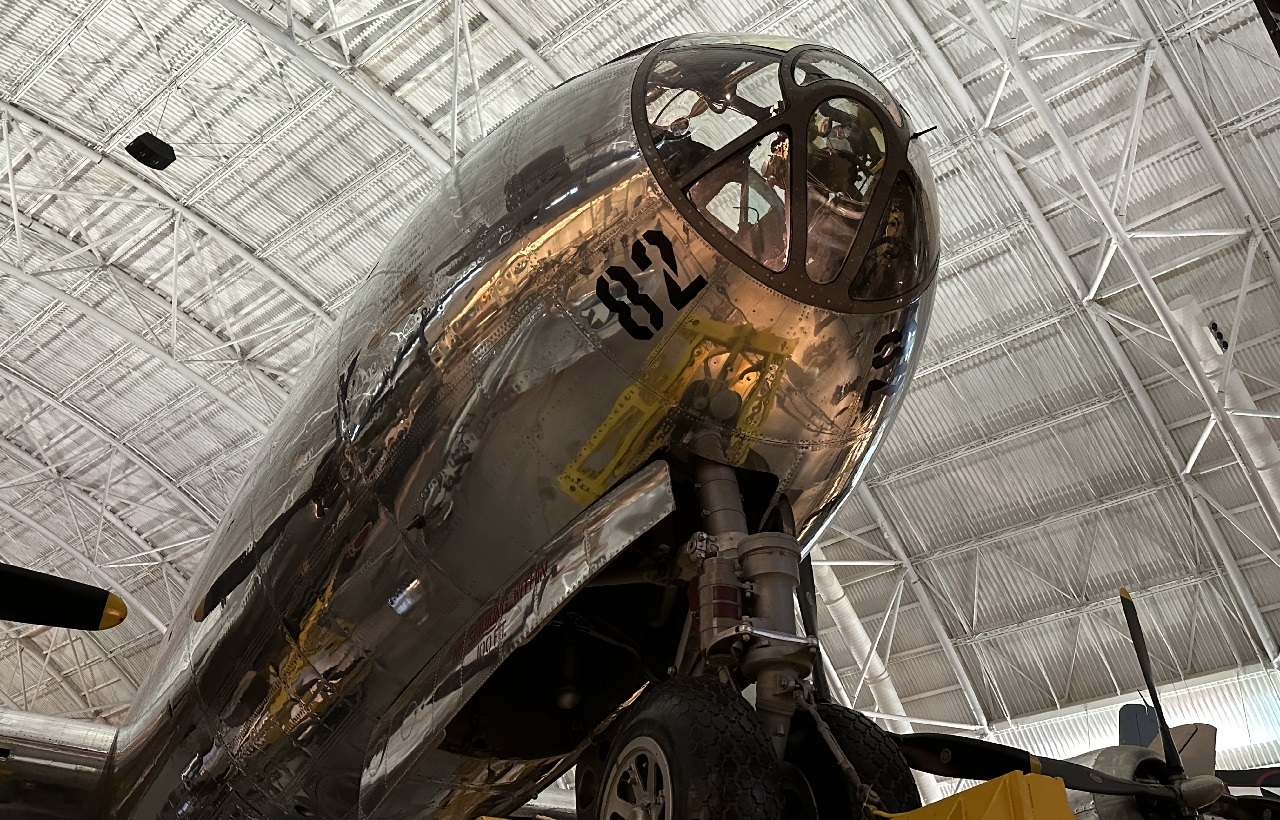
As the Second World War progressed, the United States introduced the Boeing B-29 Superfortress, which was the largest and heaviest bomber in the world at the time. It also cost more than the actual atomic bomb it dropped. The costs of the B-29 came in at $3 billion, while the Manhattan Project cost a still massive $1.9 billion.
The B-29 featured several cutting-edge, remotely operated turrets controlled by analog computers, a brand-new technology at the time.
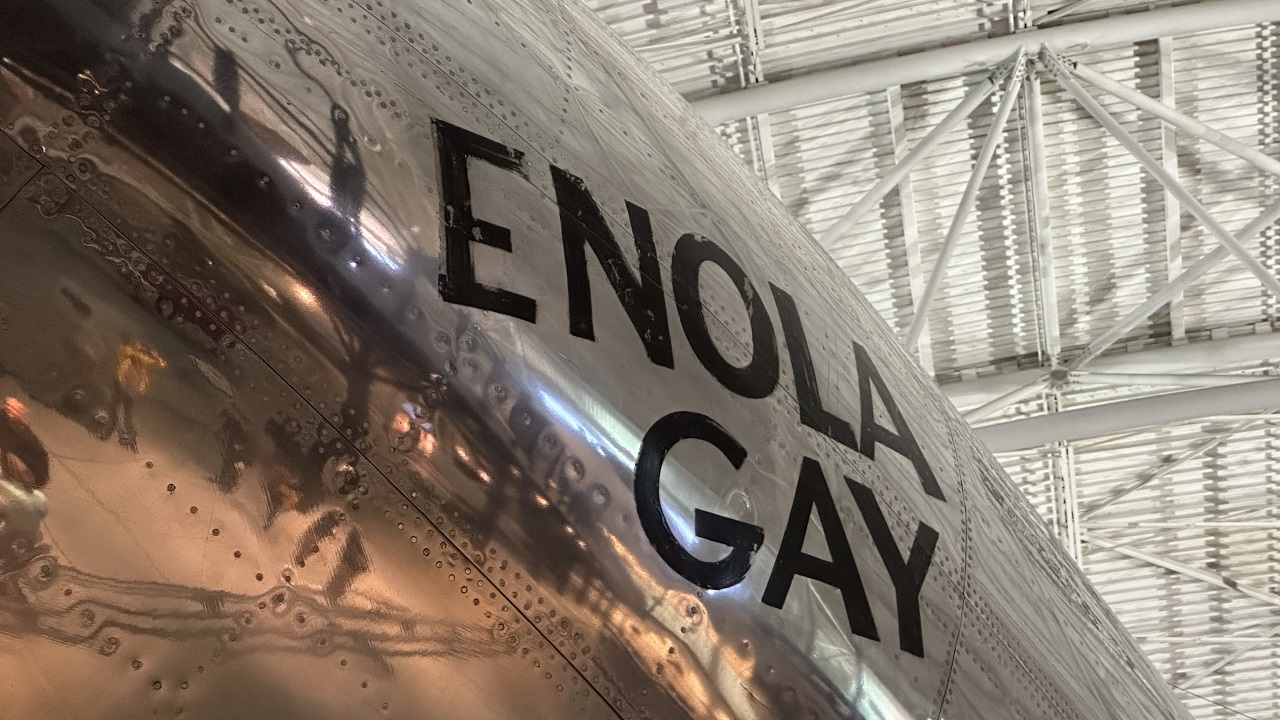
Enola Gay B-29. Image was taken on October 1, 2022. Image Credit: 19FortyFive.com
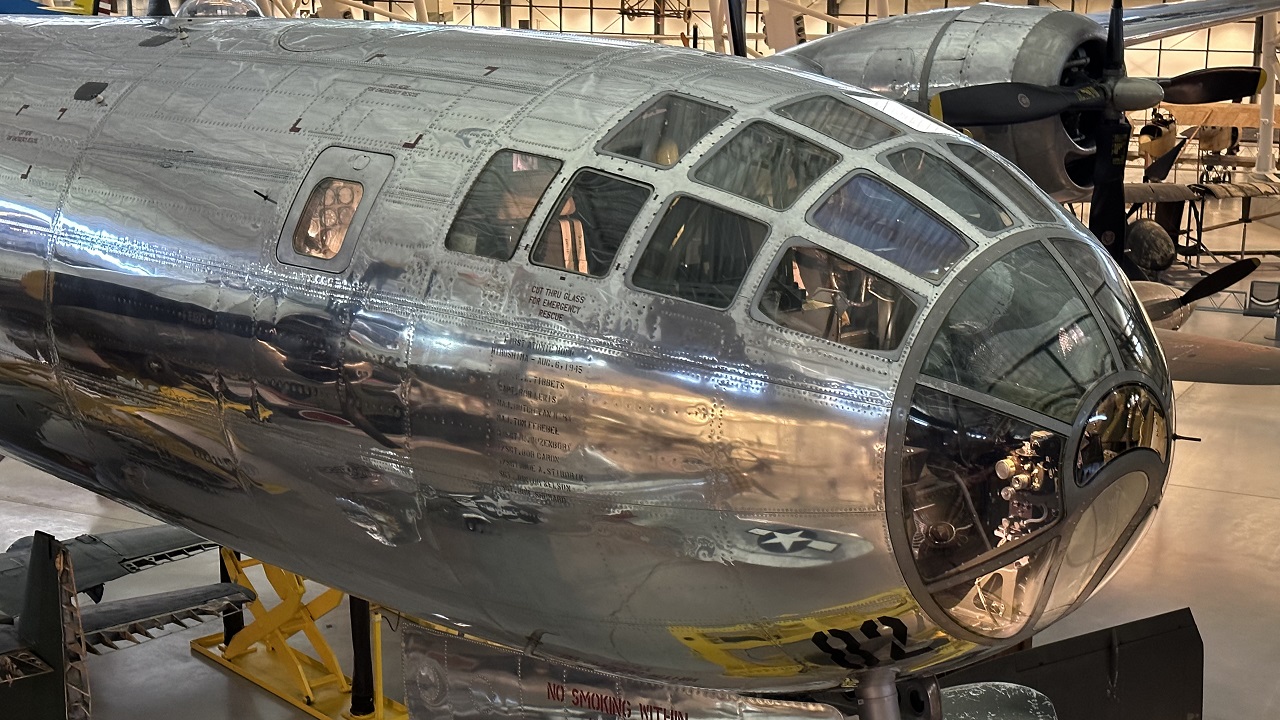
Enola Gay B-29. Image was taken on October 1, 2022. Image Credit: 19FortyFive.com
Because of the immediate needs of the war, the B-29 was pressed into service relatively quickly, with the heavy bomber entering service only a year after the prototype had made its first flight.
Consequently, the designers of the new remote turret system did not have time to perfect it.
While the new technology was incredible for its time, it was unreliable and often less effective against enemy fighters than the B-17 and B-24’s manned turrets.
The B-29’s Remote Gun System
The new fire-control system on the B-29 was meant to improve the bomber’s accuracy and improve the effectiveness of the gun turrets.
Rather than relying on manned turrets as previous bombers did, the B-29 introduced a new system in which an analog computer calculated an enemy aircraft’s speed, distance, and trajectory and made the necessary adjustments.
All the gunner had to do was aim the sights at an enemy plane, and the computer would do the rest.
The bomber’s main fire-control officer could control multiple gun turrets at once if needed.
The system let the bomber engage enemies accurately at higher speeds and at angles that were difficult for a human to predict.
On paper, the new fire-control system allowed for much better accuracy on the B-29’s turrets. In practice, however, the system was incredibly buggy and unreliable.
The biggest problem was that the concept was too ambitious for the technology of the time, and whether because of wartime needs or a program oversight, it was rushed into service before it was properly tested and perfected.
General Curtis LeMay, head of XXI Bomber Command and director of B-29 operations against Japan, also strongly disliked many of the bomber’s new computer systems. “There were scores of defects [with the B-29]—either readily apparent—or worse— appearing when an aircraft was actually at work and at altitude,” he later recalled.
Ambitious But Unreliable
The remote system, although it was technologically impressive, was overly complicated. The systems were easily damaged and prone to malfunction.
One major problem was that the computers were notoriously buggy.
Because the technology was so new and rushed, the programmers didn’t have time to iron out its kinks.
The system relied on so many new technologies that the remote-controlled guns rarely worked properly.
The technology’s groundbreaking nature meant that ground maintenance crews, many of whom had never even heard of a computer at that point, were often unqualified to maintain the complicated systems.
Training programs for computer maintenance were implemented, but like the computers themselves, they were rushed and half-baked.
Gradually, the computer-assisted weaponry was removed from the B-29, with most of its defensive armaments removed by the end of the war.
This shift came as the mission changed from high-altitude daytime strikes to low-altitude night bombing runs, when enemy fighter activity was at its lowest.
Because the threat from Japanese fighters was low (as the war dragged on, many of Japan’s most experienced pilots were already lost), combined with the unreliability of the computer systems, meant that most of the gun turrets simply were not necessary.
In 1945, General LeMay rescinded his order to reduce defensive armaments after observing that crew morale dropped noticeably after removing some of the gunners (bomber crews often developed very close, familial bonds with each other throughout the war).
By the end of the war, however, newer B-29B models had most defensive turrets removed in favor of extra fuel and an AN/APG-15 fire-control radar.
Ahead of Its Time
To give the B-29 designers as much credit as possible, the principle behind the fire-control system was fundamentally sound, but the war didn’t give the program the time it needed to iron out the issues.
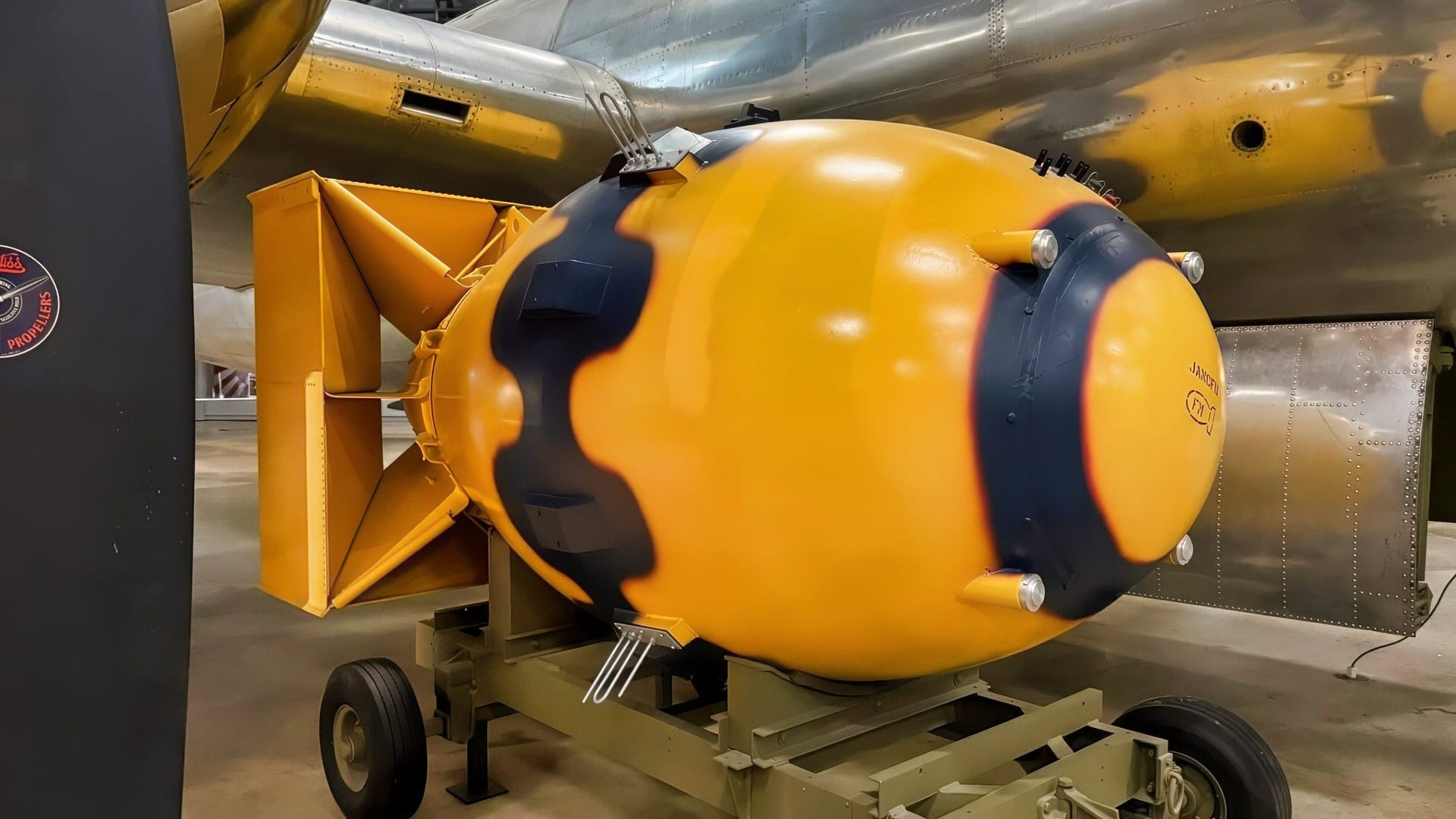
Fat Man Nuclear Bomb from National Museum of the U.S. Air Force. 19FortyFive.com Image.
At the same time, some crews were quite satisfied with the system and never experienced any issues with the remote-controlled turret.
The system was not worthless, as evidenced by some of the records of air kills by B-29s against Japanese pilots.
It was a groundbreaking, revolutionary advancement in technology and helped pave the way for future flight-control systems.
As revolutionary as the fire-control system was, however, it was still a brand-new, relatively untested technology that left plenty of room for improvement.
This is to be expected of any first-of-its-kind system, and the technology did, in fact, improve over time. However, after the war ended and technology advanced, heavy bombers gradually lost their defensive armaments.
During the Cold War, bombers grew more sophisticated: they operated at much higher altitudes, became faster, and, more importantly, started carrying missiles.
Consequently, the possibility of a bomber coming into visual range of an enemy fighter diminished.
The B-52 was the last American bomber to carry defensive armament: a single remote-controlled M61 Vulcan at the tail. This feature would eventually be removed in 1991.
About the Author: Isaac Seitz
Isaac Seitz, a Defense Columnist, graduated from Patrick Henry College’s Strategic Intelligence and National Security program. He has also studied Russian at Middlebury Language Schools and has worked as an intelligence Analyst in the private sector.