
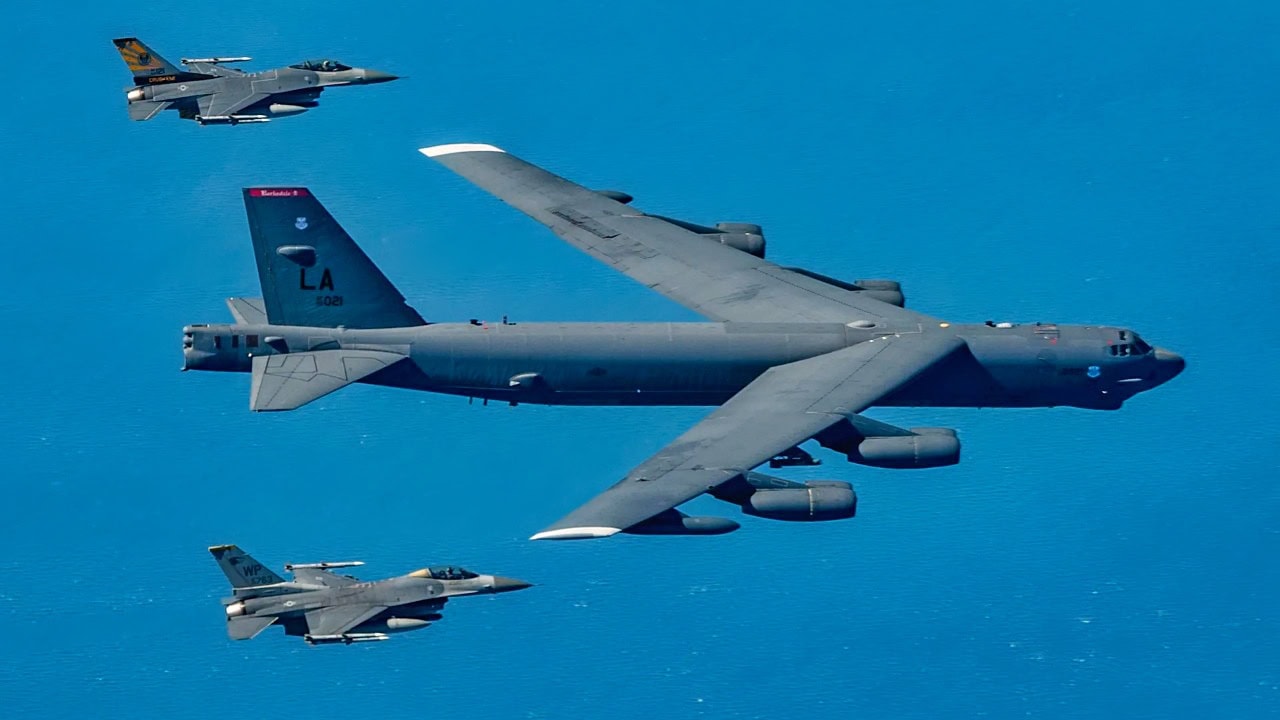
How Have B-52 Bombers Performed In The Iran Air Campaign? – During Operation Epic Fury, B-52 Stratofortress bombers were used in direct overland missions inside Iran after initial stealth strikes degraded Iranian air defenses and established air supremacy over Iranian airspace.
Early in the campaign, B-52s fired long-range cruise missiles from outside Iranian airspace. Then, as Iranian air defense networks were eliminated, the B-52s were sent on missions over Iran, using their massive bombloads to take out multiple targets during their missions.
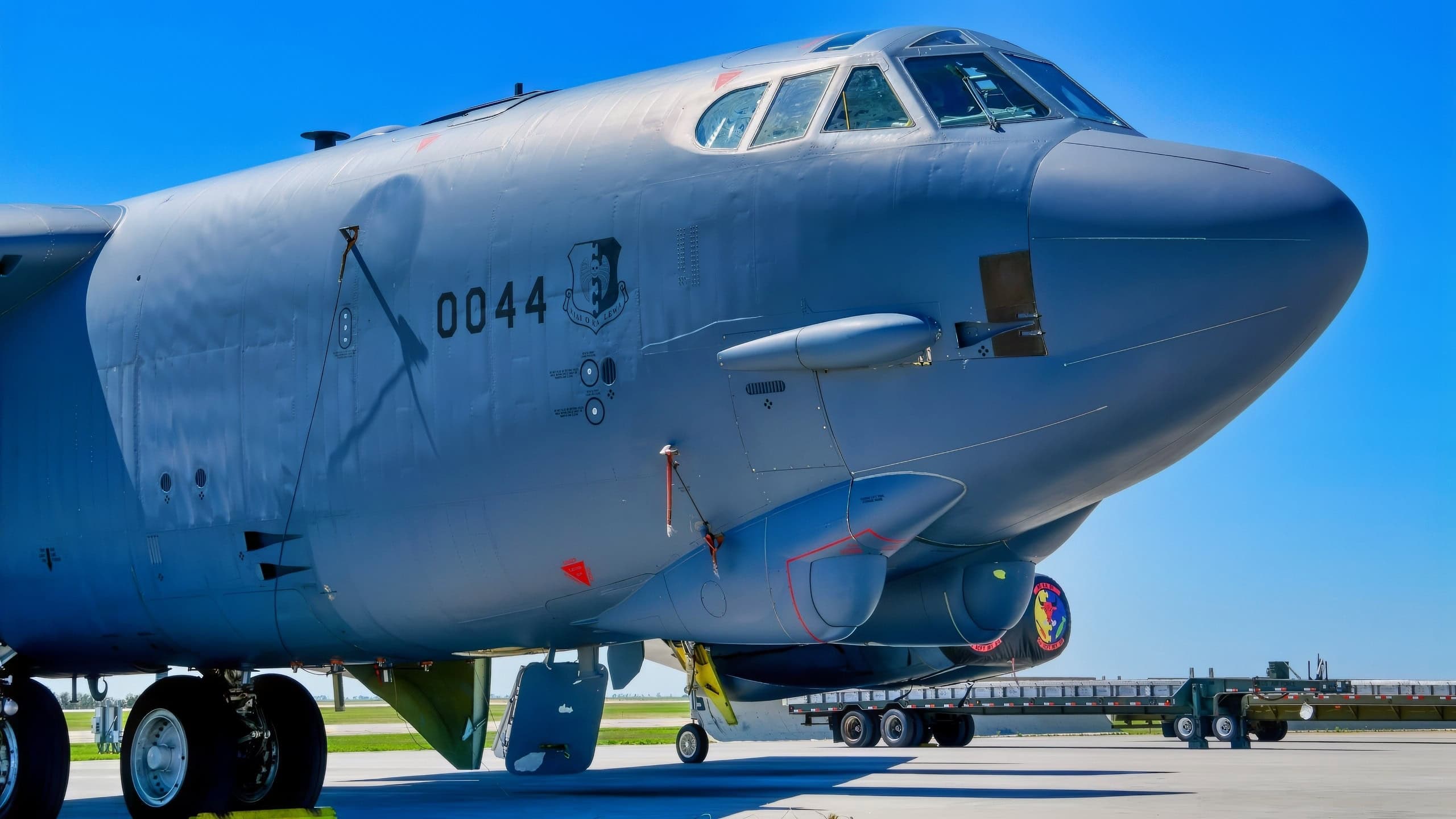
A B-52H Stratofortress sit parked on the flight line at Minot Air Force Base, North Dakota, Aug. 8, 2022. The B-52 is capable of dropping or launching gravity bombs, cluster bombs, precision-guided missiles and joint direct attack munitions. (U.S. Air Force photo by Airman Alysa Knott)
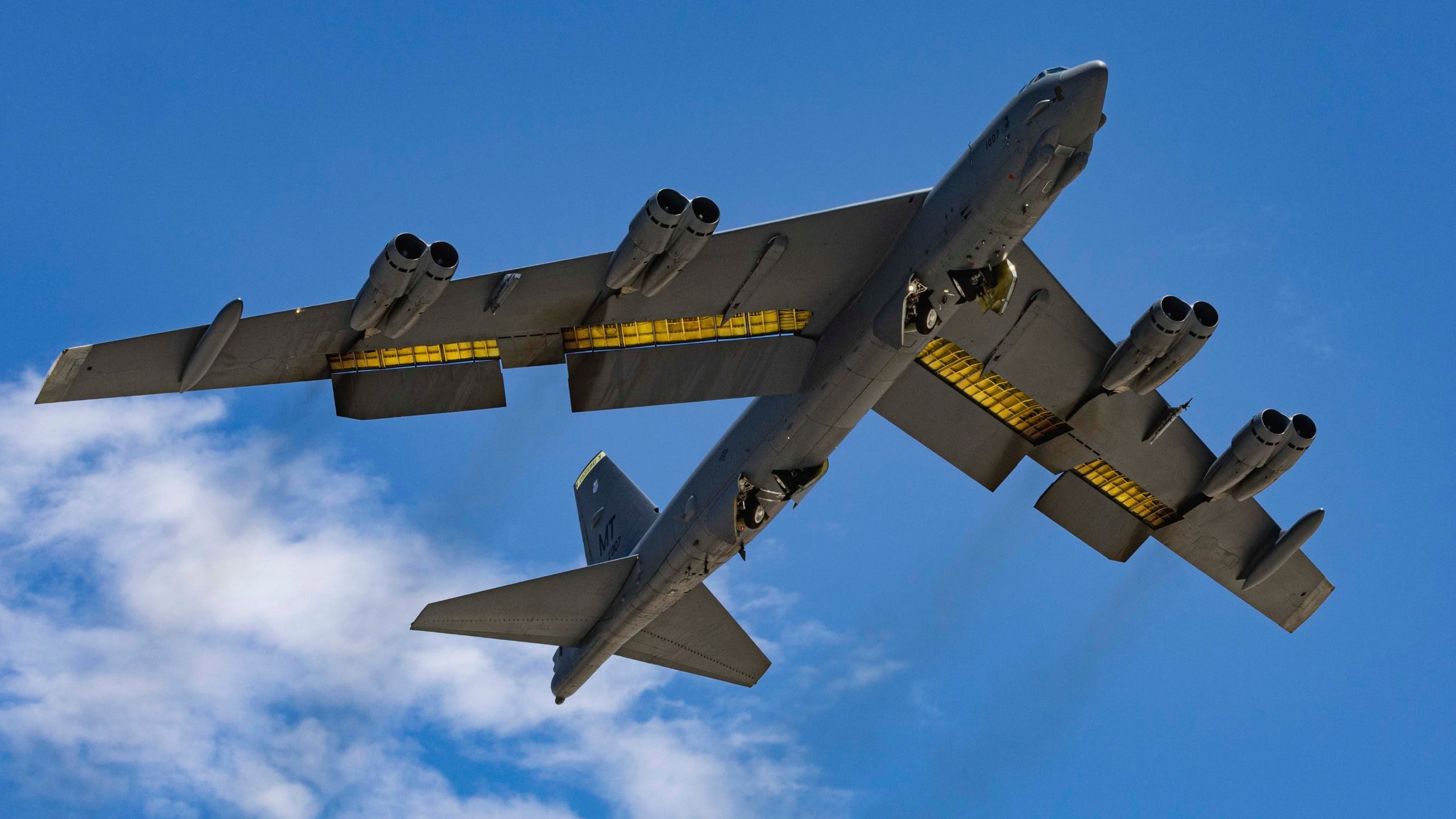
A B-52 Stratofortress assigned to the 69th Bomb Squadron, Minot Air Force Base, North Dakota, flies during Red Flag-Nellis 22-3 at Nellis Air Force Base, Nevada, July 18, 2022. RF-N 22-3 provides realistic combat training that saves lives while increasing combat effectiveness. (U.S. Air Force photo by Airman 1st Class Makenna Gott)
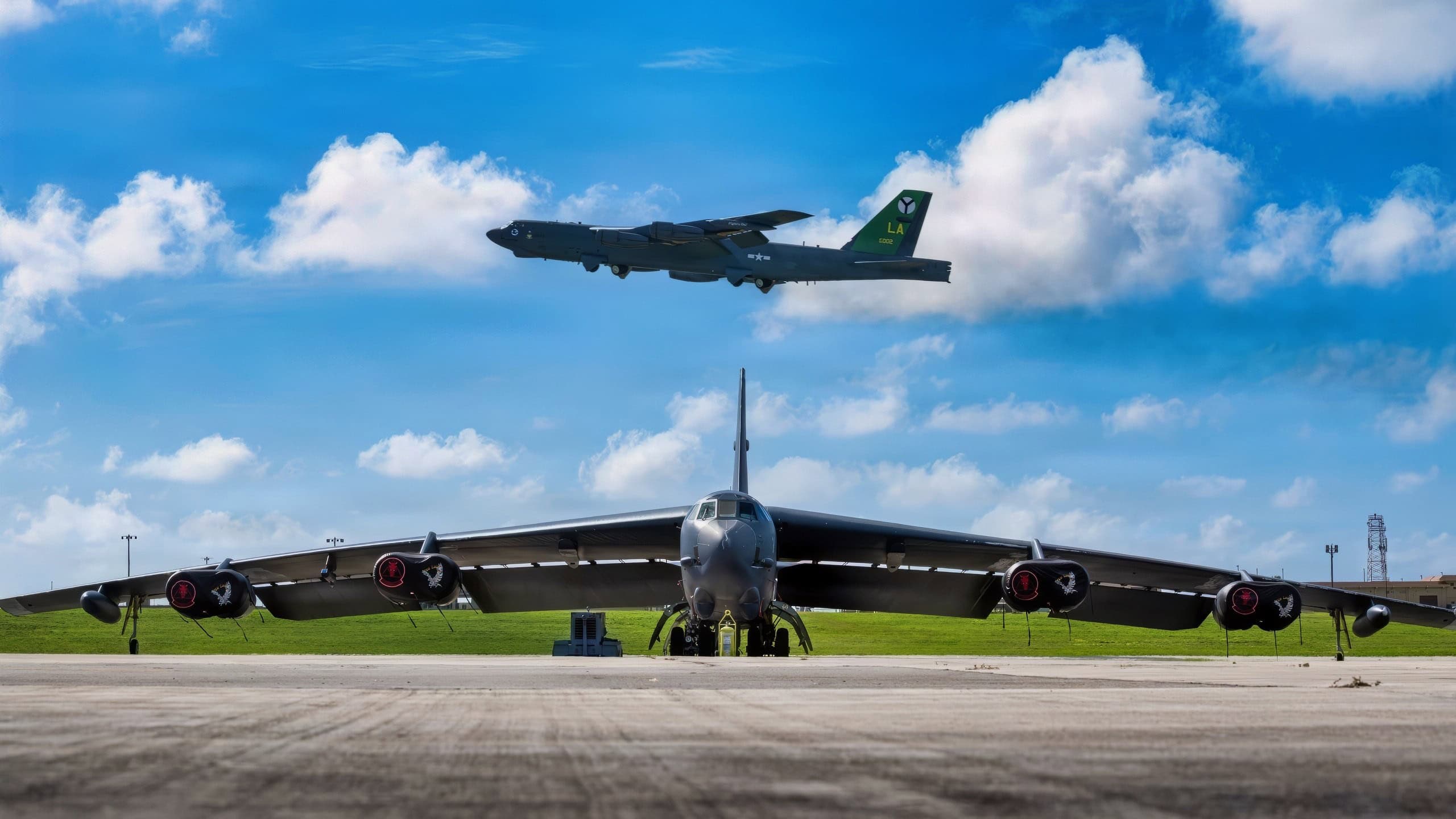
The 2nd Bomb Wing flagship B-52H Stratofortress flies over another B-52H parked on the flightline at Andersen Air Force Base, Guam, Feb. 10, 2026.Andersen Air Force Base, Guam, Feb. 10, 2026. The B-52 is a long-range, strategic bomber, and its presence demonstrates the United States’ ability to project power and respond to crises anywhere in the world. (U.S. Air Force photo by Airman 1st Class Devyn Taylor)
The B-52 can carry up to 70,000 pounds of mixed munitions per sortie, including JDAM precision-guided gravity bombs, the Joint Air-to-Surface Standoff Missile (JASSM), and Tomahawk cruise missiles.
The Cold War, 70-Year-Old Bombers Still Pack A Powerful Punch
The iconic B-52 bomber, first used during the Cold War and flown for about 70 years, enables the U.S. to increase the pace and flexibility of its strikes.
Unlike earlier stand-off attacks focused on fixed targets, B-52s could remain over the battlefield and hit multiple targets in a single mission, including mobile systems and hardened sites, Mark Gunzinger, a retired Air Force colonel and former B-52 command pilot, said in an interview with Fox News.
The B-52 is old and slow compared to modern bombers and has no stealth capability. They would be extremely vulnerable to an advanced air defense network such as the Iranians had prior to the beginning of the air campaign.
“The fact that these B-52s are now flying over Iran is clear evidence that we have air superiority — and even air dominance over parts of Iran,” Gunzinger added.
“B-52s flying in Iran’s airspace shows America’s complete air dominance — and guaranteed, there are also F-22s and F-35s at high altitude on overwatch,” Rebecca Grant, a military analyst, said to Fox News Digital. “They bring the big bomb payload for direct attacks on Iran’s drone and missile factories, plus underground targets.”
The US Used Eight B-52s Based In England For Iranian Airstrikes
While the US used B-2 Spirit stealth bombers during the early strikes of the air campaign, the bulk of the deep-penetration missions were carried out by the older B-1B Lancers and B-52s.
Air and Space Forces Magazine reported that those latter bombers were based at RAF Fairford in the southwest of England, where the U.S. has amassed 15 B-1s and eight B-52s, according to the Military Air Tracking Alliance and flight tracking data, air traffic control communications, and local aircraft spotters.
The B-2s are based in the United States and make the long 36-37-hour nonstop flight to and from their Whiteman AFB home base. These long flights require multiple mid-air refuelings (up to 6 or 7 times per round trip) managed across the long transit.
However, typically, the B-2s’ loiter time over Iran was only about 30 minutes.
What The Big Bombers Brought To The Table In The Air Campaign
The massive payloads of the B-1B and the B-52 were the most significant factors in their use during the early, heaviest phase of the bombing campaign.
“What the bombers bring to the equation is that they have larger payloads of weapons and longer duration missions, which gives them the ability to maintain a presence in the weapons engagement zone for longer periods of time to respond to dynamic targets that have just been located, such as mobile missile launchers breaking concealment,” said Gunzinger, the Director of Future Concepts and Capability Assessments at AFA’s Mitchell Institute for Aerospace Studies.
The JDAMs Are The Bunker-Buster The B-52s Carry
Among the munitions that the B-52s have used in the conflict are 500-pound, 1,000-pound, 2,000-pound, and 5,000-pound guided bombs.
Those munitions include GBU-31 2,000-pound JDAMs, utilizing a Mk-84 or BLU-109 warhead fitted with a GPS/INS guidance tail kit, and GBU-72 Advanced 5K Penetrator bombs. These guidance kits mounted on conventional “dumb bombs” are much more cost-efficient, with a price tag of about $80,000 each, as compared to the missiles, which cost upwards of $1 million each.
While fighter aircraft can carry those same weapons, those can be used in much greater numbers if employed by the bigger bombers. Aircraft have also used the Joint Air-to-Surface Standoff Missile, which has a warhead of around 1,000 pounds.
As Gunzinger pointed out, the payload of the B-52s is massive. B-52s can carry 20 2,000-pound JDAMs, 30 1,000-pound JDAMs, or 20 AGM-158 JSSAMs between their external pylons and internal weapons bay.
The B-1 and B-2 carry their weapons internally. The B-1 has the largest payload capacity of any U.S. bomber and can carry 24 2,000-pound JDAMS or 24 JASSMs. The B-2 can carry 16 2,000-pound JDAMs or 16 JASSMs.
The air campaign first neutralizing and eliminating Iran’s air defenses, paving the way for the big bombers to fly over Iran and drop numerous munitions on strategic targets. The B-52s over Iranian airspace were the result of those operations and cleared them for intensive airstrikes.
MORE – Iran Can’t Touch the US Air Force
MORE – Iran Tried to Make a Stealth Fighter
About the Author: Steve Balestrieri
Steve Balestrieri is a National Security Columnist. He served as a US Army Special Forces NCO and Warrant Officer. In addition to writing on defense, he covers the NFL for PatsFans.com and is a member of the Pro Football Writers of America (PFWA). His work was regularly featured in many military publications