
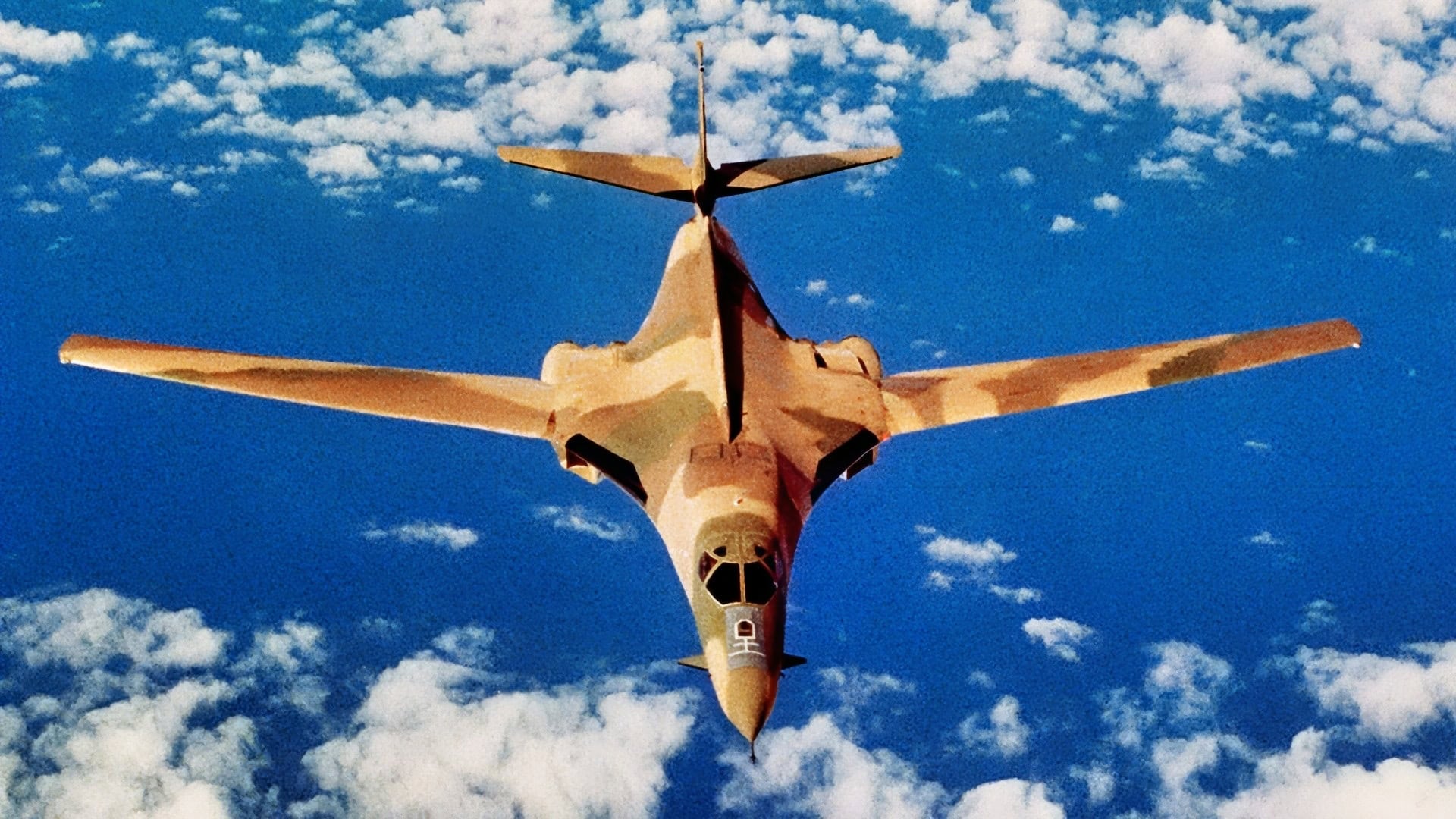
Iran Could Not Stop the F-35I, B-2, B-1B, or B-52 – As of August 11, 2026, no renewed broad U.S. or Israeli air campaign over Iran had been reported. Israel and Iran halted direct strikes on June 8. A 13-night U.S. bombing run paused on July 25, followed by fresh strikes late in the month. President Donald Trump held off another planned attack on August 2 as diplomacy continued. Iran had not forced the aircraft from its skies.
Iran Had No Way to Stop The US Air Force and Israel In the Sky
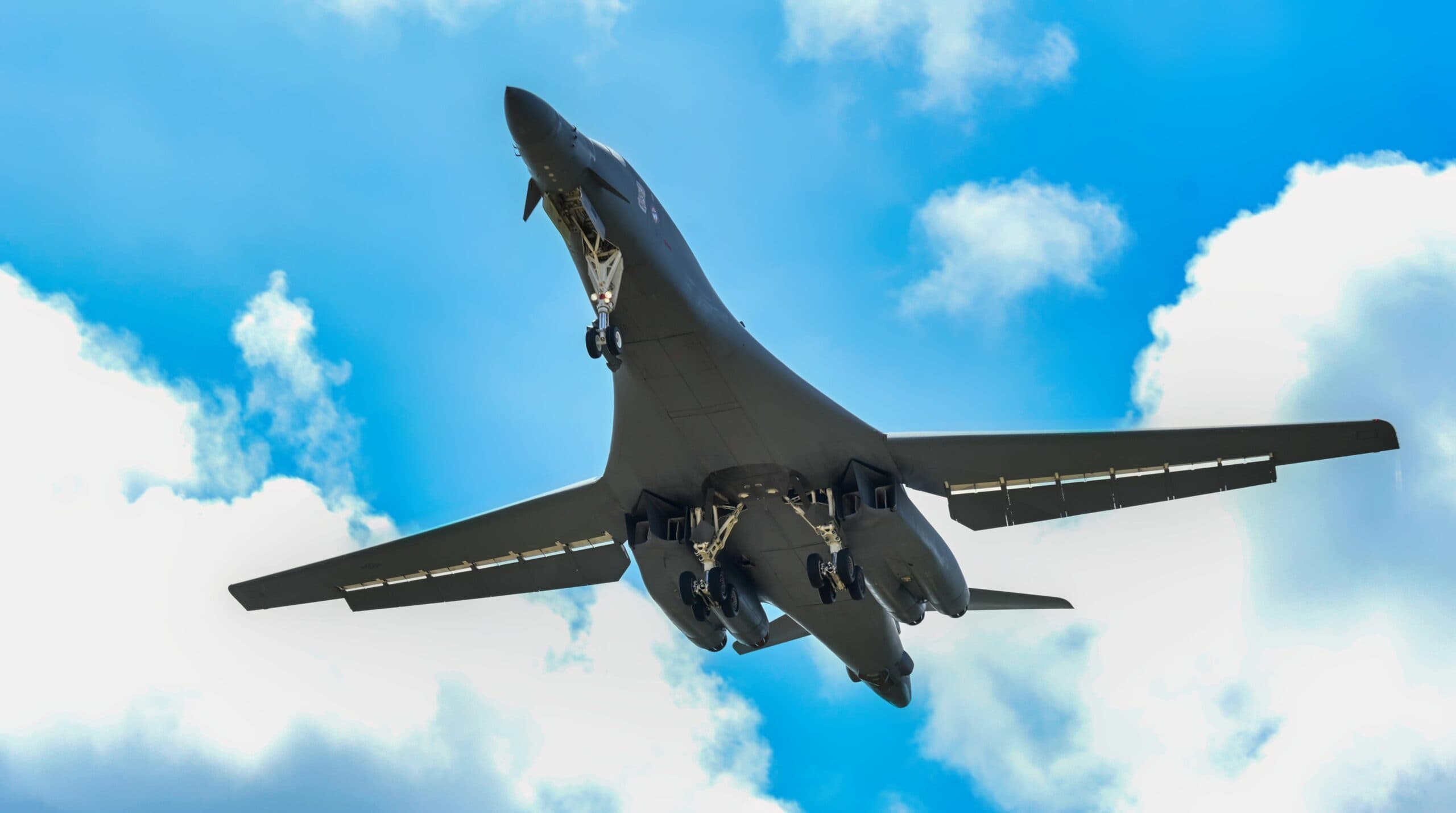
A U.S. B-1B Lancer assigned to the 34th Expeditionary Bomb Squadron, Ellsworth Air Force Base, S.D., ascends into the sky after conducting a “touch and go” maneuver during Bomber Task Force 25-1 at Andersen Air Force Base, Guam, Feb. 24, 2025. Bomber Task Force missions provide opportunities to train and work with our Allies and partners in joint and coalition operations and exercises. (U.S. Air Force photo by Airman 1st Class Alec Carlberg)
The pattern first became clear during Israel’s 12-day campaign in June 2025. Opening waves struck radars, surface-to-air missile launchers, command centers, and air bases. By June 14, the Israel Defense Forces said it had established aerial superiority from western Iran to Tehran. An open-source Foreign Policy Research Institute assessment found that Israel suffered no combat or operational loss of a manned aircraft.
The United States exploited that access during Operation Midnight Hammer on June 22, 2025. About 125 aircraft supported the mission, including seven B-2 Spirits carrying 14 GBU-57 Massive Ordnance Penetrators. The B-2s struck Fordow and Natanz, while a guided-missile submarine fired Tomahawks at Isfahan. No Iranian interception has resulted in a publicly confirmed American aircraft loss.
The 2026 war made the pattern harder to dismiss. Israeli F-35I Adirs operated over Tehran. American B-2s, B-1B Lancers, and B-52H Stratofortresses hit missile facilities, buried launch sites, and command posts.
Iran’s central failure was its inability to preserve an integrated network strong enough to deny access, break the strike tempo, or protect its highest-value targets.
The pattern is clear: Iran can strike with drones and missiles but can’t stop U.S. or Israeli air power above.
Iran Had Capable Missiles but a Fragile Air-Defense Network
Iran entered the 2025 war with Russian-built S-300 systems, domestically produced Bavar-373 batteries, shorter-range weapons, and a large radar network. The hardware posed a real danger. Its value depended on sensors, communications, trained crews, mobile launchers, and command posts remaining connected under attack. Israel targeted those links first, a problem examined in assessments of whether Iran could threaten stealth aircraft.
Tehran admitted that some defenses were damaged in 2025, then claimed reserve systems had replaced them. On March 1, 2026, Israel said it had dismantled most air defenses in western and central Iran.
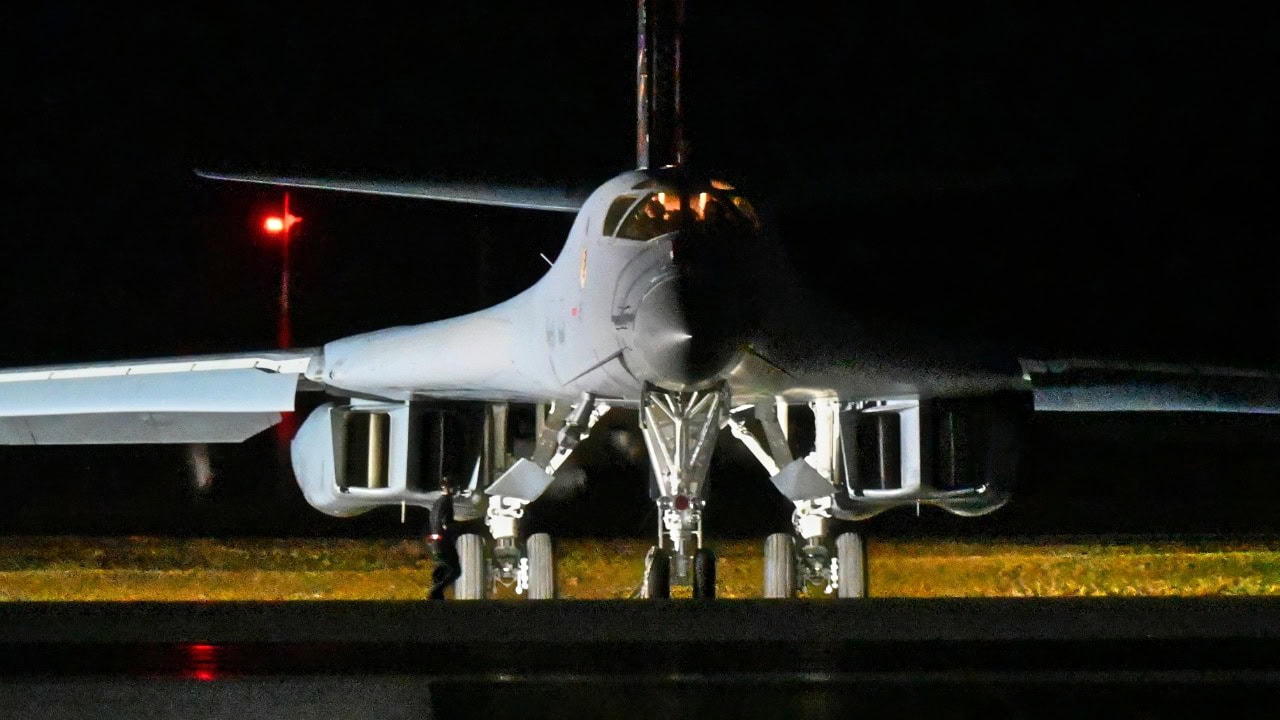
A U.S. Air Force B-1B Lancer assigned to the 34th Expeditionary Bomb Squadron, Ellsworth Air Force Base, S.D., runs final checks before takeoff of a training mission in support of Bomber Task Force 25-1 at Andersen Air Force Base, Guam, Feb. 24, 2025. The BTF missions are designed to showcase the Pacific Air Force’s ability to deter, deny, and dominate any influence or aggression from adversaries or competitors. (U.S. Air Force photo by Tech. Sgt Robert M. Trujillo)
American commanders later claimed CENTCOM destroyed about 80 percent of Iran’s air-defense systems after striking more than 1,500 related targets. The estimate lacks an independent audit. The sortie rate still shows that Iran never restored a credible denial zone.
The F-35I Adir Opened Routes and Hunted Mobile Threats
Israel has not released a target-by-target list showing which aircraft hit every radar or launcher in 2025. The F-35I’s role became explicit during the 2026 campaign. Its low-observable airframe reduced detection opportunities. Onboard sensors helped crews locate mobile threats, share coordinates, and strike before a battery moved or fired.
On March 4, the IDF said an F-35I destroyed a loaded ballistic-missile launcher near Khorramabad. The same day, another Adir shot down an Iranian Yak-130 over Tehran. The Yak-130 was a trainer with a possible light-combat role, not a peer fighter. Its loss still showed that Iran’s air force could not mount a serious challenge over its capital. The encounter also demonstrated the value of Israel’s customized F-35I fleet.
Stealth did not create the result on its own. Intelligence, aerial refueling, electronic warfare, standoff weapons, and even covert activity inside Iran shaped the campaign. The Adir shortened the time between finding an emitter, passing its location, and destroying it.
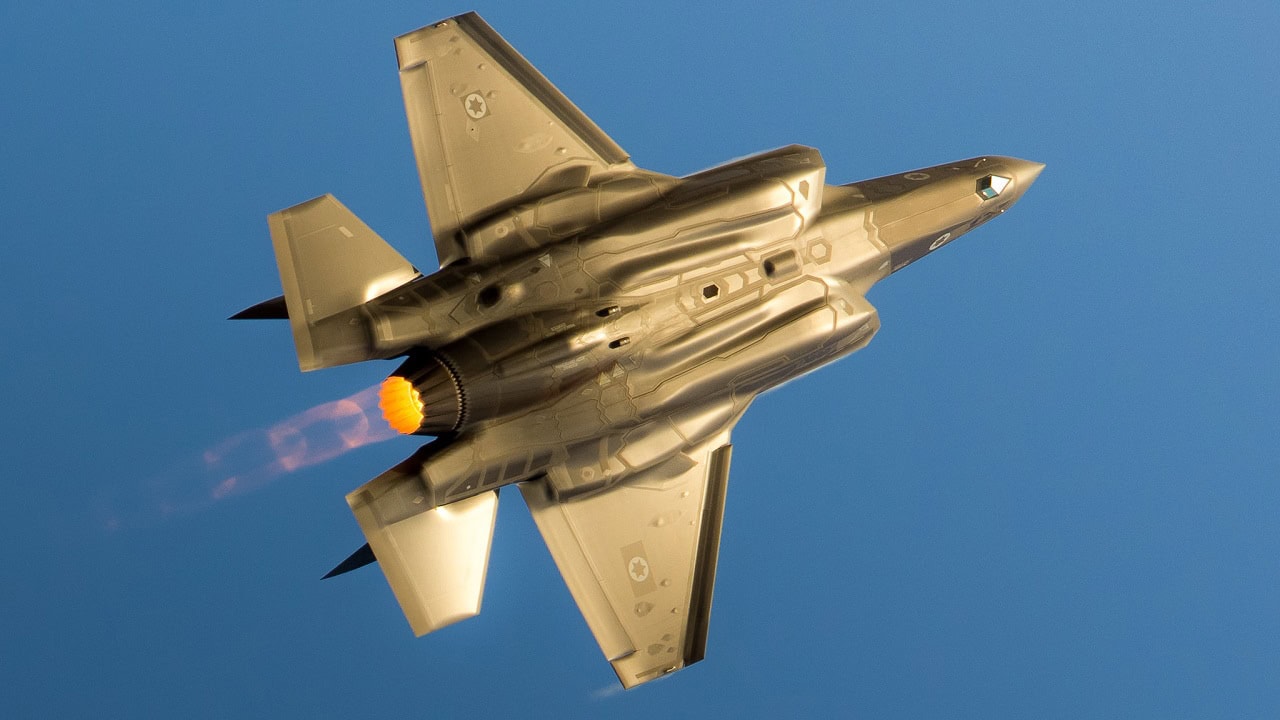
F-35I Adir. Image Credit: Creative Commons.
The B-2 Took the Targets Buried Beyond Israel’s Reach
The B-2 supplied the penetration capability and weapon weight Israel lacked for Iran’s deepest nuclear facilities. Each bomber carries up to 60,000 pounds of weapons, has an unrefueled range near 6,000 nautical miles and was designed to enter sophisticated defensive airspace.
Operation Midnight Hammer paired those traits with the 30,000-pound GBU-57, the U.S. military’s largest conventional bunker-buster.
The mission involved far more than seven bombers. A force of tankers, fighters, intelligence aircraft, electronic-support platforms and suppression aircraft created a timed corridor into Iran. The B-2’s success over Iran says as much about force integration as it does about the flying wing.
B-2s returned during Operation Epic Fury in 2026. U.S. officials said they dropped dozens of 2,000-pound penetrator bombs against deeply buried ballistic-missile launchers. Repeated use against separate target sets showed that Iran had not rebuilt a network able to keep the small B-2 force away from critical sites.
B-1B and B-52 Missions Showed the Airspace Had Been Opened
The B-1B carries the Air Force’s largest conventional bomber payload, up to 75,000 pounds. It is fast, fitted with electronic countermeasures and designed with a reduced radar cross-section, but it cannot match the B-2’s stealth. CENTCOM said B-1Bs struck deep inside Iran to degrade ballistic-missile capabilities. Their arrival after the first suppression attacks captured the sequence behind the broader American-Israeli air campaign.
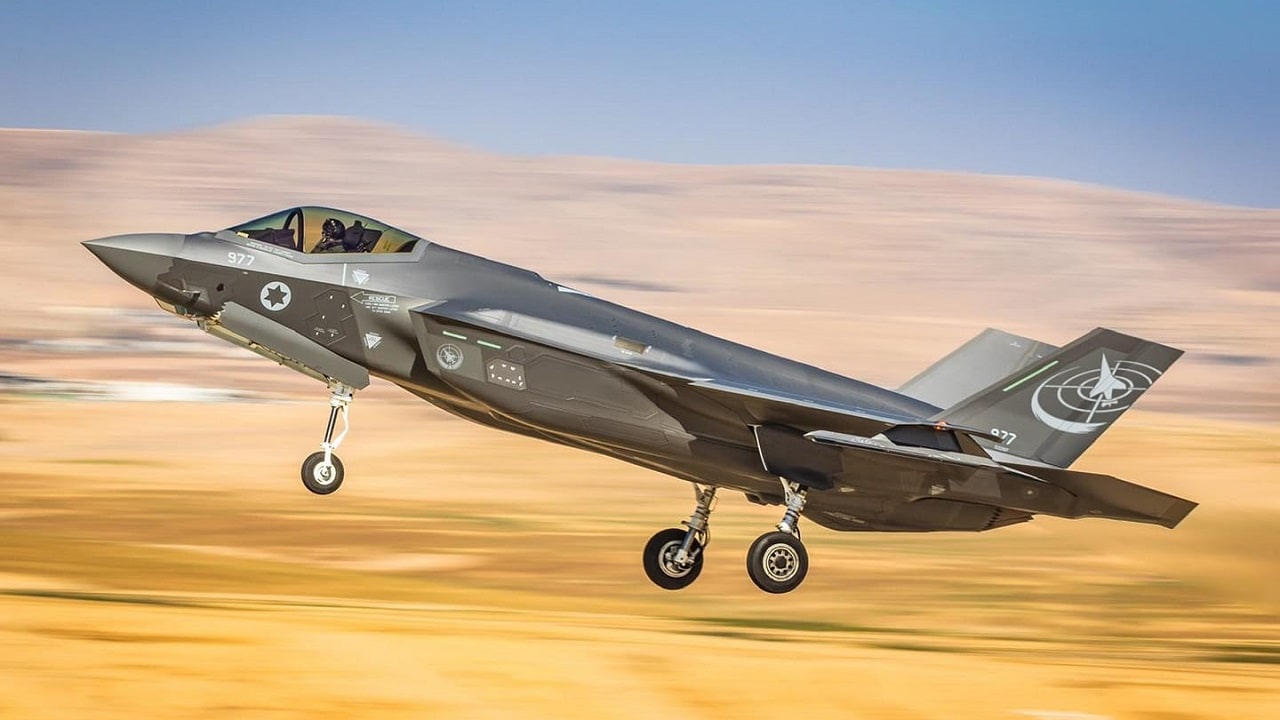
Photo by Amit Agronov via IDF.
The B-52 made the point more clearly. Its basic design dates to the early 1950s, its radar signature is large and its survival against intact modern defenses depends heavily on standoff weapons, escort support or prior suppression. During the first 100 hours of Epic Fury, B-52s struck ballistic-missile sites and command posts. The bomber’s roughly 70,000-pound payload supported repeated high-volume strikes after the F-35I helped open the campaign. The heavy-bomber phase followed the stealth opening.
Using B-1s and B-52s did not make every route safe. Planners judged the risk acceptable for selected routes, altitudes, and weapon packages used by non-stealth aircraft. That was a serious defeat for a country that had presented the S-300 and Bavar-373 as barriers against American air power.
It also strengthened the case for more penetrating aircraft in the B-21 production debate.
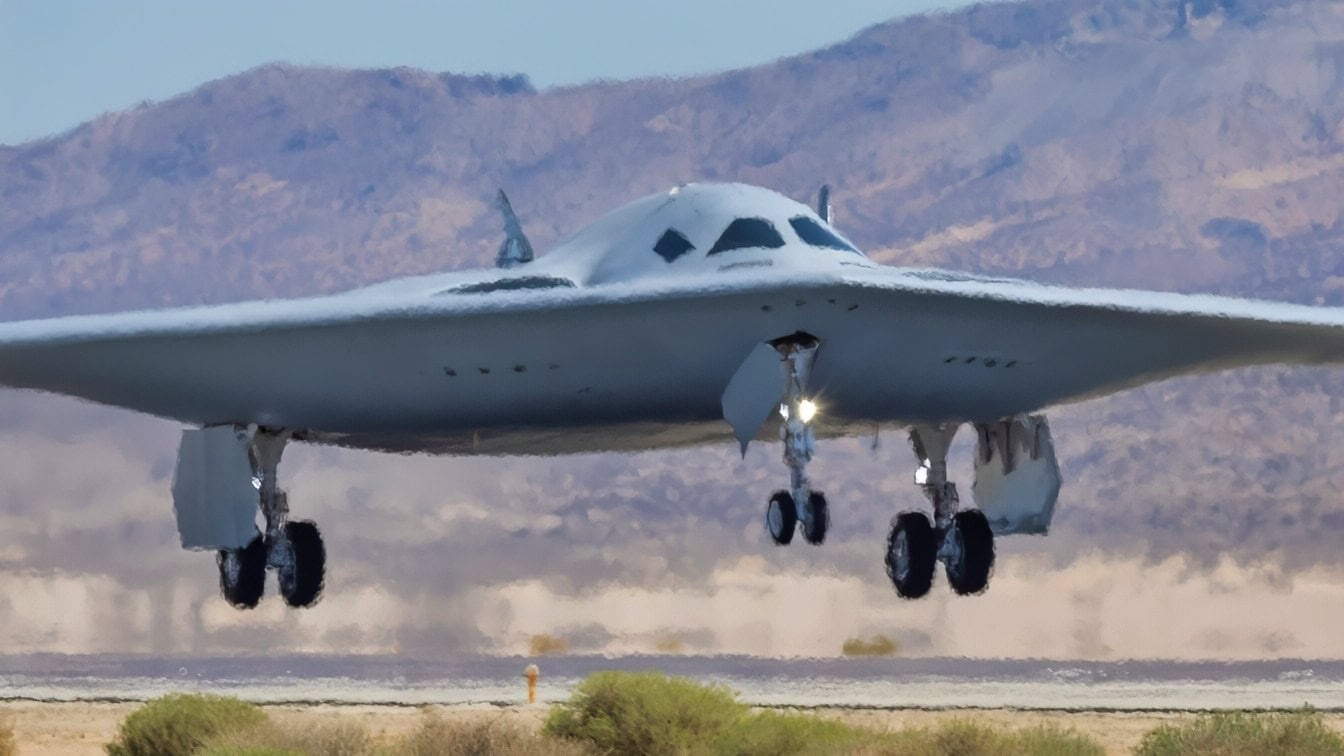
- A B-21 Raider test aircraft lands at Edwards Air Force Base, Calif., during ongoing developmental flight testing, Sept. 11, 2025. The B-21 will be the backbone of the bomber fleet; it will incrementally replace the B-1 Lancer and B-2 Spirit bombers. (U.S Air Force photo by Todd Schannuth)
Iran Still Shot Down an F-15E Without Halting the Campaign
Iran’s defenses were not harmless. CENTCOM confirmed that an F-15E Strike Eagle was shot down during a combat mission on April 2, 2026. Both crew members were rescued in separate operations. The United States has not publicly identified the weapon that brought the aircraft down.
That loss warns against describing Iranian air defenses as nonexistent. Mobile launchers, short-range missiles, guns, and shoulder-fired weapons remain dangerous after fixed radars or long-range batteries are hit. Surviving systems force crews to alter routes, jam emitters, change altitude, or spend more weapons on suppression.
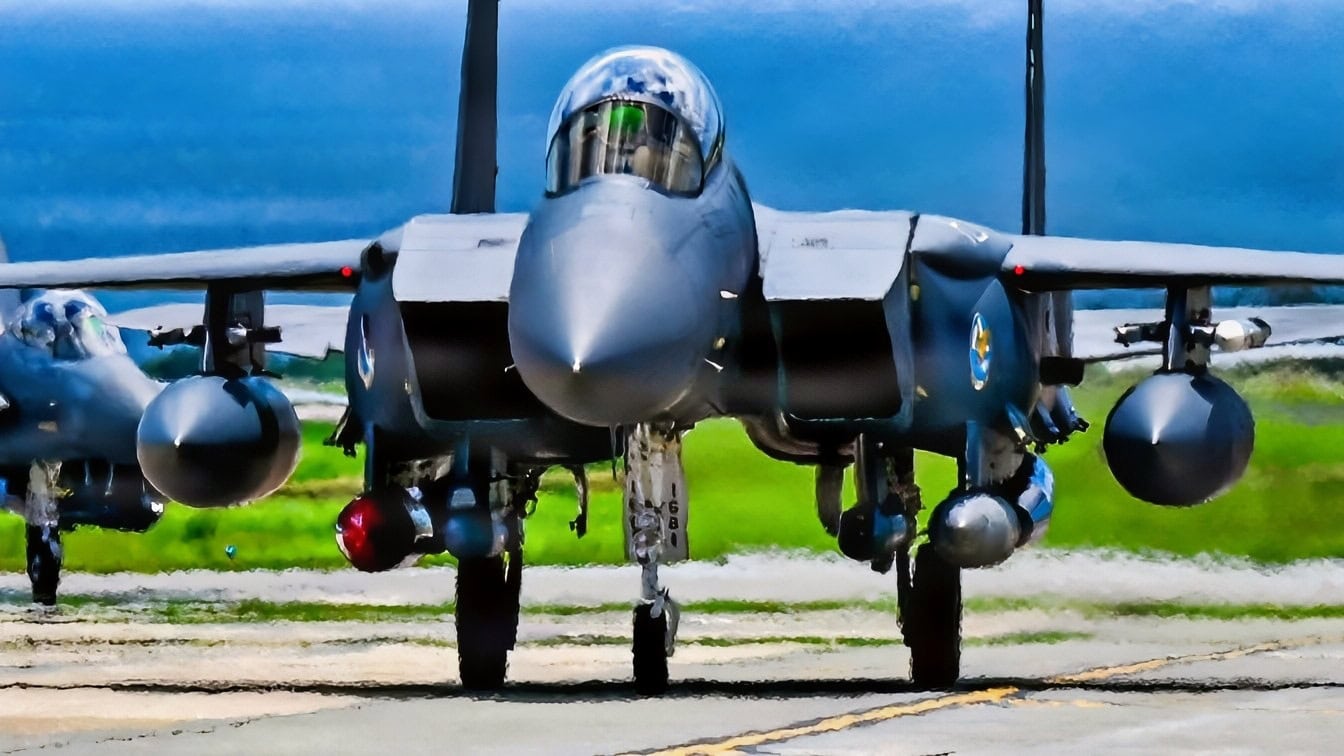
A U.S. Air Force F-15EX Eagle II and F-15E Strike Eagles assigned to 85th Test and Evaluation Squadron, Eglin Air Force Base, Florida, land at Kadena Air Base, Japan, June 29, 2026. The test aircraft arrival supported the Department of War’s effort to modernize U.S. airpower in the Indo-Pacific and prepared Kadena personnel and the local community for the F-15EX’s arrival. (U.S. Air Force photo by Airman 1st Class Gracelyn Hess)
The operational result still favored the attackers. The F-15E loss did not stop subsequent missions. U.S. officials said the joint force flew more than 10,000 missions during 38 days of major combat operations, including 62 bomber missions. Iran achieved a tactical success without restoring the ability to deny its airspace, the distinction at the center of the war’s wider military risks.
There was also an F-35 being damaged.
Air Superiority Did Not Produce a Complete Strategic Victory
Control of the air let the United States and Israel destroy aircraft, radars, missile infrastructure, and command facilities. It did not remove every Iranian weapon, topple the government, or settle the nuclear dispute. Iran still launched missiles at regional targets and disrupted the Strait of Hormuz, then threatened Gulf infrastructure to raise the cost of another attack.
The pause reflects diplomacy, target availability, munitions concerns, and political choices rather than a restored Iranian air-defense shield. As of August 11, no renewed American or Israeli air campaign had been reported. Tehran had not published a postwar inventory showing how many S-300, Bavar-373, or radar systems remained operational.
About the Author: Harry J. Kazianis
Harry J. Kazianis (@Grecianformula) was the former Senior Director of National Security Affairs at the Center for the National Interest (CFTNI), a foreign policy think tank founded by Richard Nixon based in Washington, DC. Harry has over a decade of experience in think tanks and national security publishing. His ideas have been published in the NY Times, The Washington Post, The Wall Street Journal, CNN, and many other outlets worldwide. He has held positions at CSIS, the Heritage Foundation, the University of Nottingham, and several other institutions related to national security research and studies. He is the former Executive Editor of the National Interest and the Diplomat. He holds a Master’s degree focusing on international affairs from Harvard University.