

Abandoning Israel Brings Nuclear War Closer, Recession to the United States – It is not difficult for strategists in Israel or Iran to read the tea leaves. Democrats made AIPAC a boogeyman in their campaign, playing to growing progressive antagonism to Israel. “I’d also like to see us stop selling weaponry that gets used to do the worst things, including genocide and apartheid, to Israel,” Senator-elect Abdul el-Sayyed said. Rep. Maggie Goodlander, a former staffer for the late Senator Joe Lieberman (I-Conn) and the wife of President Joe Biden’s National Security Advisor Jake Sullivan, voted in July to cut off assistance to Israel to punish the Jewish state for its campaign against Hamas in Gaza. Jon Finer, Sullivan’s principal deputy, who also aspires to be a National Security Advisor in a new Democratic administration, went further by openly flirting with the Boycott, Divest, and Sanctions movement.
AIPAC meanwhile has become a litmus test for Democrats. California Governor Gavin Newsom, a presidential hopeful, brags he “never [has] and never will” take AIPAC money. Senators Cory Booker (D-NJ) and Ruben Gallego (D-Ariz.) said they had sworn off AIPAC money.

F-35I Adir serving in Israel’s Air Force. Image Credit: Creative Commons.
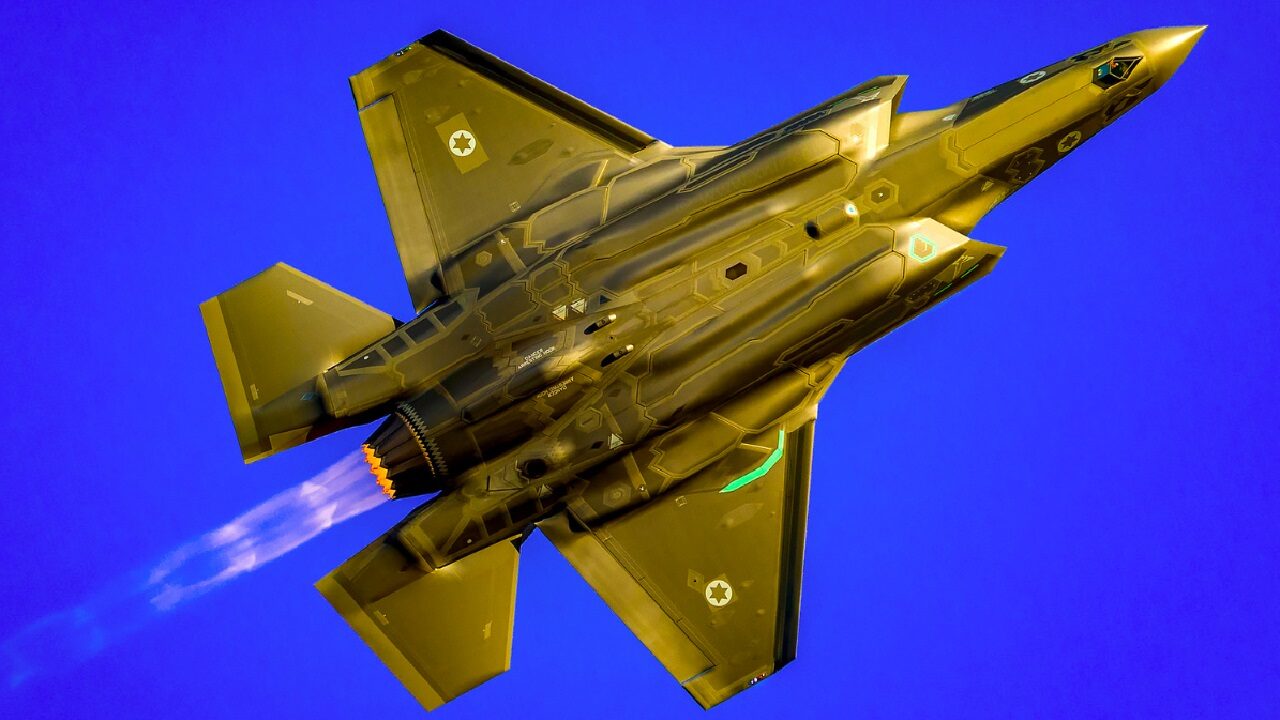
F-35I Adir. Image Credit: IDF Air Force.
The Roots of Democratic Anger
Democrats may be angry at Israel. Prime Minister Benjamin Netanyahu upset President Barack Obama and many alumni of his regime with his opposition to the Joint Comprehensive Plan of Action, the 2015 Iran nuclear deal. It was reminiscent of the October 1994 incident when South Korean President Kim Young-sam criticized President Bill Clinton’s nuclear dealing with North Korea in a New York Times interview, sparking Clinton fury at Kim’s supposed lack of gratitude and respect. For a time, Clinton’s team treated South Korea, a democratic ally, worse than they did North Korea, the target of their ingratiation campaign. Still, almost every prediction South Korea made about North Korean insincerity and nuclear cheating came true.
Israeli Prime Minister Benjamin Netanyahu’s embrace of President Donald Trump made Netanyahu an even greater lightning rod, however. Netanyahu’s warm photo-ops with Republicans after Obama’s loss left many Democrats believing Netanyahu was spiking the football at their expense.
The Republican Blame Game
A growing segment of the Republican Party, meanwhile, also blames Israel. In a lengthy tweet, Vice President JD Vance pinned Republican losses squarely on Israel. “The real reason we lost is obvious to almost everyone,” he wrote. “The reason we lost is the war,” he explained, after pointing out polls demanding Americans want politicians to “Put America First” and “Change our relationship to Israel.”
Vance refused to acknowledge both that the Republicans ran lousy candidates, many of whom Vance himself handpicked. In his home state, Ohio, Vance had no coat tails; he himself was toxic. Nor does the blame-Israel-for-inflation crowd consider that tariffs explain inflation far more than support for Israel does. Still, the Republican loss will empower Republican and conservative pundits and commentators like Tucker Carlson, Candace Owens, and Megyn Kelly who, in recent years, have strayed into the realm of antisemitic conspiracy.
Why the Abandonment Logic Fails
The analysis blaming Israel is weak on its merits, but the logic underpinning the idea that peeling away from the partnership with Israel will bring peace or improve the U.S. economy is flawed.
Like or dislike Trump, the president is right to observe that Iran prepared for its campaign long before he engaged Tehran militarily. On March 12, 2026, for example, he explained, “And we’re doing what has to be done. It should have been done over a 47-year period. Could have been done by a lot of different people. They chose not to do it.” Just a few weeks before the elections, he repeated the argument. “This should have been done a long time ago by other presidents, the Iran war. And we’ve knocked the hell out of them. And we may do it a little bit further,” he told a press gaggle.
Signaling Abandonment Emboldens Tehran
If the United States distances itself from Israel and its security needs, neither Democrats nor Republicans will bring peace. First, Iran is not a passive actor in the conflict. It has planned for decades and makes calculated decisions to attack shipping and launch ballistic missiles at more than a dozen regional states, most of whom were never combatants. The Islamic Republic’s ideology calls for the elimination of Israel as a Jewish state; essentially, it calls for genocide, with Hamas and Hezbollah the tips of the spear to actualize the vision.
By signaling abandonment of Israel, Democrats and Republicans encourage the Islamic Republic and its terrorist proxies to believe they can win. What Vance and El-Sayed propose is akin to Obama’s West Point address in which he announced that U.S. engagement in Afghanistan would be time-limited. If the Taliban ever received a shot of adrenaline, that was it. Taliban leaders understood then that they only needed to outlast the United States, and there would be little risk to their attacks on U.S. forces or Afghanistan’s flawed, elected government.
Both Vance and El-Sayed and their political allies are simply guaranteeing that Israel faces a renewed and augmented terrorist challenge with fewer mechanisms with which to defend itself.
The Eisenhower Precedent
For the United States, Iran’s nuclear breakout would be strategically untenable, but it would not pose an existential threat. After all, the People’s Republic of China, Pakistan, and North Korea each tested nuclear weapons, but none have ever launched a nuclear attack. A nuclear Iran would be inconvenient, but Vance likely believes the United States can negotiate a truce.
This essentially replicates the decisions of President Dwight D. Eisenhower, who calculated that U.S. interests required siding with oil-rich and more numerous Arab oil states over Israel. He shocked not only Jerusalem but also London and Paris when he sided with Cairo during the 1956 Suez Crisis. Within two years, however, he recognized that the Arab states simply did not make good allies; ideologically, they were opposed to the American vision of a liberal order. When Johns Hopkins University professor Vali Nasr tweets after the election, “Hopefully this will be a major turning point for foreign policy making on the Middle East,” he forgets history.
Israel’s Existential Calculus
Israel recognizes it faces an existential crisis. Late Supreme Leader Ali Khamenei’s nuclear fatwa was neither as consistent nor as legally binding as some U.S. officials claim. It also won’t survive Khamenei’s death. The 2011 International Atomic Energy Agency appendix chronicling the potential military dimensions of Iran’s nuclear program showed that Tehran worked on nuclear warhead design and triggering devices despite the fatwa.
At its narrowest point, Israel is less than ten miles wide. Some pundits argue Iran would never launch a nuclear weapon against Israel because it would kill Palestinians, but Iranians generally care little for Arabs. Iran’s deadliest conflict remains the Iran-Iraq War, in which Iran killed hundreds of thousands of Arabs with little compunction. Former President Ali Akbar Hashemi Rafsanjani essentially made the case for a nuclear attack on Israel. “The use of even one nuclear bomb inside Israel will destroy everything,” he said. Even if Israel retaliated, Iran had the strategic depth to survive.
This dynamic should worry Vance, El-Sayed, and others. Israel is not a suicidal state. They understand they face an existential threat from Iran, Hamas, and perhaps even Turkey. Within Israel, there is frustration that Vance, El-Sayed, Europe, and much of the West do not understand this simple fact.
The Nuclear Choice
Israel is a nuclear power. That it remains formally undeclared is just an asterisk. If the world abandons Israel, stripping away conventional means to defend itself, it forces a choice: suicide or nuclear defense. If Israel feels its back against the wall, it could conceivably use nuclear weapons.
If regional security is paramount, the only sensible policy is to help states defend themselves from countries that seek their destruction. Vance is ignorant of history, while El-Sayed is blinded by his own sectarian hatreds. Other politicians and policymakers—the Goodlanders and Finers of the world—show their cynicism, as they put personal ambition above principle.
Why This Is America’s Problem
But is Israel’s fight or even a limited nuclear exchange a U.S. problem? The answer is yes on multiple counts. First, the Islamic Republic seeks America’s destruction as much as Israel’s. The difference between Israel and the United States is one of order of destruction, not need for destruction. This is why the Islamic Republic has repeatedly targeted Americans over the decades. Most Iranians despise their regime, but the men with the guns and the means of repression shape the policy, not the Iranian masses.
Second, a nuclear exchange would throw the region into chaos. Trade winds would push the radioactive cloud from Iran’s Persian Gulf ports across the Persian Gulf, and up the Arab side, over Qatar, eastern Saudi Arabia, and Iraq. Middle East oil would essentially go offline, sparking a depression in East Asia, which gets more than 60 percent of its energy from the Arab world. The United States would not be immune from the resulting financial instability, nor would a collapse of Asian economies necessarily remain peaceful.
The notion that a magic formula exists for foreign affairs is both ignorant and arrogant. As both Democrats and Republicans embrace a magic formula that Israel, and not the terror sponsors that seek its destruction, they risk a nuclear exchange, regional instability they cannot fathom, and both recession whose severity they cannot imagine.
About the Author: Dr. Michael Rubin
Dr. Michael Rubin, a Director of Policy Analysis at the Middle East Forum, specializes in Iran, Turkey, and the Horn of Africa. His career includes time as a Pentagon official, with field experiences in Iran, Yemen, and Iraq, as well as engagements with the Taliban prior to 9/11. Mr. Rubin has also contributed to military education, teaching U.S. Navy and Marine units about regional conflicts and terrorism. His scholarly work includes several key publications, such as “Dancing with the Devil” and “Eternal Iran.” Rubin earned his Ph.D. and M.A. in history and a B.S. in biology from Yale University.