
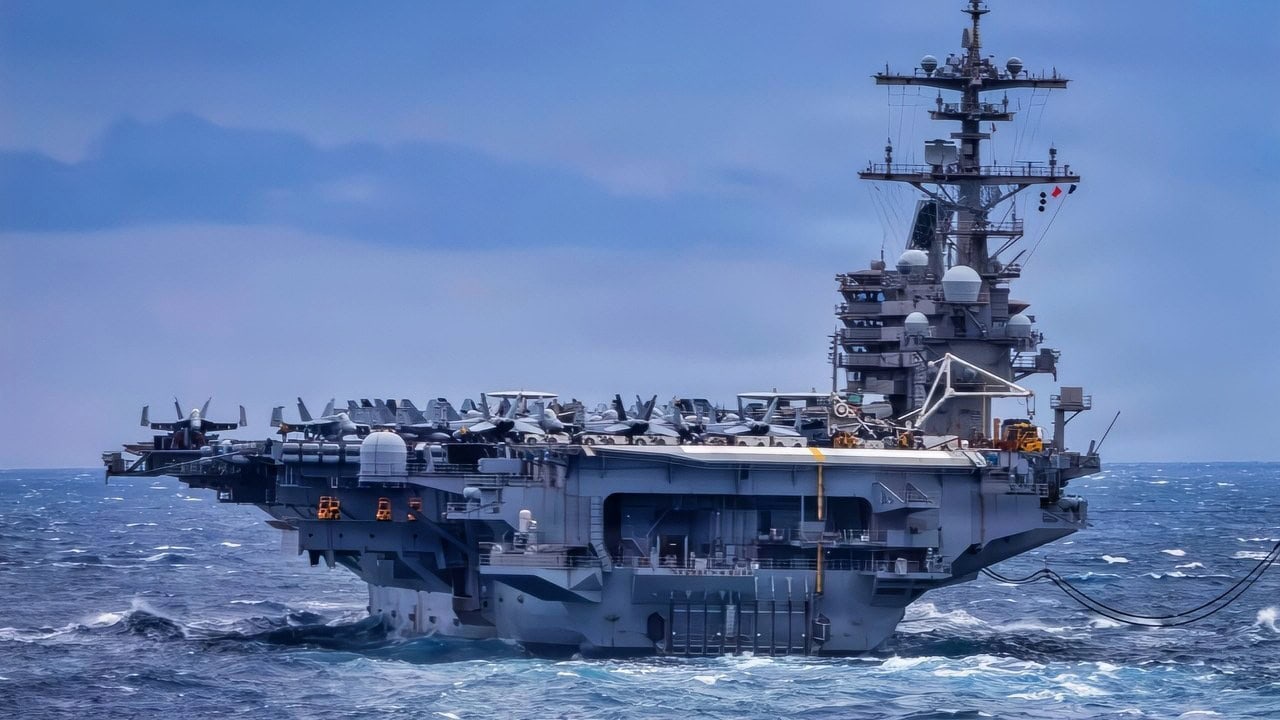
Summary and Key Points: Dr. Robert Farley, a professor at the Patterson School and author of Grounded, evaluates the viability of the 2026 Iran War’s regime-change objective.
-While air power and Tomahawk cruise missiles target the “inner ring” of the Islamic Republic’s leadership, Farley argues that airpower lacks the “boots on the ground” to dictate political outcomes.
-This 19FortyFive report analyzes the limitations of the “Afghan Model,” the history of failed decapitation strikes against figures like Saddam Hussein, and the stark reality that U.S. munitions may run out before a stable, pro-democracy successor emerges.
The Iran War 2026 Airpower Paradox: Why “Regime Change from the Air” is a Strategic Long Shot
The US and Israel have launched an air campaign against the Islamic Republic of Iran with the explicit purpose of regime change.
Thus far, the campaign includes extensive strikes from air and naval warplanes, accompanied by attacks from cruise missiles. What can the air campaign accomplish? Do the Means and Ways of airpower enable the accomplishment of the Ends of regime change?
What Has Gone Before
The Afghan Model, developed out of US experience in the 2001 invasion of Afghanistan, demonstrated that regimes could be destroyed without a large-scale ground invasion. Using special forces, indigenous forces, precision airpower, and real-time communications, the US and its allies overthrew the Taliban regime (albeit temporarily).
But the Afghan Model has drawbacks and is of only limited application to Iran. For one, the fact that the Taliban eventually reconstituted itself and resumed power reveals an essential flaw: the inability of airpower to dictate outcomes on the ground. Perhaps more importantly, the United States does not seem to have allies on the ground in Iran (there is some hope that anti-regime demonstrations will resume), and as of yet, there is no indication that special operations forces will be used in the theater of operations.
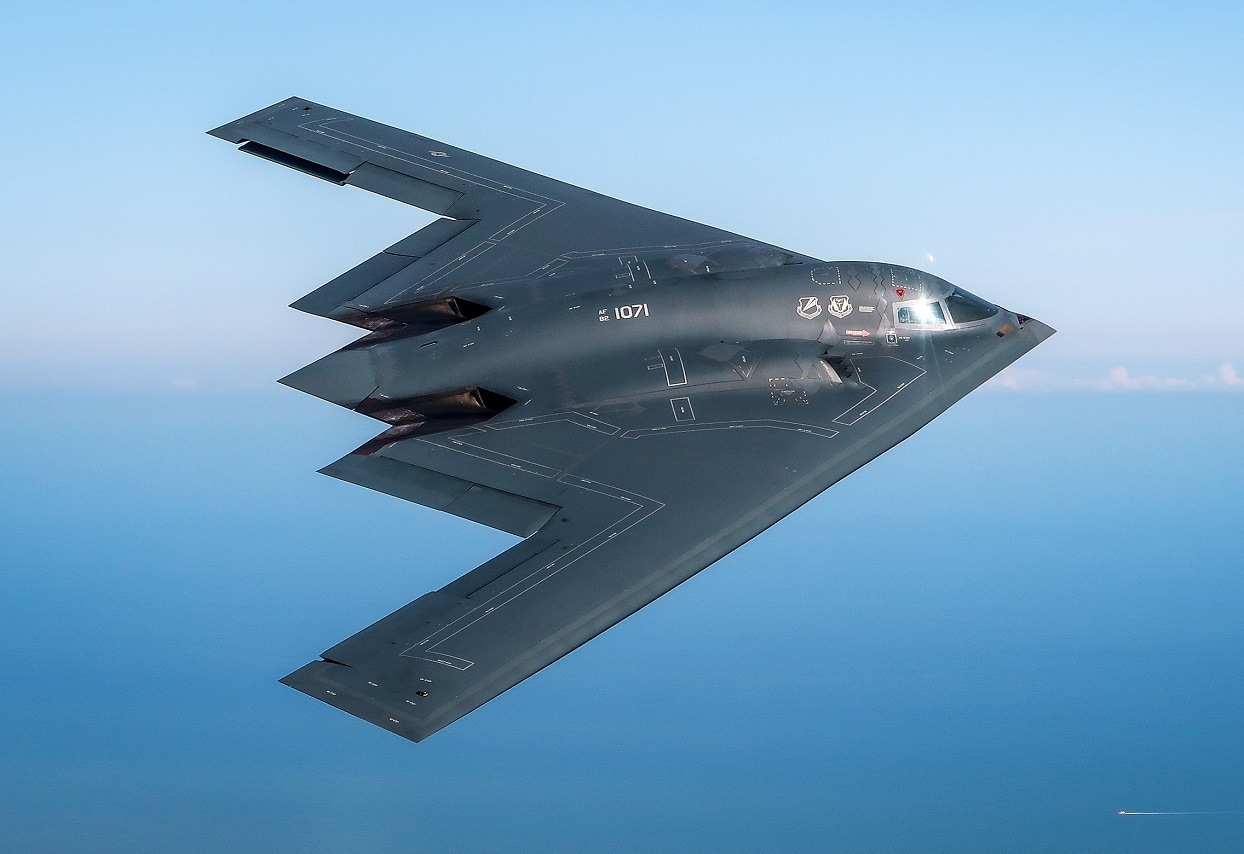
B-2 Bomber. Image Credit: Creative Commons.
Is Decapitation from the Air Possible?
Decapitation, the idea that enemy leadership could be targeted and destroyed from the air, was long a “holy grail” of airpower advocates.
Strikes designed to kill Saddam Hussein and destroy his leadership team inaugurated the 2003 Gulf War, but were unsuccessful.
In 1996, Russia undertook a successful decapitation attack against Chechen leader Dzhokhar Dudayev, although the assassination did not end the war. In January of this year, the United States launched an air and special forces attack on Caracas that apprehended Venezuelan leader Nicolas Maduro, leaving the rest of the regime in place.
As of yet, we do not have a full picture of how the United States and Israel have targeted Iranian leadership.
It is worth asking, however, whether decapitation efforts actually help achieve the objectives of an air campaign.
Generally speaking, modern states have mechanisms that allow the replacement of dead or arrested leaders, with uncertain implications for regime stability. At the onset of its military campaign against Ukraine, Russia undertook efforts to kill Ukrainian President Volodomyr Zelenskyy before deciding that murdering him would cause more trouble than it was worth; Zelenskyy the martyr was a greater danger to Russian ambitions than Zelenskyy the President.
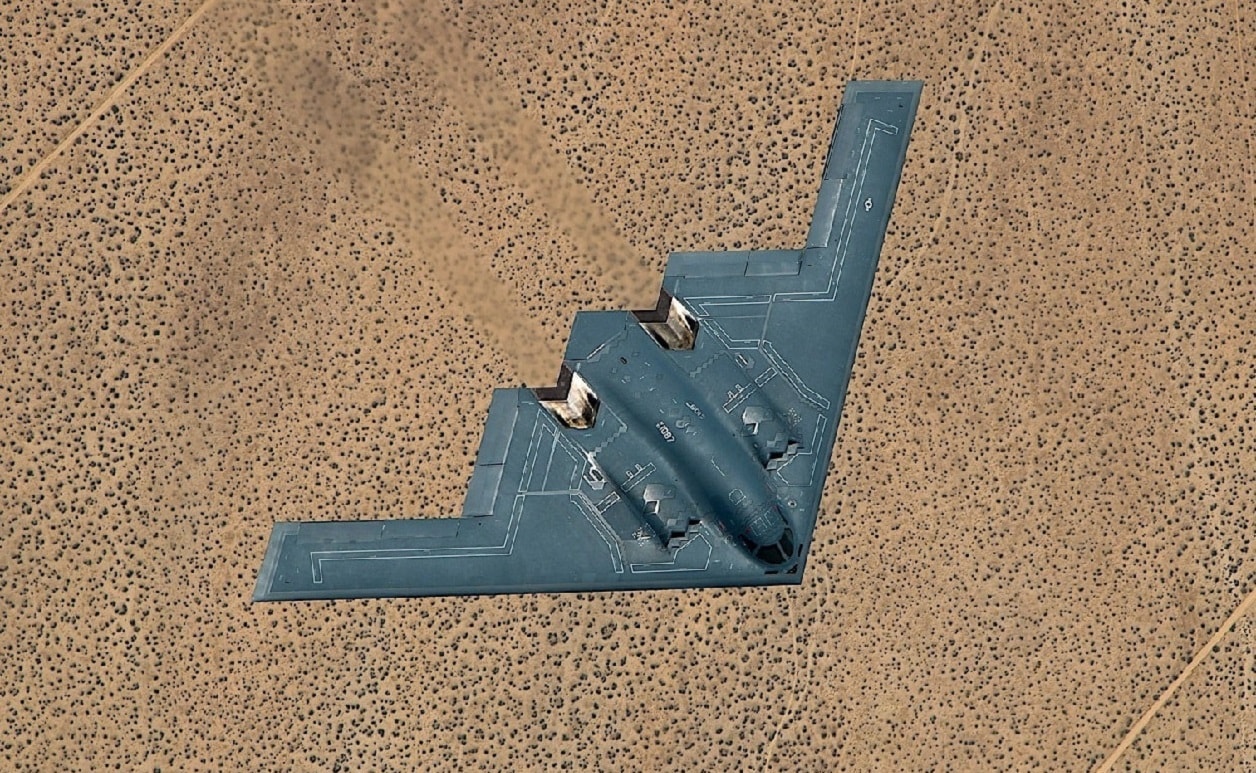
Image is of a B-2 Bomber with a camera taking a picture overhead. Image Credit: Creative Commons.
Iran War: Is Regime Change from the Air Possible?
Airpower has a limited capacity to destroy a political system.
This means that airstrikes can destroy targets associated with the preservation of a regime, including leadership on the one hand and centers of administration and symbolic value on the other.
The “regime” is one of the innermost circles of John Warden’s Five Rings system for thinking about airpower, indicating that airpower has long sought to direct targeting at the essentials of an enemy government.
But airpower cannot dictate outcomes on the ground. The capacity to destroy is limited by real, physical constraints (there are more police stations in Iran than Tomahawk missiles in US stocks) and by the fact that the attacker suffers from stark informational constraints.
People on the ground necessarily understand the political situation better than the people selecting targets from afar. The United States can kill the Supreme Leader, then another, and then another, but it cannot determine who the next Supreme Leader will be, and it will eventually run out of functional munitions. Damage to the regime may spur demonstrations (although historically this outcome has been extremely rare), but airpower cannot dictate which anti-regime faction will take power.
Iran War: What Happens Now? What Does America Want?
It is possible that everything will work out for the US campaign to destroy the Islamic Republic. Targeted attacks against key regime figures may render rapid decision-making impossible.
Other figures may defect to the opposition or simply fade into the background.
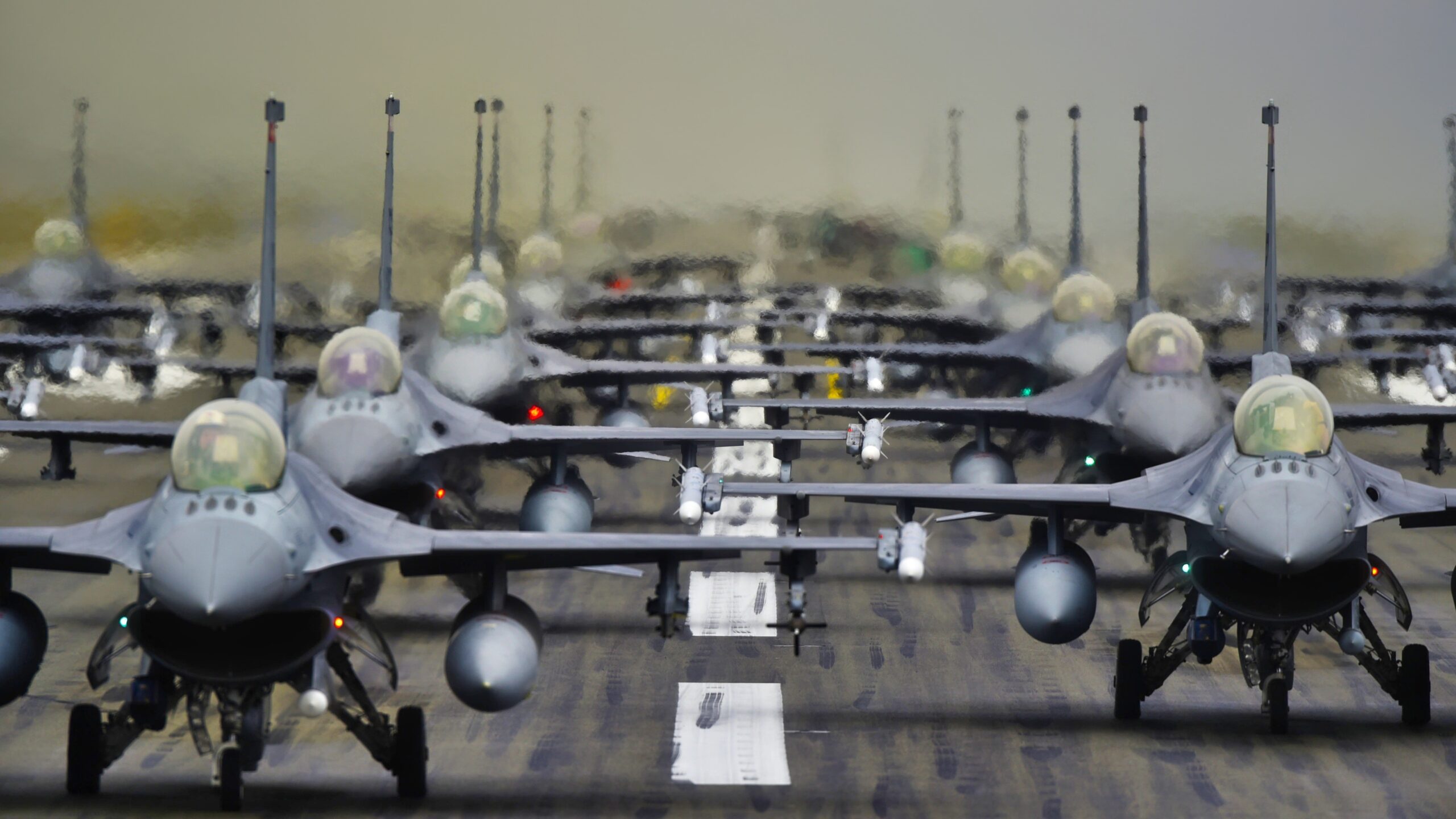
F-16 Fighter in a Elephant Walk. Image Credit: Creative Commons.
Massive anti-regime demonstrations may engulf Tehran and other major cities.
Pro-democracy demonstrators may take power in part or all of the country, and a new regime may emerge that is less irascible than the Islamic Republic. None of those outcomes is impossible… but neither are they particularly likely.
The United States has embarked on a military campaign without a particularly solid idea of what it wants or how it wants to get there, and the history of similar operations does not suggest that achieving a desired outcome will be quick or easy.
About the Author: Dr. Robert Farley, University of Kentucky
Dr. Robert Farley has taught security and diplomacy courses at the Patterson School since 2005. He received his BS from the University of Oregon in 1997, and his Ph. D. from the University of Washington in 2004. Dr. Farley is the author of Grounded: The Case for Abolishing the United States Air Force (University Press of Kentucky, 2014), the Battleship Book (Wildside, 2016), Patents for Power: Intellectual Property Law and the Diffusion of Military Technology (University of Chicago, 2020), and most recently Waging War with Gold: National Security and the Finance Domain Across the Ages (Lynne Rienner, 2023). He has contributed extensively to a number of journals and magazines, including the National Interest, the Diplomat: APAC, World Politics Review, and the American Prospect. Dr. Farley is also a founder and senior editor of Lawyers, Guns and Money.