
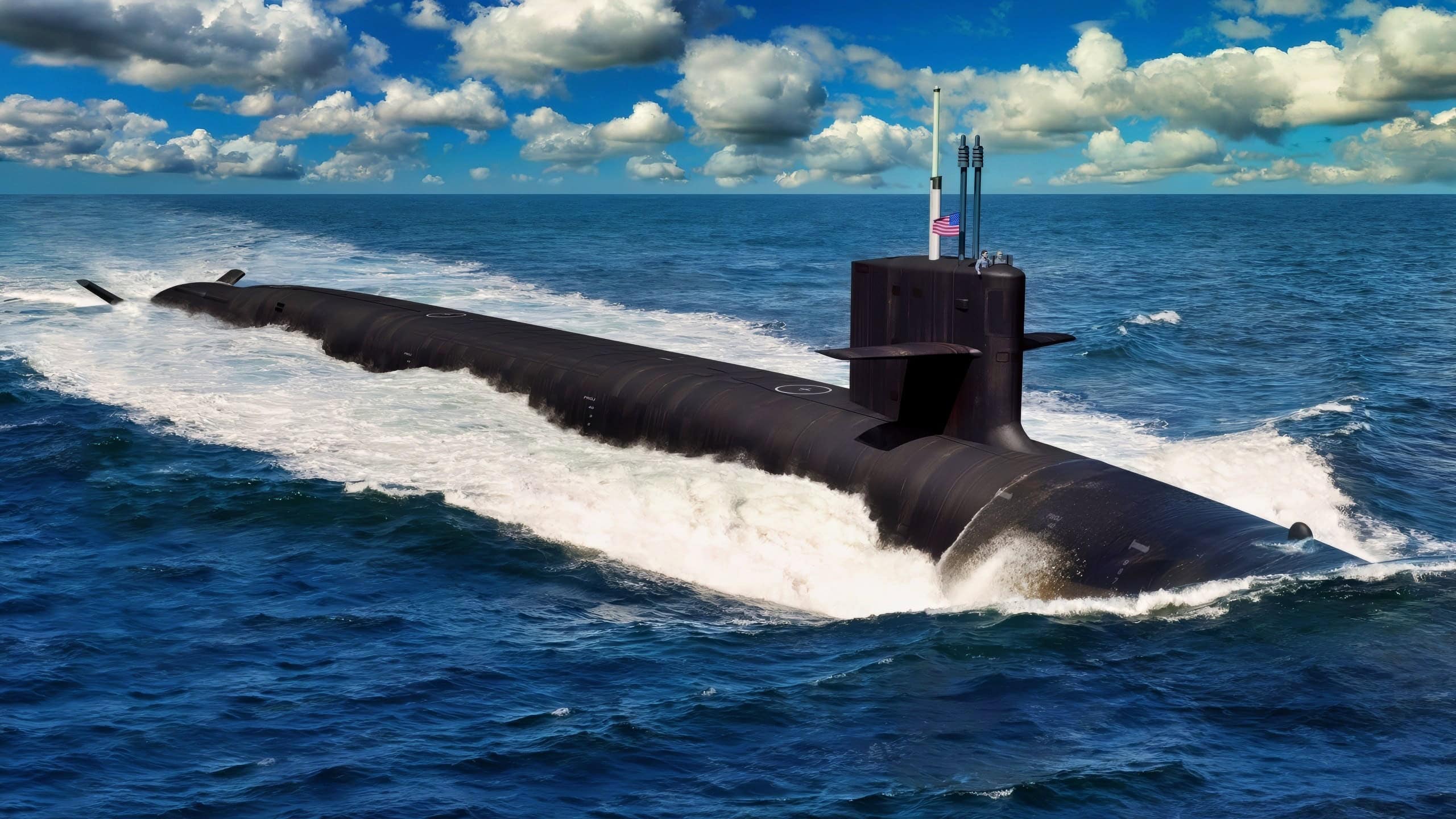
The US Navy’s Nuclear Submarine Columbia-Class Program Carries a $311 Billion Lifetime Estimate and at Least an 18-Month Delay: The U.S. Navy placed five more Columbia-class ballistic-missile submarines under contract on July 29, 2026, as part of a $76.6 billion package covering Columbia and Virginia construction and industrial-base work.
As of August 9, seven of the planned 12 Columbias are under contract.
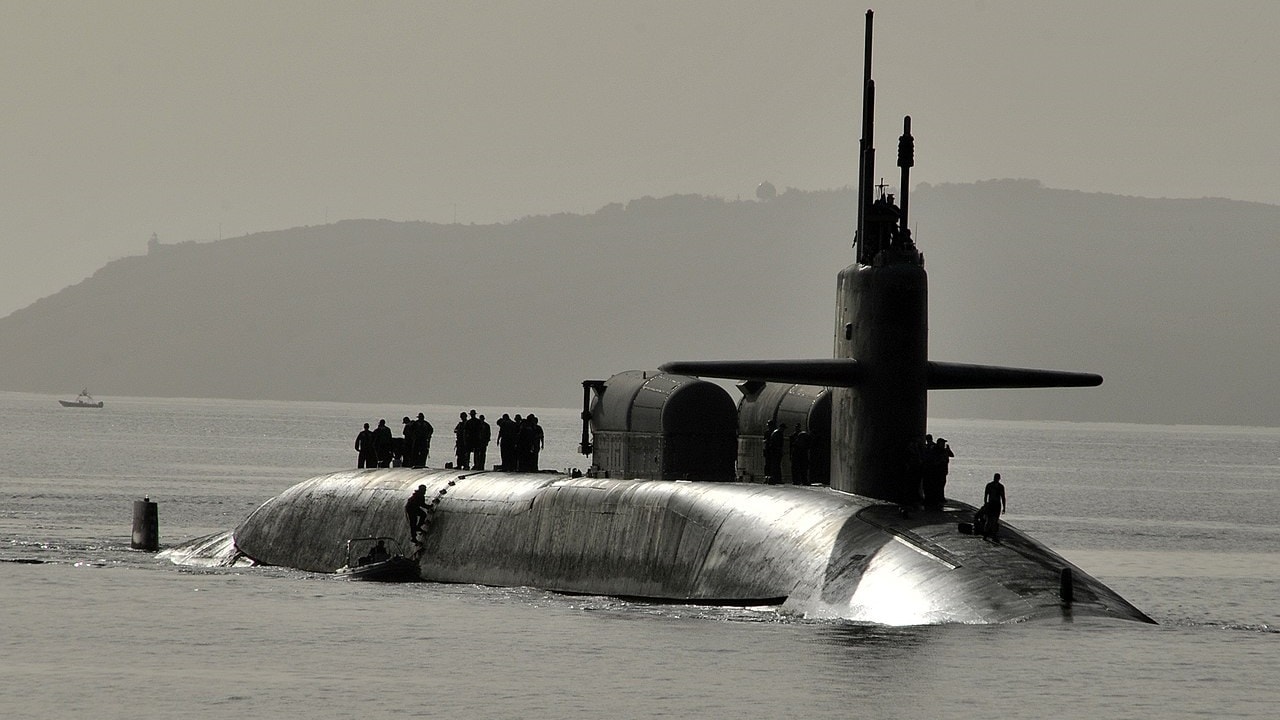
SOUDA BAY, Greece (May 21, 2013) The Ohio-class guided-missile submarine USS Florida (SSGN 728), gold crew, arrives in Souda harbor. Florida is homeported in Kings Bay, Ga., and is deployed conducting maritime security operations and theater security cooperation efforts in the U.S. 6th Fleet area of responsibility. (U.S. Navy photo by Paul Farley/Released) 130521-N-MO201-047
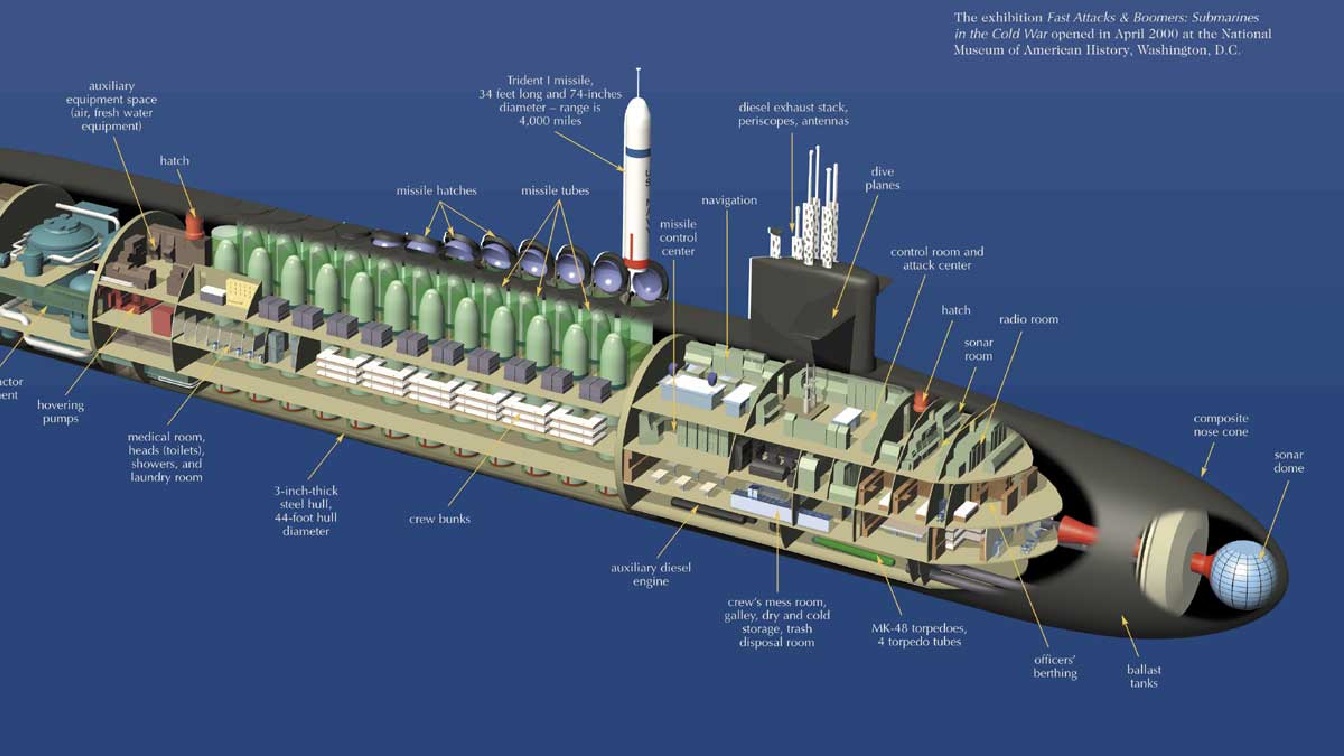
Ohio-Class SSBN. Image Credit: Creative Commons.
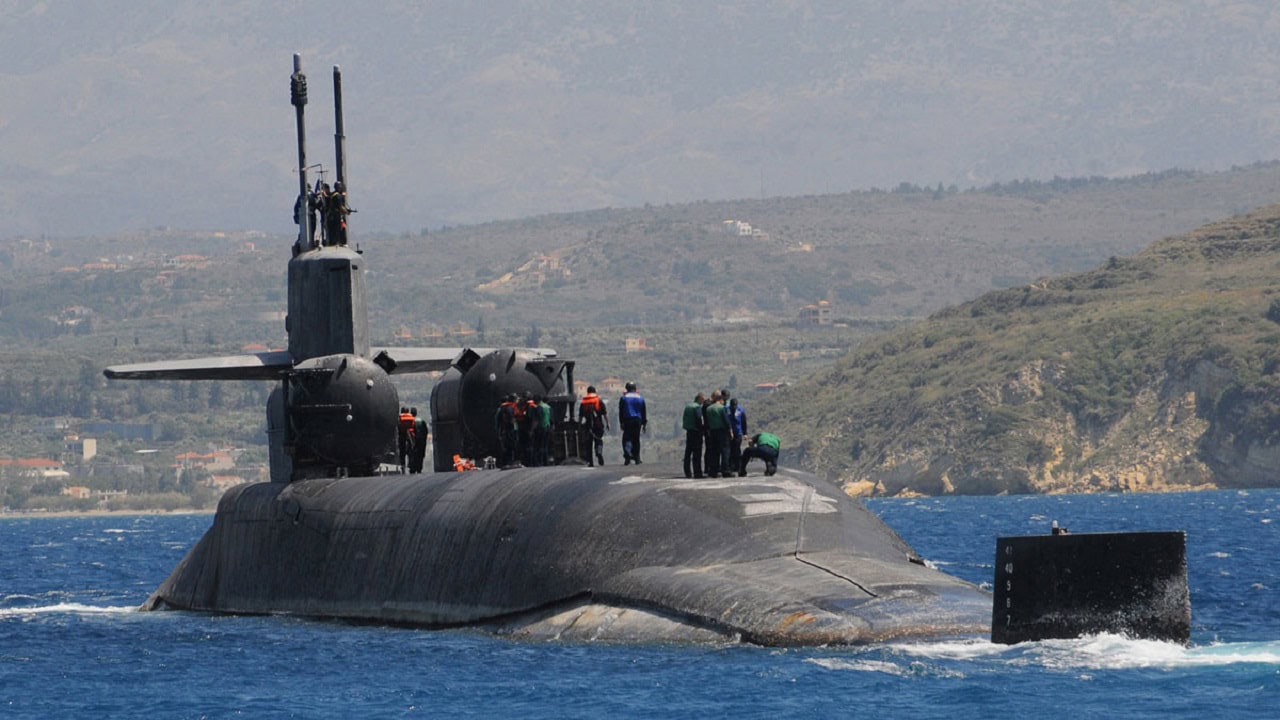
Ohio-Class SSGN. Image Credit: U.S. Navy.
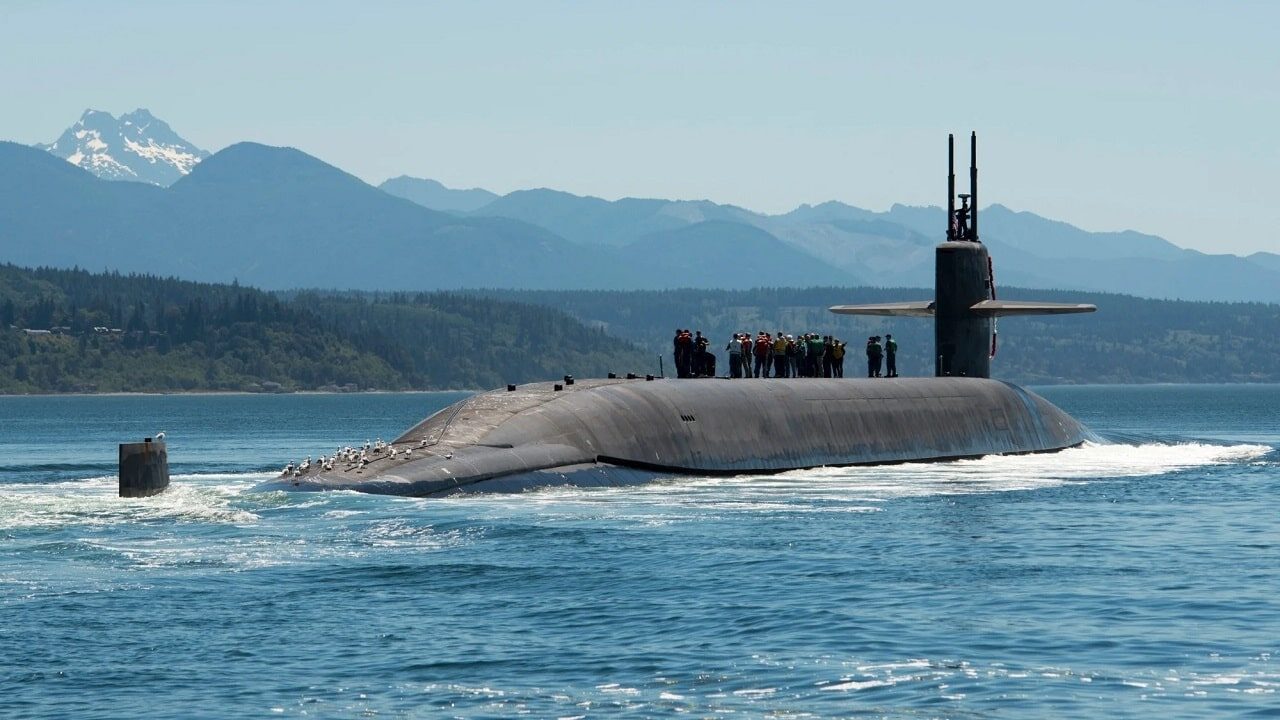
Ohio-Class. Image Credit: U.S. Navy.
The most detailed public lifecycle report puts the submarine program’s acquisition cost at $139.7168 billion in then-year dollars. It separately estimates $171.0696 billion for operations, support and disposal through fiscal 2085. Added together, those figures yield a lifetime estimate of roughly $310.8 billion on that accounting basis.
The same report gives a program acquisition unit cost of $11.643 billion per submarine and an average procurement unit cost of $10.443 billion. The lead boat, the future USS District of Columbia, carries a much higher $15.179 billion procurement estimate because it absorbs most of the class’s design and nonrecurring engineering costs.
Cost is only one pressure. The Government Accountability Office reported in April 2026 that the lead submarine was at least 18 months behind its contract delivery date. The Navy still needs the boat ready for its first deterrent patrol by October 2030, the opening month of fiscal 2031, as the oldest Ohio-class submarines reach the end of already extended service lives.
The Public Lifetime Estimate Reaches About $310.8 Billion
The December 2023 Modernized Selected Acquisition Report divides the bill into $13.938 billion for research and development, $125.320 billion for procurement and $458.4 million for military construction. The $171.0696 billion operating estimate assumes 12 submarines serving about 42.5 years each with two crews and includes disposal costs.
The calculation has boundaries. The report states that procurement excludes supplier development as a submarine industrial base, as funding. It also does not capture every separate account supporting the wider sea-based deterrent, including parts of the Trident missile nuclear warhead, lead, and shore-infrastructure system. The widely cited $350 billion framing uses a different lifecycle estimate and set of assumptions. The public Defense Department report provides the cleaner breakdown: roughly $139.7 billion to acquire the class and $171.1 billion to operate, support, and dispose of it.
The Lead Boat Costs $15.2 Billion Before CBO Adds More Risk
The future District of Columbia’s $15.179 billion procurement figure includes $6.558 billion in detailed design and nonrecurring engineering. The estimated hands-on construction portion is about $8.622 billion. A 2025 Congressional Budget Office estimate said the Navy expected the second boat, the future USS Wisconsin, to cost $10.7 billion.
CBO’s independent model was higher. In constant 2025 dollars, it estimated the first boat at $18.1 billion and the second at $11.4 billion, with the 10 later submarines averaging $9.4 billion each. CBO placed the 12-boat procurement program at $123 billion, 16 percent above the Navy’s comparable estimate, and warned that both figures might prove low.
The Navy’s procurement forecast has already moved sharply. Its fiscal 2025 submission raised the 12-ship estimate from $112.7 billion to $126.4 billion in then-year dollars, a $13.7 billion increase in one budget cycle. Inflation, labor, government-furnished equipment, reactor components and material prices all contributed to the program’s cost and schedule pressure.
The Original 84-Month Schedule Lost All of Its Margin
The Navy tried to build the largest American submarine on an 84-month lead-ship schedule. A program report warned in 2023 that construction had consumed every month of available margin and that the shipbuilders were not working fast enough to recover it. The boat is about two-and-a-half times the displacement of a Virginia-class submarine, yet the planned construction span was comparable to the lead Virginia.
GAO found persistent late material, incomplete design products and construction performance below plan. Its September 2024 review projected delivery 12 to 16 months late and hundreds of millions of dollars in additional lead-ship cost. By April 2026, the watchdog described the delay as at least 18 months and reported that Wisconsin was 8 percent behind schedule as of November 2025.
The industrial response has become another multibillion-dollar effort. GAO said the Navy received more than $2.6 billion for Columbia supplier-base investments beginning in 2018 but had not consistently measured whether the spending increased output or reduced cost. The July 2026 submarine package included another $5 billion for workforce and shipyard productivity across Electric Boat and Newport News, reinforcing the industrial-base constraint behind the delay.
Seven Columboa-Class SSBNs Are Under Contract, but the Delivery Date Still Differs
Electric Boat performs final assembly, while Newport News builds major sections for every boat. Current reporting places District of Columbia at about 66 percent complete, Wisconsin at 35 percent and the third boat, the future USS Groton, at 10 percent.
Industry leaders say the lead boat is tracking toward delivery by the end of 2028 after an acceleration effort moved the final major modules into Groton. The Navy’s fiscal 2027 budget remains more conservative, scheduling delivery for March 2029 and Wisconsin for April 2030. Full-rate construction of one Columbia per year is targeted for 2031.
The fiscal 2027 request contains about $15.2 billion for the Columbia line. That is not the price of one submarine. It includes full funding for another boat, the final funding increment for Groton, advance procurement and supporting program costs. The recent schedule-recovery effort has improved module flow without restoring the original 2027 delivery date.
Twelve Columbia Submarines Must Replace 14 Ohio SSBNs
The Navy describes Columbia as its top acquisition priority because ballistic-missile submarines provide the most survivable leg of the U.S. nuclear triad. Each Columbia will carry 16 Trident II D5 missiles, operate with Blue and Gold crews and use a reactor core designed to last for the submarine’s entire service life.
That reactor explains why 12 new submarines are intended to replace 14 Ohio boats. Ohio-class SSBNs lose years of availability during midlife refueling overhauls. Columbia avoids that refueling period, allowing a smaller fleet to produce the required number of patrols. The design is expected to remain in service into the 2080s, making the Ohio-to-Columbia transition a four-decade commitment.
The schedule leaves little room for another major slip. The first Ohio retirement is scheduled for fiscal 2027, and the first Columbia must be ready for patrol no later than October 2030. The Navy has examined three-year service extensions for as many as five Ohio-class submarines to protect that handoff, a risk already reflected in the aging Ohio force.
Electric Boat now has seven Columbias under contract. The lead boat still has to complete final assembly, reactor and systems testing, sea trials, crew certification and missile-system work before the October 2030 patrol deadline.
MORE: Japan Failed at Pearl Harbor
MORE: The M2 Bradley Fighting Vehicle Is Winning the War Against Father Time
About the Author: Harry J. Kazianis
Harry J. Kazianis (@Grecianformula) was the former Senior Director of National Security Affairs at the Center for the National Interest (CFTNI), a foreign policy think tank founded by Richard Nixon based in Washington, DC. Harry has over a decade of experience in think tanks and national security publishing. His ideas have been published in the NY Times, The Washington Post, The Wall Street Journal, CNN, and many other outlets worldwide. He has held positions at CSIS, the Heritage Foundation, the University of Nottingham, and several other institutions related to national security research and studies. He is the former Executive Editor of the National Interest and the Diplomat. He holds a Master’s degree focusing on international affairs from Harvard University.

