
Summary and Key Points: The Navy says the Columbia-class ballistic missile submarine program is showing real schedule progress after years of delays and cost pressure.
-Rear Adm. Todd Weeks said at the 2026 WEST conference that USS District of Columbia is about 65 percent complete, with all 26 modules delivered to Groton under the A-26 acceleration plan.
-The Navy now expects the lead boat’s pressure hull to be complete by the end of 2026, enter the water in 2027, and deliver in 2028.
-USS Wisconsin is also on schedule at roughly 35 percent complete, while USS Groton is ramping up. Full serial production is projected by 2031.
The District of Columbia, i.e., Washington, DC, is the capital city of the United States of America, the most powerful nation on Earth, and the hub of the nation’s political and military power elite (as embodied by the White House and the Capitol Dome in the former category and the Pentagon in the latter. Accordingly, it’s fitting that the newest iteration of the U.S. Navy’s most powerful warship type in terms of destructive power, if not sheer physical size (the Gerald R. Ford-class supercarriers are the size queens on the Navy), its nuclear-powered ballistic missile submarine (SSBN) fleet, is named the Columbia class.
Alas, the Columbia-class SSBNs are being plagued by delays and ballooning cost overruns alike, which cynics and naysayers would say is entirely apropos for the namesake of a city that they consider a cesspool of political corruption, bloated bureaucracy, and a giant rathole for taxpayer dollars.

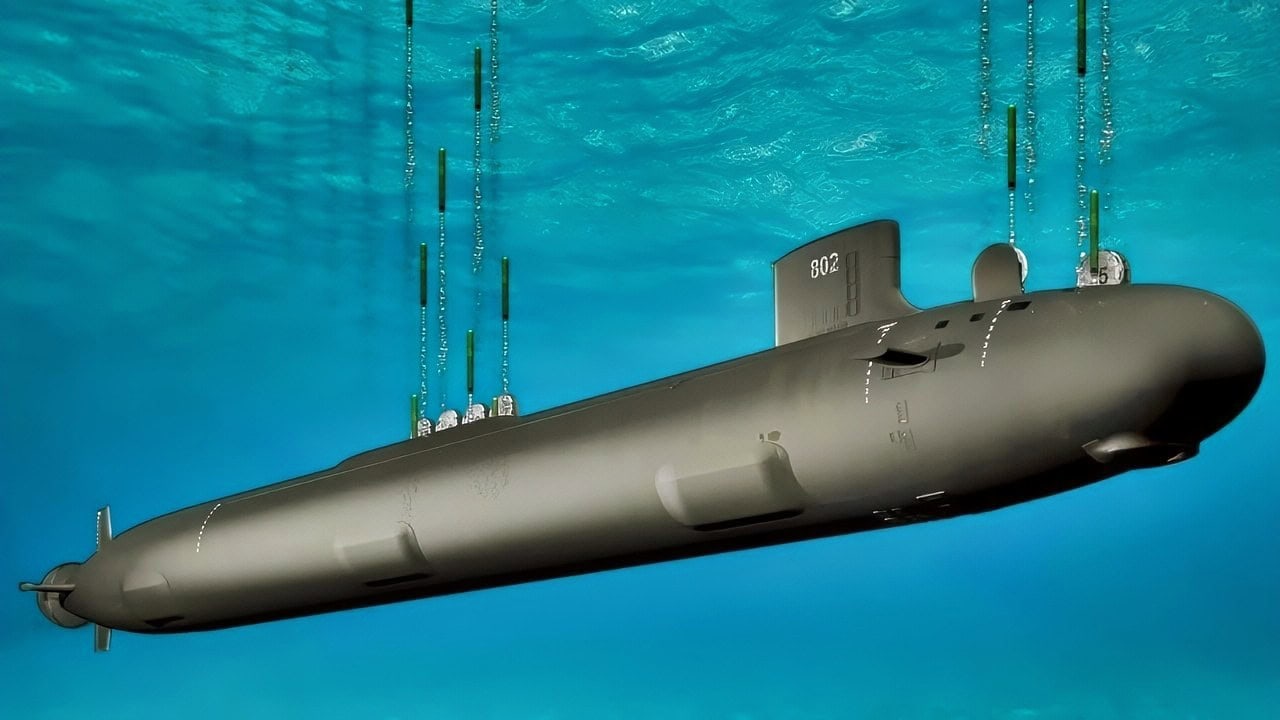
An artist rendering of the future U.S. Navy Columbia-class ballistic missile submarines. The 12 submarines of the Columbia-class will replace the Ohio-class submarines which are reaching their maximum extended service life. It is planned that the construction of USS Columbia (SSBN-826) will begin in in fiscal year 2021, with delivery in fiscal year 2028, and being on patrol in 2031.
Well, now there’s finally some good news on the Columbia construction front.
Bottom Line Up Front (BLUF)
This latest bit of encouraging news comes to us from Sam Lagrone of USNI News (as in United States Naval Institute, that is) in a February 11, 2026 report titled “Navy Says Columbia-class Sub Construction Schedule Improving,” and the senior USN officer who serves as the primary source of Mr. Lagrone’s information is Program Executive Officer Strategic Submarines Rear Admiral Todd Weeks, who was speaking on a panel during the 2026 WEST conference in San Diego, California. Among RADM Weeks’s salient points:
-The lead ship of the class, appropriately named the USS District of Columbia (SSBN-826), is now about 65 percent complete, and shipbuilders General Dynamics Electric Boat (GDEB) and HII’s Newport News Shipbuilding are working to deliver the sub in 2028
-“We sat down with our shipbuilding partners, and we realized that we were not where we needed to be on District of Columbia. We were not making the progress we needed to. Together with our shipbuilders, we embarked upon a bold plan that we called the A-26 acceleration plan and the goal was to be able to deliver every single one of the [26] modules that makes up [District of] Columbia, to deliver all those modules to the final assembly yard in Groton by the end of by the end of last year… We achieved that.”
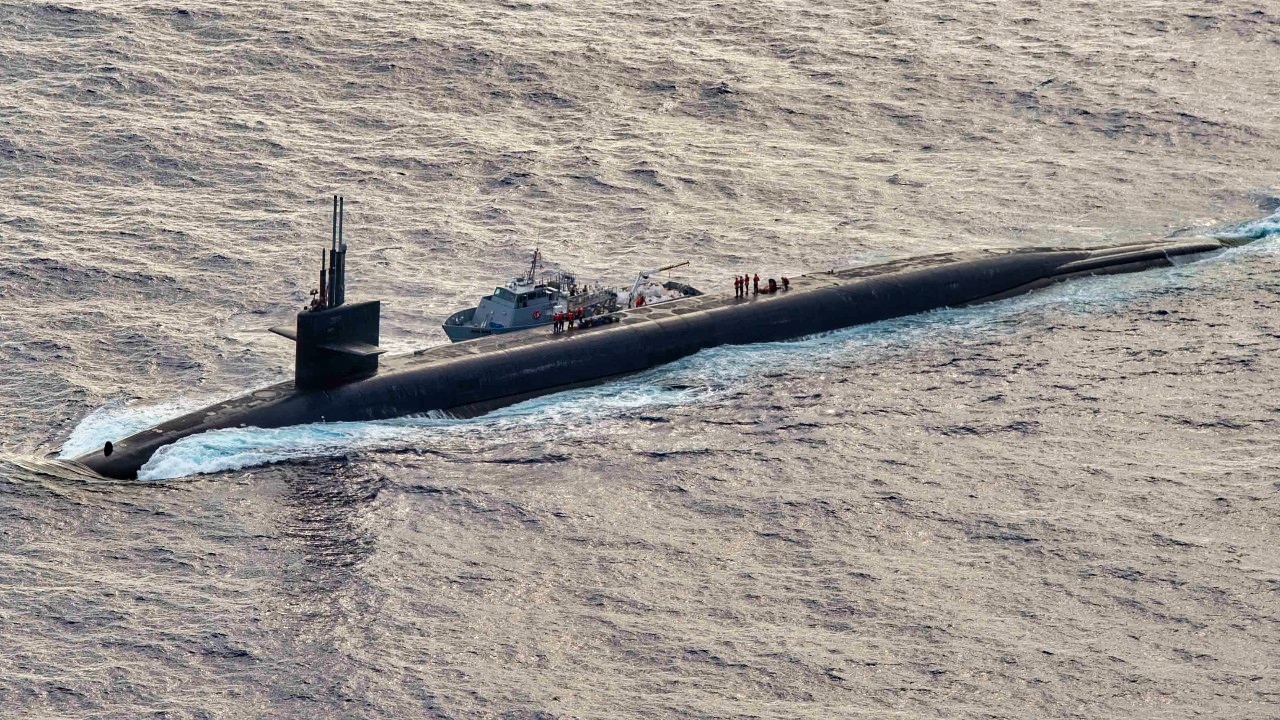
The Ohio-class ballistic missile submarine USS Kentucky (SSBN 737) sails alongside a submarine support vessel during a routine armed air escort (AAE) exercise, April 24, 2025. AAEs are designed to improve interoperability between our services, increasing lethalitythrough multi-domain integration.. Commander, Submarine Group (SUBGRU) 9, exercises administrative control authority for assigned submarine commands and units in the Pacific Northwest providing oversight for shipboard training, personnel, supply and material readiness of submarines and their crews. SUBGRU-9 is also responsible for nuclear submarines undergoing conversion or overhaul at Puget Sound Naval Shipyard in Bremerton, Washington. (U.S. Navy photo by Mass Communication Specialist 1st Class Ryan Riley)
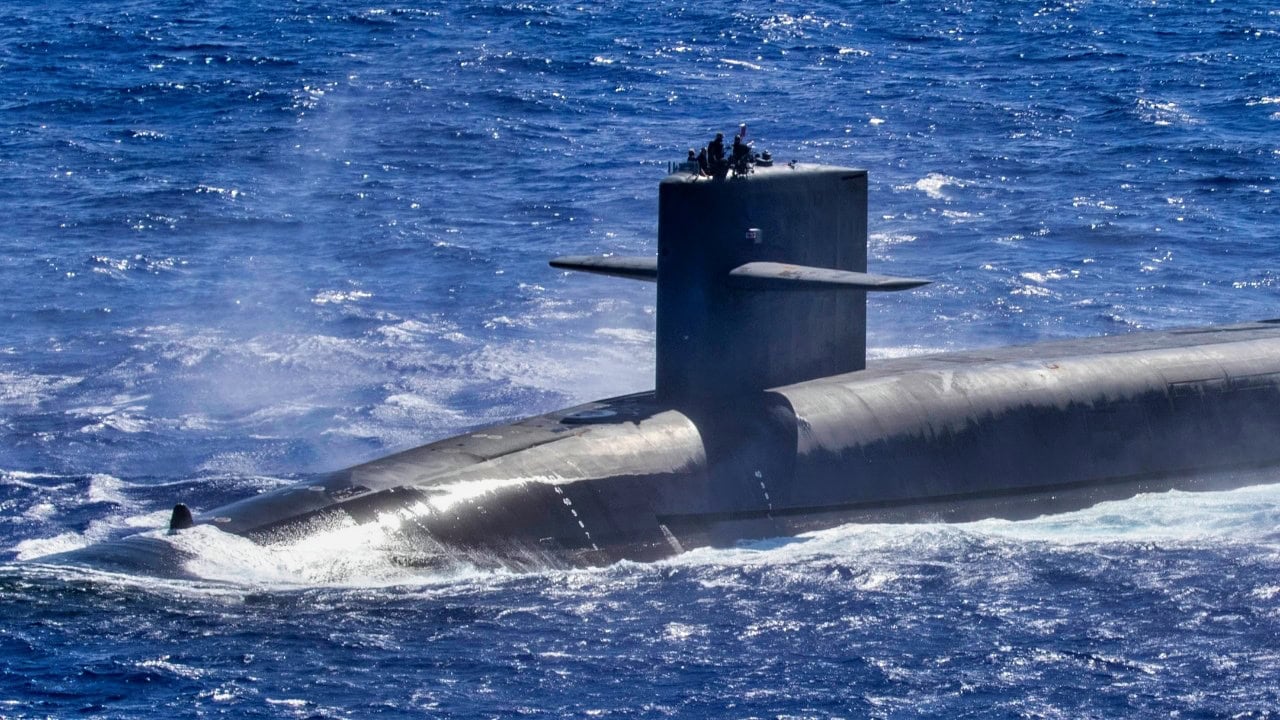
PACIFIC OCEAN (June 28, 2024) – An AS-332 Super Puma assigned to the Lewis and Clark-class dry cargo ship USNS Cesar Chavez (T-AKE 14) delivers supplies to the Ohio-class ballistic missile submarine USS Louisiana (SSBN 743) during a vertical replenishment at sea, June 28, 2024. The presence of the SSBN in the Pacific demonstrates the flexibility, survivability, readiness, and capability of the U.S. Navy submarine forces and complements the many exercises, training, operations, and other military cooperation activities conducted by Strategic Forces to ensure they are available and ready to operate around the globe at any time. Homeported in Bangor, Washington and currently assigned to Submarine Squadron 17, Louisiana is an undetectable launch platform for submarine-launched ballistic missiles, providing the United States with its most survivable leg of the nuclear triad. (U.S. Navy Photo by Mass Communication Specialist Seaman Andrew McPeek)
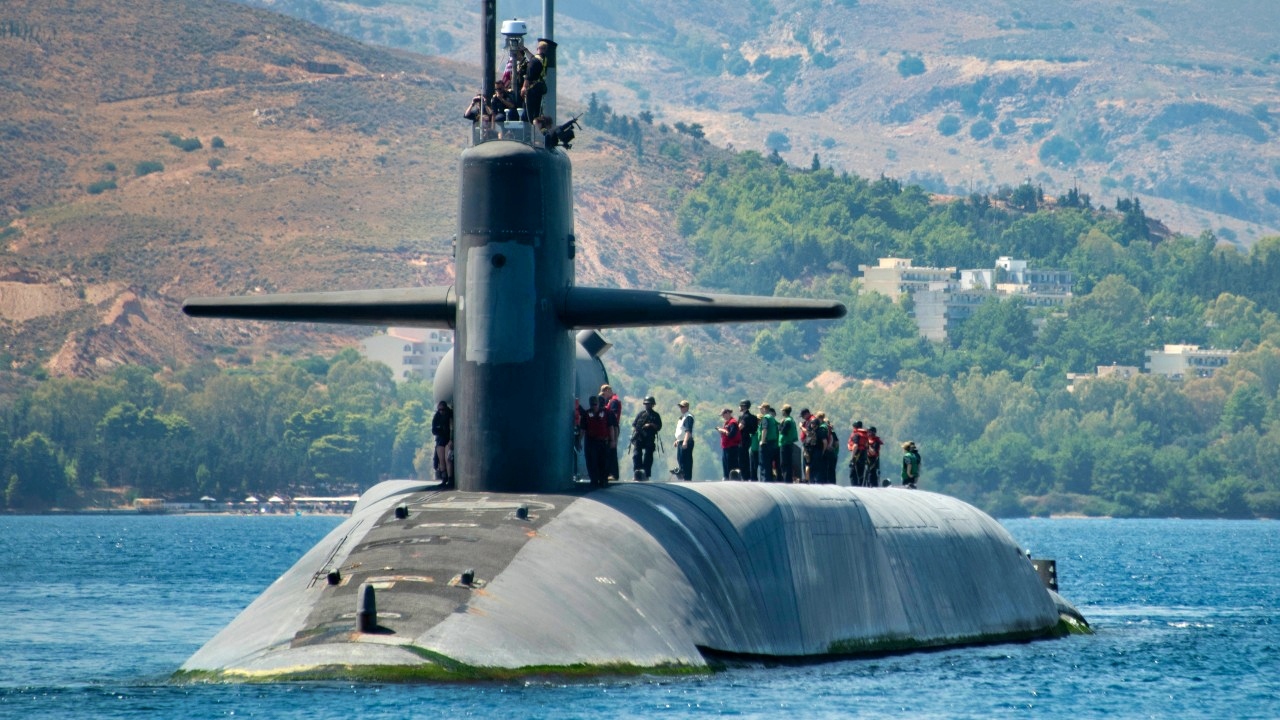
190907-N-UR565-0660NAVAL SUPPORT ACTIVITY SOUDA BAY, Greece (Sept. 7, 2019) The Ohio-class cruise missile submarine USS Florida (SSGN 728) arrives in Souda Bay, Greece, for a scheduled port visit, Sept. 7, 2019. NSA Souda Bay is an operational ashore base that enables U.S., allied, and partner nation forces to be where they are needed and when they are needed to ensure security and stability in Europe, Africa, and Southwest Asia. (Photo by Joel Diller/Released)
-The last module was the bow section of SSBN-826, which was delivered to GDEB from HII via barge just before Thanksgiving 2025
-“By the end of this year, we will be pressure hull complete on that lead ship. All the modules will be assembled into one hull. Then next year the ship will go into the water, and we’re driving towards delivering the ship in 2028.”
The good admiral also had good news about the next two ships in the class, namely USS Wisconsin (SSBN-827; not to be confused with the World War II-vintage Iowa-class battleship USS Wisconsin [BB-64]) and USS Groton (SSBN-828), noting that the Wisconsin is about 35 percent complete—”It is today, one of only two US Navy ships under construction that are on schedule,” he said—and the Groton “is about 10 percent complete, and we’re seeing good ramp-up there.”
Last but not least, RADM Weeks said the program of a dozen “boomers” (Navy slang for SSBNs) is set to hit full serial production by 2031.
Quick Aside: What’s West?
WEST is described on its official site as an event that “connects the industry professionals who design and build the platforms, equipment, and weapons with the designers of communications and technical systems…Senior military and government officials talk directly to operators to gain valuable feedback. Industry leaders attend because they can connect with decision makers and operators over the three-day event.” It has been a recurring event for 36 years.
RADM Weeks Mini-Bio
As per his official USN bio page, Todd Weeks “graduated with Merit from the United States Naval Academy in May 1993 with a Bachelor of Science in Naval Architecture. In June 2006, he graduated Cum Laude from Norwich University with a Master of Arts in Diplomacy. He is also a graduate from the Naval Command and Staff College at the Naval War College.”
As for RADM Weeks’s “real-world” operational assignments outside of the hallowed halls of academia, they’ve included:
-Engineer Officer onboard USS Los Angeles (SSN-688)
-Executive Officer (“XO,” i.e., the second-in-command, onboard USS Helena (SSN-725)
-Skipper of the USS Alexandria (SSN-757) from January 2011 until August 2013
-Deployments to the North Atlantic, Mediterranean, the Western Pacific, and the U.S. Southern Command (SOUTHCOM) area of operations (AOR)
RADM Weeks’s first flag assignment was as Program Executive Officer for Undersea Warfare Systems (PEO UWS). He also did a stint at the prestigious RAND Corporation in Santa Monica, California, from July 2005 to May 2006, where he was a Federal Executive Fellow, co-authoring “Sustaining U.S. Nuclear Submarine Design Capabilities,” a study analyzing the viability of the Submarine design base.
The Way Forward for the USS District of Columbia
The boat was originally set to begin its first patrol in 2030 following the retirement of the oldest Ohio-class SSBN, USS Henry M. Jackson (SSBN-730; named for the famous Senator “Scoop” Jackson [D-WA] who served in the Senate from 1953 to 1983 and the previous 12 years in the U.S. House of Representatives).
Meanwhile, the Navy brass isn’t wasting any time insofar as tabbing the senior leadership of the so-called “USS DC” (whose motto is “Justitia Omnibus [Justice For All]”). That leadership triumvirate consists of:
-Commanding Officer: Captain Heath Johnmeyer, a native of Rolla, Missouri, who graduated from Oklahoma State University in 2000 with a Bachelor of Science Degree in Civil Engineering and earned an Executive Master’s in Business Administration from the Naval Postgraduate School in Monterey, California in 2007
-XO: Commander David Phillips, originally from Brownsburg, Indiana, who graduated from Purdue University in May 2010 with a Bachelor’s degree in Materials Engineering and earned his commission from Officer Candidate School (OCS) in September 2010
-Chief of the Boat (COB): CSSCM(SS) Mark Shipley, who was born in Chicago, Illinois, and enlisted in the U.S. Navy in August 2000; his first sea assignment was USS Nebraska (SSBN-739)(B) from April 2001 to March 2004
About the Author: Christian D. Orr
Christian D. Orr is a Senior Defense Editor. He is a former Air Force Security Forces officer, Federal law enforcement officer, and private military contractor (with assignments worked in Iraq, the United Arab Emirates, Kosovo, Japan, Germany, and the Pentagon). Chris holds a B.A. in International Relations from the University of Southern California (USC) and an M.A. in Intelligence Studies (concentration in Terrorism Studies) from American Military University (AMU). He is also the author of the newly published book “Five Decades of a Fabulous Firearm: Celebrating the 50th Anniversary of the Beretta 92 Pistol Series.”