
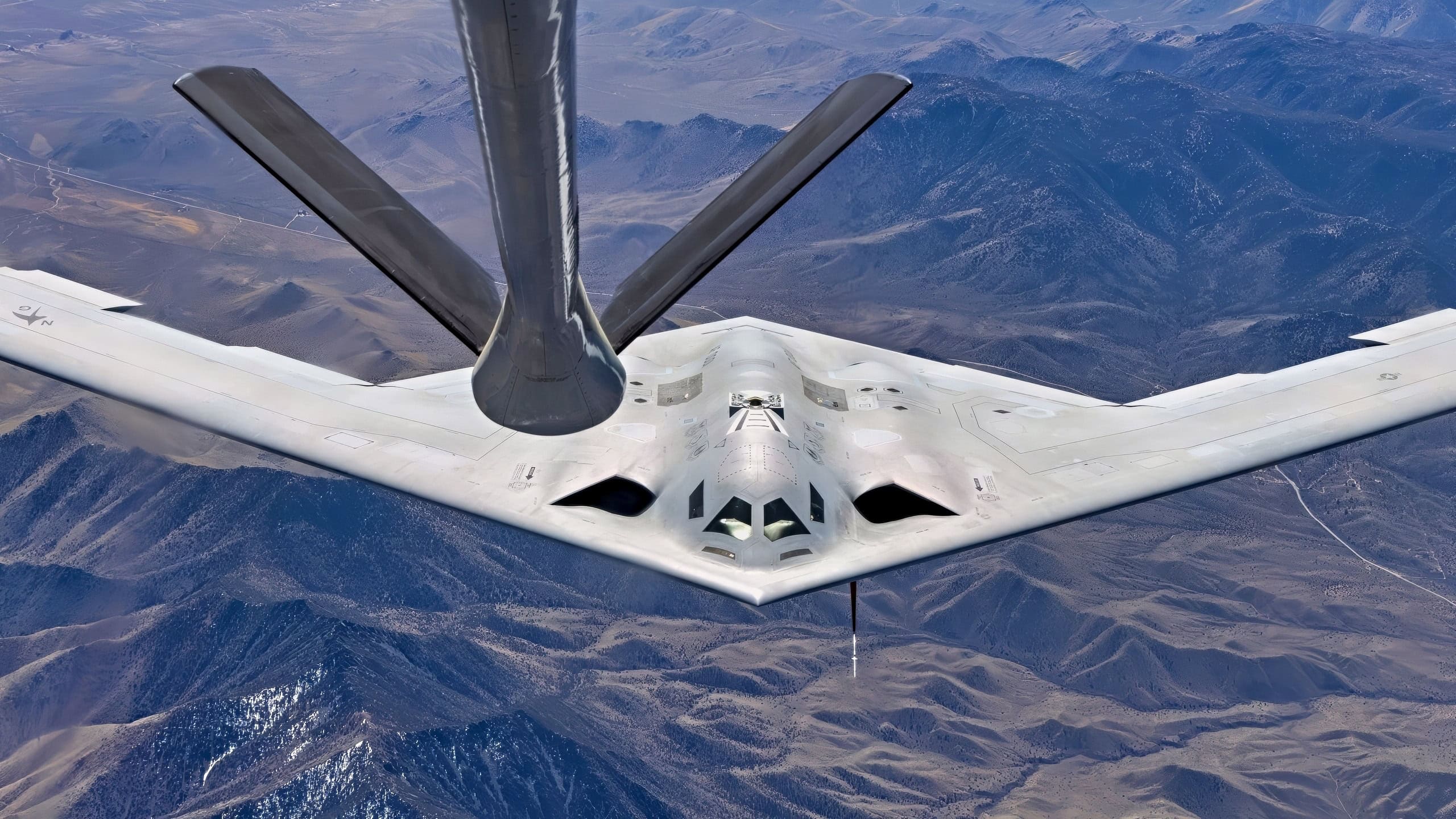
The B-21 Raider Was Supposed to Be the Next $13 Billion Disaster. Instead, It Became the Rarest Thing in the Pentagon: A Program That Stayed on Budget: Modern American weapons programs have a reputation, and it is not a flattering one. The Ford-class carrier ran billions over budget. The Zumwalt destroyer was cut from 32 ships to three. The F-35 became the most expensive weapons program in history. Against that backdrop, the B-21 Raider — a stealth bomber, the most secretive and technically demanding class of aircraft there is — was widely expected to be the next entry on the list. It has not been. Years into development, with aircraft already flying, the program is holding to a cost target it set in 2010, and understanding why is a lesson in how defense acquisition is supposed to work.
The Hall of Infamy
To appreciate what the B-21 has avoided, look at the company it was expected to keep. The Gerald R. Ford-class aircraft carrier, the lead ship of the class, came in at roughly $13.3 billion, about 23 percent over its initial estimate, after the Navy packed 23 immature technologies — new catapults, new arresting gear, new weapons elevators — into a single first-of-class hull. A Senate hearing later described the effort as one of the most spectacular acquisition debacles in recent memory, and 19FortyFive has argued the carrier is now simply too big to fail.
The Zumwalt-class destroyer was worse in its way. The Navy planned 32 ships and built three, as the program ballooned to around $22 billion, roughly $8 billion per ship, an overrun steep enough to trigger the automatic review that federal law reserves for programs that breach their cost estimates. Its signature main gun was ultimately left without affordable ammunition, the specialized shells running to hundreds of thousands of dollars apiece before the Navy canceled the round entirely, and the guns became useless weight — an embarrassment the service is still trying to fix by refitting the ships for hypersonic missiles.
Then there is the F-35, whose lifetime cost the Government Accountability Office now projects above $2 trillion, the most expensive weapons program ever fielded. It breached its cost threshold in 2012, its central Block 4 upgrade has slipped from 2026 to 2031, and its jets were fully mission-ready only about a quarter of the time last year. These are not obscure programs. They are the flagships of American air and naval power, and each became a byword for cost overrun.
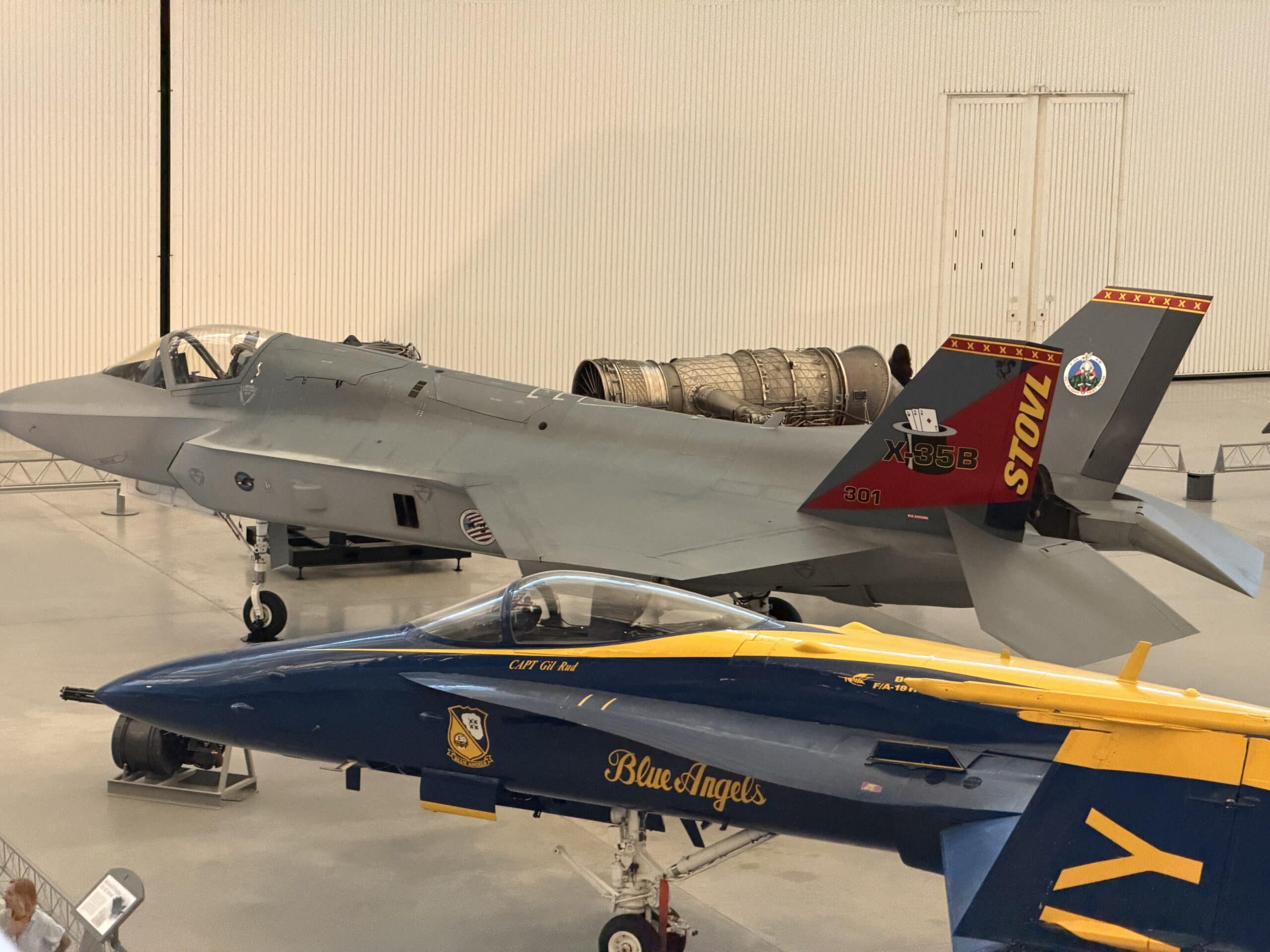
F-35 at the Smithsonian. 19FortyFive Original Photo.
The Number That Held
The B-21 was supposed to join them, and by the usual logic, it should have. A penetrating stealth bomber is the hardest, most classified engineering the aerospace industry attempts, and its predecessor offered a grim precedent: the B-2 Spirit was planned at 132 aircraft, cut to 21 when the Cold War ended, and ended up costing about $2 billion each once the tiny fleet absorbed the program’s overhead.
Instead, the Air Force’s stated average procurement cost of roughly $692 million per aircraft, in 2022 dollars, still corresponds to the $550 million target the service set back in 2010 dollars. The whole program — development, a fleet of at least 100 aircraft, and 30 years of operations — is pegged at around $203 billion. And this is not a paper promise awaiting a reckoning: two B-21s are already flying test missions, deliveries have begun on schedule, and the first combat-coded aircraft are due at Ellsworth Air Force Base in South Dakota in 2027. The cost estimate has survived the program reviews that wreck other efforts.
Why This One Worked
The explanation is not luck, and it is worth stating plainly because it is the whole point. The single biggest factor is the contract. The B-21’s development and early production were structured on a fixed-price basis, meaning that when costs rise, the contractor absorbs the difference rather than billing the taxpayer. As a direct result, Northrop Grumman has incurred more than $2 billion in losses on the program. That is the exact inverse of the cost-plus arrangements that governed the early Ford and Zumwalt, where every overrun flowed straight to the government. Northrop bet it could build the bomber for the price it quoted, and it is eating the cost of being wrong at the margins.
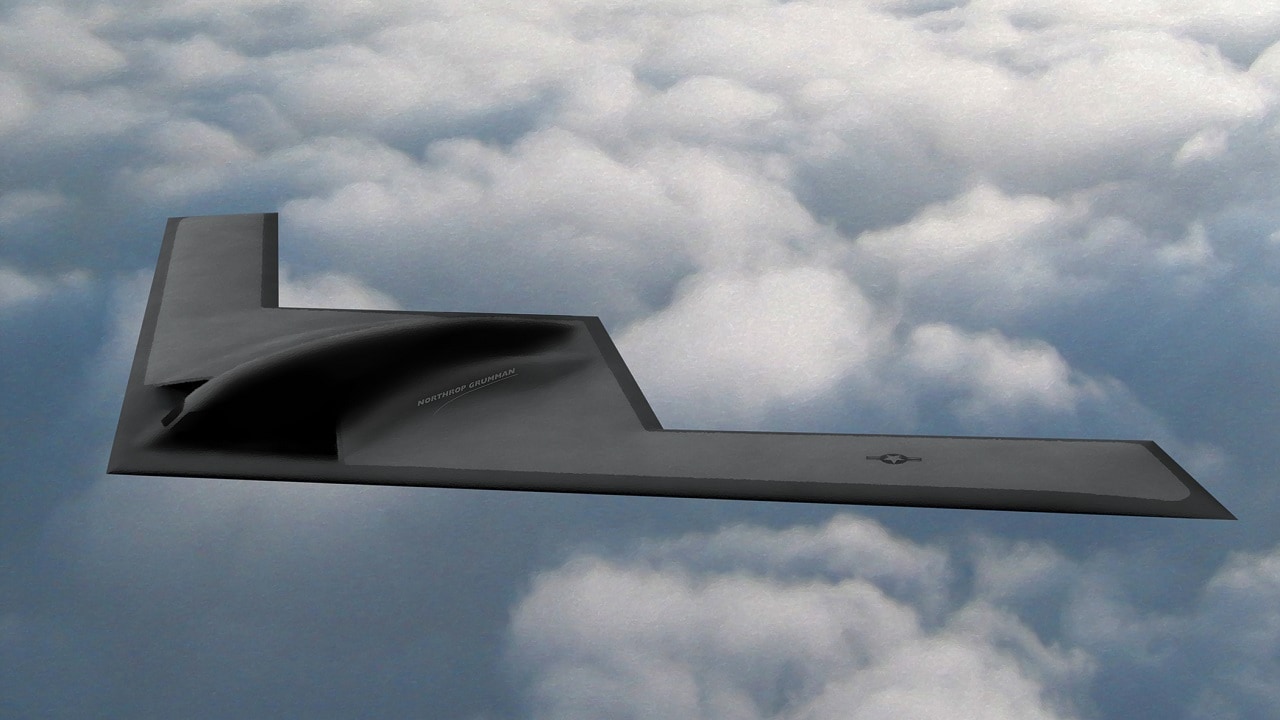
B-21 Raider bomber. Image Credit: Creative Commons.
The discipline went deeper than the contract. Where the Ford loaded 23 unproven technologies onto one hull, the B-21 was deliberately built around mature systems and an adaptable but evolutionary design, sacrificing revolution for predictability. Its requirements stayed stable rather than shifting mid-program, the reliable engine of cost growth everywhere else. And the secrecy that shrouds the program had a budgetary side effect: it insulated the design from the constant “just add one more capability” pressure that inflates open programs. A realistic target, set in 2010 and defended ever since, did the rest.
The Honest Caveat
None of this means the B-21 is home free, and pretending otherwise would repeat the very optimism that sank the others. The accurate verdict is that it has avoided disaster so far. The program is still in low-rate initial production; full-rate production and, above all, decades of sustainment lie ahead, and sustainment is precisely where the F-35’s bill exploded, with projected operating costs dwarfing the cost of buying the jets.
Northrop has already negotiated a higher cost ceiling for its next batch of aircraft, a reminder that inflation and the industrial base still press on the program, and some critics still call the $203 billion commitment a nightmare just beginning. The $692 million figure is a procurement number, not the full lifetime cost, and no stealth aircraft’s true cost is knowable this early.
But the claim worth making is narrow and defensible. The B-21 has not become the Ford, the Zumwalt, or the F-35, and it has avoided their fate for identifiable, repeatable reasons: a contract that put risk on the contractor, technological restraint, stable requirements, and a cost target held for a decade and a half.
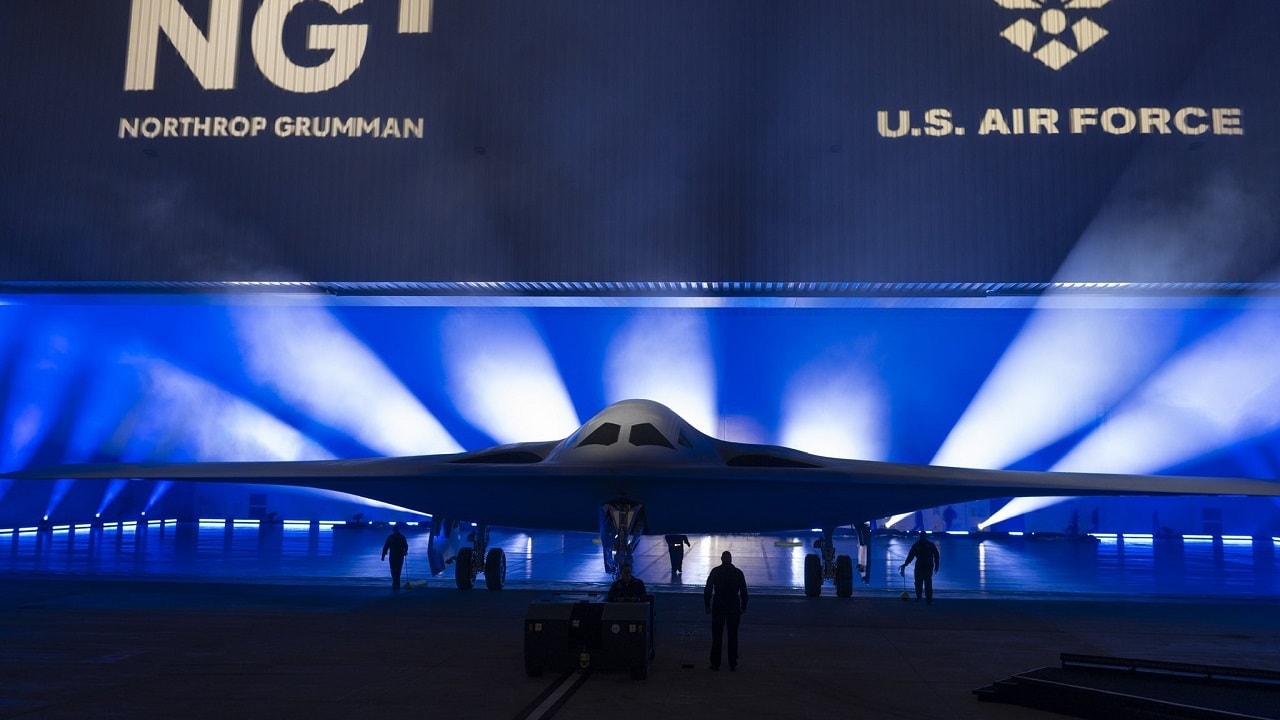
B-21 Raider. Image Credit: U.S. Air Force.
In a procurement system where those choices are the exception rather than the rule, a bomber that simply costs what it was supposed to cost is close to revolutionary. The lesson is not that the Pentagon got lucky. It is that the Pentagon, for once, followed its own advice — and everyone watching the next big program should be taking notes.
About the Author: Harry J. Kazianis
Harry J. Kazianis (@Grecianformula) was the former Senior Director of National Security Affairs at the Center for the National Interest (CFTNI), a foreign policy think tank founded by Richard Nixon based in Washington, DC. Harry has over a decade of experience in think tanks and national security publishing. His ideas have been published in the NY Times, The Washington Post, The Wall Street Journal, CNN, and many other outlets worldwide. He has held positions at CSIS, the Heritage Foundation, the University of Nottingham, and several other institutions related to national security research and studies. He is the former Executive Editor of the National Interest and the Diplomat. He holds a Master’s degree focusing on international affairs from Harvard University.

