
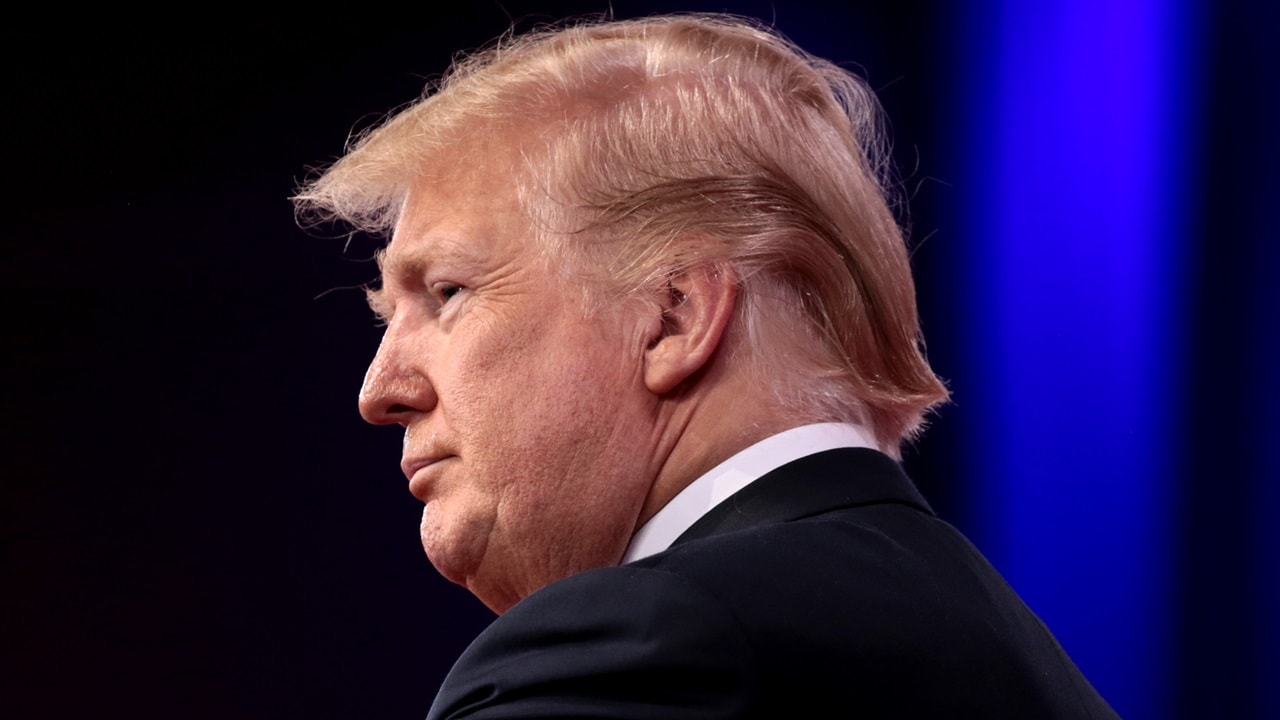
US President Donald Trump is stuck. He started a war with Iran, which he clearly anticipated would end quickly. Instead, the war drags on for six months. Worse, the overall geopolitical position of the US and its allies in the Persian Gulf has worsened, not improved, because of the war. The US destroyed many Iranian military assets, but not enough to stop Iran from blocking the Strait of Hormuz. Control of that waterway is now the central point of contention in the war.
Trump will not make any major moves before the US November election. Sheer political calculus encourages caution until then.
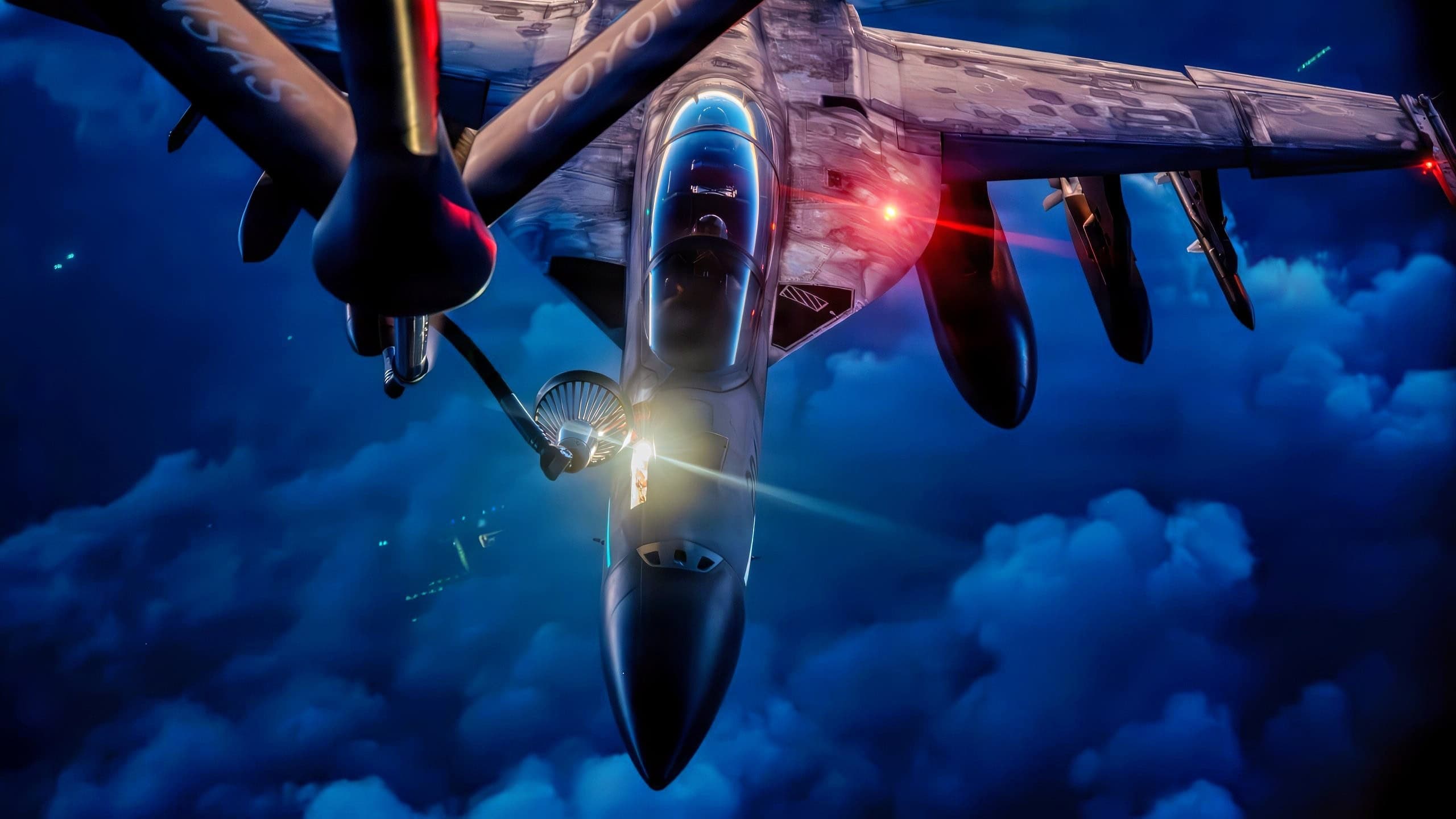
A U.S. Navy F/A-18F Super Hornet aircraft refuels from a U.S. Air Force KC-135 Stratotanker aircraft during a mission in support of Operation Epic Fury over the U.S. Central Command area of responsibility, March 8, 2026. (U.S. Air Force photo)
But assuming Trump does not want a slow-motion ‘forever war’ in the Middle East – precisely the sort of conflict US voters deeply oppose – he has three options to wrap this up afterward:
Make His Best Effort to Win: Take Hormuz
The most obvious option for Trump is to make a sustained, concerted effort to win decisively.
This is the hawkish position urged by supporters of the war, such as the recently deceased Senator Lindsey Graham. The appeal of this position is that it would force Iran to make concessions or face genuine punishments, such as the loss of territory around the Strait of Hormuz or even regime change. This is the full-on invasion many war supporters and critics of the Iran deal have wanted for years.
The downside risk, of course, is that this requires a ground war. Trump has demonstrated again and again that he fears that level of risk. He clearly hoped that airpower would be enough to replicate a Venezuela-style outcome in Iran.
A ground war in Iran – three times the size of Iraq – could very easily spiral into a repeat of the Vietnam War or the current Russian war in Ukraine. A conflict of that scale would take over Trump’s presidency – as Vietnam did to President Lyndon Johnson and Ukraine has done to Russian President Vladimir Putin. Trump would be gambling his entire legacy on a ground conflict he clearly does not want.
Capitulate: Just Slink Away
The inverse option of massive escalation is to just drift away from the Persian Gulf after the election and tacitly accept Iranian control. This is attractive because it requires no additional costs or effort from the United States.
Trump should go back to the domestic issues he really cares about, and most of the costs of Iranian cargo tolls through the Strait of Hormuz can be pushed onto other players. As Trump likes to point out, the US itself is fairly energy-independent. So any carrying charges that Iran imposes will mostly be borne by Asian importers such as Japan and China.
The obvious downside is that US allies will feel badly manipulated and continue to drift away from Washington. US allies already stayed away from this conflict because Trump did not inform or consult them.
This will only worsen that alienation and spread it to US Asian allies – to date, mostly spared Trump’s anger – as they will mostly pay the toll fees. More importantly, Iran will come into a huge new windfall of cheap money – the tolls – worsening the very problems like terrorism and nuclear development which provoked the war. This is likely why Trump is trying to find some solution where the US controls the strait itself or jointly with Iran.
Create a Concert or Cartel to Run the Gulf
There is a middling option between these two distasteful poles – a multinational controlling authority that balances Iran’s belief that it has fought its way into control of the strait with the world’s desire to restore free commerce. The status quo ante – free passage – is unlikely to return. Iran did far better in the conflict than most expected, and it learned that it can control the strait with far greater ease than expected.
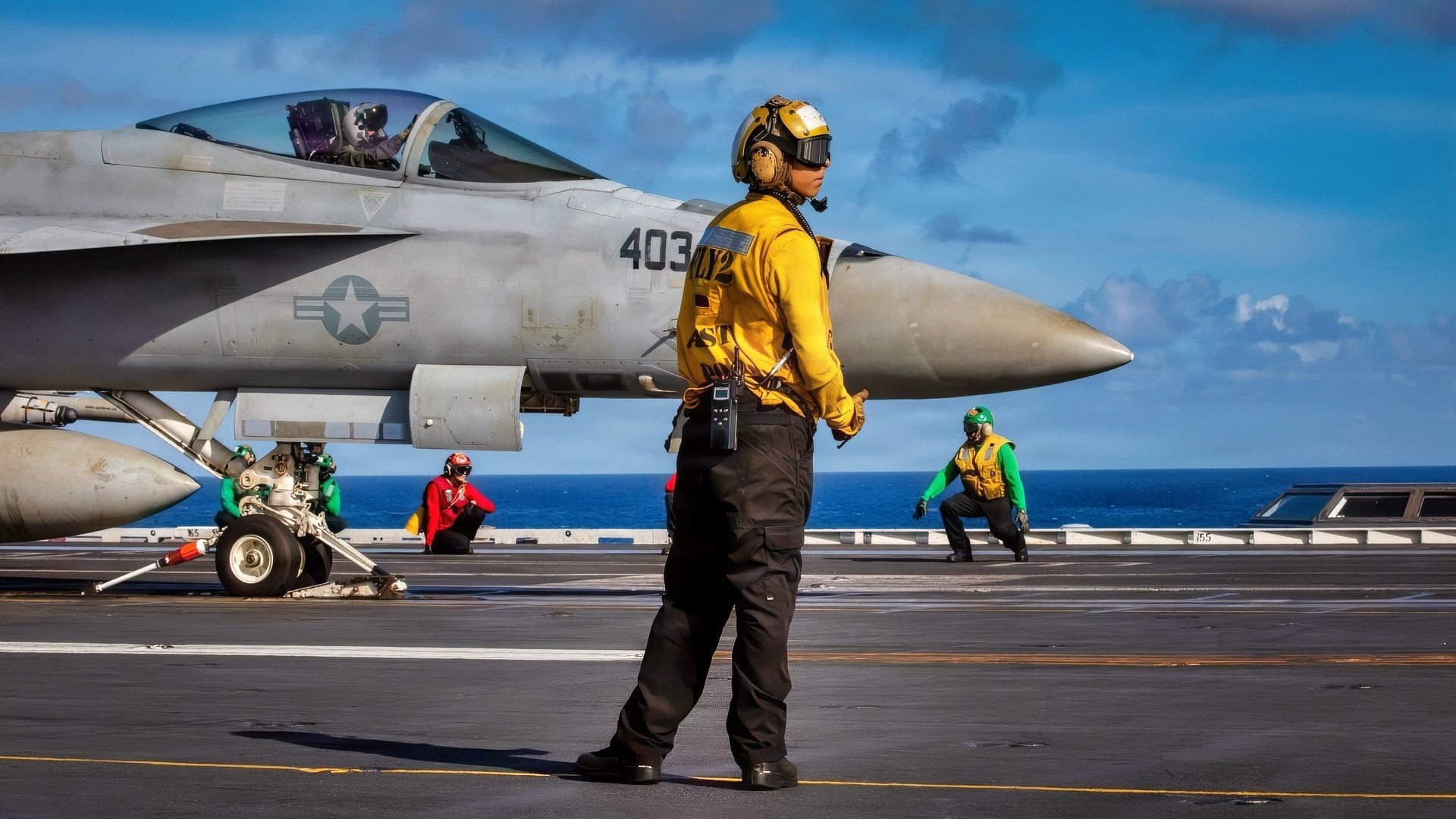
A U.S. Sailor signals to an F/A-18E Super Hornet aircraft, attached to Strike Fighter Squadron 87, during flight deck operations on the flight deck of the world’s largest aircraft carrier, Ford-class aircraft carrier USS Gerald R. Ford (CVN 78), while underway in the Caribbean Sea, Jan. 3, 2026. U.S. military forces are deployed to the Caribbean in support of the U.S. Southern Command mission, Department of War-directed operations, and the president’s priorities to disrupt illicit drug trafficking and protect the homeland. (U.S. Navy photo)
The two previous options are either to wrest that control back by force or to accept that control. But given Trump’s deal-making instincts, he could try regional diplomacy. All regional players, including Iran, have an interest in opening the strait. Its commerce is vital for their growth. Trump could convene a conference of all parties to arrange an oversight structure – something like the UN Convention on the Law of the Sea but for the Gulf. This might limit Iran’s open predation on Gulf traffic and create some regional stability, which would, helpfully, allow the US to withdraw without creating another new, expensive Middle Eastern military commitment. But this outcome would require a level of diplomatic finesse and detailed policy development atypical of the Trump administration’s foreign policy.
In the End, the World will Probably Just Accept Iranian Tolls
The most likely outcome is the second option – a de facto acceptance of Iranian control. Trump does not want a presidency-risking land war in Asia, and he lacks the patience, knowledge, and staff depth to work up a major regional framework. In the end, the US will likely default to tolerating tolls.
Author: Dr. Robert Kelly, Pusan National University
Dr. Robert E. Kelly is a professor of international relations in the Department of Political Science and Diplomacy at Pusan National University in South Korea. His research interests focus on Security in Northeast Asia, U.S. foreign policy, and international financial institutions. He has written for outlets including Foreign Affairs, the European Journal of International Relations, and The Economist, and has appeared on television news services such as the BBC and CCTV. His personal website/blog is here; his Twitter page is here.