
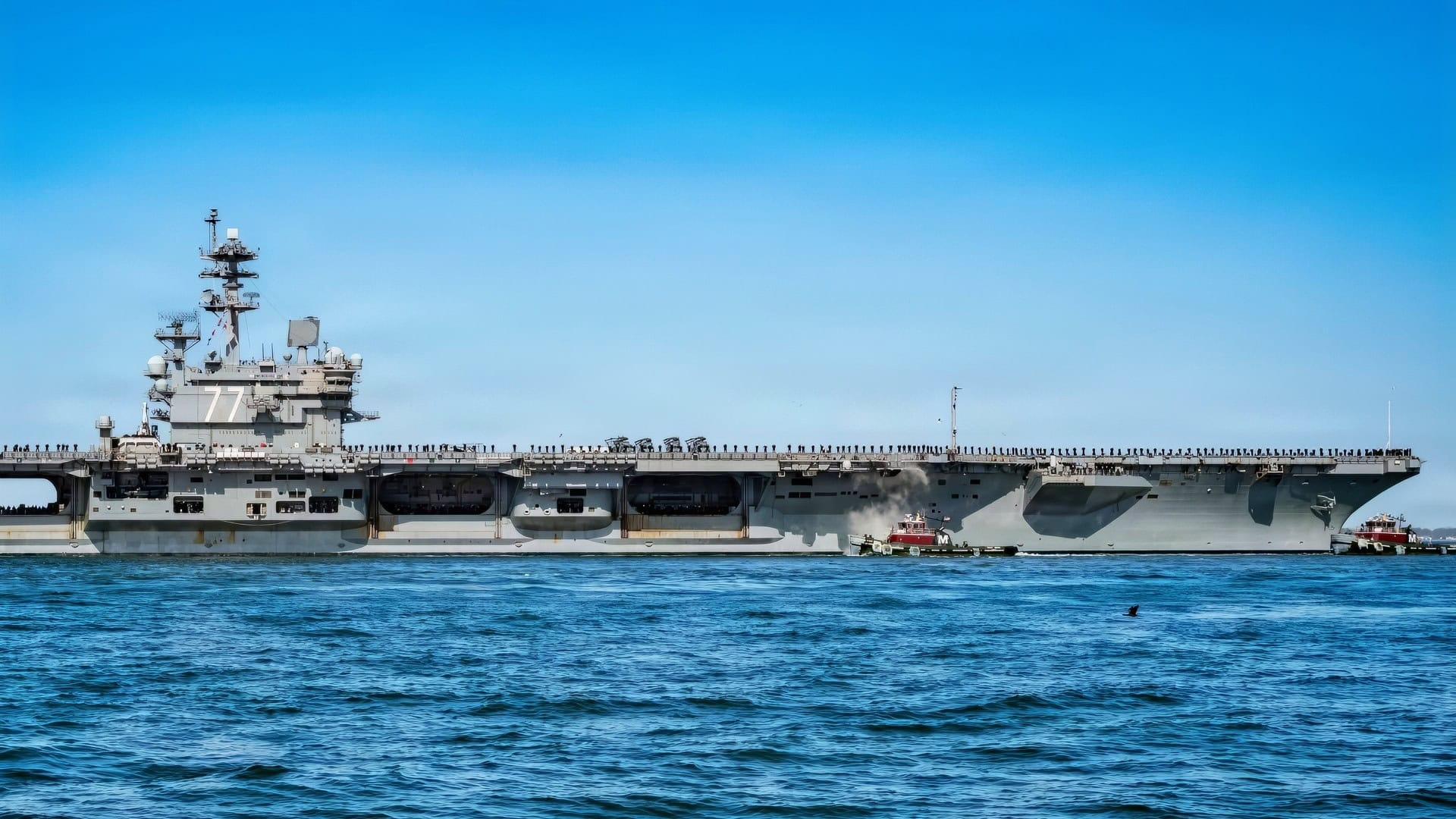
The Iran War Is Now All About Who Controls the Strait of Hormuz
Clausewitz understood that wars have a way of outgrowing the aims that set them in motion. Thirty-one days into Operation Epic Fury, his lesson is being relearned — even if Washington can’t quite decide whether to admit it.
The strikes began on February 28 with a recognizable logic: destroy Iran’s navy, dismantle its missile and drone infrastructure, degrade its proxies. Those objectives were real, and the campaign has prosecuted them with considerable operational force.
But wars, as Clausewitz argued, have a way of revealing their own decisive logic. This one has. It is the control of the Strait of Hormuz.
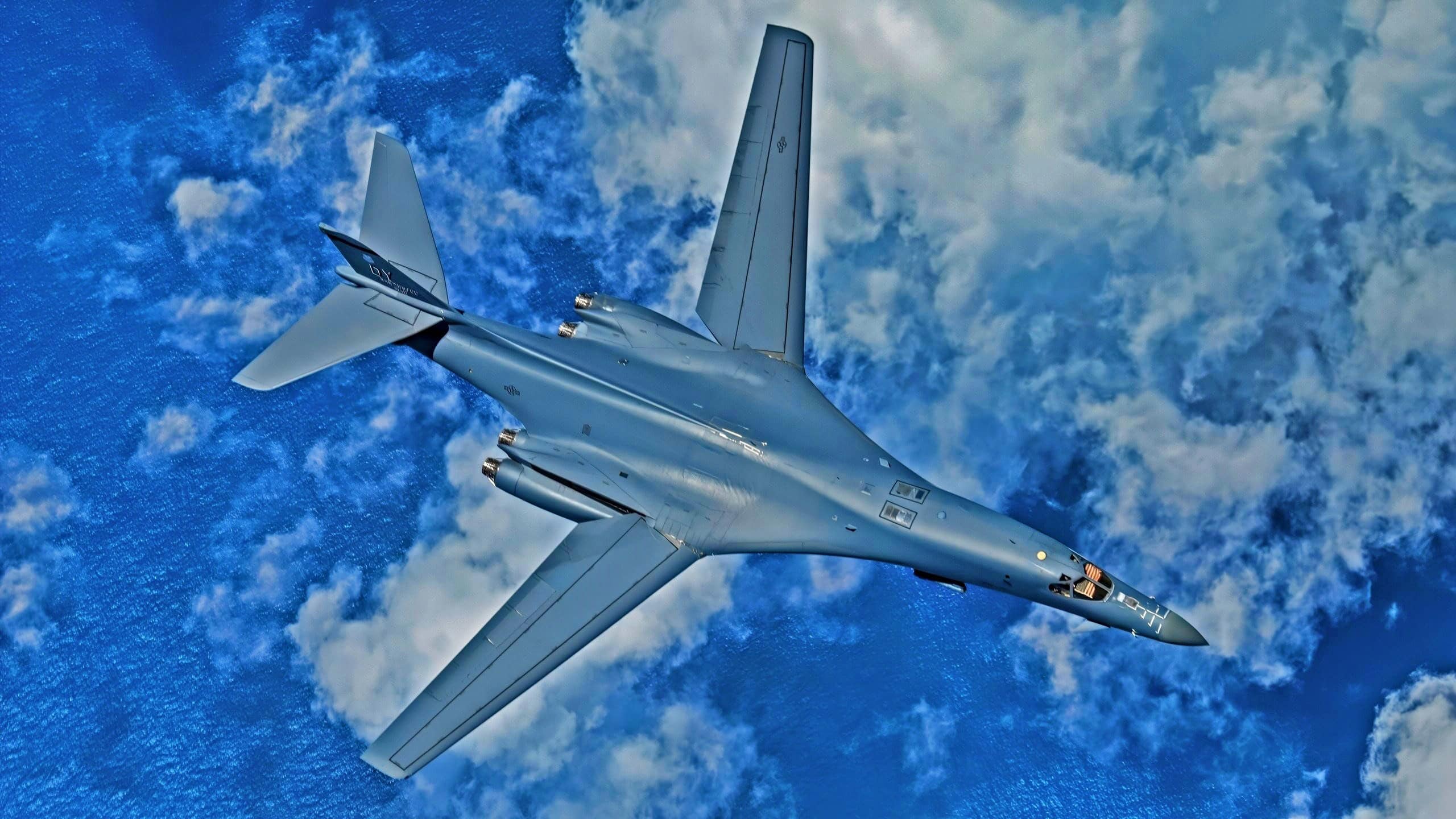
A 9th Expeditionary Bomb Squadron B-1B Lancer flies over the East China Sea May 6, 2020, during a training mission. The 9th EBS is deployed to Andersen Air Force Base, Guam, as part of a Bomber Task Force supporting Pacific Air Forces’ strategic deterrence missions and commitment to the security and stability of the Indo-Pacific region. (U.S. Air Force photo by Senior Airman River Bruce)
The Military Campaign Has Real Limits
The campaign has achieved real things. U.S. Central Command has struck over 11,000 targets inside Iran. Iran’s nuclear enrichment capacity has been badly degraded. Its long-range missile forces have been severely disrupted.
The IRGC’s navy commander is dead. Nobody serious should minimize any of that.
But none of it changes Iranian geography. Holding the Strait at risk doesn’t require a blue-water navy — it requires shore-based missiles, mines, and enough supporting infrastructure to keep them operational and to reconstitute as necessary.
Degrading all of that to the point of irrelevance would demand a far more sustained and destructive campaign than anything currently on the table.
The Strait remains what it was before the first strike: 21 miles wide at its narrowest point, 90 miles long, and the ordinary passage for roughly a quarter of global seaborne oil trade.
Which is precisely why leaving its status for a post-ceasefire cleanup is not a strategy. It is an abdication — and the window to correct it is closing.
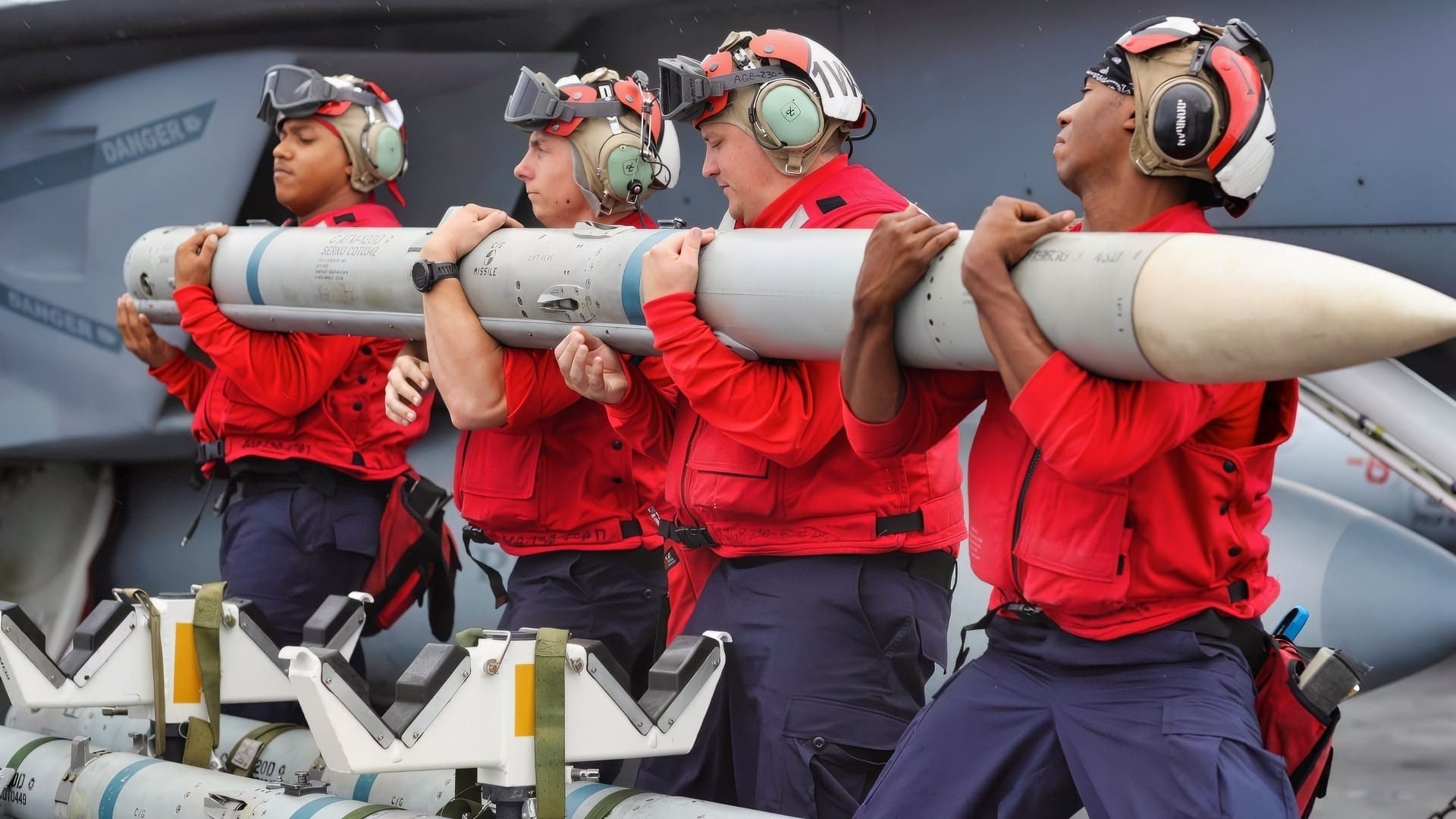
ATLANTIC OCEAN (July 31, 2018) Sailors prepare to transfer ordnance onto an F/A-18E Super Hornet from the Pukin’ Dogs of Strike Fighter Squadron (VFA) 143 on the flight deck of the Nimitz-class aircraft carrier USS Abraham Lincoln (CVN 72). (U.S. Navy photo by Mass Communication Specialist 2nd Class Jessica Paulauskas/Released)
A Ceasefire Without Hormuz Is Just a Pause
The real risk now is not further escalation. It is hoped that the war ends on terms that leave the Strait’s status unresolved — dressed up as a ceasefire, functioning in practice as a pause. Iran is already building the institutional architecture for exactly that outcome.
It is not simply closing the Strait. It is managing it. Ships from China, Russia, India, Iraq, Pakistan, Malaysia, and Thailand have been permitted to transit, while Western-flagged vessels remain at risk.
Shipping intelligence firm Lloyd’s List reports that more than 20 vessels have used a new corridor, with at least two believed to have paid transit fees of around $2 million each. The IRGC has established a registration system for approved vessels. Iran’s parliament has approved a plan to formalize tolls. An adviser to the new supreme leader has spoken openly of a “new regime for the Strait of Hormuz.”
This is not a closed street. It is a managed one — open to some flags, closed to others, on Tehran’s terms. And Tehran is building that system in real time while negotiations grind on.
The Corridor That Collapsed
The precedent is worth sitting with. The 2022 Black Sea grain corridor was hailed as a diplomatic breakthrough — a workable model for managing a maritime chokepoint under wartime conditions. It collapsed by 2023 once Russia decided the arrangement no longer served its interests. There was no enforcement mechanism, just mutual convenience, and mutual convenience proved deeply asymmetric. The side holding the chokepoint always retains more leverage over any corridor arrangement than the side that needs passage.
Iran has watched that precedent closely. It would be surprising if it hadn’t.
“One Way or Another” Is Not Enough
Rubio’s assurance that the Strait will reopen “one way or another” — either because Iran abides by international law, or because a coalition of nations ensures it does — sounds like resolve.
It isn’t. It is a post-war aspiration dressed up as a guarantee, and it papers over the central problem: Hormuz is not being treated as a condition of ending the fighting but as something to be sorted out afterward.
Once a ceasefire is signed around the original kinetic objectives, the leverage to resolve Hormuz will be gone. Iran will have its breathing room. The new supreme leader has already said publicly that Hormuz must remain a weapon — and a ceasefire built around other objectives gives him no reason to reconsider.

Eglin test squadron releases GBU-72 for first time. Image Credit: U.S. Military.
At that point, “one way or another” becomes a promise with no mechanism behind it — which is a decent description of most post-conflict maritime assurances in recent memory.
Ending the Operation Is Not Ending the Problem
Any settlement that holds has to address Hormuz explicitly, verifiably, and with real enforcement teeth. A bilateral US-Iran understanding isn’t enough — Tehran’s new supreme leader has already declared Hormuz a permanent strategic asset, making any such understanding not merely fragile but implausible on its face.
A post-war diplomatic framework with no mechanism to compel compliance isn’t enough either — it becomes a polite fiction the moment Iran finds it inconvenient. And Iran simply dropping its parliament’s tolling plan under diplomatic pressure isn’t enough; what’s needed is a formal, public renunciation of the whole regime it represents, not a tactical retreat Tehran can reverse at its convenience.
Clausewitz also understood that recognizing a war’s center of gravity — and adjusting to it — is the precondition for ending it well. This war began as a campaign to degrade the Iranian military capacity.

A U.S. Air Force B-1B Lancer assigned to the 7th Bomb Wing takes off from
Dyess Air Force Base, Texas, Dec. 25, 2025. U.S. military forces are deployed to
the Caribbean in support of the U.S. Southern Command mission, Department of
War-directed operations, and the president’s priorities to disrupt illicit drug
trafficking and protect the homeland. (U.S. Air Force photo)
It has become a contest over who controls the most consequential waterway on earth, 21 miles across at its narrowest point and right now effectively closed to the West. That shift has happened whether Washington fully acknowledges it or not.
Post-conflict maritime assurances have a poor record. The status of Hormuz has to be a condition of any ceasefire — not a problem left for the aftermath to solve, when the leverage to solve it will be gone.
MORE – The U.S. Navy’s Aircraft Carrier Era Is Over
About the Author: Dr. Andrew Latham
Andrew Latham is a professor of international relations and political theory at Macalester College in Saint Paul, MN. You can follow him on X: @aakatham. He writes a daily column for 19FortyFive.com.